Doubao Work's ARR Hits 2 Billion: The value of AI office applications first lands in factories.
In the advanced manufacturing industry, a long-overlooked truth is that sometimes, compared with the so-called technical barriers, the implicit Know-How accumulated in production lines truly determines the uniqueness of an enterprise.
On December 6, 2022, in the desert of Phoenix, Arizona, USA, the steel-structured plant of TSMC's wafer fab glowed with cold light under the sun. The ceremony for the first batch of production equipment to enter the site was held here. 91-year-old Zhang Zhongmou, founder of TSMC, stood on the stage together with Liu Deyin, then chairman, and Wei Zhejia, then president. Standing under the stage were then US President Joe Biden, Secretary of Commerce Gina Raimondo, then Apple CEO Tim Cook, Jensen Huang, founder of NVIDIA, and Lisa Su, CEO of AMD — almost all core figures of the global semiconductor industry gathered here.
Standing at the podium printed with "Building a better America", Biden, whose black loafers were covered with a thin layer of light gray dust, asked loudly: "My friends, what rule says America can no longer lead the world in manufacturing?" Then he gave the answer firmly: "We are proving that we can!"
In front of the factory and flags, 91-year-old Zhang Zhongmou and senior executives raised sparkling wine, and everyone seemed to firmly believe in one fact: "Made in America is accelerating its return."
But after the bustle fades away, the reality is far more complicated than a simple statement. TSMC once made a calculation: building a wafer fab of the same scale in the United States costs 4 to 5 times that of the plant in Taiwan, China; to meet the regulatory requirements at the municipal, county, state and federal levels, they sorted out 18,000 special compliance rules, and the compliance cost alone reached 35 million US dollars.
Unable to find enough skilled technical workers locally, TSMC had to dispatch more than 500 engineers from Taiwan, China to support across the sea, which triggered protests from local trade unions and team cultural conflicts. Nearly 600 engineers hired in Arizona also needed to be sent to Taiwan, China for training before taking up their posts. The 4-nanometer production line originally scheduled for mass production in 2024 has been delayed again and again since then. Including depreciation and labor costs, the gross profit margin of a single wafer in the US plant is only 8%, less than one-seventh of that of the plant in Taiwan, China.
The transfer of manufacturing industry often starts with cost, but what is lost along with cost is the implicit knowledge called Know-How.
Part of them is hidden in the minds of front-line workers and engineers, which is the judgment polished by day-to-day on-site practice: which process is prone to problems, where to check first when a fault occurs, and where to recruit enough workers quickly in different peak and off seasons. The other part is scattered in drawings, accounts, maintenance records and scattered shared documents, as well as in the highly digital approval processes and organizational collaboration rules of enterprises.
How to simultaneously improve efficiency, reduce costs, and prevent Know-How from disappearing with the transfer of resource allocation is almost a common problem plaguing all manufacturing players around the world.
This also provides a specific scale for enterprises to measure the value of AI office: whether it improves the efficiency of an individual, or the operation of the entire organization. The time saved by individual-level efficiency improvement can hardly be converted into definite operating returns; but when AI enters the organizational process, takes over the experience hidden in drawings, accounts, group chats and the minds of veteran workers, and precipitates it into reusable rules, tools and knowledge assets, efficiency improvement changes from individual action to organizational capability. This level of value is the reason why enterprises are willing to pay continuously.
This judgment has been verified on a large scale. According to official data, as of November 18, the ARR of Doubao Work has reached 2 billion yuan, and its DAU has exceeded 8 million. Launched for only three months, its recurring revenue and daily active users have risen simultaneously, which corresponds to not a small number of individual users trying new things, but a group of enterprises integrating AI into daily operations such as production line management, equipment operation and maintenance, and quality audit.
In other words, represented by the combination of Doubao Work and Feishu collaboration, the landing of organizational AI is becoming another solution to this problem.
On the one hand, it has the individual efficiency improvement capability of traditional individual point-to-point AI; on the other hand, it can dig out the implicit experience of the organization scattered in different corners and processes, integrate it into the daily organizational production collaboration, become the fixed asset of the organization, and bring overall efficiency improvement.
From the electric vehicle production line in Changzhou to the communication group of the automotive R&D division, from the off-road vehicle workshop in Wuhan to the supplier network all over the country, a group of front-line engineers have rewritten the daily rhythm of the factory with Feishu and Doubao Work.

Ninebot: Make on-site management keep up with the rhythm of production lines
At more than 8 a.m. every day, the production workshop of Ninebot in Changzhou has changed into work clothes and finished the morning meeting. More than a dozen production lines are started at the same time, and the sound of electric screwdrivers is connected in one piece. Every 36 seconds, an intelligent electric two-wheeler completes the final assembly.
He Yuchong, a production management specialist, the first thing he does when he arrives at the workstation in the workshop office every day is to open the Manufacturing Execution System (MES), shared disk folders and various work groups on the computer screen.
With the help of these tools, some of his colleagues are responsible for summarizing these forms to check the on-site attendance manpower of the day. The next day, another colleague will export the MES attendance data of the previous day and compare it with the submitted overtime form. Plus the operation units of pre-processing, full inspection, packaging and others, they need to process 16 forms in total every day. When all the sorting is finished, sometimes half of the morning has passed.
This is the most common dilemma in discrete manufacturing: all management decisions rely on data, but the sorting of data itself consumes a lot of manpower. The clerk of each line repeats a fixed action every hour: export the hourly output from the MES system, check the work order information, fill it into the corresponding Excel, and then take a screenshot and send it to the production group. A single operation takes only a few minutes, but after more than ten hours of shifts a day, this single task alone takes up more than one hour of a person's time. If managers want to view real-time data, they either go to the shared disk to flip through the nested folders, or scroll up dozens of chat records in the group to find the screenshots.
As for the problems noted at the stand-up meeting, they have to notify the responsible person one by one after the meeting; for the receiving ledger of the tool room, after the employee fills in the form, a special person needs to enter the inventory; for the safety examination of new employees, after the paper test papers are answered, manual scoring and statistics are required. These things are not big when taken out alone, but together they form huge friction in the operation of the factory, which consumes people's patience and attention the most.
The factory is not unaware of these problems. But if they follow the conventional IT project to build a customized on-site management system, they have to wait for the schedule, apply for the budget, and the development cycle often takes several months, which may not even meet the fragmented and changeable needs of the site. So a colleague in the process department took the lead to build the most basic dashboard according to the on-site needs, which can distinguish different line bodies, display the hourly output and efficiency, but the data still needs to be entered manually.
Moreover, once the line leader is too busy to fill in, the data will be disconnected; if someone fills in the wrong number, the information obtained by the manager will be all wrong. Later, when the company fully accessed Feishu, He Yuchong began to use Doubao Work to polish the functions little by little according to the on-site pain points.
He started with the most daily scenarios. First, he maintained the standard working hours and manpower data of different models, so that the dashboard can automatically calculate the production efficiency, and then updated the problem points of the stand-up meeting, where everyone can directly see their own problem points. The corresponding data sources are made into multidimensional spreadsheets to realize automatic data update.
When adjusting functions, he is used to describing the requirements very specifically: what the original operation path is, which step is reported to be troublesome by colleagues, and what the expected modification effect is. When an error occurs, he first troubleshoots the cause by himself, then tells Doubao Work the phenomenon and repair logic.
But the real polishing always needs to be done on site. After updating each version, he will ask the actual clerk or line leader to operate it to see if it is convenient to use. For example, in the early stage of entering output data, it was necessary to reselect the production series and model every time. A line leader complained to him that the same line continuously produced the same product, and he had to select it more than ten times a day, which was a completely redundant action. He Yuchong went back and added a memory function with Doubao Work, which retains the last selection by default. This small change alone reduces repeated operations for each line every time they enter data.
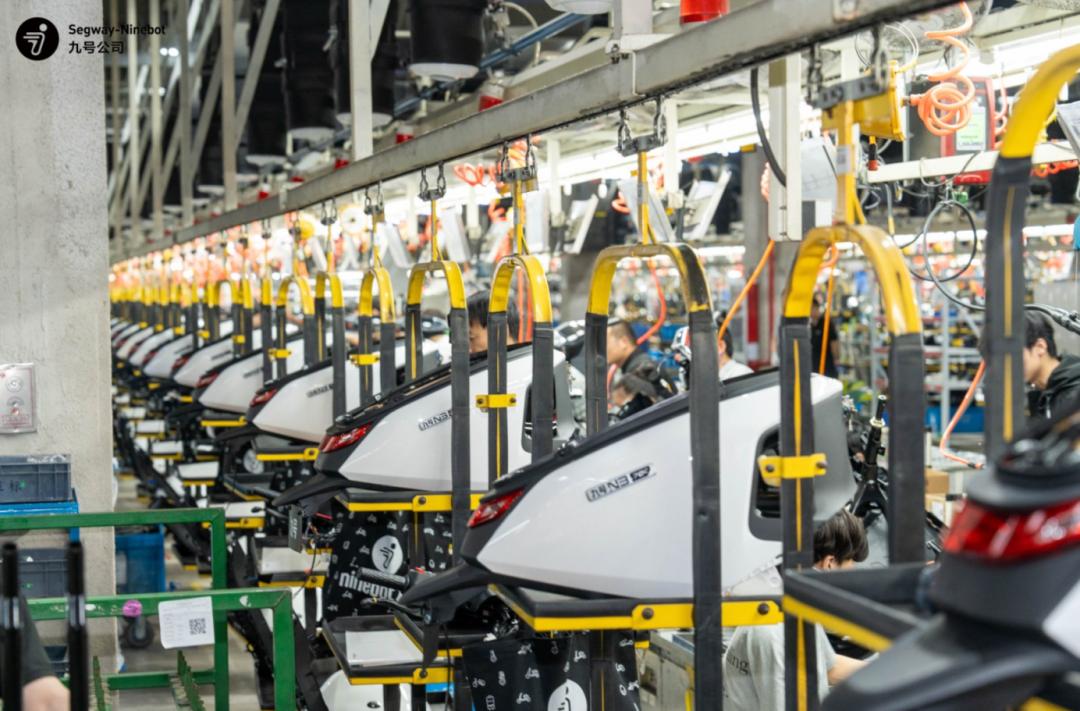
Now the large screen at the head of each line in the workshop is running this dashboard built with Doubao Work, and real-time output and efficiency can be seen when standing in front of the production line. The mobile terminal is also adapted, so managers can check it when patrolling the line without waiting for the clerk to send screenshots. After the attendance check tool goes online, 16 forms can be automatically summarized after being imported, and then the punch-in data is imported, and the difference items are directly listed, so that two clerks can save 20 to 30 minutes each per day. After selecting the responsible person for the stand-up meeting problem, the system automatically sends a message to remind the follow-up, and there is no need to remember to notify each person one by one.

Bosch China: Let engineers spend less time moving information and more time solving problems
As a leading global automotive Tier 1 supplier, Bosch's R&D system comes with strict process standards: every fault feedback from the customer side must complete a full closed loop from information collection, root cause analysis to solution output, with clear SOP and document report sorting throughout the process.
But when implemented on the front line, this strict process often gets stuck at the most front-end information link.
The R&D team of a certain business unit of Bosch China needs to connect with many vehicle customers to provide technical support, covering system troubleshooting in the whole cycle of test verification, road test problems and mass production ramp-up. During the period of dense projects, it is normal for one engineer to follow up more than a dozen communication groups at the same time, and fault messages come in fragments: diagnostic screenshots in customer groups, fault codes in private chats, and working condition descriptions supplemented by the test team. Information is scattered in different windows without a unified entrance.
At this time, engineers have to do a round of "information puzzle": go through group chats and private chats, collect more than a dozen pieces of information such as project ownership, software version, vehicle configuration, test working conditions, sort them into standard problem descriptions, and then transfer them to R&D colleagues of corresponding modules. In case of missing information and inconsistent calibers, they have to hold meetings for repeated clarification, and when a qualified preliminary analysis report is produced, most of the day has been consumed.

Behind this are two long-standing practical dilemmas. First, experience accumulation is difficult to sustain. The team has a complete knowledge base, but once the project pace is tight, sorting and archiving are often difficult to complete on time. A large number of front-line troubleshooting ideas and non-standard problem handling schemes remain in the personal memory of senior engineers. Newcomers get started by word of mouth, and once the core personnel are transferred, the corresponding implicit experience will be broken. Second, the demand input is naturally fragmented. Customers will not raise questions according to the enterprise template, and faults occur in real time and scattered. It is difficult to require customers to clarify all fields and backgrounds at one time. If the fragments are not complete, the subsequent analysis cannot be started.
The change starts from the most trivial pain points. Engineers configure regular inspection rules in Doubao Work to automatically identify fault-related information in engineers' private chats, and synchronize it to a special topic group for problem reports. There is no need to change customers' communication habits, engineers save the step of manual forwarding, and the work information scattered in private conversations is also included in the formal process.
When messages are gathered in one place, the automation of information sorting extends naturally. Doubao Work partner works in relay, grabs the complete context under each topic, splices scattered conversations into structured problem descriptions, then calls the standard template to generate the first draft of fault analysis, synchronizes it to Feishu multidimensional spreadsheet and reminds the person in charge. All information can be traced back to the original conversation. Engineers' work changes from writing reports from scratch to checking and completing the first draft, so that they can enter root cause analysis faster.
In case of complex faults across modules, Doubao Work partner can be invited to the meeting, synchronize the discussion content throughout the whole process, and automatically update the verification scheme, responsibility division and other contents into the report after the meeting, saving the steps of sorting out minutes and synchronizing the report manually.
Every closed-loop fault report will be automatically archived into the team knowledge base. When encountering similar faults subsequently, AI can retrieve historical cases to give reference ideas, and the called content includes not only general industry knowledge, but also the team's unique historical precipitation, so that the experience of senior engineers can be continuously reused in the team.
The whole set of scheme only took more than a week from the start of construction to the completion of the whole process, among which Doubao Work partner only took one day to go online.
At present, this process has processed 50 to 60 real reports, and the completion degree of standardized content of the first draft is stable at 70% to 80%. The judgment of fault root cause, arrangement of verification plan and customer reply caliber are always controlled by engineers, and human energy returns to those most important, most valuable high-value links that require professional judgment.

M-Hero: Hold the quality defense line on the eve of mass production
As a high-end electric off-road brand under Dongfeng, M-Hero is derived from the technical accumulation of military off-road vehicles, and has extremely strict requirements for parts quality and mass production nodes. Whether a part can be released on time directly determines whether the whole vehicle can be mass produced on schedule.
This checkpoint is called Production Part Approval Process (PPAP), which is the quality access audit before parts enter mass production. Suppliers need to submit more than ten to thirty documents such as inspection specifications, inspection reports, and production part approval applications. Engineers check and confirm item by item, sign and release, so that parts can enter the mass supply stage. If any part