30 Million Daily Active Users for Small and Micro Merchants — 12 Observations and Reflections from Tencent's Q3 Earnings Call
On November 18, Tencent released its 2026 Q3 financial report, and held the scheduled earnings call at 8 p.m. as usual.
The headline figures are far from impressive: revenue reached 207.3 billion yuan, up 8% year on year, which was lower than the market expectation of 210.2 billion yuan; Non-IFRS operating profit stood at 68.1 billion yuan, down 6% year on year.
Yet the earnings call delivered far more information than the previous two quarters:
WorkBuddy disclosed its revenue for the first time, Xiaowei announced its daily active users for the first time, Tencent's financial status on the balance sheet shifted from net cash to net debt, and the management gave a positive response to the new U.S. computing power regulation that was implemented just two days earlier.
I went through the full earnings call transcript and the complete financial report, combined with my personal insights, I am writing down my observations and thoughts as usual, hoping to bring some incremental information —
1. WorkBuddy Discloses Its Revenue
I complained in both Q1 and Q2 that Tencent never disclosed specific operational data of WorkBuddy.
This time it is different, Tencent released a number of data points:
Daily active users exceed 10 million, average daily Token consumption exceeds 100 trillion, Q3 revenue is more than 5 times that of Q2, and 60% of the top 100 enterprises in China have become its clients.
Martin Lau also stated —
"The annualized total revenue of WorkBuddy in the past seven days has exceeded 500 million U.S. dollars, which is more than twice that of Tencent Meeting that was launched seven years ago."
500 million U.S. dollars, roughly equivalent to 3.5 billion RMB at an exchange rate of 7.1, it was launched in March and reached more than twice the scale of Tencent Meeting within 8 months, which is quite impressive.
Two details are worth noting:
First, the ARR calculated on the annualized basis of "the past seven days" is slightly subtle, which just falls on the peak around the release of Hy4 and the end of WorkBuddy's limited-time free offer (November 15).
Second, the original English wording used is gross revenue.
A large number of third-party models are running on WorkBuddy, and Martin Lau himself also said that "WorkBuddy has become the largest client of almost all open-weight models in China".
Therefore, Tencent did not disclose how much of the 500 million U.S. dollars comes from its own deployed services, and how much is paid to model vendors through API procurement.
Well, now that we have both users and revenue, profit is still on the way.
2. The Operation Strategy of WorkBuddy
Martin Lau spent a long time explaining this time why Tencent has always been cautious about China's enterprise software market in the past, but now has changed its view.
He gave two reasons —
"First, AI services avoid the problem of software piracy. Second, WorkBuddy covers a large number of valuable use cases within enterprises, which makes the entire product package worth paying for."
Then he made an analogy with online games —
"In the past, cloud-based online connectivity also curbed piracy, and the item-based payment model allowed consumption to expand upward along the demand curve, thus opening up a much larger revenue pool."
I think this analogy is valuable.
Martin Lau said —
"We have already seen users spending as high as 40,000 RMB per month on purchasing Tokens. This is very different from China's past SaaS business, which could only charge fixed fees through subscriptions."
With 40,000 RMB per month, I am very curious about what specific scenarios this type of users use it for.
My personal experience is that the product iteration of WorkBuddy is indeed very fast. The recently launched browser plugin (quite useful, highly recommended) and Buddy One are both very practical updates.
Alex Yao from JPMorgan Chase asked a slightly sharp question:
"A large number of low-cost Flash models are integrated into WorkBuddy, will this pull down the overall unit price of Tokens?"
Martin Lau answered: Flash is the customer acquisition model, and high-performance models are the monetization model.
Well, in my opinion, this answer is very typical of Tencent style.
3. New U.S. Regulation, The Next Version of Hunyuan Will Most Likely Be Postponed
Three days ago (November 16), the U.S. Department of Commerce BIS released the interim final rule titled "Restricting Remote Access to Advanced Semiconductors":
Overseas data centers need to obtain a license to provide computing power exceeding 12 million TPP to Chinese enterprises.
Therefore, the path of overseas training and domestic inference is basically blocked.
Robin Zhu from Bernstein asked this question in his first question.
Martin Lau's answer is quite straightforward (this is also the reason why I am willing to listen to Tencent's earnings calls: compared with some companies that always use diplomatic rhetoric and beat around the bush, Tencent's management usually does not hide information and brings incremental content):
"I would say this is very regrettable... it sets everyone in China back... the training work will be affected. For the next version, we may need a longer time to launch it in the short term."
This is one of the most important incremental information throughout the meeting.
Since the reconstruction of infrastructure in February, Hunyuan has launched a major version every two months on average: Hy3 preview at the end of April, official Hy3 version in July, Hy4 preview on August 28, and official Hy4 version on November 4.
According to this rhythm, the market originally expected Hy5 to be launched at the end of this year or early next year.
Now it seems that it will be postponed.
What is interesting is James Mitchell's statement on inference —
"We have now reached a stage where we can run these inferences very efficiently with a surprisingly limited number of domestic chips."
Therefore, the current reality is that training is affected, while inference and cloud revenue are not affected.
Not only Tencent, domestic large models will collectively go through a difficult period in the next stage, I hope Liang Wenfeng leads DeepSeek to make breakthroughs on Ascend chips as soon as possible.
There is also an easily overlooked detail:
James said that for some pre-paid computing power contracts, "we are exiting them due to recent changes", and prepayments will even flow back in some future quarters.
4. Tencent's Balance Sheet Has Shifted to Net Debt
Put the figures of the three quarters together —
Net cash at the end of Q1 was 146.9 billion yuan; net cash at the end of Q2 was 58.2 billion yuan; net debt at the end of Q3 was 13.7 billion yuan.
More than 160 billion yuan disappeared in half a year.
Where did the money go?
It is mainly the prepayment for computing power. Tencent classifies prepayments in operating cash flow, so the operating cash flow in Q3 was only 2.6 billion yuan (compared with 52.7 billion yuan in Q2).
Free cash flow was -69.1 billion yuan, and it turned to +16.9 billion yuan after excluding prepayments.
In terms of borrowing, the total amount rose from 251 billion yuan at the beginning of the year to 380.1 billion yuan, and Tencent issued another 1.8 billion U.S. dollars and 26 billion yuan of notes in October.
Of course, Tencent still has listed equity holdings with a market value of 505.4 billion yuan and unlisted equity holdings with a book value of 397.2 billion yuan, so this net debt does not pose any risk at all.
But objectively, Tencent, which has been carrying out large-scale share repurchases in the past few years, has begun to borrow money to purchase computing power.
Of course, James also stated —
"The levels in the second and third quarters were exceptionally high, and we have now signed the long-term contracts we want, so the outflow of prepayments will decline."
The first peak of computing power rush is most likely over.
5. New AI Products Lost 15.2 Billion Yuan in a Single Quarter
Following the usual practice, let's do the accounting.
Non-IFRS operating profit was 68.1 billion yuan, and it reached 83.3 billion yuan after excluding new AI products (Hunyuan, Yuanbao, CodeBuddy, WorkBuddy, Xiaowei).
83.3 billion minus 68.1 billion equals 15.2 billion yuan.
The loss was 8.8 billion yuan in Q1, 10.5 billion yuan in Q2, and 15.2 billion yuan in Q3, with a month-on-month increase of 4.7 billion yuan.
Last quarter I said Tencent was burning more than 100 million yuan per day on new AI products, and now the figure is about 170 million yuan per day.
Of course, there is another figure: after excluding new AI products, gross profit was 118 billion yuan, while the group's total gross profit was 115.9 billion yuan.
That means new AI products only lost about 2 billion yuan at the gross profit level. The majority of the 15.2 billion yuan loss comes from R&D.
This matches the cost structure: R&D expenditure reached 32.4 billion yuan, up 42% year on year (the growth rate was +35% in Q2).
Sales and marketing expenditure was 12.1 billion yuan, up only 6% year on year (the growth rate was +44% in Q1 and +26% in Q2). Administrative expenses excluding R&D increased by only 2%.
Therefore, although we still see a lot of advertisements for WorkBuddy, the data shows that Tencent has obviously stepped on the brakes on promotion expenses, while stepping hard on the accelerator for R&D expenses.
Recruiting talents and training models are the most costly and most important things. Tencent deeply understands that if the model cannot reach the leading position, it will not have enough confidence.
6. Xiaowei Has 30 Million Daily Active Users, And The Cost of Full Release Is Lower Than That of Yuanbao
Xiaowei released data for the first time: interactive daily active users reached 30 million, and its access points have been expanded to more than 30 scenarios including Moments, Official Accounts, and Channels.
30 million accounts for roughly 2% of the 1.449 billion monthly active users of WeChat.
Xiaowei is still in a very early stage.
Martin Lau also stated at the same time —
"Even if Xiaowei is fully open to all 1.4 billion WeChat users, we expect the quarterly cost of Xiaowei will still be lower than the quarterly cost of Yuanbao in the early part of this year."
The statement in Q2 was that "the cost of Xiaowei will be less than the investment in Yuanbao over the past year", and this time it means that the cost of one quarter is even lower than Yuanbao's cost in one quarter at the beginning of the year.
This is achieved by relying on WeLM, a small large model (a large model with relatively small parameter size).
Martin Lau also mentioned that part of the inference can be run on the mobile phone side in the future, and the cost will be further reduced.
WeChat's model team is very low-key but very pragmatic. I think it is possible that they will launch some models that exceed expectations later, and everyone can continue to pay attention.
In addition, the financial meeting also put forward specific expectations for the first time on the incremental contribution of AI to WeChat's revenue:
"If you look at WeChat's current revenue streams, add everything up, it is on the order of hundreds of billions of yuan per year. Then adding 10% or 20% on this basis will be a very considerable number... We think we will see this very clearly in the next 6 to 12 months."
7. Xiaowei Will Eventually Benchmark Muse: Intentionally Made Less Powerful
Kenneth Fong from UBS (the one who asked the question last quarter "what if users enjoy the service so much that they stop watching ads") compared Xiaowei with Meta's Muse this time.
Martin Lau answered very frankly —
Many people compare it with Muse, saying it is not as powerful as Muse, and that's true, it is done intentionally.
Tencent's path is to first let all 1.4 billion people have access to a usable assistant, then rely on the improvement of computing power efficiency to double its capabilities every year, and gradually accumulate its performance.
Martin Lau gave the timeline of one year or 18 months, after which Xiaowei will be as powerful as Muse.
This strategy is consistent with WeChat's past product philosophy: cover all users first, then iterate, and rarely let a small number of users pay for early access to new products.
I do hope Xiaowei can be more aggressive and move faster. In my opinion, the domestic Personal Agent will eventually rely on Xiaowei, after all, a lot of our information is on WeChat.
But I can more or less understand from the perspective of WeChat's product team: precisely because a lot of our information is on WeChat, WeChat has to be cautious.
Fortunately, Xiaowei has already made some attempts, for example, the function of "chat with friends' Xiaowei" I think is very innovative.
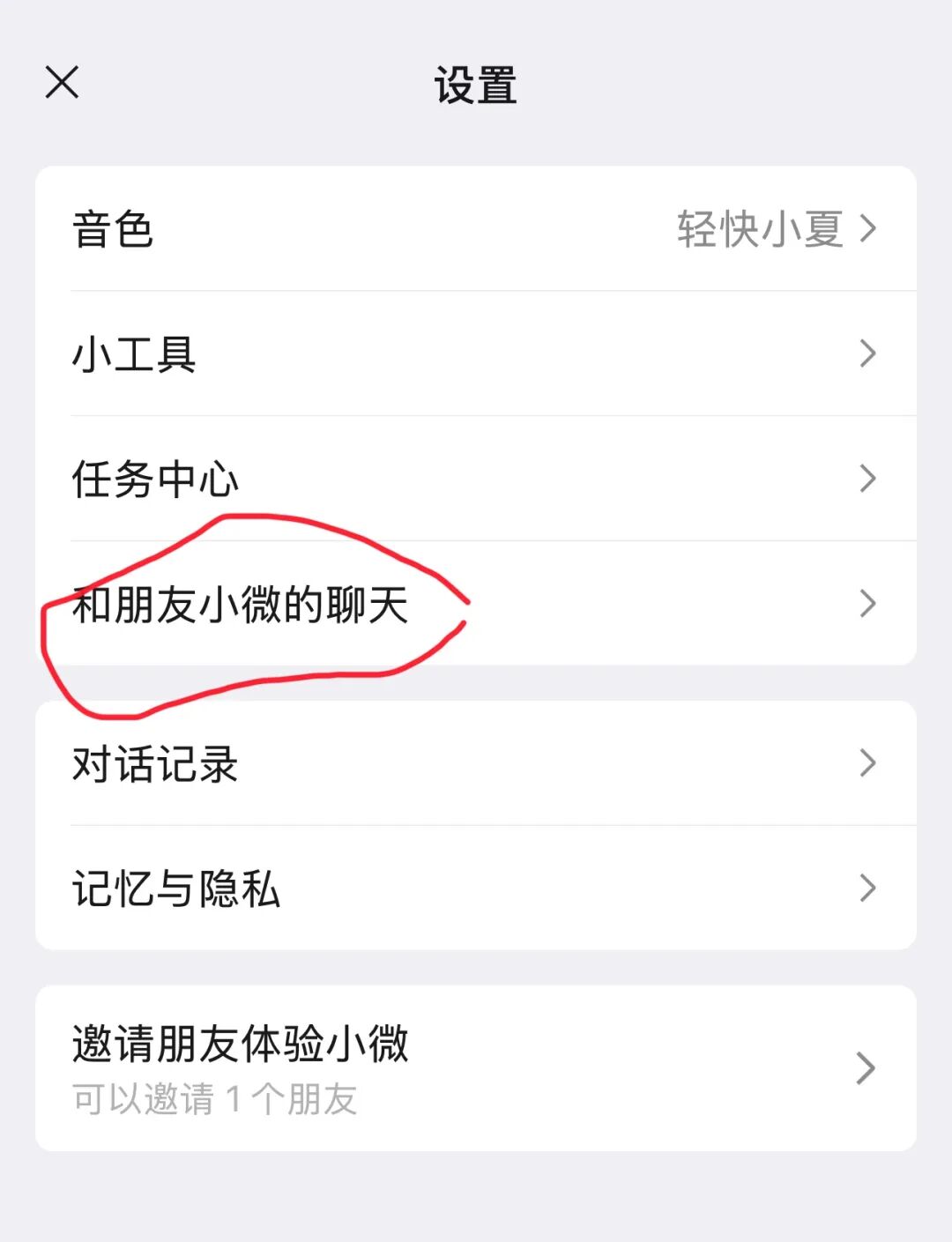
Another incremental information is the new monetization method mentioned by Martin Lau: charging merchants and service providers "matching service fees between agents".
This is essentially the commission in the Agent era.
Xiaowei helps you place orders through the mini-programs of Meituan and Luckin Coffee, and WeChat has a reason to charge a diversion fee.
Remember what the management said in Q1 that "Agents have a greater impact on e-commerce companies"?
Now, Tencent is also moving in this direction.
8. Short Dramas Are The Biggest Variable of Advertising Revenue This Quarter
Marketing service revenue reached 43 billion yuan, up 19% year on year.
Looking back at this growth curve: 17% in Q4 of last year, 20% in Q1 of this year, 22% in Q2, 19% in Q3.
The three consecutive quarters of acceleration was broken, with a month-on-month drop of 1%.
Last quarter James reminded that "it is not recommended to make linear extrapolation of the growth rate of any single quarter".
Sure enough, it came true, which also shows that Tencent is very pragmatic.
Look at this sentence from James —
"Without