All the top AI leaders of this generation are physics majors.
Back then I felt like I was "born a hundred years too late" and missed the boom era of physics discoveries, but now I have found the golden age in the AI field.
Behind the largest IPO in history stands a group of physicists who "switched careers".
On November 19 Eastern Time, Anthropic will be listed on the NASDAQ under the ticker symbol "ANT". In addition to public offering, the company will conduct a private placement simultaneously, with the maximum total fundraising size of the two parts reaching about 904 billion US dollars; calculated at the upper limit of the offering price range, the fully diluted valuation is about 1.4 trillion US dollars. This scale exceeds the record set by SpaceX in June this year and is expected to become the largest IPO in history.
Looking through the resumes of the company's core founders, you will find an interesting detail: there are a huge number of people with physics backgrounds in this large model team. Dario Amodei, the CEO, majored in physics for his bachelor's degree and studied neural circuits during his doctoral stage; Jared Kaplan, the Chief Scientific Officer, used to be a theoretical physicist; Sam McCandlish, the Chief Architect, holds a doctorate in theoretical physics.
This is quite different from people's conventional imagination of a large model company. Normally, people would think of computer scientists and machine learning researchers, but at Anthropic, physicists not only appear in the founding team, but also form an important part of the company's talents.
This phenomenon is even somewhat universal. From large model laboratories in Silicon Valley to AI startups in China, more and more people with physics backgrounds are standing at the core of the AI wave. Digital Intelligence Frontline learned that this year, even the founder of a domestic Internet company specifically interviewed candidates with physics backgrounds when recruiting AI talents.
What exactly has physics training brought to them? Why have physicists become important participants in this round of AI wave?
01
Trillion-dollar Anthropic is crowded with physicists
In early 2021, seven researchers left OpenAI and decided to found a new AI company. It was the middle of the epidemic at that time, and the only way for them to meet was to make an appointment in the backyard of one of them, talking with masks on, six feet apart from each other.
A year later, when the two co-founders of Anthropic recalled this experience, they added an interesting detail: apart from having worked together at OpenAI and some members having collaborated at Google Brain, this group of people also had one thing in common — "many of us are current or former physicists". Dario said that they had known each other as early as in the physics circle.
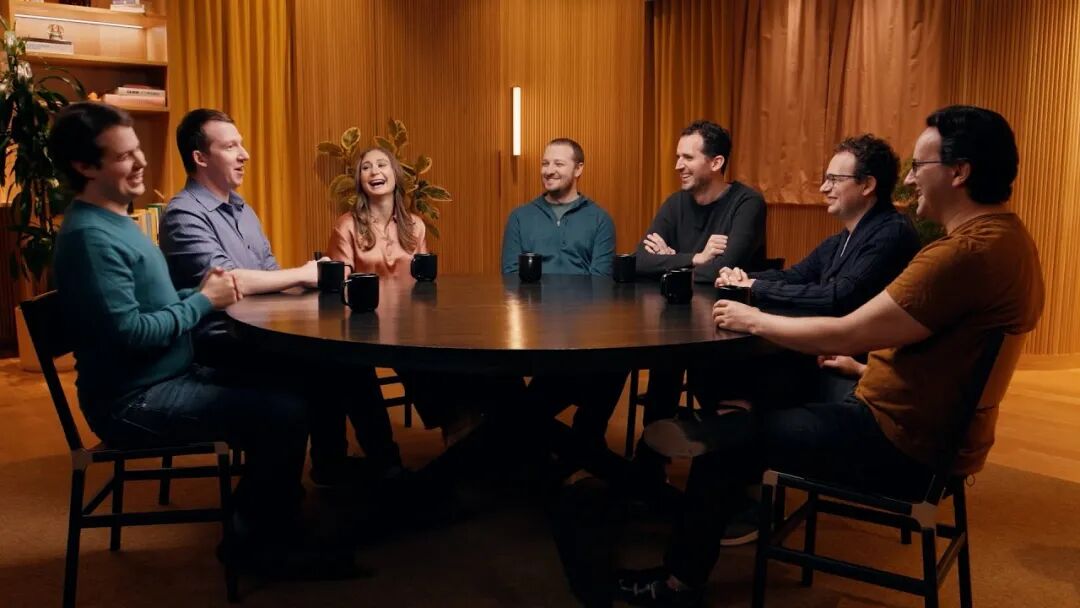
Dario's own experience is a microcosm of this.
In the spring of 2007, 24-year-old Dario was still a physics doctoral student at Princeton University. In an office in the basement of Guyot Hall, he had a conversation with Michael Berry, a professor of neuroscience. After that, he seriously considered switching to biophysics for the first time. In his second year of doctoral study, he joined Berry's laboratory to study how nerve cells in animal retinas process and transmit visual information.
The new direction soon brought a difficult problem: the laboratory needed to record the electrical signals of a large number of nerve cells at the same time, but there was no suitable equipment available.
Dario simply built a multi-electrode array by himself. Berry later called it "a quite ambitious technology development project". Dario spent all his time in the clean room making devices and adjusting equipment, and this work was finally published as a paper in 2012. This is probably the background left by physics training: people are used to understanding problems starting from basic principles, and making tools by themselves when there are no existing tools available.
Why did he switch from physics to neuroscience? Dario later explained, "I have always been interested in two questions: how intelligence actually works, and whether we can improve human life through science and medicine", which is exactly looking for the "laws of physics" of intelligence.
After graduating with a doctorate, Dario went to Stanford University to do postdoctoral research under the supervision of Professor Parag Mallick, studying cancer detection and its mechanisms. Mallick later recalled that Dario had almost no background in cancer research before, but he would spend his weekends reading all published papers on a certain topic to quickly catch up with the progress.
It was also during his postdoctoral period, around 2012 to 2013, that the research results of teams such as Google Brain in deep learning emerged one after another. In particular, the performance of AlexNet in image recognition made him see that this technology began to show real potential.
At the end of 2014, Dario joined Baidu and entered the team led by Andrew Ng. The first project he participated in was the research and development of Deep Speech 2, an end-to-end speech recognition system. Less than a year later, he transferred to Google Brain as a senior research scientist, and joined OpenAI in 2016.
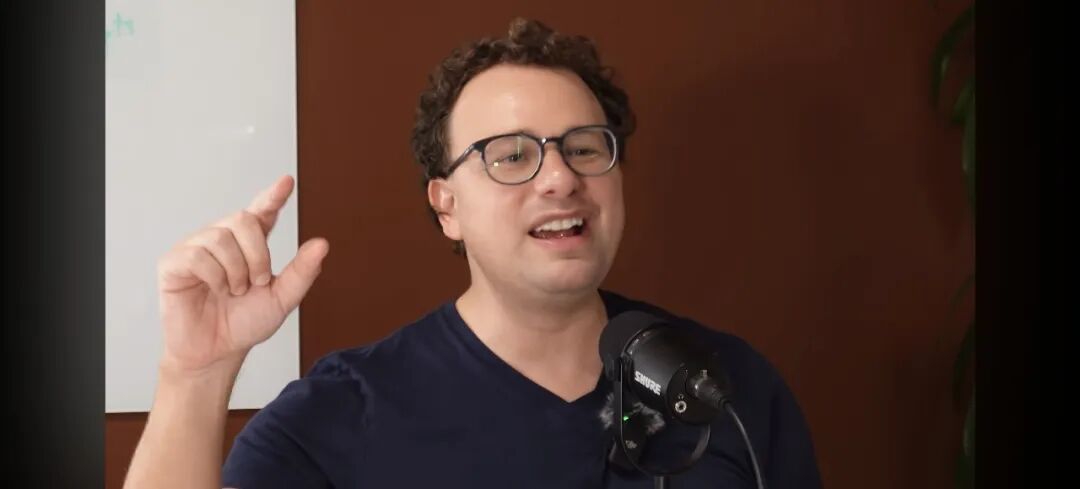
Another key figure at Anthropic, Jared Kaplan, the Chief Scientific Officer, initially focused on the universe itself.
Kaplan's mother is a science fiction writer. Since he was a child, he has been fascinated by a question: is it possible for human beings to build a faster-than-light aircraft?
To figure out this problem, he chose physics. For many years after that, he followed a typical theoretical physics academic path: he did his undergraduate study at Stanford, his doctorate at Harvard, did postdoctoral research at the SLAC National Accelerator Laboratory operated by Stanford University, and finally joined Johns Hopkins University as a professor of theoretical physics.
However, after years of research in multiple fields such as large hadron collider physics, particle physics, cosmology and string theory, he gradually felt frustrated and burnt out. "The progress in these fields is not as fast as I expected. Many friends told me that AI is becoming a very important field," Kaplan later recalled. In early 2018, Kaplan began to spend part of his time learning and carrying out machine learning research.
Sam McCandlish, the Chief Architect, also has a similar background to Dario and Kaplan. He pursued a doctorate in theoretical physics at Stanford, studying quantum gravity and holographic theory. In 2018, he also joined OpenAI and began to participate in machine learning research.
In January 2020, Kaplan, McCandlish, Dario and other researchers jointly published the paper *Scaling Laws for Neural Language Models*. Through a series of experiments, they found that the performance improvement of language models is not completely unpredictable, but has a relatively stable power-law relationship with model size, training data volume and computing resources.
This is the famous "Scaling Laws" that came later.
"The most helpful part of physics training is that it makes me accustomed to looking for the most macroscopic and important trends, and then describing them as accurately as possible," Kaplan said when reviewing this research experience many years later.
This inextricable connection with physics also entered the company with the establishment of Anthropic, influencing its team building and talent selection.
Daniela Amodei, co-founder and President of Anthropic, revealed in an interview that in the early days of the company's founding, two-thirds of the first about 15 employees had a doctorate degree in physics. The company even formed an internal talent cultivation mechanism called "Physicist Pipeline", which attracts those very smart people who are good at quantitative analysis and have macro thinking ability, and then trains them to engage in machine learning research.
Dario said in a program in August 2023: "Physicists learn new things extremely quickly. We usually find that when we recruit a physics doctor, he can often quickly learn machine learning and make contributions." He mentioned that there might be 30 to 40 physicists in the Anthropic team at that time.
Of course, AI is still a relatively young field. The Anthropic team includes not only software engineers and machine learning researchers, but also researchers with backgrounds in physics, ethics and neuroscience, as well as policy and operation staff. No one is restricted by professional boundaries: researchers can write code, and engineers also participate in research; the company also organizes small-scale training, where people familiar with Transformer offer courses for different skill levels, so that the operation and policy teams can also participate in beginner learning.
02
Physicists have never been absent from AI
The 2024 Nobel Prize in Physics was somewhat unexpected: it was awarded to two scientists studying artificial neural networks — John Hopfield and Geoffrey Hinton, in recognition of their "fundamental discoveries and inventions for machine learning using artificial neural networks". The Nobel Committee for Physics specially mentioned that physics has provided important tools for the development of machine learning.
In fact, the fate between physicists and AI is far earlier than this wave of large models. They were present when the neural network theory took shape.
Hopfield himself is a condensed matter physicist. In 1982, he proposed the "Hopfield Network", introducing concepts such as energy function and stable state in physics into neural network research. In 1985, Hinton, together with David Ackley, Terry Sejnowski and others, went a step further, applying the methods of statistical physics to neural network learning, and developed the Boltzmann Machine, whose name itself comes from statistical physics.
Sejnowski's experience is particularly interesting. He pursued a doctorate in physics at Princeton University, initially studying general relativity, and his supervisor was exactly Hopfield. Later, he attended a neuroscience class, and since then he has been fascinated by the complex problems behind the brain and behavior, gradually turning to neural network research, believing that "the mysteries of the universe pale in comparison to the mysteries of behavior".
A group of researchers with physics training began to apply probability, statistics and information theory tools to machine learning problems. For example, in the 1980s, physicists began to use statistical physics to study the memory mechanism and storage capacity of neural networks; by the 1990s, this intersection further expanded to fields such as Bayesian inference, statistical learning, pattern recognition and kernel methods.
Entering the new century, people with physics backgrounds still appear at key nodes. Li Feifei, who studied physics for her bachelor's degree at Princeton, began to promote the establishment of the ImageNet dataset around 2007, allowing machines to "see" a huge amount of labeled images for the first time.
But what really made a group of young physicists unable to sit still was a chess game in 2016.
In March of that year, during the match between AlphaGo and Lee Sedol, the 37th move in the second game surprised many professional chess players. For the first time, people intuitively felt that machines might be able to find solutions that human beings had not thought of through learning.
Misha Laskin, who was still pursuing a doctorate in theoretical physics at the University of Chicago at that time, was also touched by this game. When he was about to graduate, he began to reconsider his career choices. He later recalled that it was not because he no longer loved physics. Instead, he gradually realized that he had become an expert in a very narrow field, and even if his research was successful, it might take decades to know whether it had a real impact. "Maybe I just lack patience," he said.
He started various attempts until he saw AlphaGo. He put down all the work at hand and plunged into deep learning and reinforcement learning: he first did postdoctoral research at UC Berkeley, and later joined Google DeepMind to participate in research in the direction of Gemini reward models. In 2024, he founded the AI company Reflection AI with his colleagues, aiming to build an open-source alternative to "closed frontier laboratories" such as OpenAI and Anthropic, and is also known as the "American version of DeepSeek" by the outside world.
A similar choice also appeared in Yao Shunyu's experience. But this "Yu" is not that "Yu": his name differs by only one character from that of Yao Shunyu from Tencent, both graduated from Tsinghua University, and both are working on large models. From the outside's perspective, his resume of a bachelor's degree in physics from Tsinghua University and a doctorate in theoretical physics from Stanford is quite excellent, but he is not satisfied with his own research results: "No one will say that my papers during my doctorate are bad, but to be honest, how much impact have they had on the world? I think almost none."
"I want to find a direction that offers more opportunities for young people." Both quantum computing and AI were on his candidate list, but the main bottleneck of quantum computing lies in experimental implementation, which is not his strongest or most interested part. On the contrary, AI made him see a familiar research method: "More often, you have an idea, and you can verify it with some numerical values. In AI, this numerical value may be training a model."
In his opinion, today's AI is very similar to the physics in the 18th century, where theory and experiment have not been clearly separated. "You can do experiments by yourself, and you can also make theoretical speculations."
Therefore, in 2024, he only stayed in his postdoctoral position in theoretical physics at UC Berkeley for two weeks, then turned to join Anthropic to participate in the research and development of the Claude model. At the end of September 2025, he joined Google DeepMind again to continue his large model research.
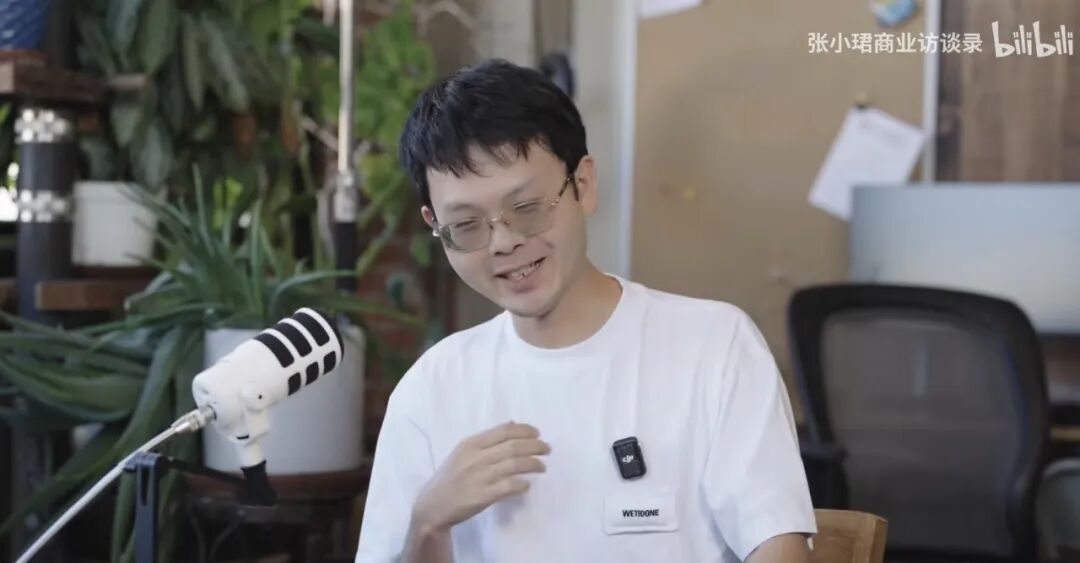
The opportunities brought by AI are increasingly going beyond foundation models.
In 2022, several physicists who worked together in a fintech company decided to bring AI into the music industry. At first, they just wanted the machine to understand and analyze sounds, but an experiment after work made them find that AI could even write songs directly. After they made the model into a Discord bot, they unexpectedly gained a group of enthusiastic users. This is how the AI music company Suno was born.
A few years later, Suno became the first unicorn in the global AI music field, with a valuation of 5.4 billion US dollars. In an episode of podcast in May 2026, the host asked Mikey Shulman, the CEO: As a physics doctor studying quantum computing, why did you found a consumer-facing music company? Shulman said that physics training taught him an important lesson: opportunities often lie at the intersection of different fields. For Suno, this intersection is music and technology.
Jiang Xu saw another opportunity. He studied physics for both his bachelor's and doctorate degrees, and tried several research directions during his doctoral study. "I think in life, you have to take a rocket once," he said.
But the further he went in his studies, the more he felt that he was "born almost a hundred years too late". The golden age of physics was the decades at the beginning of the 20th century, when many basic laws had not yet been discovered, and "second-rate physicists could do first-rate work". Today, most of the simple laws have been revealed, and the remaining problems are all tough nuts to crack.
In 2016, AlphaGo made Jiang Xu get to know deep learning for the first time. He began to teach himself Python and machine learning, took Andrew Ng's open courses on Coursera, and did some open source projects. He smoothly got his first AI job in Silicon Valley, and joined OpenAI a year later.
After participating in the research and development of large models for a period of time, Jiang Xu turned his attention to embodied intelligence, returned to China and founded BrightSource Innovation to research foundation models for embodied intelligence. In his view, the capabilities of AI will gradually expand from the text field with the largest and most easily accessible data to other fields. Today's AI is just like physics a hundred years ago, with a large number of problems waiting to be explored, and "gold is everywhere".
03
After a long detour, physicists are back in the physical world
In November 2