Automotive industry keywords at the APEC Summit: globalization and AI implementation
On November 17, the 2026 APEC CEO Summit kicked off in Shenzhen.
Wang Chuanfu, Chairman of BYD, Zeng Yuqun, Chairman and CEO of CATL, Lei Jun, Founder, Chairman and CEO of Xiaomi, Li Yanhong, Founder, Chairman and CEO of Baidu and other industry leaders attended the event and shared their respective views on the automotive industry.
After sorting out the relevant content, Auto Industry Review summarized two key words: globalization and AI implementation.
This is exactly closely related to the current development status of China's automotive industry.
On the one hand, the status of China's automotive industry in the global market continues to rise. Facing a more complex and intertwined international trade environment, how to shift from product export to long-term and sustainable global operation has become a new topic.
On the other hand, although Chinese enterprises have made continuous progress in the process of exploring new technologies such as AI, there are still many problems to be solved from technological breakthroughs to large-scale application. How to translate continuous innovation investment into commercial value and tap new growth space also poses a test for Chinese enterprises.
NO.1
[Wang Chuanfu: Made in China is not seizing jobs]
In terms of globalization development, Wang Chuanfu first responded to external doubts about Made in China.
He said: "Now many outside parties have misunderstandings about Made in China, thinking that we are seizing their jobs, but that is not the case at all."
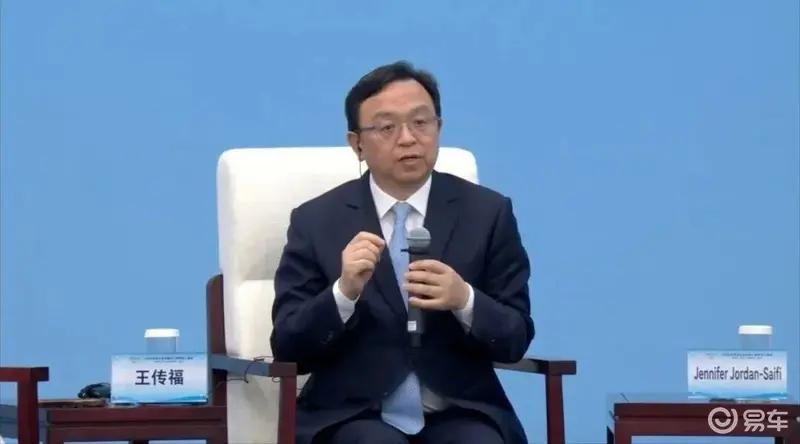
From Wang Chuanfu's perspective, the entry of China's new energy vehicles into overseas markets is not a simple competition for existing industrial shares, but fills the local gap in the new energy vehicle sector through technological innovation, driving the development of the local economy.
He cited examples that BYD currently has about 1.02 million employees worldwide, of whom around 60,000 are overseas employees.
Among them, the annual output of the Thailand plant is about 150,000 units, creating about 6,000 jobs, more than 95% of the employees are local Thais. The local parts localization rate of this plant also exceeds 50%, driving the development of local industries.
In Chile, BYD purchases a large amount of resources such as copper and lithium locally, and at the same time provides Chinese-made electric buses to Chile to help the local area improve environmental problems in transportation.
Wang Chuanfu emphasized that this is a win-win model. Chinese enterprises not only bring technologies and products to the world, but also promote local procurement and local R&D, leaving technologies, jobs and taxes in the local markets.
"Only sustainable development can achieve long-term development. The 'I win you lose' path cannot go far," Wang Chuanfu said.
NO.2
[Zeng Yuqun: Globalization is far more than just product trading]
In terms of global industrial cooperation, Zeng Yuqun believes that technology sharing and innovation sharing are very important, but the premise is mutual respect for intellectual property rights.
He said that international cooperation should follow universally accepted rules. In the absence of rules, enterprises can only stay at the simple product trading relationship. Only on the basis of respecting intellectual property rights, through two-way technology licensing, can a deeper and more sustainable cooperation relationship be established.
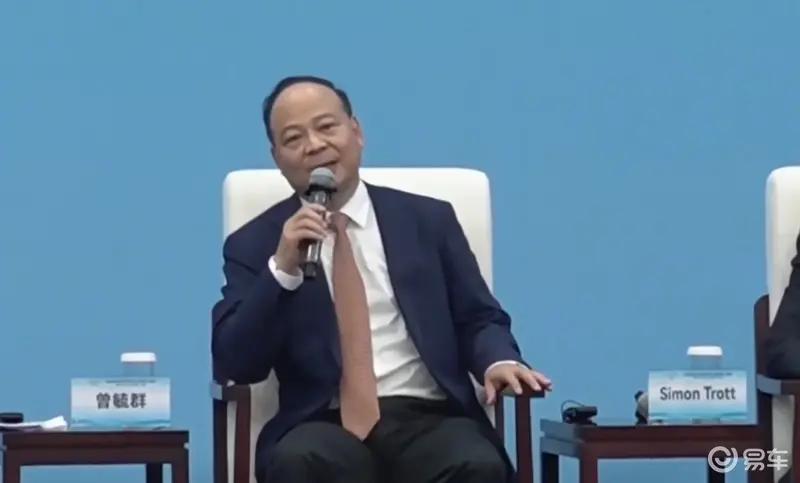
When talking about the specific new energy vehicle industry, Zeng Yuqun also said: "Now everyone is paying attention to electric vehicles, but we pay more attention to the infrastructure of electric vehicles."
He introduced that CATL is exploring new technologies and business models. For example, battery swapping allows electric vehicles to complete energy replenishment within 99 seconds, and this model is very suitable for promotion in the Asia-Pacific market.
Zeng Yuqun also believes that there are numerous islands in the Asia-Pacific region. If new technologies such as electric aviation can be applied on a large scale, the travel time between different cities can be greatly shortened, which can better empower the development of the Asia-Pacific region. To this end, CATL is working hard to increase the battery energy density to 350Wh/kg.
In addition, the sustainable development of the battery industry is also a concern of Zeng Yuqun.
From his point of view, with the continuous development of sodium batteries, recycling technologies and other fields, the demand structure of some raw materials in the battery industry may change in the future. How to improve resource utilization efficiency through technological innovation and establish a circular economy system is directly related to the long-term development of the industry.
NO.3
[Lei Jun: No revolutionary AI products have emerged yet]
Although AI large model technology has advanced by leaps and bounds in the past four years, Lei Jun believes that AI practitioners are still trapped in confusion and anxiety.
He said that the scenarios where AI can be implemented are very limited at present, and relatively few companies have achieved a closed commercial loop and made profits in this round of cycle. No revolutionary AI benchmark products have emerged in industries including mobile phones and automobiles.
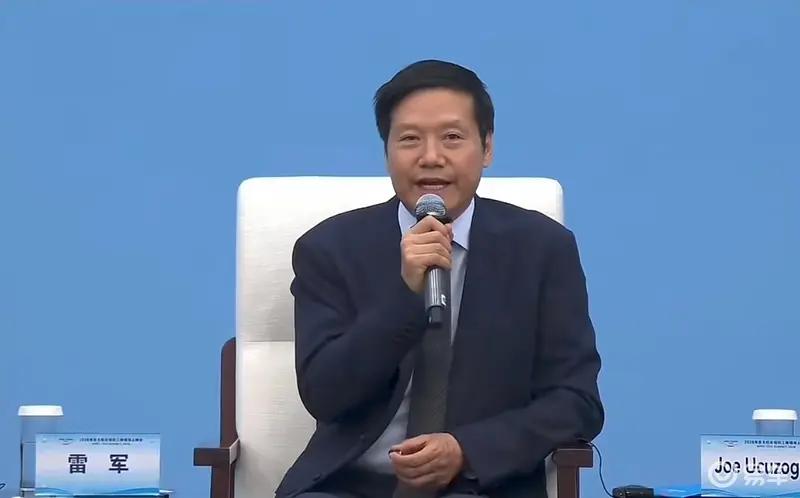
However, Lei Jun also emphasized that he is firmly optimistic about the opportunities after AI enters the physical world, and believes that the in-depth integration of AI with terminals and application scenarios will generate huge commercial opportunities.
He cited examples that Xiaomi uses AI to optimize every link of factory production and has built an unmanned factory. The next step is to upgrade it to an industrial intelligent agent that can operate independently, detect problems on its own and iterate autonomously on the basis of the unmanned factory.
Lei Jun also introduced at the same time that Xiaomi has been carrying out robot R&D work for about six years. Not long ago, the robot did an internship in the factory, and it has been able to work continuously for 8 hours, and can charge itself twice in the middle.
Lei Jun believes that this performance is already very outstanding, and judges that the embodied intelligent robot is a huge industrial opportunity whose imagination space will exceed that of the automotive industry.
At the same time, Lei Jun also emphasized the importance of global industrial cooperation. He said that the Asia-Pacific region is not only an important concentration area of industrial chains and supply chains, but also a consumer market with great potential, and all economies have strong complementarity with each other.
NO.4
[Li Yanhong: Robotaxi needs a broader market]
Li Yanhong also pays attention to the implementation scenarios of AI. In his view, AI can be divided into four layers: chip, cloud infrastructure, model and application. Only when reaching the application layer can the value be realized.
However, the penetration of AI at the application layer is still lower than expected. After many enterprises introduce AI, their revenue and profit have not improved significantly. Li Yanhong said straightforwardly: "If this problem is not solved, AI may become a bubble. Therefore, the most urgent task is to find the application scenarios that AI is truly suitable for."
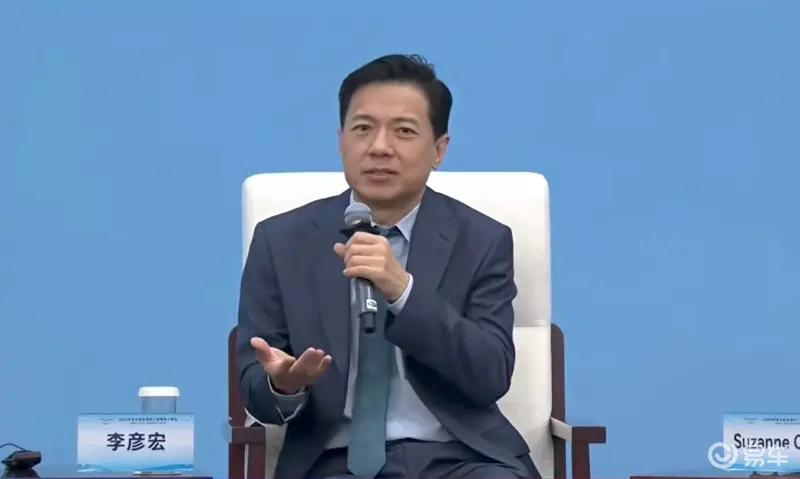
Li Yanhong believes that self-driving taxis (Robotaxi) is a typical sample of the application layer. This technology has been put into commercial operation, and its safety record is more than 10 times that of human drivers, which is enough to reflect its value.
He also said that in recent years, some cities in China and the United States have gradually opened up the commercial operation of Robotaxi. Baidu Apollo Go has been launched or carried out pilot tests in Dubai, London, Hong Kong and other cities, and he looks forward to more APEC economies opening up the commercial operation of Robotaxi in the future.
In terms of international cooperation, taking Dubai as an example, Li Yanhong pointed out that the local government formulated relevant regulations for autonomous driving at a relatively early time, creating conditions for the application of new technologies.
He believes that cooperation does not mean relying entirely on partners, but giving full play to their respective advantages to jointly get things done. Dubai's experience in the development of autonomous driving is also worth learning for other economies.
This article is from "Auto Industry Review", written by Yu Lei, edited by Gan Meng, and published with authorization from 36Kr.