With orders piling up so heavily that delivery is scheduled half a year later, the Yiwu business owner who lost 5.3 billion yuan has finally pulled through.
Every few years, the photovoltaic industry brings all founders to the same crossroads. There is never a shortage of "passionate speeches" about who the future belongs to, but the answer has long been written: take one more step along the old path, and pack as many "new stories" as possible into the old production capacity — this is the industry's most familiar move.
But Chen Gang, Chairman of Aiko Solar (hereinafter referred to as "Aiko"), is a special one. At almost every intersection, his choices are completely "opposite" to those of others.
His experience can partly explain his uniqueness. He worked in three fields for nearly 20 years: aluminum profiles, aluminum profile equipment, and molds. He did not turn to the photovoltaic cell segment — a far less popular link than silicon materials — until he was 40 years old. But essentially, the cell business is a semiconductor industry that focuses on technology and conversion efficiency, while the logic of other links is closer to bulk commodities. For "new entrants", this is almost the only gap to break through.
Until 2017, Aiko achieved remarkable results with its technology: it promoted the tubular PERC technology developed in 2016 to mass production and application, and became the world's largest PERC (Emitter and Rear Contact Cell) cell shipper in 2018, fully reaping the dividends of this round of technological iteration.
Therefore, betting on BC (Back Contact Cell) is essentially a "continuation" of this underlying business logic. But when the whole industry flocked to TOPCon (Tunnel Oxide Passivated Contact), Aiko shrank its PERC cell business that had made its fortune and announced that it would go all in on BC, leaving no one behind it. Chen Gang said that on the BC track, he has been walking on a "single-plank bridge". This happened during the cold winter of the industry, when the industry consensus was that those who could stay at the poker table were not the ones with the most leading technology, but the ones who still had money on their books.
It seemed that he never intended to solve this problem from the very beginning. He told China Entrepreneur that even when he was engaged in traditional businesses such as aluminum profiles in the past, his business philosophy was to rely on technological innovation, and even "reject" price wars.
Therefore, at the stage when the whole industry was advancing rapidly through vertical integration, Aiko "only stuck to its own niche" and focused solely on cells. This did not come without a price: it missed the most lucrative dividends of that stage, and also attracted continuous criticism: this company was too narrow, so narrow that it looked like a "gamble".
Then there is R&D. The photovoltaic industry values scale and speed, and production capacity, shipments, and rankings form a universal value system. In the eyes of the outside world, Aiko always invests a large amount of resources in propositions that are difficult to verify even in ten years, including BC and the "silver-free process".
Controversies have never ceased: the technical route is questioned, dividends are missed, and capital cannot understand... But from Chen Gang's perspective, he is following the "first principle": the cost structure of a technology must continue to decrease as the scale expands and time extends. In his understanding, "BC + silver-free process" is the only way forward.
As the market later made its choice with orders, a beam of light shone back on BC, and also on Chen Gang. In 2025, the sales volume of Aiko's ABC modules reached 14.71GW, a year-on-year increase of 132%, and its proportion in total revenue rose to 68%. The overseas market achieved positive gross profit for the whole year, and the selling price was 10%~50% higher than that of conventional TOPCon products. BC, which was sentenced to "death" by the whole industry through PPT presentations, began to see volume growth.
The market reputation has changed. Even those who once asked "is doing BC a gamble" began to re-examine this matter. In 2025, in multiple industry reports, the proportion of TOPCon winning bids remained above 90%, while BC accounted for less than 10%. Since the beginning of 2026, the proportion of BC modules in the total winning bids of centralized procurement has reached 22%.
However, there are still voices discussing this kind of playing method without "buffer": Aiko has not yet got rid of high debt, with the asset-liability ratio approaching 80% by the end of September 2026; among the attributable net profit of 44.5666 million yuan, it still lost 24.58 million yuan after deducting non-recurring gains and losses... Fewer and fewer people question that "BC is the future", but people are wondering whether Aiko, which has gone through several years of hard times, can persist until that day.
China Entrepreneur met Chen Gang in mid-October 2026. He loves to smile, speaks unhurriedly, does not like to talk about capital and the market, and is used to explaining things from the underlying logic. He said that only by getting infinitely close to the limit of the levelized cost of electricity in power generation scenarios can Aiko have greater say.
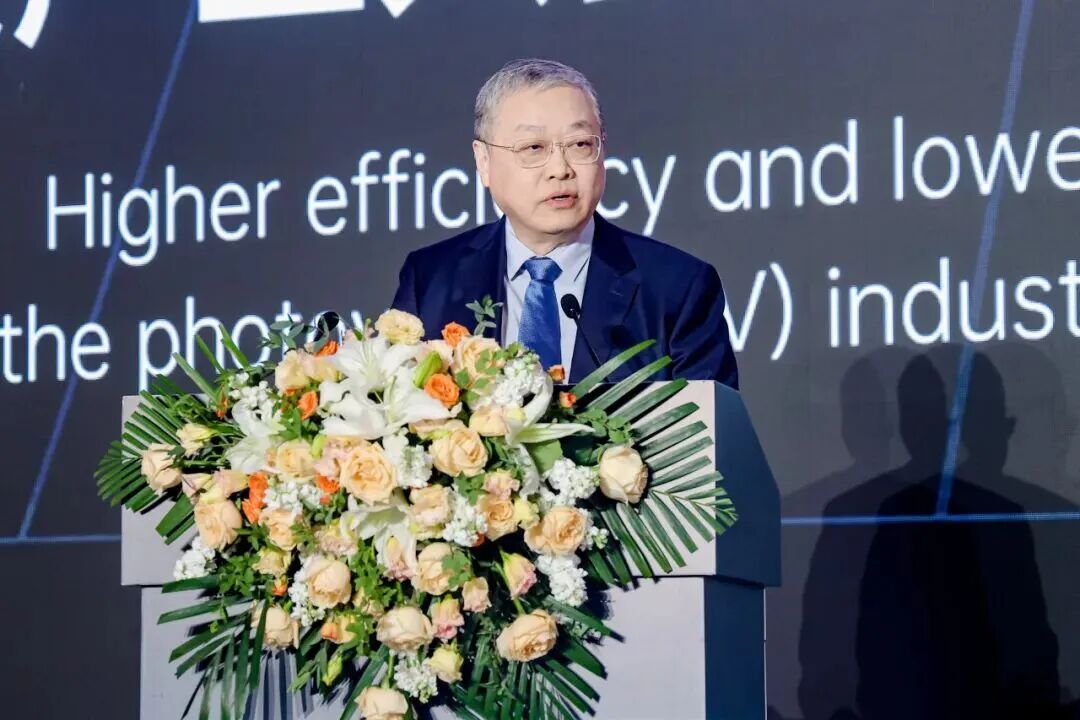
Chen Gang Source: Official WeChat account of Aiko Solar
He admires the six words of Zeng Guofan: "Build solid camps, fight steady battles". He considers himself "a little less capable, a little clumsy", with insufficient ammunition to fight on multiple fronts, so he can only focus on one area. When the industry trends pass by rapidly, his choice is almost slow. For example, when space photovoltaic was extremely popular at the beginning of the year and peers entered the market one after another, Aiko rarely disclosed the layout progress of related businesses, with only one reason: there will be no commercial value within three years.
He is also a believer of "time". In his timeline, after Becquerel discovered the photovoltaic effect, Einstein wrote the photoelectric equation, and Bell Labs developed the first crystalline silicon solar cell, it took human beings another sixty or seventy years to reach the BC stage; if someone can compress it to two or three decades, the compression itself constitutes a commercial opportunity. When deciding whether a technology is worth developing, he never asks how far ahead it is at the moment, but asks whether its cost curve can still drop after 10 years, and whether it can still generate electricity after 25 years.
In the cold winter, peers are busy counting old production capacities and looking for new outlets, while Aiko is doing something more expensive, more difficult and slower: switching tracks.
No one knows when the new track will be fully paved. Chen Gang and the Aiko under his leadership have formed a "rare" sample — in an era when everyone chases market trends, a "technology-first" entrepreneur stands outside all the busy directions, and independently verifies that only one path works.
01
"Time"
Talking about the most controversial technology trade-off, Chen Gang was silent for a few seconds and smiled. From the current perspective, this matter is most easily interpreted as "foresight", but the decision-making process in his mouth is not romantic — he calls it "exhaustive enumeration", which means trying all paths and finding that only this one is left.
At that time, Aiko was at the peak of its glory — the world's largest PERC cell shipper in 2018, and the world's largest cell exporter in 2019. But these are all transcripts of P-type cells. The first problem to jump out is that it must admit that the old identity has come to an end. What is more difficult is that in the main track where N-type cells replace P-type cells, choosing BC means that Aiko will "disappear" for a period of time.
Switching from P-type cells to TOPCon is the answer of almost all photovoltaic enterprises. Cost is an important factor. According to estimates by many industry institutions, TOPCon has high process compatibility with PERC, about 70% of the equipment can be reused, and the new equipment investment per GW is only 60 million to 80 million yuan.
BC is different. All electrodes need to be moved to the back of the cell, and the processes and equipment are basically not compatible with PERC. At that time, the equipment investment per GW may reach 300 million to 400 million yuan. Some media calculated that the whole industry has hundreds of GW of existing PERC production capacity, and the vast majority of enterprises cannot afford the transformation cost.
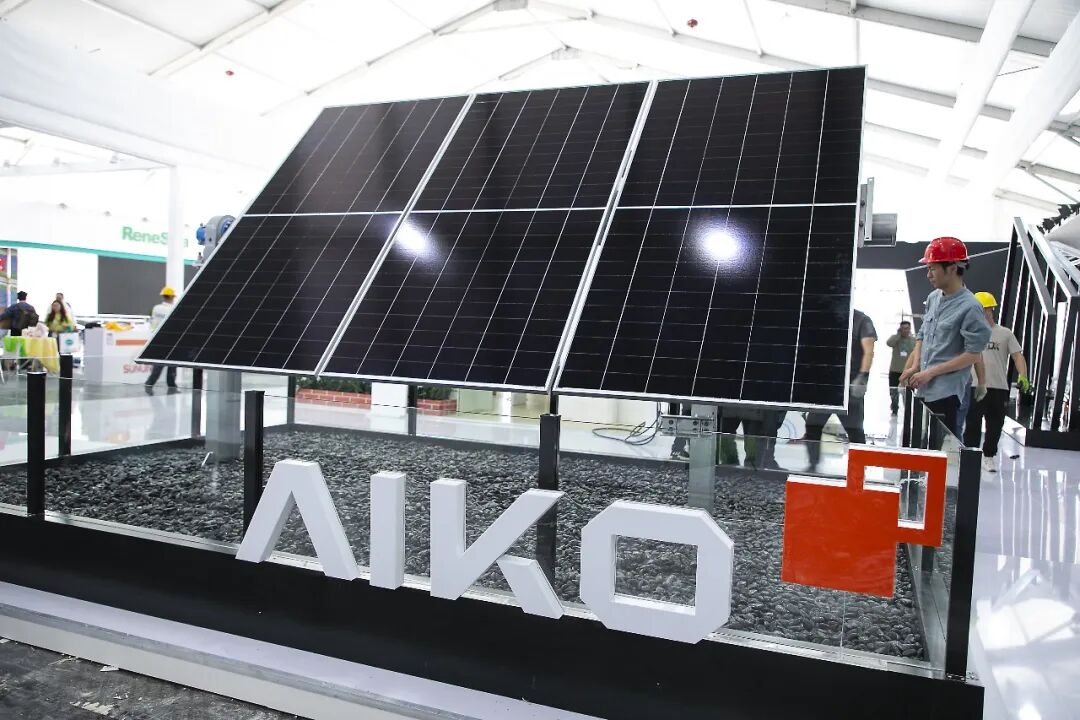
Source: Visual China
Institutions generally predicted that TOPCon would capture more than 60% of the market share in 2024, and the fact was roughly the same. Chen Gang did not settle accounts with reporters, but repeatedly mentioned one word — first principle.
In his words, the reason why TOPCon can become the mainstream choice is not essentially a technical judgment, but adding things along the old path. He mentioned a detail: when the technical debate was at its hottest, he once suggested to an enterprise in person "do not do TOPCon, do BC together", and made a detailed breakdown, but the other party did not adopt it later.
He is not betting blindly. Aiko did TOPCon projects in the early stage, and the evaluation conclusion was that "the cost is the highest" — double-sided passivation has to be done twice. TOPCon is derived from PERC. If everyone has the same starting line, in the end they can only compete on scale and price.
HJT (Heterojunction) was also abandoned for this reason. Aiko early in the laboratory made the then world record level, but from the physical logic to break down, this path is difficult to pass. It is a typical low-temperature process. In Chen Gang's metaphor, it is similar to the difference between "pottery and porcelain" — pottery is not bad, but its reliability within 25 years is very limited, and it needs to rely on space-grade packaging materials, which are exactly "the larger the size, the more expensive".
Then there is the "silver-free process". When AI chips and electric vehicles are all competing for silver, using silver is to be the "enemy" of time. This judgment was partially verified in 2026. The silver price continued to rise at the beginning of the year, making the silver paste cost per watt of photovoltaic modules nearly 0.1 yuan/W more expensive than half a year ago, even surpassing silicon materials to become the most expensive item in the module cost, while the net profit per watt in the industry is only 0.1 yuan even in a good year.
In his view, the essence of technological competition is not the efficiency in the laboratory, but "time": the cost structure of a technology must continue to decrease as the scale expands and time extends.
Only the path of "high-temperature process BC combined with silver-free process" conforms to the logic, but the difficulty is extremely high. "Silver will definitely choke the neck of solar energy. You must make ABC, and you must make the silver-free process, otherwise there will be no commercial value."
Chen Gang does not avoid the influence of his personal value judgment on the company's decision-making — since the 1990s, all his business ideas have relied on technological innovation, and he rarely took the initiative to participate in price wars for bulk commodities.
Even though many times he has to face the so-called "no man's land", he is much more "comfortable" in that knowledge system. He admires Huawei's playing method: fire a shot first, then fire a cannon, and finally use the Van Fleet ammunition volume. Of course, that is the playing method of world-class enterprises. "When it comes to Van Fleet ammunition volume, we are not qualified. We rush up after others have finished bombing, and fire a cannon first."
Consensus is still in the process of formation. In the first half of this year, the media pointed out the phenomenon of "separation of words and deeds" in the industry: BC accounts for half of the public voice, but TOPCon accounts for 90% of the orders. BC requires 4 to 6 more processes, and each process needs to meet the yield requirement. Under the multiplication effect, the overall yield is naturally more difficult to achieve than TOPCon. But in Aiko's understanding, the competition has ended, but most people in the industry are still staying on the TOPCon track.
The controversy over the "silver-free process" is even greater. Leading companies including JA Solar, Tongwei Co., Ltd. and Trina Solar have all mentioned the decisive role of silver on quality in different ways, and even used expressions such as "anchor" and "ballast". Opponents are not against silver removal, but against "radical silver-free process" — any complete replacement of materials that have not been empirically verified across cycles essentially transfers unknown reliability risks to end customers.
But the BC camp is still expanding — Longi Green Energy Technology launched HPBC, and more than ten enterprises followed up after 2024. In the camp of "BC final theory", Chen Gang is undoubtedly the one who bet the most heavily and turned around most thoroughly.
02
Single-plank Bridge
In the photovoltaic track, Chen Gang is not a professional background person. He was originally an "outsider" who transformed from the mold and aluminum industry.
Therefore, Aiko is recognized as one of the very few "exceptions" in the industry. After several cycles, the survival rule precipitated by most leading photovoltaic enterprises is "comprehensive": Tongwei Co., Ltd. covers silicon materials, cells and modules; Longi Green Energy Technology covers silicon wafers, cells and modules; JinkoSolar, JA Solar and Trina Solar have achieved more thorough vertical integration, with full chain self-supply from silicon wafers to modules, and even once extended to silicon materials.
Until now, Aiko's core manufacturing links are only cells and modules, and even its technology platform only bets on ABC.
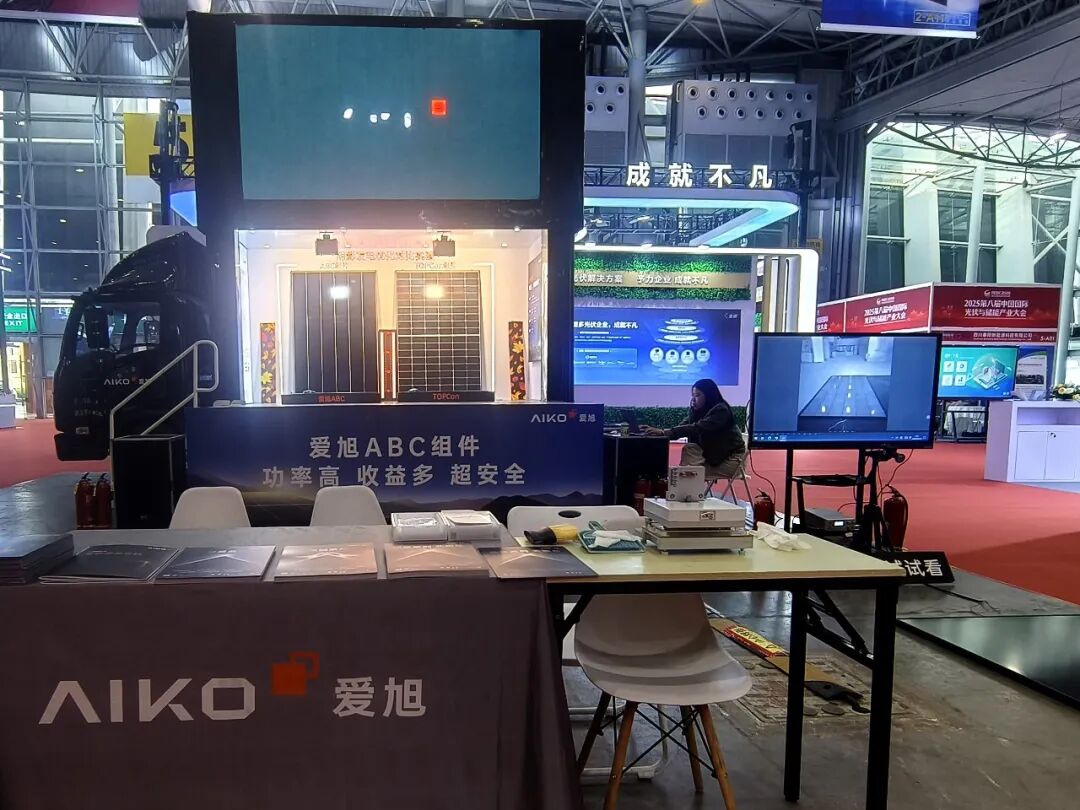
Source: Visual China
Chen Gang divided the 17-year development history of the company into three stages: growth cycle, price competition, and the newly started value cycle.
The rules of the game in the growth cycle are simple and crude: supply falls short of demand, and scale is the competitive advantage, "products can be sold as soon as they are produced". At this stage, Aiko put all its chips on two "singles": single link of cells, single indicator of conversion efficiency.
In 2017, Aiko promoted the laboratory tubular PERC technology to mass production and application; in 2018, it ranked first in the world in shipments of PERC cells, and opened up the market in the industry through technological advantages.
Chen Gang's logic is not difficult to understand. Different links in the photovoltaic main material industrial chain correspond to completely different knowledge. The upstream silicon material is a cyclical bulk commodity business, which focuses on the understanding of the cycle and extreme cost control. The cell business is essentially a semiconductor business, which focuses on efficiency evolution. If two kinds of business logic are put into one company, "it is like a madman with a split personality". He believes that such a company cannot carry out internal evaluation or incentive.
But the price is that in the heyday of vertical integration, the dividends Aiko obtained did not match its position in the industrial chain. "Many people think that vertical integration is the right way. In fact, at that time, you could get some money and start the business immediately, but it was easy to enter and difficult to exit." Chen Gang believes that it was just a special stage, and eventually the whole industry will return to specialization.
Aiko did not take no action at all on vertical integration. After repeated internal discussions, the plan finalized at that time was "virtual vertical integration": no new factories were built in the upstream, only equity participation to lock in supply, including silicon wafer enterprise Gokin Solar, silicon material enterprise Qinghai Lihao Silicon Industry, and Asia Silicon. But Chen Gang's main appeal was to solve the supply problem and improve the safety of the supply chain.
At this stage, going public is an invisible "price". In September 2019, the