Leading robotic vacuum cleaner giants are collectively venturing overseas to pursue profits.
The robotic vacuum cleaner industry is ushering in a new round of profound reshuffling.
Data from AVC shows that in the first half of 2026, the domestic retail sales volume of robotic vacuums in China reached 3.09 million units, a decrease of about 149,000 units compared with the same period of the previous year, representing a year-on-year decline of 4.6%; the retail sales value hit 9.8 billion yuan, down 4% year on year.
While industry data is not optimistic, leading robotic vacuum brands are growing more vigorous amid competition. The "two giants of robotic vacuums" Ecovacs and Roborock have successively released their 2026 third-quarter reports, both companies maintaining revenue growth, with overseas business in particular contributing the major incremental growth.
Overseas growth is not limited to the two domestic giants. IDC data shows that in the second quarter of 2026, global shipments of robotic vacuums reached 7.885 million units. The top five manufacturers took 75% of the shipment share and 82% of the sales share, and all of these five manufacturers are from China.
On the one hand, both sales volume and price in the domestic market are falling, on the other hand, the overseas market continues to grow rapidly. Going global has become a watershed for the industry. However, behind the roaring engine, the path of going global is not all smooth sailing.
01 "Go Global or Get Eliminated"
In the first half of 2026, both the retail value and retail volume of domestic robotic vacuums in China declined. In the same period, according to data from Luo Tu Technology, the entire robotic vacuum industry lost 11 brands and 73 product models, and a large number of no-name products priced at around 1,000 yuan and old models were collectively cleared out by sales channels.
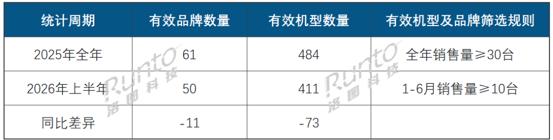
* Image source: Luo Tu Technology
Nowadays, the robotic vacuum industry is going through an awkward shift period: products are getting harder to sell, and even if they can be sold, they cannot be sold at a good price.
On the one hand, the industry is facing extremely fierce internal competition, and robotic vacuum products have hit a "micro-innovation" bottleneck.
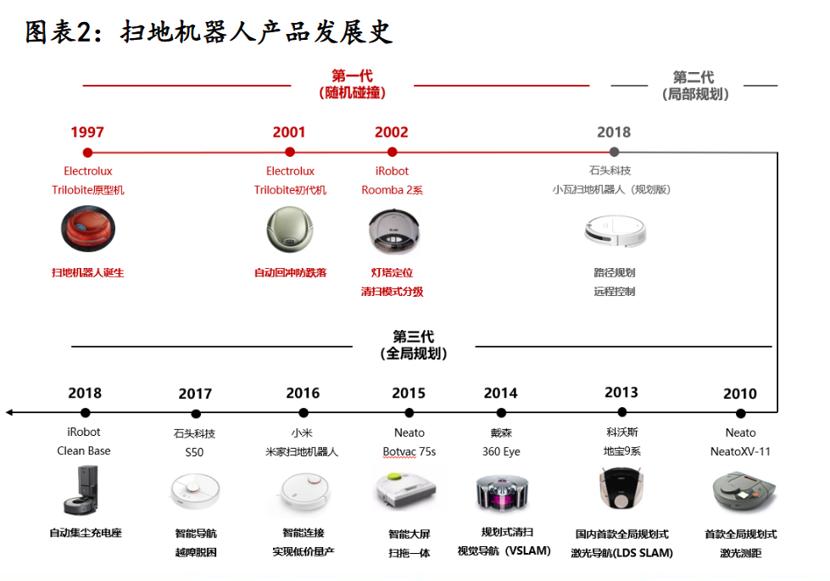
In the past few years, the full boom of the robotic vacuum market first benefited from generational innovation of products.
Before 2016, although robotic vacuums had the capability of global planned cleaning, they were still dominated by "dry sweeping"; it was not until after 2016 that wet and dry dual-use robotic vacuums integrating vacuuming and mopping functions began to hit the market.
After 2020, robotic vacuum manufacturers have made continuous technological breakthroughs. For example, Roborock launched intelligent perception algorithms; Narwal launched a base station with an automatic mop cleaning function, and robotic vacuums have gradually developed into more diverse forms.
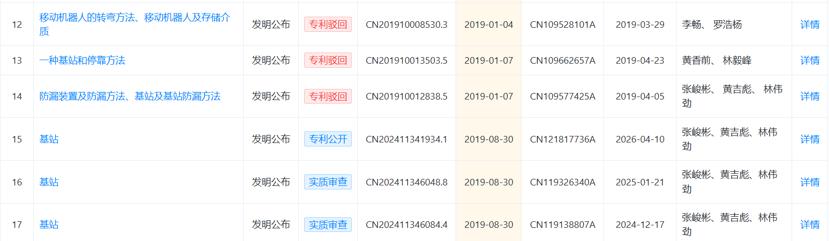
* Image source: Tianyancha - Narwal Patent Status
For example, all-in-one sweeping and mopping robots, all-in-one sweeping, mopping, washing and drying robots, intelligent floor scrubbers, as well as all-round base stations integrating multiple functions such as dust collection, mop washing, drying, water supply and drainage, and sterilization, further liberate users' hands.
* Image source: Founder Securities
But after that, the industry entered the stage of "snatching market share", the focus of industry competition began to shift to marketing and pricing, while technological innovation has been progressing at a snail's pace, leading to increasingly homogeneous functions.
On the other hand, consumers are gradually disillusioned with robotic vacuums.
On social platforms, many consumers complain that robotic vacuums "look good but are not practical": for example, obstacle avoidance performance is not satisfactory, leaving dead spots in cleaning; users need to do secondary cleaning, so their hands cannot be fully liberated; the devices are prone to hair tangling and malfunction after a short period of use.
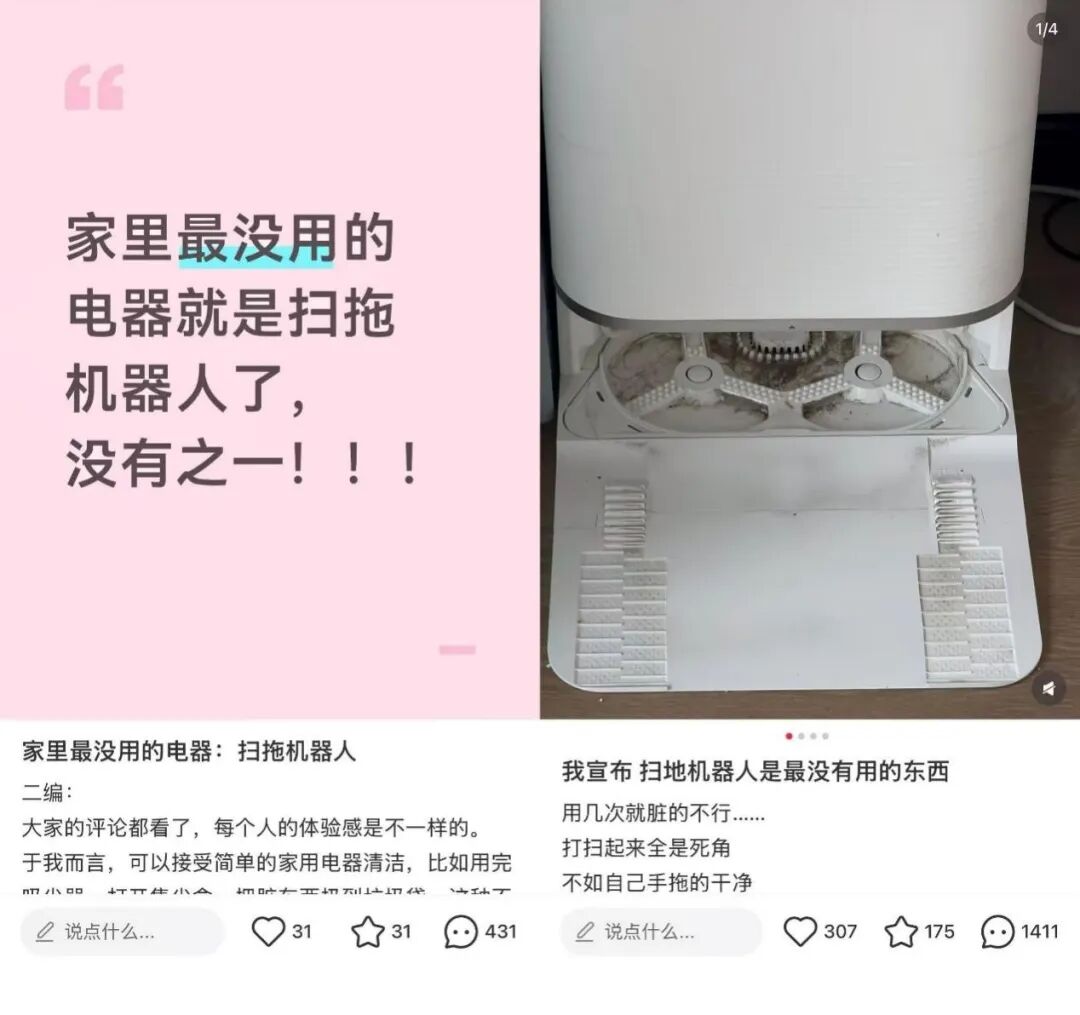
* Image source: Xiaohongshu
In the final analysis, consumers are unwilling to pay for the products because robotic vacuums are not easy enough to use. However, to make products truly user-friendly requires long-term R&D investment, but under the industry-wide price war, the meager profits of manufacturers cannot support this tough battle at all.
Take Ecovacs and Roborock as examples. Although their revenue scales have been rising in recent years, their profit scales have been shrinking. In 2025, the sales expense ratios of Ecovacs and Roborock were 31.2% and 26.2% respectively, while their R&D expense ratios were 5.1% and 7.6% respectively.
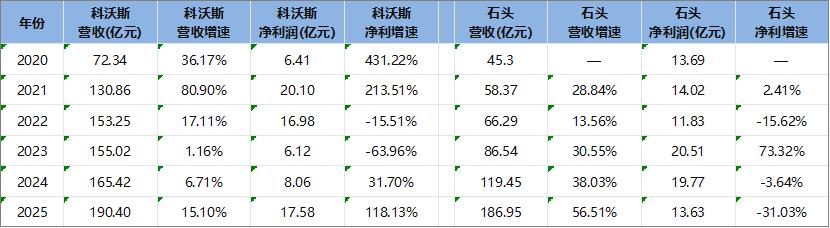
* Image source: Public Financial Reports
When the ceiling of growth and profit in the domestic market is close at hand, going outward has become the only way out.
02 "Pursue Profits from the Overseas Market"
In the past three years, the pace of Chinese cleaning home appliance brands going global has accelerated significantly.
According to IDC data, in the second quarter of 2026, the top five manufacturers by shipment share in the global robotic vacuum cleaner market are Roborock, Dreame, Ecovacs, Xiaomi and MOVA, with Chinese manufacturers occupying the vast majority of the market.
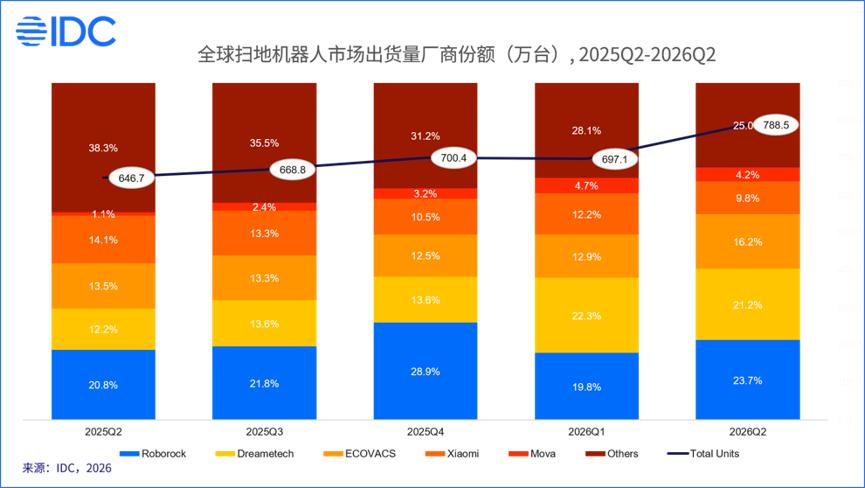
* Image source: IDC
Taking Ecovacs and Roborock as examples, the proportion of overseas revenue of both companies continues to increase, and the growth rate of overseas revenue is significantly higher than that of domestic revenue.
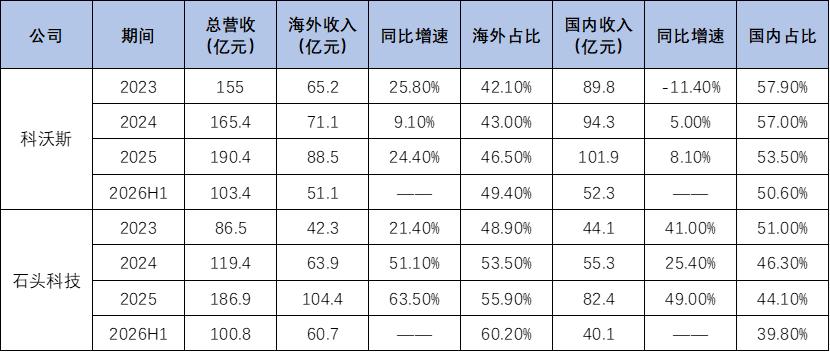
* Image source: Public Financial Reports
But interestingly, although the overseas revenue proportion of both companies has exceeded half, their profit trends are moving in opposite directions, one upward and the other downward.
Roborock realized a net profit attributable to shareholders of 1.466 billion yuan in the first three quarters, with a year-on-year increase of 41.23%; Ecovacs realized a net profit attributable to shareholders of 1.369 billion yuan in the first three quarters, down 3.47% year on year, and the net profit attributable to shareholders in the third quarter even dropped 72.43% year on year.
At present, mainstream domestic brands have different timelines and layouts for going global: some have secured overseas offline channels first, while others have advanced rapidly driven by marketing. The answer to profit differentiation lies in these differences.
Roborock's strategy is "taking deep roots and pursuing profits from the high-end market".
It went global relatively early, targeting mature European and American markets from the very beginning, and occupied the high-end price segment with its product strength. In 2023, its share in the price segment above 800 US dollars on Amazon US once reached as high as 62%.
After that, Roborock did not bind itself to online channels, but actively cooperated with mainstream retail systems such as North American Costco, Walmart, and European MediaMarkt to enhance its high-end brand image through the dual online and offline channels.
For this reason, it can achieve counter-trend profit growth against the backdrop of generally rising material costs this year: the high-end market brings it higher premium space; and its rich channel layout avoids the impact of the staggered schedule of Amazon Prime Day.
Dreame went global relatively late, but it focuses more on marketing and has achieved faster expansion. It has laid out indoor cleaning, personal care small home appliances, large home appliances and other categories in the overseas market, and promoted explosive business growth through a multi-category matrix. Yu Hao, the founder of Dreame, once revealed that overseas markets account for 80% of total revenue.
However, the aggressive high-investment strategy also has its cost. According to statistics from Jiemian News, in the first two months of 2026 alone, Dreame's investment in channels such as the Spring Festival Gala and the Super Bowl is expected to be no less than 500 million yuan. Whether marketing can continuously support sales growth remains to be tested by time.
Ecovacs also went global relatively late, and it was not until the second quarter of this year that the proportion of its overseas business revenue exceeded that of domestic business for the first time.
CEO Qian Cheng chose a different path, trying to hedge against the growth ceiling of robotic vacuums by laying out emerging categories such as lawn mowing robots, window cleaning robots, and swimming pool robots. However, the market size of these emerging categories is still small, while the company's R&D and marketing investments have to be made in advance, which will inevitably drag down profits in the short term.
In the first three quarters of this year, Ecovacs' sales expenses reached 4.123 billion yuan, up 5.44% year on year, with a sales expense ratio of about 27.51%. Although the company has been working hard to reduce expenses, its sales expense ratio is still slightly higher than that of Roborock (21.95%).
There are also some brands that have declined sharply amid fierce internal competition. According to data from AVC, during the big promotion period from September to October this year, Narwal's online sales dropped by 51% year on year, making it the brand with the largest decline. Analysis shows that its product update rhythm is too slow, missing the window period for seizing the all-round base station track; its previous strategy of exchanging growth for marketing in the past two years coincided with the fading of traffic dividends, which affected the company's development pace.
In addition, cross-border players such as Xiaomi and DJI have risen rapidly. Although their market share is not high, they have their own brand traffic, rely on their own ecological chains and channels to distribute products, face relatively less cost pressure, and have a smoother path of going global.
03 "Going Global Is Not Always Smooth Sailing"
Going global has become an inevitable choice, but it is not all worry-free. Changes in policies, tariffs, channels and every other related factor may bring huge difficulties to enterprises.
The biggest uncertainty comes from policy changes.
In July this year, the US Federal Communications Commission (FCC) included "foreign-produced advanced robotic equipment" in the controlled list. According to the standards it set (capable of autonomous navigation, equipped with sensors, capable of connecting to the Internet, etc.), some robotic vacuums will fall into this category.
In addition to the US market, the European market is also raising access barriers. In November 2025, the European Commission launched an anti-dumping investigation on lawn mowing robots originating in China, proposing to impose anti-dumping duties of 45.6% to 53.3%.
In the past, Chinese manufacturers pried open the door of overseas markets relying on cost advantages and supply chain efficiency, and then successfully gained a firm foothold in overseas markets after a round of fierce attacks on marketing and channels. However, once encountering the "black swan" of policy changes, these strategies are like punching into thin air.
The more difficult challenge is that competition in overseas markets is also accelerating quietly.
On the surface, the sales volume and sales value of Chinese robotic vacuums in the global market are still rising in tandem, but when all players go global collectively, the overseas market has changed from a blue ocean to a red ocean.
According to IDC data, in the traditional peak season of the second quarter of this year, the growth rate of global cleaning robot shipments has declined significantly. User demands have changed, and cost pressure is still rising. Chinese manufacturers cannot rely only on old experience to squeeze out more profits in overseas markets.
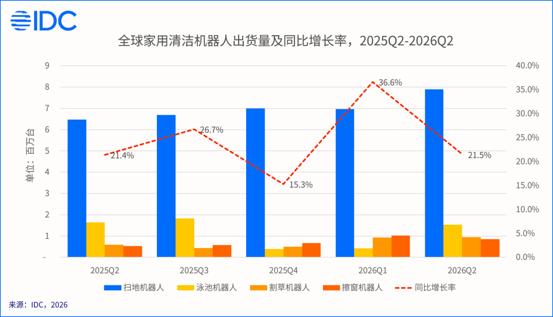
* Image source: IDC
First of all, to take deep roots in overseas markets, it is not enough to just sell products out.
At present, Roborock, Dreame and other brands have set up production bases overseas. In addition, their channels and service centers have also been gradually deployed locally overseas.
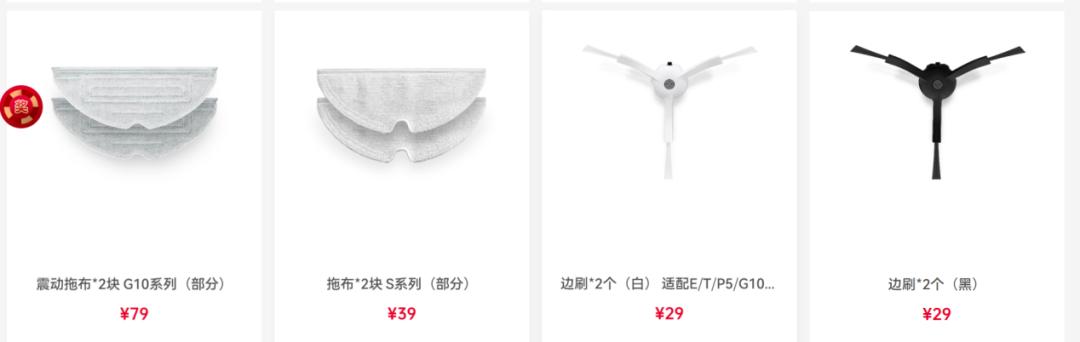
For example, since 2023, Roborock has set up multiple regional offices and after-sales service centers in the United States, Germany, Japan, South Korea and other regions. It has also turned after-sales service into a long-term business, selling accessories such as mops, filter screens and dust bags for cleaning home appliances.