Independent musicians who are being completely wiped out by AI
Earlier this year, Naojiti launched the Spark Program, aiming to turn the camera lens on ordinary people who are often overlooked in the AI wave. Before that, we documented hearing-impaired friends who opened up entrepreneurial paths with the help of AI, and also tracked live streamers rooted in county towns who opened up sales channels relying on new technologies. From them, we saw the gentle side of technology: it can act as a support, pushing open a new door for lives that were originally restricted.
But technology has never been a one-way gift. While it brings opportunities to some people, it also throws others into turbulence. When it surges into a mature industry to restructure the division of labor, benefits and survival rules, the old balance will loosen accordingly. In this article today, we intend to turn our attention to the impact on the art industry, trying to explore how the industry changes brought about by AI are altering the fate of independent musicians, and what kind of way out they can find.
How big is the impact of AI on music?
Different from the devastating winter of the film and television industry, few well-known singers seem to worry that they will be replaced by AI, and albums and concerts are still the focus of the market. Jay Chou's new album exceeded 100 million yuan in sales four days after its release, and concert tickets were still resold at four times the original price; Hua Chenyu's Nanjing residency performance spanned the Mid-Autumn Festival and National Day holidays, and the first five performances alone drove nearly 540,000 passenger flows in the Tangshan area. At first glance, the impact of AI on music does not seem to be as fierce as in other industries. Top artists release albums as usual, performance venues are packed, streaming platforms update their leaderboards daily, and there are no purely AI-generated works.
But in hidden corners, the ripple effect triggered by technology has gradually expanded its scope.
In 2026, platforms such as Suno and Udio generate millions of songs every day. Tencent Music adds more than 100,000 new songs to its library on average every day, among which the proportion of AI-generated new songs was close to 40% by the end of 2025. On the Deezer platform, 44% of the tracks uploaded daily are generated by AI.
At the same time, an interview survey of independent musicians shows that the revenue per 1,000 streams on domestic platforms is only 0.16 yuan to 1 yuan, 52% of the surveyed musicians have no music income at all, and only 7% of musicians earn enough from copyright income to make a living. On one side, the production capacity of AI music is skyrocketing, on the other side, the income of musicians is plummeting. What happened in between?
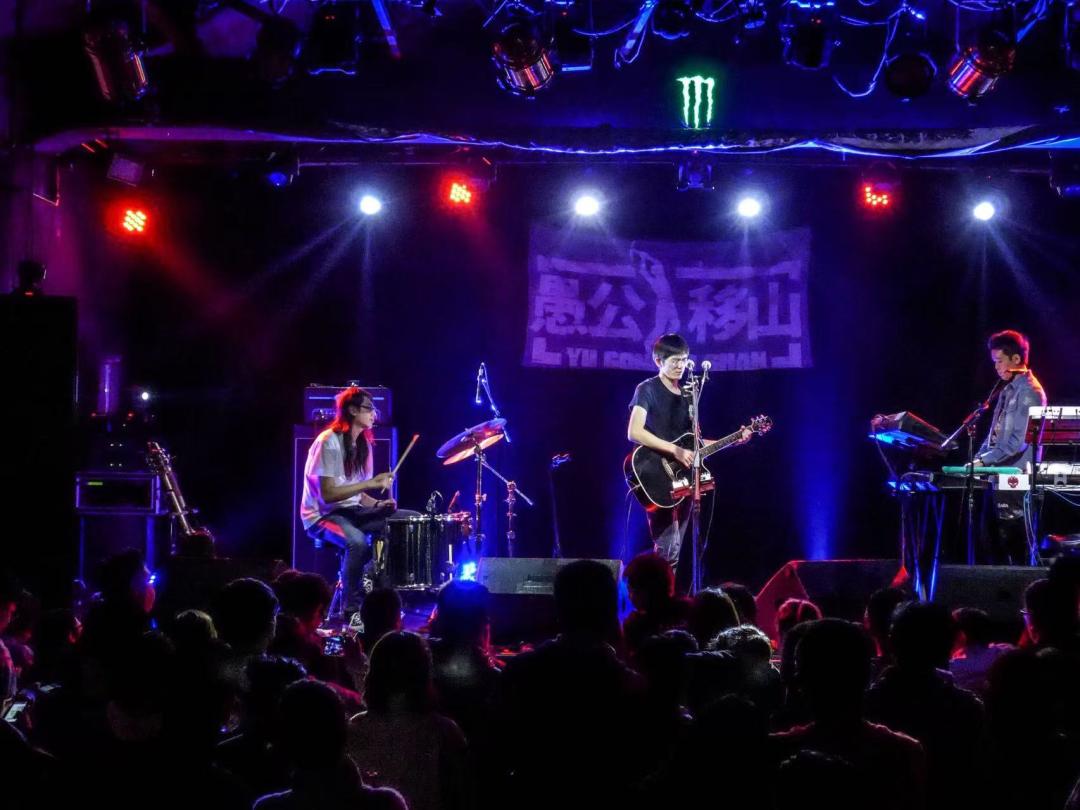
With this question, we found Zhang Yide, an independent musician now living in Tianjin. He entered the industry in 2011, has released eight personal albums, and held 520 solo performances. He experienced the most glorious era of Douban Musicians, and also witnessed the upward period of livehouse box office revenue from its start to its heyday, until the cost brought by formalization exceeded his own capacity and he had to stop performing. More importantly, he is right in the squeezed middle tier, preparing to shift from behind-the-scenes work to the front stage and return to the spotlight again.
Standing at the crossroads of technology, he has experienced confusion about where to go, as well as the certainty of making a comeback and sticking to his original aspiration for music. From his perspective, we can see the views and attitudes of an independent musician with many years of experience towards AI-generated music.
The entire middle tier is wiped out
The first time I met Zhang Yide, I couldn't wait to ask the question that laypeople most want to know:
"How big is the impact of AI on the music industry right now?"
"The music generated by current AI software has almost no flaws for most listeners who play music out loud on their mobile phones, and unknown behind-the-scenes musicians have almost all been wiped out."
In his view, when an AI platform can generate millions of songs a day, and the production cost of a song plummets from hundreds of thousands of yuan to just 10 cents, most independent musicians stuck in the middle of the industry who take orders by their skills will almost all face price cuts, and the end of the continuously falling price is no profit at all, until they switch careers and disappear from the scene.
Lyricists, composers, arrangers who sell their works to platforms, people who make accompaniments, people who do commercial performances... The behind-the-scenes producers behind the songs, people who make a living by their skills but are not top-tier celebrities in the entertainment industry are being swept away by this wave. They are not on hot search lists, not on music festival posters, and rarely give interviews, so they almost make no sound when they disappear and exit the industry.
AI music applications like Suno already have 2 million paid subscribers, annualized revenue of 300 million US dollars, more than 100 million cumulative users, and a peak daily generation of 7 million songs. The traditional production cost of a song is 50,000 to 150,000 yuan, while the cost of generating a song with Suno is about 0.1 yuan, a difference of five orders of magnitude. International Standard Recording Code registration data shows that the global number of new song registrations reached 51.2 million in 2025, 2.6 times that of the previous year.
In the past, when platforms or project parties needed to make songs, they would find producers like him through intermediaries to produce in batches. They would pay 10,000 to 20,000 yuan for a song, and he would distribute the money to arrangers, musicians, and mixing engineers layer by layer, so that everyone could make a living. Now, platform parties have more choices, or project parties can generate content with AI by themselves, and the entire chain of intermediate links is completely removed.
"In the past, the platform found the project party, the project party came to you, and you had work to do. Now that's no longer needed."
In the past, when a company made ten songs, it needed to find five arrangers to arrange two songs each, and each song cost 20,000 to 30,000 yuan; now it uses Suno to generate ten songs in ten minutes, quickly screen out two songs with potential, and then have people polish and refine them manually.
A few years ago, the average price for making a song in the industry was still 20,000 to 30,000 yuan, but now in an industry group for traditional musicians, the quotation has dropped to dozens of yuan. At the same time, the revenue share of AI music on platforms has been compressed to one tenth of that of regular human-made music.
It is reported that under the same dimension of 1,000 streams, QQ Music pays about 0.2 to 0.4 yuan for AI works, while 1 to 2 yuan for human-made works; NetEase Cloud Music pays about 0.7 to 1.2 yuan for AI works, and 2 to 3 yuan for human-made works; Douyin Music pays about 0.35 to 0.6 yuan for AI works, and 1 to 2 yuan for human-made works.
Squeezed by both falling quotations and shrinking revenue shares, the result for personal accounts is a sharp drop in income. Zhang Yide's own experience is: "I used to get a lot of royalties every month, but now my income has plummeted off a cliff." He mentioned a friend who used to run a small workshop like him, but now has opened a bar and restaurant.
Of course, one group of people is temporarily safe: those with their own IP and fame. "If you are a well-known lyricist, composer or singer-songwriter, you can still sell your works for money if you are famous. The market price is almost the same before and after the emergence of AI."
He classifies himself as an intermediary who is being affected.
Since the impact of AI is so huge, can AI-generated works really rival human works?
The Perfection and Distortion of AI
Long before AI intervened in the music industry, the boundary between original creation and plagiarism was already ambiguous. The combination space of melodies and harmonies is inherently limited, and many creations themselves are variations, reorganizations and re-expressions within the existing framework of music theory. So when AI's training library is filled with hundreds of years of human music materials from classical music to modern pop music, is every song it generates naturally carrying the shadow of some existing song? Does AI really understand creation?
Zhang Yide's understanding goes beyond the common narrative of inspiration that people often talk about: "The essence of music is mathematics. After one note, there are twelve choices, and then another twelve choices. If the entire global database is fully covered, when you personally write a melody, you can only choose a few paths in this vast ocean, and that's the limit."
In other words, human creators do not naturally have exclusive privileges that are detached from the rules of music theory. The so-called burst of inspiration in the mouths of the public is essentially selecting paths among the limited possibilities of pitch and harmony. AI just pushes the speed and computing power of this combination deduction to the extreme.
As for the widely circulated doubts on the market that AI lacks cultural depth, human emotion and sense of story, Zhang Yide is a little dismissive.
"Songs themselves do not generate emotions. The so-called emotions and sense of story are all given by the audience. No matter it is a human work or AI music, its meaning is endowed by others from the moment it is born."
He does not think that AI-generated works must lack souls, but when asked whether AI music is really perfect without flaws, he said:
The shortcoming of AI is that it is "too perfect", so perfect that it is almost distorted, which means it lacks the possible flaws in pitch and intonation that human works may have.
So can ordinary people tell the difference? Zhang Yide repeatedly emphasized a point of view: for the vast majority of listeners, they cannot distinguish between music made by AI and music made by humans.
"If you play the music on your mobile phone, you definitely can't tell the difference, and in fact only a small number of people are used to listening to music with headphones."
Most people listen to music through mobile phone speakers when commuting, scrolling short videos, or doing housework. The audio is compressed, the environment is noisy, and the hearing is in a low-resolution state. In this scenario, AI music is completely sufficient. Most people who can capture the difference in texture are professional musicians. The sense of distortion discussed in professional circles barely exists for the public's hearing.
The general trend of AI music is almost irreversible. What capital is betting on is the narrative of "everyone is a musician". Technology has erased the thresholds of music theory, arrangement, and recording, putting laypeople and professionals on the same starting line, which is a kind of equalization.
Since quality is no longer a barrier, where is the barrier? In the era of overflowing AI music, will our aesthetics change as a result?
In the AI era, is there a major downgrade of aesthetics?
If AI-made music sounds no different from human-made music, or even more perfect, why should listeners spend time distinguishing, savoring, and pursuing better things?
"The essence of popularity is low-cost homogeneous communication, which will lower everyone's aesthetics without you noticing. You don't even know your aesthetics have been lowered, so you think there's no problem, and you don't need to improve anymore."
AI can continuously produce content that conforms to the average preference of the public at a very low cost, and algorithms continuously push this kind of safe, smooth, inoffensive music to users. After long-term immersion, everyone's aesthetic baseline will be anchored at this average level unconsciously.
Zhang Yide believes that for the generation that grew up natively in the environment of AI content, AI is not a new technology that appeared later, but the original appearance of music. Their aesthetic ruler is built on the standard of AI from the very beginning.
"If you have seen better works, you will know the gap, but better works are placed for free on the music platforms you use every day, and you won't go out of your way to find them. Once you get used to being pushed content, you don't even know how to search for it."
But he also admits that there is no absolute high or low in aesthetics. Take the "Huabu-Yabu" controversy in Peking Opera as an example: the elegant Yabu Kunqu Opera is exquisite and elegant, targeting upper-class literati with high thresholds; the popular Huabu local operas are straightforward and lively, rooted in the market, and even peddlers and porters can understand and hum casually. In the end, the more popular Huabu won.
Put in today's context, the popular music produced by AI is in a sense like the Huabu back then. It lowers the access threshold of music and makes music reach more people, at the cost of compressing the complexity and uniqueness of auditory expression.
On the one hand, AI eliminates music work with low technical content, mass-producible nature, and no need for strong personal expression, such as short video background music and functional music for commercial advertisements. But on the other hand, mixing engineers are even busier. AI mixing technology is not mature enough. In the context of the general drop in the price of lyrics and music, production companies are more willing to invest in the mixing link that still requires manual meticulous polishing.
He said: "The proportion of people who listen to music will get smaller and smaller, but the number of people who listen carefully may remain the same. In fact, maybe 50 to 60 out of 100 people listen to music now, but only a few of them really listen to music carefully. In the future, there may be 20 or 30 people who still have the habit of listening to music, but the number of those who listen carefully is still in single digits."
In other words, the middle tier of the music industry is being squeezed by two forces at the same time: on the top, platforms produce and sell their own works with AI, and on the bottom, massive free content drowns people's attention. As a result, the veteran artisans caught in the middle are the first batch to disappear. They neither have the IP moat of top stars, nor the low-cost advantage brought by the amateur identity of "everyone is a musician". The technical barriers they used to rely on to make a living, such as songwriting, arrangement, and taking ordinary commercial orders, quickly fail in front of AI.
Since the recording end is devalued and platform revenue shares are shrinking, what exactly do the remaining musicians live on and where is their way out?
The way out for survivors: IP and live performances
If good music is no longer valuable, and being able to write songs is no longer a scarce skill, what exactly is there on a musician that AI cannot take away?
Zhang Yide believes that the only way out is live performances and personal IP.
"If you still work on pop music and online songs, you will be in competition, and AI is a tool in your competition arena. But I am a very tiny part in that competition arena. The blue ocean has turned into a red ocean, and you can't survive." He said, "It's better to create songs by hand to express yourself, use AI as a tool when needed, and the important thing is to manage your own IP."
This is actually becoming a consensus at the industry level. In 2025, the scale of the music performance market reached 42.4 billion yuan, and the box office of livehouses exceeded 5 billion yuan, a year-on-year increase of 45%. People are willing to spend money on live performances, but their willingness to pay for recorded music is shrinking. When the two traditional income paths of copyright and streaming revenue shares are eroded by AI at the same time, only musicians who can turn themselves into assets have bargaining power.
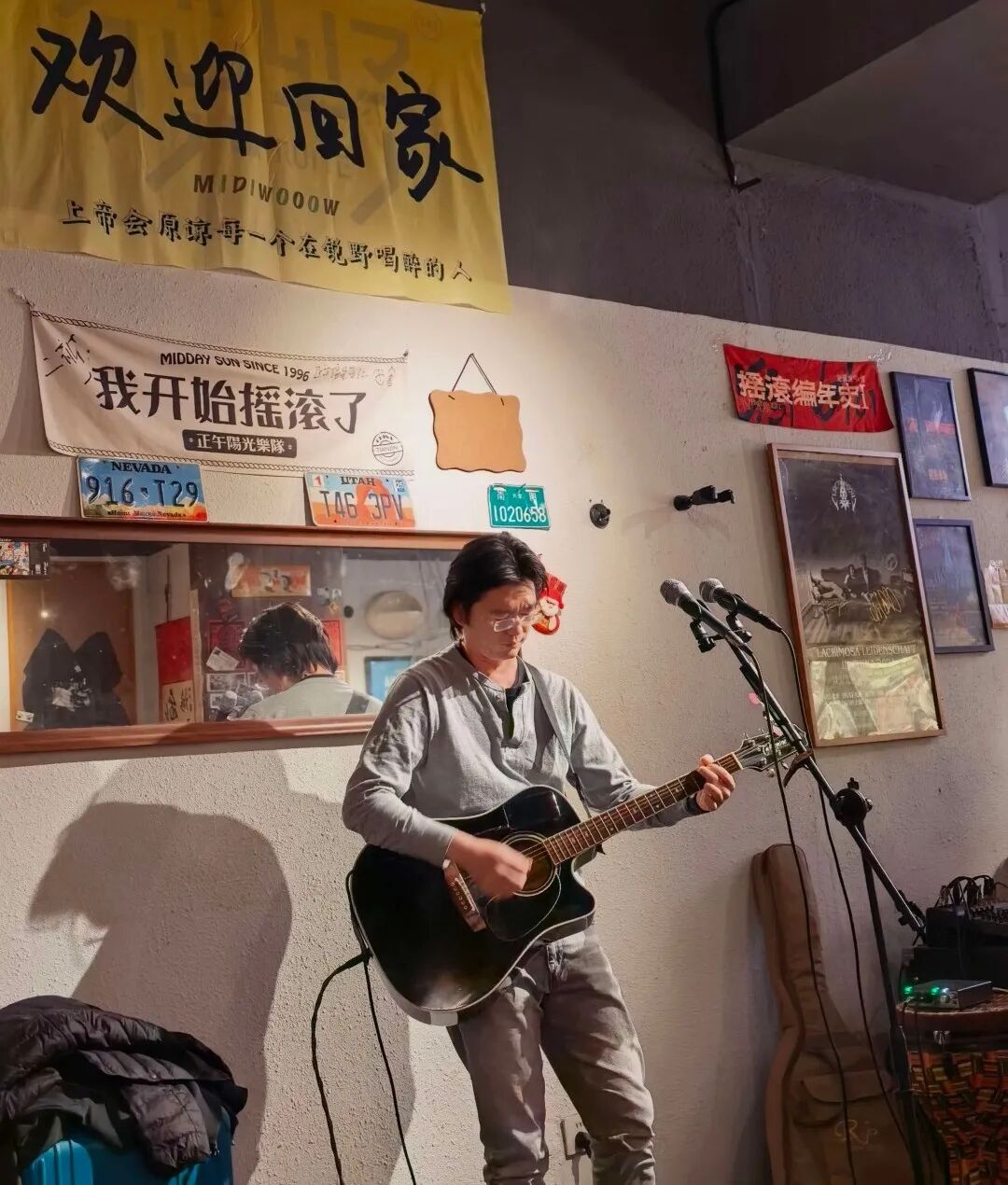
In his newly released song "Homophonic Pun" this year, Zhang Yide has a line of lyrics: "I caught up with the trend, and didn't lose my style." The trend refers to the trial-and-error cost brought by AI, and not