Down jackets priced at 399 yuan are completely sold out, Sam's Club and Pang Donglai have introduced "purchase restriction" policies, and affordable down jackets are selling like hotcakes this winter.
Winter is coming, and it is the season to add down jackets to your wardrobe.
Recently, a down jacket priced at 399 yuan from Peking University has unexpectedly become the focus of the consumer market. According to media reports, this product was sold out first in the on-campus cultural and creative store, and the restocking cycle is scheduled to the end of December; the online mini-program once crashed due to a surge in short-term visits. On November 16, the related topic even topped the Weibo hot search list.

Students who grabbed the spot goods posted the washing label online, and the comments were full of messages asking for purchasing agents. Links with a price increase to 450 yuan were quickly put up on second-hand platforms. According to Beijing Daily, this down jacket is only sold in on-campus stores, and all sizes of the white version are out of stock.
The popularity spreads along the shelves. In addition to the Peking University down jacket being snapped up, a 399.9-yuan men's long down jacket at Sam's Club has been out of stock in stores in Nanjing, Wuhan, Shanghai and many other cities; at Pang Donglai in Xuchang and Xinxiang, Henan Province, the self-operated down jacket area is crowded with people, and some styles are also sold out.
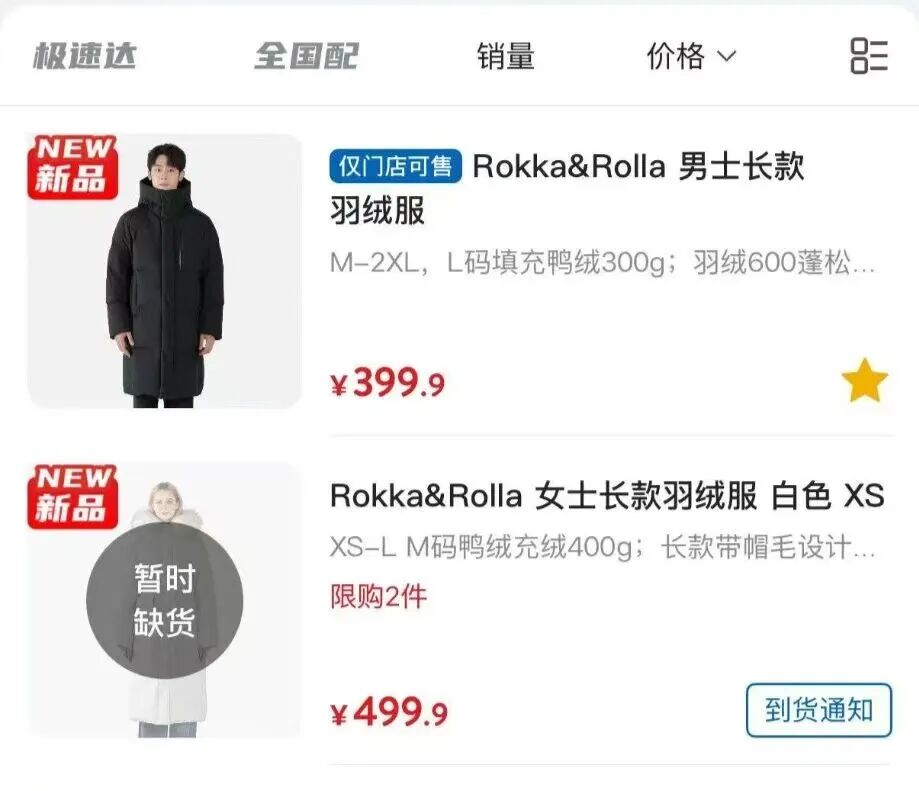
Looking at these products together, the rule is clear: the prices of these down jackets are concentrated in the range of 300 yuan to 500 yuan, and their cost performance is much higher than that of products from big-name clothing brands. Against the background that the overall average price of down jackets has risen year after year, the collective popularity of affordable products shows that the consumer market is voting in a completely different way.
Sold out at 399 yuan, why did the Peking University down jacket become a hit?
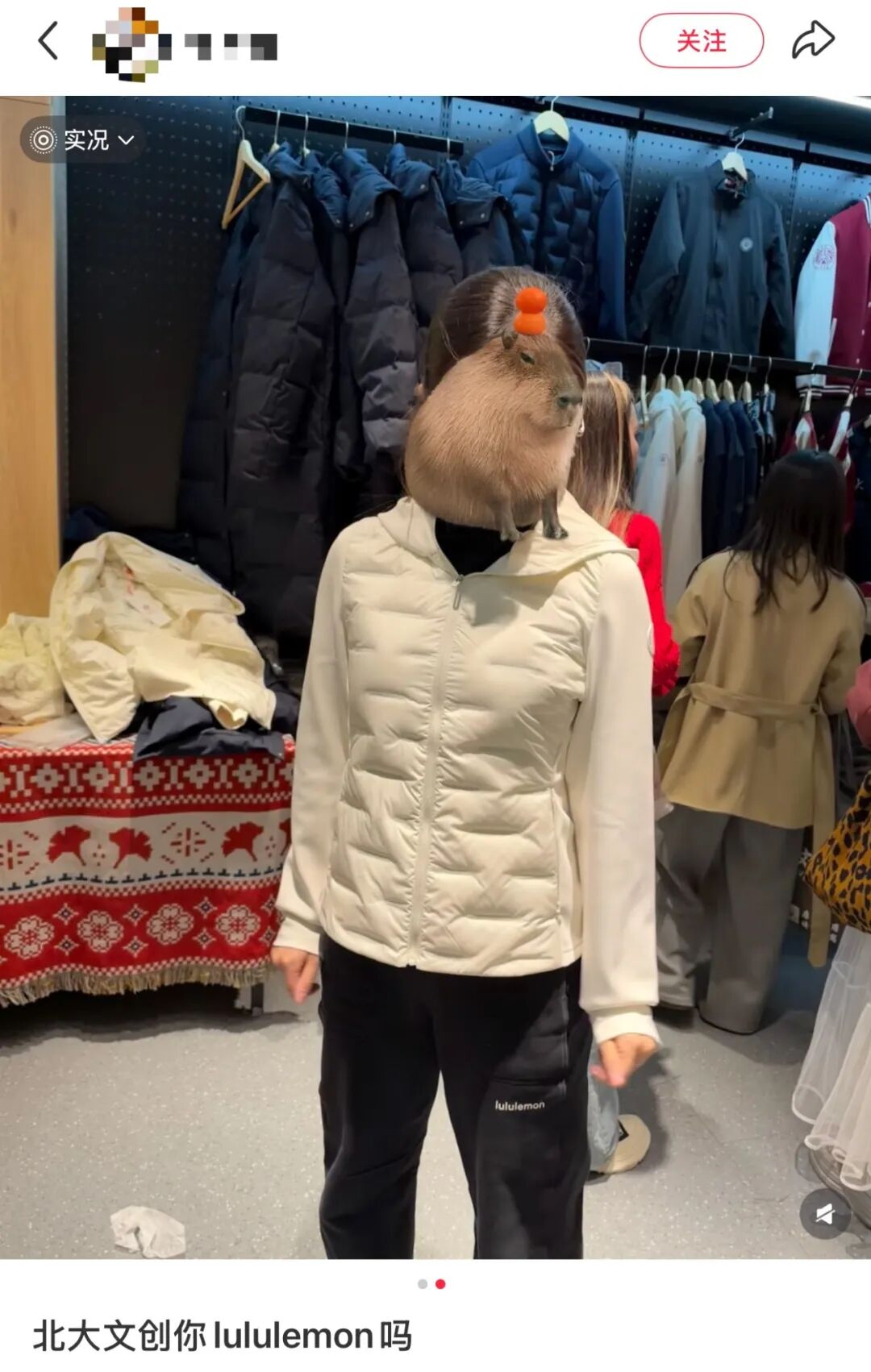
"Peking University cultural and creative products, are you Lululemon?" A student took a photo of the newly arrived coat and posted it on Xiaohongshu with a half-joking tease. The comment section quickly became lively, some people asked about the size, some asked for purchasing agents, and some had already started checking the washing label and comparing the parameters item by item.
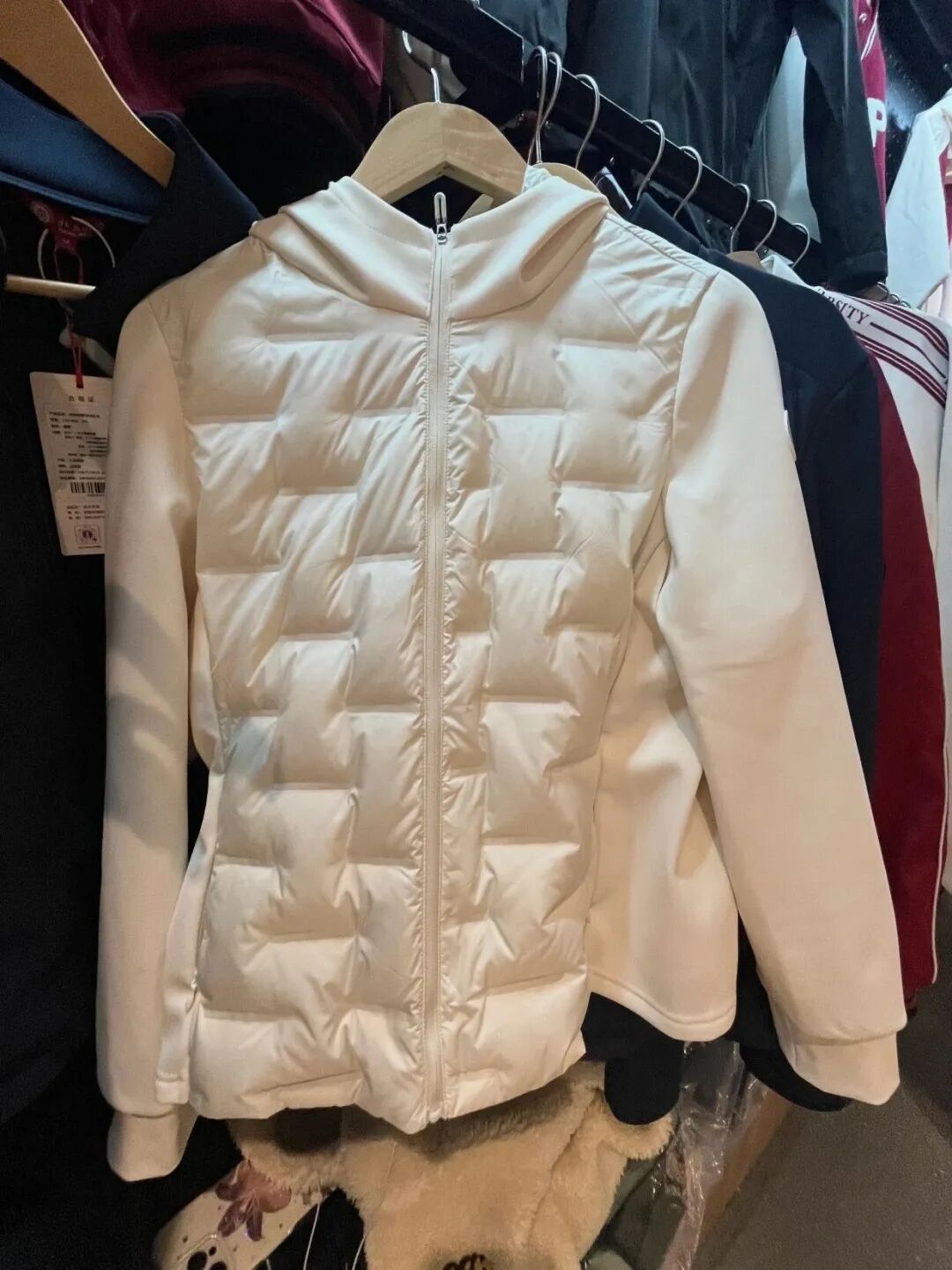
According to public information, this coat is filled with goose down with a down fiber content of 90%, and it is produced in Nantong, Jiangsu Province. The washing label posted by the buyer shows that the down filling weight of each size ranges from 20.5 grams to 30.5 grams, and the sleeves are not filled with down. It is positioned as a lightweight model, suitable for early winter and transition scenarios between indoor and outdoor.
The China Down Industry Association once gave a reference range: the down filling weight of lightweight models for early winter is about 40 grams to 90 grams, the short models with conventional thickness are about 130 grams, and more than 180 grams are usually required for outdoor scenarios in northern China.
By comparison, the down filling weight of this product is not actually very high. The parameters are mediocre, so why do consumers still pay for it?
In the view of *Tianxia Wangshang* (World Net Merchants), the driving force behind this round of purchases mainly comes from two layers: one is the brand and cultural attributes of Peking University, and the other is the channel and product foundation accumulated by university cultural and creative industries for more than ten years.
The value carried by the school name constitutes the core difference of this product. For teachers, students and alumni on campus, it is a natural extension of campus identity; for off-campus consumers, it provides a low-cost way to obtain the cultural symbol of a top university.
Public information shows that Peking University opened its first campus souvenir direct store in 2015. Now there are nearly ten physical cultural and creative stores on campus, matched with online channels, and the products cover stationery, clothing, home furnishing, digital and other categories. University cultural and creative industries have also produced many hits with social communication potential, and the audience has expanded from teachers, students and alumni to the public. Every time at nodes such as graduation season and school anniversary, a communication peak is often formed.
And university down jackets even had a round of popularity in the early years.
The black long down jacket of the Central Academy of Drama came into the public view because it was worn by Liu Haoran, Yi Yangqianxi and others. The prices of men's and women's models are 670 yuan and 600 yuan respectively. It is only available for on-campus students to book with their ID cards, and each person is limited to one piece per year. The down jacket uniform of Beijing Film Academy has a down filling weight of about 440-600 grams for different sizes, and the exclusive reservation price for teachers, students and alumni is 1099 yuan. It is named the celebrity same style because it is worn by many artists.
In comparison, this Peking University down jacket keeps the price below 400 yuan, and the style is more inclined to daily commuting. From the perspective of design, this product follows the urban sports and leisure style. The version is neat and the lines are clean, which is closer to the daily wear coats of light sports brands like Lululemon. In the upper body photos posted by students, it matches well with sweatshirts, yoga pants and jeans, and can be worn for commuting and classes, which not only lowers the purchase threshold, but also broadens the audience boundary.
The business logic of affordable down jackets: the struggle for channels, costs and pricing power
Zooming out to the entire down jacket market, more universal industry changes are emerging.
Recently, the Sam's Club down jacket is also "hard to get one". At Sam's Club in Hangzhou, the popular ROKKA&ROLLA down jacket is a third-party brand. The men's model sells for 399.9 yuan, with 300 grams of down filling for size L; the women's model sells for 499.9 yuan, with 400 grams of down filling for size L. The coat is filled with 80% white duck down and is produced in Tai'an, Shandong Province.
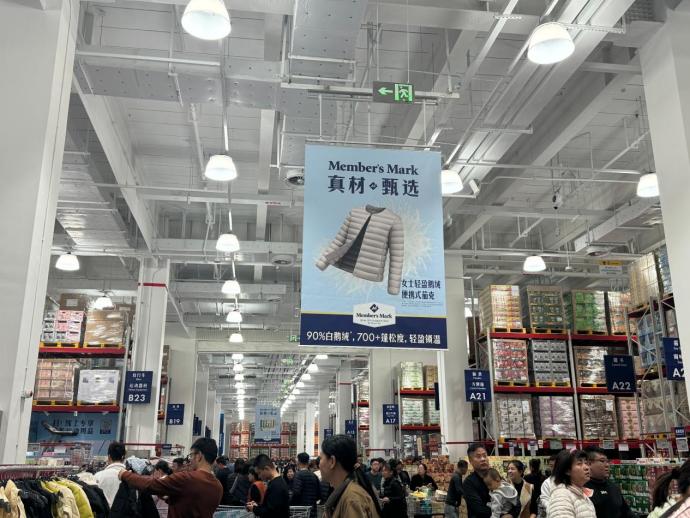
Industry insiders analyze that there are two layers of support behind the low price of Sam's Club down jackets. First, Sam's Club directly customizes from factories in super large batches, compresses intermediate links, and obtains the lowest ex-factory price; second, products with high down filling weight undertake the drainage function, allowing members to intuitively perceive the channel's product selection and bargaining power, and then balance the revenue through membership fees and overall commodity sales. The profit model of membership-based retailers determines that a single product can bear thinner profits.
According to the market trend of Down Golden Network on November 12, 2026, the bulk ex-factory price of 80% white duck down is 444.72 yuan per kilogram, 90% white duck down is 535.62 yuan per kilogram, and 90% white goose down is 929.04 yuan per kilogram. Calculated based on 300 grams of down filling for size L of Sam's men's model, the raw material cost of down is about 133 yuan, accounting for about one third of the selling price.
By horizontal comparison, the structural difference is clear at a glance. For example, a mainstream brand's 90% down medium and long down jacket has a final price of 1099 yuan, with a down filling weight of 100 to 149 grams, and the raw material cost is about 53 to 80 yuan, accounting for 5% to 7% of the selling price. A high-end outdoor brand's down coat priced at 8600 yuan has a down filling weight of about 100 grams and a down fiber content of 90%. Roughly calculated according to the price of white goose down, the raw material cost of high grade is about 93 yuan per 100 grams, accounting for about 1%. The higher the terminal selling price, the lower the proportion of raw material cost, and design, labor, marketing, channels and brand premium take a larger share.
Pang Donglai focuses more on price transparency. According to Elephant News, the tag of its self-operated down jacket lists the purchase price, selling price and gross profit margin item by item. A product priced at 297 yuan has a purchase price of 214 yuan, a gross profit margin of 27.87%, a down filling weight of more than 140 grams and a down fiber content of 90%; another product priced at 599 yuan has a purchase price of 457.9 yuan and a gross profit margin of 23.55%. Its founder Yu Donglai once clearly stated that the gross profit margin of clothing will not exceed 30% at most.
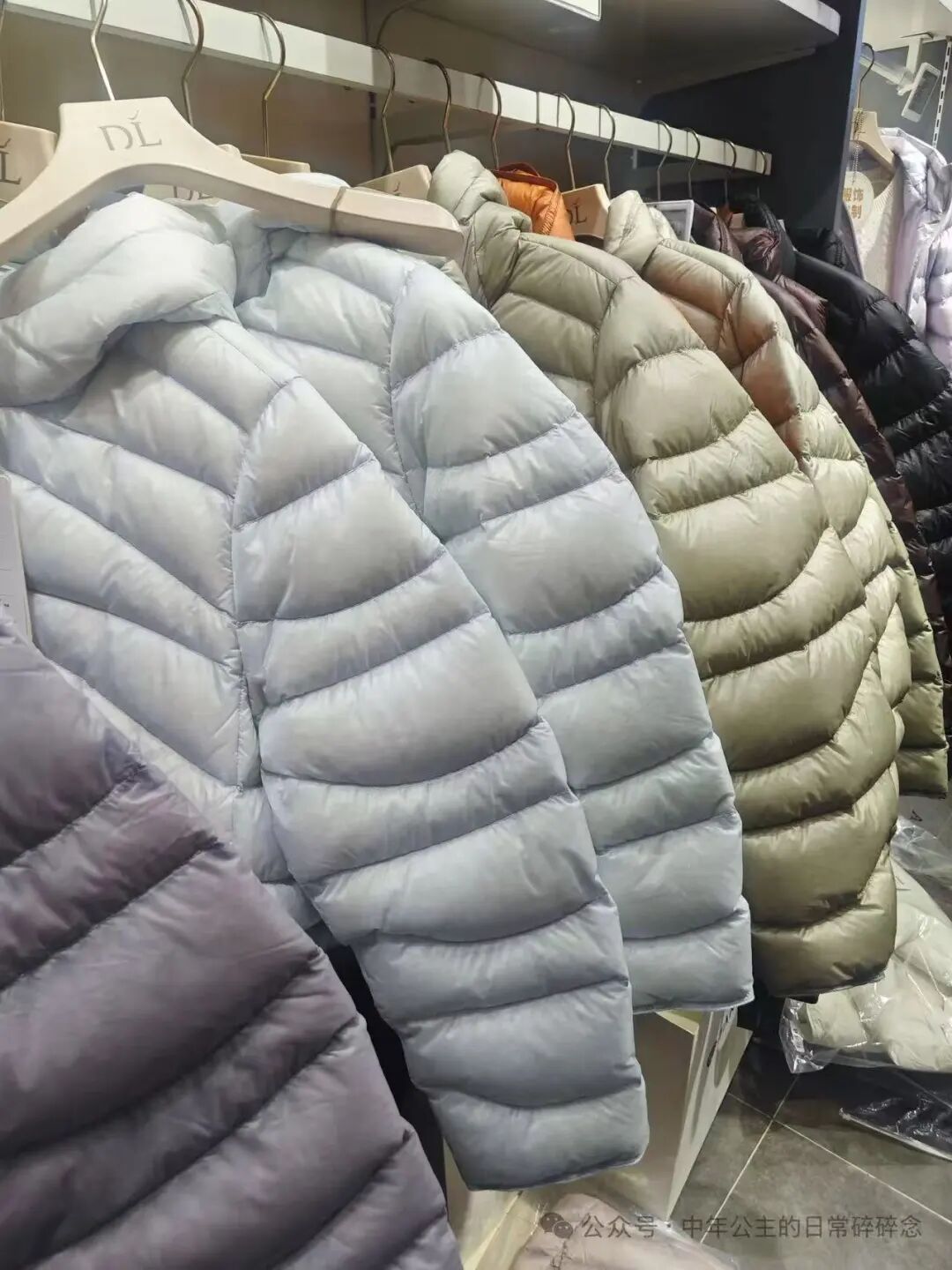
After the Pang Donglai down jacket products became popular, purchasing agents with a price increase of 30 yuan to 50 yuan appeared on second-hand platforms, and the mall immediately introduced purchase restriction measures.
Thus, there are two changes in this winter's market worthy of attention: first, the basis of consumption decision-making is shifting from brands to other factors such as parameters, prices and cultural attributes. Indicators such as down filling weight, down fiber content and loft are widely discussed and compared. Consumers are comparing prices horizontally across brands, and the weight of brand factors in decision-making decreases accordingly.
Second, the right of discourse of channel merchants in product definition continues to rise. With supply chain management and member trust, Sam's Club and Pang Donglai participate in the production standards and pricing of factories in reverse. Retail channels have extended from a pure sales link to a co-definer of products.
Data from Qichacha shows that as of November 16, there are 450,800 down-related enterprises in China, more than half of which are located in East China; 112,200 new ones were registered in 2025, a year-on-year increase of 31.97%, hitting a new high in the past ten years. The huge manufacturing capacity of the industrial belt provides a solid supply foundation for affordable products.
On the whole, the concentrated popularity of affordable down jackets this winter reflects that consumers' requirements for pricing transparency and value verifiability are rising, and consumers are beginning to be restrained from the premium of certain categories.
In the down jacket business, the upstream depends on raw materials, the midstream depends on manufacturing, and the downstream depends on channels and brands. The hits that have become popular one after another this winter show that the bargaining power of the downstream is increasing, the supply of the industrial belt in the midstream is sufficient, and the price fluctuation in the upstream has become a touchstone to test the business model. For brands, whoever can better organize the upstream, midstream and downstream will have the opportunity to make affordable products a long-term business.
This article is from the WeChat official account "World Net Merchants" (ID: txws_txws), author: Yang Jie, published with authorization from 36Kr.