The difference between portable WiFi devices priced at tens of yuan and those priced at thousands of yuan goes far beyond just network speed.
In recent days, Meizu has launched a portable WiFi device named "MIFI N1" on its official website.
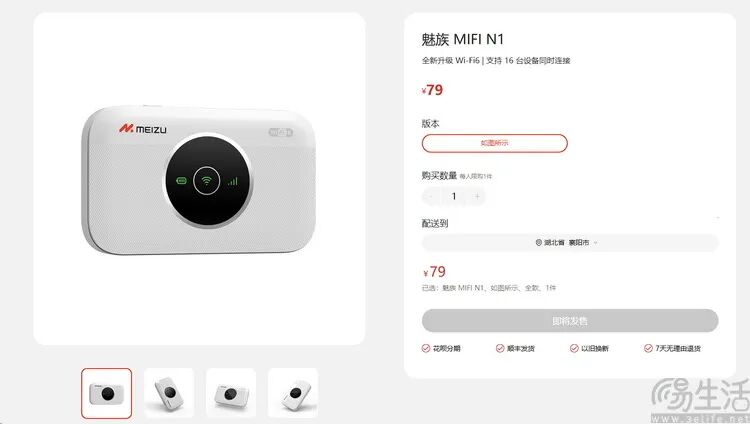
Official released information shows that it is priced at 79 yuan, built with the MobileTek EC800LE chip, supports WiFi 6, and is equipped with a 3000mAh battery.
Judging from the specifications alone, this product is quite "decent". But if you look through the comment sections of related reports, you will find that the focus of everyone's discussion is not the price or configuration, but a detail that the official did not explicitly mention: whether this device supports inserting a SIM card or not?

Why do people care so much about "whether the portable WiFi can insert a SIM card"? Because this seemingly trivial design actually hides the biggest hidden trick in the entire portable WiFi industry.
From 30 yuan to 6000 yuan, the price gap is more exaggerated than that of mobile phones
Nowadays, open any mainstream e-commerce platform and search for "portable WiFi", you will see a market far more fragmented than that of smartphones.
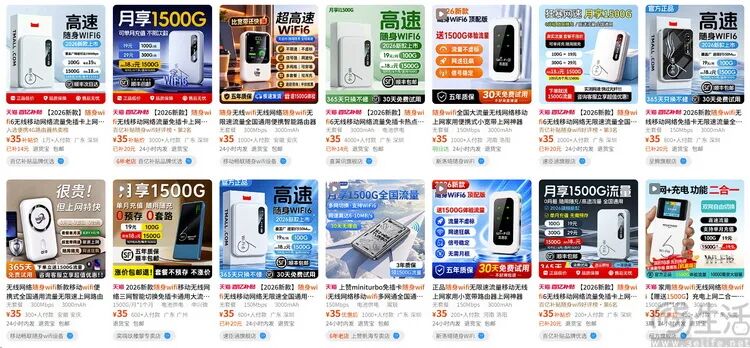
Search results on a certain e-commerce platform, all marked at 35 yuan with "1500G data gift"
Those cheapest unbranded products often cost only 20 to 30 yuan, or even "9.9 yuan with free shipping". A little higher, from tens of yuan to hundreds of yuan, you can see relatively well-known brands such as Lenovo and Machenike. On this basis, high-end portable WiFi devices from ZTE and Huawei can cost more than 1000 yuan or even 2000 yuan. If you pursue higher-end and more "full" configurations, there are even flagship products such as Netgear Nighthawk M7 Ultra that sell for more than 6000 yuan.
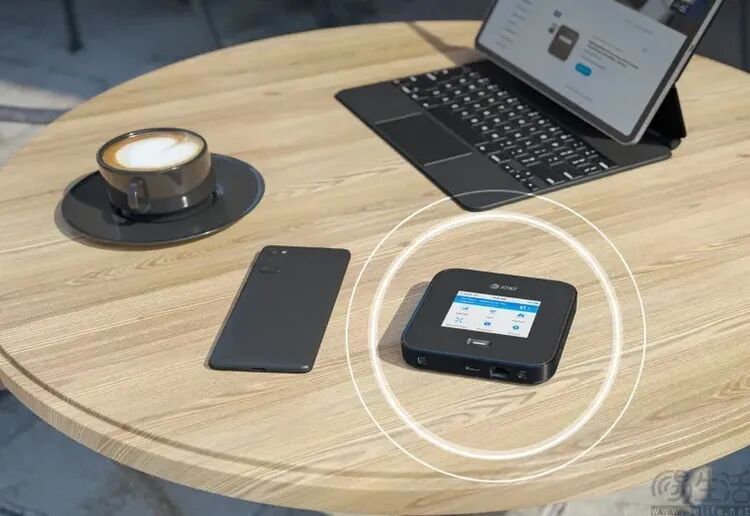
From more than 30 yuan to more than 6000 yuan, the price difference between the cheapest and the most expensive portable WiFi is as high as 200 times. What does this concept mean? You know, in the smartphone market, the price gap between an entry-level 4G mobile phone of 500 to 600 yuan and a "tri-fold" phone of more than 20,000 yuan is far less exaggerated than that of portable WiFi.
More importantly, the difference between entry-level mobile phones and top foldable flagships can be felt through the appearance, imaging performance and screen size even if you don't understand technology. But from entry-level models to flagships, portable WiFi devices all look like similar "small boxes", why is there such a big difference between them?
After disassembly, you will find they are not the same species at all
To understand why such a large price gap exists in the portable WiFi market, we have to start with the hardware solutions of different products, to see what chips they use and what network specifications they support.
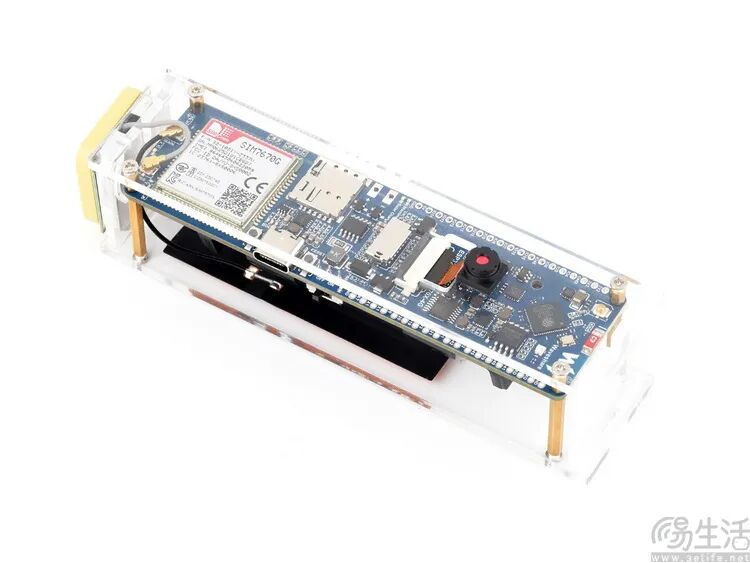
LTE Cat1 IoT portable WiFi made by open source enthusiasts
First of all, most of the cheapest products use the so-called "LTE Cat.1 bis" network module, a typical example is MobileTek EC618. This is a special low-speed 4G network designed for IoT terminals such as shared bicycles and container locators. Its peak downlink bandwidth is only 10Mbps, and the cost is only a few yuan. If this kind of solution is made into a "portable WiFi", it can basically only meet the needs of text sending and receiving, and it may even be difficult to load images.
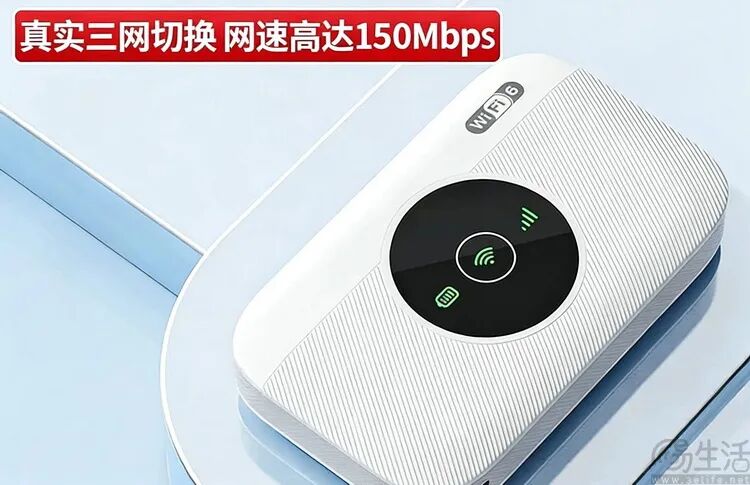
Interestingly, we found multiple products that look exactly the same as Meizu MIFI N1
Next comes the MobileTek EC800LE used by Meizu MIFI N1, which supports LTE Cat.4, that is, ordinary standard 4G network (please note that this is also slower than the 4G LTE-A network supported by most mobile phones). The theoretical peak downlink bandwidth of this solution can reach 150Mbps, which is enough for watching videos and playing lightweight games, but downloading high-definition videos and large games will still be slow enough to drive you crazy.
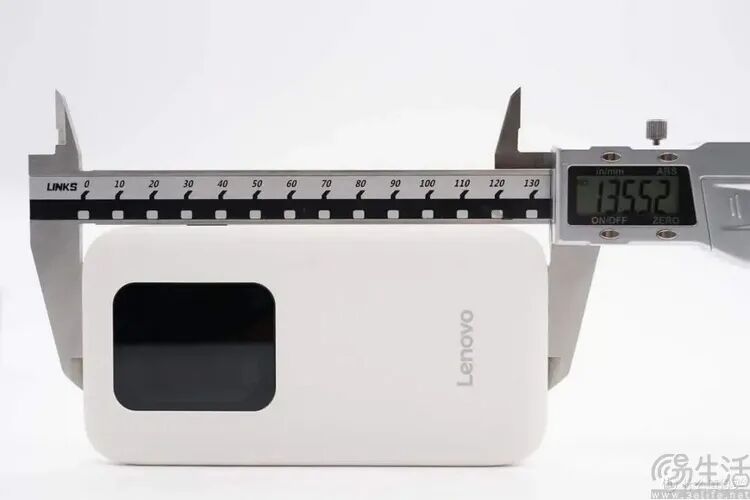
Then we come to the entry-level 5G gear of 300 to 500 yuan. Portable WiFi devices at this level usually use low-end 5G baseband solutions from Unisoc and Qualcomm. They do not support high-priced 5G network packages, but at least they can reach the "entry-level speed" of 5G networks, which is roughly 300 to 500 Mbps, and the daily experience is almost the same as the low-grade home broadband.
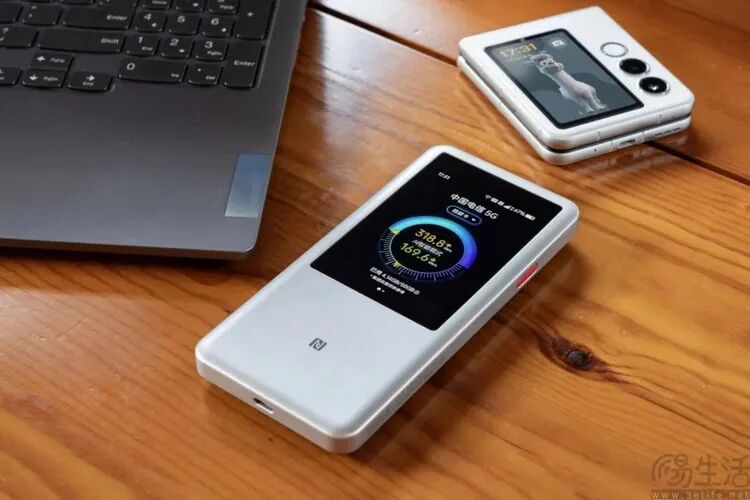
Finally, we arrive at the flagship gear of portable WiFi. Taking the currently common ZTE U60 Pro as an example, it uses the Snapdragon X75 baseband, paired with a WiFi 7 wireless module, and can theoretically support 5G-A networks. Its official nominal peak downlink bandwidth is 4.29Gbps, which can fully support the highest 2000Mbps 5G package in China, faster than most people's home broadband. For this type of portable WiFi, multi-person office, team online gaming, and professional high-definition live broadcasts are all no problem.
To sum up, if calculated by "cost performance", the common flagship portable WiFi in China is about 30 to 50 times more expensive than the cheapest one, but the network speed is 200 times faster, so the "cost performance" of flagship products is actually higher.
However, if you only understand this hundreds of times gap as hardware upgrade, you will miss the most critical part of this industry. The real "cost control" of those cheap products lies in the invisible and extremely deceptive business model.
The real watershed: how do cheap portable WiFi devices make money
Why can some portable WiFi devices insert SIM cards while others cannot, and the models that cannot insert SIM cards are often much cheaper than those that can? Because these are two completely different businesses.

ZTE's flagship portable WiFi with air cooling and water cooling
For those portable WiFi devices that support SIM card insertion, manufacturers only sell a simple "Internet access device". Whether you use China Mobile, China Unicom or China Telecom's SIM card, and what package you choose, has nothing to do with them. Since they can't make money from you afterwards, the profit must of course be included in the selling price of the product.
But those "SIM-free" portable WiFi devices are much more complicated. To put it simply, they follow the "razor and blade" business model: the hardware can be sold at a loss, and the real profit comes from the subsequent monthly data packages. The SIM card is directly welded in the device and the network is locked, so users have no freedom to change the card and no qualification to negotiate prices. The device that seems to cost only a few yuan or tens of yuan is essentially an admission ticket to a "long-term meal ticket".
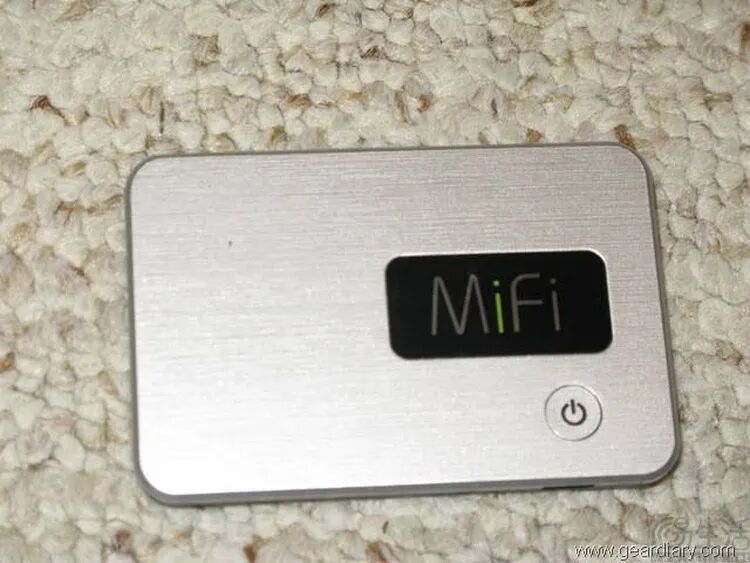
Worse still, as mentioned earlier, most of the cheap portable WiFi devices are built with dedicated IoT modules. These modules not only have worrying network speed, but were originally issued by operators for smart water meters, shared bicycles, POS machines and other equipment. In principle, they are not allowed to be remade into portable WiFi for resale.
Therefore, when relevant enterprises stuff IoT modules into "portable WiFi", this is already illegal use. Once the operator identifies the content of the data packet, they can limit the speed or block the card at any time, which is completely legal and compliant.
That's not all. The cheap portable WiFi devices you see on e-commerce platforms are often not only cheap themselves, but also marked with amazing low prices such as "9.9 yuan for 1500G". So under such seemingly extremely low tariffs, how exactly do these cheap portable WiFi devices make money? We have to talk about their many hidden tricks.
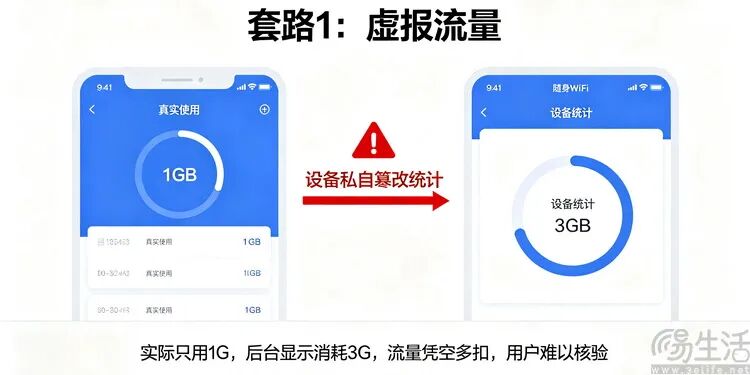
A well-known method is to falsify data usage. For most portable WiFi devices that cannot change cards and do not directly use the official data packages of the four major operators, the actual amount of data used by users is completely impossible to verify. At this time, you may have only used 1GB of data, but the App or management page of these portable WiFi devices will show that you have used 2GB, 3GB, or even more data.
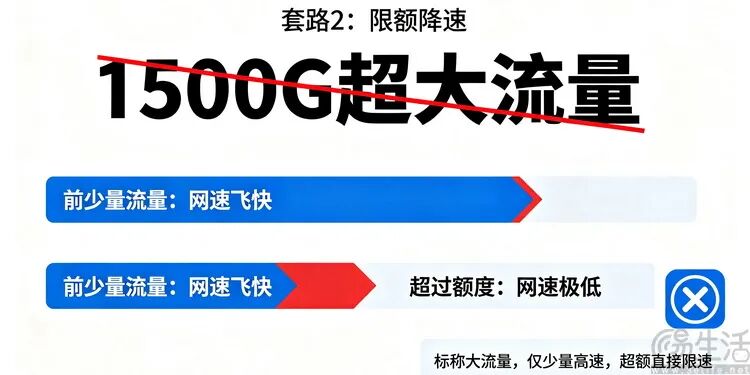
Another trick is speed limit after quota. For example, it claims to have a 1500GB data package, but only the first few GB can be used normally. Once the limit is exceeded, the network speed will be automatically limited to an extremely low level. At that time, you may experience the situation that "you can't even send a chat message", but who can you complain to? After all, you are not using the official operator service.
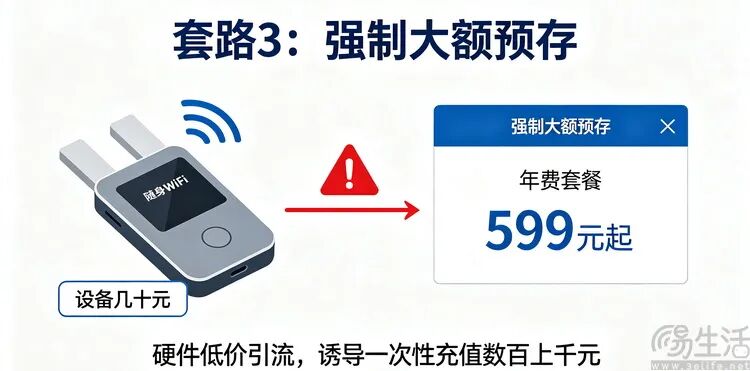
Of course, compared with the previous two tricks, forcing large pre-deposit and "running away halfway" are common plots for this type of cheap portable WiFi.
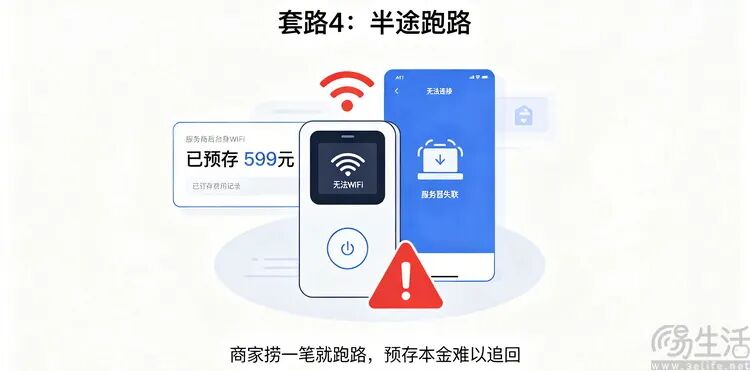
To put it bluntly, the enterprises behind these irregular devices also know that such a business cannot last stably for a long time. Therefore, "making a quick buck and leaving" under the cover of cheap devices is the strategy that maximizes their interests. This is also the most important reason why netizens have doubts about this Meizu portable WiFi we mentioned at the beginning of this article.
Conclusion: Not all cheap portable WiFi devices are traps, but you must be careful
Back to this 79-yuan Meizu MIFI N1. Its hardware has no obvious flaws at this price point: Cat.4, WiFi 6, 3000mAh, 3C certification, and the chip is even a new solution released this year. But the official silence on the package and SIM card issues does give people reasons to question. After all, terms such as who operates the data, whether it is monthly payment, how much high-speed data is provided, and what the speed limit rules are, are far more important than the 79-yuan price of the device.
