Multiple Macs form a computing power cluster, and Apple may enter the data center market.
Deploying large language models locally to achieve Token freedom, privacy security and autonomous controllability is a classic meme in the AI circle. To meet the needs of such users, NVIDIA launched DGX Spark, AMD launched Strix Halo, and now Apple seems ready to enter this track.
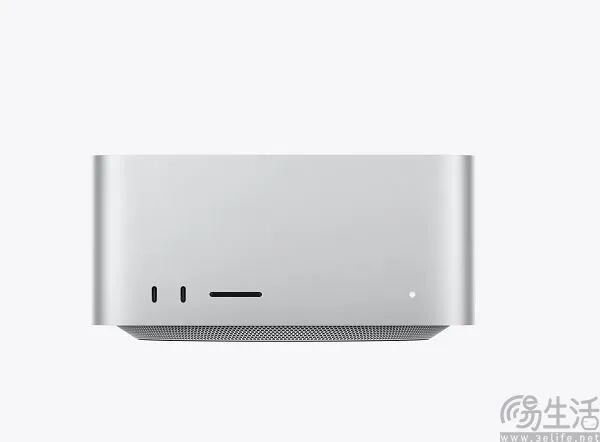
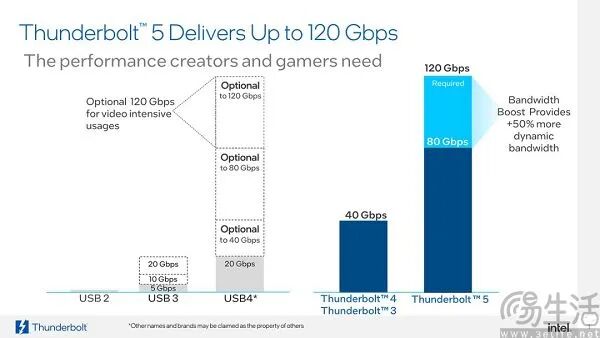
Recent news shows that Claris, a subsidiary of Apple, is testing an application called Harbor, which aims to turn Mac computers equipped with Apple Silicon chips into personal computing power boxes. Its core selling point is to connect multiple Macs through the Thunderbolt 5 interface, integrate the unified memory of different devices into a larger computing resource pool, so as to run large-scale AI models that cannot be independently accommodated by a single Mac.
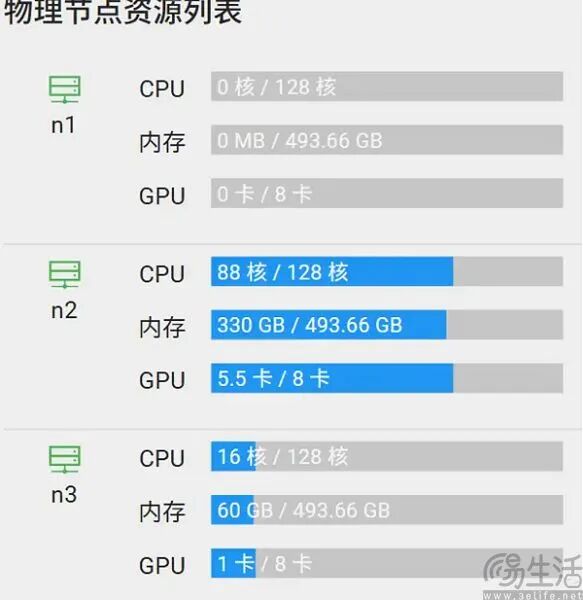
In fact, as early as 2024, Apple had already realized the advantages of Mac in locally deploying AI models. Then CEO Tim Cook once said, "All Macs powered by Apple Silicon chips are very powerful artificial intelligence machines. In fact, there are no better computers for artificial intelligence on the market than Mac."
Although Mac is indeed suitable for locally deploying AI, the capability of a single unit is limited, and it is unable to keep up with the rapidly changing user demands.
OpenRouter, a global model aggregation platform, and a16z, a top Silicon Valley venture capital firm, released an AI industry trend report at the end of last year. This report, based on 100 trillion real API calls worldwide, covering more than 300 AI models and over 60 suppliers, shows that the share of models with parameters less than 15B is plummeting. Because users find that no matter how fast the speed is, it is useless. If the AI is as silly as a repeater, it is better not to use it, so medium-sized models (15B-70B parameters) have become the new favorite.
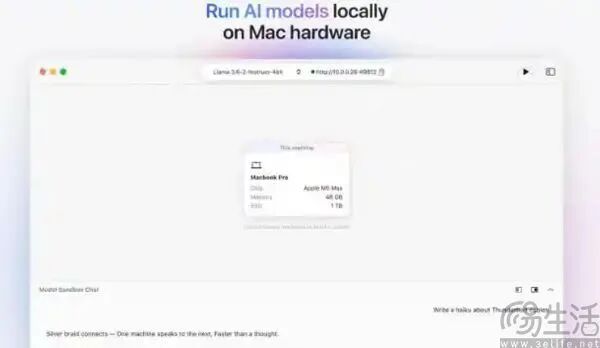
By the fall of 2026, medium-sized models also began to show signs of becoming obsolete. This is because users' tasks are changing. Small-scale models were popular two years ago because they could realize "local AI" at low cost and solve the problem of availability. When users really start to use local AI to make videos and write code, small-sized models and even medium-sized models begin to be overwhelmed. Many small and medium-sized companies and even individual users begin to pursue running DeepSeek V4.1 Flash locally.
As is known to all, the scale of locally deployed AI models is determined by the memory of the device. The larger the memory, the larger the scale of models that can be accommodated. For example, Mac Studio with 96GB unified memory can run Qwen3.8-27B smoothly, and Mac Studio with 512GB memory can run Qwen3-235B smoothly. Therefore, Harbor is an application serving the local deployment of large models, which connects Macs in series to form something similar to a server cluster.
Multi-device collaboration is not a new thing in local AI deployment. There are already many solutions on platforms such as GitHub, but they all have one thing in common: they require users to have a certain technical background. At present, although ordinary people can run open-source AI models locally through tools such as LM Studio and Ollama, if they want to connect multiple computers into a cluster, they usually need to have a certain understanding of servers, Docker, SSH and other fields, and solve the communication problems between different devices.
The currently exposed function description shows that Harbor can automatically identify Mac devices connected via Thunderbolt 5 and assist in establishing a cluster. Users only need to connect the devices and start the application, and the system will automatically complete the necessary configuration, no need to use the command line, and users do not need to have professional server management experience.
In a sense, the core function of Harbor is to transform the deployment that ordinary users do not understand into the familiar installation, making the multi-device series deployment of large models ready to use with one click.
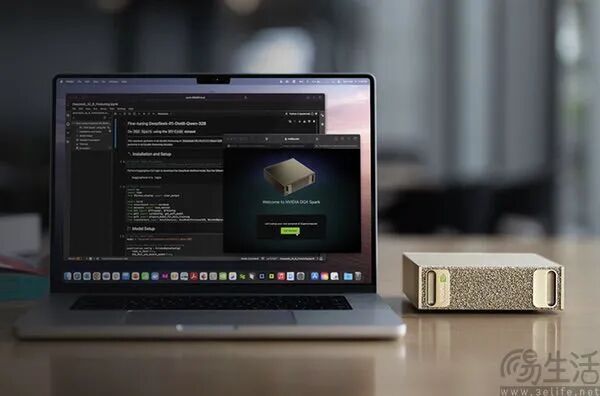
With Harbor, Mac as a local computing power box has super scalability. It is worth mentioning that the early experience application page of Harbor requires filling in the company name, which indicates that Apple may really plan to enter the highly profitable data center market. As for how profitable the data center is, NVIDIA has become the company with the highest market value in the world relying on it, and AMD recently announced that the company's current strategic focus has fully shifted to the data center field, and it will continue to increase investment in AI infrastructure construction in the future.
Starting from the fact that multiple Macs paired with Harbor can deploy large-scale AI models, Apple does have the opportunity to enter the data center track. For users who are suffering from the shortage of RTX 5090 and RTX PRO 6000, and the unreasonably high premium of DGX Spark, Apple's entry may bring some relief.
[All pictures in this article are from the Internet]
This article is from the WeChat official account "3eLife" (ID: IT-3eLife), author: San Yijun, 36Kr is published with authorization.