Cracking, firmware flashing, evading location tracking: Children "trapped" in smartwatches are paying to buy "freedom"
How long has it been since you last flashed your mobile phone?
Most people probably cannot recall the last time they flashed their device. At present, the vast majority of Android phones have closed the access to unlock the BL lock, and third-party ROMs are nearly extinct.
However, CCTV News recently reported that paid firmware flashing services for children's smartwatches have surprisingly become a lucrative business. Relevant merchants attract customers from physical stores and short-video platforms, and provide paid services for potential users.
This makes people curious: how did children's smartwatches get linked to firmware flashing? Why would someone pay for paid flashing services?
Why do kids flash their smartwatches? To remove usage restrictions
The reason why firmware flashing for mobile phones has disappeared is quite straightforward: the cost of tinkering with devices has risen sharply, while the benefits have dropped significantly.
In the early days of the smartphone era, our motivation to flash devices came from insufficient device performance: the system was laggy, there were too few functions, the UI was poorly designed, and there were too many pre-installed apps. Flashing a third-party ROM could extend the service life of the device. Now even entry-level phones priced at around 1000 yuan come with custom systems developed by manufacturers that are hardly laggy and fully functional. Even if you go to great lengths to flash the device, the final user experience of the phone may not be significantly improved.
At the same time, the threshold for mobile phone firmware flashing has also become higher. Most Android brands no longer support BL unlocking. A small number of manufacturers that still provide official unlocking channels have set up numerous obstacles. For example, Xiaomi has designed a complex process for unlocking on its HyperOS, including community level requirements, answer verification, and waiting periods. Rooting is even more troublesome: after obtaining Root access, a large number of banking and payment apps cannot be used, and face and fingerprint payment functions will also stop working.
The situation of children's smartwatches is exactly the opposite: their hardware is sufficient, but their functions are artificially restricted.
Nowadays, children's smartwatches are equipped with increasingly powerful hardware configurations, including cameras, internet-connected positioning modules, various sensors, and smart operating systems. Most children's smartwatches are internet-connected smart devices running customized Android systems. They inherently have the hardware foundation to install third-party apps, but this capability is restricted by manufacturers.
Specifically, children's smartwatch brands usually only provide the official app store as the only channel for app installation, and most of the apps on the shelves are education-related applications. If users want to directly install short-video, browser, game and other applications, they cannot achieve this through official channels.
The most special feature of children's smartwatches is that their actual users and payers are two different groups: the former are children, and the latter are parents. Therefore, the core regulatory functions of children's smartwatches are designed for parents to restrict and supervise children, such as class-time disable mode, daily usage duration limit, available time period control, app whitelist, as well as the bound payment limit and password-free settings on the watch.
The direct purpose of flashing a children's smartwatch is to remove all these restrictions.
The mechanism of flashing and cracking children's smartwatches is essentially similar to the way we flashed mobile phones in the past. The only difference is that mobile phone manufacturers have put a lot of effort into patching system vulnerabilities and anti-cracking measures, which greatly increases the cost of bypassing official channels to unlock mobile phones. However, children's smartwatches are positioned as "closed terminals for children", and manufacturers have invested far less in security protection than they do for mobile phones.
After all, few children have the ability to crack their watches on their own, and parents have no reason to do such a thing. Compared with mobile phones, the system update frequency of smartwatches is lower, and security patches are not released as quickly, which creates opportunities for those profit-seeking merchants.
Judging from the paid watch cracking services sold by merchants on e-commerce platforms, their technical methods are not particularly sophisticated. After receiving payment, merchants mainly provide two types of services: one is "installation package plus tutorial", which sends the system recovery tool and installer to the buyer for them to operate on their own computer; the other is to flash the watch for the buyer remotely by taking over the user's computer, or even ask the user to mail the watch to them. The way to flash a watch is nothing more than entering the engineering mode or Recovery mode, rewriting the system partition, and then injecting the third-party installer into the device.
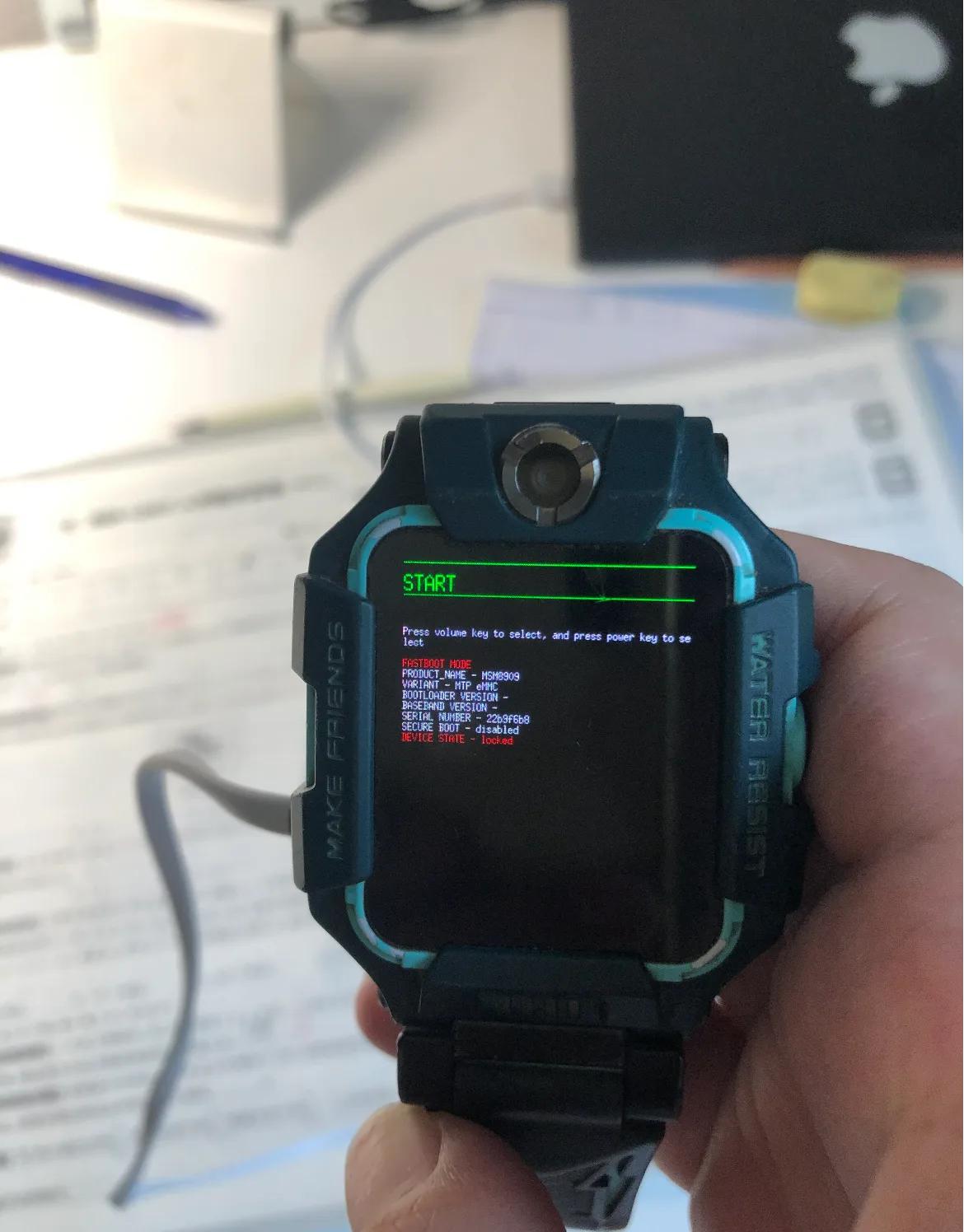
(Source: Xiaohongshu)
In fact, most of the so-called tutorials provided by merchants are collected from the internet, some of which are even free tutorials posted by netizens one or two years ago. To put it plainly, they are just making money from information asymmetry. The fee for these paid services is not high, usually only dozens of yuan, which is affordable for children by saving a small amount of their pocket money.
In the view of Leitech (ID: leitech), cracking smartwatches through firmware flashing is not much different from the way we tinkered with electronic devices in the past. Twenty years ago, the electronic devices that children could bring to school were basically only learning machines and feature phones.
At that time, learning machines were theoretically only equipped with learning functions such as memorizing words and doing homework, but many people had found ways to crack them and install game emulators inside. Feature phones originally had very limited expandability, but people still figured out ways to install third-party Java applications on them.
However, children's smartwatches are more special for children and parents, and there are more hidden risks after cracking.
After children's smartwatches gain "freedom", risks come one after another
The first problem encountered after flashing the watch to gain "freedom" is the warranty. Brands such as Imoo have clearly stated that the original warranty service will be invalid after the watch is cracked. If the device goes black-screened or bricked, children and parents have to pay for the repair themselves, or even buy a new one. As for the merchants that provide flashing services, their business is operating in the gray area, so the possibility of them providing after-sales compensation is extremely low.
In addition, almost no parents want their children to crack their watches, because this will undermine the functions they value most. Children's smartwatches are essentially special products born from the game of compromises between various demands. Their configuration, performance and functions are inferior to smartphones. Since schools and parents do not want children to carry devices that can browse short videos and play games to school, banning mobile phones from entering campus has become their consensus.
However, out of consideration for safety and other factors, parents also hope that their children can have an electronic device that supports real-time positioning and can make calls and send text messages.
Therefore, children's smartwatches have found their own market space under such demands. Different from ordinary smartwatches, children's smartwatches need to emphasize their independence rather than being an accessory of mobile phones. Children's smartwatches are usually equipped with cellular network modules, precise positioning functions, and components such as cameras. Of course, no matter how powerful the hardware configuration of children's smartwatches is, manufacturers will not open the security permissions for short-video, game and other applications, and they will at most make efforts in camera shooting and social interaction functions.
After the watch is cracked via flashing, the supervision functions on the parent's side will be restricted or even completely invalid, so children can prevent their parents from monitoring their location, device usage duration and other information. Moreover, parents have no way to know that their children have installed third-party video and game applications on the watch. From the perspective of parents, after the watch is cracked, its core functions are lost, and the originally harmless device has become a product similar to a mobile phone that "affects learning and physical and mental health".
Of course, there is another risk for flashed watches, which is that private data may be leaked, and the device may even be implanted with Trojan horse applications. Similar incidents also occurred on smartphones in the early years, when many third-party ROMs from unknown sources came with pre-installed rogue software.
These ROMs are promoted under the guise of free flashing packages, but in fact they push advertisements through the built-in rogue software to earn commissions, and some even lock the device to extort money. Obviously, cracked children's smartwatches will also face similar problems.
The paid firmware flashing business will not last long
In fact, it is not technically difficult to plug the loopholes of smartwatch cracking. Most children's smartwatches run on the Android system. As long as the system version is new enough and security patches are updated in a timely manner, the risk of being cracked can be greatly reduced. In addition, children's smartwatches are basically connected to the internet in real time. As long as manufacturers are willing to put in some effort, they can identify devices with modified systems on the cloud, and impose restrictions when the devices are activated online, bound to accounts, or use payment channels.
Besides, the regulatory authority has also put forward stricter requirements on the safety mechanism of children's smartwatches. At the end of 2025, the State Administration for Market Regulation issued the Safety Technical Requirements for Children's Smartwatches. This new national standard will come into effect on January 1, 2027. The new national standard requires children's smartwatches to provide system security upgrades and patch updates throughout the product lifecycle, be able to identify and prevent malicious applications, and encrypt children's information to prevent data leakage.
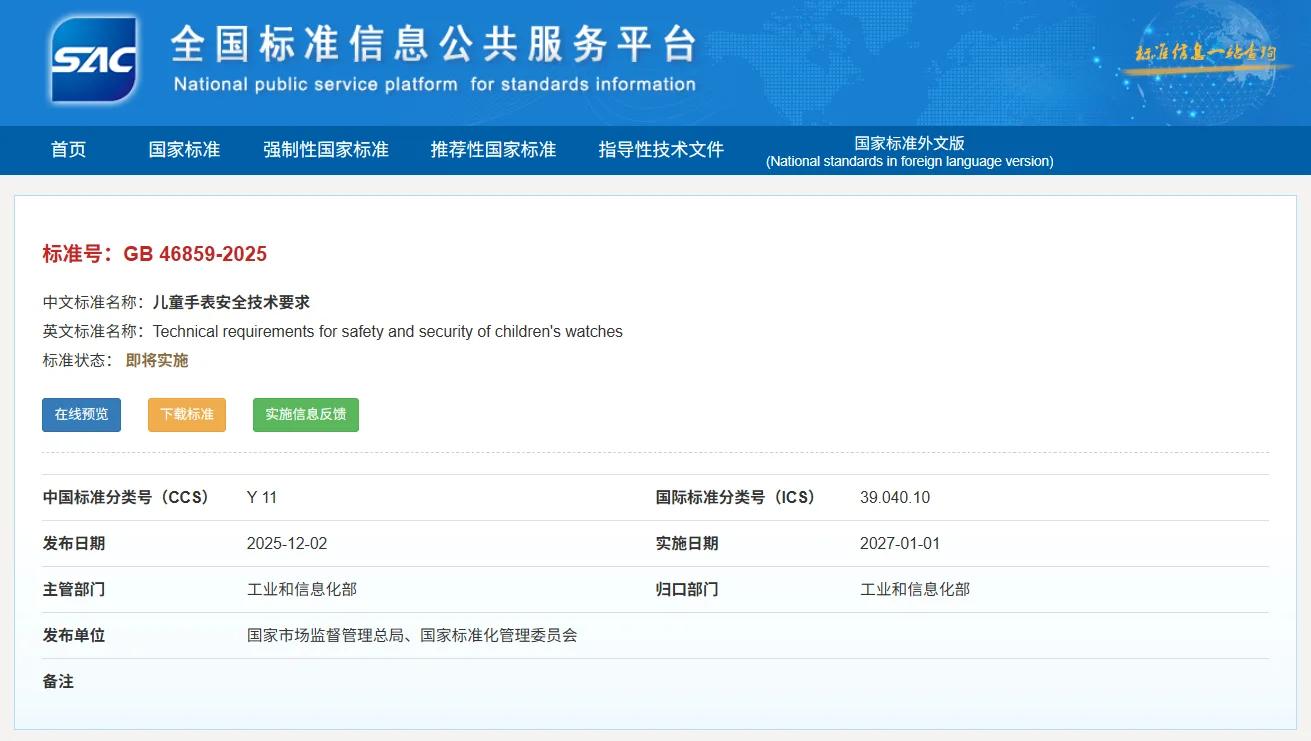
(Source: Weibo)
It is predictable that the difficulty of cracking children's smartwatches through firmware flashing will increase significantly in the future. Moreover, with successive media reports, e-commerce platforms and short-video platforms will also step up crackdowns on this kind of gray paid flashing service. For parents, what they can do now is mainly to limit the payment limit of the watch to prevent large capital losses. At the same time, they should also pay close attention to the usage of their children's watches. Once any abnormality is found, they can try to restore the official system according to the official guidelines or directly seek help from the manufacturer.
That being said, even if platforms ban all flashing merchants and manufacturers make their systems impregnable, this cat-and-mouse game may still continue. When we were young, in order to play computer games for a longer time, we also did things like using a wet towel to physically cool down the computer case and hiding game discs secretly. Nowadays, children go to great lengths to find people to flash their watches, which is essentially the same as what we did in the past: everyone is eager for entertainment opportunities and hopes to have a little freedom without adult supervision.
In our opinion, technical blocking is only a temporary solution, not a permanent cure. The most effective solution to prevent addiction is family education and daily companionship. Parents might as well take their children out more often and help them develop real-world hobbies. After all, when real life is interesting enough, that small screen will no longer be so attractive.