The payback rate of AI-generated manhua dramas stands at a mere 1.3%, yet it has spawned a surefire profitable course-selling business.
In the era when AI manhua dramas are exploding in popularity, people who want to follow the trend and earn extra income from side hustles are in luck, as a group of people have specially prepared a complete set of "AI Manhua Drama Side Hustle Monetization Training Courses" for them, covering everything from toolkits and template libraries to order-receiving channels.
On the free live stream courses, instructors claim that as long as you make good use of AI, you can easily get started even with zero foundation: they first teach people to use AI to run through the entire production process, then teach people to edit materials and add dubbing in one-stop, and also promise internal order-receiving channels to ensure no worries about getting orders. Does that sound very tempting? But a closer look shows that the subsequent courses are priced at 4,980 yuan, euphemistically called "knowledge payment", with only 8 spots released for people to compete for. You only need to pay 200 yuan to sign up, and students can also pay the remaining balance in 12 monthly installments.
Watching the passionate instructor in the live stream showing various screenshots of students "earning thousands of yuan per order" and "making over 10,000 yuan a month", a large number of listening audiences were so tempted that they kept posting comments like "You are so generous, teacher", "This model is great" and "No problem", and the few spots were quickly snapped up in this rush-buying atmosphere.
However, they did not notice that the AI manhua drama market has long been a red ocean, and the competition is so fierce that "producing dramas" itself has become something that is mathematically hardly viable. In the first half of 2026, there were as many as 221,900 new AI manhua dramas added on Douyin alone, with an average of one new drama launched every minute. In the first 9 months of the year, the entire industry launched 490,000 micro short dramas, while the total number for the whole of last year was only 33,000. The supply has expanded at a rate of more than ten times, but the proportion of works that can "stand out" is shrinking at an even faster rate.
The works of newly enrolled students may not even be able to reach the threshold of "being seen", let alone monetize and recoup their costs. That several thousand yuan of tuition fee is likely to be the first and most expensive admission fee they pay for the chance of "being seen".
AI Manhua Drama, a Truly Zero-Threshold Side Hustle?
How simple is the full-process creation of AI manhua dramas? It only takes six steps: use AI to generate novels, let AI adapt novels into scripts, use AI to turn scripts into storyboard scripts, generate images with prompts, generate videos from images, and synthesize segmented videos, edit and dub them into finished works.
This is all the cognition that Zinc Scale has after taking several free zero-based AI manhua drama training courses. In other words, this "six-step method" sounds like an assembly line. Indeed, you only need to click the corresponding AI tool according to the steps, enter prompts, wait for generation, and then drag them into the editing software to splice, so as to produce the corresponding short drama clips. But the problem is hidden in this phrase "only need to", because there are not six steps, but six hundred, even six thousand or sixty thousand steps between being able to make a drama with AI and being able to make a drama that people will watch.
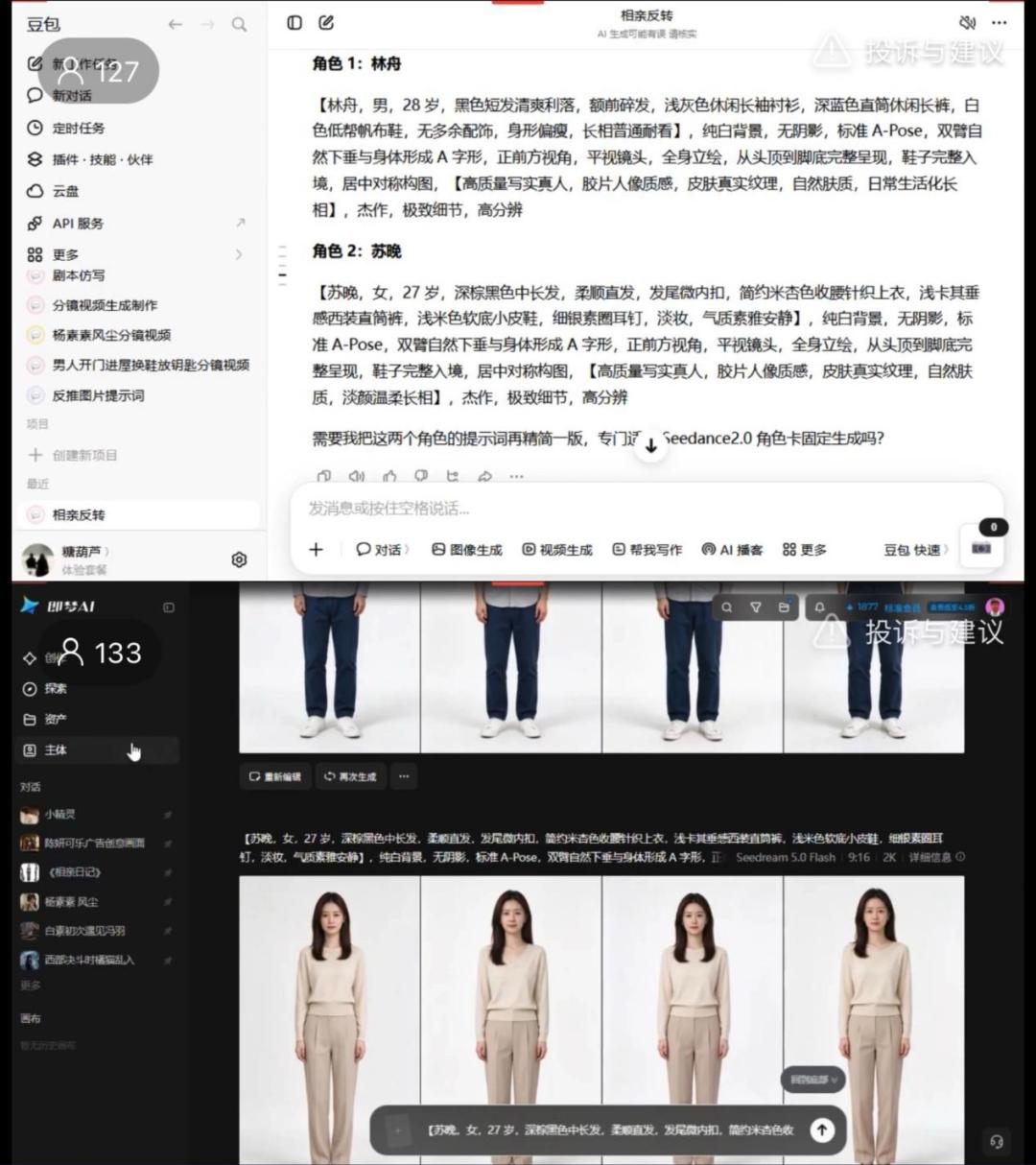
From the results, AI-generated novels often have stereotyped plots and flat characters. To endow them with real narrative tension, creators need considerable understanding and control over the story structure, character arc and emotional rhythm; AI-adapted scripts often have stiff lines and jumping scenes, which require a lot of manual polishing to make the dialogues natural and transitions smooth; Storyboard scripts even test the director's thinking. Where to use close-ups, where to pull long shots, whether the rhythm is tight or loose, these judgments cannot be given by AI as standard answers, and can only be manually trial and error based on experience and aesthetics.
As for generating images with prompts, it is even a "seemingly simple but frustrating to do" gacha game. With the same set of character prompts, the costumes, hairstyles and facial feature proportions are all up to luck. To ensure character consistency, you have to repeatedly pad images, adjust weights and manually retouch. Behind a usable image, there are often dozens of discarded drafts; In the link of converting images to videos, stiff movements, collapsed expressions, and extra or missing fingers are common occurrences. A 10-second clip may need to be generated dozens of times before you can pick out a barely usable one; The final editing and dubbing seems to be the most "traditional" part, but it is precisely the most skill-demanding link. The emotion of the background music, the timing of sound effects, the duration of subtitles, and the rhythm of transitions, these details stacked together determine whether the content is "watchable" or "enjoyable".
During the demonstration, the instructor himself almost "failed". Due to limited class time, image-to-video generation often takes more than ten minutes. In order to complete the demonstration of the whole "six-step method" process, the instructor generated two 15-second clips with prompts in advance for the demonstration of synthetic editing. However, when generating videos with the same set of prompts, the students found that the expressiveness of the pre-prepared materials was significantly higher than that of the two freshly produced clips in class after comparison, which also shows that in the field of video generation, the AI's own uncertainty is the biggest variable outside this fixed production process.
In other words, what the "six-step method" teaches is only to get familiar with all the operation buttons of AI tools, which is equivalent to making it clear that "this is a hammer, this is a nail, this is a board", and then saying "go make a chair". But to actually make a chair that can be sat on, what you need is an understanding of the properties of wood, a grasp of structural mechanics, patience with the polishing process, and most importantly - knowing what kind of chair people are willing to pay for.
In the live class, the instructor always had a joke on his lips: "I have a membership, so I choose the best generation mode when generating, but if you practice, you can use the lowest gear to save points." This sounds like thoughtfulness, but in fact, it reveals the bottom line clearly: the instructor himself knows very well that the gap between the lowest gear and the highest gear of the works produced by this process is exactly the watershed of "whether it is watchable or not".
When students practice with the lowest gear, what they are practicing is not creative ability, but the muscle memory of clicking buttons. When the free points are used up and the free courses are over, if you want to go further, you have to renew the production tools and pay for advanced courses. Every link is connected, and each link has a clear price tag.
What is more subtle is that the "six-step method" itself creates an illusion. It splits creation into six checkable steps, making people mistakenly think that completing the process is equal to finishing the work. But real content production is never a linear assembly line, but a cycle of constantly looking back, constantly overthrowing, and constantly obsessing over details.
Training Fee Is the Real Truth of This Business
In the AI short drama track that has been verified by many predecessors, with the industry-recognized 50 million views as the break-even line, only 1.3% of the more than 220,000 new dramas meet the standard, and the proportion of works that cannot recoup costs is as high as 98.7%. On average, only 1 out of every 77 works can barely reach the break-even threshold.
After all, the hit rate of AI manhua dramas is so low that it is heartbreaking: out of every 1,000 newly launched AI manhua dramas, only about 1 can enter the traffic investment pool and achieve positive ROI, with a hit rate of less than 0.1%. The proportion of top works with over 100 million views is only 0.117%, and only about 1 out of every 1,000 AI works can enter the "100 million views club". As for 91.6% of the works, their new views in a month are less than 1 million, which means that they have sunk to the bottom before even touching the threshold of being seen.
Why can an industry with an elimination rate of more than 98% continue to sell "low-threshold, high-return" admission tickets to groups of people who lack risk identification capabilities?
The training course instructor gave another answer: AI manhua drama monetization can make money through technical services. Whether it is modifying scripts, designing storyboard scripts, being responsible for character and scene gacha, or video editing, as long as the production process is split, every step has room to receive orders - modifying scripts is charged per copy, storyboard scripts are priced per shot, character gacha is charged per image, and editing is quoted per minute. This logic sounds impeccable: you don't need to produce hits at all, just become a screw on this assembly line and provide services for those who really want to make hits.

Source: Zhubajie Official Website
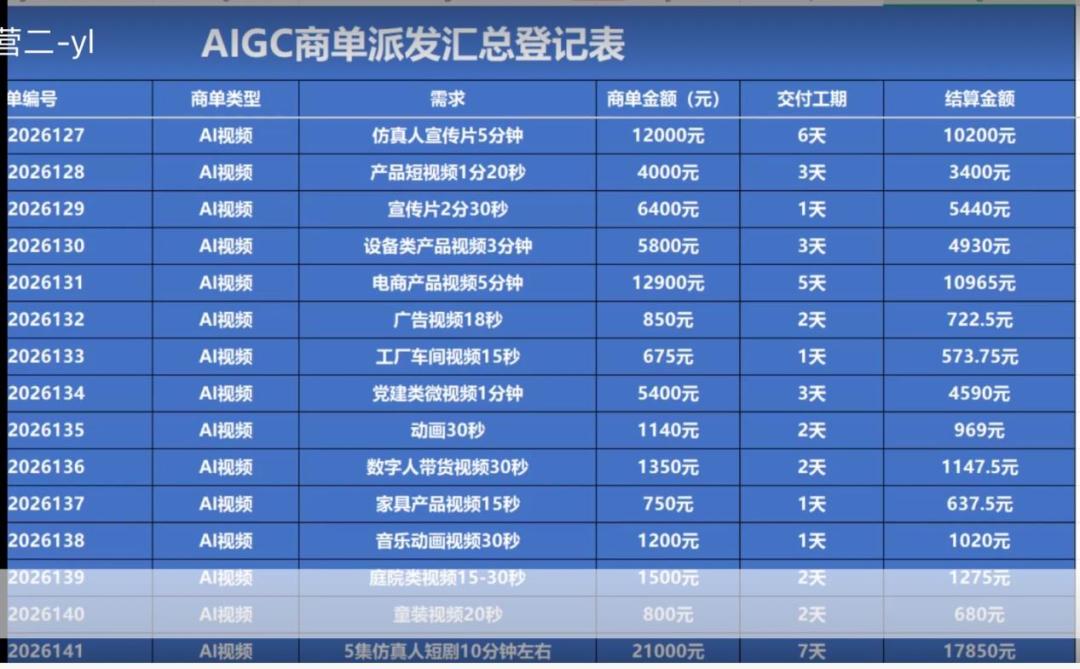
Whether it is Zhubajie, YiPinWeiKe, or Juliang Xingtu, as long as you can accept the commission drawn by such platforms, you can enjoy the pleasure of receiving orders effortlessly. If you want to take 100% of the remuneration for your labor, you can simply join the instructor's private domain group, and you can get access to "internal resources" after signing up for the course, so you don't have to worry about no work to do.
However, this logic of "selling shovels" is precisely the most unsubstantiated link in the entire chain.
Why would those teams that are really striving for hits outsource links such as storyboarding, gacha and editing to a training course student who may not even be able to produce a hit? The answer is most likely: they won't. Teams that have real budgets and production capacity pressure either use their own well-coordinated fixed team, or directly purchase mature industrialized services on the market, with extremely low prices but extremely strict delivery standards.
The orders that training course students can receive through public channels are mostly leftover work subcontracted by small teams that are also struggling at the bottom. Modifying one episode of the script costs dozens of yuan, drawing one character image costs a few yuan, editing a one-minute clip costs hundreds of yuan, and the platform takes a part of it, so the money you get may not even cover the electricity bill and points cost. As for the so-called "internal resources", no one knows how long it will be valid. After all, the other party only promised "priority recommendation for order channels or employment", which means that the channel is provided, but whether you can receive orders is the student's own business; the recommendation is also provided, but whether the employer wants to hire you is also their own business, and the exemption clauses are clearly stated.

What is more ironic is that the narrative of "monetization through technical services" and the previous narrative of "making manhua dramas with the six-step method" are logically mutually exclusive.
If the "six-step method" can really mass-produce watchable works, why doesn't the instructor go make hits and take the 0.1% top-tier dividends, but sell courses and private domain access here? The answer is obvious: because the cash flow from selling courses and selling shovels is much more certain than betting on hits. A student pays thousands of yuan in tuition, and 8 students per session means tens of thousands of yuan, which is safe in the pocket, no need to share revenue with platforms, no need to bet on traffic investment ROI, no need to face the 98.7% sinking rate. Students think they are buying an "admission ticket", but in fact they are buying the ticket stub of the business that has been verified by others that "selling tickets is more profitable than participating in the competition".
The really stable business in this industrial chain has never been AI manhua dramas themselves, but the anxiety marketing and skill futures built around "people who want to make AI manhua dramas". As for that "chair", no one really expects students to make "chairs that can be sat on". As long as they believe that "paying tuition can make a chair", this business can keep running.
This article is from the WeChat Official Account "Zinc Scale" (ID: znkedu), written by Zinc Scale, and published with authorization from 36Kr.