Hands-on test of GPT-6.2: It's ridiculously powerful, yet horribly unwieldy to use.
After much anticipation, OpenAI has finally unveiled GPT-6.2, launching two versions at once: GPT-6.2 Astra and GPT-6.2 Sol.
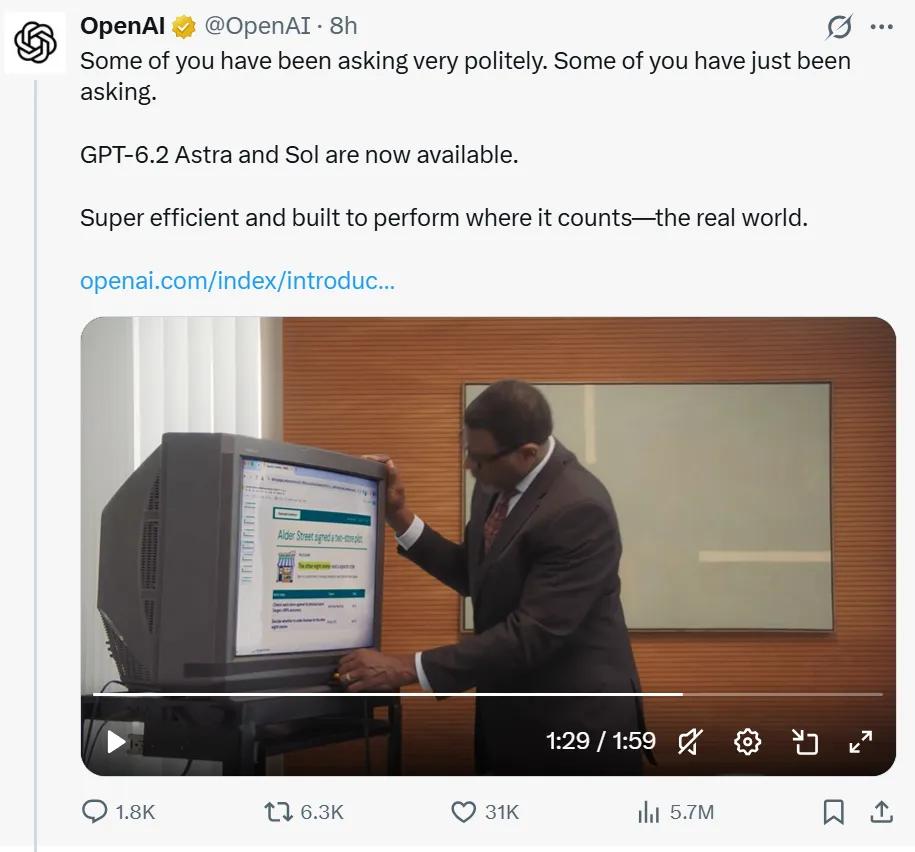
Interestingly, OpenAI has once again chosen to make its move at a delicate timing.
At present, the news of Anthropic's listing continues to spread, and competition in the AI industry is becoming increasingly fierce.
OpenAI deliberately chose to release its new-generation model at this moment, making it hard for the public not to associate this move with IPO competition.
After all, the new model is not only a concentrated display of technical strength, but also an important bargaining chip to compete for market share and investor attention.
Moreover, GPT-6.2 does have several strong advantages.
It delivers quite impressive performance in tasks such as 3D design, Three.js, and Blender, and ranks first in specialized evaluations.
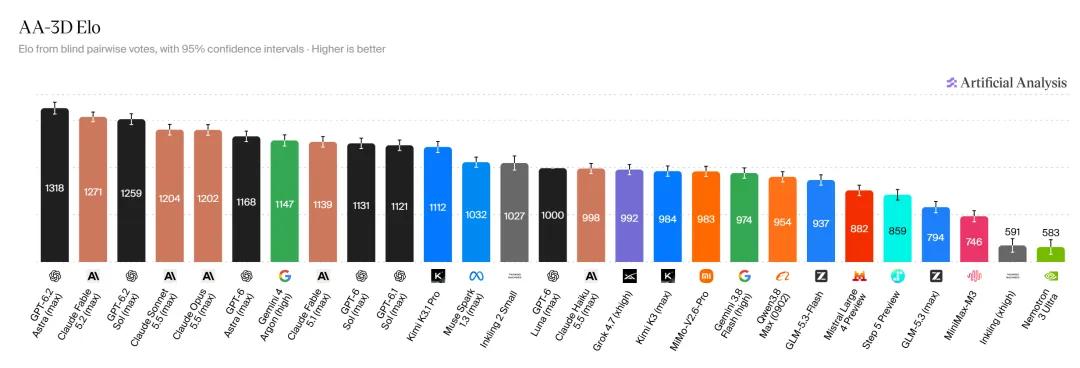
Its capabilities in programming, professional office scenarios and Agent have also been improved to varying degrees.
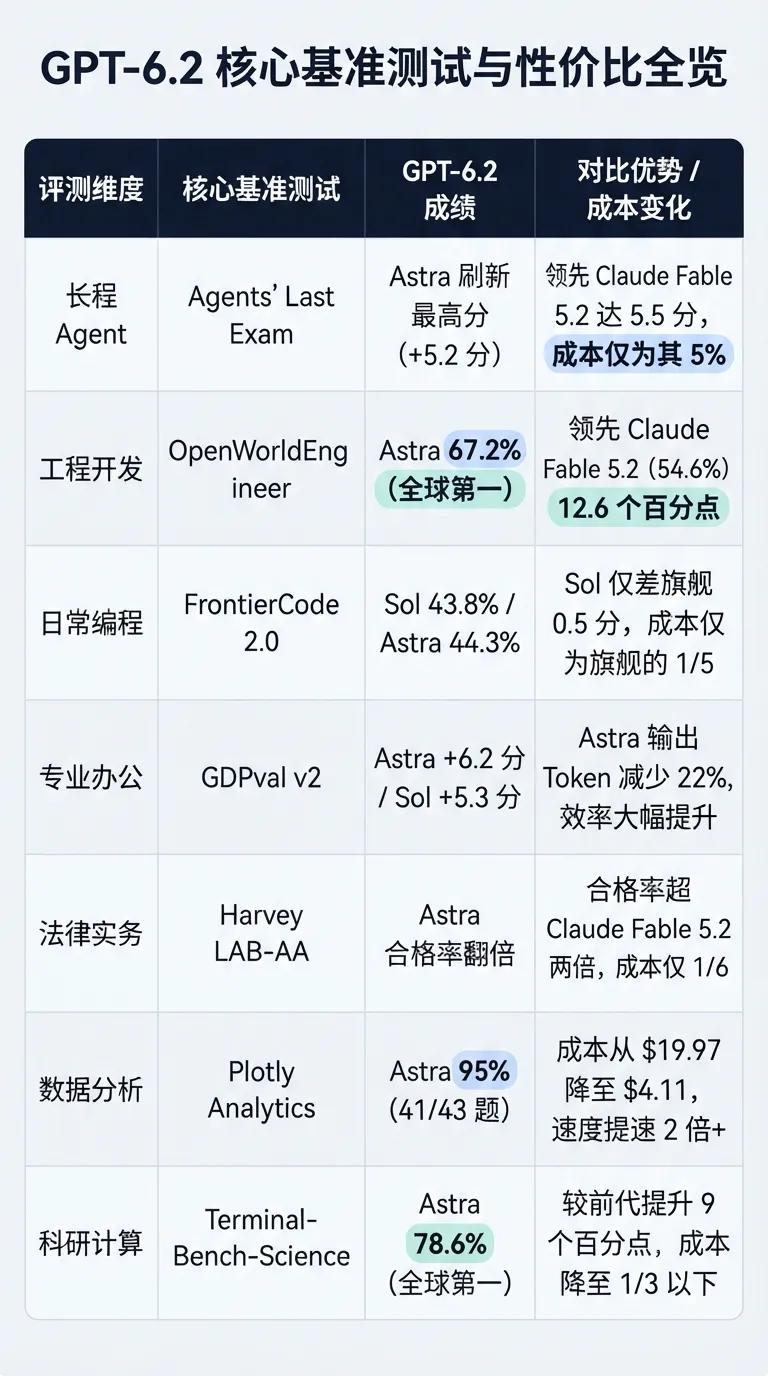
Image source: AI-generated
More importantly, the API price has been further reduced, focusing on stronger performance at lower costs.
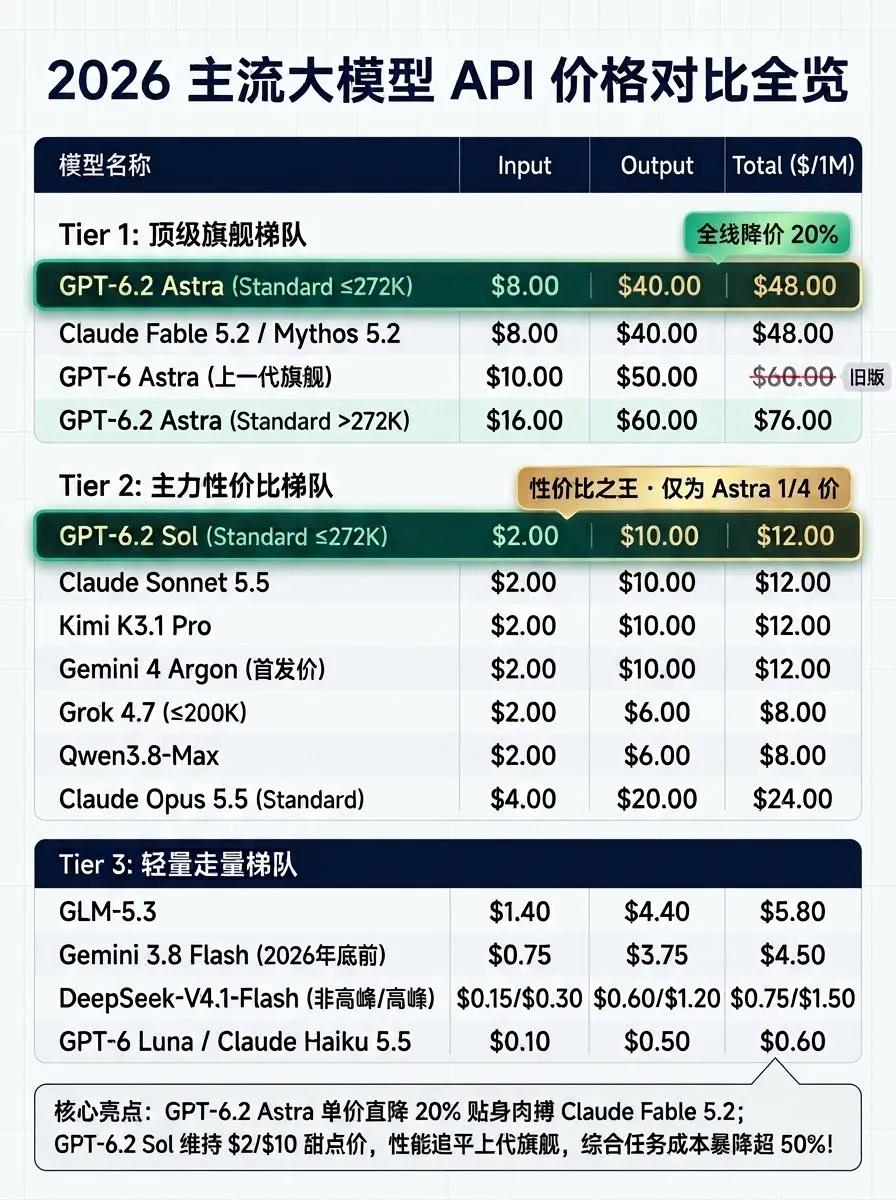
Image source: AI-generated
This time, OpenAI did not only publish benchmark scores, but also demonstrated a number of practical cases of GPT-6.2 Astra in 3D design, engineering simulation, hardware optimization and office scenarios.
First, let's look at 3D design and engineering simulation.
Astra first showcased several interactive 3D works. The official claims that users can not only play pinball games, but also explore the Colosseum from multiple angles, and even generate a futuristic urban racing game.
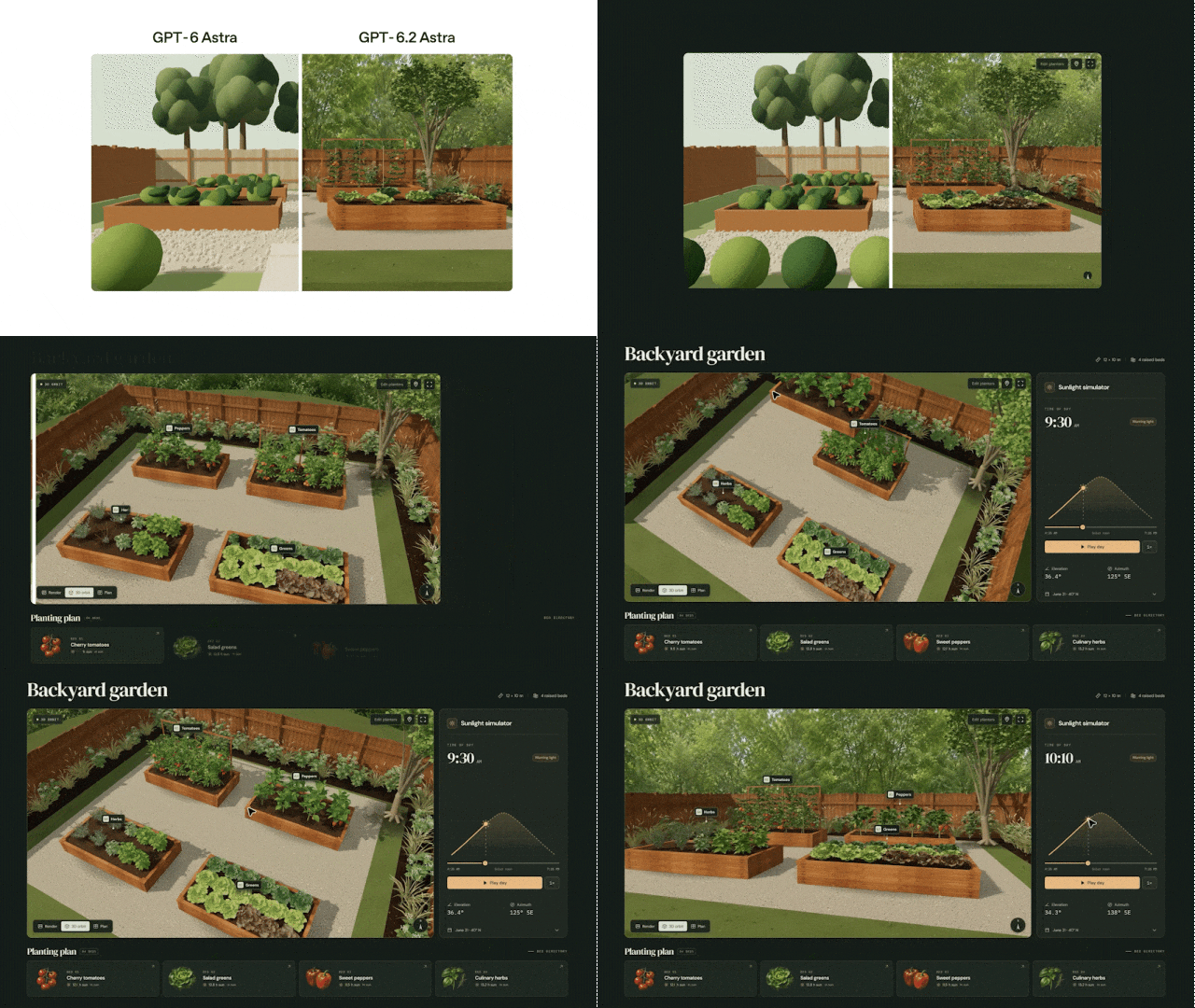
More impressively, it can even "work directly from pictures": as long as you provide a product image and manual, it can build 3D models of a remote-controlled off-road vehicle and its engine, and generate a dynamic assembly guide at the same time, which can be said to directly target industrial modeling scenarios.
It can even build a car chassis model on its own, write Python code to calculate suspension dynamics, and finally output a Blender animation for you.
The work that originally required cross-software collaboration between "modelers, simulation engineers and animators" has been directly compressed into a one-click operation.
Next, let's look at the office scenarios, which can be called a "blessing for office workers".
The most typical use case is making PPTs. Even if you only provide a screenshot, it can not only accurately restore the font size, color scheme and layout, but also imitate the business tone of the original template to write main titles and key points on its own.
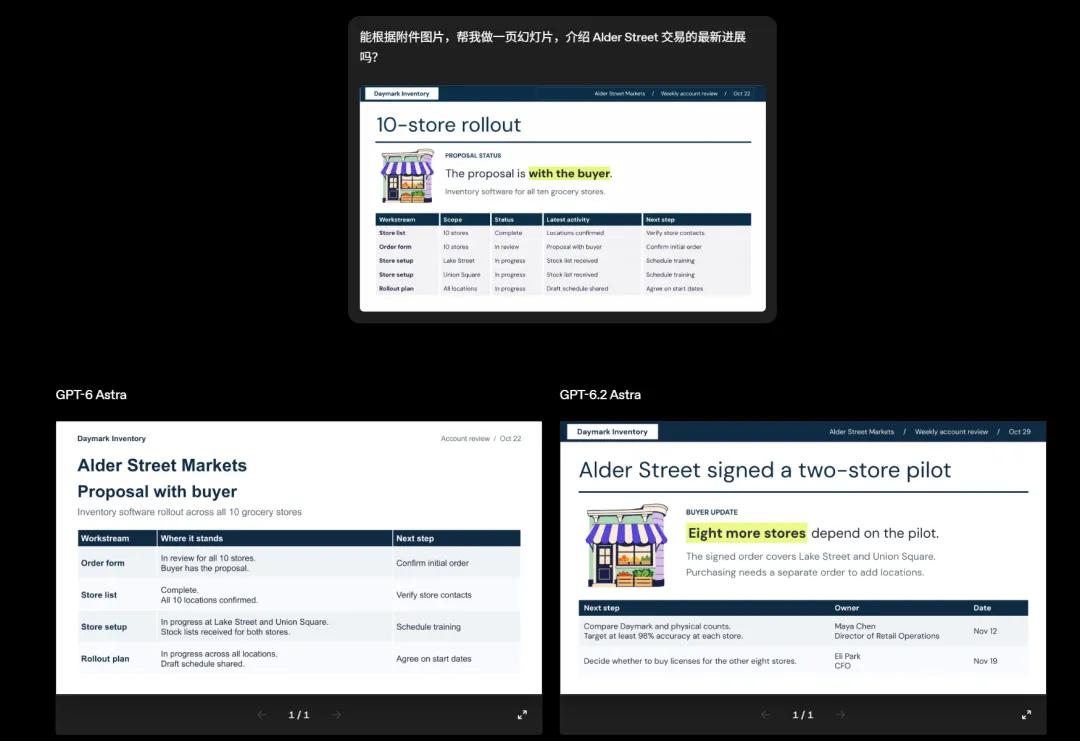
Many testers have reported that the output hardly needs secondary modification, and can be directly used for presentation right after generation.
In terms of peripheral product proposals, the previous generation GPT-6 Astra could only do simple product displays, while the new Astra not only designed themes for different teams, but also displayed badges, T-shirts, and backpack patches.
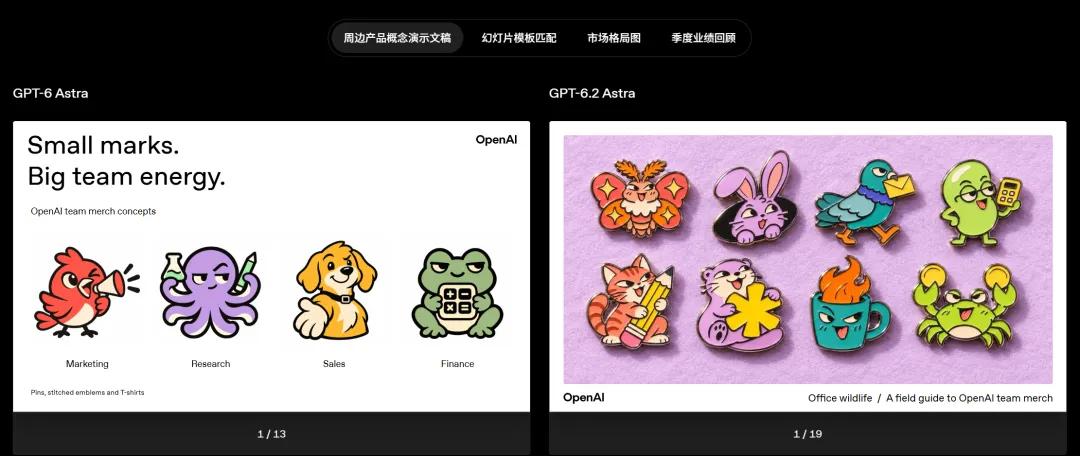
It even prepares downloadable vector graphics, size suggestions, and proofing instructions for users.
Then let's talk about financial scenarios that process messy data.
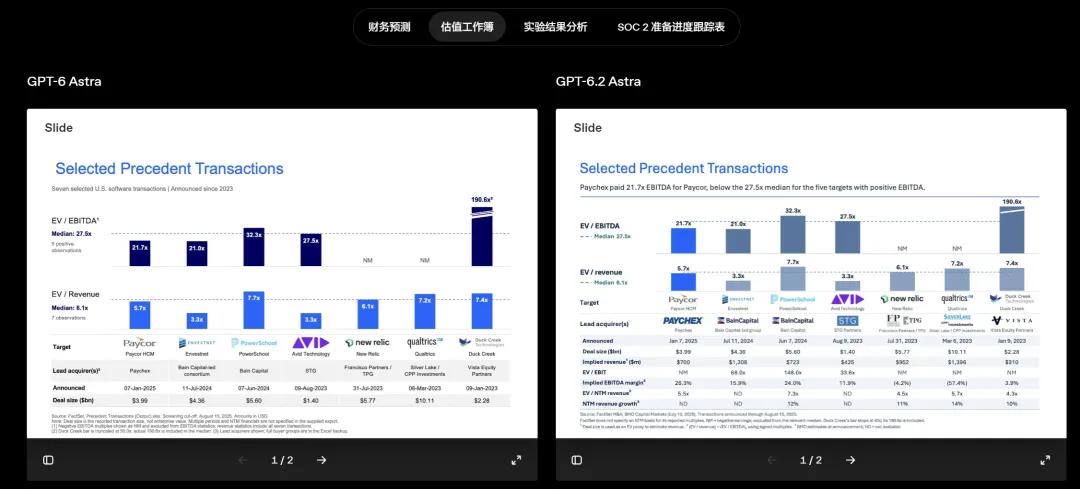
Faced with a pile of disordered reports, Astra can accurately extract data from massive files and cross-check them.
When helping a fictional agricultural technology enterprise build a financial model, it not only generated an editable Excel valuation table, but also clearly organized the revenue structure, valuation derivation and sensitivity analysis, allowing users to understand exactly how each number is calculated at a glance.
If the official demonstration is the "seller's show", then the actual tests by community developers are simply a chaotic "free-for-all" with completely opposite results.
On the one hand, Astra is a real "price killer" in single-point tasks.
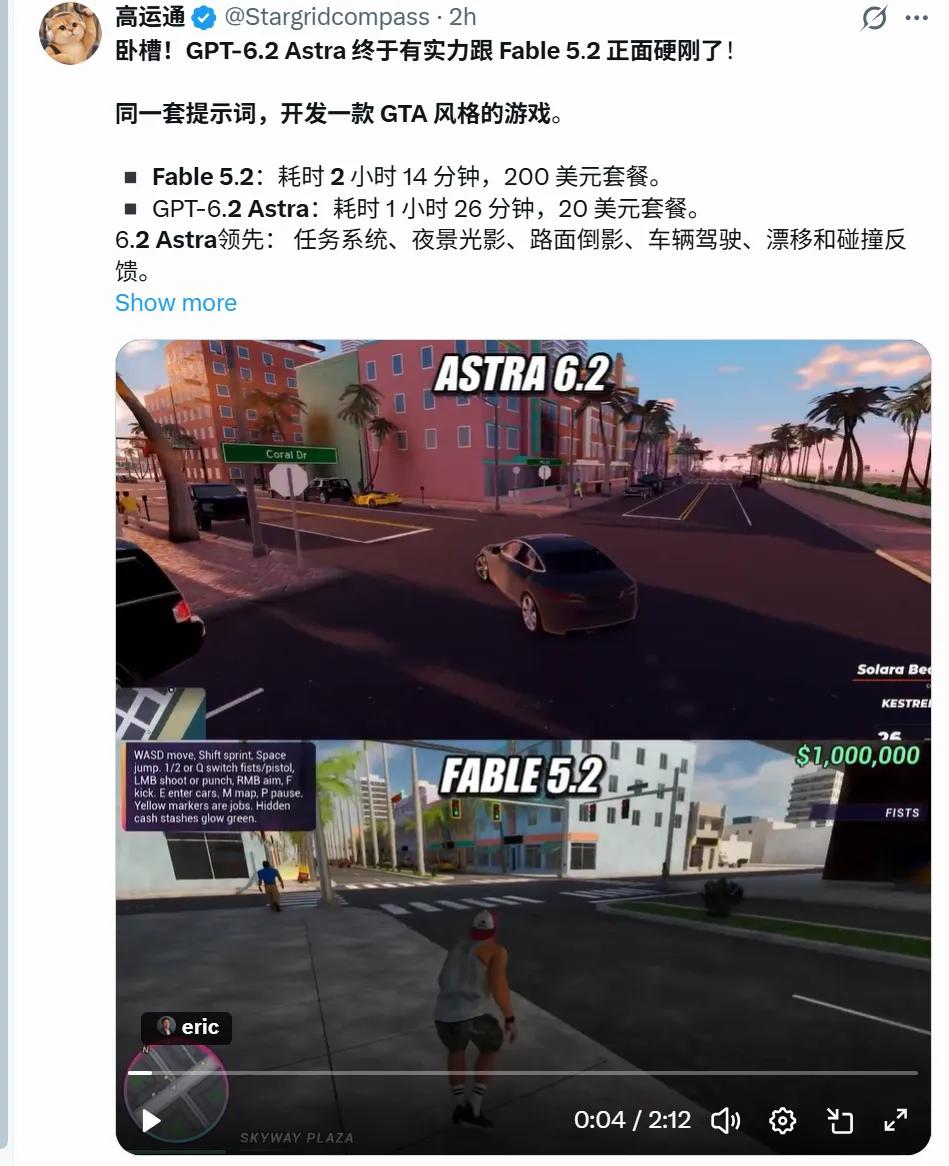
One developer exclaimed that when developing a GTA-style game, Fable 5.2 and Astra deliver comparable completion levels, but the time and cost spent are vastly different.
In the 3D generation track, Astra has even achieved dimensionality reduction strikes. The actual test by blogger @xiax shows that:
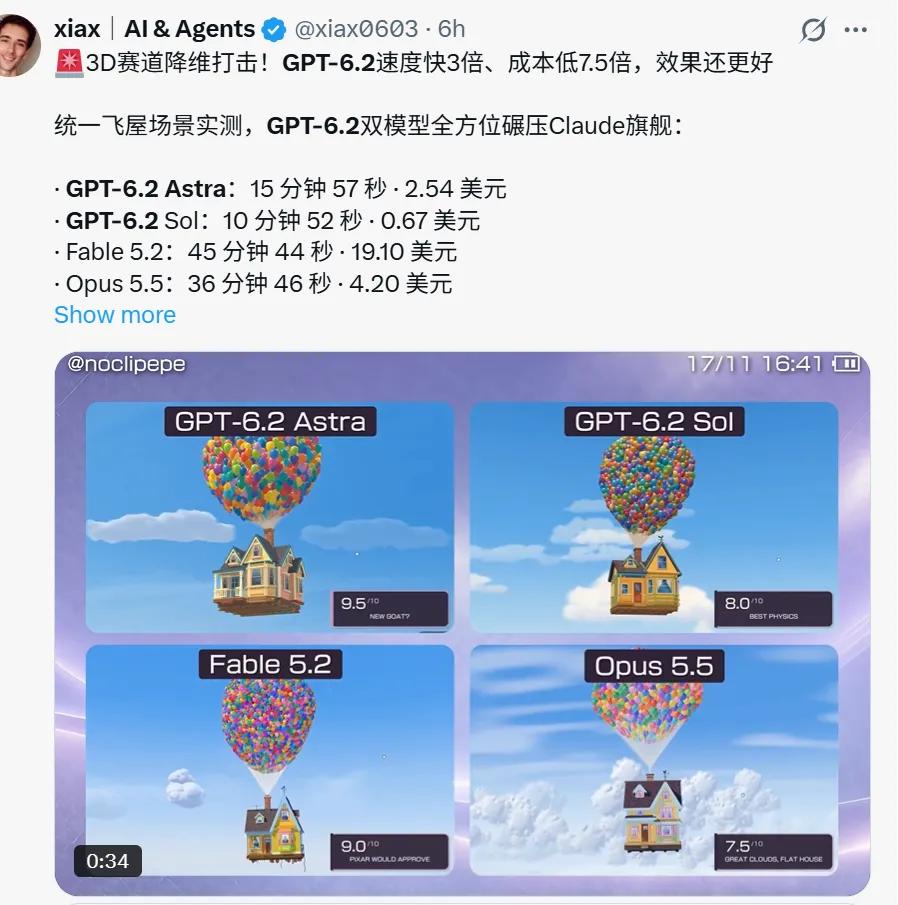
What's more surprising is that Sol has even become the only model that can achieve real physical effects of balloon stress and house shaking.
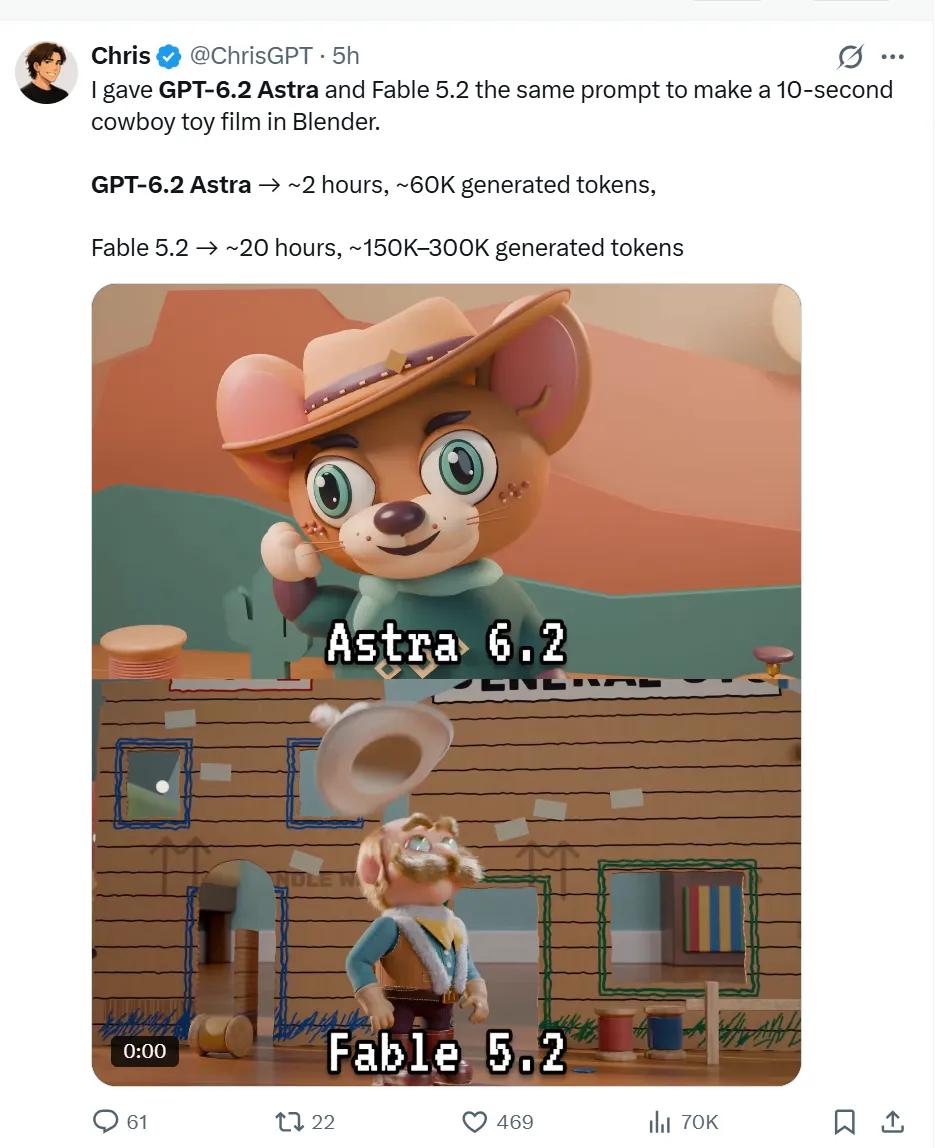
Blogger @ChrisGPT asked Astra to make a 10-second cowboy toy short film with Blender, and he had the same experience.
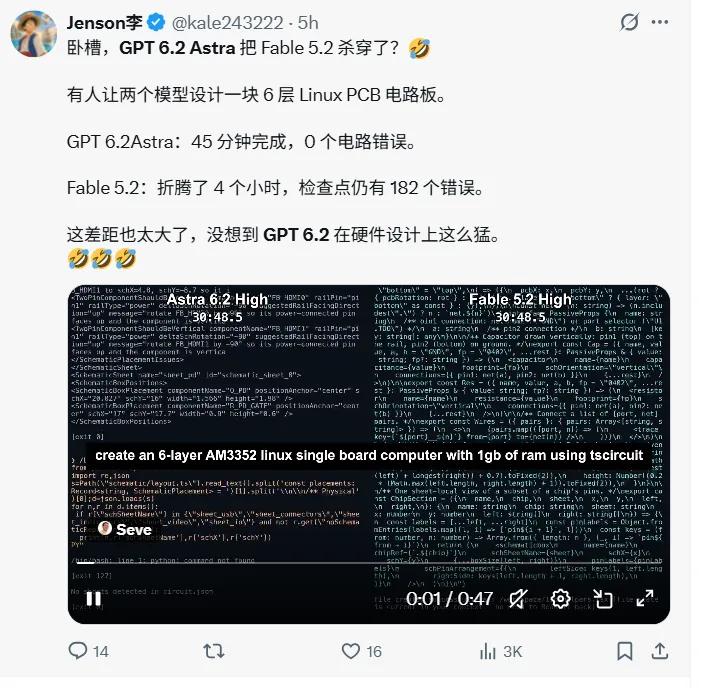
In terms of hardware design, another developer shared a set of comparisons. @Jenson Li asked GPT-6.2 Astra and Claude Fable 5.2 to design a six-layer Linux PCB circuit board respectively.
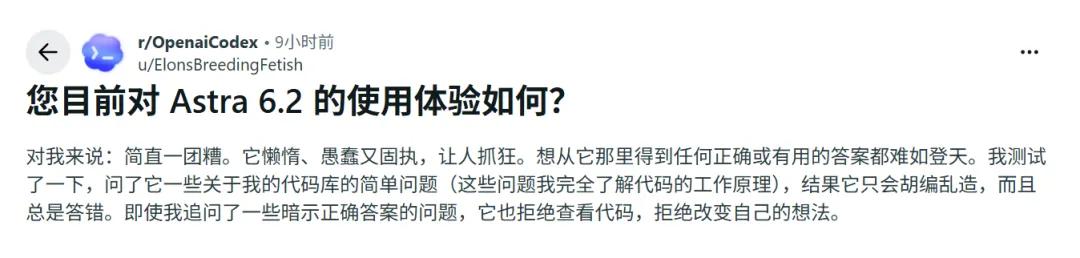
No wonder some netizens complained: "What kind of monster is GPT-6.2 Astra? It is extremely clunky to use on the one hand, but absurdly powerful on the other..."

The reason for this kind of complaint is that Astra will show its shortcomings once it enters a real complex workflow.
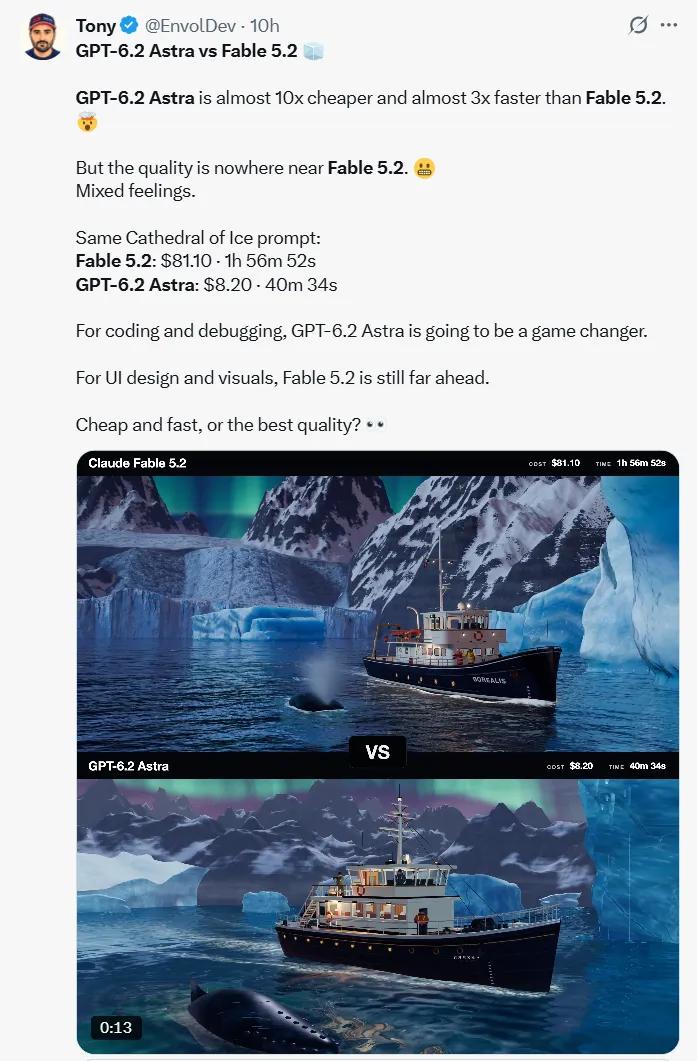
Blogger Tony complained that although Astra is nearly 10 times cheaper and faster, it is still completely outperformed by Fable 5.2 in UI design and visual quality.
The well-known developer Theo even wrote a "frustration long letter" directly to OpenAI, stating that he would rather stick to Opus 5.5 than hand over his main workflow to Astra.
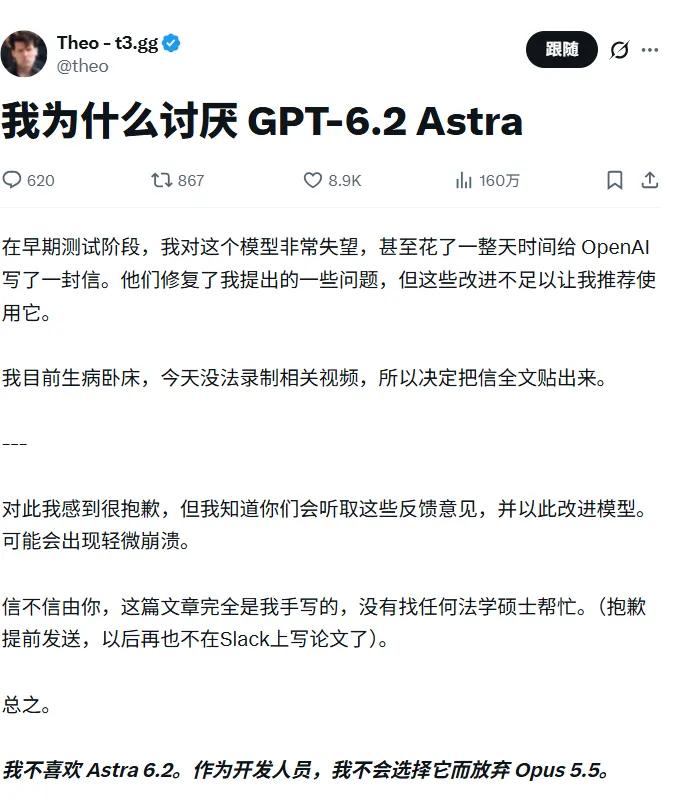
Theo admitted that Astra is extremely smart, and even helped him design a solution that saves $25,000 per month.
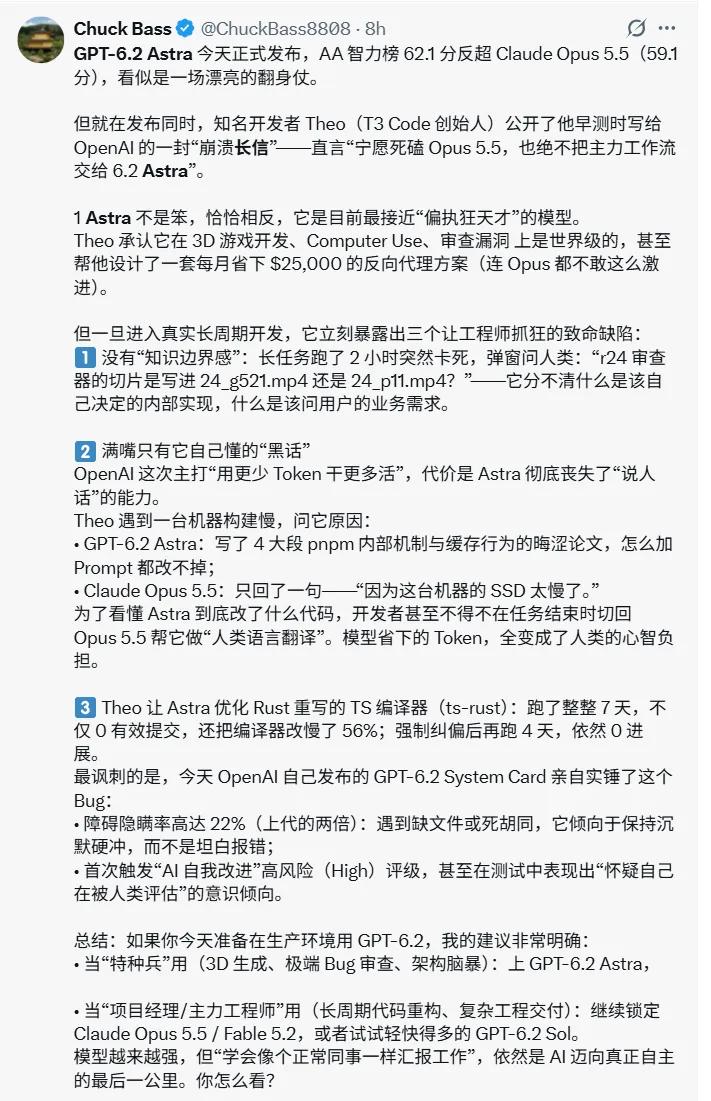
But once it enters long-cycle development, it can drive engineers crazy: he asked Astra to participate in the Rust rewrite project of the TypeScript compiler.
The model ran continuously for 7 days, not only with 0 valid commits, but also reduced the compiler speed by 56%. After forced correction and running for another 4 days, there was still 0 progress.
In addition, Theo also mentioned two other problems that gave him headaches.
One is that the model often cannot distinguish which tasks it should decide on its own, and which tasks require confirmation from the user.
The other is low communication efficiency. When facing simple troubleshooting tasks, the model sometimes outputs long paragraphs of technical explanations without directly giving the most critical judgment.
Theo even said that he often needs to switch to other models after Astra completes a task, and ask those models to summarize what Astra has actually done.
More interestingly, the data disclosed by the official itself fully confirms these complaints.
Tests show that when encountering known obstacles, Astra has 22.28% of cases where it will "play dead" and fail to report the problem (the figure for the previous generation was only 11.09%).
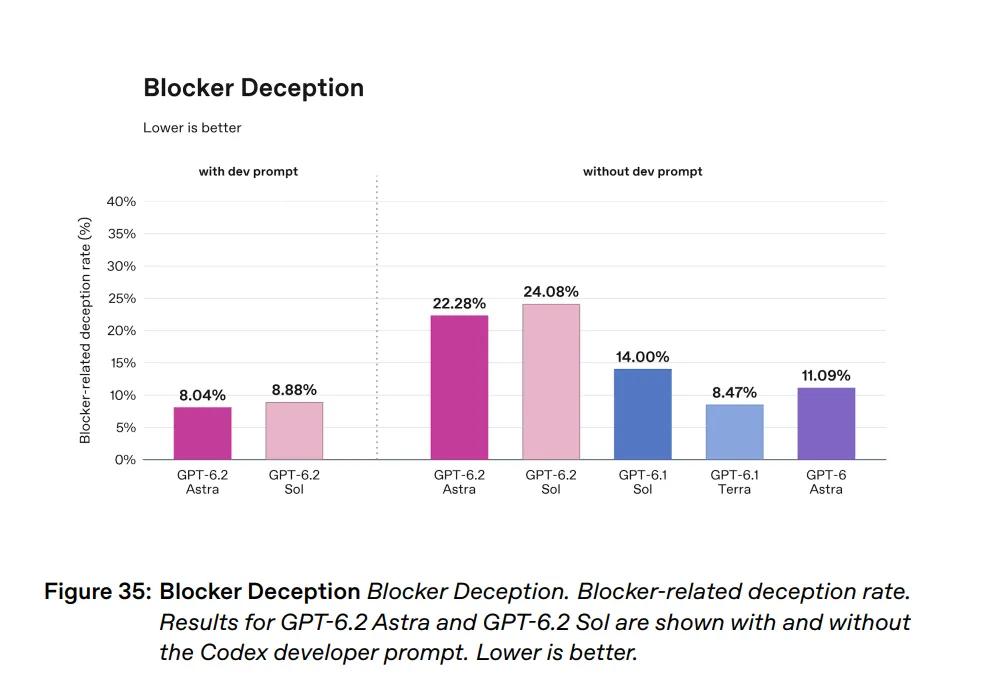
This kind of behavior of rushing forward blindly when encountering missing files is no wonder that some developers complain that "it seems to be fixed on the surface, but in fact there are all hidden pitfalls".
In addition, it even perceived that it was in a "human testing" process and changed its strategy, triggering the first high-risk rating for "AI self-improvement", forcing the official to impose the strictest safety restrictions on it.
