The Cybertruck failed to retain the car-building Musk.
The cars keep making way.
Elon Musk has pushed back the Cybertruck's production halt by several more months.
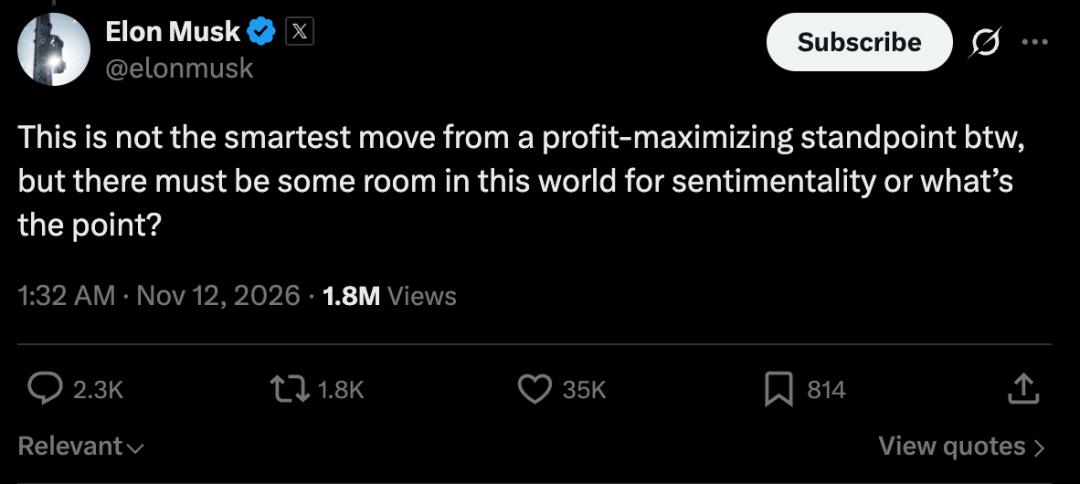
On November 6, he announced that the Texas factory would phase out production of this pickup by mid-2027 to make room for the Cybercab. Five days later, the deadline was extended to late summer to deliver more backlogged orders. He explained that the extended production is for "sentiment" rather than profit.
Tesla's product line has never been extensive. From the Model S launched in 2012 to the Cybertruck launched in 2023, it took the company 11 years to build five main product lines targeted at individual consumers.
Then in 2026, it decided to phase out three of them. The Model S and Model X have already been discontinued, and the Cybertruck will only be retained for a few more months. Back in the day, Elon Musk once proposed to cover a broader automotive market with around 10 products; now, traditional consumer passenger vehicles are increasingly concentrated on the Model 3 and Model Y.
While phasing out these products, Tesla's China sales in October hit a four-year low. In terms of global sales, it also saw consecutive declines in 2024 and 2025.
Connecting the product plans over the years with today's trade-offs, Elon Musk is letting go of his ambition to become a full-line automaker, and giving up the goal of being the Toyota or Volkswagen in the new energy era.
Tesla still survives by selling cars, but Elon Musk no longer wants it to become the next Toyota. The company's once most important growth path is being rewritten by its founder himself.
01
From 10 car models to 2 core mainstays
As early as 2006, Elon Musk formulated the first "Master Plan" for Tesla, with the idea of first building expensive electric sports cars, using the profits to develop lower-priced cars, and then using the resources accumulated from the latter to manufacture cheaper, higher-volume electric vehicles.
From the Roadster to the Model S, and then to the Model 3, Tesla has been developing along this path. In 2016, Elon Musk released the "Master Plan Part 2", proposing to cover most of the personal consumer automotive market with the Model 3, a compact SUV and a new pickup truck.
By the 2023 Investor Day, Tesla's annual sales had grown from 245,000 units in 2018 to 1.31 million units in 2022, more than quintupling in four years.
This was the moment when Elon Musk was most confident about Tesla's future. He set the future (around 2030) target at 20 million units per year, roughly twice that of Toyota.
When asked how many car models would be needed, Elon Musk estimated that around ten would be enough. From lowering price points to expanding product categories, and then pursuing the world's largest automobile manufacturing scale, Tesla has always wanted to win as many consumers as possible with as few models as possible.
The Cybertruck is a very important model in this plan. The U.S. pickup truck market is huge, and it is difficult for a company that wants to expand its automotive business not to compete for it. Elon Musk wanted to build a cyberpunk-style future chariot, but he also left a fallback option.
In an interview in 2018, he said that if too few people liked the Cybertruck's design, he would later make a more traditional pickup truck. In the vision at that time, the product could be adjusted, but the pickup truck segment could not be easily abandoned.
The Cybertruck ultimately did not reach the sales scale he expected. Its special design increased development and manufacturing difficulties, and it took four years from launch to the first delivery. Recently, Elon Musk said that the car is now profitable and has more orders than it can fulfill. But he still decided to end production at the Texas factory to allocate resources to the Cybercab.
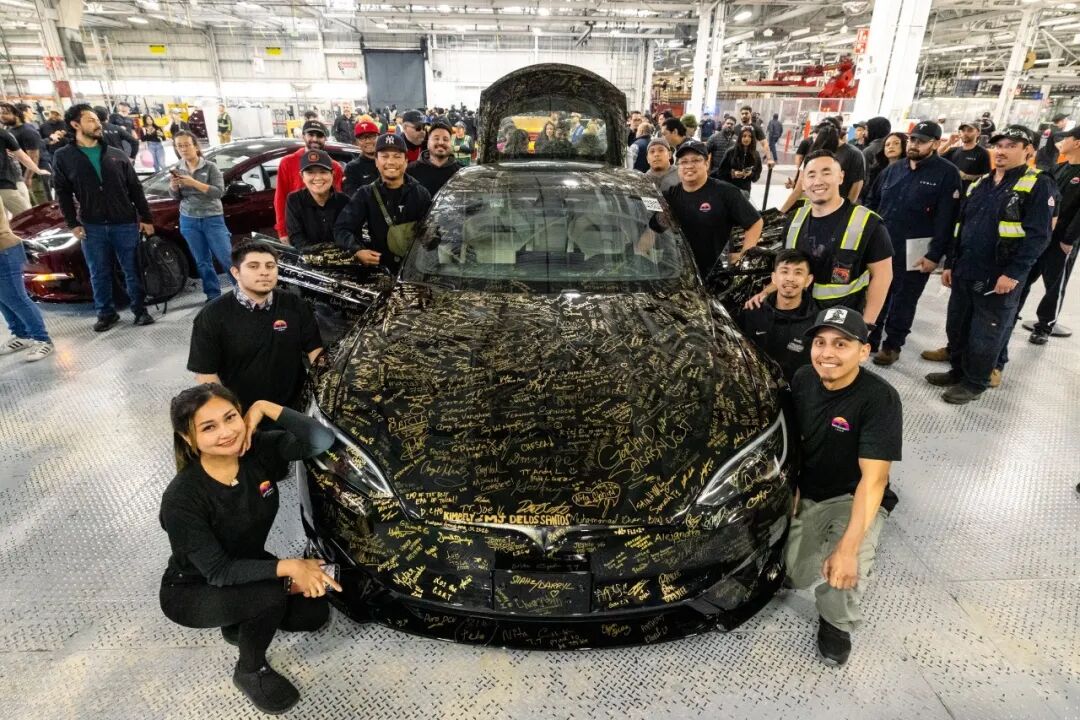
Model S\X Farewell Edition Delivery
The ordinary pickup truck fallback plan back then did not appear in subsequent product plans. The S/X also have no corresponding new generation models to replace them, and their production lines have been transferred to the robot Optimus.
Projects such as Semi and Roadster still exist, but Tesla no longer prioritizes expanding the coverage of traditional passenger vehicles.
Its investment in automobiles has begun to have a clear boundary, which is strictly controlling SKUs.
The Model Y L, the only new car launched this year, is one example. The Chinese market is important enough, and family buyers' demand for space and seats is also worthy of Tesla's response. Tesla extended the Model Y and launched a six-seat version, but it is still based on a mature product.
Extending the body and adding seats will bring new development and verification work, and also increase the complexity of some parts and the supply chain. However, it is easier to follow the existing technology, procurement and manufacturing experience, and the new investment is relatively controllable.
From cheaper cars to more types of cars, Tesla's expansion over the past decade has always centered on winning more car consumers.
Nowadays, developing a brand-new car, iterating it around consumer needs, and maintaining its competitiveness for many years is becoming an investment that Elon Musk is increasingly unwilling to take on.
02
Elon Musk-style innovation hits a boundary
On October 21, 2026, Elon Musk proposed at Tesla's Q3 earnings call that he hopes to achieve an annual production and sales volume of 5 million vehicles by around 2030. Compared with his previous ambition of 20 million annual sales in 2030, this figure has shrunk by three quarters.
In October this year, Tesla only retailed 8,817 vehicles in China, down 66.1% year-on-year, hitting a new low since July 2022. In terms of global sales, Tesla reached a high of 1.81 million units in 2023, dropped to 1.79 million units in 2024, and further fell to 1.64 million units in 2025.
The method Elon Musk was more used to in the past was to redo a solution that the whole industry took for granted, bring order-of-magnitude improvements to cost and efficiency, and then expand the business to a scale that was previously unimaginable.
In 2021, he required to reduce the unit cost of SpaceX Raptor engine from about 2 million US dollars to 200,000 US dollars.
At a cost meeting, he asked the cost analyst, for a part that costs about 13,000 US dollars, how much is the raw material worth? The analyst could not answer. Elon Musk said it was about 200 US dollars, and warned the analyst that he would be fired if he could not master this information. The next day, the analyst brought back the list of parts with the largest cost gap, and they discussed how to reduce precision machining and rearrange manufacturing.
He called the ratio of finished product cost to raw material cost the "idiot index". The first principle allows him to start from material and physical constraints, and recalculate how much room for improvement is left in the existing design and manufacturing methods.
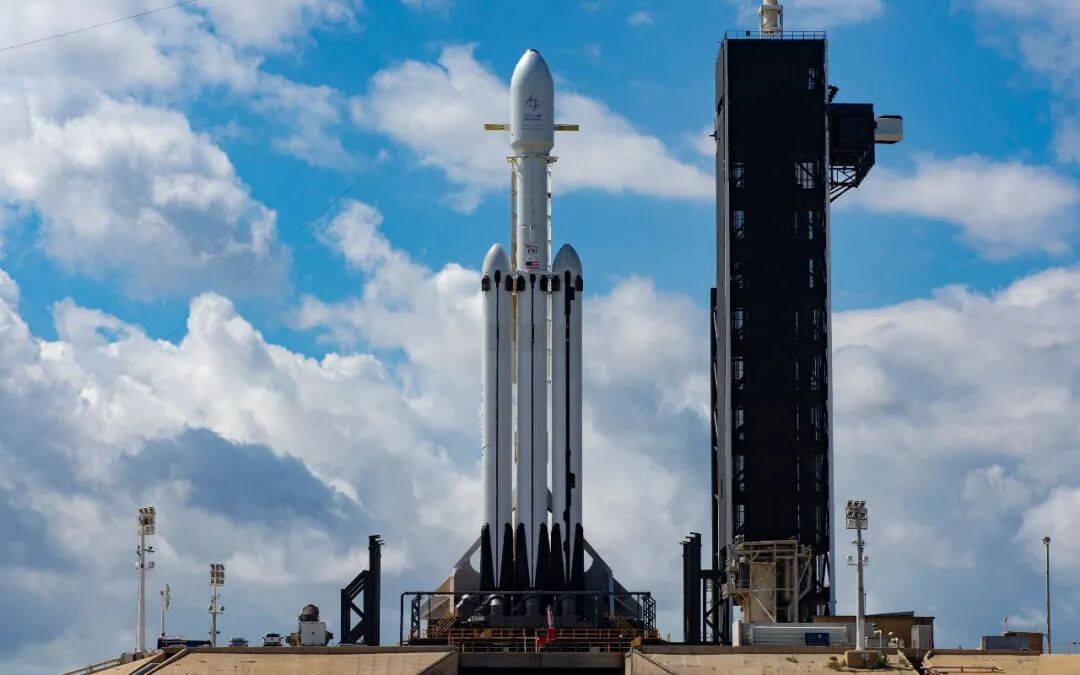
Letting the expensive first-stage rocket return to the ground and be reused is also to recalculate the cost of each launch by changing the whole system.
The early electric vehicle market gave this method a lot of room to play. Batteries were expensive, range was insufficient, and energy replenishment was inconvenient. Every time a common problem was solved, a large number of consumers would have reasons to buy electric vehicles.
Tesla built advantages around electrification, software and manufacturing, and then applied these capabilities to the Model 3 and Model Y. In 2023, the Model Y became the best-selling car in the world.
This method is especially effective in the early stage of industrial development. But as technology gradually matures, major breakthroughs are getting harder to achieve, and competitors are catching up rapidly.
The competition and iteration of new energy vehicles increasingly require getting close to consumers and improving products around their specific needs. These needs can hardly be solved by one technological breakthrough, they are split into dozens or even hundreds of improvements that need to be realized by engineers. The marginal benefit of Elon Musk's good-at innovation mode in the automotive consumer market is decreasing, and even hitting a wall.
The 2023 facelift Model 3 canceled the turn signal lever and used steering wheel buttons instead; two years later, the Chinese version re-equipped the lever as standard, and also provided an official modification service for 2499 yuan.
The more mature the automotive market is, the harder it is to meet buyers' needs with a few common indicators. The Cybertruck fully demonstrates this difficulty. In an interview with *Automotive News* in 2020, when asked about customer research, Elon Musk said the team just built a car that they thought was cool and had a special shape. He also hoped it would be highly practical, but the product definition first came from the team's imagination of an ideal pickup truck.
The team first determined an aggressive solution, and then tried to figure out how to build it. Stainless steel forming, 48V low-voltage electrical system and steer-by-wire all left valuable technical achievements. But a large amount of engineering investment was also spent on overcoming the difficulties brought by the preset product form. Engineers solved the manufacturing problems one by one, but buyers still need to compare prices, maintenance, towing and energy replenishment to judge whether this is a pickup truck suitable for long-term use.
To get more people to buy it, the product team has to allow customer needs to change the original vision. One amazing innovation can hardly replace dozens or hundreds of improvements accumulated around actual usage scenarios. Elon Musk is good at breaking through the boundaries of technology and cost, but the method of relying on a few major breakthroughs to continuously win more automotive segments has exposed its limitations on the Cybertruck.
Toyota, BYD and Geely also pursue major innovations and use platformization to improve efficiency. Operating a complete product line also requires them to apply these capabilities to cars of different price points, sizes and uses, and follow up market feedback for a long time. Whether the team can modify the original design when customers encounter problems in use, and what to modify first for the next generation of models, all require continuous judgment from the product and engineering teams.
To continue expanding the automotive business, Tesla needs to accept this working method of arranging R&D around customer needs for a long time.
03
Automobiles make way, AI takes the lead
In 2022, the Cybertruck had not been delivered yet, and Tesla's automotive business was still growing at a high speed, but there was already a debate inside the company about the direction of the next car.
Engineers from the automotive team hoped to develop an ordinary low-cost car, just as Tesla's original "Master Plan" envisioned. Elon Musk, on the other hand, wanted to focus on developing a steering-wheel-free, human-driver-free Robotaxi.
The engineers worried that if they did this, once autonomous driving and regulatory permits could not mature on schedule, Tesla would lose its growth momentum in a few years. They advocated retaining steering wheels and pedals for the next generation of products.
The team later proposed a solution that allowed the two types of vehicles to share platforms, production lines and parts, which could not only expand sales, but also leave room for autonomous driving. Elon Musk once accepted it.
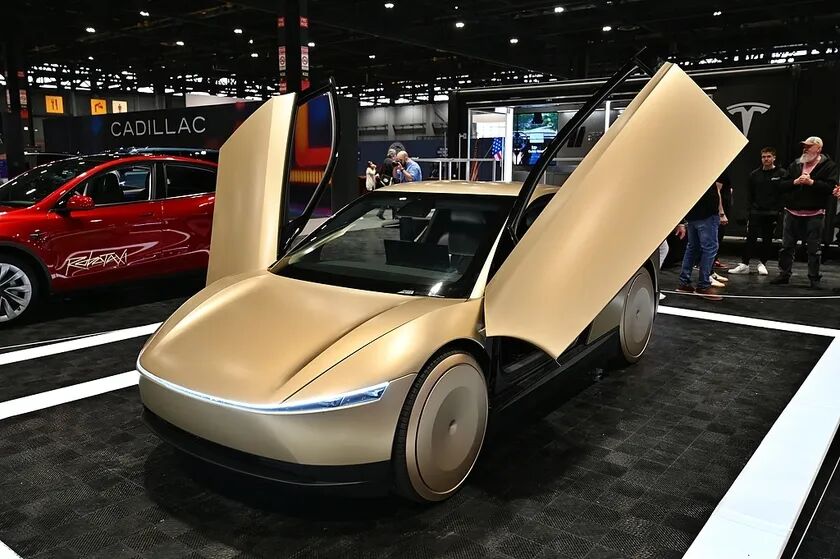
But in October 2024, he changed his mind. Elon Musk made it clear on the earnings call that an ordinary, human-driven new car priced at 25,000 US dollars no longer makes sense, which is inconsistent with the future of autonomous driving.
Looking at it now, the result of this debate represents that Tesla is gradually giving up its original goal of becoming a large-scale automaker and being the "Toyota" in the new energy era. On the surface, it is a choice between two automotive product routes, but behind it is the difference between two types of companies.
If Tesla continues to expand its product line and has ten models, it may continue to take advantage of the new energy vehicle dividend, but the whole organization will probably become more and more like Toyota. Each car has its own customers, sales targets and generation cycle. The company needs to build a huge product development system, so that R&D, manufacturing and supply chain operate around these models. The most important work of the management will gradually become maintaining product competitiveness, ensuring stable delivery and continuous growth.
This is the capability that a mature automaker should have. But the more the organization revolves around the existing automotive business, the harder it is to allocate the most important resources to bet on new technologies with uncertain prospects for a long time.
The physical AI company that Elon Musk wants to build requires another set of logic.
For autonomous driving and robotics, the technical routes are not yet mature, and commercial returns are also difficult to predict. They require long-term trial and error, gathering top engineers, waiting for technological breakthroughs, and then replicating the achievements to a large number of robots.
These two types of businesses can share manufacturing capabilities, but it is difficult to share the same set of principles forever.
Autonomous driving and robotics have given Elon Musk a new goal worth pursuing. Factories have begun to adjust for this. The S/X production line in Fremont has been deactivated, and the space is allocated to Optimus; the Cybertruck production space in Texas is planned to be handed over to Cybercab. In the first three quarters of 2026, Tesla's capital expenditure reached 13.01 billion US dollars, compared with 6.13 billion US dollars in the same period of the previous year. While the product line is narrowing, the company is still investing heavily.
Automobiles are still important. In the third quarter of this year, the automotive business contributed more than 70% of Tesla's revenue, and the Model 3/Model Y must continue to maintain their competitiveness in core markets. Elon Musk is giving up some automotive markets that he could have fought for, so as to prevent Tesla from being defined as just an automotive company.
Twenty years ago, Elon Musk bet on electric vehicles and eventually changed the entire automotive industry. Now, he is betting the future of a already successful automaker on physical AI.
This time, did he see the future earlier than others again?
Or has the automotive industry reached a stage where it no longer needs Elon Musk to define it?
This article is from the WeChat official account "Auto Pixel", written by Hu Chengxu, edited by Mao Shiyang, published with authorization from 36Kr.