Proya has acquired Huazhixiao, while Botanee stumbled in its acquisition move. Is the era of large-scale mergers and acquisitions in the beauty industry coming?
Following Fan Bingbing and Zhao Lusi, is Sun Li also entering the beauty and skincare track?
hans×hannah, co-created by Sun Li and her partner Jin Yunrong, an expert in aromatherapy, has entered the essential oil skincare track. On the official Xiaohongshu account @hans×hannah, the 50ml hans×hannah Zhenhao Body Lotion is priced at 399 yuan, and the 2*50ml pack is priced at 799 yuan.
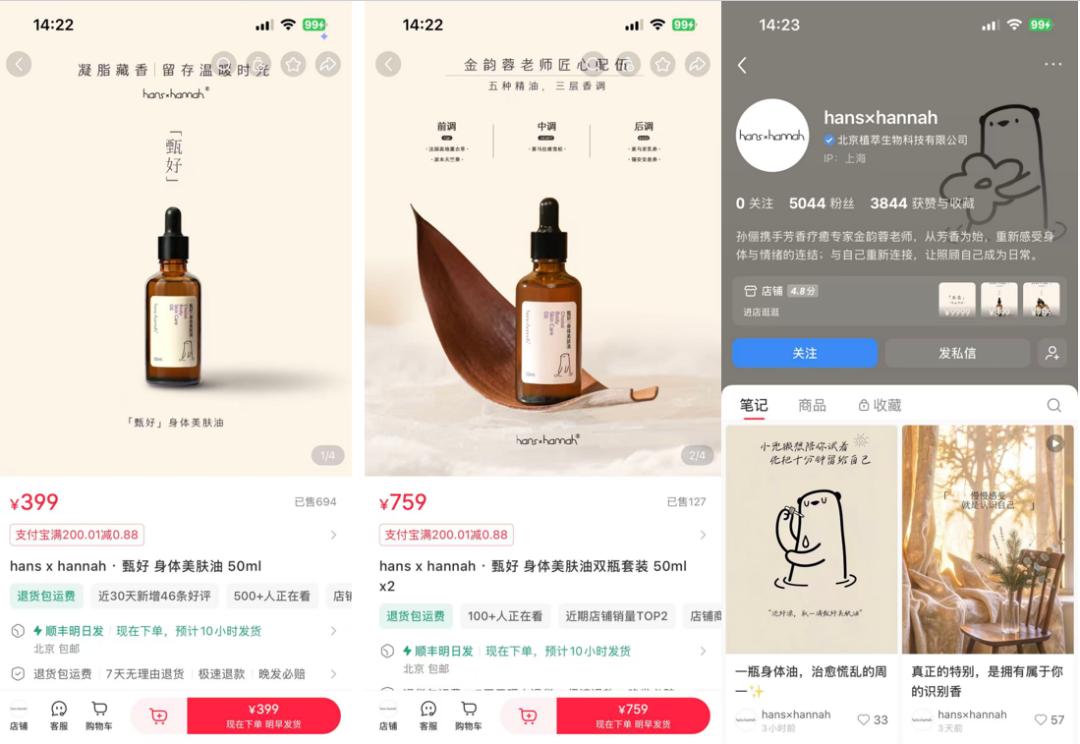
In other words, hans×hannah adopts the strategy of "starting with a single SKU + medium-to-high customer unit price + binding professional endorsement", which is different from the current strategy of celebrity beauty brands that "expand volume with multiple SKUs + drive sales at low prices + quickly launch operations in live streaming rooms". Sun Li said, "When building hans×hannah, I hope its quality is the same as the quality of the products I usually use. We cannot lower the standards just because we commercialize it."
However, it remains doubtful whether this strategy can support the continuous growth of hans×hannah's sales in the future.
On the one hand, when the celebrity aura fades and popularity cools down, whether the product can operate independently becomes the key. After all, a large number of celebrity self-founded brands have emerged in the industry, but very few brands have survived to the second or third year.
On the other hand, the limited repurchase rate of a single SKU is hitting the cruel reality of "oil-based skincare" trading price for volume. Data disclosed by *Users Speak* shows that from July 2025 to June 2026, the total sales of oil-based skincare products on Tmall, Douyin and JD.com reached about 11.5 billion yuan, a year-on-year increase of 16.58%. However, this growth is based on trading price for volume: the average transaction price dropped from 133 yuan to 121 yuan, while sales volume only increased slightly by 5.42% in the same period.
The pressure on the oil-based skincare track is just a microcosm of the sluggish growth of the beauty market. Data from Qingyan Intelligence shows that during the 2026 Double 11 shopping festival, the total transaction value of cosmetics on mainstream online channels (Taobao-Tmall, Douyin, JD.com, Kuaishou) reached 84.929 billion yuan, and the average daily transaction value decreased slightly by 0.54% year-on-year.
On the one hand, the capital market requires sustained performance growth; on the other hand, sales are under pressure and large promotions can hardly drive incremental growth. Acquisitions are becoming a breakthrough solution for leading beauty enterprises, and 2026 is even called the big year of beauty M&A. But will M&A bring honey or a burden to beauty enterprises?
01
Internal incubation fails, shifting to acquiring mature targets
Is Lin Qingxuan also going to enter the infant and child skincare business?
Recently, news came out that Lin Qingxuan has acquired Yierrun, a maternal and infant efficacy skincare brand. According to people familiar with the matter, Yierrun will remain independently operated after the acquisition is completed, and Wang Danqin, founder of Yierrun, will continue to serve as the general manager of Shanghai Yierrun Medical Technology Co., Ltd., the main operating entity of the brand.
Why does Lin Qingxuan want to acquire Yierrun?
High dependence on the main brand Lin Qingxuan and the lack of a truly diversified brand matrix are important problems that Lin Qingxuan is facing at this stage. At present, the brands under Lin Qingxuan include the main brand Lin Qingxuan (Camellia Repair Expert), Huarongzhuang (community beauty service brand), Xiaoxinxuan (light repair moisturizing skincare brand), and MOQI (men's skincare sub-line brand).
Lin Qingxuan's previous prospectus shows that from 2022 to 2024, the main brand "Lin Qingxuan" accounted for 99.1%, 99.0% and 99.0% of the group's total revenue respectively. Facing the situation of excessive proportion of a single brand, Lin Qingxuan proposed in its 2026 semi-annual report to build a "1+4+N" category matrix, creating a category matrix system with clear structure, reasonable echelon and sustainable growth.
But can reality meet Lin Qingxuan's expectations?
Third-party data shows that on the Douyin platform, the sales volume of Xiaoxinxuan Artemisia Annua Repair and Wrinkle Smoothing Essential Oil has only reached 100,000 yuan to 250,000 yuan in the nearly 30 days (October 17 to November 15, 2026); in the same period, even for another Xiaoxinxuan Artemisia Annua Repair and Wrinkle Smoothing Essential Oil with a high 20% commission, the sales volume of the product link is only 5,000 yuan to 10,000 yuan.
"The layout of new brands is divided into three stages. The first stage is the ongoing high-end positioning of a single brand, the second stage is a differentiated multi-brand matrix for different crowds, regions and skin types, and the third stage is globalization," said Sun Laichun, founder of Lin Qingxuan.
The acquisition of Yierrun has become a key layout for Lin Qingxuan to complete the infant and child skincare track and expand its consumer base. According to Euromonitor data, the market size of China's infant and child care products will expand to 46 billion yuan in 2026, with an overall expected growth rate of 44%.
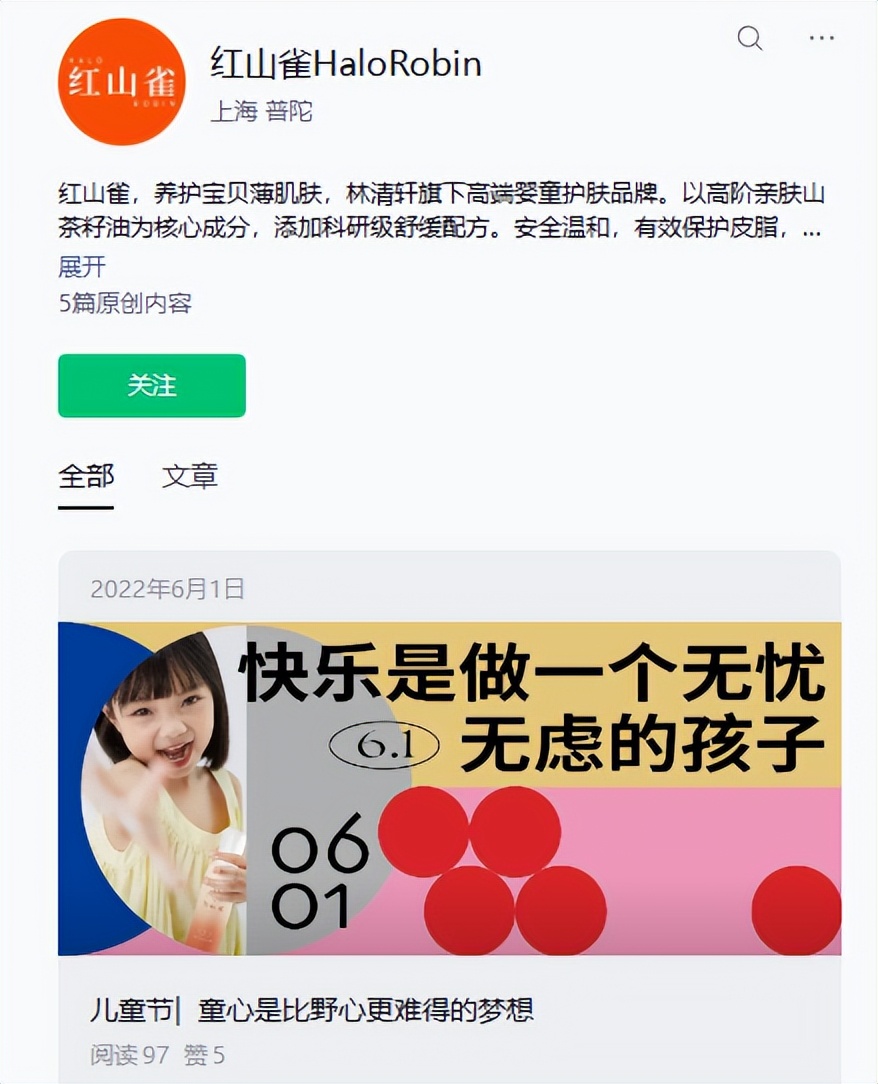
Facing the considerable market size, as early as 2021, Lin Qingxuan released its infant and child skincare sub-brand HaloRobin. However, the WeChat official account of HaloRobin has stopped updating since June 1, 2022; Lin Qingxuan did not even mention HaloRobin at all in its 2026 semi-annual report.
In contrast, data disclosed by Supernova Capital Bureau shows that in terms of online sales, Yierrun's GMV on Douyin in 2025 was 2.5 million to 5 million yuan, and its GMV since 2026 has risen to 10 million yuan. Obviously, compared with the uncertain risks of internally incubating new brands, directly acquiring mature targets is more worry-free for Lin Qingxuan.
But did Lin Qingxuan acquire Yierrun just for its high GMV growth?
In the infant and child track, ingredient safety is the first threshold for consumers' decision-making. Zhang Xiaojun, founder and CEO of Daxkes, said, "Mothers care most about safety and efficacy rather than price." The survey data from Huaxinren Consulting also points out that ingredient safety (32%) is the top concern for consumers when buying infant moisturizing lotion.
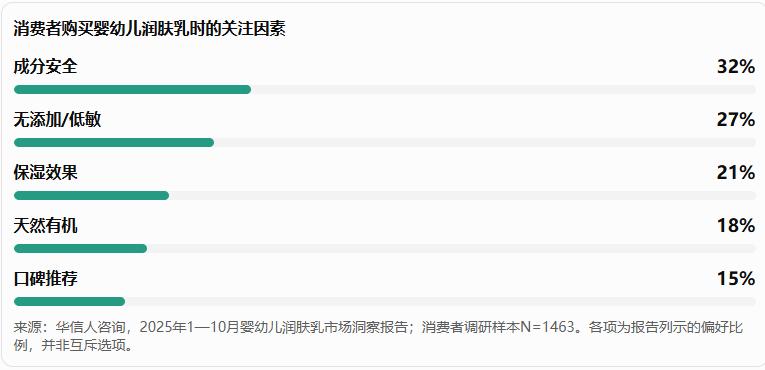
(Source: Huaxinren Consulting)
Wang Danqin has a background in pediatrics at the Medical College Affiliated to Shanghai Jiao Tong University, has worked at Danone, Wyeth and Mead Johnson for more than 20 years, and has 15 years of work experience related to hypoallergenic baby formula. This medical research background and channel accumulation are barriers that many new consumer infant and child brands cannot establish in a short period of time.
But why is Yierrun willing to accept the acquisition by Lin Qingxuan?
At present, Yierrun is facing extrusion from new brands such as Turtle Dad and Rabbit Head Mom. Third-party data shows that the GMV of Rabbit Head Mom's official Douyin flagship store (from January 1 to November 15, 2026) exceeds 10 million yuan.
At the same time, it also has to face competition from large groups: Winona Baby and Qichu are backed by Winona and Shanghai Jahwa respectively. According to Winona's financial report, in the first half of 2026, Winona Baby's revenue reached 169 million yuan, a year-on-year increase of 54%.
In addition, overseas giants in the maternal and infant track continue to increase their investment. Pigeon launched a bionic vernix series of products at the Shanghai China International Import Expo, simulating the structure of the native vernix of newborns, reproducing the sebum protection environment that babies are born with, focusing on repairing the fragile skin barrier of newborns.
With crowded players in the track and giants squeezing the living space, the growth ceiling of vertical brands is clearly visible. After being acquired by large groups, vertical brands can break through their own development bottlenecks with the help of the group's capital, supply chain, online and offline store resources, which has become a key path for vertical brands to achieve subsequent growth.
So, is Lin Qingxuan's acquisition of Yierrun a microcosm of domestic beauty brands making up for shortcomings through M&A?
02
Different demands of beauty giants in M&A
Hou Wenjie, Secretary-General of Yice Think Tank, pointed out that the overall growth of the industry is slowing down, and it is difficult to achieve high growth relying on self-owned brands. M&A can acquire new brands, new customer groups and new categories. At the same time, segmented beauty tracks are rising, niche brands and efficacy skincare are growing rapidly, and giants need to quickly make up for their capability shortcomings. Coupled with the improvement of the capital market environment, the valuation of new brands has fallen, and the acquisition cost has become controllable. International giants are also using M&A to enter the Chinese market or strengthen their high-end beauty layout. Driven by multiple factors, domestic beauty giants have collectively launched a "buy, buy, buy" M&A boom.
For acquisition targets, domestic beauty enterprises have taken three differentiated paths:
The first path is represented by brand owners such as Proya, Shanghai Chicmax and Lin Qingxuan, who reduce their dependence on the main brand and improve the brand matrix by acquiring mature brands. Chen Yanyi, Chief Strategy Officer of Guangzhou CSD, pointed out that after endogenous growth hits the ceiling, acquiring mature brands is the most direct way to "replenish blood". The deeper logic is that high gross profit tracks such as fragrance and high-efficacy skincare have become the main battlefield of competition, and giants prefer to complete the category layout through acquisition rather than investing from scratch to incubate new brands.
Take Proya as an example. In the first half of 2026, the main Proya brand, which accounted for 68.79% of revenue, saw its revenue drop by 7.19% year-on-year; the revenue of Cai Tang dropped by 21.93% year-on-year. Although Pasee saw a sharp increase of 222.23%, its revenue only accounted for 5.83% with a limited scale.
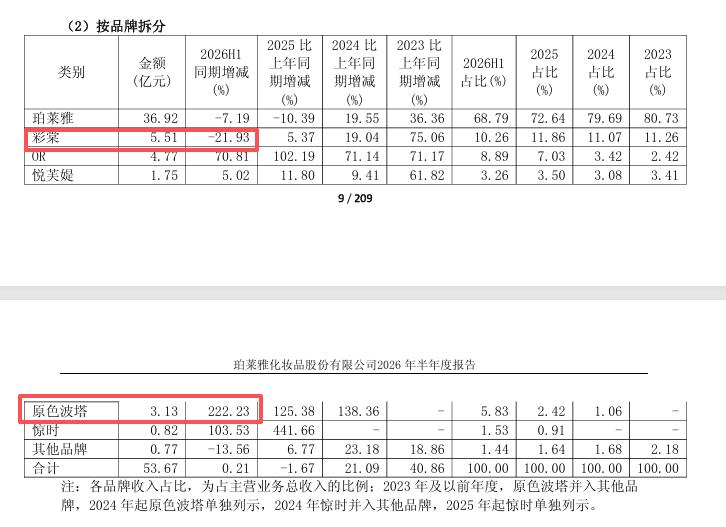
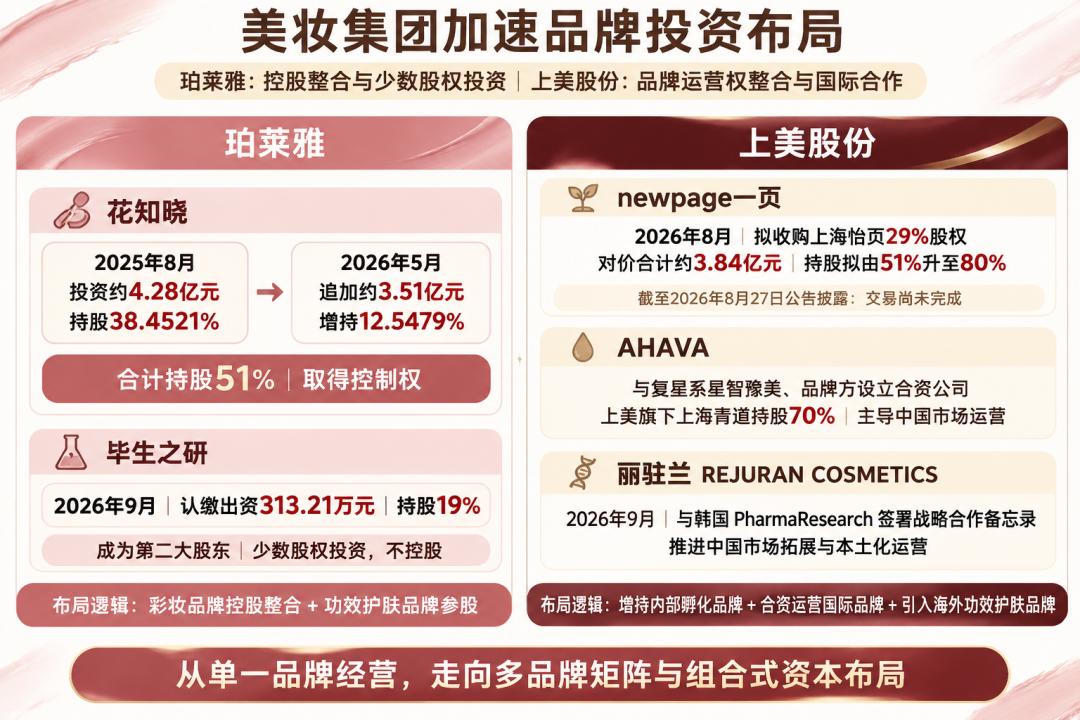
Facing growth pressure, on the one hand, Proya took full control of Huazhixiao to form dislocation competition with existing Cai Tang and Pasee, covering makeup users of different age groups; relying on Huazhixiao's mature overseas operation experience - the brand settled in ULTA Beauty in the United States at the end of 2025, which in turn empowers the Proya group's overseas expansion. On the other hand, it invested 3.1321 million yuan to take shares in Shanghai Kedai Biotechnology Co., Ltd., the parent company of efficacy skincare brand Dr.Bio, and became its second largest shareholder.
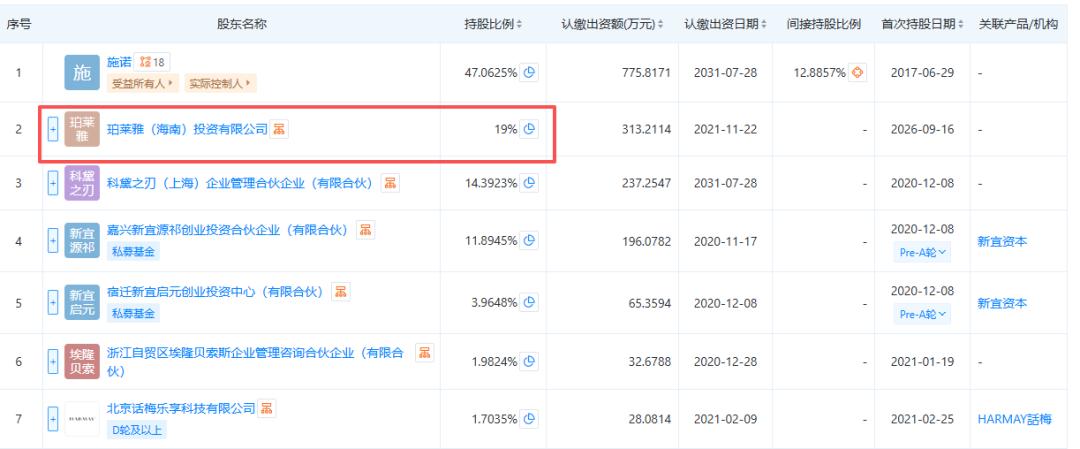
(Source: Tianyancha)
Facing the situation that the revenue of Kans under Chicmax dropped by 20.4% year-on-year in the first half of 2026 and accounted for as high as 70.8% of total revenue, Shanghai Chicmax successively acquired Shanghai Yiye, the parent company of newpage; established a joint venture with Starzhi Yumei of Fosun Group and the AHAVA brand owner; and also signed a strategic cooperation memorandum with Pharma Research, the leading South Korean PDRN regenerative medicine enterprise, to lead the localized operation of REJURAN COSMETICS in China. Lyu Yixiong, CEO of Shanghai Chicmax, also publicly stated that AHAVA has unique brand genes and he looks forward to telling the brand story well.

(Source: Tianyancha)
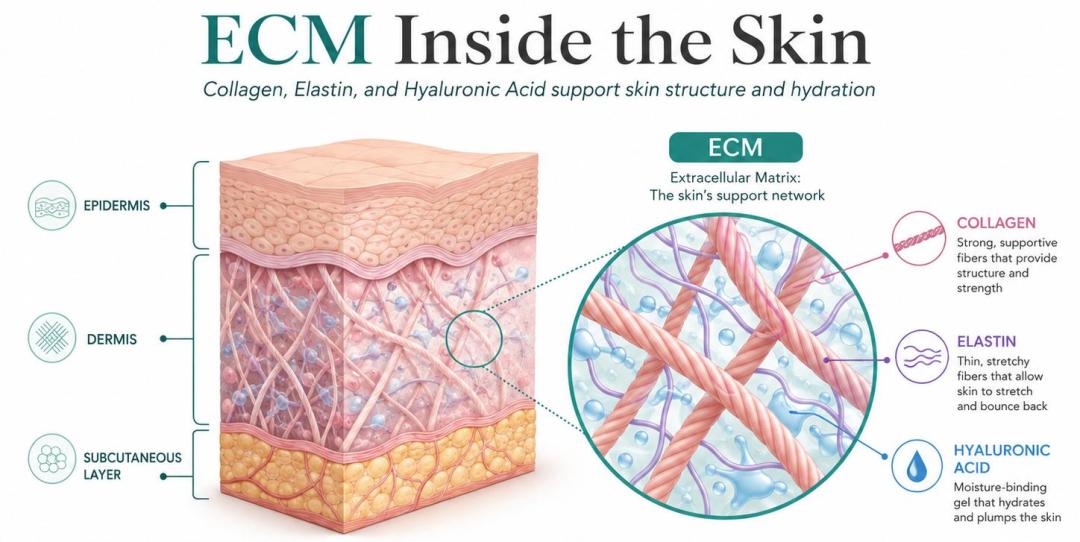
The second path is represented by medical aesthetic enterprises such as Bloomage Bio, Imeik Technology and Haohai Biological, who bet on upstream raw materials and new medical aesthetic technologies. According to a report by *Seoul Economic Daily*, enterprises including Hans Biomed, L&C Bio, DOF and CGBio have all bet on the ECM (extracellular matrix) track.
If we compare human skin to a garden: hyaluronic acid is like a sponge, whose core function is to lock in moisture and keep skin hydrated; while ECM is equivalent to the soil and the whole supporting system of the garden, which combines collagen, elastin, hyaluronic acid, polysaccharides and other components to maintain the microenvironment of skin cells.
In the view of Jang Doo-hyun, CEO of Hugel, although the ECM track is still in the early stage of development, its growth potential is considerable; if the "toxin + filler + ECM + cosmetics" combined package sales can be created to get rid of the price involution of a single category,