In these cities, signs of stabilizing housing prices are constantly emerging.
Positive signals are gradually accumulating.
First-tier cities are the first to hit the bottom of housing prices. In October, new home prices remained flat month-on-month, marking 9 consecutive months of no month-on-month decline in new home prices since February, with the year-on-year decline narrowing to -0.1%, nearly halting the fall.
According to the current recovery pace, the year-on-year indicator of new home prices in first-tier cities is expected to stop falling or turn positive in November.
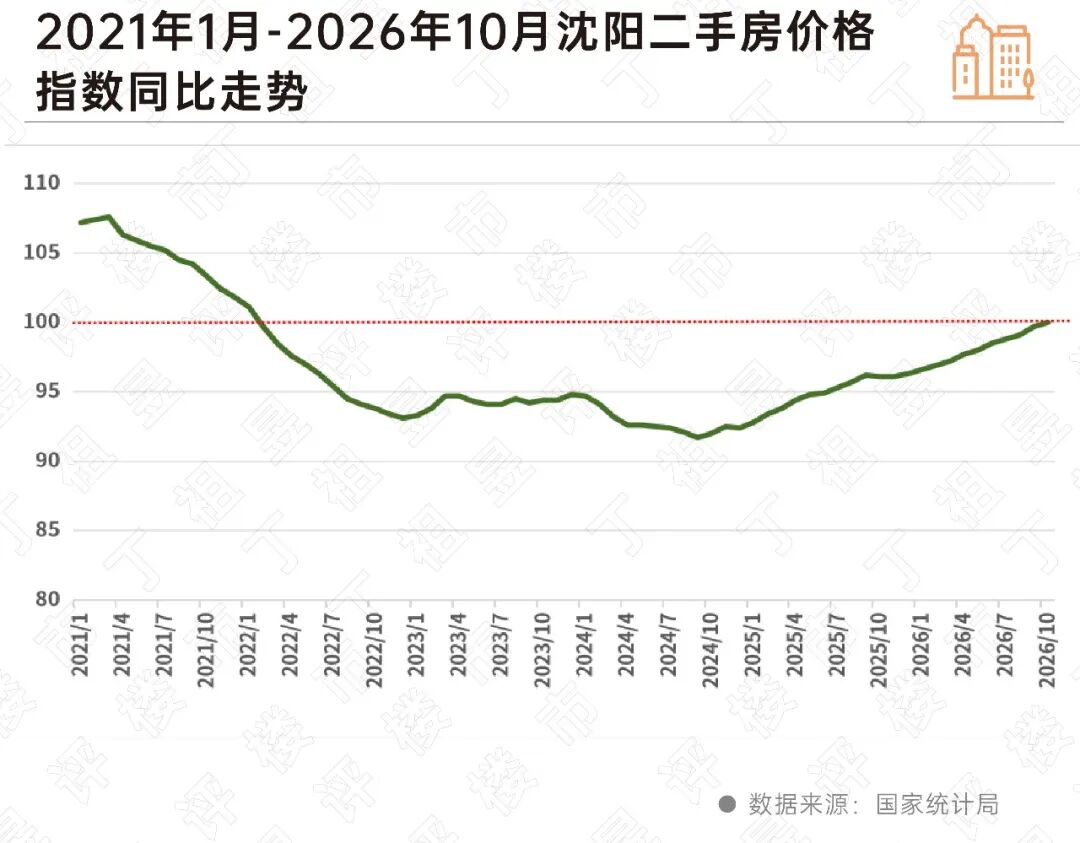
A more critical signal comes from the second-hand housing market. Shenyang has become the second city to see its second-hand home prices stop falling year-on-year (remain flat) after Shanghai, and the first one among second-tier cities.
01
Shanghai is the core city with the most outstanding overall market performance in this cycle. In October, both new and second-hand homes recorded year-on-year and month-on-month increases, and have maintained simultaneous rises in both indicators for two consecutive months.
On the new home front, Shanghai's new home prices rose by 0.2% month-on-month in October. Since the month-on-month leveled off in January and returned to the rising track in February, they have risen for 9 consecutive months within the year. Looking at a longer time horizon, since the new home prices stopped falling and rose month-on-month in August 2019, Shanghai's new home prices have not seen a month-on-month decline for 87 consecutive months, with only a few months remaining flat month-on-month.
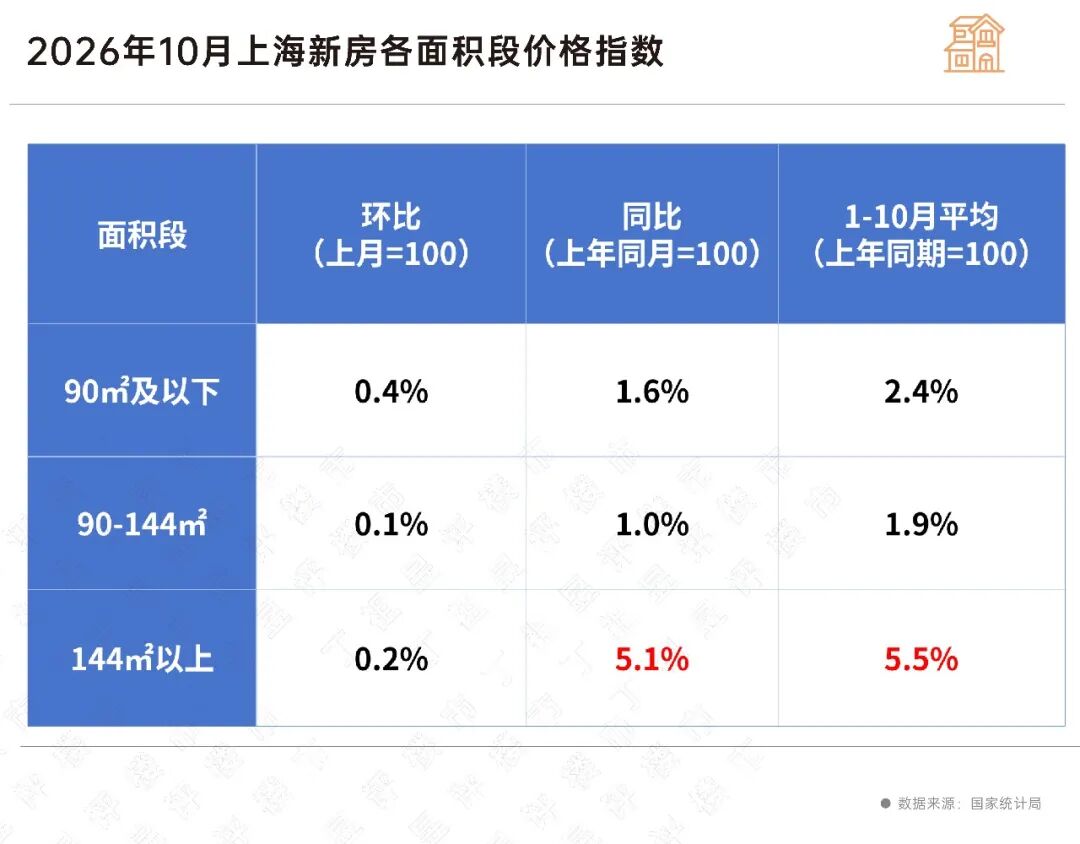
Among them, the high-end improved housing segment of over 144 ㎡ is the core engine driving the recovery of Shanghai's housing prices in this cycle. It rose by 0.2% month-on-month in October, continuing the upward trend for consecutive months, with a year-on-year increase of 5.1%. The average increase from January to October reached 5.5%, far higher than the other two housing area segments.
While new home prices keep rising, Shanghai's second-hand home prices also show strong recovery resilience.
Second-hand home prices have risen for 9 consecutive months month-on-month, driving a moderate recovery in the year-on-year trend. After the year-on-year increase turned to 0.8% in September, the growth rate expanded to 2.2% again in October, making Shanghai the first city in this adjustment cycle to achieve two consecutive months of year-on-year growth in second-hand home prices.
Different from the large-area segment driving the new home market, the recovery of Shanghai's second-hand housing market is mainly driven by the demand-oriented housing units below 90 ㎡. This segment has accumulated a 4.4% month-on-month growth from February when it entered the rising track to October.
Judging from market performance, Shanghai's second-hand housing market has maintained high activity since the beginning of this year, and the rule that "volume precedes price" is being realized.
Since the start of this year, the number of second-hand home transaction units in Shanghai has exceeded 20,000 every month except February, the Spring Festival month. In October, 22,000 second-hand residential units were transacted, with the transaction volume expanding by about 8% month-on-month, and this sustained high-level operation has lasted for 8 months.
Data from Purui Digital Intelligence Shanghai Institution also confirms this trend: in October, Shanghai's second-hand apartment price index rose by 1.1% month-on-month, marking 6 consecutive months of growth, which is basically consistent with the trend of the National Bureau of Statistics.
02
There is another key signal in the housing prices of 70 major cities in October: Shenyang has become the second city to see second-hand home prices stop falling year-on-year after Shanghai, and also the first second-tier city to achieve this.
In terms of the pace, Shenyang's second-hand home prices stopped falling month-on-month since January this year, and have stayed at the bottom stage for 10 consecutive months, with prices gradually stabilizing after the halt of decline. The new home market is also recovering synchronously: new home prices rose by 0.2% month-on-month in October, stopping falling for 7 consecutive months; they rose by 0.5% year-on-year, stopping falling for 5 consecutive months.
In addition to Shanghai and Shenyang, a number of core first-tier and second-tier cities have also entered the stage of structural bottom formation one after another, with different recovery paces.
Guangzhou and Shenzhen, together with Shanghai, form the stable camp of first-tier cities, with solid bottom momentum.
Guangzhou: New home prices have stopped falling month-on-month for 9 consecutive months, remaining flat month-on-month in October. The year-on-year decline has narrowed from 5.3% in January this year to 0.4% in October, just one step away from turning positive year-on-year. Second-hand home prices have risen for 8 consecutive months month-on-month, with the year-on-year decline continuing to narrow. Shenzhen: In October, both new and second-hand home prices rose by 0.1% month-on-month, and both have risen for 8 consecutive months. The year-on-year decline of second-hand home prices narrowed to -0.5%, just a stone's throw away from turning positive.
The recovery of new and second-hand homes in first-tier cities is highly synchronized, and the downward pressure on housing prices continues to ease.
Second-tier cities including Nanjing, Hangzhou, Ningbo and Hefei are mostly in the stage of structural bottom formation. Except for Ningbo where new home prices fell by 0.1% month-on-month, the other three cities have achieved simultaneous year-on-year and month-on-month growth in new home prices, while the recovery of second-hand home prices lags behind that of new homes.
Nanjing: In October, new home prices rose by 0.5% month-on-month, leading all 70 major cities across the country; the year-on-year increase reached 0.7%, officially stepping out of the downward range. However, the liquidity of the second-hand housing market has not kept pace synchronously. Second-hand home prices stopped falling in a single month, but the sustainability of this trend remains to be observed.
Hangzhou: In October, new home prices rose slightly by 0.2% month-on-month, with a 1.9% year-on-year increase, the highest among strong second-tier cities. The overall trend is stable, with new home prices rising for 9 consecutive months month-on-month and 19 consecutive months year-on-year. However, the second-hand housing market is still under pressure, with prices falling by 0.3% month-on-month in both September and October, and the decline has expanded compared with July and August.
Hefei: It is a second-tier city with good linkage between new and second-hand housing markets. In October, new home prices rose both year-on-year and month-on-month, up 0.4% year-on-year and 0.1% month-on-month; second-hand home prices also rose by 0.2% month-on-month, with 7 months of halted month-on-month decline within the year, and the stock market has also shown stabilizing signals synchronously. Ningbo: New home prices turned positive with a 0.4% year-on-year increase, but fell slightly by 0.1% month-on-month in October, and the stability of the stabilizing momentum still needs to be verified in the follow-up.
Shanghai has taken the lead in completing the resonant bottom formation of new and second-hand housing markets, and Shenyang has taken over the second baton of halting year-on-year decline in second-hand home prices, making the support at the price bottom increasingly solid. The path for housing prices to stop falling and stabilize has become very clear: The first-tier cities have basically confirmed the trend, strong second-tier cities are on the way, and most third-tier and fourth-tier cities are still in the bottom grinding stage.
At present, housing prices have entered a reasonable range. An important reference is the price-to-rent ratio. According to statistics of 2053 sample residential compounds in 30 key cities in the first 9 months, the median rental yield is 2.06%, while the deposit interest rate is about 1.5%, which means the rental yield has exceeded the deposit interest rate.
Overall, this round of national housing price adjustment is nearing its end, and the scope of housing price stabilization will continue to expand.
This article is from the WeChat Official Account "Ding Zuyu Comments on Real Estate Market", written by the Editorial Department, and published with authorization from 36Kr.