What is the underlying significance behind JD.com, Taobao and Pinduoduo's collective foray into the short drama track?
Recently, JD's independent short drama mini-program "JD Drama Welfare Club" has been launched on WeChat. The product introduction mentions that users can watch dramas for free, get exclusive benefits, and buy the exact same items shown in the dramas directly with JD's official delivery service.
Actual tests show that the current mini-program has a very simple interface with only two sections: "Swipe to Browse" and "My". The short dramas hosted on the platform are not original, and can be watched simultaneously on other short drama platforms. The same-item purchase function has not been implemented yet, and no corresponding e-commerce redirect entrance has been found for now.
This is a new experiment carried out by JD around scenario-based e-commerce shopping guidance, but it entered the track relatively late, and the entrance and conversion link still need to be verified.
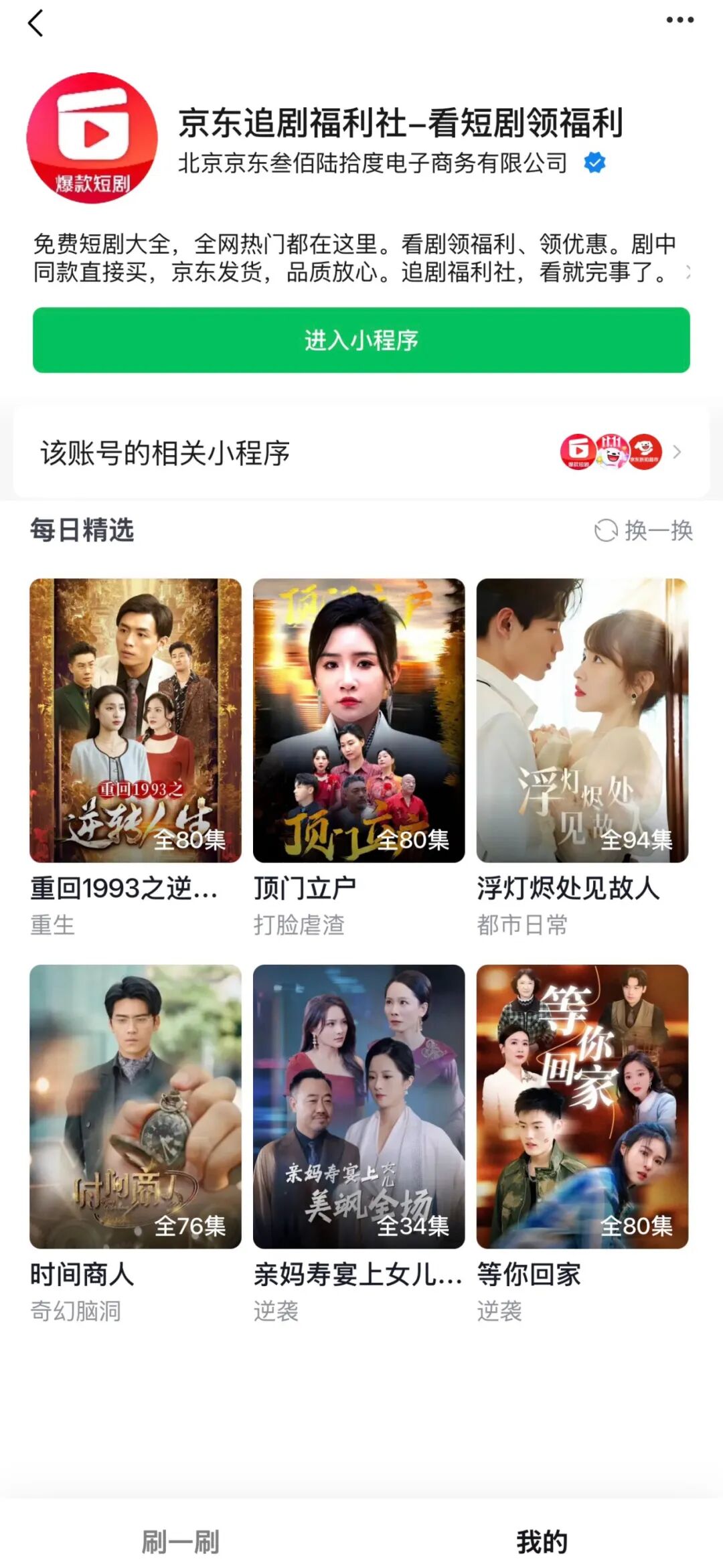
Image source: JD Drama Welfare Club
Apart from JD, Taobao and Pinduoduo have taken the lead in the short drama track long ago. Taobao launched multiple AI-generated brand short dramas during this year's Double 11 shopping festival, while Pinduoduo has vigorously promoted free short dramas in its Pinduoduo Video section. Major platforms are collectively stepping up content layout with different core priorities: some aim to extend user stay duration, some are committed to strengthening users' awareness of their product offerings, and others are trying to connect users' interest in drama watching to shopping pages.
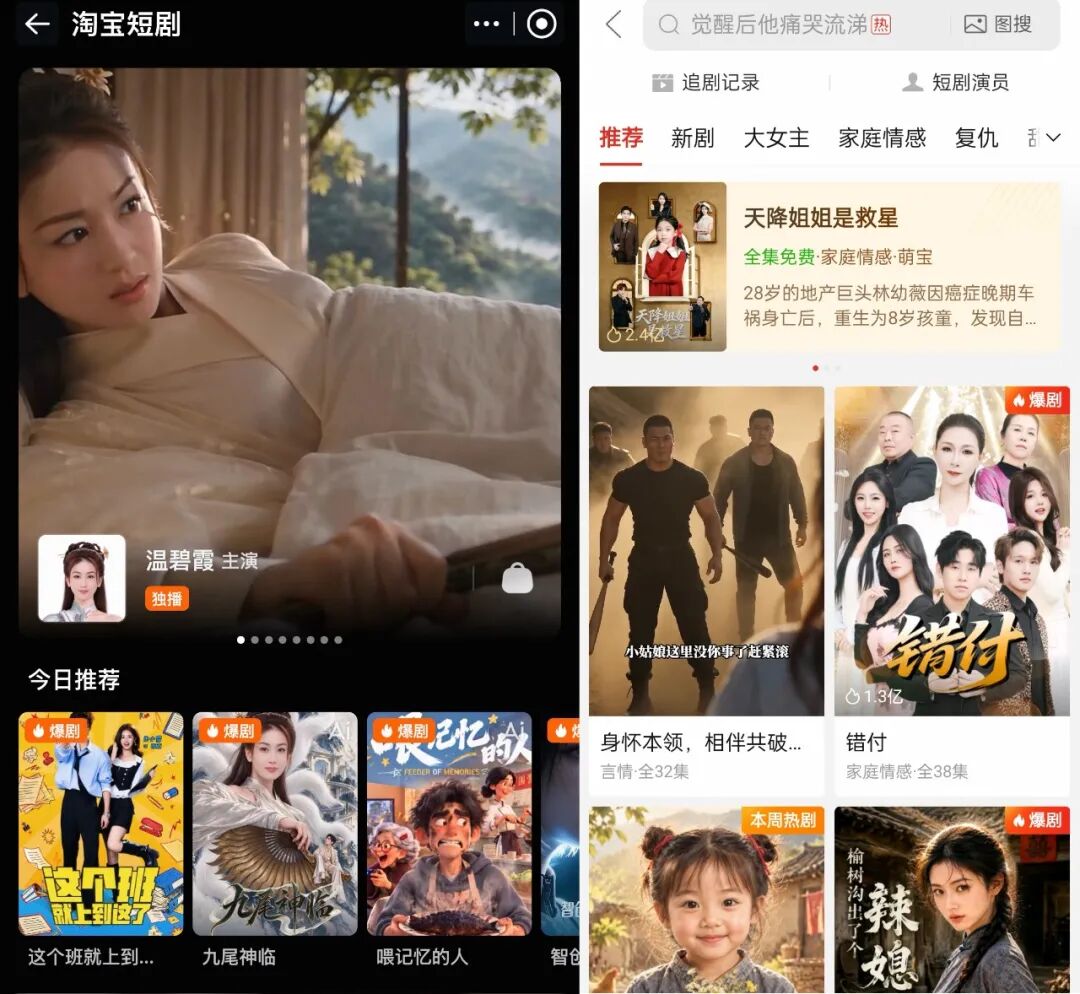
Image source: Taobao, Pinduoduo
For e-commerce platforms, is short drama a business worth investing in, or just a bustling content entrance? Can the products featured in the plots really arouse users' purchasing interest? If users only watch dramas without placing orders, is this business still worth running? Follow the perspective of "TopKlout" to find out together.
01
When you don't plan to buy anything
We still give you a reason to open the app
Shopping apps face a very realistic problem: users are very likely to exit the app right after they finish their purchases. In the traditional e-commerce logic, users will complete operations very efficiently when their demands are clear: search, compare prices, and place orders.
However, while platforms are pursuing smooth transaction processes, they are also facing a practical problem: when users do not have a clear shopping list, they lack a "reason to open the app" in non-shopping scenarios.
Short dramas just break this deadlock and provide a feasible solution. After all, users do not necessarily need to buy goods every day, but attractive plots can attract users to keep coming back to watch every day.
Pinduoduo's attempt is exactly aimed at this direction. At present, users can directly enter the short drama category from "Pinduoduo Video" and watch episodes for free. But we found that in the current experience, there is no entrance for the same products featured in the dramas. This idea of "retaining users with content first, then realizing commercial conversion" is completely different from the pure goods-selling logic.
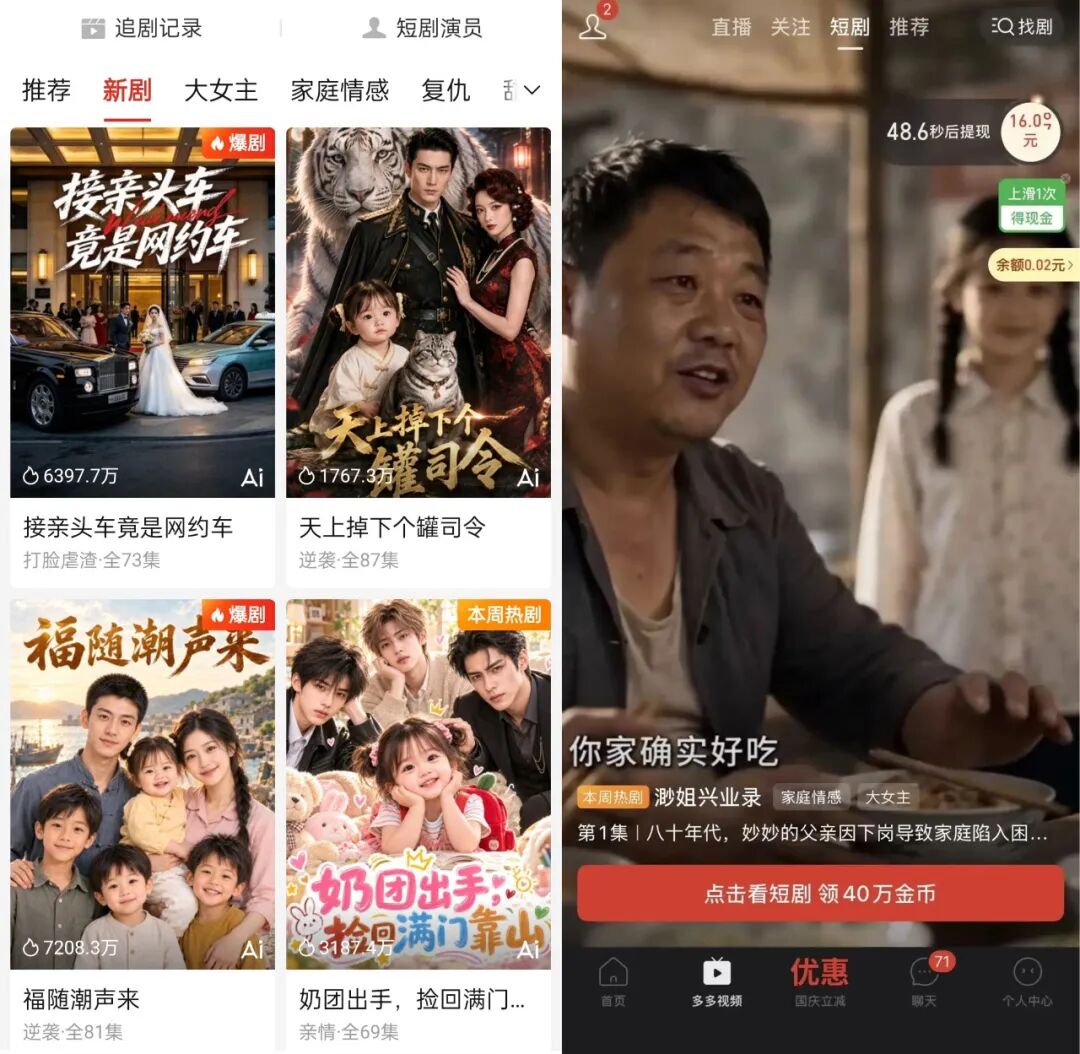
Image source: Pinduoduo
This approach is fundamentally different from the traditional "goods-selling advertisement". It provides users with a pure content consumption space, so they do not need to be interrupted by frequently popping up ads while immersing in drama watching, nor are they forced to make purchase decisions.
The first-layer value of short dramas for e-commerce is to add one more access, not necessarily one more order immediately.
As long as users are willing to come back, the platform will have one more chance to display its products, activities and services. This is why free short dramas are worth a try, and also explains why e-commerce platforms do not necessarily rush to make money from paid unlocking services.
But "free" is not an exclusive advantage.
The same logic is also reflected in JD's attempt. Through experience, we found that some episodes in the mini-program can also be watched on other platforms. For people who already have the habit of watching dramas, just adding one more free entrance is not enough to make them switch platforms.
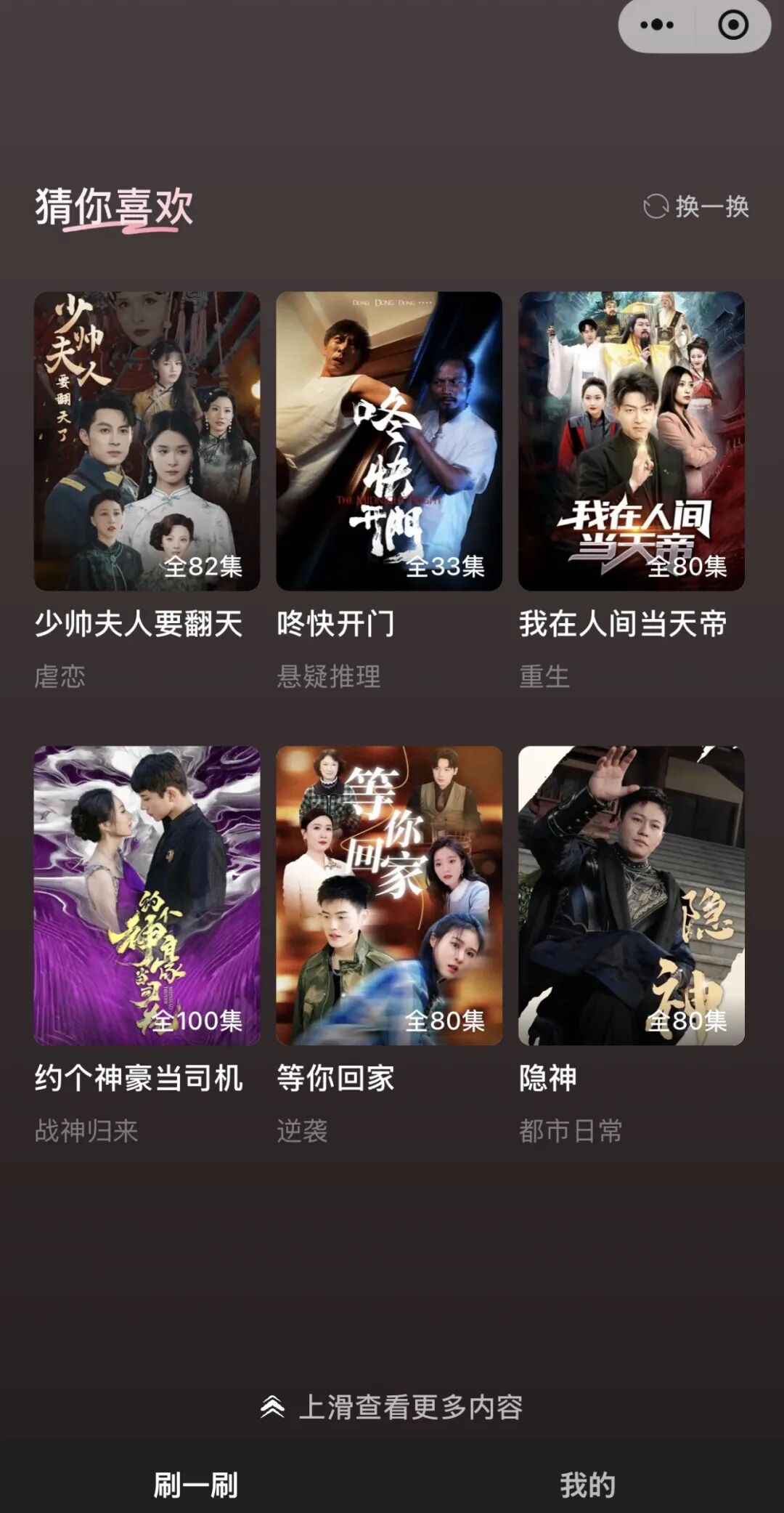
Image source: JD Drama Welfare Club
Welfare benefits can attract users to visit once, but content updates, recommendation algorithms and viewing experience will determine whether users will come back next time. If users leave right after getting the discounts, or only stay in the drama section all the time, the platform may only get short-term popularity.
Therefore, the fact that users stay a few more minutes is worth recording; whether these minutes bring more active visits is another question. E-commerce platforms are good at facilitating purchases, but not necessarily good at making users addicted to drama watching.
02
Products are integrated into the plot
Reasons for purchase also follow up
Compared with simply retaining users, Taobao's recent brand short dramas have a clearer goal: the story should be attractive, and the products should also be noticed by users.
For example, during this year's Double 11, the short drama *Beyond the Final Chapter* participated by Quanu Home Furnishing sets the wardrobe as the key prop connecting two worlds. The product is no longer just a fleeting decoration in the background, but has a reasonable reason to appear repeatedly.
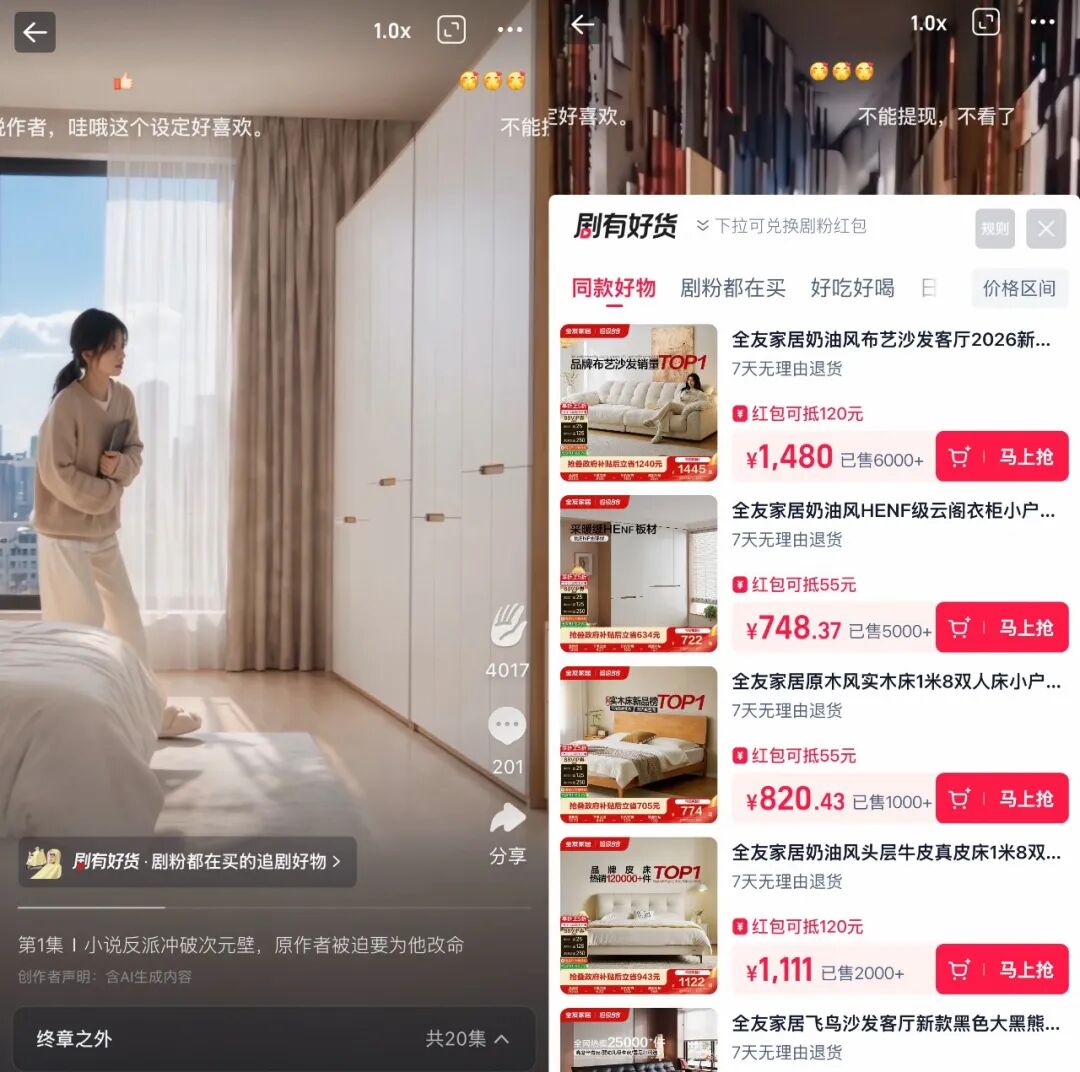
Image source: Taobao short drama
Such arrangement is much more natural than having characters stop suddenly to introduce products. Audiences following the plot may also remember this special prop.
However, between remembering a "portal for time travel" and deciding to buy a wardrobe, there are still factors like size, material, price and installation to consider. The story solves the problem of attracting attention, but does not necessarily solve the problem of driving purchase.
Having a presence in the plot is the starting point of cultivating user preference for the product; the reason why the product is suitable for users is the real motivation for them to make the purchase.
This is also the advantage of e-commerce platforms in making short dramas. After interest is generated, there are product information, user reviews and store pages right beside, so users do not need to switch to other platforms to search for related content. If they want to know more, they can continue to watch product reviews or enter the live streaming room to get answers to questions not clearly explained in the plot.
For example, the customized short drama *The Legend of Spirit Jade in Another World* for Pechoin, as reported by media, has gained over 35 million views within 30 days after launch, and the associated new product Spirit Jade Cream has achieved a transaction volume of over 10 million yuan in its first 30 days on sale.
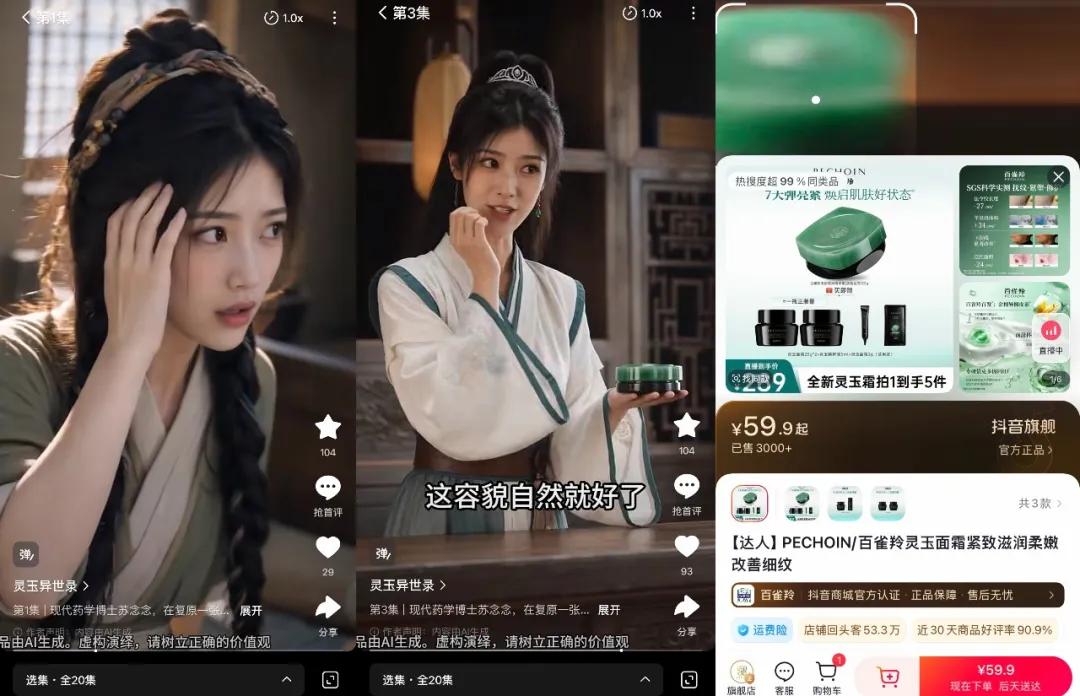
Image source: Hongguo Short Drama
This shows that brand short dramas are no longer limited to the "being viewed" display level, and have begun to integrate with specific product operations. But we cannot take all the 10 million yuan transaction volume as the incremental value brought by short dramas: promotions, live streaming, and existing brand users may all contribute to this result.
However, the performance of different product categories cannot be generalized. A coat or an accessory shown in the drama may make users want to find the same item immediately; a refrigerator or a set of furniture actually requires a much longer time for comparison. Although e-commerce platforms are close to the transaction process, they cannot make all products become instant decision purchases.
If characters introduce product functions every few minutes just for the sake of selling goods, the short drama will easily become an extended version of advertisement. Audiences are willing to pay for wonderful stories, but not necessarily willing to pay for blunt selling points.
03
Worth doing does not mean unlimited investment
Looking at the actions of several platforms together, although their entrances and content forms are different, what they want to change is actually the same usage habit. In the past, users would open shopping apps only when they had something to buy; now, even without a ready shopping list, they can open the app first to watch something.
This is somewhat similar to visiting a physical shopping mall. Some people go straight to the counter, buy what they need and leave immediately; others just stroll around casually, and generate purchasing interest after seeing a nice outfit or experiencing some products. What short dramas want to make up for is exactly the latter process.
What e-commerce platforms value is not only what short dramas can sell, but also whether they can change users' behavior from "searching for things" to "discovering things".
Traditional product pages are good at answering clear questions: how much the product costs, what specifications it has, and when it will be delivered. The plot can present a certain lifestyle first, for example, what occasions a piece of clothing is suitable for, and how a household product can be integrated into the room. Users may not place an order immediately, but they will search and compare the product later after remembering it.
The significance of short dramas cannot be judged only by "how many orders are sold through the link attached to this episode". It can also undertake the functions of helping users get to know the brand, learn about the product, and increase return visits. The existing stores, reviews and transaction services on e-commerce platforms have the opportunity to convert these gradually formed interests into actual purchases.
But TopKlout also found an unavoidable problem: the platform hopes that audiences can shop incidentally, but sometimes audiences just want to watch dramas quietly.
The more wonderful the plot is, the more eager audiences are to watch the next episode, and they are not necessarily willing to click on the product page halfway; the more intensive the goods promotion is, the more likely it is to interrupt the viewing experience. Watching dramas and shopping will not be automatically connected just because they are placed on the same page.
The real difficulty is to make products appear at the right time. When audiences develop interest in the character's outfit, the same-item entrance is useful; if they are urged to get coupons and place orders before they even figure out the relationship between characters, their enthusiasm will inevitably be consumed in advance.
This also means that the free drama library and welfare benefits are just the opening. Whether the content can make users come back actively, whether the products are related to the viewing interest, and whether the purchasing experience can keep up, will determine whether short dramas will become a daily entrance or just a rarely opened column.
At the end of the day, what the three platforms are striving for is the same change: give users one more reason to stay, and then one more chance to discover products. As for whether this opportunity can be turned into real business, it still depends on whether consumers generate real demand, not whether the platform puts the purchase button right in front of them.
04
Conclusion
When e-commerce platforms make short dramas, they do not necessarily need to build another drama-watching platform. A more practical opportunity is to give users one more way to discover products besides searching for products directly.
But clicking to watch the next episode and clicking to buy the next item are two different choices after all. Free content can make users click in, wonderful stories can make users stay, but whether they will make payment still depends on the product itself.
In this short drama attempt by JD, Taobao and Pinduoduo, the real follow-up worth paying attention to is not how many new dramas are launched, but whether audiences get one more reason to shop after watching, or just add a few more viewing records.
This article is from the WeChat official account "TopKlout" (ID: TopKlout), written by Xiao Yang, and authorized for release by 36Kr.