As tens of billions of US dollars pour into the market, who is pricing AI4S?
Recently, capital news in the overseas AI4S (AI for Science) track has been released intensively.
Whether it is OpenAI's acquisition of the drug R&D coordination platform Orchestra Bio, Iambic's listing on the public market to raise 150 million US dollars, Bloomberg's report that Isomorphic Labs is negotiating new financing of 5 billion US dollars at a valuation of about 500 billion US dollars, or Mirendil's Series A round that raised 1 billion US dollars... Large-scale financing, giant mergers and acquisitions, and IPO exits have appeared one after another within the year. The question behind the popularity of AI4S is what exactly makes these companies get such valuations.
SVTR counted the financing of 175 AI4S companies from September 2025 to September 2026, with 118 confirmed financings totaling about 7.5 billion US dollars.
Among them, Isomorphic Labs alone took 2.1 billion US dollars, accounting for 28%; 13 companies with a single financing of over 100 million US dollars took 73% of the total; the remaining 162 companies shared 27%.
The top players have taken most of the capital.
Why is the capital concentrated? SVTR examined the round, company age, whether the company has self-developed pipelines and the founder's background, and attributed the intra-group differences to the scarcity of capabilities.
Following this judgment, we can further ask: Who pays for these capabilities?
According to different payers, AI4S assets can be divided into four layers. The pipeline layer is priced by the R&D budget of pharmaceutical companies; the cost of the platform layer is determined by computing power and experimental infrastructure; the tool layer benefits from the R&D software budget; the capital layer depends on exit buyers.
Behind these four layers of assets stand four different payers respectively. Which layer has the most capital, which layer's price can stand up to scrutiny the most, and which layer has begun to loosen... The major capital test for AI4S is underway.
01
Pipeline layer: The budget of pharmaceutical companies determines the ceiling of AI drug discovery
Let's first look at the pipeline layer closest to revenue.
According to Evaluate's statistics, from 2025 to 2030, more than 300 billion US dollars of prescription drug revenue worldwide will lose patent protection.
By 2030, the growth gap of large pharmaceutical companies will be about 94 billion US dollars.
Pharmaceutical companies need new pipelines, and AI pharmaceutical companies sell time.
In May 2026, Isomorphic Labs completed a 2.1 billion US dollars Series B round, led by Thrive Capital, with participation from Alphabet, GV, MGX, Temasek, CapitalG and the UK sovereign AI fund.
Its cooperation with Eli Lilly, Novartis and Johnson & Johnson, the potential total amount of Eli Lilly and Novartis alone is close to 3 billion US dollars.
In November 2026, Bloomberg reported that it is negotiating new financing of 5 billion US dollars at a valuation of about 500 billion US dollars, which has not yet closed. This is the most expensive sample in the pipeline layer.
However, Isomorphic's self-developed pipelines are still in the pre-clinical stage, and the company expects to launch the first clinical trial at the end of 2026, which is later than the original plan.
The total cooperation amount is the upper limit of milestones, not equal to the revenue that has been received. Pharmaceutical companies use down payments and clinical node payments to leave clinical risks to the seller.
The same pricing logic is also reflected in other pipeline companies.
In July 2026, Chai Discovery completed a 400 million US dollars Series C round with a post-investment valuation of 3.8 billion US dollars. The Chai model has entered R&D cooperation with pharmaceutical companies such as Eli Lilly, Pfizer and Novartis.
The company said that Chai-3 roughly doubles the success rate of molecular interaction prediction. Strong product capabilities can raise prices, and whether prices can continue to rise depends on whether pharmaceutical companies renew the next round of cooperation.
Pharmaceutical companies have always been bound to risks.
The upper limit of milestones in the agreement between Eli Lilly and Profluent is 2.25 billion US dollars, and the down payment has not been disclosed.
What pharmaceutical companies buy is the option of candidate drugs, and milestones are paid only when the candidate drugs reach clinical nodes.
Apart from the cooperation terms, the pipeline layer eventually needs to exit in the capital market. In February 2026, Generate Biomedicines raised 400 million US dollars through IPO on Nasdaq, and GB-0895 entered two Phase III clinical trials.
The exit path of the pipeline layer is the clearest, on the premise that clinical data can support the valuation.
02
Platform layer: Computing power and experimental infrastructure determine the cost of the platform
Different from the pipeline layer which sells candidate drugs, the platform layer sells a set of AI R&D infrastructure.
In September 2025, Periodic Labs completed a 300 million US dollars seed round with a post-investment valuation of 1.3 billion US dollars.
The company was founded by Liam Fedus and Ekin Çubuk. The former participated in the creation of ChatGPT, and the latter worked on material discovery at Google DeepMind. No revenue has been disclosed.
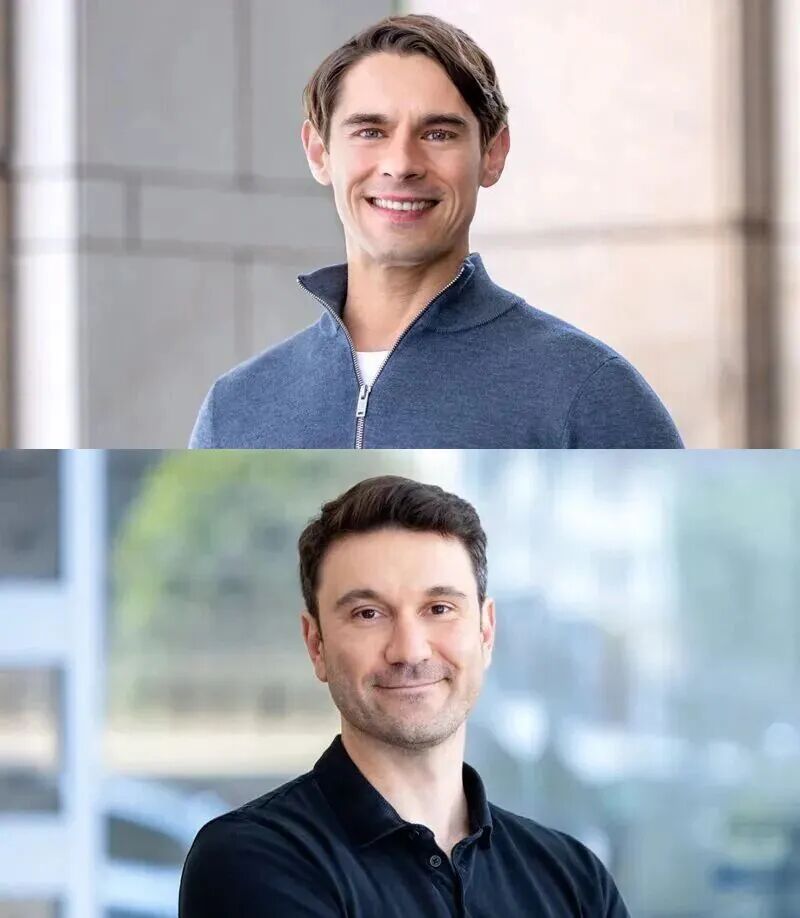
Liam Fedus (top) and Ekin Çubuk (bottom)
In May 2026, Forbes reported that it is in-depth negotiating for at least 500 million US dollars in new financing at a valuation of about 7.5 billion US dollars, led by AMP; the transaction has not been confirmed by the company.
a16z wrote in the investment announcement that internet texts have been exhausted, and the best models have been trained on about 10 trillion tokens. Science cannot rely solely on reading textbooks.
Periodic builds a powder synthesis laboratory, allowing robots to mix precursors, heat and characterize, and the experimental data flows back to the model. a16z summarizes this method in one sentence: Nature becomes a reinforcement learning environment.
The same judgment has also been bet on earlier-stage teams.
In June 2026, Mirendil completed a 200 million US dollars seed round, led by a16z and Kleiner Perkins, with participation from NVIDIA.
In November, the company officially announced a 1 billion US dollars Series A round, led by Kleiner Perkins and Clearlake Capital, with participation from Google and other parties. The valuation was not disclosed.
The company has publicly launched the Fern model, and the Lor agent platform is in private testing, targeting scientific research and engineering teams.
Lila Sciences has pushed the self-built experimental system further. It was incubated by Flagship Pioneering in 2023, with a 200 million US dollars seed round and two Series A rounds totaling 350 million US dollars.
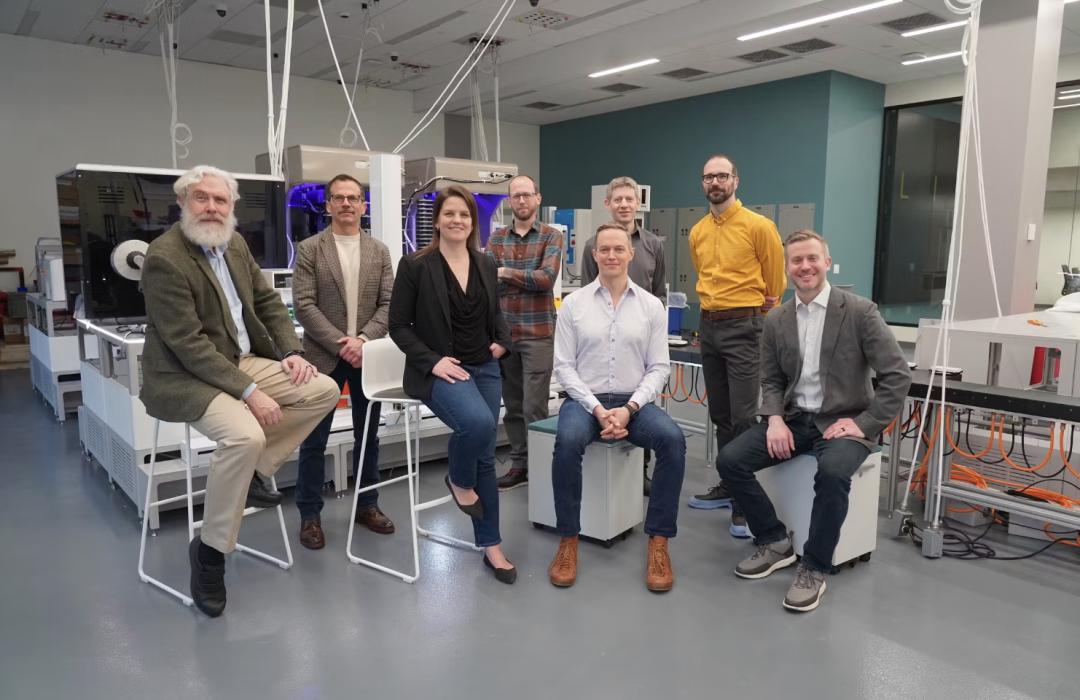
The Lila team in the automated laboratory
The company has built its own AI Science Factory, which has designed, synthesized and tested more than 950,000 mRNA sequences. Every result flows back into the model.
In June 2026, Bloomberg reported that it is negotiating a Series B round of about 2 billion US dollars at a pre-money valuation of 8.5 billion US dollars, which has not closed.
The asset composition of the three companies is different, but the pricing logic is the same.
Lila's 950,000 mRNA sequences, Periodic's powder synthesis laboratory, Mirendil's model and agent platform. These assets sell capabilities that others cannot replicate in the short term.
The price is the cost structure. A robotic experimental line needs to purchase robotic arms, liquid processing equipment and characterization instruments, and also maintain a team of scientists who can design experiments. The more experiments are run, the more data is obtained, and the higher the equipment depreciation and computing power bills will be.
This cost structure ultimately directs capital to the upstream.
Capital eventually flows to NVIDIA, cloud vendors and experimental equipment vendors.
According to incomplete statistics from VCBeat, NVIDIA and NVentures have invested in at least 14 AI drug discovery companies.
In January 2026, NVIDIA and Eli Lilly announced the joint construction of an AI innovation laboratory, and the two parties will jointly invest up to 1 billion US dollars within five years. It is both a shareholder and a supplier.
03
Tool layer: R&D budget determines the upper limit of tool companies
The tool layer is closest to the existing software expenditure.
Schrödinger's revenue in fiscal 2025 was 255.9 million US dollars, of which software revenue was 199.5 million US dollars, a year-on-year increase of 10.6%. The company still had a net loss of 103.3 million US dollars.
Among the first three types of assets, the tool layer is the easiest to verify with recurring revenue.
In addition to software licensing, there is another type of company in the tool layer that turns the verification process into a standard service.
Adaptyv Bio makes protein verification a standard service.
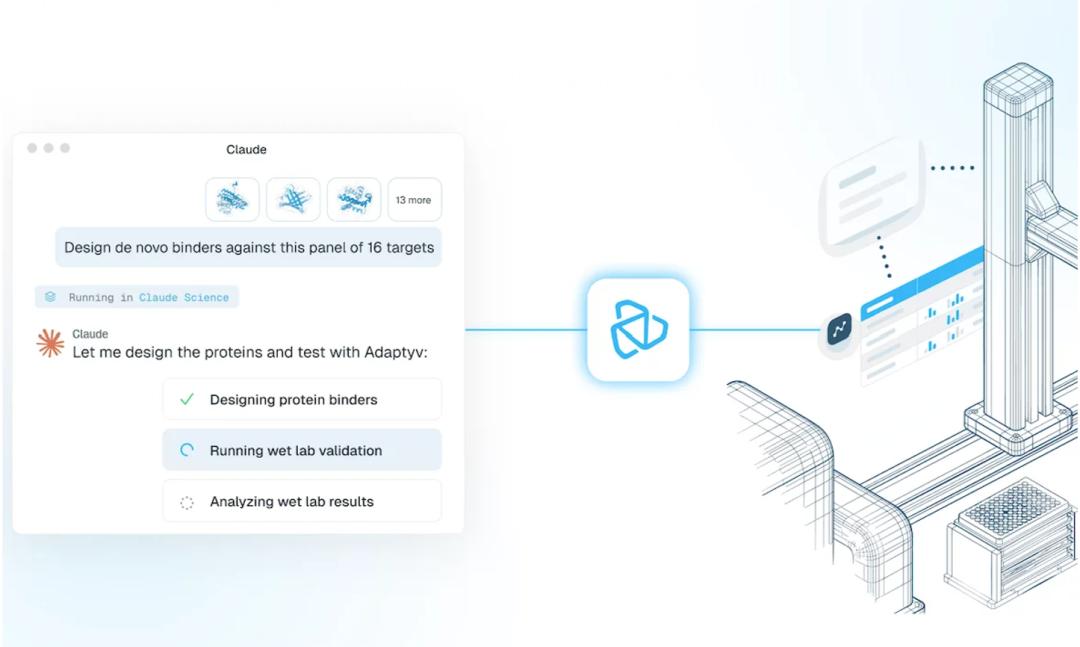
Customers submit designs and get data on binding affinity, expression level and thermal stability in three weeks, starting at 149 US dollars per protein, with an expedited option of three days. Chai Discovery is its customer.
Low unit price, fast turnover, and customers spend the R&D budget of pharmaceutical companies.
The financing scale of early-stage tool companies is also constrained by revenue. Uncountable completed a 27 million US dollars Series A round in June 2025, with 90 team members at that time.
Tamarind Bio completed a 12 million US dollars Series A round in February 2026, serving 8 of the world's top 20 pharmaceutical companies.
The exit market also bids according to the same revenue logic.
Scite was acquired by Research Solutions for 20.9 million US dollars in 2023, and Wildcat Discovery was acquired by Holyvolt for 73 million US dollars in March 2026. The scale of the two transactions is less than a fraction of a round of financing in the platform layer.
Capital bids according to revenue multiples and replacement costs, without giving platform premium.
04
Capital layer: Exit buyers determine the holding period of VCs
The first three layers are assets, the capital layer focuses on who will take over.
Generate raised 400 million US dollars through IPO in February 2026, and Iambic raised 150 million US dollars in October. The public market has accepted the exit of the pipeline layer.
Industrial buyers directly purchase assets, and Scite and Wildcat were sold to strategic buyers.
Technology giants acquire teams.
According to media reports, Anthropic acquired Coefficient Bio in April 2026 for approximately 400 million US dollars in stock consideration, and OpenAI acquired Orchestra Bio in October, with the amount undisclosed.

Around these projects, investors have formed several clear profiles. a16z has included Periodic and Mirendil in its portfolio, and Thrive has continuously led the investment in Isomorphic. General Catalyst appears in the shareholder lists of both Lila and Chai at the same time. Deep tech funds like Dimension have bet on Chai and Earendil from the seed round. ARCH and Foresite incubated Xaira, and Flagship incubated Lila and Generate.
NVIDIA NVentures, GV and Amazon belong to industrial capital, while MGX, Temasek and the UK sovereign AI fund represent sovereign capital.
In addition to financial funds and industrial capital, pharmaceutical companies themselves are also sitting at this table. Sanofi participated in Earendil's 787 million US dollars financing in March 2026. Previously, it paid a 125 million US dollars down payment for two antibody pipelines.
This heavy bet is most extreme when reflected in a complete pharmaceutical company.
In 2024, ARCH and Foresite Labs incubated Xaira, with an initial round of 1 billion US dollars, which is the largest initial investment in ARCH's history.
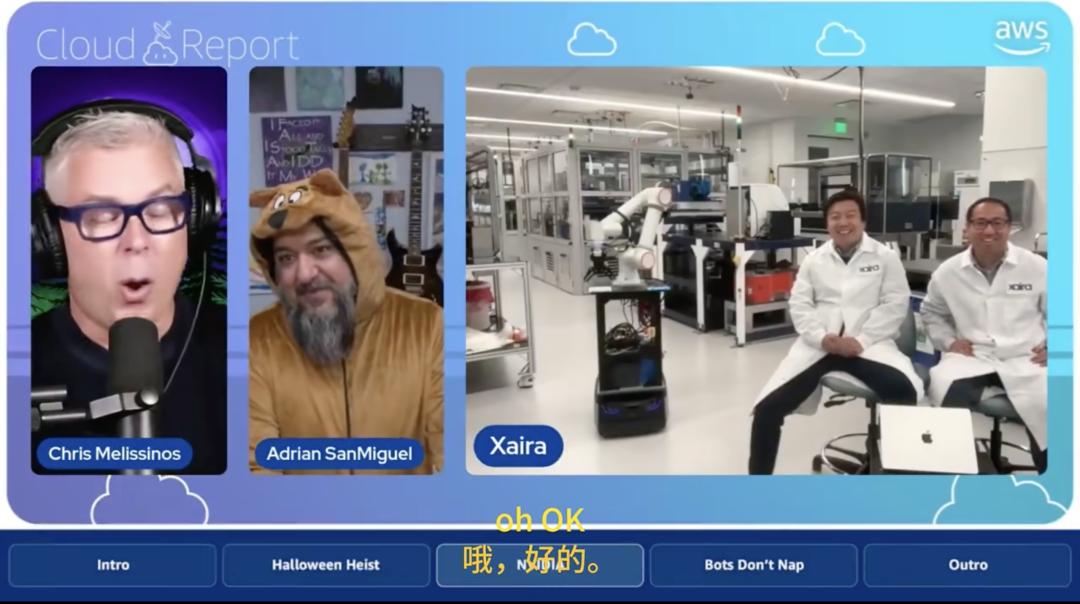
Xaira lab real video: AI scientists direct robots to conduct experiments
The reason Bob Nelsen gave is very straightforward. To build a complete pharmaceutical company that also understands AI requires billions of dollars, and one billion dollars is not enough.
The difference in the duration of different funds ultimately determines the holding period of VCs. In Isomorphic's Series B round, MGX, Temasek and the UK sovereign AI fund all contributed capital.
Sovereign funds focus on national capabilities and long-term exposure. Industrial capital pursues computing power demand and model usage. Pharmaceutical corporate venture capital keeps