Let users spend 30,000 USD to help test autonomous driving? Tesla's overt scheme of opening CyberCab for individual purchase.
Spending $29,990 on a Level 4 autonomous driving Robotaxi, you still have to pay a $299 monthly autonomous driving software service fee. At this stage, it is even limited to personal use, and you cannot use it for commercial profit?
You read that right, this is the Tesla CyberCab that was recently opened for individual purchase. By selling Robotaxi to individual users, Tesla has set another precedent in the automotive industry.
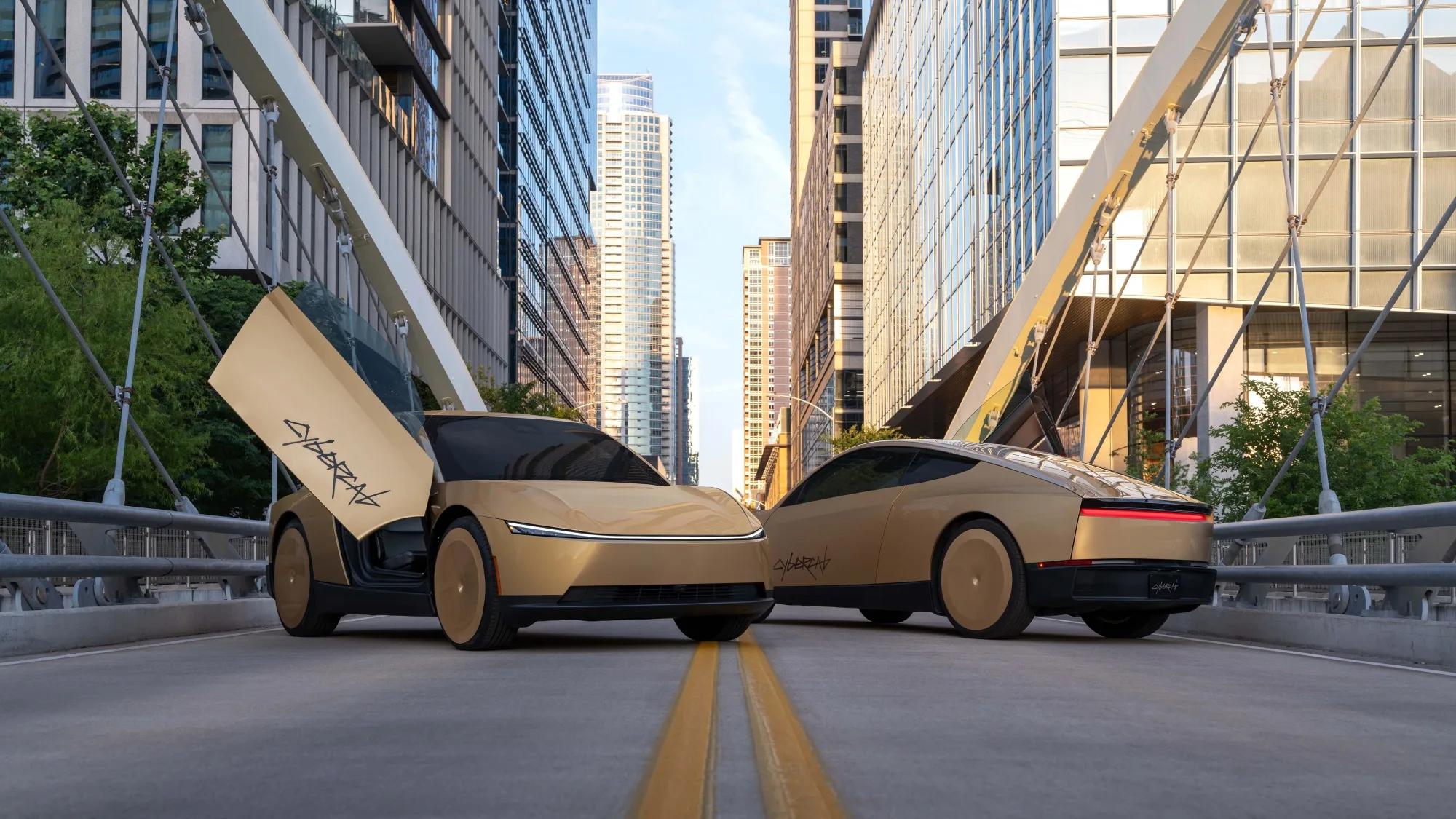
(Image source: Tesla)
However, this is far from the ideal scenario many people have imagined: "you go to work, and your car takes orders and earns money for you on its own". At this stage, even if you own a CyberCab, you are subject to various restrictions. More critically, currently consumers are only allowed to use it for personal use. It is not expected to join the Robotaxi fleet for trial operation until December, and you still have to pay the $299 monthly Autonomy autonomous driving service subscription fee.
In the view of Dianchetong (ID: dianchetong233), this operation where consumers pay for the car themselves and pay subscription fees to help automakers test autonomous driving is also unheard of.
Spending $29,990 to be Tesla's "autonomous driving tester"?
It should be noted here that the model adopted by Tesla's CyberCab, which is open for individual purchase this time, that requires paying both the vehicle price and a monthly autonomous driving subscription fee, cannot be confused with some domestic brands that are equipped with advanced assisted driving and require payment to activate corresponding assisted driving functions.
The reason for saying this is that Tesla's CyberCab itself is a model built specifically for autonomous driving, with no steering wheel or pedals. The vast majority of driving scenarios will be executed by the unsupervised version of FSD. Manual driving can only be achieved through the central control screen when moving the car at low speed, with a maximum speed of only 2 miles (about 3.2 kilometers) per hour.
In other words, without a paid subscription to the Autonomy autonomous driving service, this car can barely be driven on the road. Those domestic vehicles that require payment to activate assisted driving functions are completely different from it. Even if the assisted driving function is not activated, the vehicle can still be driven normally, so the two are not comparable at all.
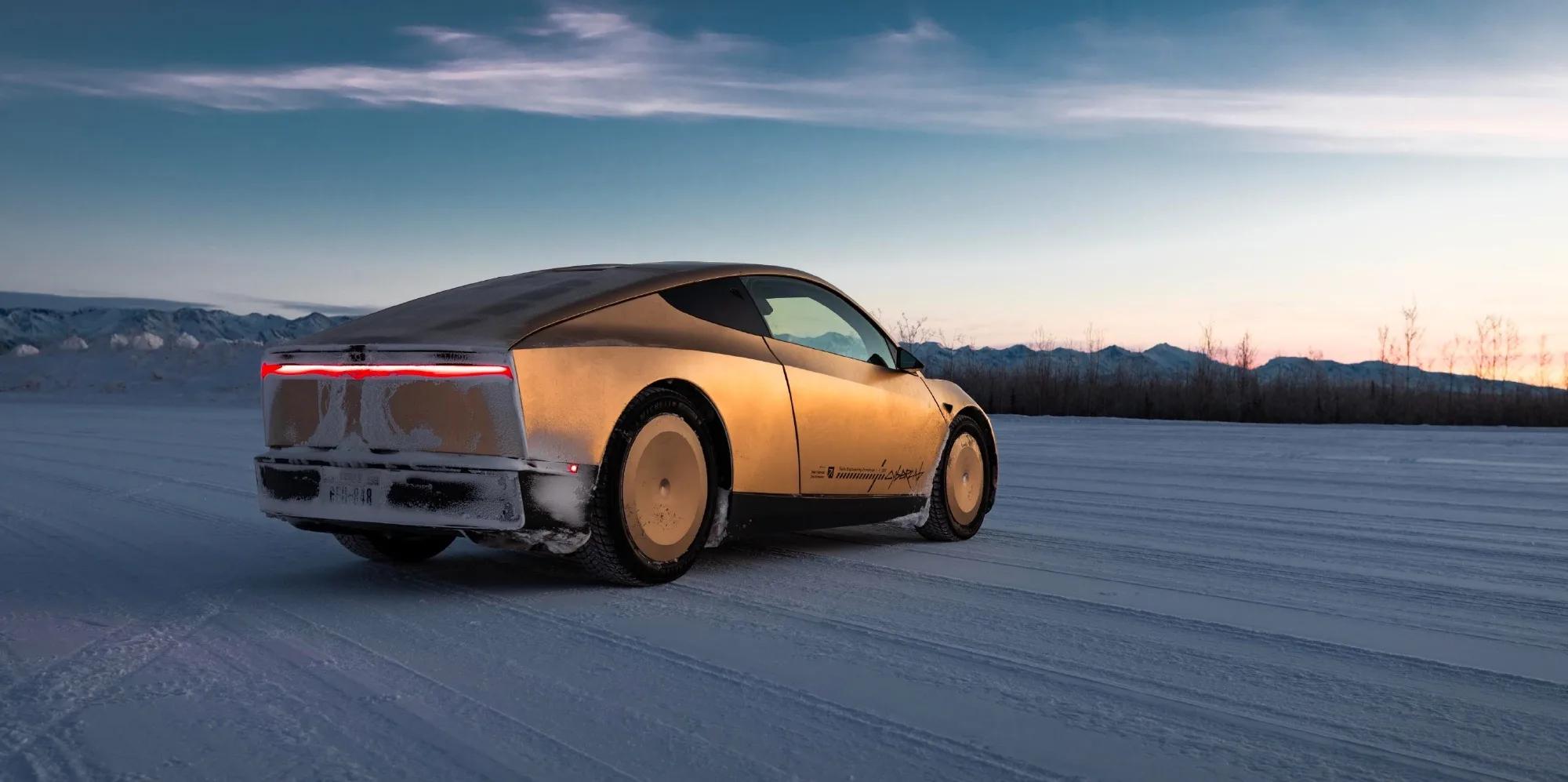
Back to CyberCab itself, even if consumers spend $29,990 to buy the car and pay $299 per month to subscribe to the Autonomy autonomous driving service, they still cannot have full control over the vehicle. According to the regulations, apart from operations by Tesla and its authorized service providers, car owners are not allowed to make any modifications to the vehicle, including applying color change films or window tints to the car, and replacing tires.
Even the subscription fee for the Autonomy autonomous driving service and the geofence where this model can travel are subject to adjustment by Tesla.
Therefore, after users buy this car, they cannot make any modifications to it, have to pay a monthly subscription fee, and even have restricted operating ranges. From the perspective of Dianchetong, this is not buying a car at all, it is simply paying to help Tesla conduct tests.
(Image source: Tesla)
Of course, on the bright side, buying this car means you only need to pay the monthly Autonomy subscription fee and the electricity cost of the vehicle to experience the fully autonomous Robotaxi unlimited times. If the car owner happens to be a big fan of autonomous driving or Robotaxi, this deal seems quite cost-effective.
As for when the individually purchased CyberCab can start commercial operation, Elon Musk also stated on local time November 17 that if everything goes smoothly, Tesla may launch the trial operation of individually purchased CyberCab joining the Robotaxi fleet as early as December.
However, compared with a large number of autonomous driving operators who honestly purchase their own vehicles for Robotaxi commercial operation, Tesla's choice to let individual consumers pay for the vehicles to participate in the trial operation of CyberCab is a rather clever way to make money.
The industry chooses either self-operation or joint operation, but Tesla relies on consumers
Whether it is autonomous driving operators in the United States or across the ocean, Tesla's move to let individual consumers purchase Level 4 Robotaxi and let these vehicles participate in commercial operation is indeed too advanced to be accepted, because this is the first time an autonomous driving company has targeted individual consumers to pay for vehicle purchases.
We can compare other leading Robotaxi operators in China and the United States to see the differences between these companies and Tesla.
First of all, Waymo in the United States currently owns all of its Robotaxi vehicle assets and is also responsible for the operation of these vehicles. Although Waymo is now connected to the Uber platform, allowing users to hail rides on Uber, and has outsourced part of the operation and maintenance business to other companies, the vehicles are still owned by Waymo itself, and it has not chosen to build a fleet with third parties.
Even General Motors' Cruise, which has withdrawn from the Robotaxi sector, previously operated its own fleet.
In China, current leading Robotaxi operators include WeRide, Pony.ai and Apollo Go. Apollo Go, under Baidu, operates self-owned fleets in many places across the country without cooperating with third parties, while Pony.ai and WeRide are slightly different.
First of all, Pony.ai has close cooperation with GAC Group. It has not only invested in GAC's mobility platform Ruqi Travel, but also received investment from GAC Capital under GAC Group. This year, more than 100 Robotaxi equipped with Pony.ai's autonomous driving system joined Ruqi Travel's fleet for operation, which means the two companies have carried out a certain degree of cooperation in capital and operation.
As for WeRide, it cooperated with Baiyun Taxi Group under Guangzhou Public Transport Group in Guangzhou to establish WeRide Baiyun, which is responsible for the operation of Robotaxi in Guangzhou. In Shanghai, it carried out demonstration operation of driverless Robotaxi together with Chery and Jinjiang Taxi.
In recent years, the Robotaxi business of Pony.ai and WeRide in overseas markets has also cooperated with local mobility platforms, where local mobility companies own the vehicles and Pony.ai and WeRide provide technology, thus realizing asset-light operation in overseas markets.
Similarly, as an automaker operating Robotaxi business, XPeng Voyager currently owns its own Robotaxi fleet and carries out initial trial operation.
Overall, whether it is Waymo and Cruise in the US, or WeRide, Pony.ai, Apollo Go and XPeng Voyager in China, they either adopt self-owned fleets or cooperate with other enterprises. In other words, apart from collecting fares, they have not reached into the pockets of C-end consumers, which forms a sharp contrast with Tesla.
In the view of Dianchetong, Tesla's choice to open CyberCab sales to individual consumers also has certain positive significance. For example, it can change travel modes, allow vehicles to switch freely between private cars and autonomous taxis, improve vehicle utilization to a certain extent, help car owners reduce vehicle usage costs, and even make profits from it.
But the problem is that these advantages can only be realized after the technology is mature and the business model is verified. At present, Tesla has just started the operation of CyberCab, and there is still much room for improvement in terms of operation scope, travel experience and business model. Opening up individual purchases of CyberCab at this time and trying to get their vehicles to join the Robotaxi fleet for commercial operation is nothing but letting individual consumers bear the test vehicle costs that the enterprise itself should bear, helping Tesla reduce costs and increase efficiency in the Robotaxi business.
Making consumers willing to pay for trial and error is Tesla's "privilege"
Compared with other autonomous driving technology operators, Tesla already has distinct advantages in vehicle manufacturing costs, because CyberCab is built for Robotaxi, with configurations such as power system and interior simplified as much as possible. Coupled with the reuse of FSD technology and the adoption of a pure vision autonomous driving solution, the manufacturing cost of the whole vehicle is far lower than that of other Robotaxi equipped with a large number of sensors on the roof.
However, Tesla, which holds the best cards, has chosen the most unexpected strategy.
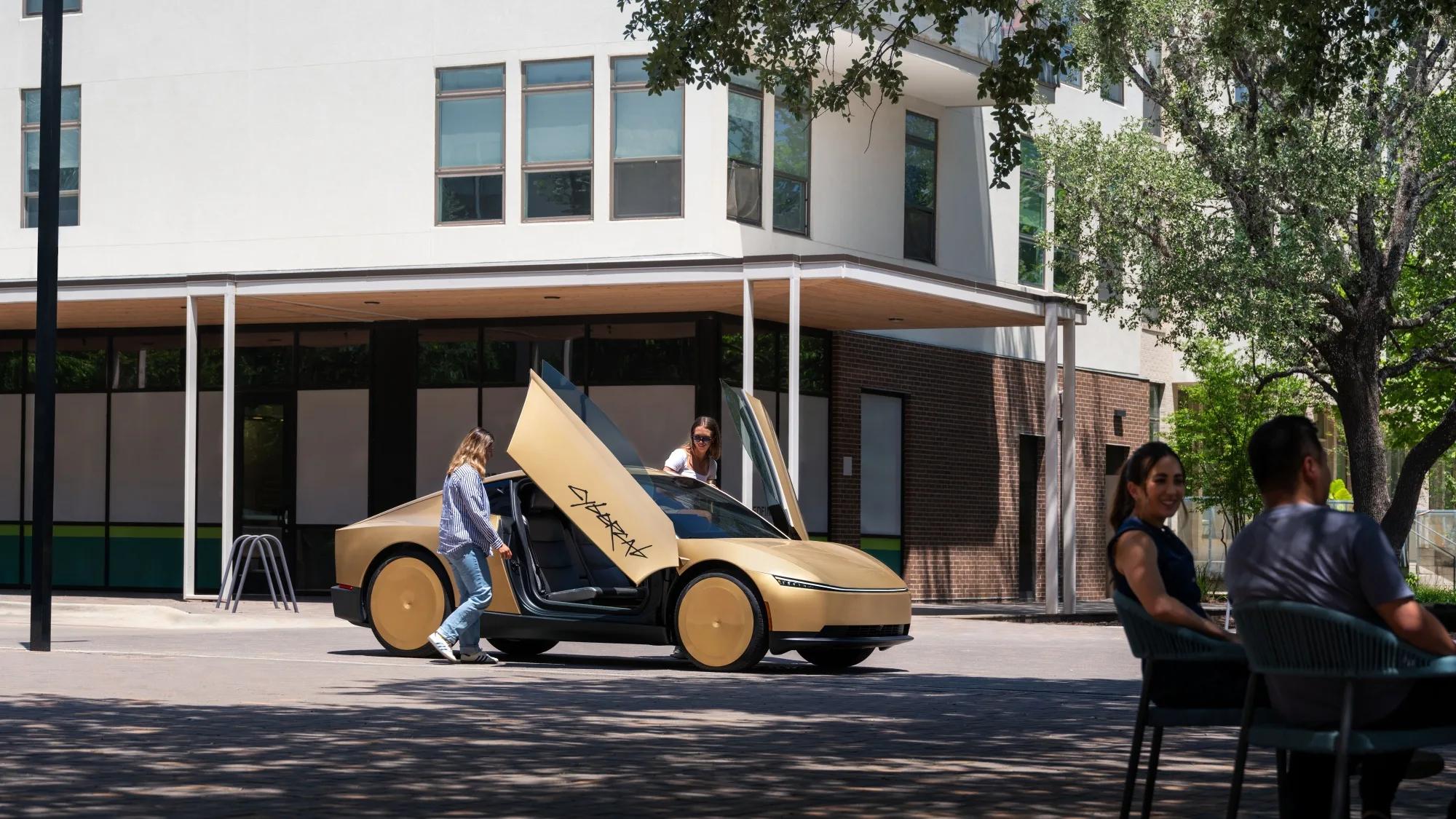
Instead of investing a lot of capital in fleet construction first, it opened the service for individual consumers to purchase this model when only a few hundred CyberCab were put into service, letting consumers bear the vehicle purchase cost and the autonomous driving service subscription fee, and help Tesla improve related services.
(Image source: Tesla)
Although this model is still under the invitation system at this stage, that is, only invited users are eligible to buy CyberCab, this does not affect the unconventional nature of Tesla's model.
If this happened to Chinese automakers or autonomous driving operators, presumably the criticism from various media and netizens on this behavior would keep this topic on the hot search list for several days.
However, with Tesla's dominance in the autonomous driving field supported by FSD technology, it indeed has the privilege to make consumers willing to pay for its products.
Dianchetong believes that if Tesla cancels the invitation system for CyberCab purchases and opens sales to the US market, many consumers will rush to buy it and become the first group of people to try the Robotaxi.
If you don't believe it, just look at how many people still chose not to refund their deposits and continued to wait silently after the multiple delays of Cybertruck and Roadster in the past.
However, when the fees consumers pay for their faith in technology are turned into the enterprise's clever ideas to reduce costs and increase efficiency, or even become the payment for trial and error of technology and business routes, we need to think about whether consumers are participants in technological progress, or targets harvested by marketing?
This article is from "Dianchetong", authorized for release by 36Kr.