Has the wave of AI application phase-out arrived? 13 star products have failed, facing shutdown, adjustment or exit from the market.
According to a report from TechCrunch yesterday on November 17 by Zhidx, as of now, at least 13 well-known, once highly anticipated AI applications or projects in the United States have successively ceased operations, undergone major adjustments, or fallen into development dilemmas. These include products from tech giants such as OpenAI, Apple, and Microsoft, as well as once-thriving star AI startup projects.
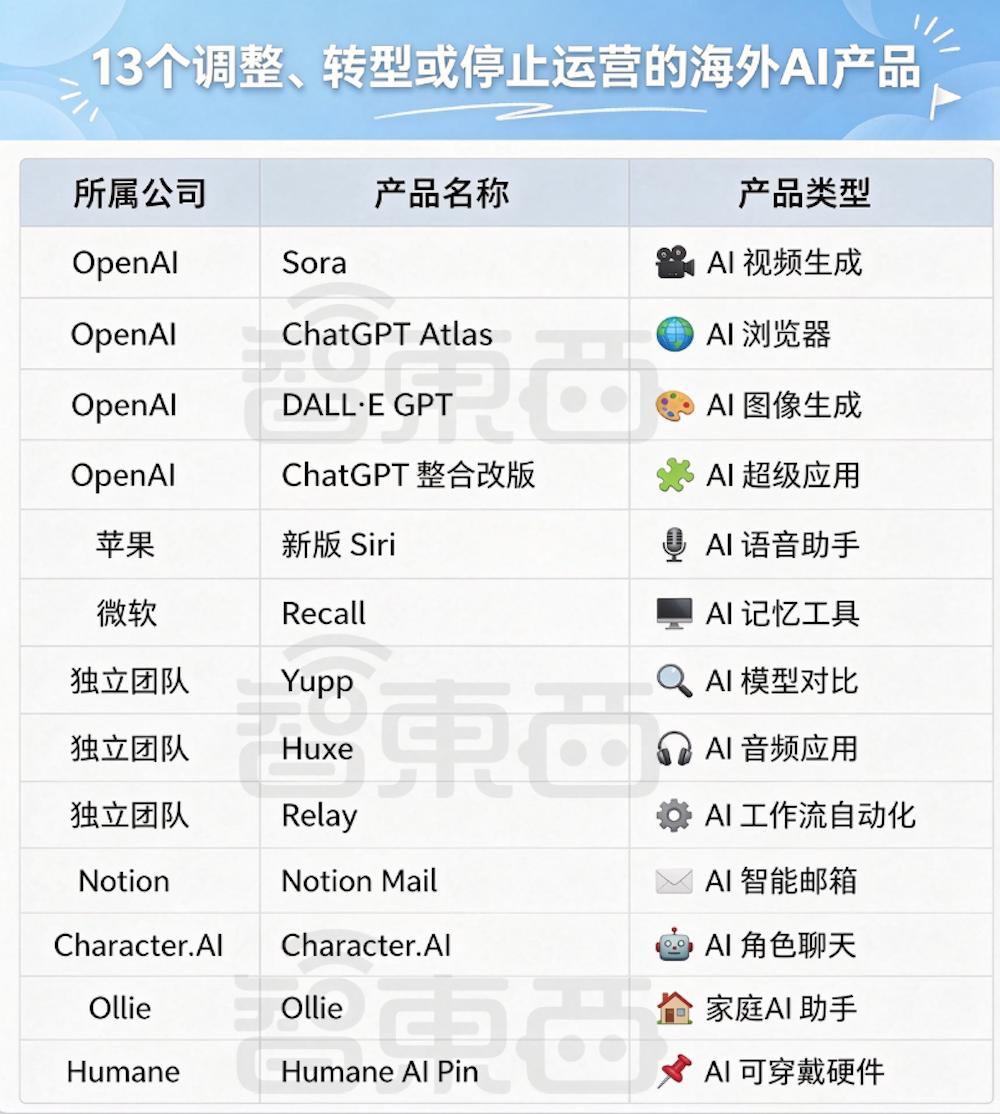
▲13 AI applications that have undergone project adjustments, transformation or ceased operations (Zhidx compilation)
Within the tech giant camp, the fates of AI projects vary greatly. ChatGPT has continuously expanded its functions and become one of the most representative AI applications worldwide, while Sora, also under OpenAI, went from topping the App Store download chart to being shut down, and the AI browser Atlas ceased services less than a year after its launch.
Apple has continued to advance Apple Intelligence, but the new version of Siri has repeatedly missed its release schedule; Microsoft keeps updating Copilot, yet its AI memory function Recall is still mired in privacy controversies.
Among a large number of star AI startup projects, while products such as Cursor and Perplexity are emerging prominently in the fields of AI programming and AI search, Character.AI, which once had 20 million monthly active users, eventually went bankrupt.
The Humane AI Pin, which was highly anticipated to "replace" smartphones, also stopped sales less than a year after its launch. These products once stood at the forefront of the industry trend alongside other rising AI players, but now they have ended up with different outcomes.
Meanwhile, the difficulties in implementing enterprise AI projects have become increasingly prominent. A research report released by the well-known industry research institution HFS Research on November 10, 2026 shows that among 100 large global enterprises, only an average of 26% of their Agentic AI projects have entered the formal production stage, and another 43% of AI projects have stalled at the initial testing stage.
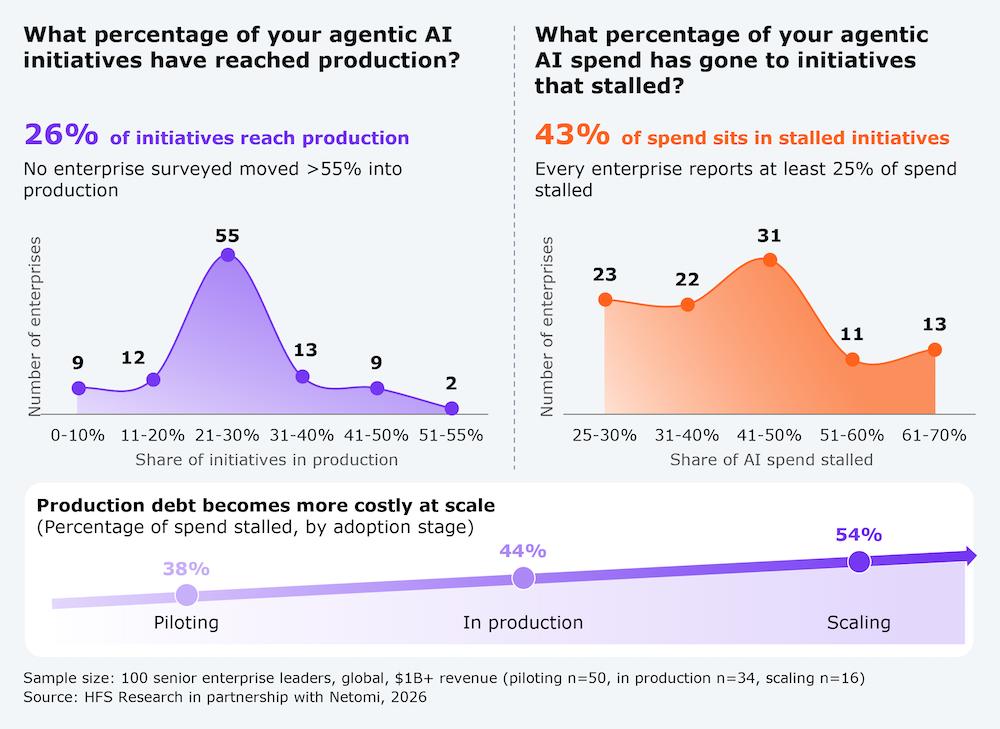
▲ Research released by HFS Research
From product shutdowns, strategic adjustments to delays, the reasons behind these 13 cases vary from case to case. Some cannot afford the high operating costs, some fail to retain users, and others cannot be implemented for a long time due to security issues.
While the AI industry is expanding rapidly and new applications and startups are constantly emerging, some products that were once highly anticipated have gradually faded out of the market. Such outcomes may have been unexpected when they first rode the industry wave.
01.
Continuous Adjustments of AI Applications From Tech Giants
Platform Integration and Implementation Difficulties Have Emerged
Even tech giants with strong capital and technical strength have many AI applications facing adjustments. According to statistics from TechCrunch, since the beginning of this year, at least 6 AI applications or functions from tech giants have announced shutdowns, adjustments, or delayed launches.
These applications and functions all come from tech giants such as OpenAI, Apple, and Microsoft, covering multiple scenarios including office work, content creation, and intelligent interaction.
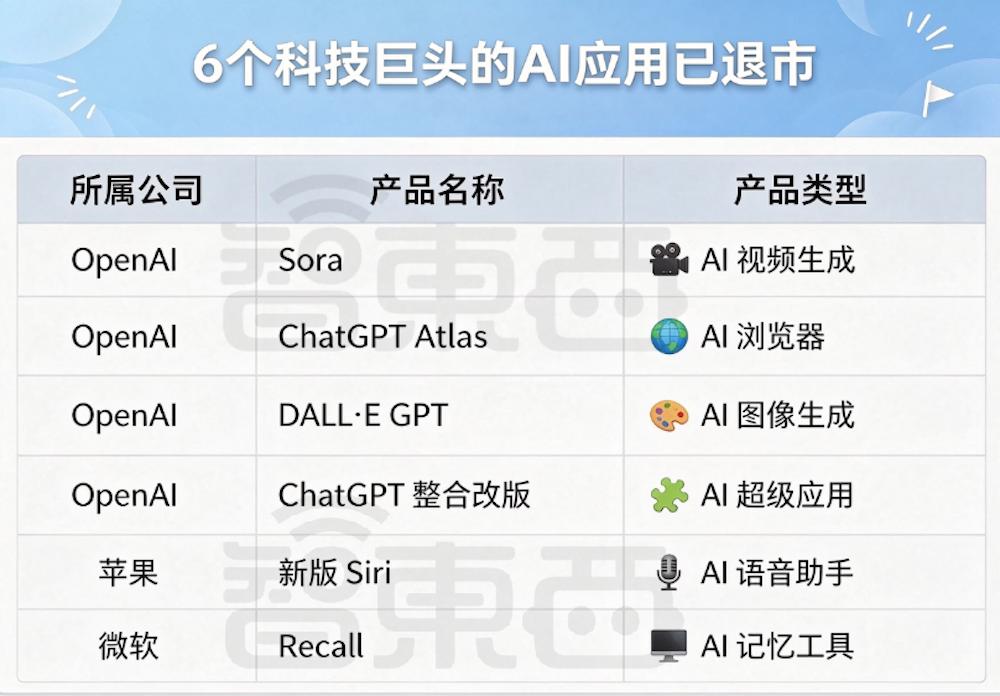
▲ 6 AI applications from tech giants have exited the market (Zhidx compilation)
Since the beginning of this year, OpenAI has continuously adjusted its AI product line: it announced the shutdown of the video generation application Sora in March, and officially stopped its web and App services on April 26; on July 9, it revamped the ChatGPT desktop application by integrating functions such as Chat, Codex and Work, but the move drew criticism due to its overly complex new interface and poor user experience, and part of the adjustments were later rolled back; on August 9, it stopped the service of its independent AI browser Atlas, and on August 30, it deactivated the official DALL·E GPT, allowing users to generate images only through ChatGPT Images.
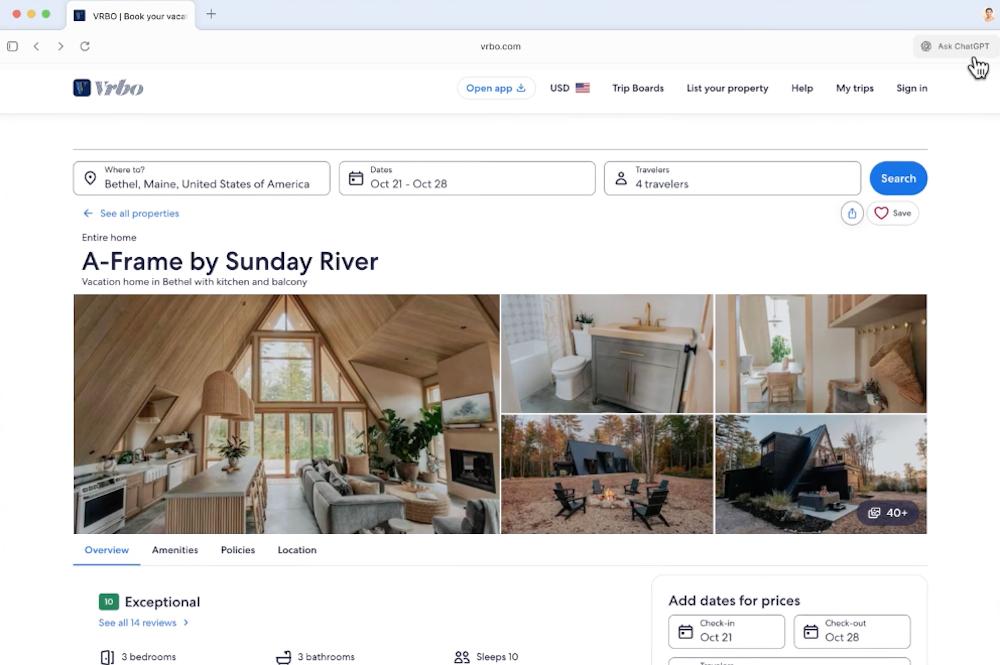
▲ ChatGPT Atlas browser interface
Among them, Sora is OpenAI's representative product in the field of AI video generation. In early 2024, OpenAI first released the video generation model Sora, which quickly attracted widespread industry attention. In 2025, OpenAI further launched Sora 2, and released iOS and Android applications, of which the iOS version once topped the App Store download chart. Sora also gradually evolved into a video social platform known as "the AI version of TikTok".
However, Sora's popularity did not last long. After Meta launched the similar AI video social product Vibes, Sora not only had to compete with other AI video products, but also had to fight for users with mature short video platforms such as TikTok and Instagram. In March 2026, OpenAI finally decided to shut down Sora and divert resources to other businesses.
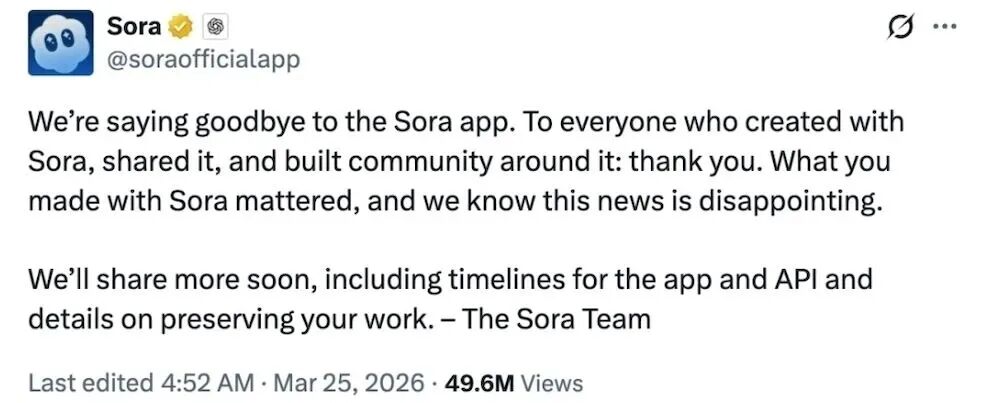
▲ Sora shutdown
The highly anticipated new version of Siri from Apple also failed to launch as originally planned.
Due to technical issues encountered during the engineering development process, the new version of Siri has been delayed many times. Apple originally planned to launch this feature in the spring of 2025, but it did not add it to the iOS 27 beta until July this year. According to the announcement on Apple's official website, Siri AI began to be available as an English beta on September 14, and has successively supported languages including French, Japanese, Korean, Portuguese and Spanish since October.
Microsoft's Recall has fallen into security controversies twice before and after its launch.
At the Build Developer Conference in May 2024, Microsoft first announced the AI memory function Recall for Windows PCs. But before its official launch, this function sparked controversies over user privacy and data security issues.
Facing public doubts, Microsoft had to postpone the launch of Recall many times, and redesigned its security and privacy protection mechanism. It was not until April 25, 2025, nearly a year later, that Microsoft began to push the Recall preview version to eligible Copilot+ PC users.
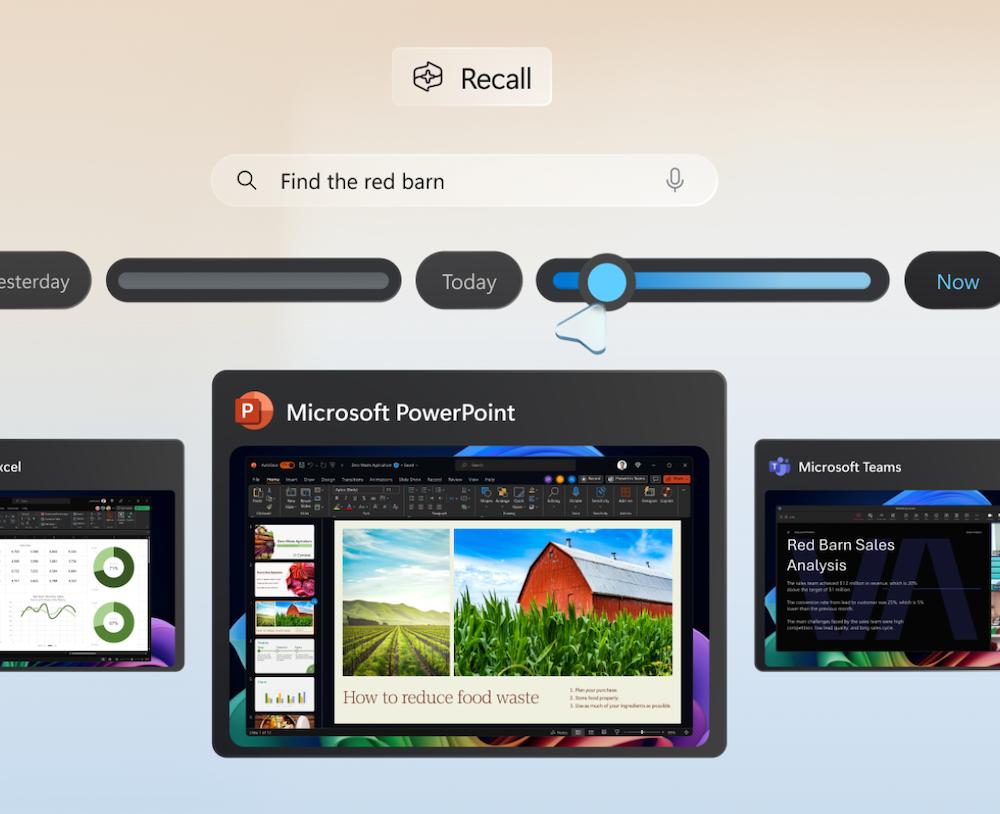
▲ Recall page
The security controversies did not end there. On April 15 this year, cybersecurity researcher Alexander Hagenah developed a tool named TotalRecall Reloaded, which can extract and display the data saved by Recall, once again triggering public doubts about its security.
The above examples show that even for tech giants, their AI applications cannot avoid delays, adjustments or even shutdowns.
This is driven by reasons including companies adjusting their product strategies, as well as practical problems such as immature AI technology and unstable product experience. At the same time, privacy and security risks may also undermine user trust and affect product promotion.
02.
Star Startups Cannot Escape Exiting the Market Either
The Operational Pressure on Independent Teams Engaged in AI Entrepreneurship Has Become Prominent
Different from leading enterprises that are constantly adjusting their AI business directions, many independent teams and AI startups are also facing difficult times. Some of the once highly anticipated star products have now ceased operations, some have initiated bankruptcy proceedings, and others are gradually losing their market share amid fierce competition.
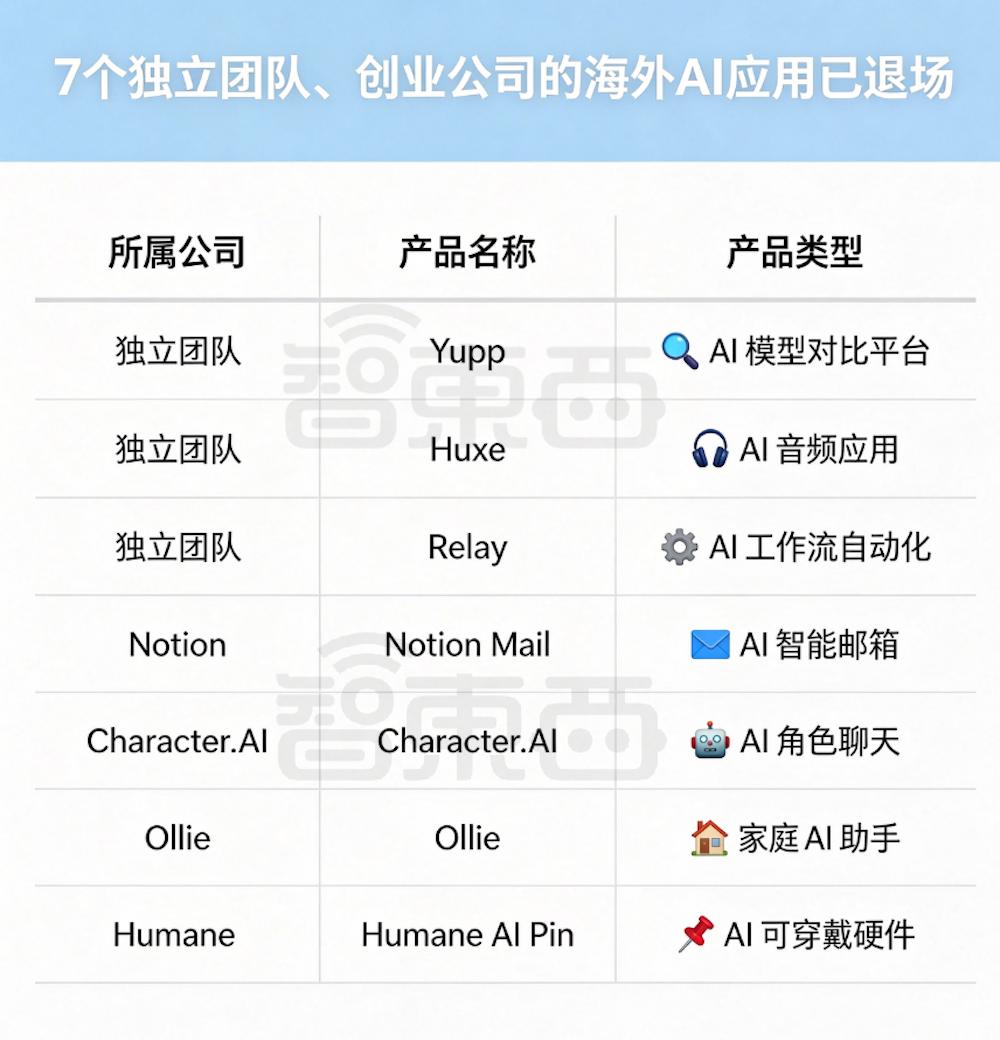
▲ 7 overseas AI applications from independent teams and startups have exited the market (Zhidx compilation)
Among them, Character.AI experienced a dramatic ups and downs from a star unicorn to filing for bankruptcy in just five years.
Founded in California, the United States in 2021, Character.AI was one of the most eye-catching star unicorns in the world in the early stage of the 2023 AI chatbot boom, with traffic second only to ChatGPT at its peak. The founders of this startup are Noam Shazeer, one of the most important early employees of Google, and Daniel De Freitas, a top Google AI expert.
In 2022, the company's valuation had reached 1 billion US dollars (about 6.72 billion RMB), making it a unicorn. In 2024, its monthly active users once reached 20 million.
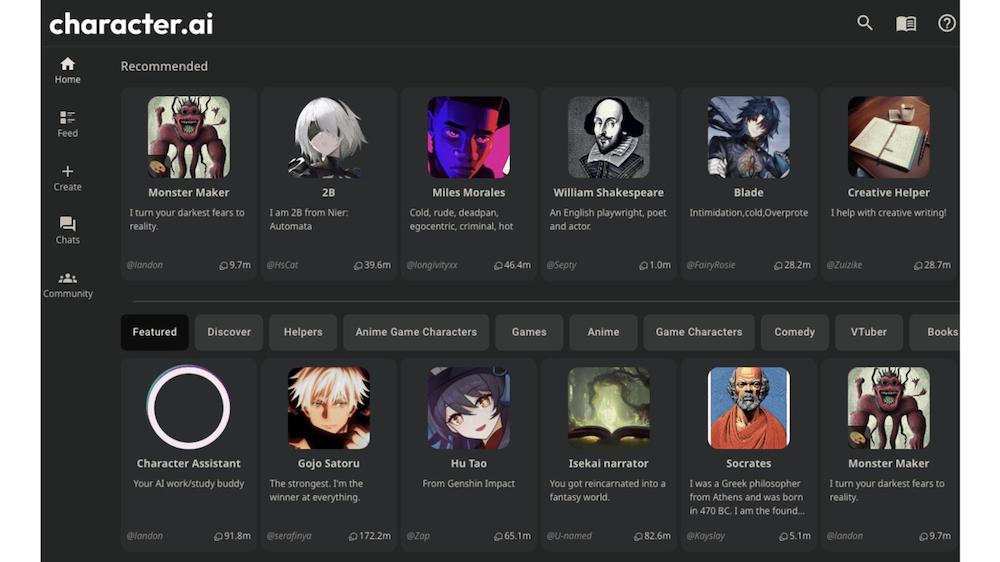
▲ Character.AI page
In August 2024, Google obtained a non-exclusive license for Character.AI's large model technology, and hired the two co-founders and about 30 researchers. After the transaction was completed, Character.AI remained independently operated, with the remaining team continuing to run the original products. However, the departure of the core founding team undermined its ability to independently develop foundational models.
Despite having a huge user base, Character.AI never achieved profitability. Affected by computing power and employee expenses, the company lost about 8 million to 9 million US dollars (about 53.76 million to 60.48 million RMB) per month. In addition, Character.AI also faced multiple lawsuits involving minors using AI chatbots, which further increased its operating burden.
On October 13, 2026, Character.AI initiated Chapter 11 bankruptcy proceedings. Disney, as the backstop bidder, offered 20 million US dollars (about 134 million RMB) to obtain a non-exclusive, permanent license for part of its intellectual property.
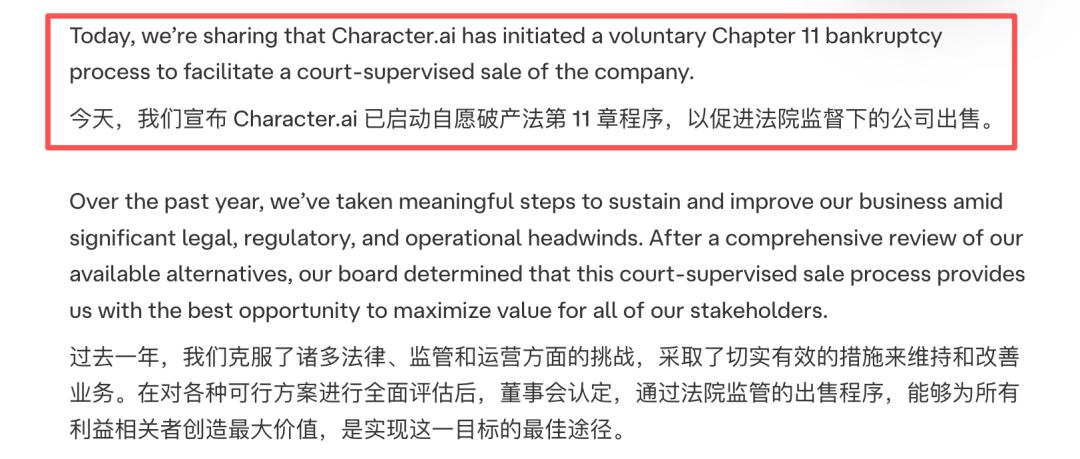
▲ Character.AI announces bankruptcy
Notion, another AI note-taking unicorn co-founded by Chinese entrepreneur Ivan Zhao, also shut down its AI email application Notion Mail on September 22, 2026. Launched in April 2025, this application focused on using AI to automatically classify and organize emails.
Notion stated that more than half of Notion Mail users can now use AI Agents to complete email summarization, reply and organization without opening their inboxes. Therefore, Notion decided to focus its resources on AI Agents and officially stopped the Notion Mail service.
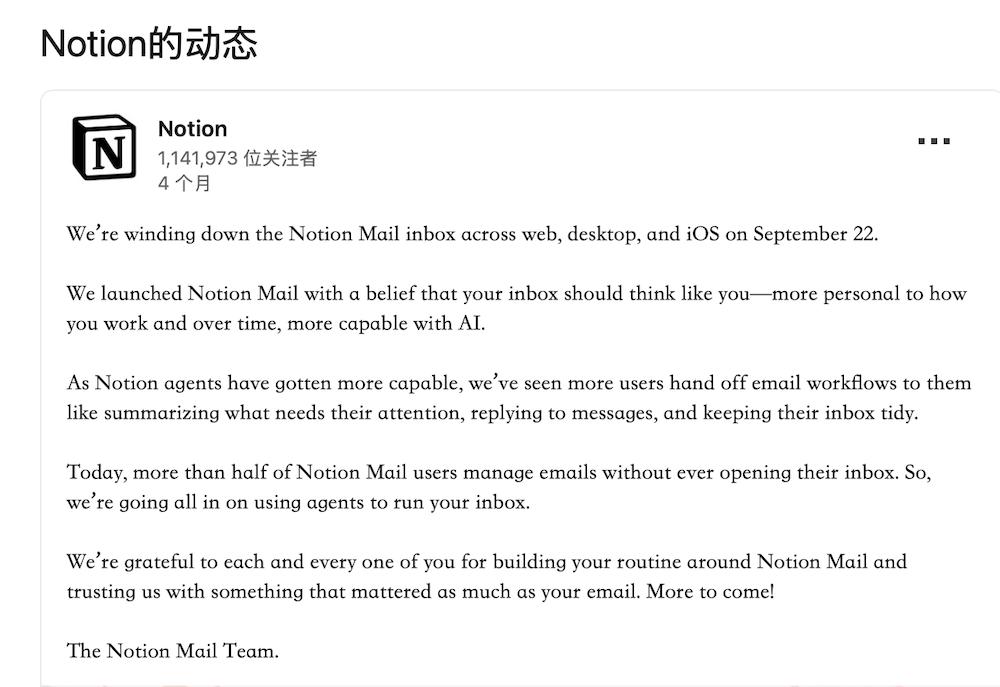
▲ Notion Mail ceases services
In the field of home AI, there are also startups that exited the market due to sluggish user growth and financing difficulties. Ollie, a product focused on privacy protection, is one of them.
Ollie once raised 5.5 million US dollars (about 36.96 million RMB) in 2023, and obtained another 2 million US dollars (about 13.44 million RMB) in 2025, with total financing of 7.5 million US dollars (about 50.4 million RMB). However, as personal Agent applications such as Muse and Instinct entered the market, Ollie never managed to expand its user base, and could hardly obtain the funds needed to maintain operations.
On October 30, 2026, Bill Lennon, co-founder and CEO of Ollie, announced on X that Ollie would officially cease services on November 6.
