Once rivaling SK-II, a renowned beauty company has abandoned the Chinese market.
After 32 years of presence in China, the well-known Japanese beauty brand has finally exited the market. On November 10, the high-end Japanese skincare brand Menard announced on its official Chinese website that it will officially withdraw from the Chinese market.
The brand's "Farewell Letter" reads: "1994-2026, after 32 years of ups and downs, Menard China is officially saying goodbye to its loyal users... In the autumn of 2026, the brand will officially wrap up all its operations in China."
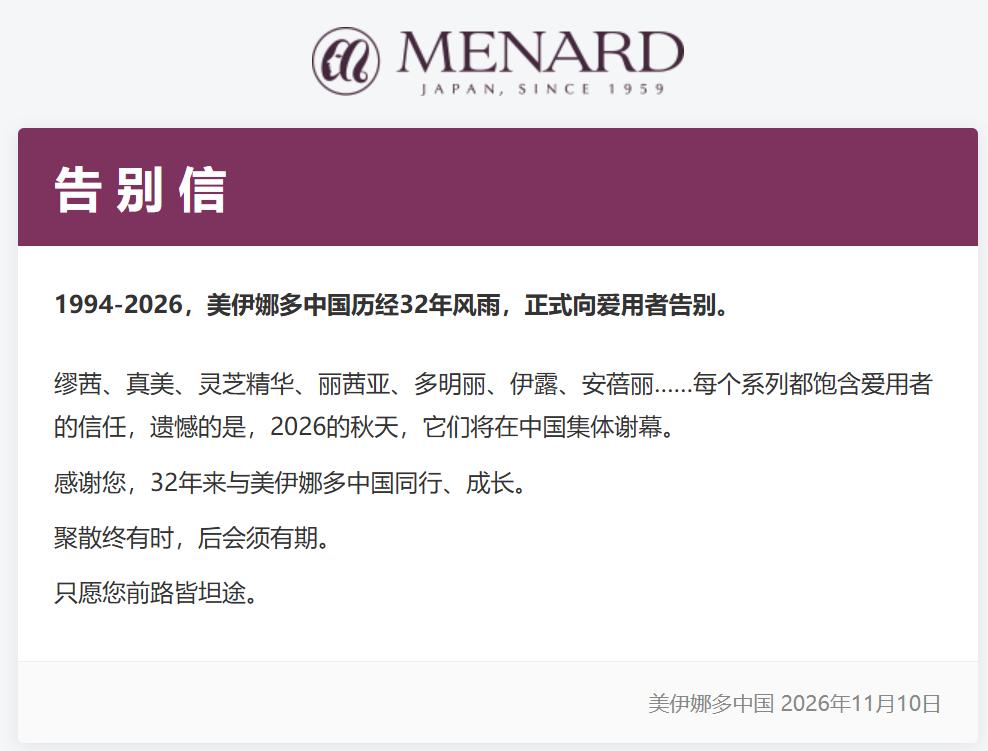
△ Screenshot from Menard China official website
Prior to this, rumors that Menard would withdraw from the Chinese market had been circulating in the industry for more than a year. Now that the official announcement has been released, the rumor has come true, marking the end of its 32-year journey in the Chinese market.
32 Years in China: The Renowned Japanese Beauty Brand Bids Farewell to the Chinese Market
Menard's contraction in the Chinese market had clear traces long before the official announcement.
In February 2025, netizens on Xiaohongshu broke the news that Menard would completely remove all its counters and withdraw from the Chinese market[1].
At that time, Menard's in-store sales associates and the agent in charge of the brand's clearance sales confirmed the authenticity of the news to Jumeili, stating: "The exit is due to long-term underperformance in the Chinese market and continuous sluggish sales."
However, the customer service of Menard's Tmall flagship store denied the rumor of "exiting China" at that time, saying: "We are full of confidence in the future of the Chinese market."
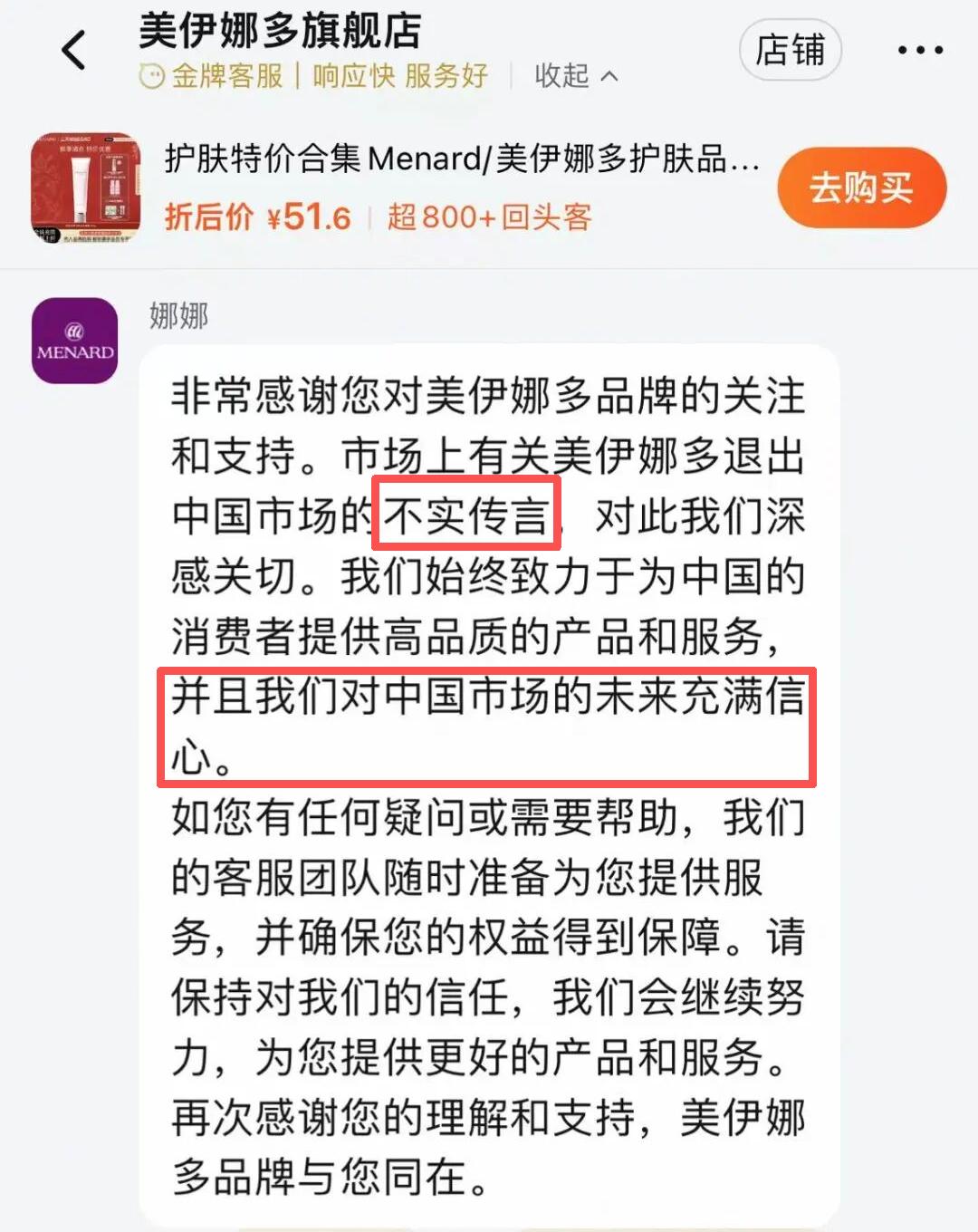
△ Source: Internet
Nevertheless, only 3 months later (May 2025), Menard announced that the operation of its WeChat mall had entered the countdown phase; the following month, its Tmall flagship store also launched clearance sales. Both the WeChat mall and Tmall flagship store announced that sales on relevant channels would be suspended starting from August 25, 2025.
In the announcement of Menard's flagship store, the reason for removing all sold products from the store is: "Company decision." The brand also expressed regret for the product removal.
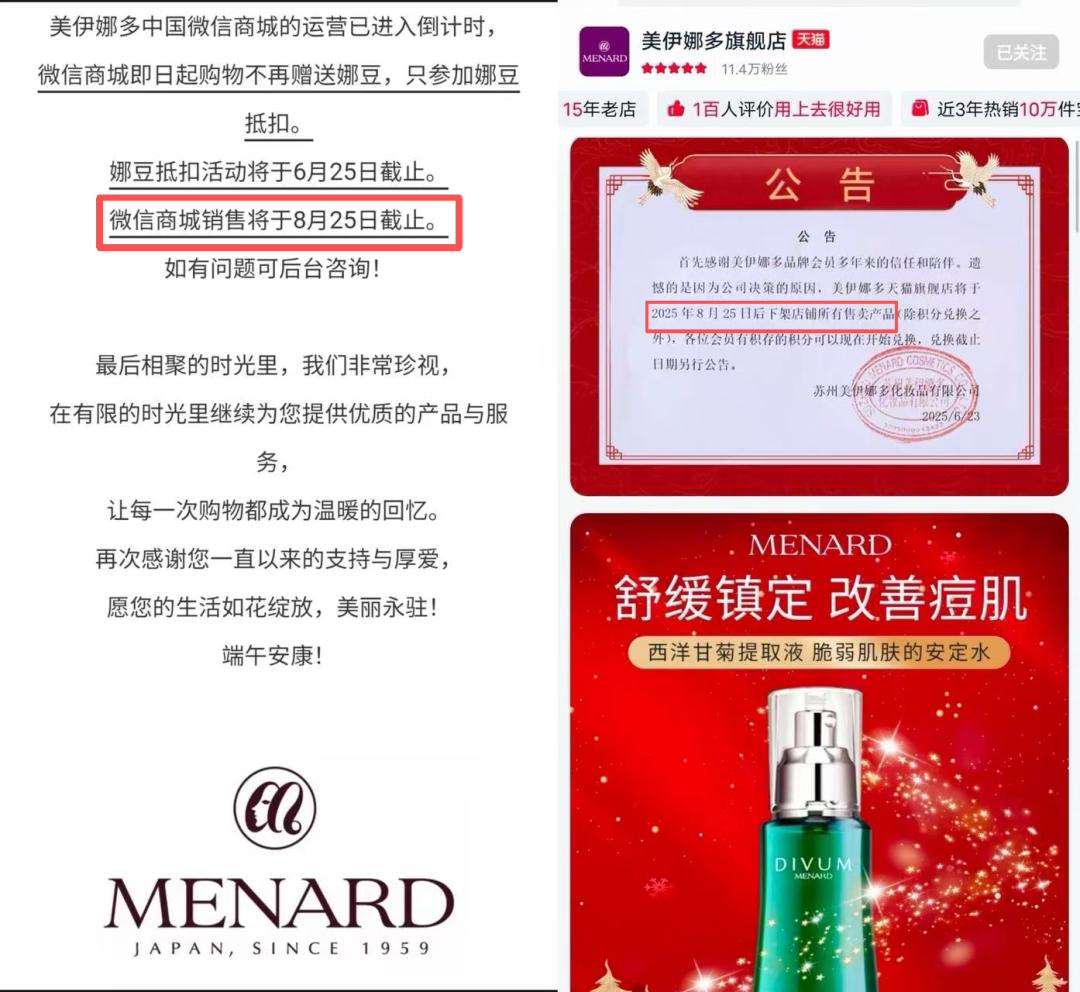
△ Source: Xiaohongshu
Up to now, Menard's official stores and accounts on Tmall, WeChat Official Accounts, Xiaohongshu and other platforms can no longer be searched.
But on the day when the brand's WeChat mall and Tmall store stopped operating (August 25, 2025), "Menard Hong Kong" announced its entry into Xiaohongshu, though the account is updated very slowly, with the latest post on Xiaohongshu dated June 4 this year.
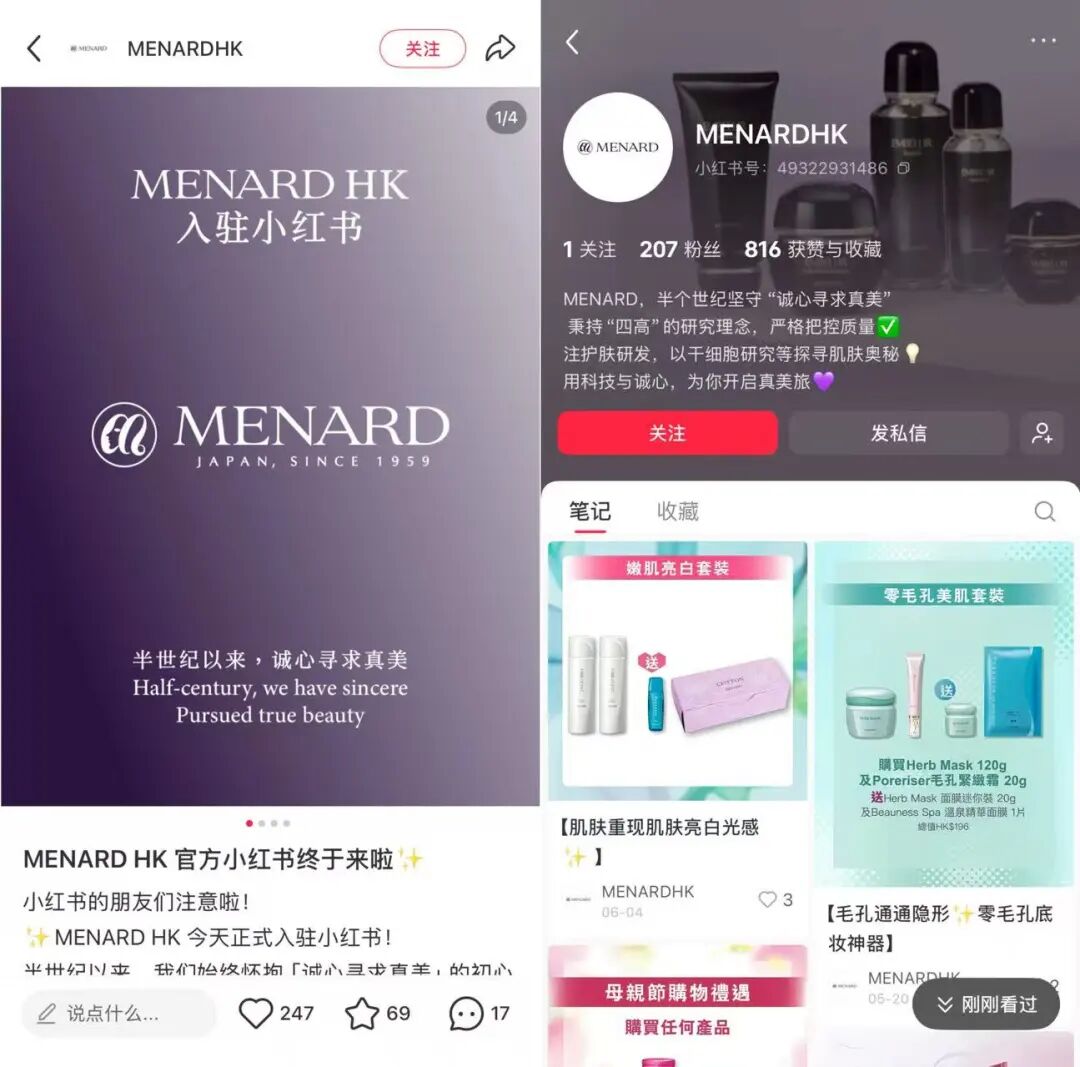
△ Menard Hong Kong Xiaohongshu account; Screenshot from Xiaohongshu
If we turn the clock back more than 30 years, such a farewell would be almost unimaginable. At that time, a large number of foreign beauty brands entered China, and Japanese beauty brands represented by Shiseido won the love of a large number of Chinese users with their high quality and features better adapted to Asian skin types and aesthetics.
Among them, Menard was founded in Nagoya, Japan in 1959. Relying on the long-term R&D accumulation of the Nagoya Comprehensive Research Institute, it established its brand recognition with two ingredient systems of hot spring minerals and ganoderma, launching iconic products such as Byo Water, EMBELLIR Ganoderma Essence and Ganoderma Cream.
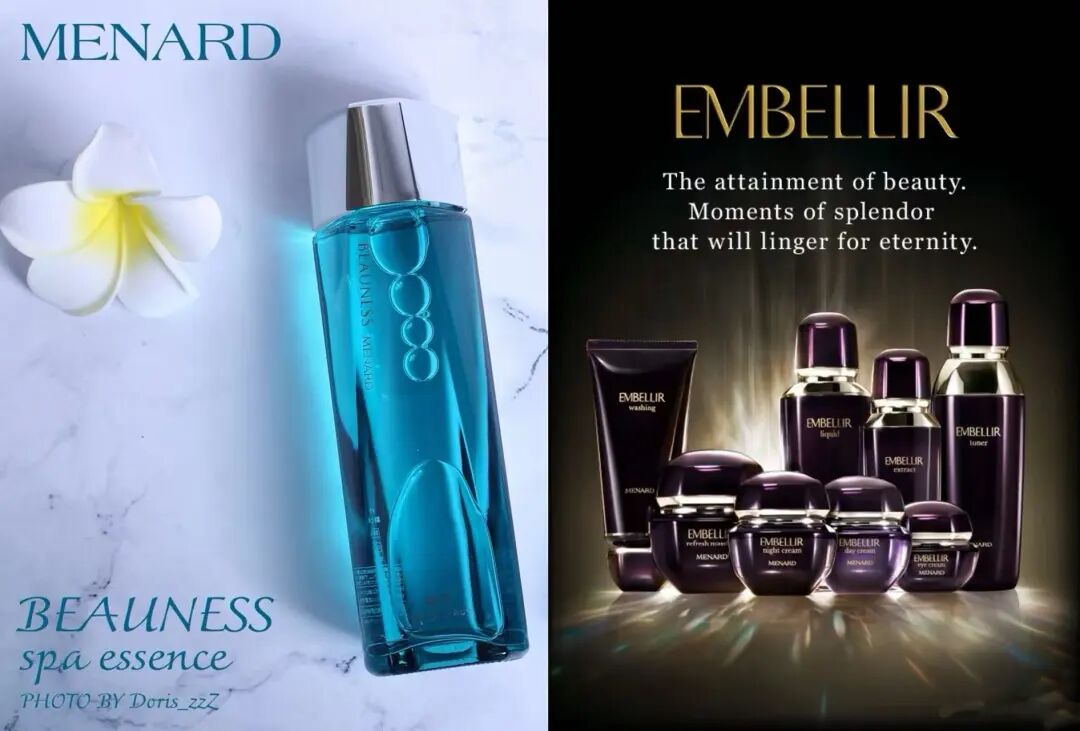
△ Picture above: Byo Water and EMBELLIR Ganoderma series; Source: Xiaohongshu
In 1994, Menard established Suzhou Bamei Cosmetics Co., Ltd. in Suzhou, built a local factory, and officially opened the door to the Chinese market.
As one of the earlier batches of high-end Japanese skincare brands to enter the Chinese market, Menard not only introduced the original Japanese product lines, but also launched domestic product lines adapted to the local Chinese market. In November 2014, Menard stated that it had developed a series of mid-to-high-end products tailored for the Chinese market, with a total of hundreds of products[2].
Its representative product Byo Water was once listed as one of the four "holy waters" of Japanese skincare together with SK-II Facial Treatment Essence, Albion Skin Conditioner and Decorte Sage Lotion.
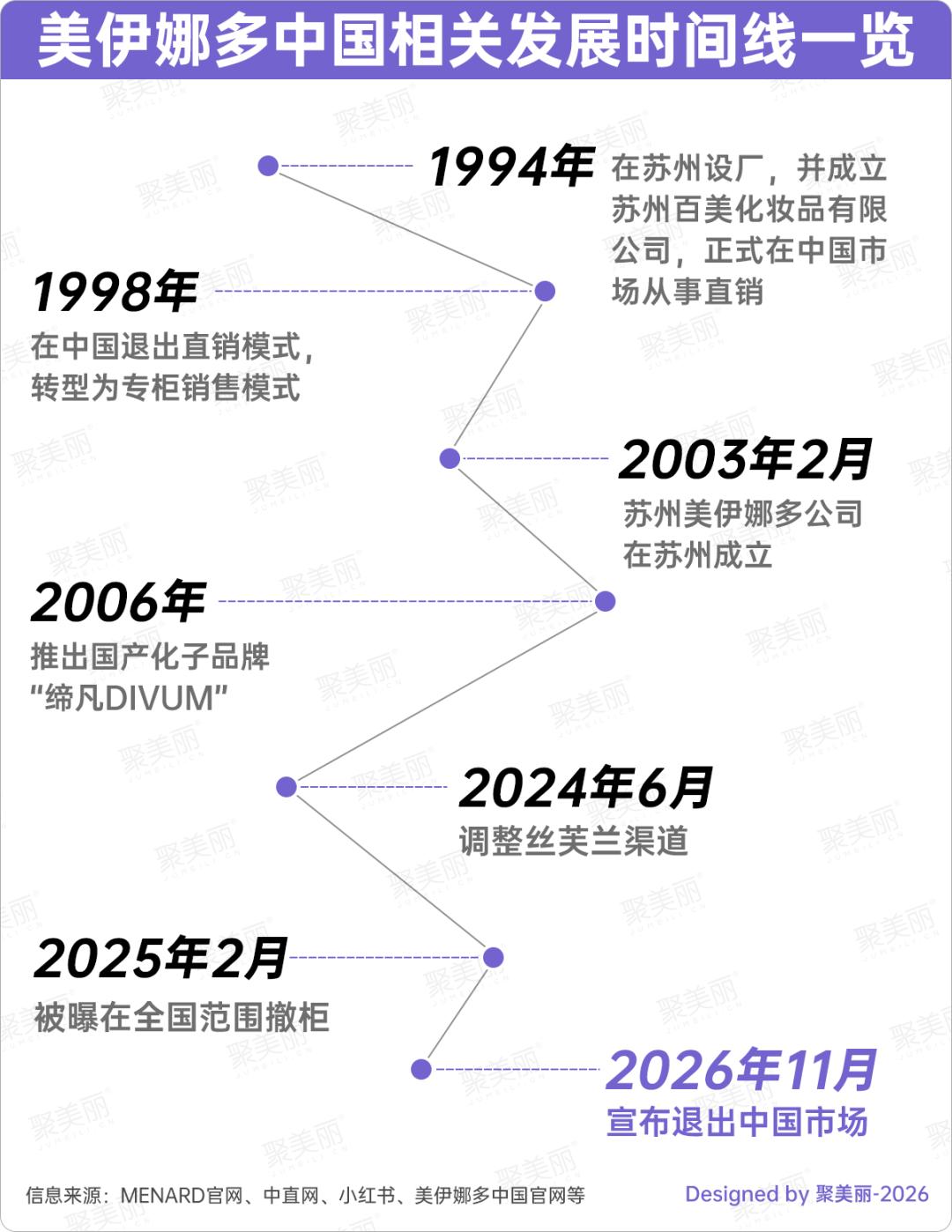
In the early stage of entering the Chinese market, Menard started with a direct sales model; after the policy adjustment in 1998, it quickly switched to the department store counter model, seizing the golden window period of domestic department store beauty channels in the late 1990s and early 2000s.
At the same time, Menard also expanded its channels to beauty salons, CS stores, supermarkets and Sephora across the Chinese market, with more than 200 counters nationwide at its peak. According to the data of the "2015 Top 100 Global Cosmetics Enterprises List", at that time, Menard's cosmetics business achieved sales of about 2.88 billion yuan[2].
The good times did not last long. With domestic Chinese beauty brands breaking through through various strategies and the changes in consumer demand and concepts, Menard gradually went downhill. By 2024, Menard's sales in China had dropped by more than 23% year-on-year, shrinking by nearly half compared with its peak period[3].
"In 2024, we experienced a lot of hesitation and helplessness, fierce competition in the industry, and unprecedented challenges. The world outside the window became sensitive and unfamiliar." At the end of 2024, Menard wrote such sentiments in the article "The Last Day of 2024" posted on Xiaohongshu. But it still looked forward to the brand being able to "return to professionalism and focus on itself" in 2025.
According to the data of the 2026 Top 100 Global Direct Selling Companies List, Menard's revenue in fiscal year 2025 was 121 million US dollars (about 807 million yuan), further declining from the previous year's 129 million US dollars (about 860 million yuan).
In terms of results, Menard ultimately failed to complete this self-adjustment, failed to adapt to this "sensitive and unfamiliar world", and finally chose to bid farewell to the Chinese market.
Foreign Beauty Brands in China: From "Localization" to "Deep Local Embedding"
In the process of rapid development of the Chinese market and drastic changes in channel structure, Menard is not the only Japanese beauty brand that failed to withstand market iteration.
Since 2025, many Japanese beauty brands including Shiseido Group, Kose Group, POLA and Fancl Group have announced store closures and counter removals in China, and some, like Menard, have even directly announced withdrawal from the Chinese market.
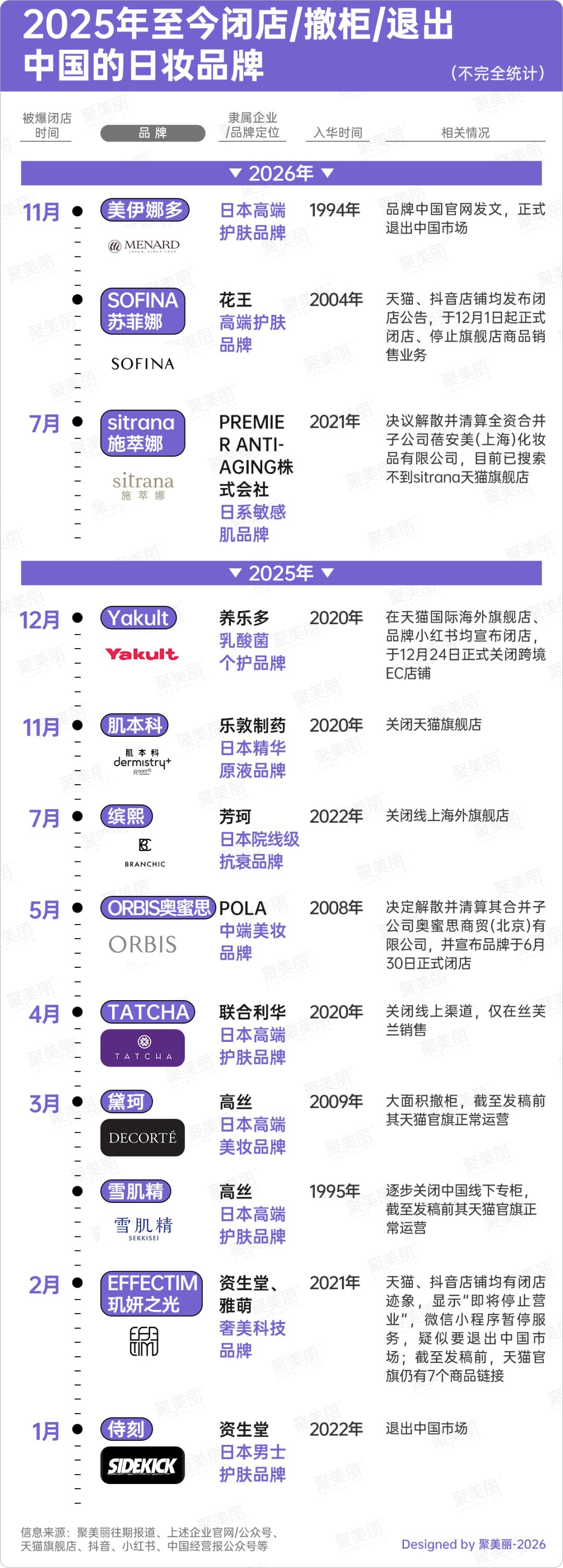
Combined with the industrial and commercial information of enterprises, in the past two years, many Japanese beauty-related entities have started the deregistration and liquidation process of their Chinese subsidiaries, and Japanese beauty groups such as Shiseido, POLA ORBIS and I-ne have all carried out similar operations.
At present, Menard's Japanese parent company has invested in 3 enterprises in China, among which Menard (Hangzhou) Trading Co., Ltd. was deregistered many years ago, and the remaining Chinese entities, Suzhou Menard Cosmetics Co., Ltd. and Suzhou local factory Suzhou Bamei Cosmetics Co., Ltd., are still shown as "in operation".
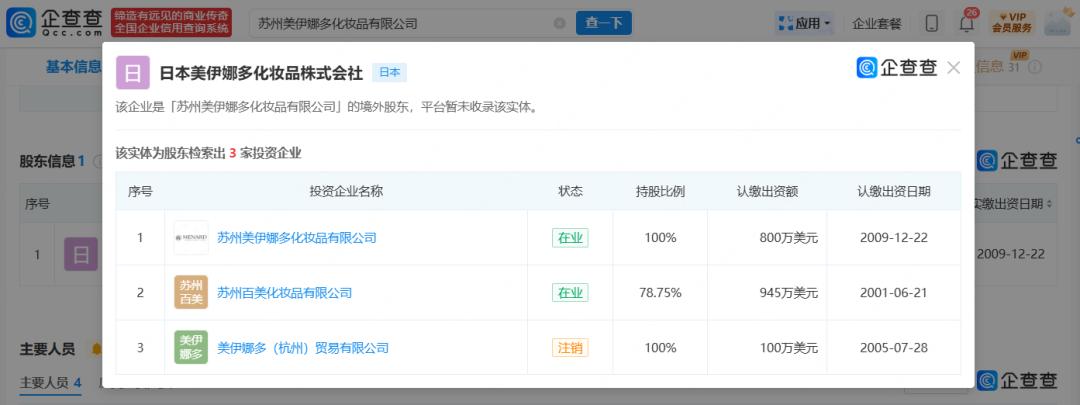
△ Screenshot from Qichacha
But a key distinction is: Deregistering local subsidiaries, closing directly-operated counters and domestic flagship stores is not equivalent to the brand completely withdrawing from the Chinese market.
For example, PREMIER ANTIAGING Co., Ltd., which announced the dissolution and liquidation of its Chinese subsidiary in July this year, stated that its future sales business in China will be integrated and transformed into a cross-border e-commerce model (operated through overseas flagship stores)[4]. Shiseido Group and POLA ORBIS are also still operating normally in China.
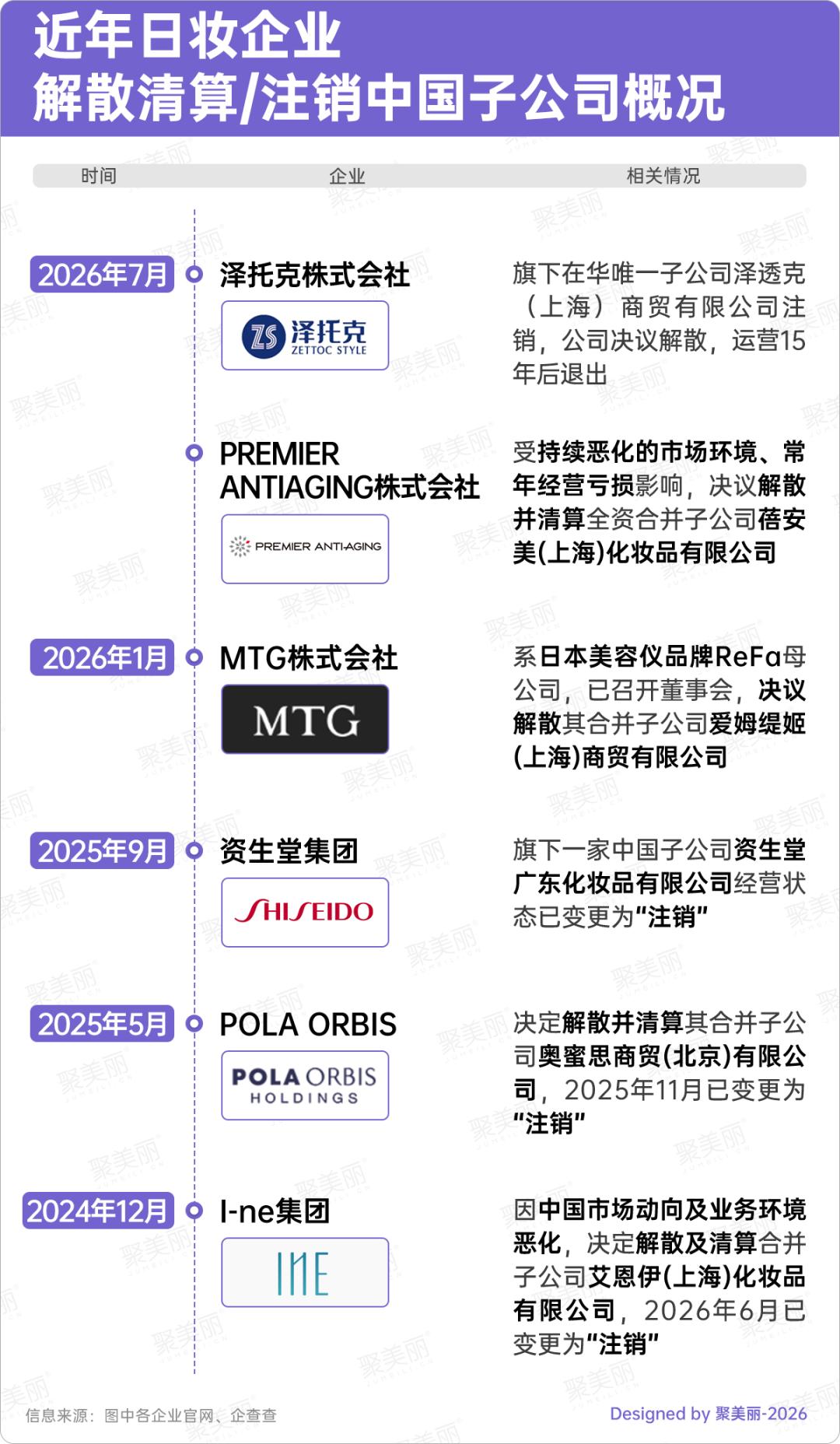
Beauty companies that withdraw from the Chinese market like Menard often attribute the retreat to the deterioration of the Chinese market environment. For example, in December 2024, I-ne Group announced the dissolution and liquidation of its merged subsidiary I-ne (Shanghai) Cosmetics Co., Ltd., and the reason given by the enterprise at that time was exactly: The deterioration of domestic market trends and business environment in China[5].
Interestingly, as early as when the rumors of Menard's counter removal came out, internal employees of the brand revealed another perspective to the outside world: "In fact, the operating efficiency was not bad, but the Japanese headquarters thought the Chinese market was too difficult to operate."
In other words, withdrawal is not necessarily due to losses that are unsustainable. Sometimes it is a voluntary choice of the headquarters to shrink the front line after evaluating the global resource allocation. Behind this decision, it reflects the brand's long-term low willingness to invest in localization.
As far as Menard is concerned, the filing time of domestic ordinary cosmetics with "Suzhou Bamei Cosmetics Co., Ltd." as the filer stopped in July 2023, and the product filing time with "Suzhou Menard Cosmetics Co., Ltd." as the filer stopped at the end of 2022.
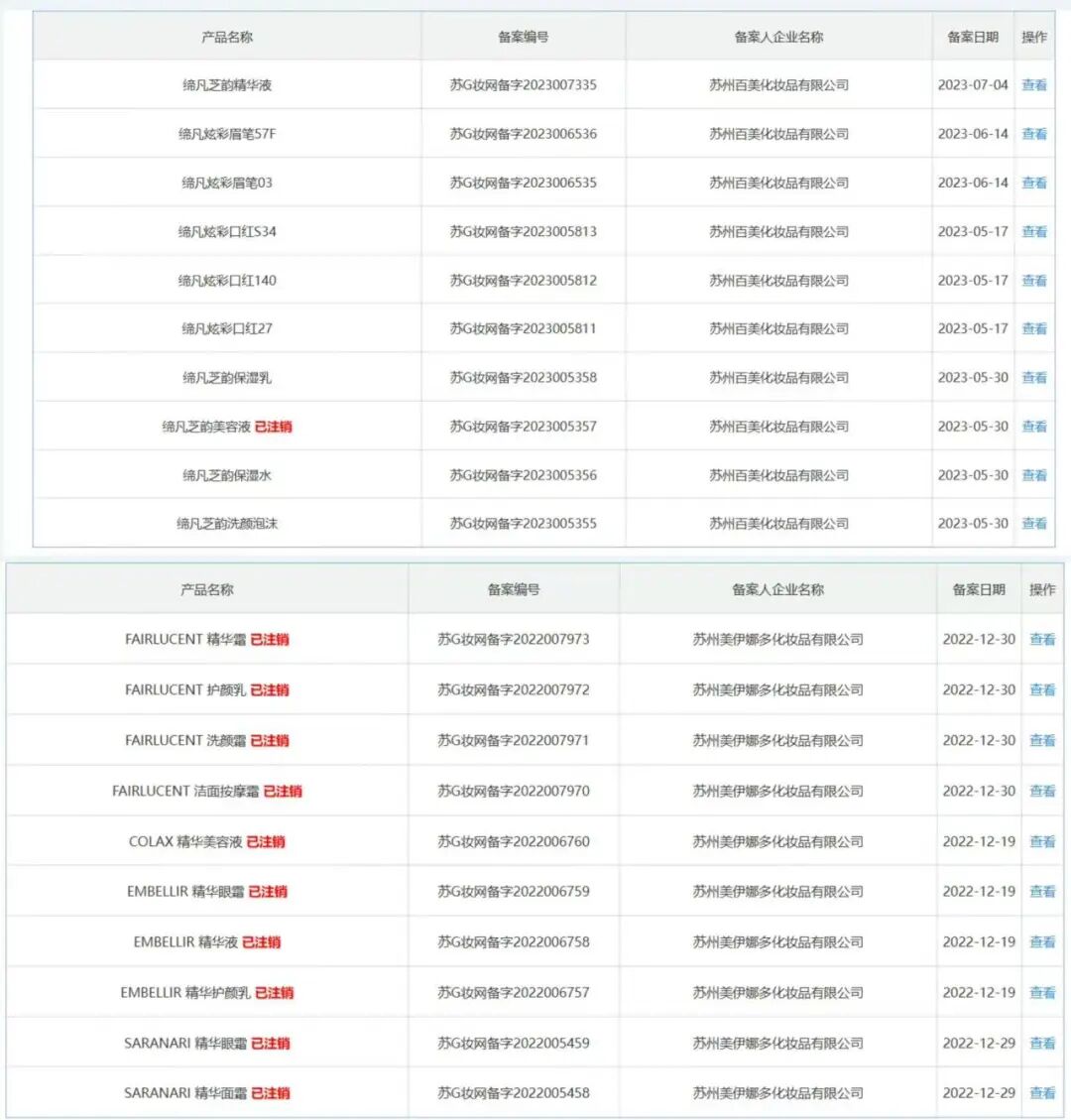
△ Menard product filing information; Screenshot from National Medical Products Administration
The filing records intuitively show that Menard has long slowed down or even suspended the localized product development for the Chinese mainland market.
At the same time, Menard also lacks blockbuster products that can trigger social discussion, and has long had "zero promotion" on the main positions of the new generation of consumers such as Xiaohongshu and Douyin. There is no continuous content marketing, and no popularization and communication from influencers and experts, so it has almost lost its voice among the mainstream consumer groups.
In the cycle where China's beauty industry has entered the stage of traffic competition and efficacy competition, it is obviously not feasible to stick to the old cognition that "gold will always shine".
In today's beauty track, gold also needs to learn to shine actively, adapt to the local context to tell good brand stories, and continuously output value, so as to be seen by the new generation of consumers.
In 2025, domestic Chinese beauty brands took 57.37% of the Chinese market share, while the market share of Japanese brands was only 6.39%[6].
