Nike has suffered a precipitous fall down the status ladder.
At the end of September this year, Kim Kardashian made a surprise appearance in Shanghai, showing up to support NikeSKIMS, the collaborative product line launched by her own shapewear brand SKIMS and Nike.
This store is located at HKRI Taikoo Hui in the West Nanjing Road commercial district of Shanghai, with its product categories and pricing benchmarked against lululemon. On its opening day, customers queued up for 3 hours at the entrance, and during the National Day holiday, people even had to scan a QR code to get a queue number for the fitting rooms.
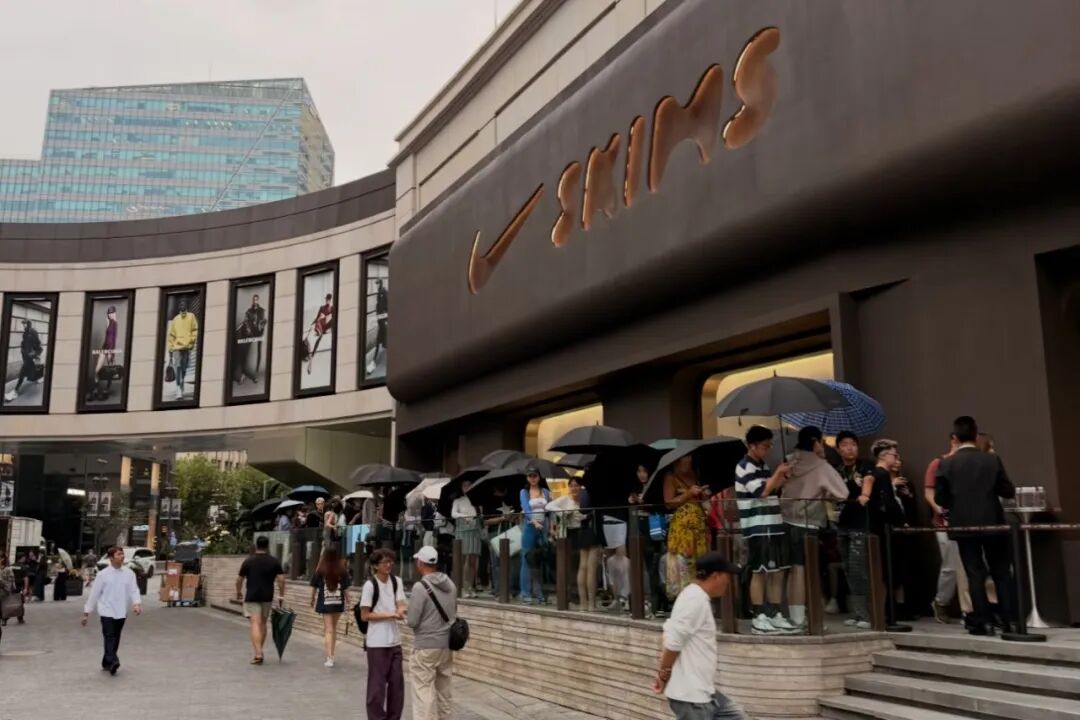
Queuing scene at the NikeSKIMS store entrance
People who don't know the situation might think Kardashian has made another manifestation come true. After all, such popularity feels like a lifetime ago for Nike. Its last peak period was around 2020, when sneaker fans and scalpers stayed up late waiting to snap up its Travis Scott x Air Jordan 1 "Reverse Swoosh" sneakers.
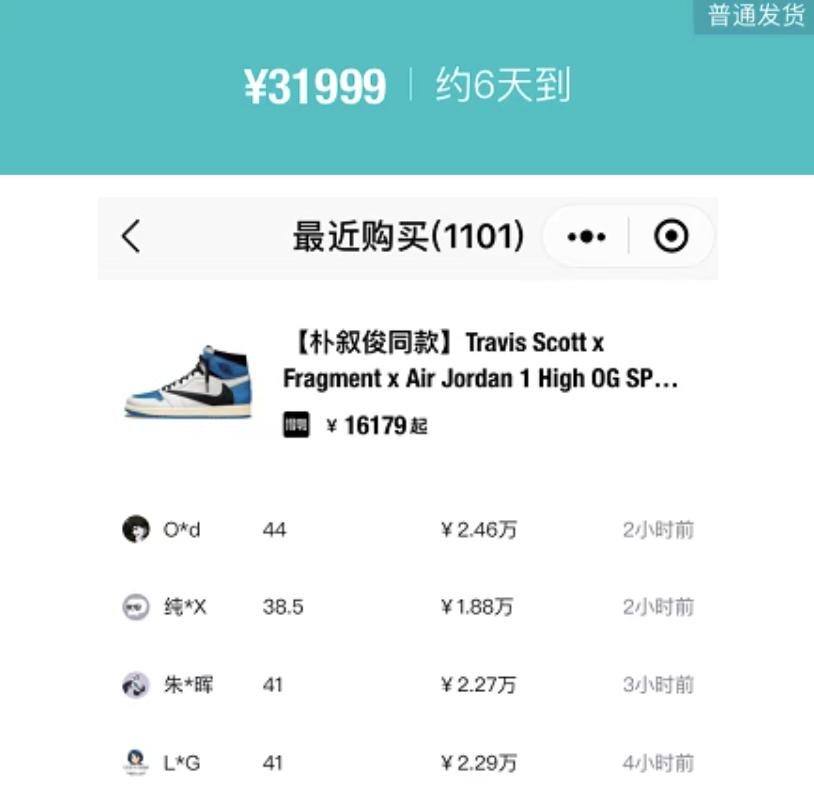
Looking back at that time, just a reversed swoosh on the shoe body pushed the premium rate to over 500% at one point. The $175 shoe could be resold for more than $1000, and Chinese consumers had to spend over ten thousand yuan on Poizon to get one, with many people hoarding them as wealth management products[1].
"Past its prime" is the common sentiment when people mention Nike in recent years. It has long lost its followers in the trend circle, and most of the time it only appears in outlet channels and government-subsidized e-commerce sections with massive discounts.
On the earnings call at the end of last year, Nike CEO Elliot Hill regretfully admitted: We have become a lifestyle brand that relies on price competition in China.
According to the quarterly report in August this year, Nike's Greater China region has recorded year-on-year revenue declines for 9 consecutive quarters, with EBIT dropping by 34%, meaning it sold over 300 million US dollars less in this quarter than the same period last year.
If Nike tries to use NikeSKIMS to fill this performance gap, it needs to sell 1300 pairs of 800-yuan yoga pants every hour, 24 hours a day without a break, for 3 consecutive months.
The global market is also not optimistic, with both revenue and profit declining at the same time. Wall Street analysts have lowered Nike's overall rating to the lowest level in at least 25 years. In September this year, Nike was removed from the S&P 100, suffering the unprecedented humiliation of being kicked out of the index for the first time in its history.
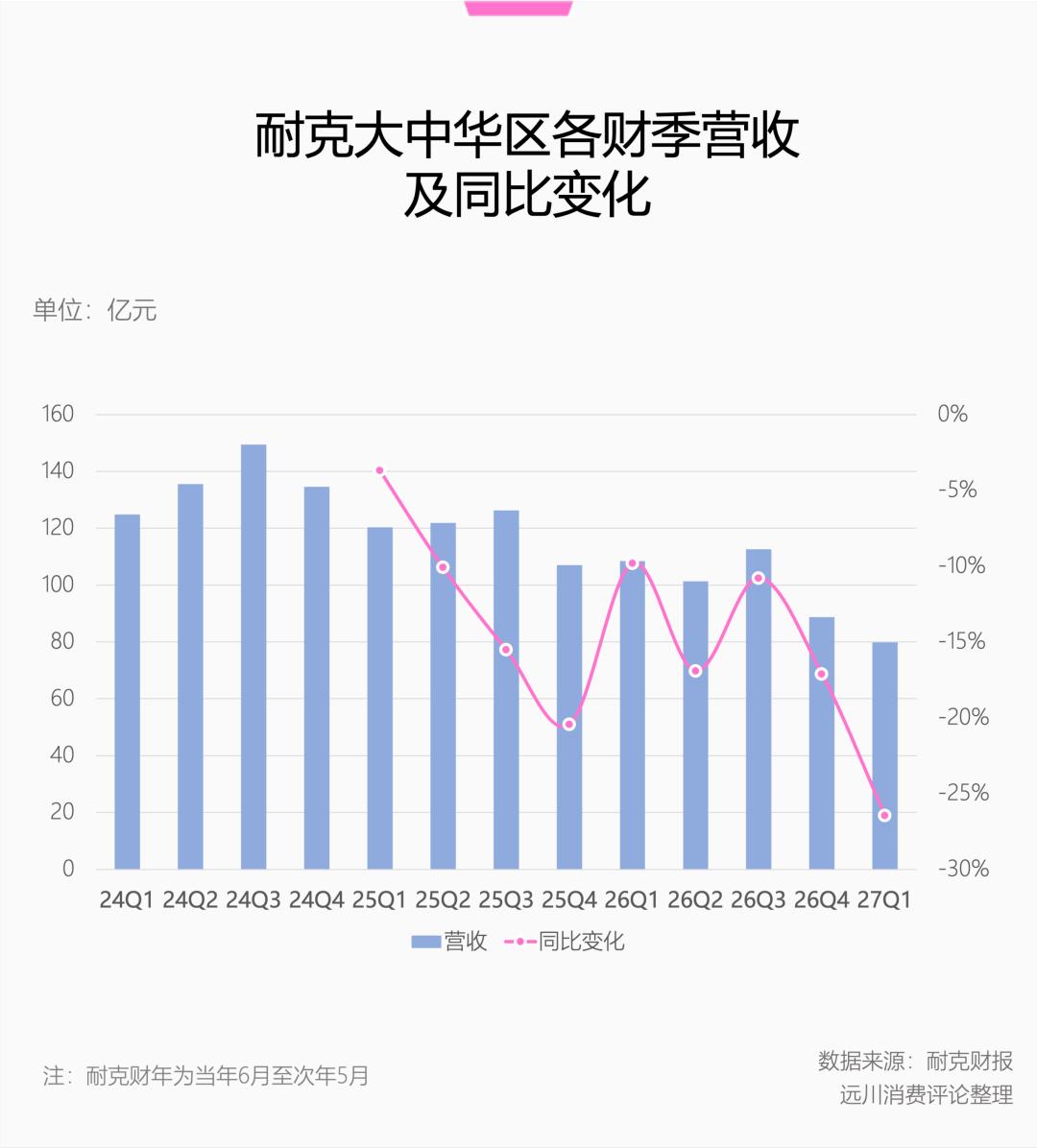
This is the current situation of Nike, and I'm afraid even the whole Kardashian family can't turn the tide.
But the cruelest part is not the current poor performance, but that the trend-leading consumers no longer have any interest in Nike.
Only bottom-fishers left
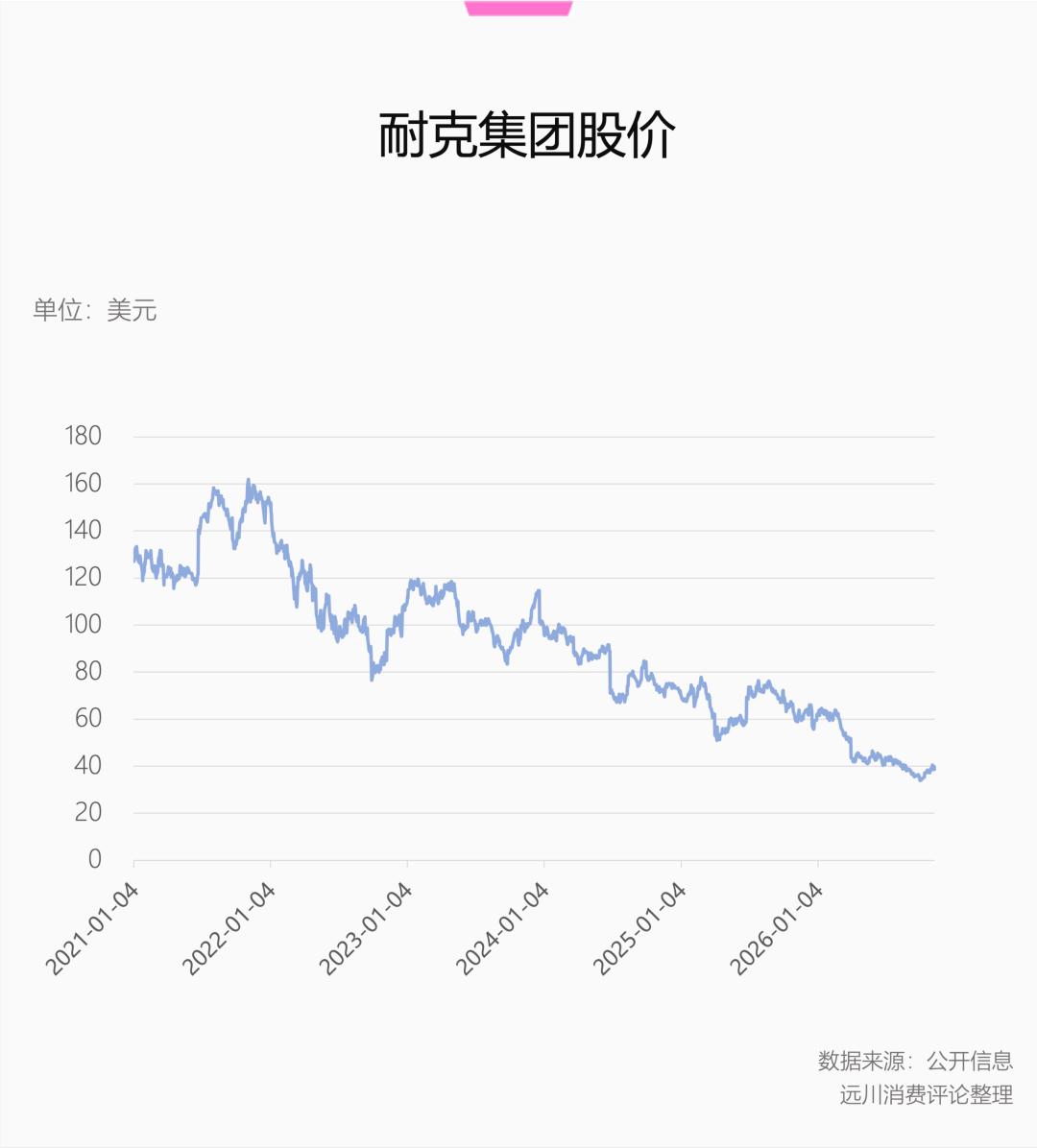
Compared with its peak in 2021, Nike's stock price has plummeted by nearly 80% now, and shareholders who bought at the peak have been trapped for exactly five years by this month.
If it fails to reverse the situation before the end of the year, it will hit the worst performance record since Jordan retired in 1993.
Investors on one side are waiting to buy the dip, and consumers on the other side share the exact same sentiment: as soon as new products are released, everyone's first reaction is to wait for discounts.
The AJ1 Low OG "Banned" released in May this year, priced at 1099 yuan, fell to over 800 yuan in the secondary market in less than 5 hours after going online. Unlike consumers who wait for discounts for the 5090 graphics card, consumers waiting for Nike discounts never lose.
Once upon a time, Nike was the core player in the sneaker reselling gray industry. At its craziest peak, that pair of Reverse Swoosh sneakers could be sold for over 30,000 yuan, which even caught the attention of the legal and news circles, who claimed that the related practice was suspected of violating the Price Law.
But from another perspective, this accusation of "securitization of sneaker reselling" was nothing but a sweet trouble during Nike's performance growth period. In 2019, over 6.2 million people placed orders for AJ series sneakers on Poizon alone, contributing 9.5 billion yuan in sales to the platform[2].
The overwhelming popularity in the early years made Nike overconfident. To make sure all consumers who wanted to pay could send money to its account, Nike launched a crazy restock mode, making the originally limited hot models available everywhere on the streets.
In 2021, Nike launched another hit product: the panda colorway Dunk with an original price of 100 US dollars was hyped up to 300 US dollars a pair, and getting one meant making a profit.
However, by the end of 2022, Nike had restocked this model 6 times only in the US market, and it was also widely available on domestic e-commerce platforms in China. In early 2023, about 150,000 pairs were launched in a single round, and after that, there were continuous restocks almost every month.
The good old days when scarcity drives high value are completely gone, and now new Nike products often break their issue price as soon as they are released.
Nike obviously failed to learn the lesson about human nature that luxury brands have already verified: Hermès never discounts its Birkin bags, and customers have to buy a bunch of accessories first to get the qualification to purchase one, but every wealthy woman who pays for it gets a strong sense of honor; on the contrary, those light luxury brands that stay in outlets all year round, after endless discounts, only have the "light" part left, and completely lose the "luxury" attribute.
Sure enough, after this series of operations, Nike completely devalued its own brand, and was excluded from the trend circle.
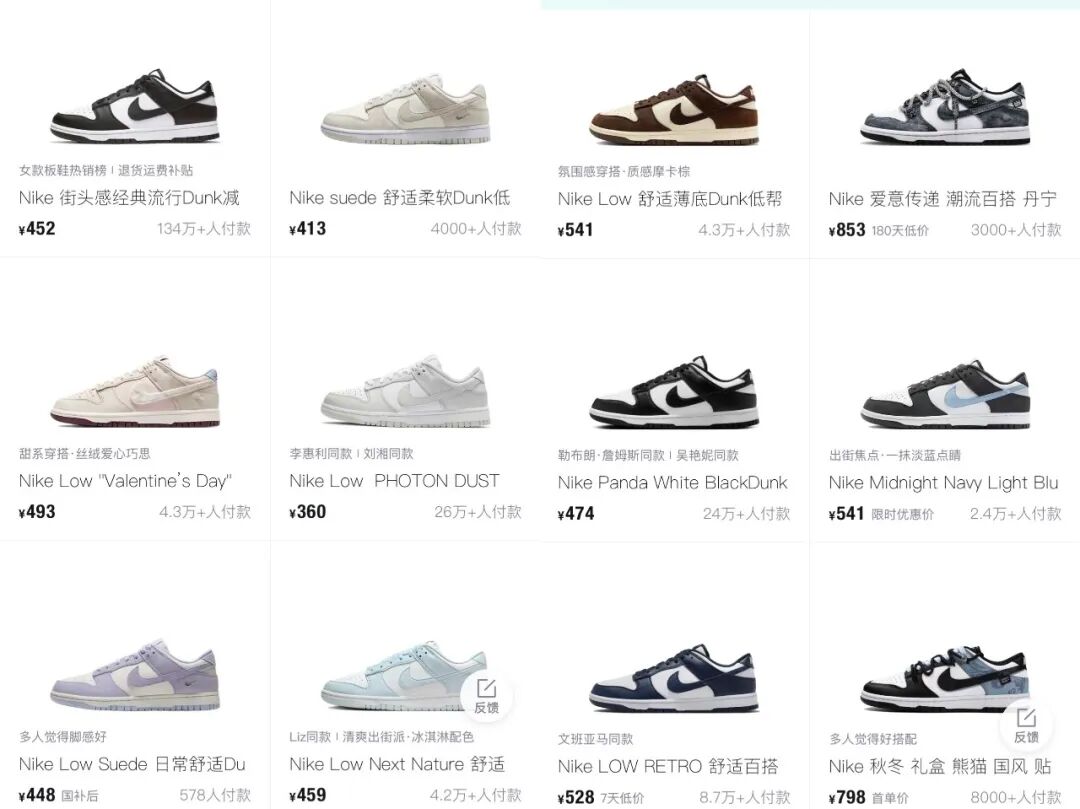
Seeing that it has completely become an ordinary brand in the past two years, Nike finally lost its patience and started its desperate battle to defend its brand value.
It can't get back the premium power overnight, so what it can do now is to take back the pricing power first.
In June this year, news broke that Nike would cancel the online authorization for its first-tier distributors. Such a drastic reform was carried out to clean up the market and reduce disruptive discounts.
After all, on the same e-commerce platform, the Air Force 1 priced at 799 yuan in the official flagship store can be bought for around 600 yuan in the distributor's store next door, which is unbearable for Nike.
As Nike's largest distributor in mainland China, Topsports was the first to be affected. After the news came out, its stock price plummeted by nearly 15% in one day, and fell by another nearly 25% when the official termination notice was issued[3], but no pains, no gains.
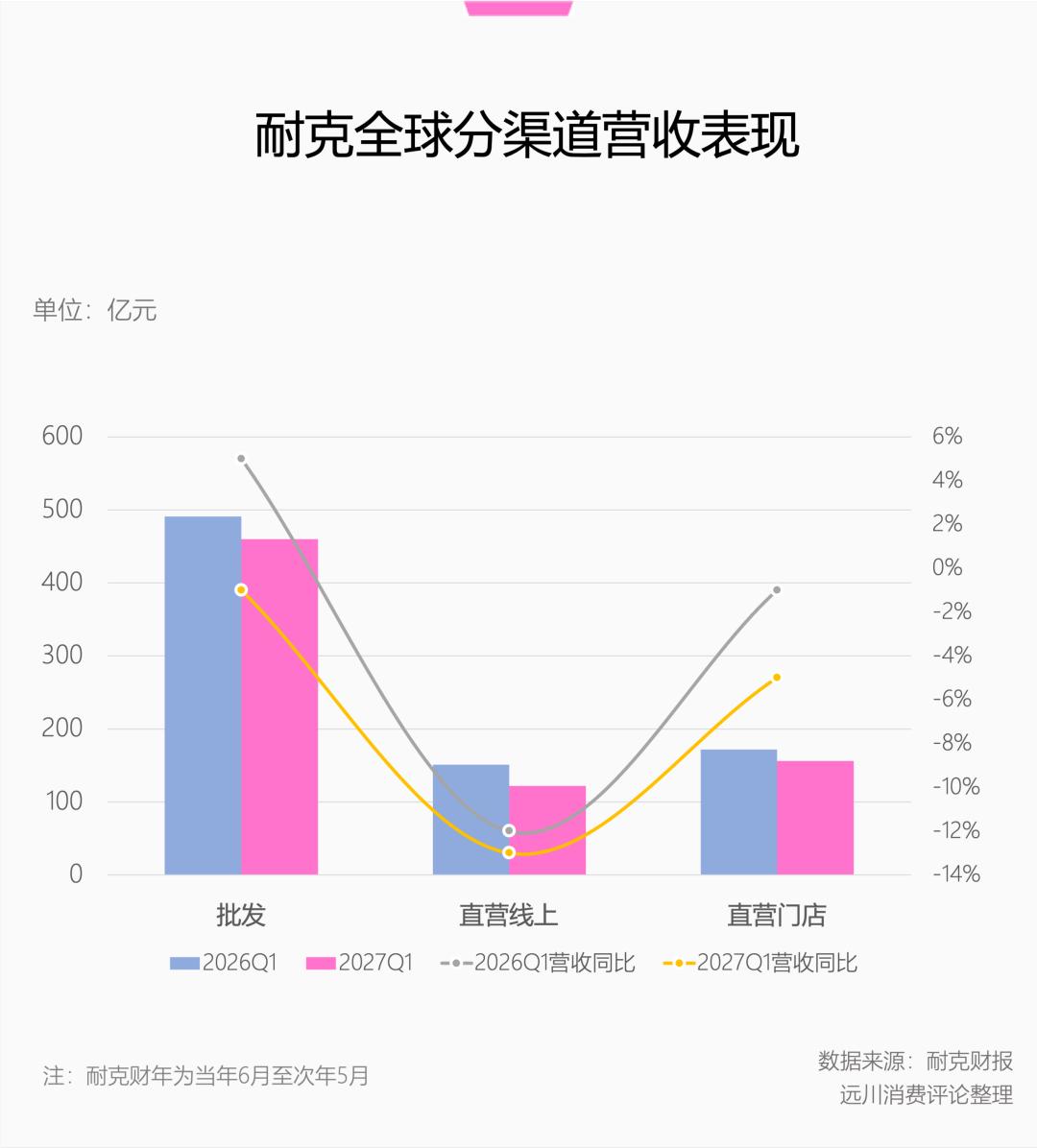
During this year's Double 11 shopping festival, Nike further tightened its discount policy, changing the 50% off promotion last year to around 20% off this year. As a result, once the huge discounts were removed, consumers left immediately.
The ranking change of Tmall's sports and outdoor category list during the past two Double 11 events can directly reflect the rise and fall of Nike's fortune:
Nike had been the top sales champion since 2020, but in 2025 it rarely gave up the first place, lagging behind FILA but still ahead of Adidas.
By 2026, its ranking dropped directly to the 6th place. It can't even compete with new players like lululemon and Descente, not to mention that its old rival Adidas has overtaken it?
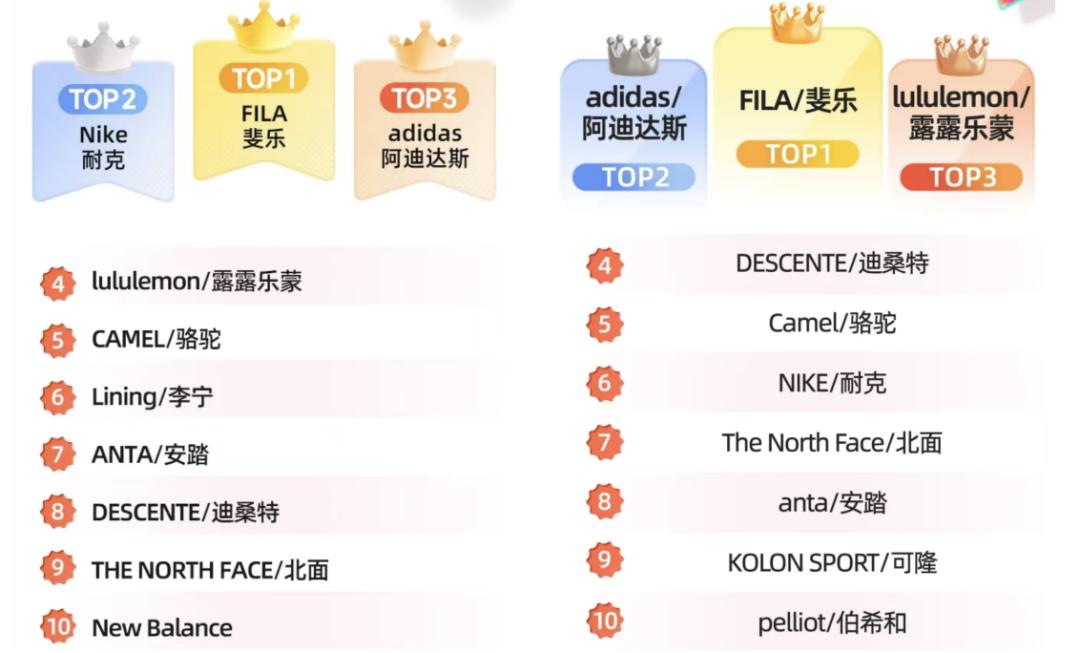
Tmall Sports & Outdoor Category Ranking during Double 11 in 2025 and 2026
Old rival has overtaken
When it comes to brand devaluation, Adidas, which people often wear when going out for errands, is in the same boat as Nike. The two are twin stars that fell together in the trend circle and are inseparable in the discount zones.
But in the corner that no one pays attention to, Adidas's business is actually picking up: while Nike has seen 9 consecutive quarters of revenue decline, Adidas's Greater China region has recorded 14 consecutive quarters of revenue growth, and its profit in the last quarter also surged by 24%.
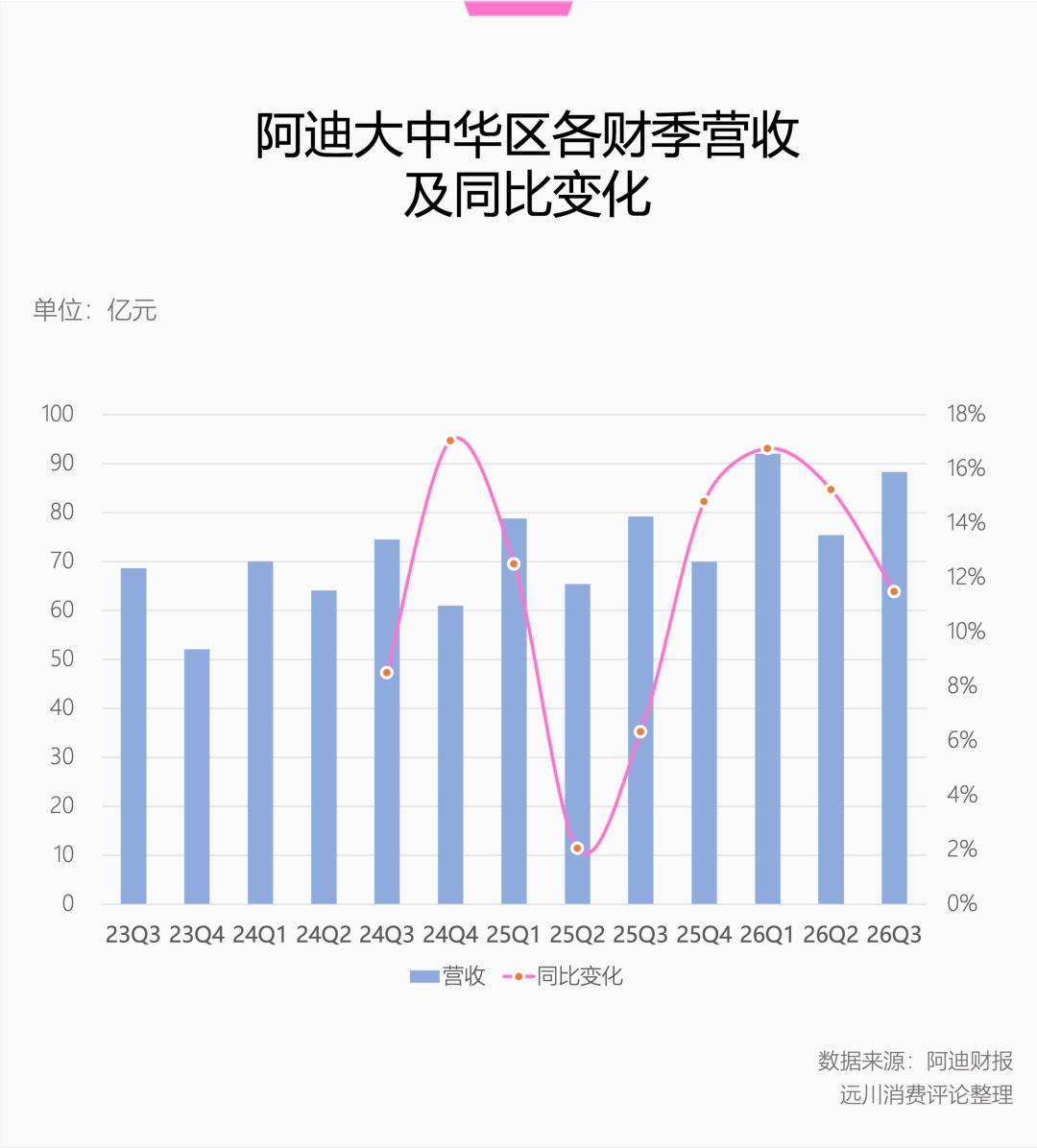
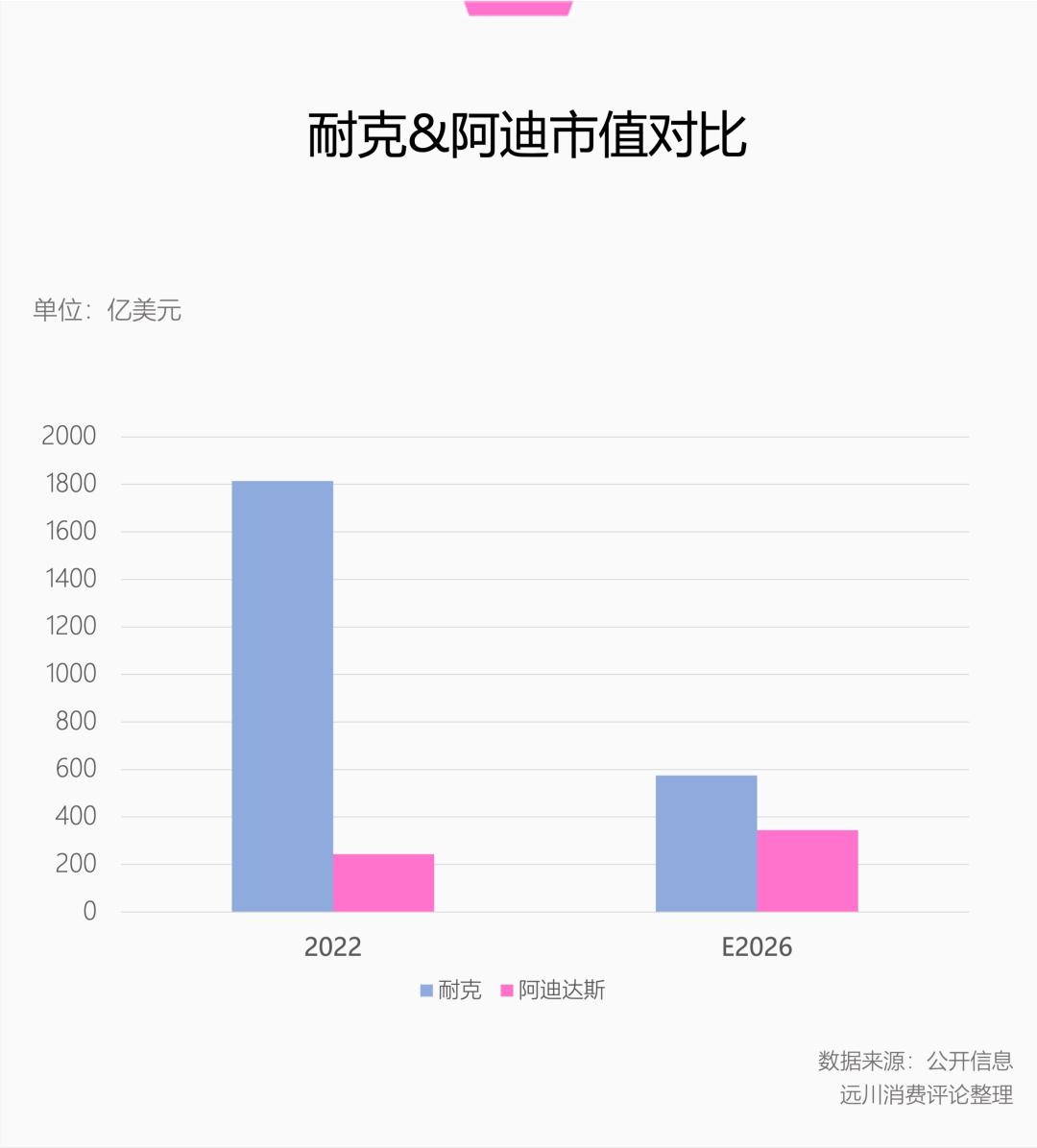
The market value gap between the two has shrunk significantly, as we can see from the data.
At the end of 2022, Nike's market value was about 183.1 billion US dollars, equivalent to 7 times that of Adidas. But by early November this year, Nike's market value has dropped by nearly 70%, while Adidas's market value has risen by 40%, leaving a gap of less than 30 billion US dollars between the two.
But Adidas's progress is not only supported by its regressing peer. It does perform better in two aspects.
First, its performance-supporting product portfolio is more balanced.
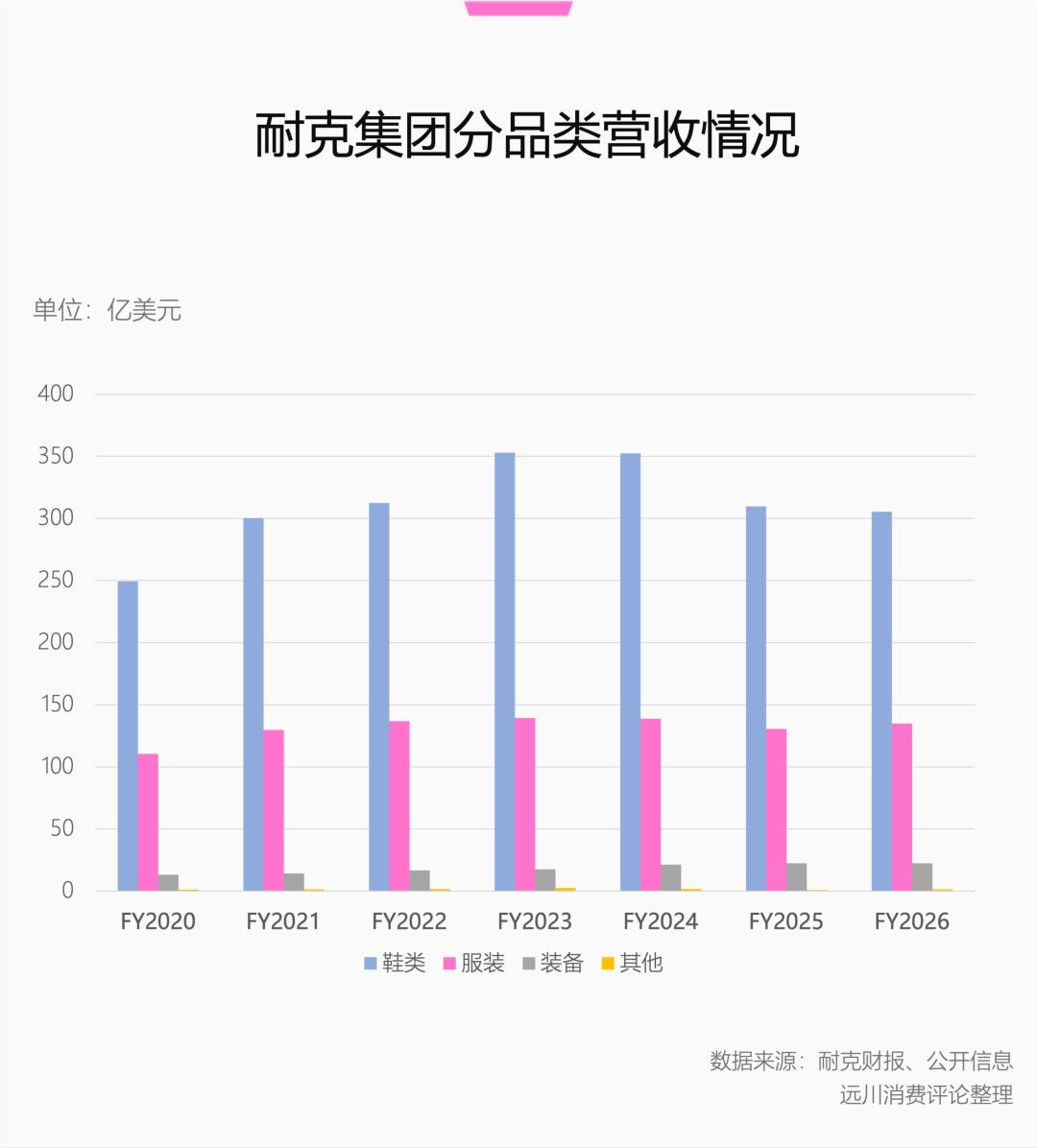
For a very long time, Nike has relied too much on the reissue and color-swap release of classic casual shoes such as Dunk, AJ1 and AF1. Consumers jokingly named this uncreative strategy the "color palette strategy".
The technical threshold of this practice is indeed very low. Other peers at least pretend to work hard to develop new black technologies, but Nike directly uses classic models with mature molds, extremely low manufacturing costs and inherent trend premium as cash cows.
In fiscal year 2024, the Dunk series contributed about 18% of Nike's total footwear revenue. There are about 4700 Dunk models listed on resale platforms, which is enough for people to wear a different pair every day for nearly 13 years without repetition[4].
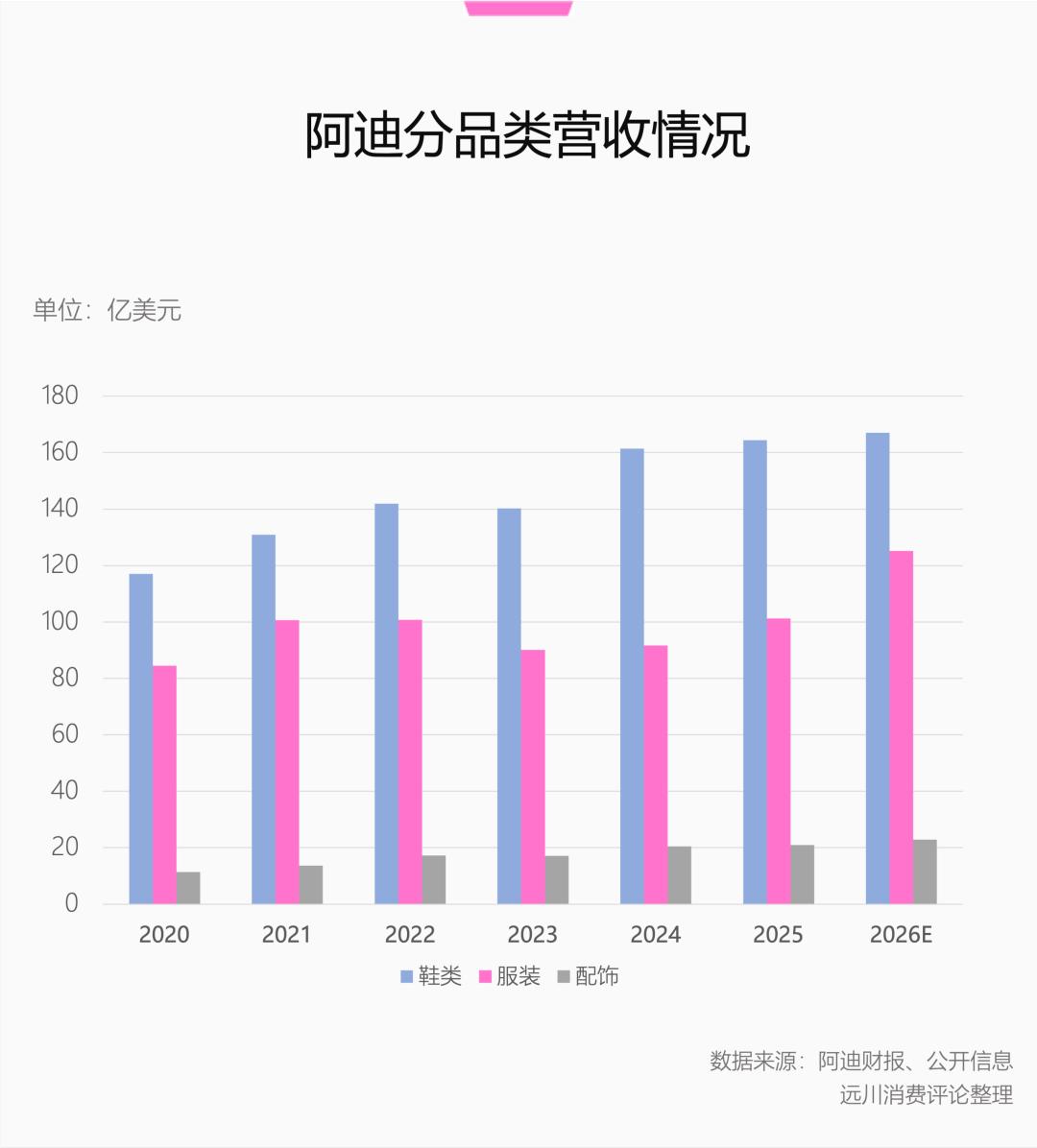
In contrast, Adidas did not wait for gains passively by the same cash cow. Its 2025 financial report shows that its major categories including Originals, sport fashion, running and football all achieved double-digit growth.
This means that Adidas has kept up with the trend in the fields of retro fashion, daily commuting and professional sports.
Second, its localization efforts are more sincere.
Over 65% of Adidas's products for the Chinese market are designed by its Shanghai Innovation Center. The entire Greater China region can independently decide marketing activities, trend IP and cooperation partners. This year's Scottish Premiership jerseys and the new Chinese-style series that became popular among trendsetters in the US are all local works.
In this aspect, Nike is still on the way: its local product R&D team is still under construction, and the vice president in charge of this business just took office a few months ago — this is also the first time Nike has set up a dedicated vice president position for local product innovation in this huge market[5].
Nike's CEO has also realized this point, admitting that "the company has insufficient investment in stores in China in the past, and the stores are no longer attractive enough".
