A 68,000-yuan fine has plugged the biggest loophole in AI-powered live-stream selling: the core issue does not lie in the on-camera presence, but the fabrication of fictitious personal product usage experiences.
On November 13, 2026, the Market Regulation Bureau of Panyu District, Guangzhou, issued a penalty notice of over 68,200 yuan to Guangzhou Wode Film and Television Media Co., Ltd., which was publicly disclosed on November 16. The illegal fact was "illegal act of publishing medical advertisements". This company is the producer of the AI short drama *The Laid-off Girl*, and also the operator of the virtual female lead "Fang Taozi".
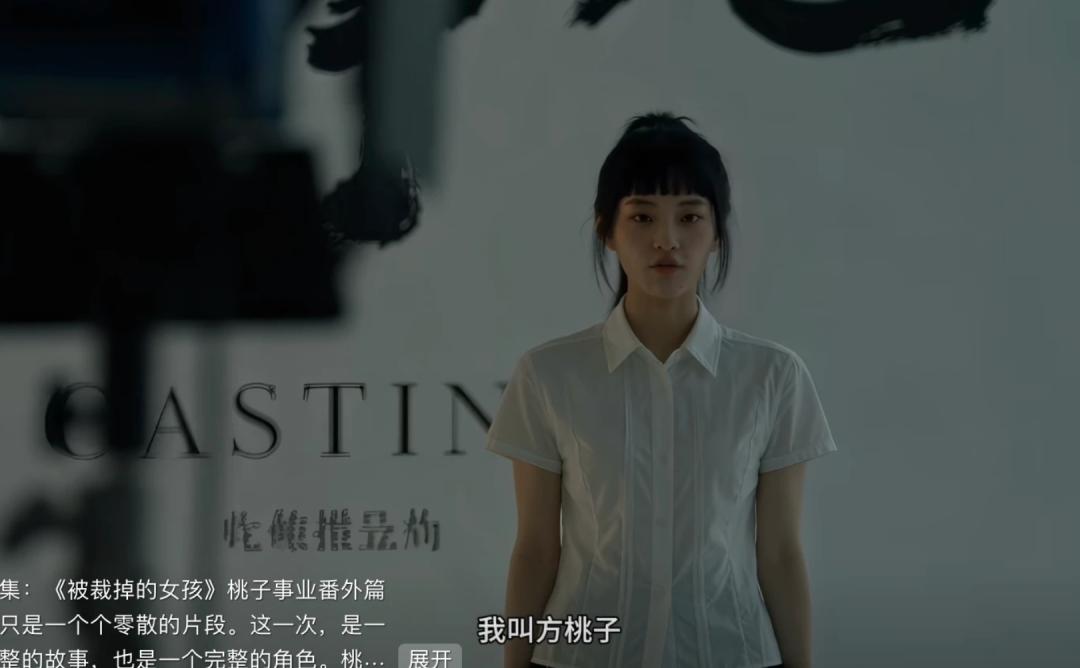
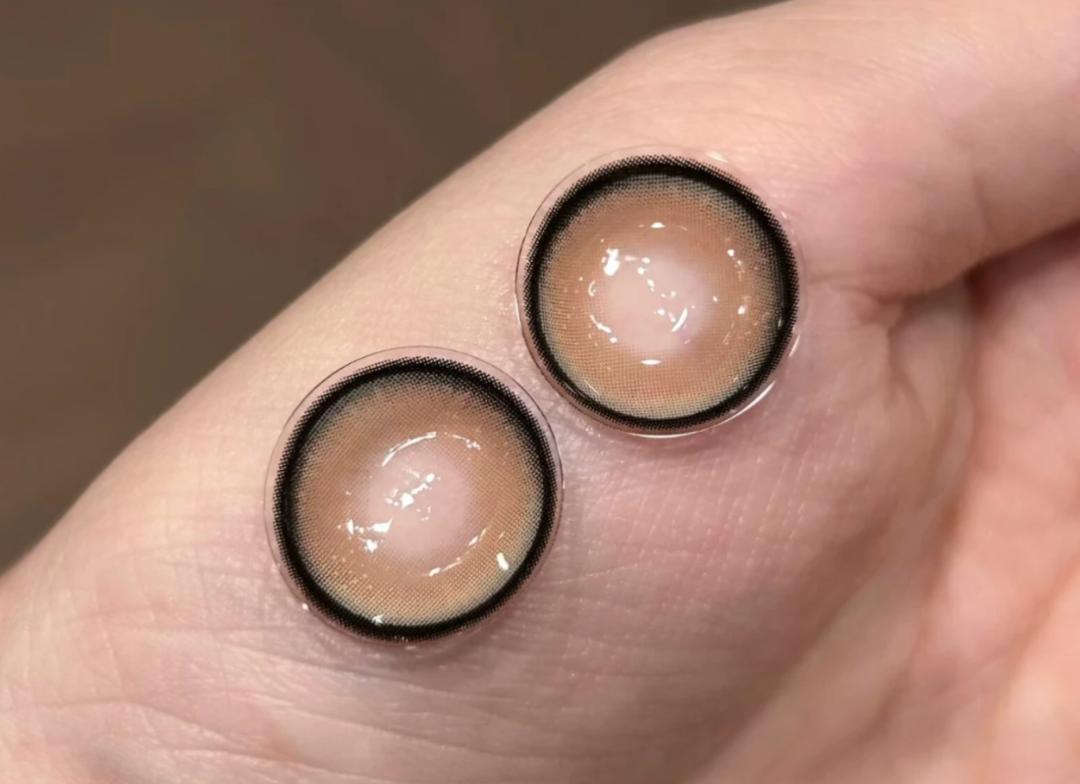
More than three months ago, Fang Taozi said in that 60-second cosmetic contact lens ad: "My cosmetic contact lenses are very comfortable to wear even after a whole day" "With high-light fixed axis design, they won't shift when you blink". A digital image with no eyeball and no cornea is endorsing the wearing experience of Class III medical devices. The netizens' question is so plain that it is almost cruel: you don't have eyes, how do you know if it is comfortable?
According to public information, this is the first penalty ticket in China targeting AI virtual humans fabricating usage experience. It is not a penalty on technology, but on a kind of rhetoric.
The penalty is not imposed on the virtual human, but on the line "I wore it for a whole day"
Fang Taozi rose to fame faster than any ordinary virtual character. On June 12, 2026, *The Laid-off Girl* was launched, telling the story of a laid-off small-town girl looking for a new job in a big city. The total views of the series exceeded 200 million, Fang Taozi's account gained more than 400,000 followers in one month, and then updated daily content about cooking and fitness. Around July 31, she received her first commercial endorsement since debut: the cosmetic contact lens brand "Nuts Power". Public reports show that the short video quotation of this account starts from 168,000 yuan, which is more expensive than many bloggers with millions of followers.
Tianyancha information shows that Guangzhou Wode Film and Television Media Co., Ltd., the operator of Fang Taozi's IP, was established in September 2019. Since July this year, the company has successfully registered 192 art work copyrights including "Fang Taozi" and "Zhou Yiheng", most of which are named after character names.
The backfire came very quickly. Almost all viewers in the comment section realized at the same time — AI has no eyes. In early August, the Market Regulation Bureau of Langya District, Chuzhou received transferred clues; around August 7, media searches found that the video could no longer be found and had been taken down. In September, Fang Taozi even appeared on the cover of the electronic publication under *Cosmopolitan China*. On November 16, the penalty was officially issued.
The penalty decision classified the illegal fact as "illegal act of publishing medical advertisements". Compared with relevant laws and regulations, this ad has at least two obvious defects. Cosmetic contact lenses are decorative colored plano contact lenses that directly contact the cornea. They are managed as Class III medical devices in China, at the same regulatory level as implantable cardiac pacemakers. Before publishing such advertisements, they must be reviewed, no advertising spokesperson shall be used for recommendation or certification, and the statement "Please read the product manual carefully or purchase and use it under the guidance of medical personnel" shall be clearly marked. The 60-second video of Fang Taozi did not meet any of the three requirements.
The more critical defect is the second one: fabricating usage effect. Article 28 of the Advertising Law lists "fabricating the effect of using goods or receiving services" as false advertising. Fang Taozi has no eyes and is impossible to wear the product. The line "I wore it for a whole day" has no corresponding fact from the moment it was generated. It is not an exaggeration, but a completely fabricated experience.

The most easily confused legal principle here is that AI is not an advertising spokesperson. Article 2 of the Advertising Law defines spokespersons as "natural persons, legal persons or other organizations", and virtual images do not belong to any of the three. In the past two years, the industry has regarded this loophole as a moat — since it is not a spokesperson, the endorsement ban in Article 16 does not apply to it.
However, law enforcement logic does not stop at the subject identity. This penalty targets the content and publishing procedure of the advertisement, rather than "who appears on the screen". To judge whether an advertisement is deceptive, we look at whether the statement content is true, not whether the person appearing on the screen is a human or a code. The identity can bypass a certain clause, but the behavior cannot bypass the bottom line of authenticity.
The dividing line is actually very simple. AI can broadcast parameters, display appearance, read brand propositions, and play a plot role; it cannot output first-person physical experience testimony. Sentences like "I tested it personally", "it does not cake on the face", and "it is very comfortable to wear for a whole day" are premised on the speaker having skin, cornea and senses. Some lawyers summarize the boundary into five actions: wearing, eating, applying, using and smelling. AI should never say any words that can only be established with real senses.
Therefore, the real line drawn by this penalty ticket is not "whether AI can publish advertisements", but "whether AI can say things that it has never experienced on behalf of real people. What is punished is not the technical carrier of digital human, but the advertising behavior of fabricating non-existent consumption experience through the mouth of AI. AI can be an actor, but cannot be a witness.
Labeling only solves the problem of "knowing or not", not the problem of "being true or not"
This is not a temporary additional regulation, and the whole world has discussed this for a long time. The US Federal Trade Commission revised the *Guides Concerning the Use of Endorsements and Testimonials in Advertising* in 2023, making it clear that endorsements must reflect the real opinions of real users; a synthetic persona packaged as "real experience of an independent customer" is unqualified in itself.
The *Consumer Review and Testimonial Rule* that took effect in October 2024 directly included "AI-generated fake reviews" in the prohibited list, with a maximum fine of more than 50,000 US dollars for a single violation. In September 2024, the FTC launched "Operation AI Comply", with a very clear statement: there is no AI exemption under existing laws.
South Korea has taken more specific measures. Starting from June 1, 2026, the Korea Fair Trade Commission requires advertisements with AI virtual characters to be marked with "virtual character" — the mark shall be displayed near the character during the whole period when the character appears in the video, and placed in the title or the beginning of text posts. However, there is a neglected sentence in the revised guide: even if marked, letting virtual characters tell personal usage experience may still constitute improper advertising.
The European Union has written this sentence into the interpretation of the provisions. On August 2, 2026, the transparency obligation of Article 50 of the AI Act officially applies; the supporting guidelines issued by the European Commission on July 31 are very straightforward: labeling cannot make originally illegal content legal, including misleading advertisements. The maximum fine for violating the transparency obligation is 15 million euros or 3% of the global turnover.

Regulations in multiple regions point to the same conclusion: labeling is a transparency obligation, not an authenticity exemption. It solves the problem of "whether consumers know that the opposite side is AI", but does not solve the problem of "whether the sentence said by AI has happened". The former can be completed with a small line of text, while the latter can only be supported by facts.
There is no lack of early warning signals in China. The *Measures for the Identification of Artificial Intelligence Generated Synthetic Content* came into effect in September 2025; the *Administrative Measures for the Supervision and Administration of Live Streaming E-Commerce* was implemented on February 1, 2026, which brought digital human anchors into supervision and required continuous prompt of "this is AI generated"; in June, Hainan issued the *Compliance Guidelines for the Publication of Artificial Intelligence Generated Advertisements*; Ningbo's *Guidelines for the Specification of Artificial Intelligence OPC Advertising Activities* requires "AI preliminary review + manual final review", and the materials shall be retained for no less than 3 years. The academic discussion on "whether virtual images constitute substantive endorsement" has lasted for many years.
There are also precedents. Previously, an MCN in Wuxi was fined and confiscated more than 190,000 yuan for displaying usage experience in cosmetic contact lens advertisements without marking "advertisement"; when the Chinese-style virtual human Ling Ling promoted lipstick and said "moisturizing and not dry", it already triggered the question of "why can virtual people talk about skin feel". The cases are scattered, the amount of fines is not large, but the direction is consistent.
The real problem is why the industry collectively turns a blind eye to these rules. The business model of this track is exactly the opposite of these early warnings: using a face that will never collapse, mass-producing the sense of trust of "real people recommending products", while avoiding the quotation and public opinion risks of real bloggers. A set of self-comforting narrative has taken shape accordingly: labeling means compliance, non-spokesperson is not subject to endorsement constraints, and the fine will not be imposed on a string of code.
The cost of this set of narrative is calculated too low. The industry did not fail to see the red line, but saw it and gambled once: bet that there is no precedent for supervision, bet that the law enforcement knife will fall on others first. With a quotation starting from 168,000 yuan and a penalty of 68,200 yuan, from a pure business perspective, one backfire will not cause fatal damage. What is really rewritten is the premise of "no precedent". It is not so much a sudden rectification as a long-overdue implementation: the long-term consensus has become an open precedent for the first time.
The beginning of differentiation: realistic human-like product recommendation has become a high-cost business
After the penalty, the AI digital human track will be divided into two paths. One is brand image broadcasting: virtual hosts, virtual customer service, product parameter explanation, and store shopping guide. What appears on the screen is the image, and what is said is verifiable information. This path will become wider and wider, because it does not rely on "I have experienced it", but only on "I read it accurately".
The other path is realistic human-like experience product recommendation. This path will not disappear, but will be stratified. For high-risk categories such as medical aesthetics, cosmetic contact lenses, health products, pharmaceuticals, and medical devices, the commercial order space has been greatly compressed; for categories in beauty, food, and home furnishing that rely on "application on face", "ingestion" and "hand feel", the wording will be completely rewritten. The compliance cost will rise — category whitelist, double review of scripts, material archiving, pre-launch review, each item requires money, manpower and process.
The responsibility chain has also taken shape in this penalty. The fined party is not the brand party Anhua Huaxin, but Guangzhou Wode Film and Television, the operator that produced and published the advertisement. This point is worth pondering: law enforcement penetrates the shell of "the brand hires others to make advertisements" and directly finds the content production end. The advertiser bears the primary responsibility, the operator and producer bear the review responsibility, and the platform bears the publishing management responsibility, none of the three parties can escape.
The longer-term problem is that the core contradiction to be dealt with in AI commercialization has never been technical capability, but the exchange rate between appeal and authenticity. The reason why virtual humans can sell goods is that they look like a real person, with expressions and tones; the reason why they will backfire is that they are too realistic, so realistic that the audience defaults that they have really worn, eaten and used the products. The more advanced the technology is, the stronger this default will be, and the greater the cost of backfire will be.
You can play a role, you can perform, but you cannot fabricate. AI can play a laid-off girl, can play a roommate who loves cooking, can play an explainer who knows the ingredient list by heart; but it cannot play "I wore it for a whole day and it is very comfortable", because the subject of this sentence must have a pair of real eyes. The boundary of performance is fictional characters, and the boundary of testimony is personal experience.
68,200 yuan is far lower than the quotation of one advertisement of Fang Taozi. The amount of the fine is not heavy, but the signal is very important. The wild growth, the set of gameplay that treats virtual IP as a regulatory loophole, is over. What advertisements AI can make and what words AI cannot say has since had a reference sample. The real cost is not the fine, but that before every virtual character opens its mouth, it has to answer a question that it is worst at: have you experienced this sentence?
AI can have no body, but advertisement cannot have no facts. The 68,200 yuan not only buys a penalty, but also the first public price list of this common sense.
This article is from the WeChat official account "Deep Dive Atom" (ID: deepatom), written by Meng Fanle, and published with authorization from 36Kr.