AI is not to blame for the sevenfold price surge of memory chips from the three major manufacturers.
Recently, a surreal event has taken place in the hardware industry. As the new generation of DDR5 RAM modules are ridiculously overpriced, and old DDR4 and DDR5 slots are not mutually compatible, multiple motherboard manufacturers have been forced to restart production lines of previously discontinued DDR4 motherboards since mid-year.
Even more absurd is that when gamers inquire about prices in the market, they find that old DDR4 products are not cheaper at all, and their price increase even surpassed that of the new DDR5 recently. This year's new laptop products have all collectively rolled back to the 16GB RAM era.
For over a year, every time downstream parties complain, Samsung, SK Hynix and Micron, which together hold over 91% of the global DRAM market share, would claim that the AI boom is so hot that HBM, which is urgently needed for AI computing power cards, has eaten up wafer production capacity, leading to natural shortage and price hikes of regular memory.
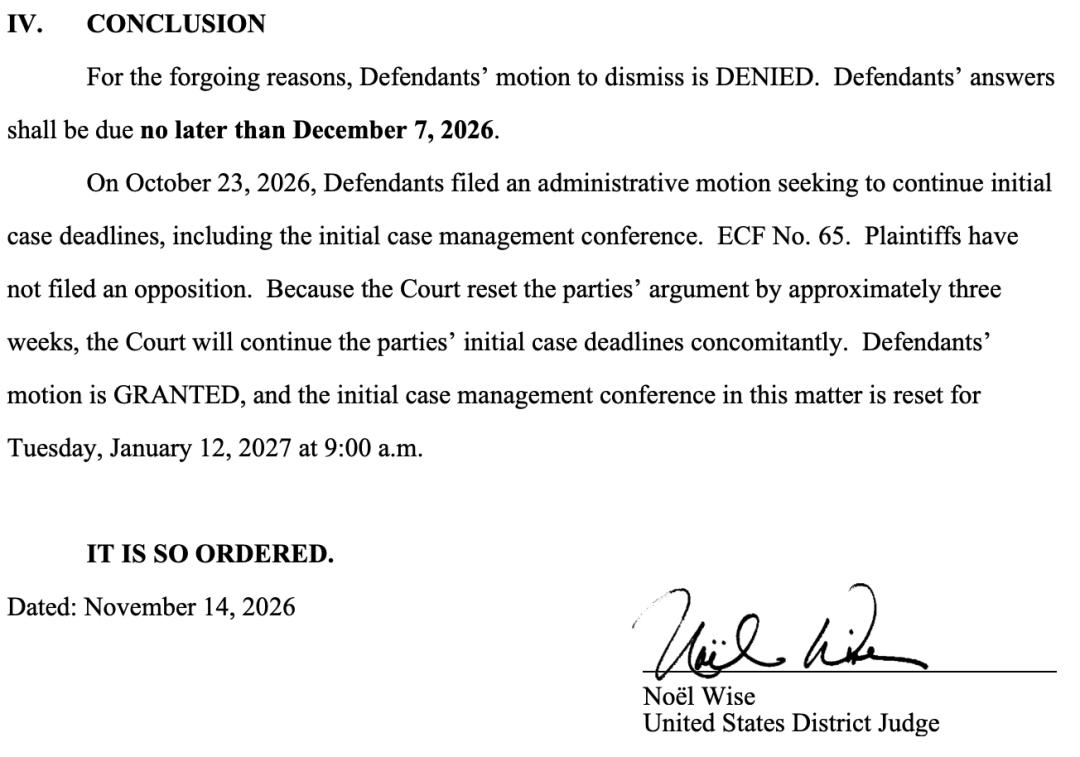
This explanation sounds reasonable, and many people took it for real. Until November 14, Judge Noel Wise of the U.S. District Court for the Northern District of California debunked this lie with a 20-page ruling.
Judge Wise dismissed the joint motion to dismiss filed by the three giants, ruling that this class action lawsuit over memory price manipulation will proceed. The three parties must submit an official response before December 7, and are required to hand over internal production capacity schedules, executive correspondence and meeting minutes during the subsequent discovery phase.
As soon as the news came out, the overseas hardware industry was in an uproar, finally seeing someone stand up for justice. "These three do this every few years, and even sending their executives to prison back then didn't teach them a lesson. The only change is that their excuses are getting more and more fancy every time." This highly upvoted comment speaks the mind of many people.
This is the first time in DRAM history that a class action lawsuit over price hikes during the AI cycle has crossed the motion to dismiss stage and entered the evidence discovery phase. Once internal emails are exposed, the subsequent impact will be immeasurable. Back then, the Apple e-book price manipulation case also started from a trivial lawsuit, and eventually drew a heavy crackdown from the U.S. Department of Justice, fining Apple 450 million U.S. dollars.
1
This lawsuit was first filed on June 25 this year.
Mark Garciagire, an ordinary consumer living in Pasadena, California, joined 16 other plaintiffs and entrusted the boutique law firm Bathaee Dunne to sue the three major memory manufacturers in federal court.
Among the 17 plaintiffs, there are ordinary consumers who buy RAM modules from Amazon and Micro Center, as well as small distributors such as PC assembly stores in Florida whose business was shut down due to the 500% surge in retail memory prices.
They presented shopping receipts in the 118-page indictment, accusing the three giants of colluding to control production since October 2022, leading to a 697% surge in the price of regular DRAM contracts within 18 months.
In September, the three giants formed a luxury legal team to fight the lawsuit. They followed the same old playbook - first crying poor, then confusing people with esoteric economic theories.
The defense lawyers referred to the period from the end of 2022 to the beginning of 2023 as the "DRAM Winter". In the first quarter of 2023, Samsung's semiconductor division suffered a huge loss of 3.51 billion U.S. dollars, SK Hynix lost 2.61 billion U.S. dollars, and Micron posted a net loss of 5.833 billion U.S. dollars for the entire 2023 fiscal year. The lawyers argued that production cuts were for self-rescue, and shifting production to HBM was to chase the AI trend.
To explain why the three parties always acted in perfect sync, they cited the Chicago School's "oligopoly interdependence theory": in a market with only three major players, companies do not need to communicate privately, as long as they keep a close eye on their competitors' movements like eagles, they will naturally make the same rational response. This theory successfully convinced judges in a similar lawsuit back in 2018.
But this time, the judge did not accept this argument.
Judge Noel Wise, who presides over this case, became a federal prosecutor through the U.S. Department of Justice's Honors Program in her early years, and later spent ten years presiding over complex civil litigation trials in California courts. She has seen far more defenses like this.

The team of plaintiff lawyer Brian Dunne was also prepared early. Since you want to talk about economics, we will follow the rules of economics.
The plaintiff pointed out an abnormal phenomenon that violates business instincts in its rebuttal brief. On October 26, 2022, SK Hynix, the second largest player in the industry, took the lead in cutting DRAM production capacity. Only three weeks later, Micron, the third largest player, followed suit immediately.
The performance of Samsung, the industry leader, was even more abnormal. Looking back at history, whether it was the 2008 financial crisis or the 2019 industry downturn, Samsung's consistent strategy was to expand production counter-cyclically, never cut production, and take the opportunity to wear down Hynix and Micron. In January 2023, Samsung executives even publicly stated that "we will never artificially reduce production of memory chips". However, on April 7, 2023, Samsung suddenly made a 180-degree turn and joined the production cut camp.
The plaintiff's lawyer raised a soul-searching question: In a highly homogeneous standard product market, how dare the second and third largest players take the initiative to cut production and raise prices? Aren't they afraid that the leader will take the opportunity to grab all customers?
Conversely, when the price of regular DRAM later surged nearly 7 times, with tens of billions of dollars in excess profits from capacity expansion available every year, why did Samsung go against its decades-long tradition and refrain from expanding production to seize the market?
In the plaintiff's view, there is only one reasonable explanation: they are all confident that the other parties will not stab them in the back.
On November 14, Judge Wise directly pushed back in the ruling. In response to the claim that the old case would repeat itself, she only replied: "This court does not think so."
Immediately afterwards, facing the defense lawyers' proud "eagles watching each other" theory, Judge Wise refuted along the same metaphor: in nature, eagles may watch each other when hunting, but they will never fly together in a neat formation.
This series of synchronized actions of the three giants, which are comparable to "marching in step", obviously goes far beyond the scope of mutual observation.
2
Judge Wise dismissed the motion to dismiss because the plaintiff presented "additional factors" sufficient to meet the threshold at this stage.
The core excuse here is that "HBM is too profitable and takes up too many wafers, so there is no capacity to produce regular memory".
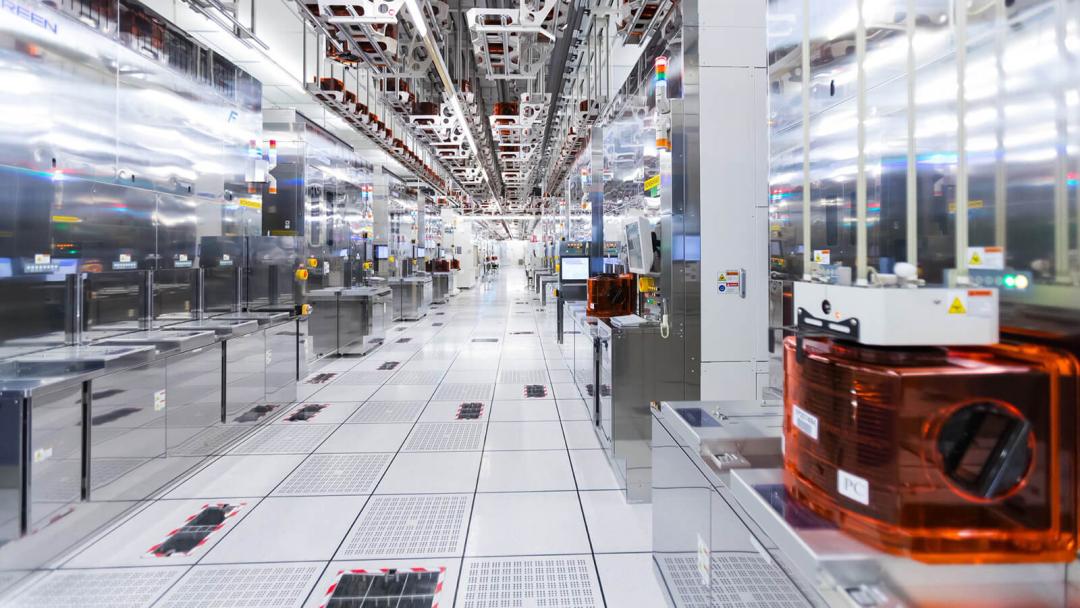
This statement actually evades the key point. In wafer fabs, whether it is server memory purchased by major cloud manufacturers or consumer-grade RAM modules bought by regular gamers for PC assembly, the front-end wafer manufacturing all occupies the same DRAM capacity pool. Under the same capacity, HBM does consume 3 to 4 times the wafer area of regular DDR5, and the stacking process is complex with low yield.
But after the three giants jointly cut standard DRAM to extreme shortage and the price surged nearly 7 times, the situation changed. According to TrendForce's calculation, by the first quarter of 2026, the output value of a single wafer for DDR5 64GB RDIMM has surpassed that of HBM, and its profit margin is also higher than HBM.
In other words, producing 64GB DDR5 RDIMM was more profitable than making HBM at that time.
Even though regular DRAM had already been so highly profitable, the three giants still did not immediately expand standard DRAM production capacity. In the plaintiff's view, they are pursuing a strategy of "having the best of both worlds": using HBM's occupation of wafer capacity as a shield to reasonably suppress the supply of standard DRAM, while artificially driving up all standard DRAM prices to extremely high levels, harvesting profits from both the enterprise and consumer segments at the same time.
How exaggerated is this? In the third quarter of this year, the global total DRAM revenue soared to nearly 200 billion U.S. dollars, a year-on-year surge of 369%, but the actual total shipment capacity of the entire industry only increased by 4%. The shipment volume barely grew, but the revenue is nearly 5 times that of the same period last year, which is almost entirely driven by price hikes.
Limited production capacity is real, but taking the opportunity to drive up prices is also real. The three giants are not only cheating consumers, but major tech companies are also being ripped off.
The lawsuit revealed that Samsung and SK Hynix forcibly raised the price of server memory sold to Google and Microsoft by 60% to 70% within one quarter, and refused to sign long-term multi-year contracts, forcing them to accept new quotations on a quarterly basis.
By the fourth quarter of fiscal year 2026, Micron's single-quarter revenue surged to 54.23 billion U.S. dollars, and its Non-GAAP gross profit margin soared to 87%, surpassing NVIDIA in one go; its full fiscal year net profit reached 84.97 billion U.S. dollars.
Since limited standard DRAM chips are prioritized for major cloud manufacturers, the production capacity left for the consumer market has naturally bottomed out.
But the three giants know very well that the extremely high gross profit margin cannot be separated from extreme shortage. DRAM is a highly standardized general commodity. Once one party significantly expands production, it may break the supply-demand balance, and even trigger a full-industry price avalanche. In the plaintiff's view, to extend the period of excess profits, the three parties must maintain tacit understanding and block several possible retreats for increasing supply in the consumer segment.
First, in the second quarter of 2025, the three parties all shut down or significantly cut the production lines of low-cost DDR4 for regular PCs; Samsung and Hynix also simultaneously stopped selling old DRAM manufacturing equipment to the second-hand market, blocking the way for small manufacturers to buy old equipment to expand production.
Shortly after, on December 3, 2025, when consumer-grade memory prices hit a record high, Micron suddenly announced the shutdown of Crucial, its well-known consumer brand that had been in operation for 29 years. Only when Micron is fully confident that Samsung and Hynix will not take the opportunity to expand production to seize the retail market, would it dare to cut off this retail business line by itself.
By January 2026, the three parties launched almost identical "customer review mechanisms" in the same month, using nearly copy-pasted questionnaires to interrogate distributors and OEMs: Who is the end user? What is the actual usage volume? Are you hoarding excessive stocks? This is used to lock up the liquidity of the spot market.
With HBM occupying advanced wafers, low-cost DDR4 and Crucial being cut off, and spot circulation locked by customer reviews, the end market is completely suffocated. Apple CEO Tim Cook publicly complained to the media that the memory price hike is unsustainable, and the sales of PC assembly in domestic computer cities have been cut in half.
What comes faster than the shrinking downstream market is the capital market's concern about whether such extremely high profits can be sustained.
Micron's stock price retreated all the way from its high of $1255 in June, plummeting 17.46% in a single day on November 5 to around $656, and its market value once fell by more than 40%.
On November 9, Sean Kim, an analyst at Morgan Stanley who accurately predicted the memory winter in 2021, sounded the alarm again. He warned in the research report that with the concentrated commissioning of new production capacity by the end of 2027, the memory industry is heading for a "2028 profit cliff", and the extremely high profit margin will eventually fall back to the historical average.
Morgan Stanley slashed SK Hynix's target price by 38% and lowered Samsung's target price by 19%.
3
In court, Judge Wise showed no mercy to the three giants' defenses. Outside the court, the three parties have long had a long track record of anti-trust cases, which gamers are all too familiar with.
The first round was from 1999 to 2002. The three giants formed a secret alliance to manipulate prices. Eventually, the U.S. Department of Justice launched a criminal prosecution, issuing fines of over 730 million U.S. dollars. Multiple Samsung executives pleaded guilty and served sentences, while Micron acted as a "whistleblower" to betray its allies in exchange for immunity.
The second round was from 2013 to 2020. The three giants no longer left evidence in secret meetings, and instead played the "water, fire and power outage" trick to raise prices mysteriously: whenever memory prices fell, there would be a fire at the Wuxi factory, a power outage at the Pyeongtaek factory, or a nitrogen leak at the Taoyuan factory. Relying on these successive "accidents", DRAM prices nearly tripled in two years. It was not until May 2018 that China's anti-monopoly authorities raided the three giants' offices in Beijing, Shanghai and Shenzhen, coupled with the peak of the industry cycle, that the price hike came to an end.
In the third round starting from 2022, the excuse has been upgraded to "the greater good of AI computing power". But the reason why the three giants have even resorted to drastic measures that cut off their own retreats, such as shutting down Crucial and cutting off the supply of second-hand equipment, is probably that they have felt the pressure of external competition.
This kind of collusion is most afraid of being disrupted by external forces, and artificially high prices will also leave room for competitors to catch up. China's ChangXin Memory Technologies (CXMT) and Yangtze Memory Technologies (YMTC) are exactly the new opponents that make the three giants restless.
Gamers all remember that a few years ago, when domestic solid-state drives and memory just entered the market and launched price wars, the overseas giants' wafer fabs suddenly miraculously stopped having fires or power outages.
However, when the three giants first started this round of joint production cuts at the end of 2022, CXMT and YMTC were still small in scale, and a series of sanctions prevented them from completely changing the situation. But that confrontation already showed that there were new unruly players at the poker table. That's why they are desperately squeezing out all possible profits from this round before the "2028 profit cliff" arrives.
Unfortunately, the three giants' own creation of price surges and supply shortage panic has instead shortened the originally long customer onboarding cycle for China's two leading memory manufacturers.
When the three giants collectively cut DDR4 production and shut down Crucial in 2025, they voluntarily gave up the gap in the mainstream consumer-grade memory market, and downstream customers began to accelerate the purchase of domestic memory products.
Earlier this February, CXMT launched a disruptive price of 138 U.S. dollars for mainstream 32GB DDR4 memory modules, which is only one third of the international market price of 300 to 400 U.S. dollars at that time. On the day the news came out, the stock prices of memory manufacturers including Win