Earn $30,000 a year by buying a Cybercab? You're thinking way too much.
Elon Musk has fulfilled a promise he made a decade ago — enabling self-driving taxis to generate income for their owners.
Recently, Tesla announced that it has started selling the Cybercab to the public. This vehicle is built exclusively for autonomous driving, with no steering wheel, accelerator, brake or traditional rearview mirrors. Originally intended solely for Tesla's robotaxi network, it is now available for purchase by ordinary consumers.
What is even more exciting is that its price is very affordable: 29,990 US dollars, equivalent to about 216,000 RMB.
Tesla stated that the first batch of Cybercabs is expected to be delivered in December this year; in addition to Austin, owners will later be able to choose to take delivery of their vehicles in Dallas, Houston, Fort Worth, San Antonio and other locations.
Long before the Cybercab was launched, Elon Musk repeatedly claimed that robotaxis can not only serve their owners, but also hit the road to take orders and earn money during idle hours, generating up to 30,000 US dollars a year.
Today, this whimsical vision is turning into reality.
Driven by the Cybercab, the robotaxi industry seems to have taken a small step forward: it has begun to support itself, and even earn a profit to cover its own costs. The blueprint of "cars working for people" that Musk depicted ten years ago has finally begun to be implemented.
1
Spending 30,000 US dollars on a Cybercab — can it really pay for itself within a year and generate pure profit afterwards, just as Musk claims?
Unfortunately, this is almost impossible.
First, let's take a look at where Musk's so-called "earn 30,000 US dollars a year" figure comes from.
At the first Autonomy Investor Day in April 2019, Tesla estimated the revenue model of robotaxis in its presentation slides.
The core data is as follows: robotaxis charge 1 US dollar per mile traveled, while the vehicle operating cost is less than 0.18 US dollars. Assuming an empty driving rate of 50%, a gross profit of 0.65 US dollars can be obtained for every mile traveled with passengers on board.
Calculated based on 45,000 miles of passenger-carrying mileage per year, a gross profit of about 30,000 US dollars can be obtained.
From Musk's perspective, this set of calculations is simplified into a highly attractive statement: "Users can own a Robotaxi, allow it to operate on the Tesla network, and make 30,000 US dollars in profit per year."
Perhaps this is one of the reasons why the Cybercab is priced below 30,000 US dollars: buying a car that can earn back its own value in just one year is obviously a very appealing story.
If calculated according to Tesla's estimated 11-year vehicle lifespan, an owner who buys a Cybercab can earn 300,000 US dollars in ten years, which is comparable to the income of an ordinary American worker.
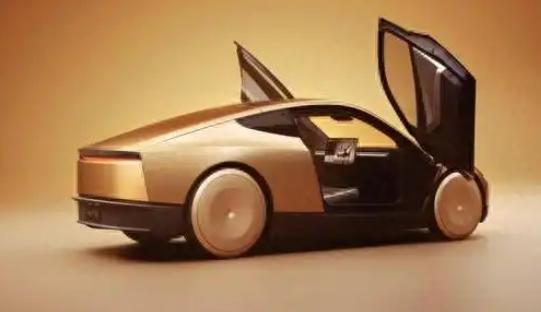
This is not just buying a car — it is clearly buying a private money printer.
But a little in-depth digging will reveal how unreliable this model is.
The biggest flaw is the 90,000 miles of annual driving distance and the 11-year vehicle lifespan.
At present, the annual mileage of taxis in the United States is far from reaching 90,000 miles.
Take New York, where ride-hailing demand is extremely strong, as an example: the average annual mileage of taxis is about 70,000 miles — and this is the data for the vast majority of vehicles that operate on two shifts, with drivers taking turns resting while the car never stops.
The figure estimated by Tesla is nearly 30% higher than the actual operating intensity of New York taxis. Meanwhile, the population density and travel volume in cities like Austin are far lower than those of a megacity like New York.
The idea that the Cybercab can run continuously for 11 years is deduced by Tesla based on its claim that its batteries can last for 1 million miles — which is also a figure that has not been widely verified through large-scale real-world testing.
In contrast, New York taxis are usually scrapped after driving 200,000 miles, and are mandatorily retired after 7 years. What's more, the lifespan of pure electric vehicles is generally shorter than that of durable, robust fuel vehicles.
Even the "30,000 US dollars in profit" figure contains a lot of exaggeration.
According to Tesla's model, what owners earn is actually gross profit, which only deducts items such as electricity costs and depreciation.
But in subsequent dissemination, this figure was intentionally or unintentionally simplified by all parties to "net profit", implying net income after all expenses.
In reality, owners not only need to purchase various types of insurance for the vehicle and pay parking fees, but also bear hidden costs such as vehicle preparation, maintenance, cleaning, traffic violation fines, and dispute handling. After deducting all these costs, it is even questionable whether the owner can avoid losing money.
In fact, when an owner buys a Cybercab and puts it on the road to take orders, it looks cool, but in essence it is still the extremely traditional "vehicle owner" business — buying the vehicle, renting it out to taxi or ride-hailing drivers, and earning the difference in profit.
This has never been a highly profitable business. It requires extreme cost cutting across all links, and often operates in a gray area, where cases of owners exploiting drivers and defrauding insurance are common. This situation will not change immediately with the arrival of the Cybercab.
2
Regarding the Cybercab helping owners make money, Tesla and Musk used to make firm promises, but now they have quietly softened their stance.
Two years ago, Musk officially launched the Cybercab at the "We, Robot" launch event, elaborating on the vision of "cars working for people".
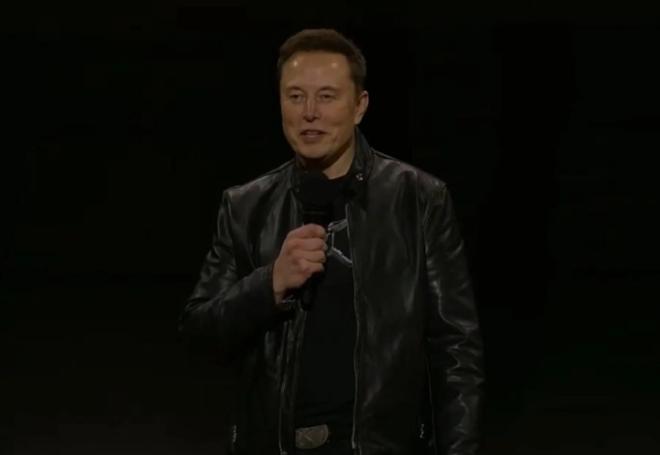
He said: "I think an interesting business model will emerge. For example, someone who is currently a Uber/Lyft driver may actually manage a fleet of vehicles in the future — I can't say for sure, maybe ten or twenty cars."
According to Musk, drivers will look after these vehicles like shepherds tending their flocks. "You have your own fleet of cars, you are the shepherd in charge of taking care of your group of cars. I think that will be pretty cool."
But when the Cybercab officially went on sale, Musk abandoned this narrative.
At the third-quarter earnings call in late October, Tesla's management stated that the first batch of Cybercabs will be delivered at the end of the year, starting on a small scale and gradually expanding as the company learns more about "vehicle ownership" and "fleet management".
Musk also said that the vast majority of Cybercabs will still be owned by Tesla and put into operation for mobility services. In other words, individual purchases are only a small part of the overall business model.
At this stage, Tesla has no plans to sell Cybercabs on a large scale. Retaining ownership of the vehicles and putting them into its own robotaxi fleet is the main use case for this model.
Tesla has imposed a series of restrictions on the first batch of vehicles: only a small number of invited users are eligible to purchase them; the first batch of deliveries is limited to Austin, Texas, USA, which is also the city where Tesla's robotaxi business is most mature.
In addition, owners need to pay a monthly subscription fee of 299 US dollars (equivalent to about 1,993 RMB) to use the autonomous driving functions of the Cybercab. In other words, without activating the monthly membership, the Cybercab will not be able to operate at all.
Of course, Musk later admitted that the 299 US dollars monthly fee is too high, and suggested that it should be reduced to around 115 US dollars (about 767 RMB) per month.
A lower monthly fee will help the Cybercab break even. But as mentioned earlier, it is still not easy for owners to make a profit.
Another potential risk is that even after owners buy the Cybercab, Tesla still retains extremely strong control over the new vehicle.
On social media, a Tesla owner disclosed the Cybercab purchase agreement.
The agreement includes: the vehicle can only be driven in areas approved by Tesla (i.e. areas where unsupervised robotaxi operation is supported), and Tesla can adjust these areas at any time.
Third-party calculations show that Tesla's operating area in Austin is about 1,150 square kilometers, and in Dallas it is about 210 square kilometers.
In addition, without written authorization from Tesla, owners cannot connect the vehicle to the Tesla Robotaxi network, nor can they connect it to platforms such as Uber and DoorDash to run ride-hailing, delivery or rental services. Tesla only stated that it is expected to open up the order-receiving function in the future.
Owners cannot even sell the vehicle at will — without Tesla's written consent, they cannot sell, transfer or mortgage the vehicle; the penalty for private transactions is "50,000 US dollars or the total transaction amount, whichever is higher", and Tesla can also remotely lock the vehicle.
Even more notably, Tesla can repurchase the vehicle at any time at the fair market value determined by itself, and the return shipping fee will be borne by the owner.
Other terms also include:
Applying color change wraps to the Cybercab body, tinting windows, replacing wheel hubs, etc. must be done through Tesla or authorized service providers; reverse engineering or tampering with the software is prohibited; three records of improper or unsafe use will trigger a one-week suspension of autonomous driving functions, with no refund of the subscription fee; subscription prices can be adjusted with one month's prior notice; and so on.
After buying the car and paying the monthly fee, owners not only cannot let the Cybercab take orders for the time being, but also have to use the vehicle in full accordance with Tesla's rules and regulations, otherwise the vehicle may be deactivated or repurchased.
It can even be said that essentially, the vehicle still belongs to Tesla; owners only obtain limited usage rights, and the empty promise of being able to make money in the future.
In this situation, owners who are still willing to pay must be extremely loyal fans of Tesla.
3
At this stage, ordinary people who buy a Cybercab will encounter pitfalls at every step.
But Musk needs this story.
An unavoidable fact is that with the advent of the AI era, the Cybercab and the entire autonomous driving industry are no longer as high-profile as they used to be.
Ten years ago, when Tesla first entered the robotaxi track, Musk could lead everyone to imagine the broad future of autonomous driving, and depict it as the promised land that Tesla would eventually reach.
Today, Tesla's robotaxi is finally ready for launch, but the external environment has changed drastically. No matter how cool the Cybercab is, no matter how impressive the data it generates in trial operation cities is, it is difficult to truly impress investors who are fully focused on AI.
Even Tesla itself is seeking changes. The future vision outlined by Musk is no longer about selling cars, nor about autonomous driving, but about embodied intelligence and AI computing power.
Under such circumstances, if the Cybercab moves forward according to the original plan, it will at most become a seemingly glamorous but loss-making robotaxi business — peers at home and abroad have been working hard for many years, but still cannot turn a profit overall.
Such an unexciting prospect obviously cannot meet the expectations of Musk and Tesla.
Selling the Cybercab to ordinary people, although not the best way to break the deadlock, can to a certain extent answer the ultimate question of "how can robotaxis make money".
It can transfer most of the costs to consumers, while using extremely strict terms to maintain Tesla's control over the vehicles, and keep the entire robotaxi network as healthy as possible.
Given enough time, the Cybercab will have the opportunity to generate a steady stream of revenue and profits; Tesla's robotaxi path will also gain new highlights.
There have been previous rumors that Tesla will merge with SpaceX as early as December this year. This time point overlaps with the delivery of the first batch of Cybercabs.
The premise of all this is that owners are willing to cooperate and play this game.
The tolerance and purchasing power of Tesla's loyal fans are beyond doubt. The real problem is, after Tesla opens up Cybercab purchases, how many people will it attract to place orders.
An even greater challenge is safety liability attribution.
Robotaxis at home and abroad have never really clarified the division of accident responsibility, and basically the enterprise will bear all the costs once an accident occurs. When vehicle ownership belongs to the platform, this unwritten rule can still operate; but when the owners are ordinary people, how to clarify responsibilities and coordinate compensation will be a challenge that robotaxis face every single day.
This is the least appealing part of the Cybercab story, but it is also a part that neither Tesla nor owners can avoid.
The Cybercab is the first to test the waters, and it has also triggered a series of follow-up problems. Just like all of Musk's wild ideas, it still needs to overcome numerous difficulties in the process of continuous expansion, before it can finally achieve great results.
This article is from the WeChat Official Account "Alpha Ranking" (ID: wujicaijing), written by Yan Fei, and published by 36Kr with authorization.