With an $8.2 billion acquisition of Li Feifei's team, AMD no longer wants to challenge NVIDIA merely by selling chips.

Today, AMD announced the official completion of its acquisition of World Labs. Renowned AI scientist Li Fei-Fei has officially joined AMD as Executive Vice President and Chief Scientist, reporting directly to CEO Lisa Su.
The scene of the "Chip Queen" and the "Godmother of AI" appearing in the same frame has gone viral across the entire internet.
AMD Buys World Labs: The "Chip Queen" Is Also the Expansion Queen
In accordance with the previously disclosed transaction agreement, this is an all-stock acquisition valued at approximately 8.2 billion U.S. dollars. According to documents submitted by AMD to the U.S. Securities and Exchange Commission (SEC), the transaction was actually completed on November 13, and AMD issued approximately 14.98 million ordinary shares to the former shareholders of World Labs.
This also marks another major acquisition for AMD calculated by the announced transaction value, following its acquisition of Xilinx for approximately 48.8 billion U.S. dollars in 2022.
However, unlike Xilinx, World Labs is not a traditional chip company. It was founded by Li Fei-Fei and others in 2024, focusing on spatial intelligence and world models, aiming to enable AI to not only understand text and 2D images, but also generate, understand and simulate 3D physical environments. Its research directions include interactive 3D world generation, robot learning and simulation.
From a business perspective, this is very different from AMD's traditional CPU and GPU products.
But Lisa Su explained why she took a fancy to World Labs. She stated in the acquisition completion announcement that to provide infrastructure for the next stage of superintelligence, it is necessary to optimize both the computing platform and the model at the same time. World Labs' research will help AMD shape future hardware, software and systems.

It is worth noting that this is not the first time AMD has acquired an AI model team. In 2024, it had already acquired European AI lab Silo AI for approximately 665 million U.S. dollars.
Looking at the acquisitions and business changes in recent years, during Lisa Su's tenure at AMD, AMD has carried out a larger-scale expansion than the outside world imagined, mainly through mergers and acquisitions. The only difference is that the capabilities AMD purchased at different stages are not the same.
In February 2022, AMD completed the acquisition of Xilinx. According to its annual report, the final purchase consideration was approximately 48.8 billion U.S. dollars.
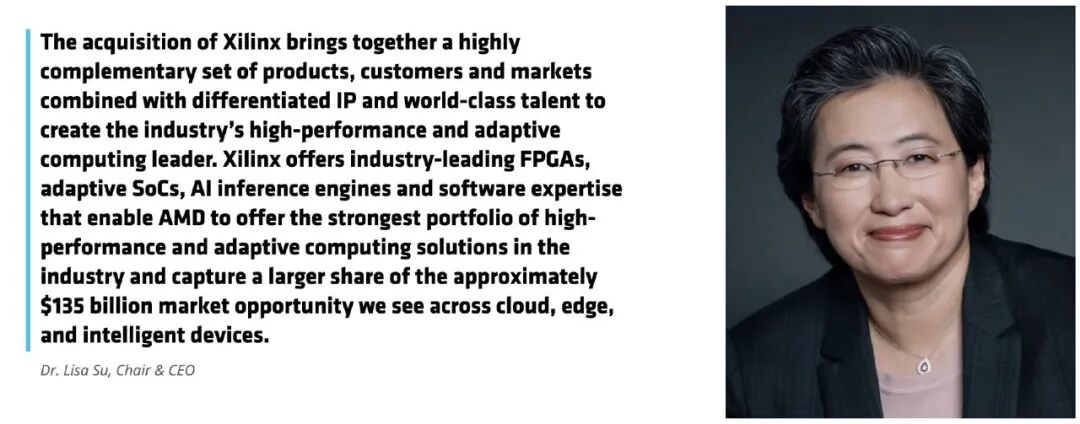
This transaction allowed AMD to obtain technical assets such as FPGA, adaptive computing and embedded systems, and also expanded its business coverage in data centers, industry, communications and automotive fields. In the same year, AMD also completed the acquisition of Pensando, incorporating data center networking, DPU and infrastructure processing capabilities into its own product portfolio.
These two transactions have one thing in common: they both took place in the semiconductor and data center hardware fields, and the main purpose was to expand the types of computing products AMD can provide.
However, after the rise of large AI models, AMD set its sights on AI.
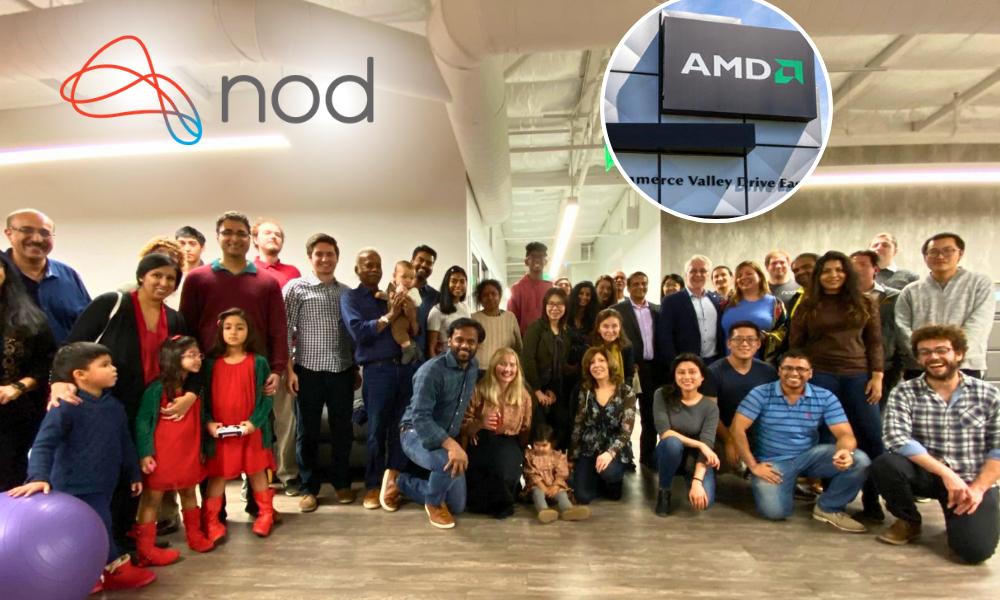
In October 2023, AMD completed the acquisition of Nod.ai. This company does not produce GPUs, but focuses on open-source AI compilers and model optimization software. The company was co-founded by Anush Elangovan and Harsh Menon in 2013. Elangovan was once a member of Google's first Chromebook team and also served as Cisco's chief engineer. Menon previously worked at Kitty Hawk, a company invested by Google co-founder Larry Page.
AMD mentioned in the announcement that the Nod.ai team has contributed to open-source compilation technologies such as Torch-MLIR and OpenXLA/IREE.
For ordinary users, these technologies may be quite unfamiliar. But for AI chip manufacturers, they directly affect whether the model can run efficiently on different hardware. When the same model runs on different GPUs, problems such as operator adaptation, memory layout, computing graph optimization and kernel scheduling often need to be solved. The role of the compiler is to convert model calculations into programs suitable for execution on the target hardware as much as possible.
By 2024, AMD's acquisitions began to further extend to the model development link.
In August of that year, AMD completed the acquisition of Finnish AI company Silo AI for a transaction amount of approximately 665 million U.S. dollars.
Founded in 2017, Silo AI has experience in developing AI models and applications for enterprises, has cooperated with companies such as Allianz, Philips, Rolls-Royce and Unilever, and has developed open-source large multilingual models such as Poro and Viking. The significance of the acquisition is not just adding an additional model R&D team.
AMD can enable more models to complete training and deployment on its own hardware, accumulate real model operation experience, and further improve software tools and optimization solutions.
In June 2025, AMD announced the acquisition of Brium.
This team specializes in AI compilers, inference optimization and cross-hardware software adaptation. AMD clearly stated at that time that it hoped to reduce developers' dependence on specific hardware configurations through the acquisition, so that AI applications can more easily obtain out-of-the-box performance.
Until 2026, AMD's acquisitions further penetrated into both ends of the industrial chain.
In August, AMD announced the signing of a definitive agreement to acquire Taalas. This Canadian company researches dedicated AI inference chips, hoping to reduce the computing and memory bottlenecks existing in general-purpose computing architectures by optimizing data flow. According to AMD's latest quarterly report, the transaction is valued at approximately 2.9 billion U.S. dollars, including up to approximately 1.4 billion U.S. dollars in contingent consideration. As of the disclosure of the report, the transaction is still pending completion.
Then in September, AMD announced the acquisition of World Labs; in November, the transaction was officially completed.
Different from Silo AI, which mainly focuses on language models and enterprise applications, World Labs' research focuses on spatial intelligence, interactive 3D environments and robot simulation. These new models may put forward different requirements for the computing method, video memory, data transmission and system organization of GPUs.
From these actions, a gradually clear route can be seen: AMD is no longer just buying companies that can expand its existing hardware product lines, but extending to different links of the AI computing chain. Compilers, models, inference chips, server system design, and even future-oriented physical world modeling have all begun to enter AMD's technical territory. Compared with the past chip-centered expansion, AMD is trying to build a more complete AI technology system.
Why Is AMD Increasingly Becoming an AI System Company?
If the acquisition of model companies represents AMD's extension to the upper reaches of AI technology, then the acquisition of ZT Systems is an important step for it to expand to a complete computing system.
In March 2025, AMD completed the acquisition of ZT Systems. According to financial documents, the total purchase consideration for the transaction was approximately 4.4 billion U.S. dollars, including cash, AMD stock and contingent consideration.
ZT Systems has long provided data center computing infrastructure for hyperscale cloud computing customers, and has accumulated experience in server and rack-level system design, verification and deployment. For AMD, this capability has practical value.
In the past, when people measured two GPUs, they usually compared peak computing power, video memory capacity, bandwidth or power consumption. But when AI clusters expand to the scale of thousands or tens of thousands of cards, the performance of a single GPU is only part of the whole. How GPUs interconnect, how CPUs cooperate, how data flows between memory and the network, as well as the power supply, heat dissipation and maintenance methods of the system, may all affect the final computing efficiency. Especially for large model inference, what users ultimately care about is often not the theoretical performance of a single GPU, but how long it takes to complete a request, how many users can be served at the same time, and how much cost each Token requires.
This means that chip manufacturers are increasingly participating in system-level optimization. The acquisition of ZT Systems just complements AMD's capabilities in this regard. What can better illustrate AMD's strategic intention is that after completing the acquisition, it did not retain all of ZT Systems' manufacturing business for a long time.
In October 2025, AMD sold its data center infrastructure manufacturing business to Sanmina, while retaining part of the intellectual property rights and the system design team. Sanmina will become AMD's preferred partner in the manufacturing of complex AI systems.
In other words, AMD prefers to retain system architecture design, customer adaptation and R&D capabilities, and continue to entrust large-scale manufacturing to professional partners. This has certain similarities with the fabless business model it has long adopted: mastering core design capabilities while relying on the external manufacturing ecosystem to achieve large-scale delivery.
This transformation has already been reflected in products.
AMD's Helios rack-level AI system integrates Instinct GPUs, EPYC CPUs, Pensando network technology and ROCm software, aiming to provide an AI computing platform that can be deployed on a large scale.
In October 2026, AMD released the Helion rack solution for Agentic AI. Different from systems mainly built around GPU inference computing, Helion specifically emphasizes the role of CPUs in Agent workloads.
The reason is that to complete a task, an Agent often needs to continuously carry out task planning, tool calling, status management and external system interaction. In addition to model inference, there are a large number of general-purpose computing and system coordination tasks.
Therefore, AMD has proposed different configurations: including racks that mainly rely on EPYC CPUs to undertake Agent execution tasks, and enterprise-level solutions that integrate both CPUs and GPUs. This shows that AMD has begun to reorganize its product portfolio according to the computing characteristics of different AI applications.
However, neither Helios nor Helion is simply loading existing chips into larger cabinets. What they correspond to behind is another value that AMD hopes to provide: customers do not need to independently solve all hardware integration problems, but can deploy and optimize AI workloads based on AMD's system solutions.
From selling individual chips to participating in the design of the entire computing system, what AMD is competing for is not just GPU market share, but also the system design right of AI infrastructure.
AMD Certainly Wants to Own Its Own CUDA Ecosystem
There is one problem that cannot be avoided: if AMD's GPU performance and price are sufficiently competitive, why does it still need to continuously acquire software companies? The answer is related to the software ecosystem that NVIDIA has built over the past decade.
CUDA is not just a set of GPU programming interfaces. Around CUDA, NVIDIA has gradually established compilers, mathematical libraries, deep learning acceleration libraries, development tools, model optimization and deployment frameworks, and a huge developer community.
In the era of large AI models, the value of GPUs can no longer be measured only by hardware performance. For developers, whether a GPU can directly run mainstream frameworks, whether it supports common models, and whether there are mature optimization tools when encountering performance problems, are often as important as hardware prices, which is also the problem that AMD has been trying to solve.
But in fact, AMD does have its own software platform. ROCm, which it has developed for a long time, is an open software stack for GPU computing and AI, providing compilers, runtimes, computing libraries and support for mainstream AI frameworks.
However, having a set of software platforms is not the same as having a mature developer ecosystem.
Especially in large model training and inference, even if both platforms support PyTorch, problems such as operator compatibility, GPU kernel optimization, framework version adaptation and performance debugging may still be encountered during actual deployment. If the engineering investment required for migration exceeds the hardware cost saved by using another GPU, customers may not be willing to switch platforms.
This is also the practical background for AMD to acquire software teams such as Nod.ai and Brium.
Nod.ai's open-source compiler technology can help AI models be more effectively compiled and optimized on AMD hardware; Brium focuses on reducing the dependence of model deployment on specific hardware configurations. The two acquisitions are not simply adding software engineers, but complementing the technical links that developers are most likely to encounter when using AMD GPUs.
In July 2026, AMD and Anthropic announced a strategic cooperation, which took this idea a step further. According to the agreement between the two parties, Anthropic plans to deploy up to 2 gigawatts of AMD Instinct GPUs in the future, and the first 1 gigawatt is planned to be launched in the first half of 2027.
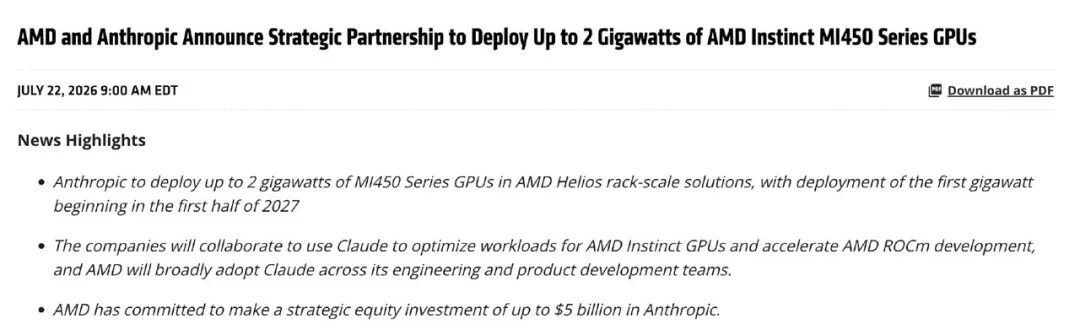
But the cooperation is not limited to purchasing GPUs. The two parties also plan to use Claude to optimize AI workloads on AMD GPUs and accelerate ROCm software development. AMD also plans to widely adopt Claude in its own engineering and product R&D teams. The signal released is quite obvious: AMD is letting its leading AI customers directly participate in the construction of the software ecosystem.
On the one hand, large model companies provide real workloads and development needs; on the other hand, AMD improves compilation, operation and inference efficiency according to these needs.
These measures more or less have some shadows of CUDA.
Deeply Tied with AI Giants
In addition to acquisitions, another obvious change in AMD in the past year is that its relationship with large AI model companies is deepening.
In October 2025, AMD and OpenAI announced the signing of a multi-year, multi-generation GPU deployment agreement involving 6 gigawatts of computing infrastructure, and the first 1 gigawatt is planned to be launched in the second half of 2026.
The cooperation between the two parties is not limited to procurement. According to the information released by AMD, OpenAI will cooperate with AMD on the next-generation GPU and rack-level AI system to help optimize future computing platforms.
In February 2026, AMD reached a cooperation agreement of similar scale with Meta, planning to deploy up to 6 gigawatts of AMD GPUs. There is a notable technical detail in this cooperation: Meta's first batch of deployments will use custom Instinct GPUs based on the MI450 architecture and optimized for its own workloads.
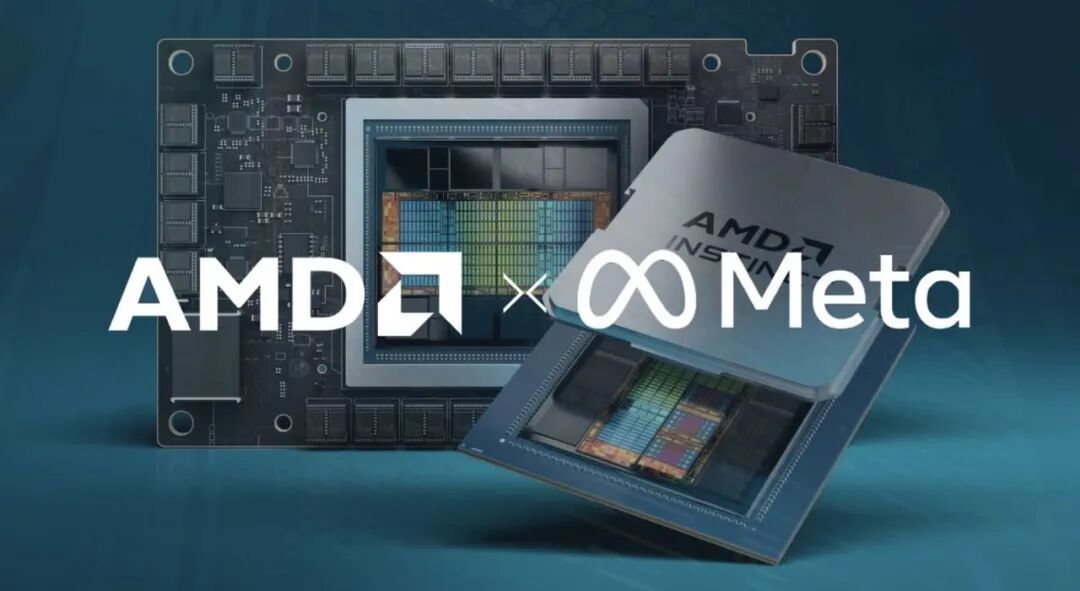
The two parties will also jointly coordinate GPU, CPU, system and software roadmaps.
By July 2026, Anthropic joined this cooperation camp, and its agreement with AMD involves up to 2 gigawatts of GPU deployment, adopting