Pinduoduo has moved the "New Quality Workshop" to Xiong'an.
Inside the office building of Pinduoduo's Hebei Xiong'an subsidiary, a team is working on a seemingly trivial task: labeling each product image of online apparel one by one, and organizing them into training data that algorithms can use. This internal project, dubbed the "Fitting Mirror", targets a long-standing pain point in online apparel consumption: the authenticity of the model's wearing effect is questionable, leading to an overall high return rate. In September 2026, the "Fitting Mirror" has entered the user testing phase.
The significance of this initiative lies not in a single function itself, but in the organizational model behind it. Labeling quality depends on whether different staff members can identify image features in accordance with unified standards. When unclassifiable samples are found, they need to be submitted to the team for discussion to form new judgment criteria. That is to say, the Xiong'an team undertakes the critical link from product materials to algorithm data, whose output directly supports a platform function available for user trial.
This is exactly the key to understanding Pinduoduo's Xiong'an subsidiary. In May 2026, Pinduoduo registered and established a company in Xiong'an, and subsequently launched two major business centers: the Traditional Industry Data Processing Service Center and the Comprehensive Service Center for High-Quality Development of Traditional Manufacturing. On the surface, these are two business departments; at a deeper level, they essentially break down the platform's internal capabilities such as algorithm labeling, compliance review, quality inspection and after-sales service into standardized, reusable, cross-regionally deliverable digital facilities, and "move" them into Xiong'an.
It opens up a new path for the integration of digital and real economy, which is equivalent to building a "new quality workshop" in the new area: products or merchants can be located in other regions, while data processing, personnel training and business judgment are completed in Xiong'an. This path provides a perceptible sample for the digital and intelligent transformation of traditional industries.
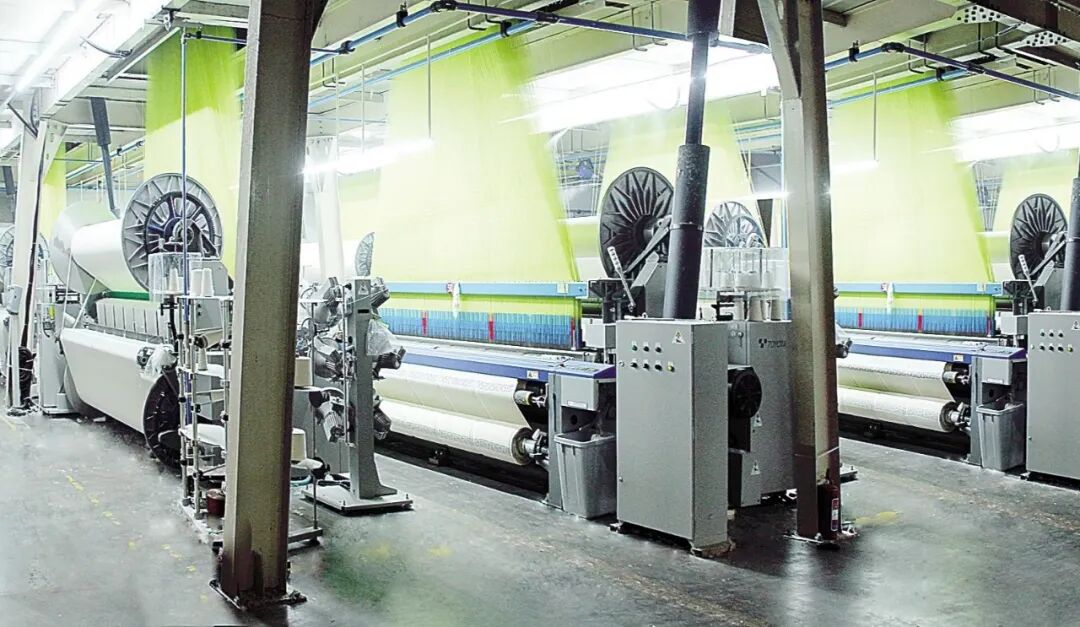
Empowered by Pinduoduo, Gaoyang's towel industry is accelerating its digital and intelligent transformation
The *Report on the Development Index of Private Economy Empowering Xiong'an New Area (2026)* (hereinafter referred to as the "Report") defines Pinduoduo's Xiong'an project as "the core sample of the digital service path": instead of building factories, it selects "links that can form independent operation units relying on regional nodes", and precipitates the platform's underlying capabilities such as data labeling, compliance governance, review and merchant services in Xiong'an in the form of physical teams — essentially "keeping the actual business, talent cultivation and organizational capabilities in Xiong'an while products and clients are located elsewhere", so as to transform cross-regional platform demands into local posts and team capabilities, and further empower the digital and intelligent transformation of traditional industries in Hebei.
01
What exactly is contained in the new quality workshop?
First look at the speed and quality of implementation. In May 2026, Pinduoduo Group decided to register a subsidiary in the new area. The investment promotion department of the new area set up a special working group with dedicated personnel for docking, and it only took one day from the decision of registration to obtaining the business license and official seal; in June, the enterprise purchased an entire 12-story office building, and all employees moved in at the end of July. During this period, the new area also coordinated 1000 temporary workstations to ensure transitional office work. By September, the number of employees exceeded 5000, more than 80% of whom came from the Beijing-Tianjin-Hebei region, 99% were newly recruited external employees. It only took more than three months to complete the annual plan of special recruitment, refreshing the record of talent agglomeration speed of private enterprises in Xiong'an New Area.
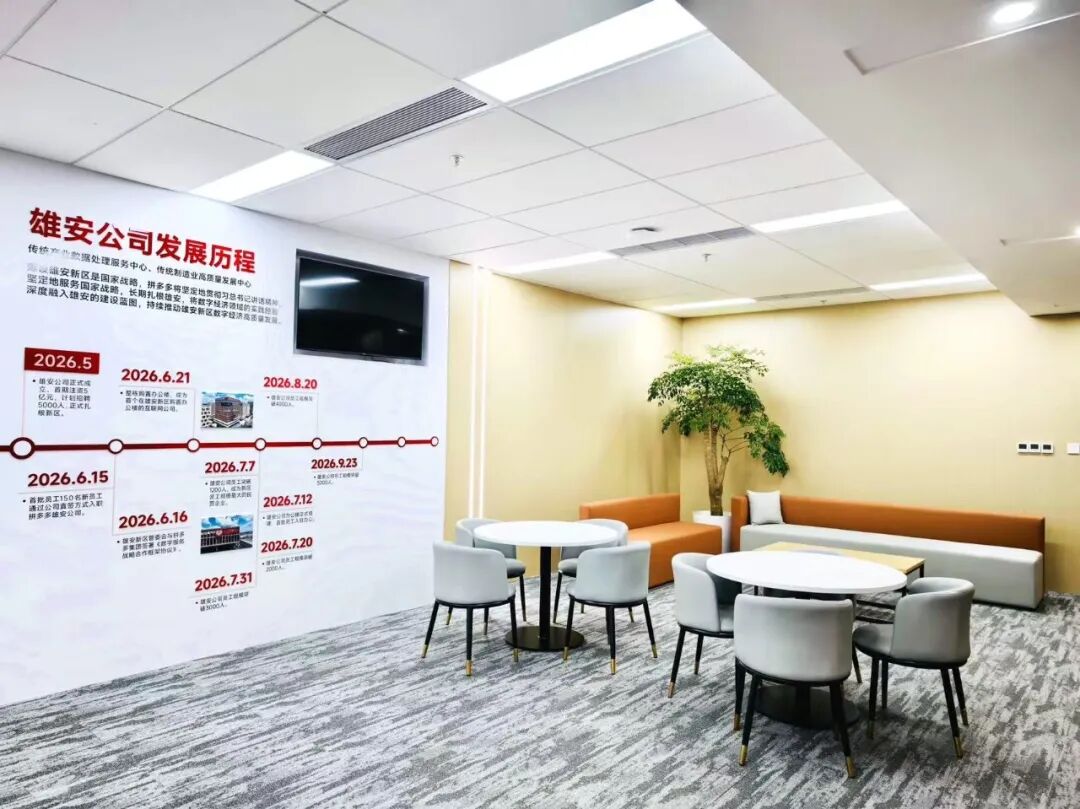
Hong Yong, a researcher at the Chinese Academy of International Trade and Economic Cooperation under the Ministry of Commerce, mentioned his understanding of the two centers at the seminar. The platform can bring digital business to Xiong'an, and extend services to the traditional manufacturing industry. Taking Pinduoduo as an example, it has laid out two centers in Xiong'an. One is the Traditional Industry Data Processing Service Center, which focuses on sorting and processing data to support the development and application of digital tools. The other is the Comprehensive Service Center for High-Quality Development of Traditional Manufacturing, which focuses on connecting the platform's market and operation services to relevant manufacturing enterprises.
Zhu Keli, founding dean of the National New Economy Institute, affirmed the value of projects like the "Fitting Mirror". He believes that the "Fitting Mirror" uses locally sorted training data to optimize the model, which in turn helps industrial belts in Hebei and even across the country reduce return rates and improve conversion rates, opens platform capabilities to local small and medium-sized merchants, and opens up the channel from production capacity to the market. While growing and developing itself, the platform also acts as a "nutrient conveyor" to drive the growth of upstream and downstream supporting services, digital services, training and employment, so that local small and micro entities can also access the national and even global digital network.
It is not difficult to see that the core of the two centers is to "make the platform ecosystem healthier and merchants' operations smoother".
In addition, both experts emphasized the gatekeeping role of the centers, which is consistent with the statements of some employees. Pinduoduo employees in the review and labeling department are responsible for the full-process digital review of merchants' business licenses, including landmark qualification certifications, such as the "geographical indication" certificate for Qianxi chestnuts. They not only use standardized tools to hold the platform's compliance bottom line, but also try to reduce the time for invalid qualification verification to help merchants complete access quickly. Wang Wenhai from Qianxi Yanlu Food later confirmed this point: as soon as the geographical indication was uploaded, the platform kicked out low-quality merchants that misappropriated the brand name.
The Report points out that the two centers share a common feature: they rely on business standards, information systems and personnel collaboration, including both repetitive tasks and work that requires experience-based judgment and problem handling. This feature determines that such businesses can be separated from the location of commodities and form independent operation units at regional nodes. Therefore, the service demands that the new area can undertake have expanded from "what local residents and merchants need" to "what the daily operation of the national platform needs".
This is the internal structure of the "new quality workshop". It does not transfer production capacity from other places, but lands the most basic and standardized digital capability links in platform operation in a city with digital infrastructure and supporting policies, organizes teams locally to precipitate experience, and promotes it across the country.
02
Building "digital facilities" for traditional industry transformation
Why are the two centers defined as a type of digital facility?
Xu Zhixing, associate professor at the Business School of Beijing Normal University, shared his view. He believes that Pinduoduo came to Xiong'an to jointly build a digital service industry agglomeration highland with the new area, bringing modern digital economic infrastructure to empower the development of other industries, which can generate endogenous development impetus.
Xu Zhixing mentioned that at present, Xiong'an New Area has built more than 500 kilometers of digital roads, deployed over 1 million various sensing terminals, and the comprehensive data platform has aggregated more than 40 billion pieces of data, ranking among the top tier in China in the field of data element innovation. At the seminar, some scholars also pointed out that Pinduoduo's technical capabilities in big data processing, cloud platform services and other fields can form business synergy with the existing digital infrastructure of the new area, providing more extensive and implementable digital service support for various industries in the new area. The platform's "point capabilities" are connected to the city's "base capabilities".
Lü Laiming, professor at the Law School of Beijing Technology and Business University and director of the Commercial Law Research Center, shared his views at the seminar. In his opinion, the services provided by online platforms are not limited by geographical location, and services related to merchant review and compliance are undertaken by Xiong'an New Area. In addition to continuing the existing services for merchants' compliant operation, more importantly, it deeply integrates data services and platform services into the front line of industries.
He reminded that in the process of providing data services and promoting the digital transformation of traditional industries, data collection, use and processing will be involved, and problems related to data rights and interests will also arise. In response to such problems, the *Data 20 Articles* promulgated by the central government in recent years put forward the "three-rights separation" principle, which needs to be implemented in specific industries. After the Pinduoduo e-commerce platform settles in, in the process of providing data services and promoting industrial digital transformation, it is necessary to implement the data rights and interests of enterprises to ensure the sustainability of development.
Compared with that, Pinduoduo has chosen a heavy-asset, down-to-earth implementation path: 500 million yuan of initial capital injection, purchase of an entire office building, and 5000 real jobs.
Hong Yong further analyzed that Pinduoduo's purchase of office facilities and attraction of talents for employment in Xiong'an not only reflects its confidence in the development prospects of Xiong'an New Area, but also will exert a driving effect on industries and employment far exceeding its business scale.
"We should not only see that Pinduoduo has invested 500 million yuan and brought 5000 jobs, but also see the service providers, manufacturing enterprises, agricultural business entities and a large number of small, medium and micro enterprises connected behind it. A platform enterprise may directly create thousands of jobs, but the number of jobs and business entities it can drive through the industrial chain, supply chain and service ecosystem may far exceed its own scale," Hong Yong said.
03
From "helping sell goods" to "capability spillover"
At the seminar, many experts mentioned that some industrial belts do not lack manufacturing capacity, but what they really lack are market connection capacity, brand building capacity and digital operation capacity.
In this context, the trend of platform enterprises participating in the real economy is nothing new. Over the past decade, e-commerce for agriculture and industrial belt investment has been widely deployed, but it has generally stayed in the 1.0 stage of "connecting the market": that is, helping merchants sell their goods.
However, experts generally believe that selling goods is the starting point, not the end point. They generally describe the two centers as infrastructure that upgrades e-commerce's "helping sell goods" from 1.0 (expanding sales channels and selling out goods) to 2.0 (bringing market demand back to the production end, enabling merchants to "produce accurately" and improving their operation capabilities). Hong Yong believes that "the value of platform enterprises is not only to help manufacturing enterprises sell their products, but more importantly, to bring market demand back to the production end". This means that the real value of the two centers is to translate the market signals mastered by the platform into information that can be directly used by the production end.
Chestnut processing enterprises in Qianxi, Hebei, were blocked from offline channels during the epidemic. When they moved online, they "could not operate, could not sell, and could not do anything", and relied on platform operation staff to guide them step by step to explore sales growth. The towel brands in Gaoyang, Hebei, caught the dividend of Pinduoduo's rise, and now the overall daily e-commerce sales are about 30,000 orders; when luggage enterprises in Baigou, Hebei, plan to develop new products, they can learn what sizes customers need and why they return goods through the platform, adjust the design according to the data, carry out small-batch trial sales first, and then decide whether to expand production according to feedback.
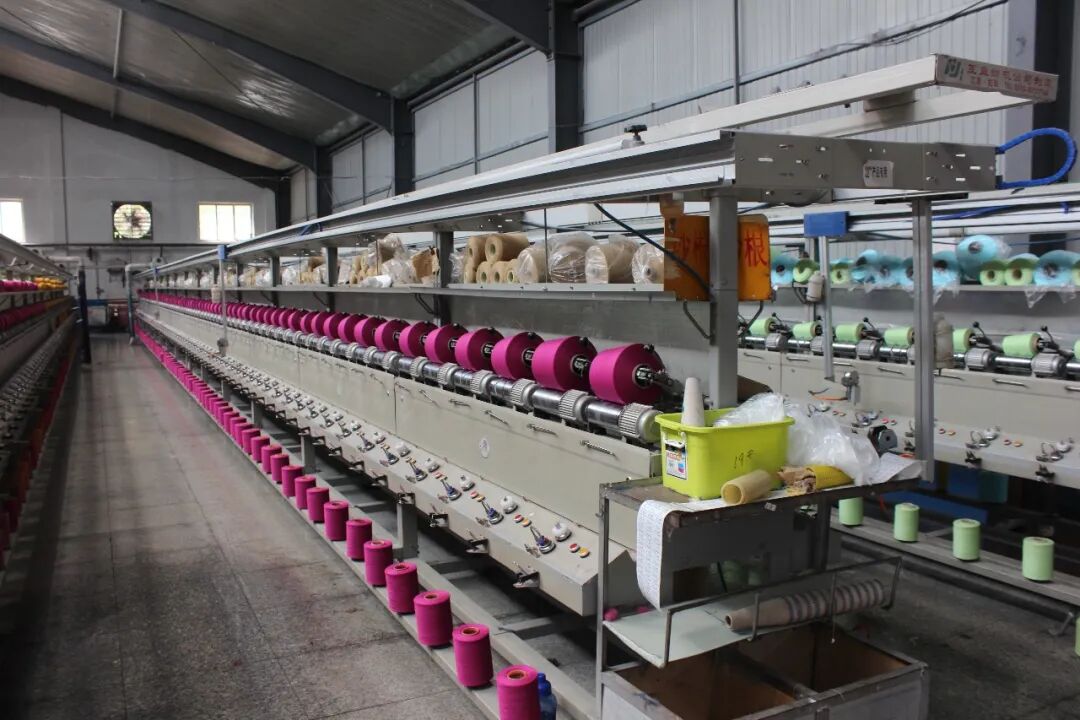
Xieyue Sanxing has become an emerging brand in Gaoyang's towel industrial belt
This path targets the structural shortcomings of northern industrial belts. At the seminar, experts studying regional e-commerce pointed out that Hebei and the surrounding areas of Beijing-Tianjin-Hebei have a large number of distinctive industrial clusters. The biggest advantage of the industrial belts is the complete industrial chain supporting facilities and manufacturing capacity that can quickly respond to the market; however, many enterprises "are good at production but not good at sales". Products produced by some northern industrial belts need to be first transported to southern trade distribution centers such as Yiwu and Guangdong, and then resold across the country — there is a clear disconnect between manufacturing capacity and market connection capacity. Pinduoduo's settlement in Xiong'an just places the platform's market analysis and digital service capabilities at the doorstep of the industrial belts.
People are the carriers of this set of capabilities. Digital skills are precipitated locally along with posts, and this group of people will become a talent reservoir serving the digital transformation of regional industries in the future. The value of the "new quality workshop" will eventually fall on specific enterprises one by one. Several industrial belt cases recorded in the index report just form a complete link from the market end to the production end, from single points to rural areas.
Putting these cases together, the significance of the two centers becomes clear: in the past, most successful cases of industrial belts were "individual cases"; what the two centers do is to standardize the success factors, and turn return data, size preferences and compliance requirements into tools and methods that can be delivered to the next enterprise. This is a reusable complete system that promotes platform services from "helping sell goods" to "capability spillover".
Conclusion
From scaling up to forming stable operation capabilities
According to the Report, in the third quarter of 2026, the comprehensive index of private economy empowering Xiong'an New Area's development reached 234.4 points, with an average annual compound growth of 20.3% since the base period; among them, the employment driving index increased by 22.6% compared with 2025, ranking first in the growth rate among the first-level dimensions, and the main driving factor is the post implementation of leading enterprises such as Pinduoduo; the number of private enterprises in the digital economy sector increased from more than 2500 in 2021 to more than 9000 by the end of September 2026, and the stock of software copyrights increased from 1830 to 39749.
However, the experts participating in the seminar also reminded that agglomeration is only the starting point. Zhu Keli said: "It is easy to achieve agglomeration but difficult to achieve symbiosis; it is easy to land but difficult to take root." The current practical bottlenecks still exist: some settled enterprises have insufficient business relevance, and industrial chain collaboration is relatively loose; local technology transformation, supporting services and talent retention cannot keep up with the growth pace of enterprises. The value of the platform lies in whether it can act as a "nutrient conveyor" to drive the growth of upstream and downstream supporting services, digital services, training and employment, so that local small and micro entities can access the national and even global digital network.
It is precisely for this reason that the sample significance of the two centers goes beyond Pinduoduo itself. The digital and intelligent transformation of traditional industries exactly needs such a workshop that understands both algorithms and factories. It verifies a replicable model: the platform turns digital capabilities into standardized facilities, the new area turns facilities into industrial soil, enterprise business is directly connected with workers' employment, and market signals return to factory workshops through data channels.
When the linkage between these "new quality workshops" and the industrial belts and agricultural production areas in Beijing-Tianjin-Hebei is gradually deepened, the integration of digital and real economy will no longer be an abstract slogan, but a transformation channel with a clear path, calculable returns and countable jobs.