Youshu Quantum has completed a new round of financing: evolving from original quantum algorithms to an AI-native quantum scientific computing platform
Recently, Shanghai Youshu Quantum Technology Co., Ltd. (hereinafter referred to as "Youshu Quantum") announced the completion of its angel round of financing. The new investors in this round include Yunqi Partners and Jiaming Haochun, while existing shareholders Hanyuan Asset, Xiaomiao Langcheng and Qigao Capital continued to increase their investment. Duowei Capital has long served as the exclusive financial advisor. The raised funds will be mainly used for the research and development of original quantum algorithms, iteration of the UnitaryLab quantum scientific computing platform and UnitarySpark heterogeneous computing products, optimization of AI and Agent-driven capabilities, adaptation of quantum hardware, as well as expansion of scientific research and industrial markets.
Less than three months after the completion of the previous round of financing, Youshu Quantum has successively completed software platform upgrade, launch of desktop-level heterogeneous computing products, engineering scenario verification involving domestic general quantum computers, and connected its self-developed algorithm tools to third-party scientific research agent platforms.
Original "Schrödingerization" Algorithm, Exploring the Quantum Path of Scientific Computing
Whether it is fluid mechanics simulation, financial option pricing and credit risk, electromagnetic simulation and power flow calculation, seismic wave solution in geological exploration, or wave and particle motion in complex physical systems, scientists and engineers need to transform real-world problems into mathematical equations and then solve them with the help of computing software. As research objects become increasingly complex, the requirements for computing scale and accuracy continue to rise, and the solution efficiency itself has become a core factor restricting the solution of complex scientific research and engineering design problems. Quantum computing aims to solve problems that are difficult or poorly solved by AI and classical computing power.
The technical foundation of Youshu Quantum is the original "Schrödingerization" algorithm framework developed by the scientific research team of Shanghai Jiao Tong University. In 2024, relevant research results were published in top international journals such as Physical Review Letters and PNAS, and were also selected as representative achievements in the 2024 annual report of the National Natural Science Foundation of China and the selection of outstanding achievements of the 14th Five-Year Plan. Through mathematical transformation, this method converts linear ordinary differential equations, partial differential equations and some important nonlinear differential equations into forms suitable for quantum simulation, providing a new algorithm path for quantum computing to solve scientific and engineering problems and filling the gaps in relevant fields.

Originality Verified by Top International Journals © Youshu
Different from developing a single quantum algorithm for specific scenarios, Youshu Quantum hopes to develop this set of mathematical methods into an algorithm and software system applicable to different scientific computing tasks, and open up the links between scientific problem modeling, algorithm design, simulation verification and quantum computer execution.
AI Agent Drives UnitaryLab to Make Complex Algorithms Easier to Use
In May 2026, Youshu Quantum released the Agent-driven quantum scientific computing platform UnitaryLab 2.0, and launched the UnitaryLab 2.5 public beta version in September, further integrating self-developed algorithm tools, agent task orchestration, AI quantum circuit editing, quantum simulation, GPU acceleration and real quantum hardware invocation capabilities.
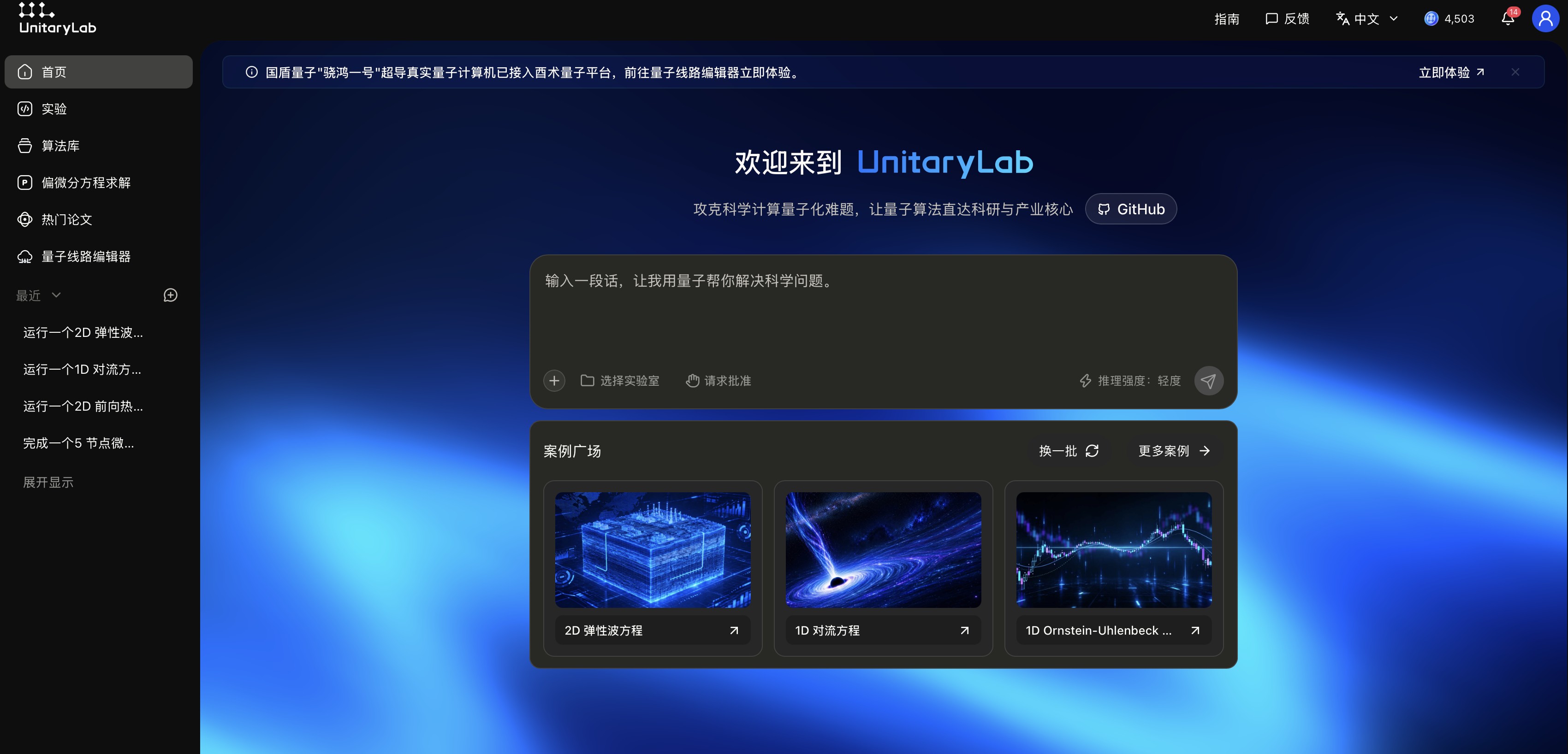
UnitaryLab 2.5 Public Beta Officially Launched © Youshu
Traditional scientific computing usually involves multiple links such as mathematical modeling, code writing, parameter configuration, computing task execution and result analysis, which puts high requirements on the software development capabilities of researchers. By introducing AI Agent, UnitaryLab allows researchers to describe scientific problems in natural language, and the agent assists in completing algorithm selection, parameter configuration, AI quantum circuit editing, simulation execution, quantum computer execution and result analysis, reducing repetitive operations in complex computing tasks.
This capability has been demonstrated in actual scientific research workflows. On August 26, NVIDIA's official technical blog introduced the local quantum scientific computing workflow built based on DGX Spark, NVIDIA NIM and UnitaryLab Agent. Taking the two-dimensional heat conduction problem as an example, researchers put forward boundary conditions and calculation requirements in natural language, and the Agent can assist in completing relevant calculation tasks. In this case, the original about 12 steps of manual operations are simplified to about 3 natural language interactions.
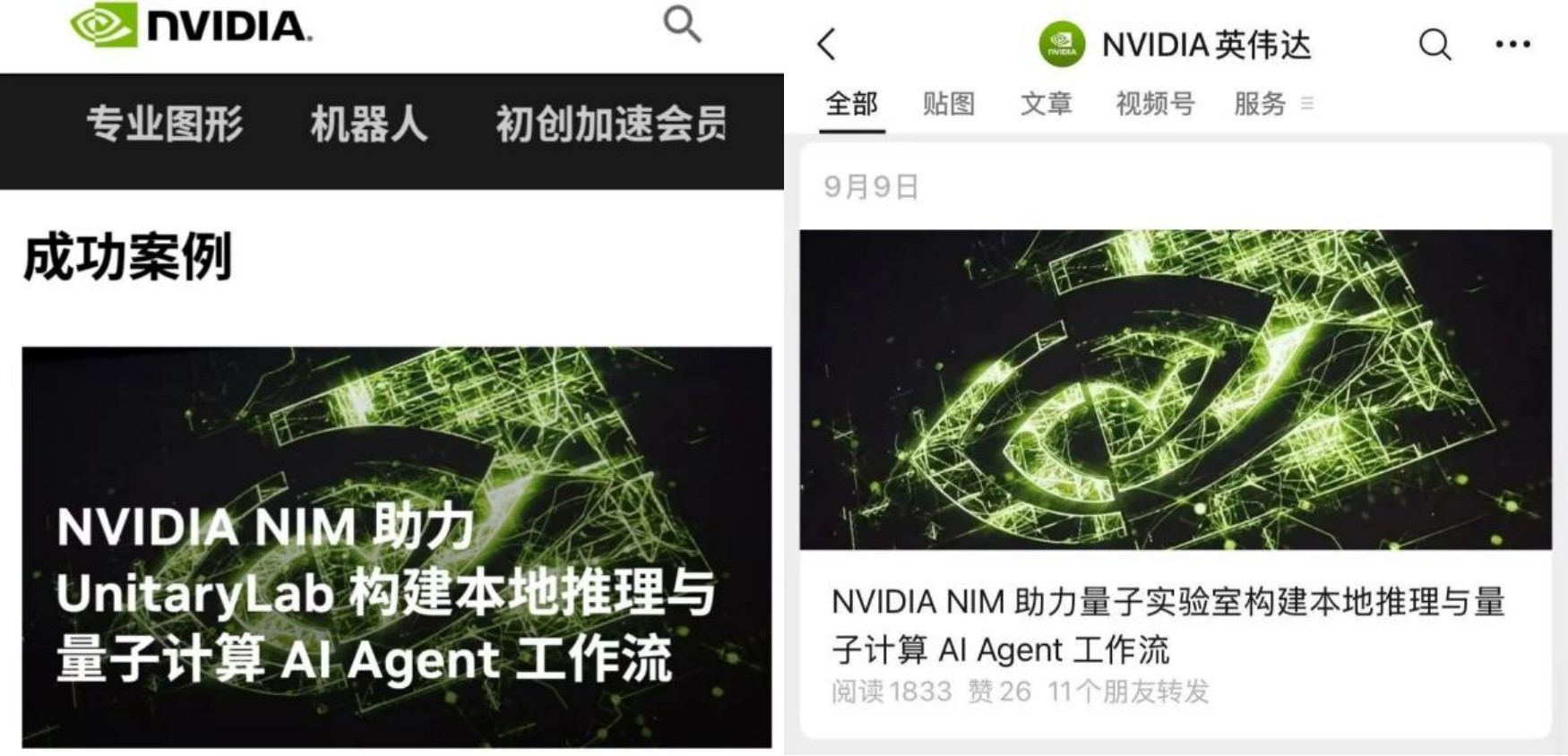
UnitaryLab Selected as "NVIDIA Success Case" © NVIDIA
In addition to its own platform, Youshu Quantum is also connecting algorithm tools to the third-party scientific research agent ecosystem. On October 22, the company's self-developed quantum-skills quantum computing skill component was launched on the "Xuanshu · DuanYan" Scientific Discovery Platform of Shanghai AI Laboratory, covering 12 technical fields and 51 algorithm and workflow guides, using UnitaryLab as the default simulator to help scientific research agents retrieve, understand and use relevant quantum algorithms.
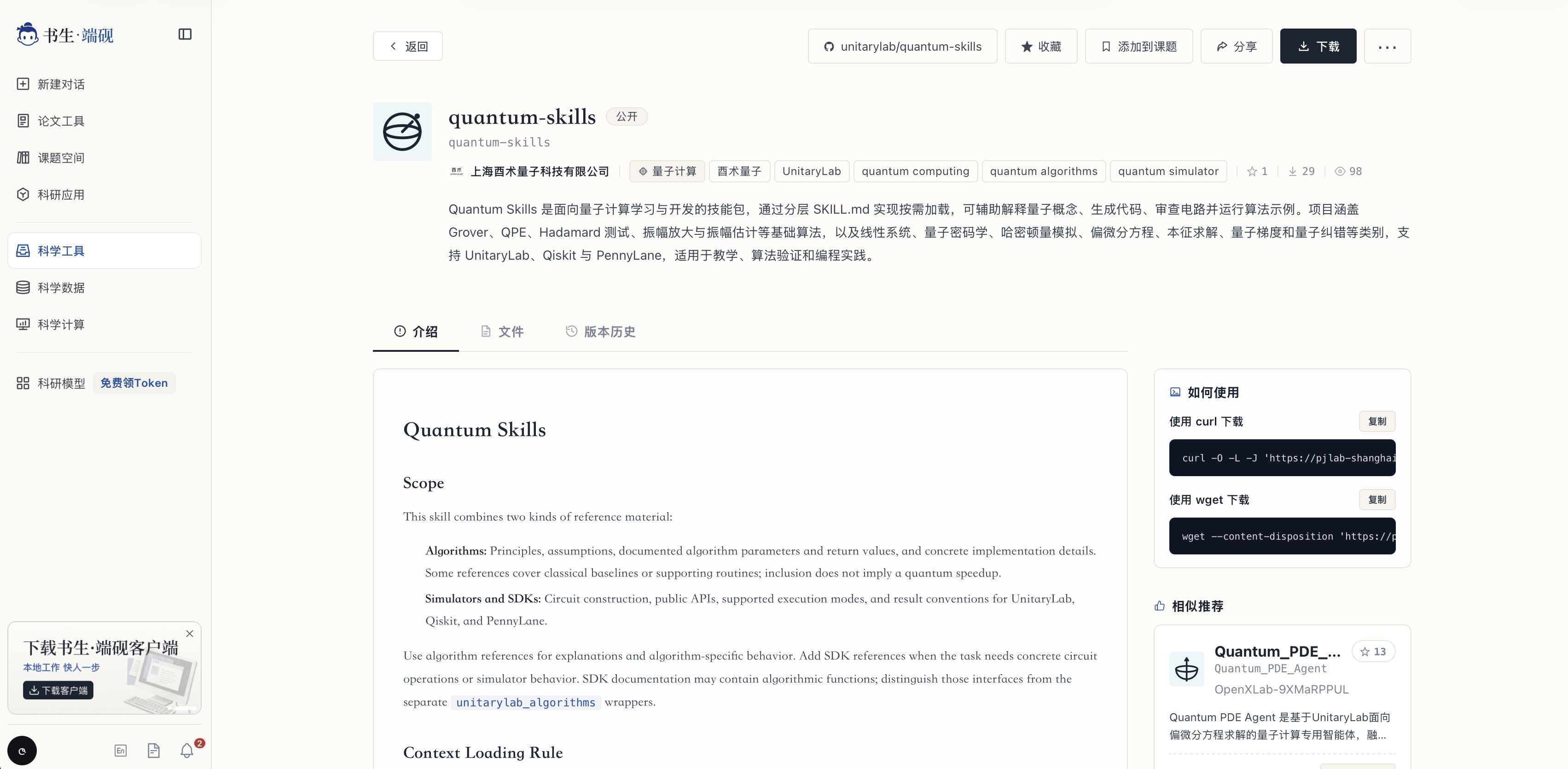
"Xuanshu · DuanYan" Scientific Discovery Platform © Shanghai AI Laboratory
UnitarySpark Connects Heterogeneous Computing Power to Promote Real Quantum Hardware Applications
In September 2026, the company launched the desktop-level heterogeneous computing hardware base UnitarySpark, which integrates AI Agent, quantum simulation and GPU computing capabilities into the local computing environment, and reserves interfaces for invoking external quantum computers. The product is oriented to all kinds of R&D or teaching teams with local deployment needs, such as universities, scientific research institutions, quantum software and hardware enterprises, and scenario-side enterprises, meeting the hardware needs of the emerging quantum computing R&D market for desktop-level, localized products with a budget of hundreds of thousands of yuan, and providing hardware support for algorithm development, scientific research verification and joint R&D, and quantum computing talent cultivation.
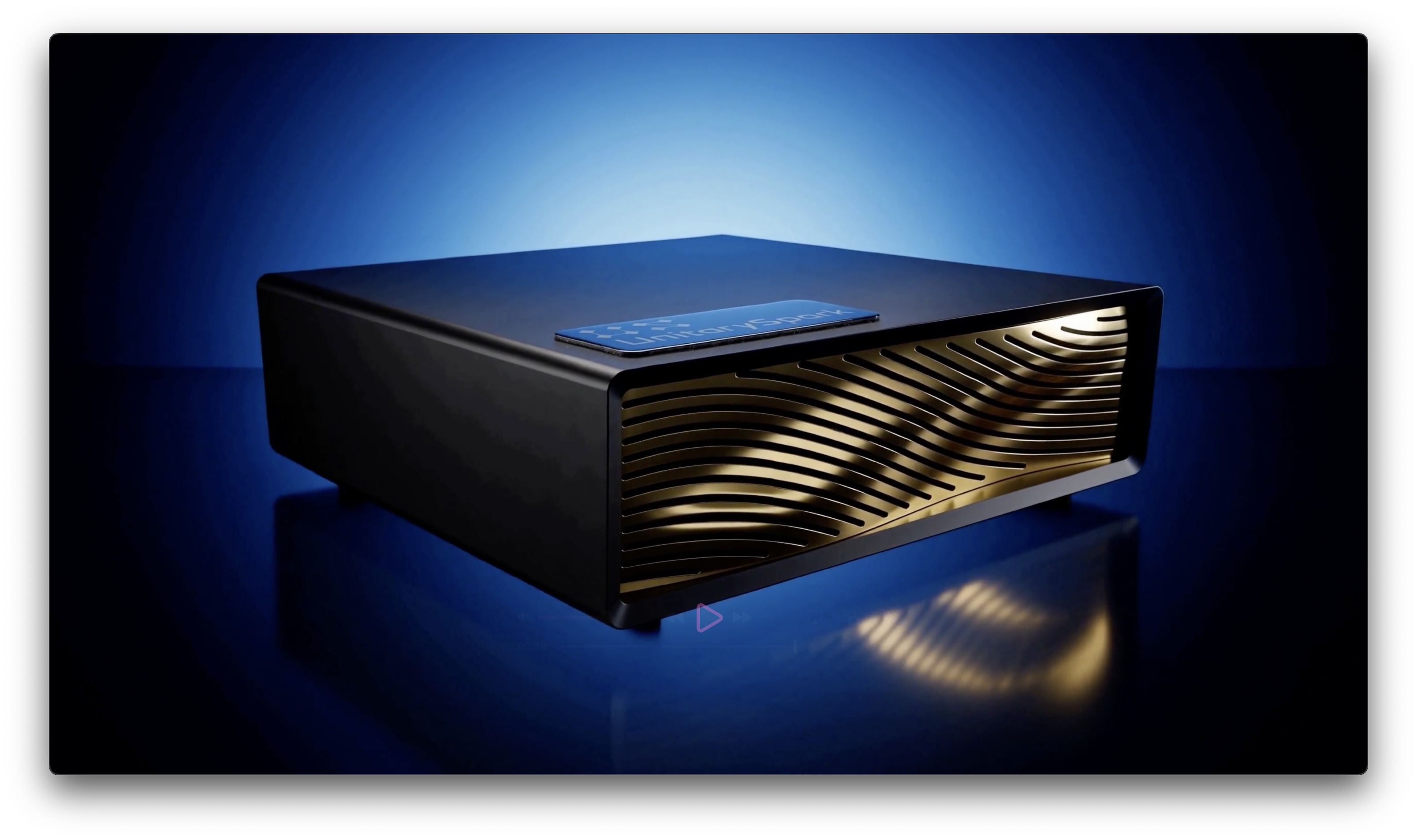
UnitarySpark is a quantum computing workstation that can be placed on the desktop © Youshu
In terms of hardware ecosystem, Youshu Quantum has signed strategic cooperation agreements with Origin Quantum, Boson Quantum, and Zhongqi Wuliang Quantum, to carry out close cooperation around software and hardware adaptation, quantum real machine interconnection and application verification, covering different technical routes such as superconductivity, photonic quantum and neutral atoms, forming a sound industrial cooperation ecosystem.
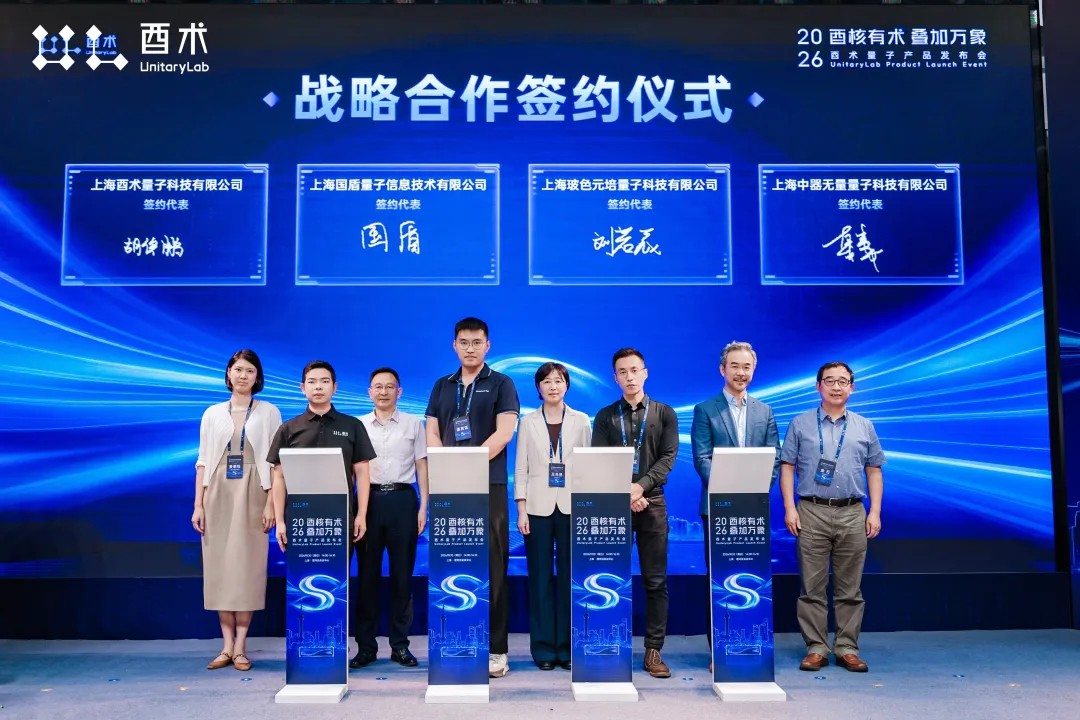
Strategic Cooperation Signing Ceremony © Youshu
In July 2026, Youshu Quantum cooperated with Origin Quantum to complete experiments on heat equation and convection equation with 10 qubits on its quantum computer, corresponding to 16 spatial grid points. The representative control group covered 5 time points for each of the two types of equations, completing a total of 10 circuit executions and 40960 samplings, opening up the complete process of circuit optimization, native gate compilation, chip mapping, real machine execution and energy recovery. Compared with the direct compilation baseline of the original circuits for these instances, the total number of gates is reduced by more than 90%. At this stage, multi-moment experimental controls have been established, and the accuracy of the real machine will continue to be improved and the stability of repeated operation will be evaluated in the follow-up.
In August 2026, Youshu Quantum carried out hybrid computing verification for computational fluid dynamics (CFD) scenarios with Boson Quantum. In the two-dimensional cylinder flow task, the two parties used Boson's dedicated quantum computer to achieve key collocation point optimization, and completed flow field prediction combined with Physics-Informed Neural Networks (PINN).
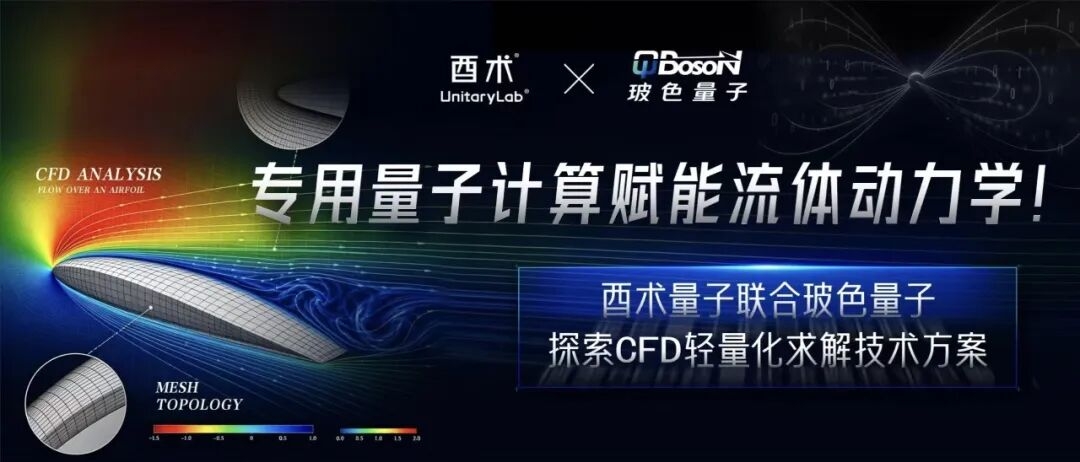
Youshu × Boson Explores Lightweight CFD Solution Technology © Youshu
In this experiment, the quantum hardware undertakes specific optimization tasks, and the classical neural network is responsible for subsequent training and prediction, which initially verifies the feasibility of quantum dedicated computing power participating in the engineering computing workflow, and provides a reference for quantum computing and classical computing to jointly solve practical problems.
At the same time, Youshu Quantum continues to deepen technical cooperation with GPU enterprises such as NVIDIA and Biren Technology, relying on the self-developed UnitaryLab full-amplitude quantum simulator backend to actively build a quantum computing intelligent computing ecosystem compatible with diverse computing architectures. At present, the company has achieved phased adaptation results on mainstream GPU and domestic GPU platforms, gradually opening up the complete technical link from underlying GPU computing power, quantum simulator, quantum algorithm library to intelligent Agent, and continuously promoting the deployment of domestic quantum computing local workstations and GPU acceleration optimization for large-scale quantum simulation, so as to improve the cross-platform compatibility and independent controllability of core technologies.
Through UnitarySpark and hardware cooperation of different technical routes, Youshu Quantum is gradually building a unified execution system that connects original quantum algorithms, classical heterogeneous computing power and quantum hardware, forming a quantum computing software infrastructure for diverse computing environments. This system enables the company to make full use of existing GPUs, quantum simulators and dedicated/general quantum computers for product R&D and application verification, reduce the dependence on the maturity progress of large-scale fault-tolerant quantum computers in the future, and accelerate the engineering application and commercial implementation of quantum computing technology.
From Scientific Research Tools to Industrial Applications, Exploring the Commercialization Path of Scientific Computing Platforms
In September 2026, Youshu Quantum held a scenario cooperation signing ceremony with a number of enterprises and public institutions at its product launch event, including Bank of Shanghai, Hefei Quantum Technology Innovation Research Center for Meteorology, Changchun Jinsai Pharmaceutical, Shanghai Normal University, Chongqing University of Posts and Telecommunications, and Zanqi Technology. The partners cover many fields such as finance, meteorology, biomedicine, artificial intelligence, and quantum education and teaching, jointly accelerating the exploration of the implementation and application of quantum computing in actual business scenarios.
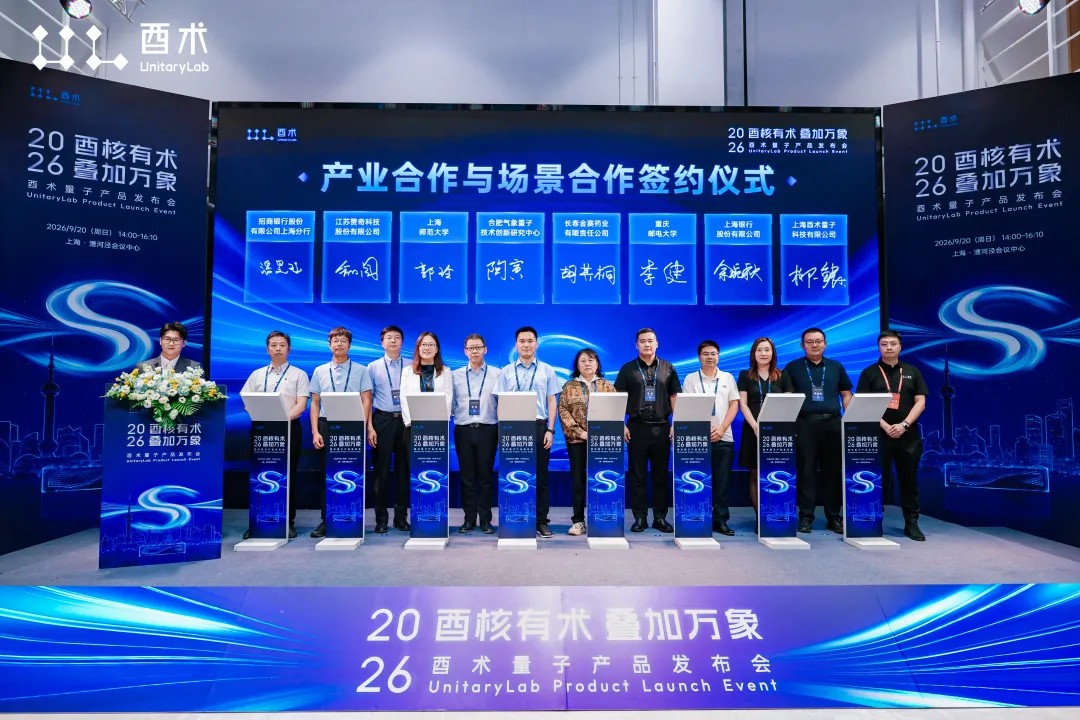
The company mainly carries out business exploration around three types of customers: for universities and scientific research institutions, it provides algorithm platforms, science and education platforms, scientific research toolchains and localized deployment solutions; for quantum hardware enterprises, it explores software adaptation, algorithm services and Agent toolchain cooperation; for industry customers in finance, simulation, automotive and new energy, life sciences, meteorology and aerospace, communications and electromagnetism and other industries, it seeks application opportunities with clear computing needs through joint R&D and scenario verification. At present, the company has moved from productization to commercialization, achieving a breakthrough from zero to one in multi-field commercial cooperation.