The Downfall of Jensen Huang and the Washington Curse of Silicon Valley Geniuses
In Nvidia's ever-expanding headquarters complex in Santa Clara, Jensen Huang spent three decades conducting an experiment that defies almost every management textbook recommendation in modern corporate history: he eliminated the "middle layer".
In his famous entrepreneurship course at Stanford University, Peter Thiel once pierced the warm, seemingly egalitarian veil of Silicon Valley: "Startups are essentially not democracies, but monarchies. We just dare not call them that, because anything less than democratic makes people feel uneasy."
Contrary to the idealized image of a hoodie-clad, freely assembled egalitarian organization that people imagine wishfully, Nvidia under Jensen Huang's leadership is the most efficient "enlightened despotism" in the history of human commerce.
In this empire, there is no rigid hierarchical reporting chain, no divisional warlords with their own hidden agendas, and not even traditional one-on-one private conversations. More than 60 senior executives report directly to Jensen Huang alone; every junior engineer in the company sends a short email titled "Top-5 Things" to all employees every week. A friend who showed me around Nvidia's headquarters during this year's GTC described Jensen Huang's monthly all-hands meeting to me: "It's like a regularly held talk show, we have to make reservations to grab seats, and even though he doesn't say anything truly important, those who can't get seats watch on screens all over the company."
According to descriptions from numerous media outlets and writers, every early morning or late at night, Jensen Huang holds a glass of whiskey or espresso and directly browses these original telegrams from the capillaries of his empire on the screen. If he finds a problem at a technical node, he will not summon the vice president in charge to apply pressure decently behind closed doors in a closed-door meeting. Instead, he will go straight to the whiteboard and, in front of dozens of young engineers and interns, subject the executive with an annual salary of tens of millions of dollars to a two-hour-long inquisition. In Jensen Huang's view, private criticism is inefficient, and public scrutiny allows everyone to complete the "weight update of the neural network" at the same time.
All these behaviors that were once worshipped by business media as successful celebrity anecdotes were immediately used by malicious media as material to kick someone when they are down the moment he stepped down quickly. After Jensen Huang stepped down, former CFO Colette Kress took over as interim CEO. The Wall Street Journal gleefully dug up the news and published the headline: "The Executive Jensen Huang Humiliated Before Being Ousted Replaces Him". The report quoted people familiar with the matter and vividly recalled that in a recent meeting, when Kress was giving a presentation, Jensen Huang publicly interrupted her and called her "a deer caught in the headlights".
Over the long years, this architecture of "cutting out intermediaries and delivering information directly to the monarch without loss" turned Nvidia into a frictionless superconducting machine, pushing its market cap to the peak in human history amid the computing power boom. However, after chips evolved from silicon wafer research into a geopolitical plaything of the 21st century, Jensen Huang made a mistake that all top engineers are extremely prone to make: he thought Washington's political system could also be "flattened and reconstructed" in the same way he managed the Santa Clara R&D team.
More fatally, Jensen Huang seems to have ignored the most unchangeable underlying attribute in this game: his Chinese face.
In today's geopolitical winter where everyone is on high alert, this face is extremely glaring to Washington politicians and national security hawks. As a result, this Silicon Valley genius who built a trillion-dollar computing power empire with his own hands and set foot on American soil at the age of 9 has become the first tech monarch who has to repeatedly prove to Washington that "I am an American". When he steps into the whirlpool of fate that Silicon Valley founders have stepped into repeatedly, his ethnic identity is infinitely magnified under today's geopolitical background; and the elaborate framing, decent forced resignation and public opinion siege he is facing have calmly laid the coldest background color of the "Washington-Silicon Valley" power system in front of everyone.
This hunt that strips away the last layer of decency of American commercial civilization is enough to make every new and old tech tycoon feel a chill.
1 Treating Washington as Nvidia
For a long time, Jensen Huang's dance on the political tightrope was amazing. Starting with dealing with the export control actions of Gina Raimondo, Secretary of Commerce during the Biden administration, Jensen Huang showed a flexibility that even professional diplomats marveled at.
Raimondo once publicly issued a near-threat warning: "If you redesign chips around a certain red line so that China can continue to do artificial intelligence, I will ban it the next day." Instead of hiring a large lobbying army on K Street in Washington to fight a war of attrition on Capitol Hill like old-school industrialists, Jensen Huang personally stepped forward, using engineering precision to follow the parameter red line of the Bureau of Industry and Security (BIS) at a millimeter level, and created A800, H800, and then H20; while assuring Raimondo in Washington that Nvidia is "100% compliant with US national security", he flew to Taipei night markets to eat oyster omelets, then turned up at the annual meeting of the Beijing branch, took off his black leather jacket, put on a Northeast Chinese big floral jacket and did the Yangge dance.
He tried to use the irreplaceability of the computing power monopolist to maintain a detached "technical neutrality" in the cracks. Until Trump returned to the White House, the rules of the game in Washington switched from the textual game of bureaucratic institutions to court politics.
Faced with this drastic change, Jensen Huang instinctively called on the muscle memory he had used to rule Nvidia for 30 years — since organizational hierarchies lead to information distortion, the most efficient way to handle Washington is to cut off the intermediate lobbying groups, bureaucratic think tanks and congressional brokers, and have this computing power monarch directly connect with the political monarch in the White House.
Today it is easy for people to forget how dramatic everything was at the very beginning. This engineer who always advertised his hatred of political showrooms seemed to turn around overnight and began to frequently enter and exit the gilded manor in Florida and the Oval Office of the White House. Standing next to the president, he praised the new administration's energy policy and manufacturing reshoring vision with the same enthusiasm he used to praise the CUDA architecture; he bypassed the cumbersome lobbying network, and tried to reach a top-level "monarch-to-monarch" top transaction directly with the highest power with a hundreds of billions of dollars of local investment commitment and personal charm in face-to-face meetings.
At the GTCs in the past two years, when participating in post-conference global media and analyst exchanges, many times I was dazed that this amiable tech star in front of me was the real decision-maker of US tech policy.
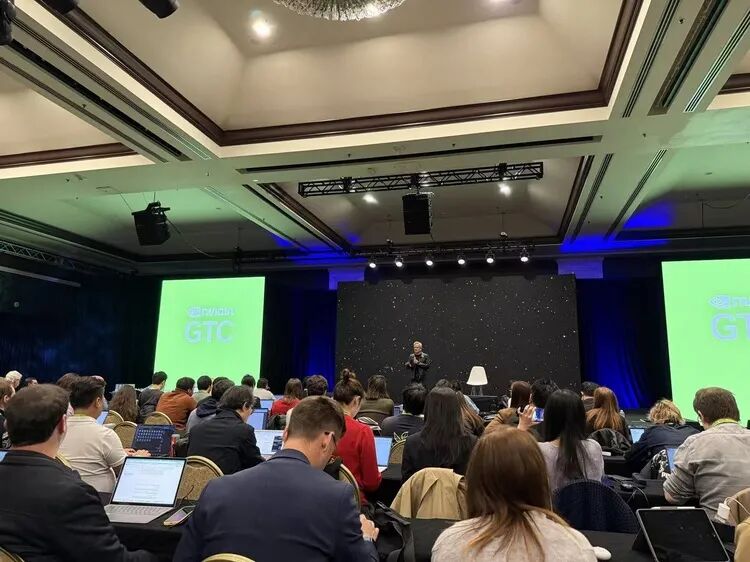
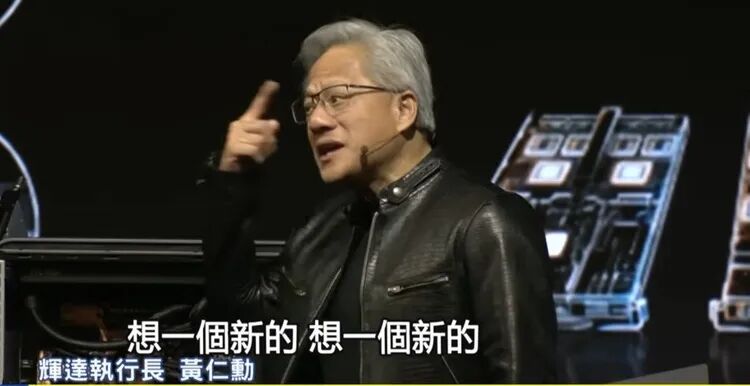
He answered more sensitive geopolitical and domestic policy questions than any other entrepreneur, and most of the time he did not hesitate to speak out his sharp views, and these answers always revealed the impression that "he is deeply involved in key decision-making and everything is under control". Even in the group interview during the Taipei Computer Show in June this year, in the face of the BBC reporter's sensitive questioning with pre-set political stance, he, wearing a leather jacket on the stage, seemed to turn into Trump in a flash — he directly pointed his finger at his temple and drew a circle, sarcastically saying: "Please use your brain, ask a new question, a really new question." Then he turned to the audience and smiled: "Let's help the BBC come up with a new question." People felt dazed that his next line would be "You are fake news".
Before November 11, you could probably say his strategy worked. But looking back today, all this is more like he was just too deep in the play, which is precisely the starting point of his systematic backlash and "purge".
Jensen Huang ignored the most fundamental difference between corporate governance and national politics: in a tech company, the "middle layer" is friction that reduces efficiency; but in Washington's political ecosystem, the lengthy bureaucracy, K Street lobbyists, congressional committees and industry alliances are essentially shock absorbers and firewalls for power. When a CEO who holds the lifeline of the global economy turns corporate governance into highly flat personal centralization, and turns political and business relations into point-to-point direct connection at the top level, he actually turns himself into the only "single point of failure" in the entire system.
Inside the company, the absence of a second-in-command and buffer hierarchy means that once the founder's judgment collides violently with the external political cycle, no executive team can play the buffer role of "playing the good cop"; and in Washington, when you bypass the establishment bureaucrats, national security hawks and Department of Justice antitrust investigators, and try to get everything done with a Mar-a-Lago admission ticket, you have offended the entire Washington institutional machine at the same time. When the US national security system determines that no private enterprise can monopolize the empire's computing power base alone, when the Department of Justice's antitrust subpoenas, the Commerce Department's computing power tracking orders, and Silicon Valley rivals eager to get rid of the "Nvidia tax" form a siege, even the president's guest of honor will immediately become the most visible target in all of Washington.
A flat monarch without a firewall has absolute speed when the wind is favorable, but has to bear the crushing of the national machine with his own flesh and blood when the wind is against — and eventually has to hand over the scepter for this "decentralized buffer" gamble in a decent or forced way.
This kind of dilemma is not an isolated case, it is even a kind of fate, which constantly happens to Silicon Valley geniuses who think they have conquered the world.
Stretching the timeline over the past 30 years, we will find that almost every generation of Silicon Valley founders who stand at the peak of power, no matter they initially appear as rebellious pirates, rational technocrats, or AI prophets who save humanity, will eventually hit the same wall called "political fate" on the road to Washington.
Only this time, Jensen Huang encountered more blatant malice.
2 The "Washington Fate" of Silicon Valley Geniuses Over the Past 60 Years
Looking back at the 60-year commercial history of Silicon Valley, you will find that these business monarchs with IQs in the top 0.01% of humanity, who are used to the cycle of "writing code — compiling and running — exponential growth", have gone through one painful adaptation process after another when facing Washington's slow, ambiguous power logic that emphasizes spoils division and submission.
2.1
In Silicon Valley in the 1990s, Washington was regarded as a group of parasites from the Stone Age who "can't even send emails". The background of that generation of founders is Bill Gates-style technological chauvinism.
In 1995, when Microsoft had monopolized the global personal computer desktop and its market value was approaching the top of the United States, Microsoft's entire "government relations department" in Washington, D.C. had only one lawyer, who drove a Dodge caravan back and forth every day to do so-called lobbying. Gates firmly believed that donating money to politicians was paying protection fees, and Microsoft only needed to write Windows well, and the laws of the old world would naturally bow to the efficiency of the new world.
This arrogance ushered in a devastating liquidation in August 1998. In the 20-hour video evidence collection of the US Department of Justice's antitrust lawsuit against Microsoft, the whole world saw the historic scene: Gates in a loose suit sat shaking back and forth on the chair, and in the face of the government's chief lawyer's inquiry, he quibbled repeatedly over the definitions of several common English words "we", "concerned" and "ask" like a pettifogging pedant.
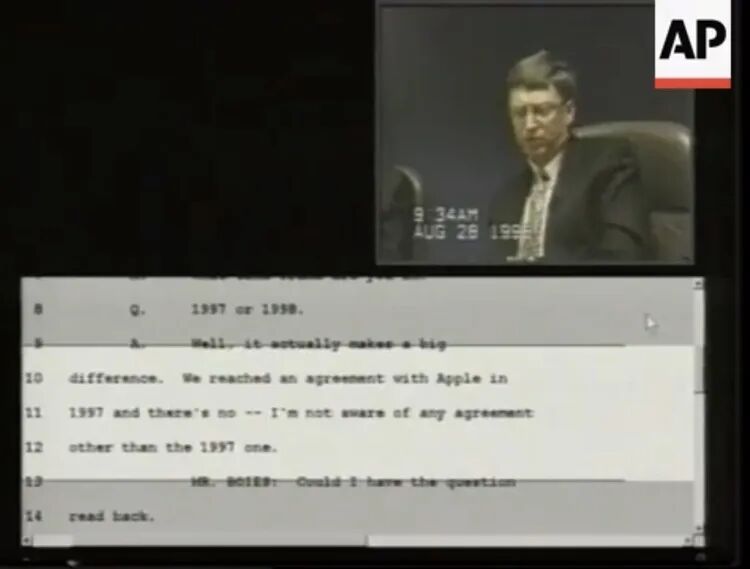
When this video was played in the Washington federal court, even the presiding judge couldn't help shaking his head and smiling bitterly. The consequence was that Microsoft was almost split in two. This years-long judicial torture directly drained Gates' energy as a business monarch. In 2000, 44-year-old Gates handed over the CEO scepter and spent 20 years reinventing himself as a global philanthropist dedicated to eradicating malaria.
Steve Jobs, a contemporary of Gates, chose another gesture: treating the president as a customer with poor taste.
In October 2010, in a guest room of the Westin Hotel at San Francisco Airport, Jobs met Obama in private for the first time, and his first sentence was a cold warning: "You're headed for a one-term presidency." Four months later, at the famous Silicon Valley dinner at the luxury Woodside mansion of venture capitalist John Doerr, Obama gently asked Jobs how to bring iPhone manufacturing back to the United States. In front of all the bigwigs in Silicon Valley, Jobs gave the US president a supply chain lesson in a flat tone: Apple needs 700,000 workers in China, and 30,000 engineers living in factory dormitories who can get up at 12 o'clock in the middle of the night to modify molds as soon as they are ordered, "These jobs will never come back to the United States."
Now it seems that the reason why Jobs could be the only monarch in Silicon Valley history who never knelt to Washington and was never castrated by Washington is cruel and simple:
He died in October 2011.
He left at the dusk when the mobile Internet had just reshaped human life and the state machine had not yet realized that these California geeks had seized the sovereignty of public opinion and the lifeline of the country. Only death can free heroes from fate.
Among the first generation of bigwigs, there was only one "traitor" who saw through the truth from the very beginning — Larry Ellison.
While his Silicon Valley peers were talking about the 1960s hippie movement and "Don't be evil", Ellison developed a relational database code-named "Oracle" for the Central Intelligence Agency (CIA) in 1977, and then simply registered his own company (Oracle) with this CIA project name.
Only ten days after the "9/11" incident in 2001, Ellison wrote an article in The Wall Street Journal, voluntarily proposing to donate software for free to the federal government to establish a unified national identity database across the United States, and declared: "Privacy has long been an illusion."
He bought Italian fighter jets, entertained two-party dignitaries in his private manor, joined the conference call discussing how to overturn the election results without psychological burden after the 2020 general election, and returned to the White House in 2025 to stand next to Trump to announce the $500 billion "Stargate" plan. The reason why Ellison has survived for half a century is that he never fantasized about replacing state violence with code. From the first day, he was the blacksmith who forged iron cages for them.
2.2
If the tragedy of the first generation of bigwigs stemmed from "ignorance and arrogance", then the rulers of the second generation of platform empires — Zuckerberg and Bezos — fully demonstrated what it means to "lose their souls in the violent swing of the political pendulum".
In April 2011, 26-year-old Zuckerberg chatted and laughed with Obama, who took off his suit jacket, at the Palo Alto headquarters; that was the peak of the honeymoon between Silicon Valley and Washington, and the new tech rich were regarded as natural allies of Democratic progressivism.
Even in some of those stages, I chatted with some friends