Content has become the primary entry point for used car consumption, and Dongchedi, together with merchants, is illuminating more possibilities for the whole industry.
Text by | Hu Bo
Edited by | Wen Tong
In 2025, for every new car sold in China, there were roughly 0.74 used car transactions; in the United States, this figure stood at around 2.4.
Although consumer habits in the Chinese and U.S. automotive markets differ, this gap still raises a thought-provoking question: as auto consumption gradually enters the stock era, how much unmet demand remains untapped in China's used car market?
The current used car market is far from easy, but it is not short of new opportunities. Data from the China Automobile Dealers Association shows that in the first nine months of this year, the transaction volume of used MPVs increased by 5.01% year on year; in the first eight months, the transaction volume of new energy used cars rose by 14.9%. Against the backdrop of overall market pressure, consumer demand is quietly evolving.
Last year, when Dongchedi conducted user research in Guangzhou, one respondent mentioned that before buying a car, he mainly followed the car selection and purchase content released by a used car dealer to figure out which used car would be the most suitable under his budget and vehicle usage needs. After watching a large amount of such content, on the one hand, his car selection dilemma was solved, and on the other hand, he gradually built trust in this dealer. In the end, he went directly to the dealer and purchased the car.
Stories like this reflect the ongoing changes in auto consumption. In recent years, with the evolution of information channels, the decision-making path for used car buyers has been continuously moved forward, shifting from "visiting physical markets" to "browsing content", making content the primary entry point for used car transactions.
As more and more people get used to getting to know a car through their screens before deciding whether to visit a physical dealership, used cars have gained new opportunities to enter consumers' field of vision before they make up their minds to buy a new car or a used one.
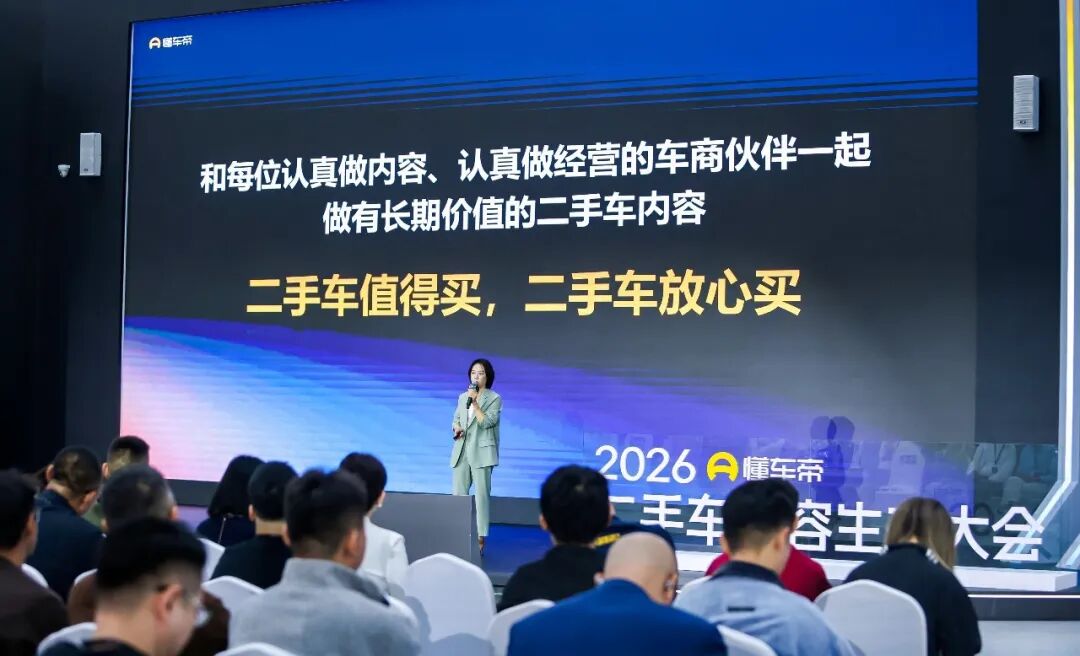
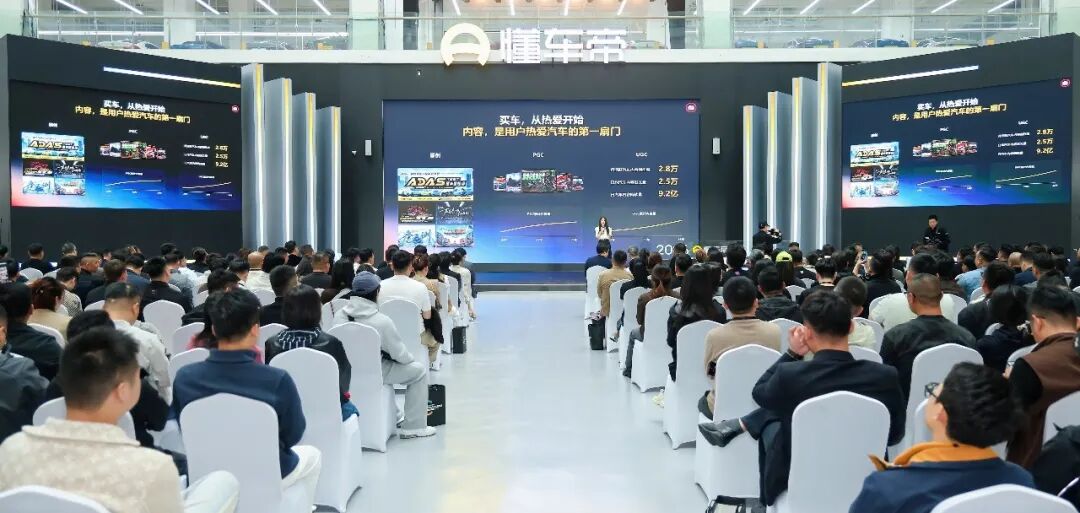
On November 7, Dongchedi held the Used Car Content Ecosystem Conference in Chongqing, and announced the launch of the Used Car Content Ecosystem Program, inviting creators and car dealers to jointly produce authentic, professional high-quality content for car selection, purchase and vehicle source, and provide AI creation tools, creation funds, traffic support and performance services.
From the moment a car is noticed, to the point where consumers are willing to learn about it and purchase it with peace of mind, content is opening up a larger window for the used car sector. Dongchedi stated that it hopes to work with more car dealers to eliminate information asymmetry by continuously producing authentic, professional and high-quality used car content, bring those undiscovered good cars into consumers' options, and turn every trust-driven transaction into a new growth force for the entire used car market.

The Opportunities in the Used Car Sector Are Being Restructured
For a long time, the core competitiveness of the used car business has lain in vehicle sourcing channels, store locations and vehicle source pricing. However, as market growth slows down, it has become difficult for car dealers to expand their business simply by sourcing more vehicles.
Luo Lei, Vice President of the China Automobile Dealers Association, mentioned at the conference that fluctuations in car prices and ups and downs in demand are reducing operational certainty, while consumers are raising higher and higher requirements for vehicle condition, services and experience. "The era of making money by leveraging information asymmetry is over."
This pressure has already been reflected in operational data. Data from the China Automobile Dealers Association shows that in the first nine months of 2026, the total transaction volume of used cars across China reached 14.3638 million units, down 2.50% year on year; the year-on-year decline in September alone hit 12.35%. In the first half of 2026, the profit ratio of used car dealers of different operational scales was generally lower than the same period of the previous year.
However, the pressure on transactions does not mean that demand is shrinking across the board. According to statistics from the association, in the first nine months of this year, the total transaction volume of used MPVs reached 1.0222 million units, up 5.01% year on year; in the first eight months, the transaction volume of new energy used cars increased by 14.9%, with the monthly inventory cycle shortened from 41 days at the beginning of the year to 29 days in September, indicating improving circulation efficiency.
Growth is concentrating on vehicle models with shorter ages. In September 2026, the share of transactions for used cars with a service life of less than three years rose to 32.1% from 25.1% in the same period last year, up 7 percentage points. Estimated based on the total national transaction volume, the actual transaction volume of such models increased by about 12.1% year on year, bucking the overall downward market trend to achieve counter-trend growth.
In the first nine months of 2026, domestic new passenger car sales fell by 24.9% year on year. Although the used car market has not yet resumed real growth, it has performed more stably than the new car market.
In the era when the general public is pursuing a cost-effective lifestyle, the value of used cars is gradually emerging. With the same budget, consumers can choose a higher-class model with richer configurations, and use the remaining money for insurance, subsequent maintenance and other household expenditures. This is exactly the appeal of used cars in the current consumption environment.
At the same time, China's car ownership has reached as high as 371 million units, providing a huge potential pool of vehicle sources for the used car market. How to make these vehicles circulate more efficiently, so that more consumers can notice and are willing to choose used cars, is the key to unlocking the value of the stock market.
Dongchedi data shows that the ratio of sales scale between used cars and new cars is about 1:2.6, but the ratio of in-depth online attention is about 1:9. This reflects that used cars have not gained attention proportional to their transaction volume when consumers are doing their car selection and purchase research.
But high-quality online content is helping used cars enter consumers' field of vision, encouraging consumers who originally only considered new cars to add used cars to their shopping lists.
Ji Chengcheng, head of used car content operation at Dongchedi, shared the experience of a buyer in Changsha. This user had a budget of about 150,000 yuan, and initially was comparing new cars including Hongqi H5, Passat and Magotan. It was not until he watched six in-depth analysis videos of used Hongqi H5 units in a row in early November that he began to actively search for used models and consult car dealers. Used car content is influencing the scope of his car purchase choices. Dongchedi data shows that 31% of new car users have browsed used car content.
User attention to used car content is on the rise. Dongchedi found that users often search for what used cars they can buy with a certain budget, and which vehicle sources of a specific car series are worth considering. This year, the traffic of two types of content on Dongchedi, namely car selection and purchase guides, and market trend analysis, both increased by more than 30%.
Such content usually does not rush to show a specific vehicle, but first answers questions about how to allocate the budget, how to choose between different model years, and what the differences in vehicle usage costs are. Only after users obtain valuable information will they be more likely to further build trust in purchasing used cars, thus promoting transaction completion.
The problem is that valuable content is still not abundant enough. According to Dongchedi's disclosure, about 2% of high-quality used car content on the platform contributes about 15% of total views. Creators such as "Xiaobo Used Cars" and "Su Wukong Talks About Cars" have accumulated relevant experience, but a large number of car dealers still lack stable content production capabilities.
The growth potential of China's used car market not only comes from the huge stock of vehicles, but also lies in the consumer demand that has not been fully stimulated. Only by using authentic and professional content to eliminate cognitive barriers, build consumer trust, and turn used cars from a neglected option into a worthy choice, can we further expand the consumer group and bring new growth space to the entire used car market.

Connecting Content to Real Transactions
To fill the gap of high-quality content, it is not enough to simply encourage car dealers to shoot more videos. The selection of topics, how to continuously produce good content, how to accurately reach potential buyers, and how to fulfill the promises made in videos offline, all affect the actual value of the final content. The program Dongchedi launched this time is developed exactly along this entire value chain.
Dongchedi started with automotive content, and has accumulated a high-quality group of automotive content creators. Zhang Xiyue, head of used car branding and content at Dongchedi, introduced at the conference that the platform has 28,000 monthly active automotive content creators, with more than 25,000 automotive content posts published per day on average, and a daily reading volume of 920 million. Dongchedi hopes to extend the professional capabilities it has built in new car content to the used car sector.
Car dealers do not lack professional knowledge, but they may not be good at converting it into content. The media once interviewed the new media lead of a used car dealer, who was solely responsible for live streaming, shooting and customer information sorting. After nearly three months of operation, he only closed two deals through online content. The team once achieved good communication effects by truly showing vehicle defects, but failed to convert this experience into a stable creation direction.
For traditional car dealers who are accustomed to centering their operations on vehicle sources and transactions, understanding what content users need and how to produce content stably is still a new capability that requires learning.
Used car content also has a natural scaling threshold. New car content can be repeatedly promoted around a single model, but used cars have different mileages, conditions and configurations, so dealers need to re-shoot, introduce and verify information for each vehicle. After a car is sold, the corresponding vehicle source content no longer has direct conversion targets. This means that used car content not only has high production costs, but also needs to keep up with the constantly changing inventory. How to continuously produce authentic and professional content at lower costs has become a major problem for car dealers to expand their online operations.
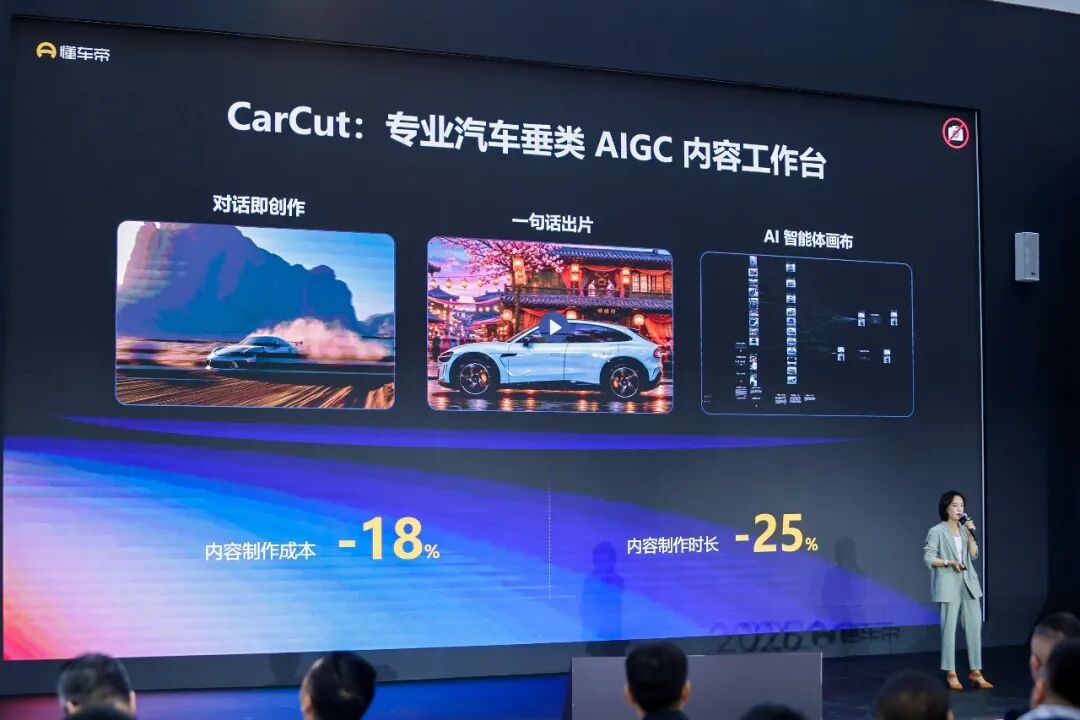
Dongchedi opened the internal beta test of the CarCut dealer version, an AI automotive content creation platform, at the conference, hoping to reduce the production threshold of vehicle source videos and copy with the help of AI. The platform disclosed that in the initial practice of self-operated vehicle sources, the production cost of relevant content was reduced by 18%, and the production duration was shortened by 25%. When introducing CarCut, Ji Chengcheng emphasized that the generated content should rely on the used car knowledge base to improve professionalism, while attaching importance to the restoration of real vehicle sources and conditions, to be responsible for users.
With production tools in place, people still need to know what to produce. Dongchedi simultaneously launched the "Creation Program", which plans to support 100 content series topics, and jointly build 100 influential content-focused dealers with car dealers. The topics range from budget comparison, selection of different model years of car series, to specific vehicle source explanations. As Ji Chengcheng put it, car selection and purchase content answers "how to choose", and vehicle source content answers "which one to choose". The former helps users form their own judgment, while the latter lands the judgment on purchasable products. Only when the two types of content are connected can we shorten the distance from user interest to transaction.
According to Zhang Xiyue's on-site disclosure, the proportion of used car sources that reach users through content exposure on the Dongchedi platform has increased from 15% to 70%, and content has become an important channel for car dealers to expand their customer base.
To make content reach people in need more accurately, Dongchedi plans to use algorithms to understand content, identify potential car purchase intentions, and provide multi-scenario exposure and traffic support on the platform. In late November, the platform will also launch the Used Gold Rush Content Creation Contest, opening registration for three tracks: car selection and purchase, vehicle source introduction, and live streaming, to encourage more dealers to participate with creation funds, traffic resources and AI computing power. Compared with simply pursuing view counts, it is more important to deliver high-quality content to people who are in the process of making car purchase decisions.
However, for high-unit-price products such as automobiles, the interest brought by content does not equal transaction completion, and the performance service after content exposure is equally critical.
Dongchedi has established a nationwide transaction performance network with more than 200 offline stores, and provides services such as vehicle inspection, price negotiation and transfer of ownership through OnePass. For dealers in need, the platform also provides operational services including testing, logistics, preparation and after-sales support. Dongchedi is also exploring invitation-to-store services that combine AI and online sales. For dealers, online content can bring business to farther places, while actual delivery capabilities determine how long this dividend can last.

From a Single Car's Video to Industry-wide Opportunities
From the perspective of individual car dealers, content can bring new customers; from the perspective of the entire industry, what is more worth looking forward to is that it can gradually expand the consumer base of used cars.
Dongchedi disclosed that the penetration rate of used car-related users on its platform has increased from 23% to 38% over the past few years. When a person who originally only considered new cars begins to seriously compare the price, configuration and condition of used cars, the market gains more than just a click, but the possibility of overall growth in total demand.
Cross-regional transaction is also a major important achievement of content-driven demand. Data from the Ministry of Public Security shows that in the first half of this year, 3.45 million cross-regional transaction registrations for used small passenger vehicles were processed nationwide, up 11.98% year on year. Data from the China Automobile Dealers Association shows that in September this year, the volume of used car ownership transfer across the country reached 489,300 units, accounting for 31.11% of the transaction volume in the month. According to reports, about 40% of the used cars closed by Dongchedi are completed through the