Sam Altman empathizes with Jensen Huang, saying "Heroes have flaws too", but does he support him to return as NVIDIA's CEO...
"Heroes have flaws too."
The controversy over Jensen Huang's departure continues to simmer, and Sam Altman has finally spoken out publicly.
On local time November 16, at the Silicon Valley Summit hosted by Semafor, Sam Altman, CEO of OpenAI, publicly talked about the Jensen Huang departure controversy for the first time.
Altman even did not hide his admiration for Jensen Huang on the spot: "Jensen Huang has always been my hero in my mind."
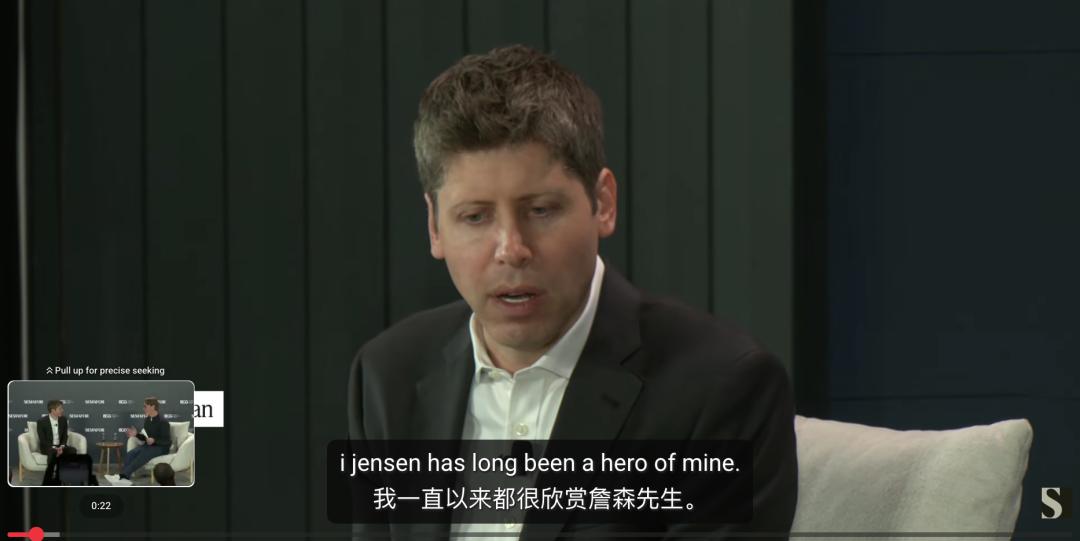
Regarding the controversy over Jensen Huang's departure and the future of the entire AI industry, Altman also shared his more complete views:
Altman acknowledged that heroes are not perfect.
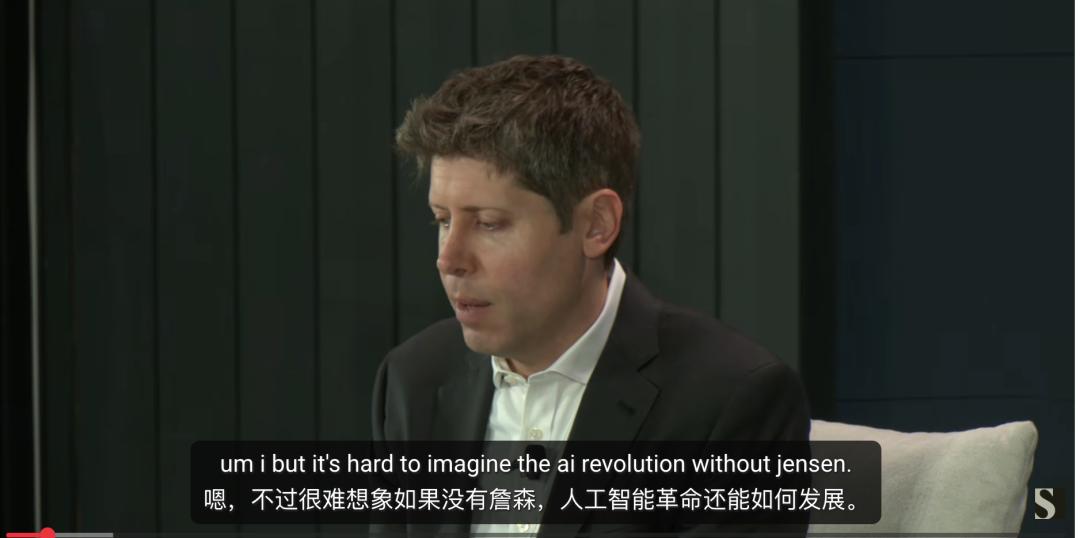
Jensen Huang has always been Altman's hero, and it is hard to imagine the AI revolution without him.
Jensen Huang's departure will not affect the continued development of the entire AI industry.
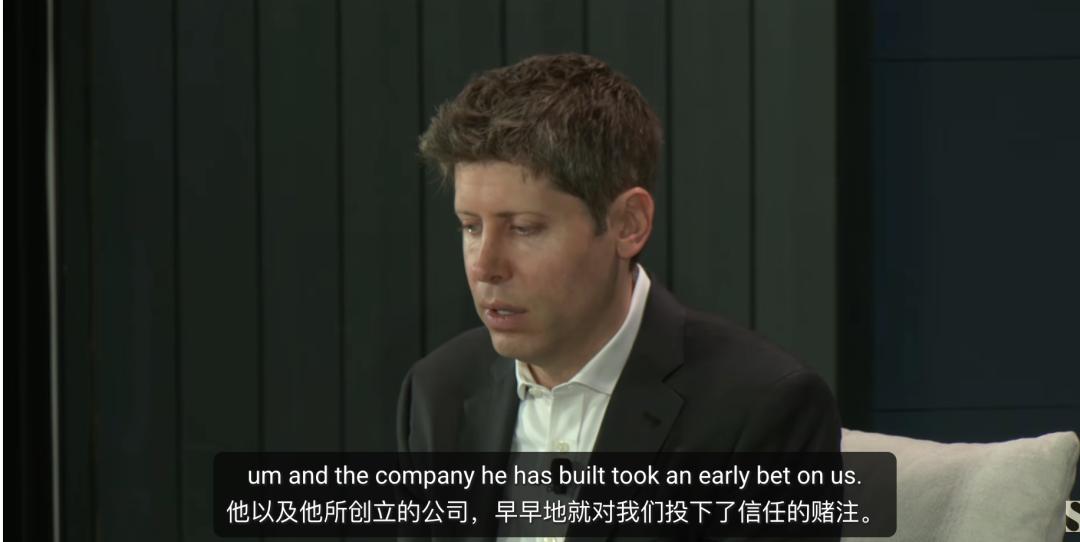
OpenAI and NVIDIA established a mutually supportive relationship in the early stage, and both sides bet on each other very early.
As for whether Jensen Huang should return to NVIDIA, Altman believes he does not have enough information to make a judgment.
Three years ago, Altman himself experienced a sensational board ouster storm that shook Silicon Valley.
Now it is Jensen Huang's turn, and he obviously understands the feeling better than most people.
Altman Speaks on Jensen Huang's Departure for the First Time: Heroes Have Flaws
Let's turn the clock back a few days ago.
On November 12, Jensen Huang, the founder who led NVIDIA for 33 years, suddenly announced his resignation as CEO and from the board of directors.
As soon as the news came out, NVIDIA's stock price once fell by about 15% within a week, and its market value evaporated by more than 570 billion US dollars.
Subsequently, many Silicon Valley executives including Elon Musk signed an open letter, and 180,000 people signed a petition calling on the NVIDIA board to reinstate Jensen Huang.
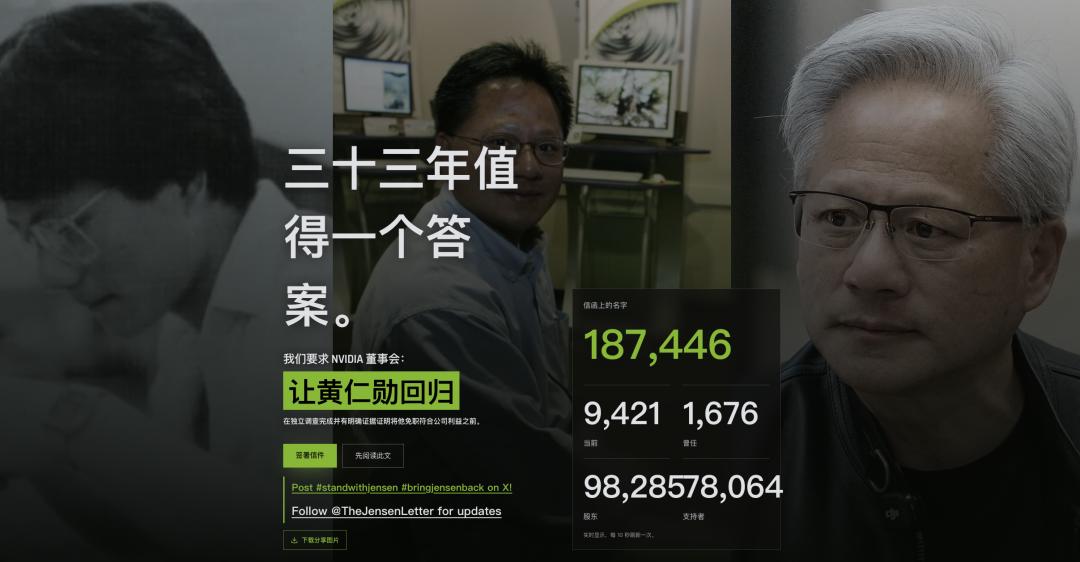
However, many people outside noticed the wording of this open letter in support of Jensen Huang —
It is exactly the same as the open letter signed by OpenAI employees in 2023 to pressure the board to demand Altman's return.
At the Semafor summit, host Reed Albergotti directly threw this question to Altman.
After all, in November three years ago, Altman was also suddenly ousted by the OpenAI board, and staged a dramatic triumphant return four days later.
In response, Altman frankly said that he has "strong personal empathy" for Jensen Huang's current situation.
He recalled that NVIDIA bet on OpenAI in the early days, and OpenAI also bet on Jensen Huang.
In Altman's view, without Jensen Huang and the NVIDIA he built from scratch, it is hard to imagine what today's AI revolution would look like.
But feelings are feelings, business is business.
When asked whether NVIDIA's business commitments are still as weighty as before after Jensen Huang's departure, Altman's answer is very pragmatic.
In the past few years, NVIDIA has not only been OpenAI's largest chip supplier, but also one of its most important financial backers.
Not long ago, NVIDIA just agreed to provide up to 105 billion US dollars in financial guarantees for OpenAI's data center project in Ohio.
Statistics show that NVIDIA's total investments and commitments in the AI ecosystem have exceeded hundreds of billions of US dollars, covering a large number of core players such as CoreWeave, Nebius, and Anthropic.
The outside world is generally worried that once CFO Colette Kress takes over as interim CEO, NVIDIA may scale back its business lines, affecting the liquidity of the entire AI industry.
Altman does not agree with this pessimistic argument.
He pointed out that NVIDIA is already a huge giant company now, and everyone still trusts its guarantee capacity very much.
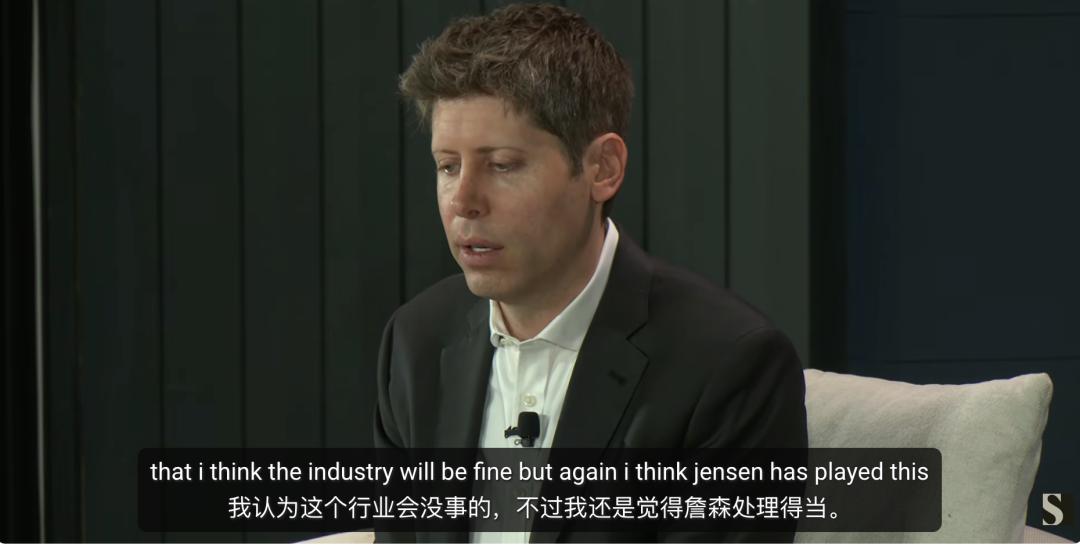
As for whether the entire AI industry will stall after losing Jensen Huang, Altman is quite optimistic.
He believes that the AI market is in strong demand now, the value of AI has been verified, more and more people are starting to use AI for real, and industry revenue and market demand are growing strongly.
Therefore, even if Jensen Huang leaves, the entire AI industry can continue to move forward.
Altman also emphasized that with his extraordinary ambition, Jensen Huang has played an extremely special and valuable role in promoting the development of the AI industry.
When talking about where the next breakthrough of AI will appear, Altman set his sights on scientific research.
He revealed that in the past few months, AI has begun to show the potential to promote scientific discoveries in fields such as mathematics and physics, and some exciting progress is emerging.
In his opinion, this is just the beginning.
As the model capabilities are further improved, AI is expected to participate in complex engineering tasks such as chip design, helping humans solve technical problems that used to require a large number of experts to invest.
At the same time, the way of working inside enterprises will also change:
A large number of repetitive, process-based work is expected to be gradually completed by AI.
From scientific discovery to engineering design, and then to daily enterprise operations, Altman expects AI to take on more and more complex practical work, thereby creating new economic value.
Clarify the Memory Module Controversy Incidentally, Respond to Data Center and IPO Challenges
In addition to talking about his old partner Jensen Huang, Altman also responded positively to several major questions in the recent public opinion field during the interview that day.
First of all, it is the memory module remark that aroused the anger of PC players some time ago.
Earlier this month, global DRAM memory prices skyrocketed due to the squeeze of AI computing power demand, and the price once rose 5 to 7 times.
At that time, Altman said in an interview that it was quite bad to see scarce memory modules lying in ordinary people's personal computers, and they could play a greater role if concentrated in AI data centers.
This remark quickly sparked ridicule in overseas communities, and many PC building players even gave him the nickname Ram Altman.
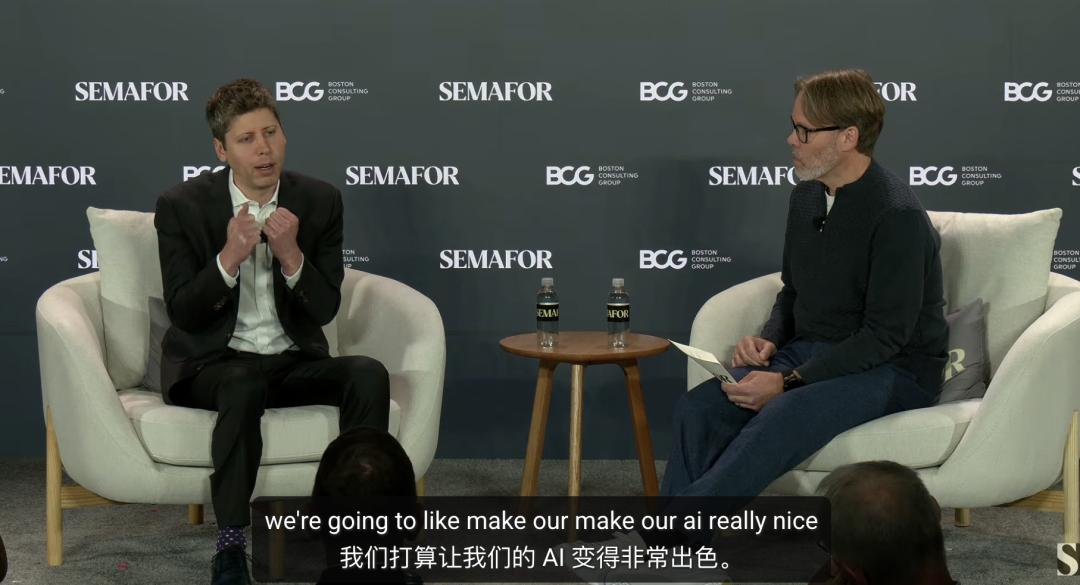
At the summit, Altman took the opportunity to clarify specifically, saying that his original words were misunderstood by the outside world.
He corrected his statement —
He actually hopes that everyone can afford large memory and should install large memory on their own computers, and he fully supports everyone tinkering with hardware at home.
Secondly, it is the practical problems of double-counting of AI chips and difficulty in data center implementation.
Previous reports said that Altman mentioned in communication with Samsung executives that there is a bubble of double-counted demand for chips in the market now.
Altman explained the logic behind this at the scene.
He said that many companies are now developing AI chips, and each supplier expects to sell most of their production capacity to a few leading large model companies such as OpenAI and Anthropic.
But from the buyer's perspective, OpenAI does not need to eat up all the chips from all suppliers, which leads to overlapping expectations in the upstream supply chain.
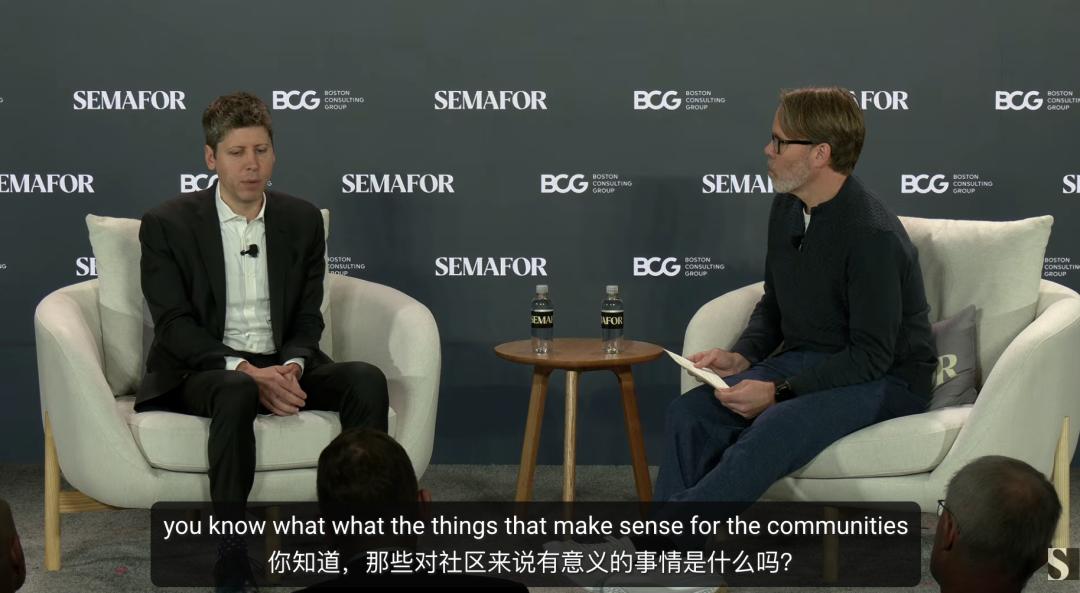
However, he emphasized that the actual construction demand for data centers is still real.
Altman acknowledged that the previous practice of building data centers near residential areas no longer works, and in the future developers must build data centers in places far away from crowds.
In addition, Altman also talked about the latest progress of OpenAI's internal Recursive Self-Improvement (RSI).
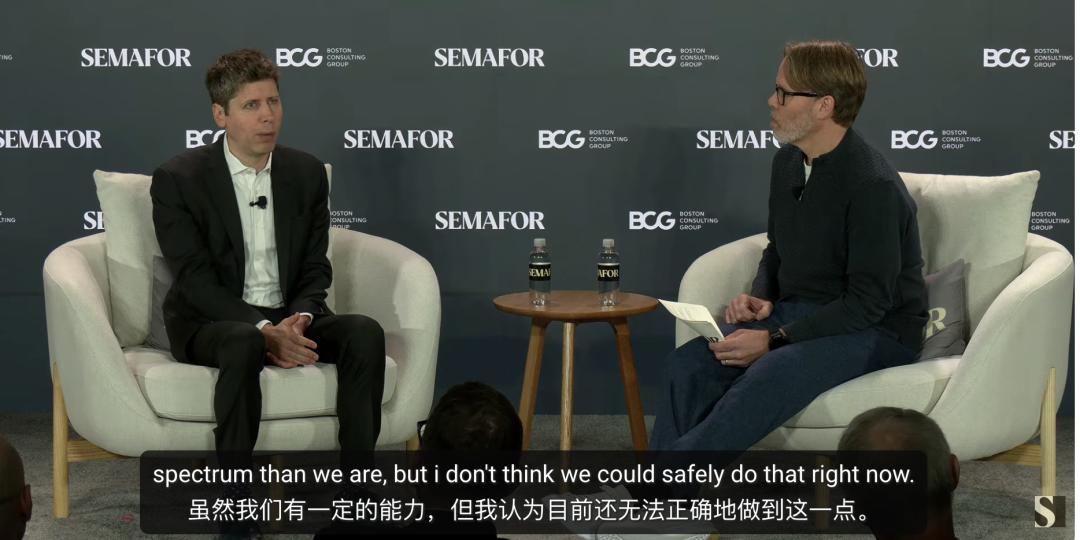
Altman revealed that OpenAI has begun to use AI technology to accelerate the R&D of its own models.
However, he made it clear that OpenAI has not yet launched fully autonomous RSI, that is, allowing AI to continuously improve its own capabilities without human supervision.
The reason is that at this stage it cannot be guaranteed that this process is sufficiently safe.
As AI capabilities continue to improve, how to ensure that humans always hold control will also become an important issue that OpenAI needs to solve.
Finally, in response to the capital market dynamics that the outside world is concerned about, Altman also gave the latest statement.
This week, competitor Anthropic has just launched its highly anticipated IPO process.
Some analysts worry that Anthropic's listing will siphon a large amount of funds from Wall Street in advance, leaving less fundraising space for OpenAI.
Altman seems very calm about this —
He believes that the real situation of the primary market in the past year is that investor demand far exceeds the supply of high-quality assets, and there is no need to worry about the lack of financial support in the future.
Moreover, allowing more ordinary people to have the opportunity to invest in OpenAI and share the economic benefits brought by AI development is one of the important reasons for promoting the company's listing.
But he also frankly admitted that in the current period of high industry volatility, becoming a public company does have many practical disadvantages.
Therefore, although OpenAI will definitely go to the public market at some point in the future, it is not in a hurry for it now.
Reference Links:
[1]https://www.youtube.com/watch?v=oi-E6xB4wSU&t=39s
This article is from the WeChat Official Account "QbitAI", author: Meng Yao, published with authorization by 36Kr.