He Xiaopeng has set seven major consecutive targets to strive for profitability, targeting annual overseas sales of 100,000 units, and plans to generate revenue by selling technologies next year.
He Xiaopeng has set 7 major targets with a firm focus on profitability.
CheDongXi News on November 16: Just now, at XPeng Group's 2026 Q3 financial performance meeting, He Xiaopeng, Chairman and CEO of XPeng Group, elaborated in detail on the company's seven major targets for the next stage.
Focusing on the automotive business, He Xiaopeng has high expectations for the MONA L05. He stated: "I expect the production ramp-up speed of the MONA L05 to break the company's historical record, with deliveries exceeding 10,000 units in the first month." Based on this, He Xiaopeng predicts that XPeng will achieve monthly sales exceeding 60,000 units for the first time in November.
In terms of globalization, He Xiaopeng has set a new overseas expansion target: international business sales will exceed 40,000 units in the fourth quarter, and the total overseas sales in 2026 will break through the 100,000-unit mark for the first time.
In the field of autonomous driving, He Xiaopeng revealed the overseas launch timeline of the second-generation VLA, expecting to obtain the first batch of regulatory approvals from the European Union in 2027, and take the lead in deploying urban intelligent assisted driving in Europe.
For the Robotaxi business, XPeng has currently obtained L4-level demonstration operation qualifications for the entire Guangzhou area, and will export overall solutions to the outside world next year, which is expected to expand its operation scale exponentially in the next three years.
In terms of humanoid robots, in the first quarter of next year, the first batch of XPeng's mass-produced robots will enter some of XPeng's stores; in the second quarter of next year, XPeng will officially release XPeng IRON to the public.
He Xiaopeng is very confident in this product: "In terms of business model, I am optimistic that the sales potential and gross profit scale of XPeng IRON are expected to significantly exceed the most popular high-end models on the market."
In addition to these, XPeng officially released its technical solution business XPENG AI ENGINEERING in October. This business opens up intelligent electric vehicle technology cooperation to the outside world, exporting physical AI technologies covering Turing AI chips, model foundations, autonomous driving and robots. At present, XPeng has formed a dedicated business team and is negotiating with a number of enterprises. According to the official plan, this business is expected to generate revenue next year.
In terms of finance, looking ahead to 2027, He Xiaopeng said he plans to devote more energy to the comprehensive improvement of operations, enhancing the company's self-sustaining capability. He also clarified the company's short and medium-term business goals: to achieve positive cash flow and profitability for the automotive business.
Just today, XPeng Group delivered its best quarterly report, with both Q3 deliveries and revenue hitting new highs.
In the third quarter of 2026, XPeng Group delivered a total of 118,400 new vehicles, a year-on-year increase of 2.1% and a quarter-on-quarter increase of 14.6%; total revenue reached 24.28 billion yuan, a year-on-year increase of 19.1% and a quarter-on-quarter increase of 23%; gross margin reached 18.9%, and automotive gross margin reached 13.1%.
At the same time, XPeng's net loss in the third quarter was 870 million yuan, which narrowed compared with the net loss of 1.34 billion yuan in the second quarter of 2026; the net loss in the same period of 2025 was 380 million yuan.
As of September 30, 2026, XPeng Group's cash reserves reached 45.41 billion yuan, a net increase of about 4.93 billion yuan compared with June 30, 2026.
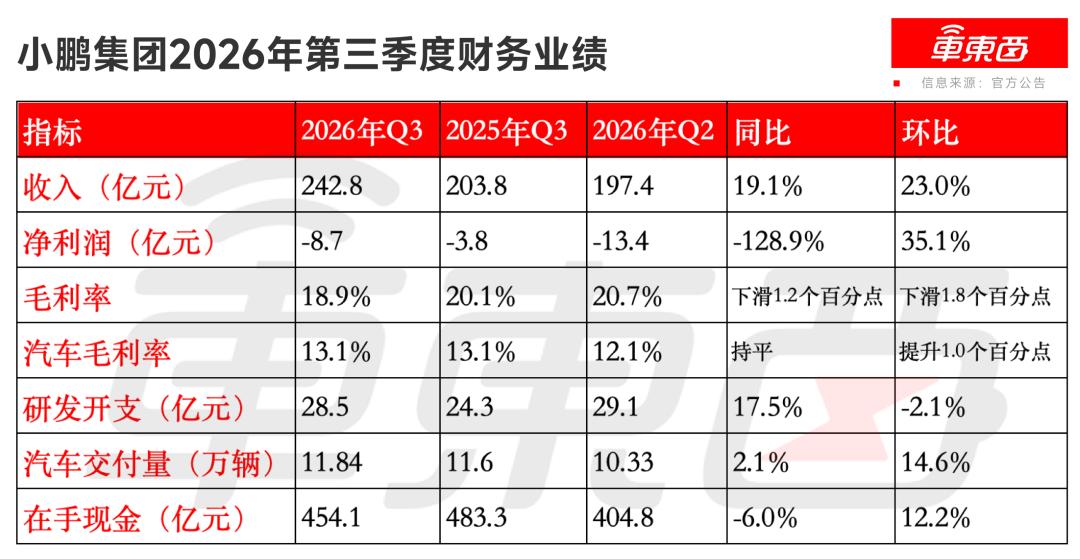
▲ XPeng Group's 2026 Q3 Financial Performance
01.
Overseas market sales are expected to double next year
Europe may account for more than half
During the Q&A session of XPeng Motors' earnings call, senior executives including He Xiaopeng, Chairman and CEO of XPeng Group, and Brian Gu, Honorary Vice Chairman and Co-President, gave detailed responses to XPeng Motors' development priorities and future plans.
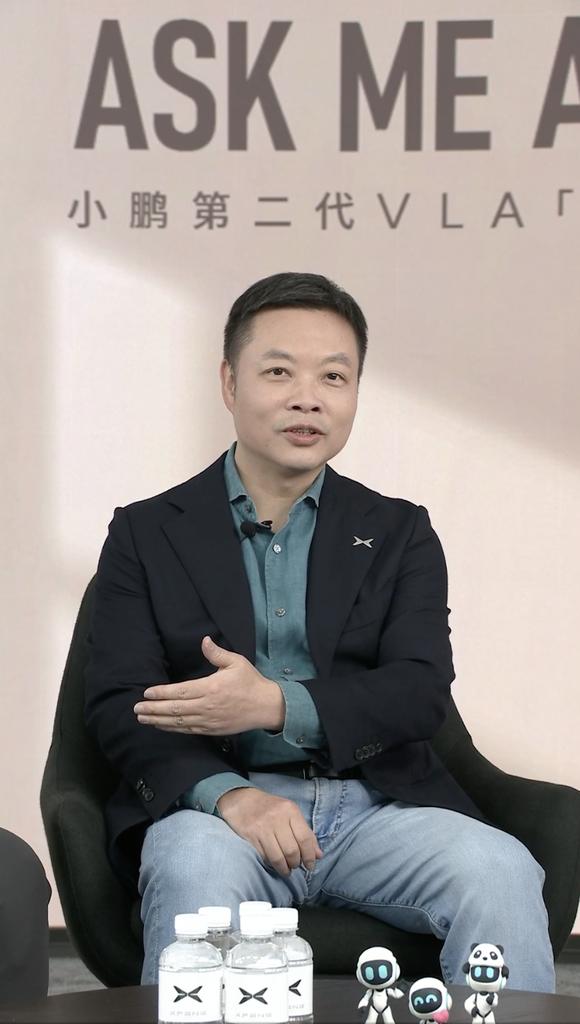
▲ He Xiaopeng, Chairman and CEO of XPeng Motors
The following is the main content of this Q&A, edited by CheDongXi without changing the original meaning:
1. How do you view the demand in the domestic and overseas automotive markets in 2027? From which models, price bands and markets will XPeng's sales growth come from next year? How does the new product matrix help XPeng continuously increase its market share during the consumption downturn cycle?
He Xiaopeng: The domestic automotive business in 2027 will still face great challenges, but the overall situation will be better than this year; the overseas market is still an opportunity of larger scale and faster growth for XPeng.
This year, fuel vehicles and hybrid vehicles account for a relatively high proportion of China's exported vehicles, but I firmly believe that pure electric-dominated vehicles will see huge growth overseas from 2027 to 2028.
Looking ahead to 2027, XPeng is confident to significantly outperform the industry and achieve sustained growth, the key is to continue to sell well the current models in the current price range.
This year, the company attaches great importance to the sales and delivery performance 3 months and 6 months after the models start delivery. Models such as GX, MONA L03, and MONA L05 have achieved good data performance; next year, new models and facelift products will be launched to further expand the product portfolio, targeting both the domestic and overseas markets.
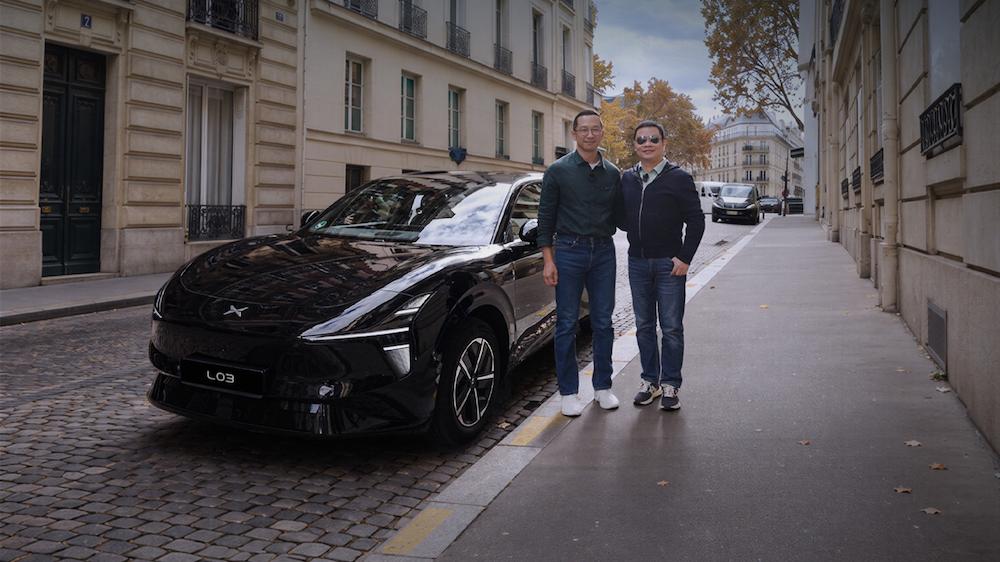
▲ MONA L03
In terms of channels, XPeng will extend from the previous first and second-tier cities to lower-tier markets as well as the northern, northwestern and western markets, and optimize dedicated networks and improve conversion efficiency for XPeng brand's differentiated customer groups.
The company estimates that XPeng's overseas sales next year will at least double compared with this year, and the growth rate of the overseas market will be higher than that of the domestic market. In terms of both products and autonomous driving technology capabilities, next year is expected to become the starting year of XPeng's rapid overseas growth.
2. How to split the sales of different regions in the overseas market in 2027? What are the plans for new overseas models? How will you seize overseas market share? What challenges may be encountered?
Brian Gu: XPeng is very excited about overseas opportunities. Next year's sales target will at least double compared with this year, and the growth comes from many factors.
In terms of regional breakdown, the official estimates that sales in the European market will account for about 50% or more of overseas sales, Southeast Asia and Asia-Pacific will account for about 30%, and the Middle East and Latin America will account for about 20%.
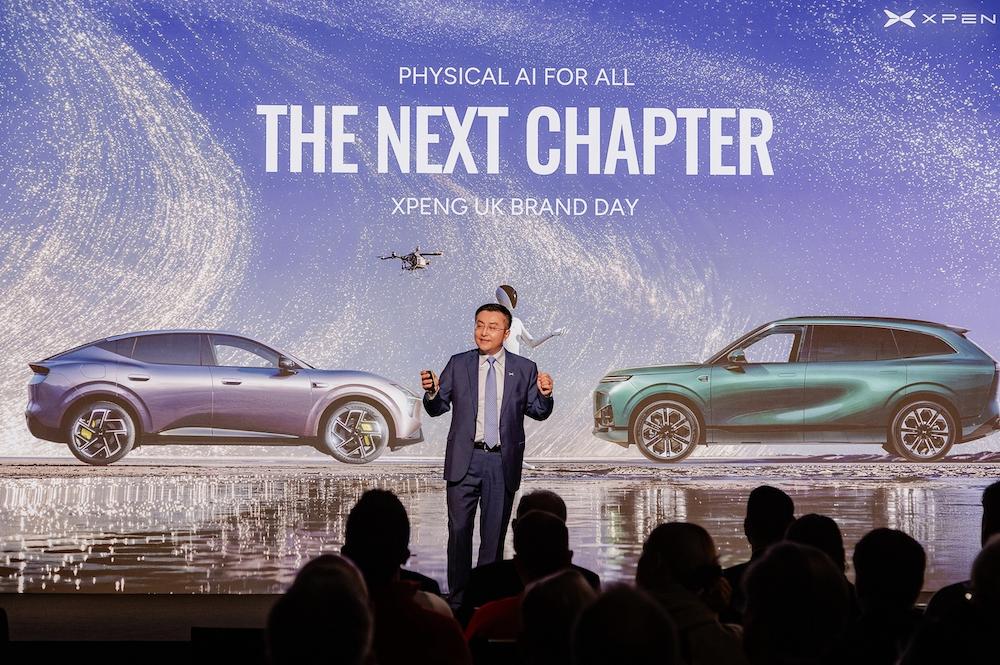
▲ XPeng Overseas Launch Event
In terms of new models, the recently launched G9L, MONA L05, GX, etc. will all become global models, and most of the sales growth will be driven by the newly launched global products.
In terms of channel and market development, XPeng plans to build more than 1,000 overseas sales and service outlets, and continue to deeply cultivate core markets in the UK, Australia, Europe, Southeast Asia and the Middle East.
Facing potential trade barriers, the company will continue to maintain flexibility in product positioning, pricing strategies and channel business models, and make advance layout of manufacturing investment and local capabilities in markets such as Europe and Southeast Asia to reduce costs and enhance competitiveness. Overall, the growth in overseas sales will also bring significant profitability improvement.
3. What is the progress of overseas localization layout? What percentage of models are expected to achieve localized production next year?
He Xiaopeng: In terms of manufacturing layout, XPeng has cooperated with Magna in Austria to carry out European manufacturing, and also has manufacturing layouts in Malaysia and Indonesia in Southeast Asia. Next year, it will further expand and deepen localized manufacturing. The company focuses on building a cost-competitive overseas supply chain, not only to achieve local production, but also to meet local regulatory and customer needs.
02.
XPeng is discussing technology external supply with enterprises
Expected to generate revenue next year
4. The company announced in October that it will open intelligent technology cooperation to global partners, exporting solutions including vehicle technology, AI chips and models. What new progress has been made in solution export so far? How to understand the expansion of cooperation with Volkswagen from the domestic market to overseas markets?
Brian Gu: Technology commercialization is an important priority for XPeng's new AI engineering organization. The company has formed the ability to cooperate with third parties and obtain revenue from the technology stack through cooperation with Volkswagen.
At present, the company has received a large number of cooperation requests. In addition to cooperation related to electrification, powertrain and vehicle platforms, the market has also shown interest in XPeng's core physical AI capabilities formed based on chips, model training and AI infrastructure.
To this end, the company has established a new business unit, which is led by myself personally. The goal is to focus on major cooperation opportunities at the platform level, develop new categories that can reuse AI and physical AI capabilities, and expand to more industries and market segments.
Currently, XPeng has existing project cooperation with Volkswagen, and is discussing more cooperation with Volkswagen and other partners, which is expected to generate revenue starting next year.
5. Looking ahead to 2027, how does the management judge the annual gross margin trend, loss reduction rhythm and main driving factors?
XPeng Group Executive: It is still too early to give clear guidance for 2027, and more information will be provided in the next earnings report.
The change in gross margin in the third quarter mainly came from the quarter-on-quarter improvement in vehicle gross margin and product structure improvement, mainly because GX accounted for nearly 20% of Q3 sales, and the export proportion increased from less than 20% to more than 20%.
With the delivery of MONA L05 starting in the fourth quarter, the ASP is expected to be slightly lower, and the gross margin may drop slightly quarter-on-quarter compared with the third quarter; partly affected by the technical R&D service income from the cooperation with Volkswagen in the second quarter, the lack of this income in the fourth quarter leads to a decrease in total revenue, but the carbon credit sales revenue starts to be recognized from the third quarter and is expected to remain at a similar level in the fourth quarter, which can partially offset the impact.
Overall, the group's gross margin in 2026 is expected to remain at a relatively high level. In 2027, the overall scale is expected to grow, overseas sales will more than double, and the overseas structure and scale will improve.
In addition, the commercial revenue of the physical AI business is expected to continue to grow, and the profitability of the robot business is expected to be significantly better than that of the automotive business.
03.
Mass production of humanoid robots by the end of this year
Delivery in the second quarter of next year
6. The next-generation humanoid robot is about to be mass-produced by the end of the year. How does the company predict the sales demand in the next 1 to 2 years? Which enterprises will become the first batch of buyers?
He Xiaopeng: At present, the robot industry in China and even around the world is still mainly to B, but XPeng does not want robots to be too customized, but hopes to make them highly standardized products that serve small and medium customers and even individual family customers in the future.
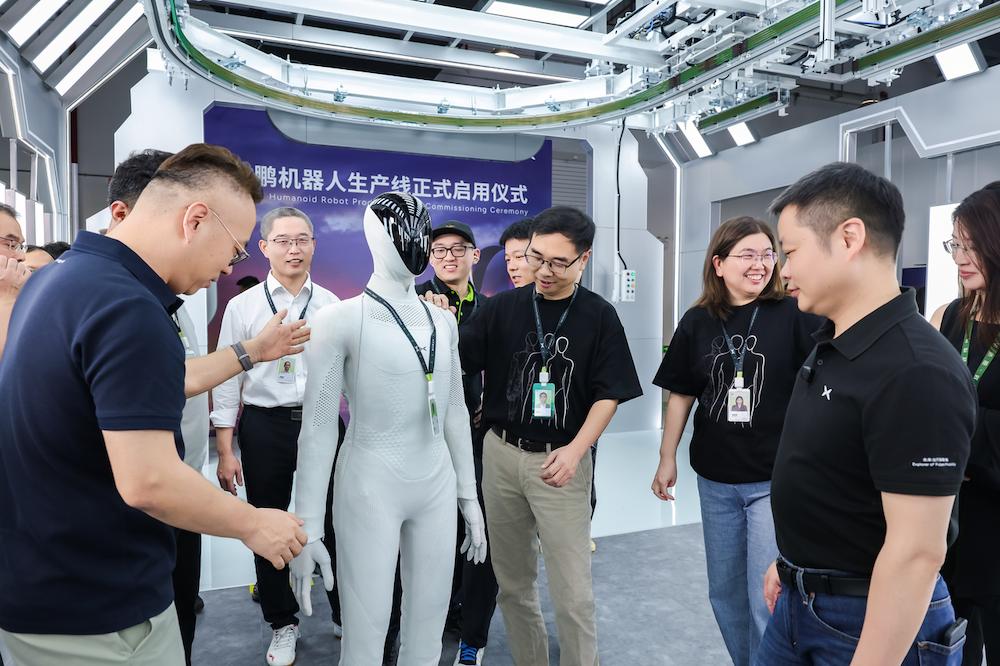
▲ XPeng Humanoid Robot IRON
In terms of business model, from the perspective of Europe and the United States, the industrial sector may be the best business scenario; from the perspective of China going global, commercial and household scenarios may be the best scenarios.
Industrial robots have relatively low requirements for safety factors, but higher requirements for hand capabilities and stricter cost requirements; commercial and household scenarios have higher safety requirements, higher requirements for design appearance, and slightly lower requirements for hands, and different scenarios vary greatly.
XPeng's robots aim to be highly anthropomorphic and general-purpose, and the production line has in-depth layout in the field of self-developed and self-made, so we are confident in the challenges of supply chain and production. The biggest challenge at present is who can be the first to make high-intelligent robots with high quality and high safety, and can be generalized and used in commercial or enterprise scenarios.
Many robots are often placed in warehouses after being sold, precisely because they cannot achieve high safety and high quality.
XPeng plans to start mass production at the end of this year and start delivery in the second quarter of next year, with the goal of achieving higher quality and higher safety in the industry; once achieved, the robot sales scale will increase rapidly, far exceeding the production capacity and sales scale of current non-advanced intelligent robots.
7. As large language model giants accelerate their entry into physical AI, what is the moat of humanoid robot companies? What are XPeng's core competitiveness as a robot manufacturer?
He Xiaopeng: Looking back at the early days of autonomous driving, there were a large number of computer simulation solutions from 2015 to 2020, and many L4 companies made excellent demos around 2018, but due to problems such as accuracy, safety, cost and latency, the final landing speed was less than expected; the end-cloud combined architecture also appeared, but it did not achieve large-scale landing either.
Based on this judgment, it is very difficult to try to complete the 0-to-1 and 1-to-2 combined capabilities of the system through a general model and achieve implementation.