Just now, Chen Danqi officially announced that she will join Noeri on a part-time basis, and the new company is betting on AI self-evolution.
Danqi Chen, Associate Professor of Computer Science at Princeton University, has joined a newly unveiled AI company.
In the early hours of this morning, Danqi Chen revealed on social platforms that she joined Noeri on a part-time basis two months ago. She is quite looking forward to the research direction of this team, especially focusing on the application of AI in scientific discovery, hoping to enable every scientist to apply AI to their most intractable research problems.
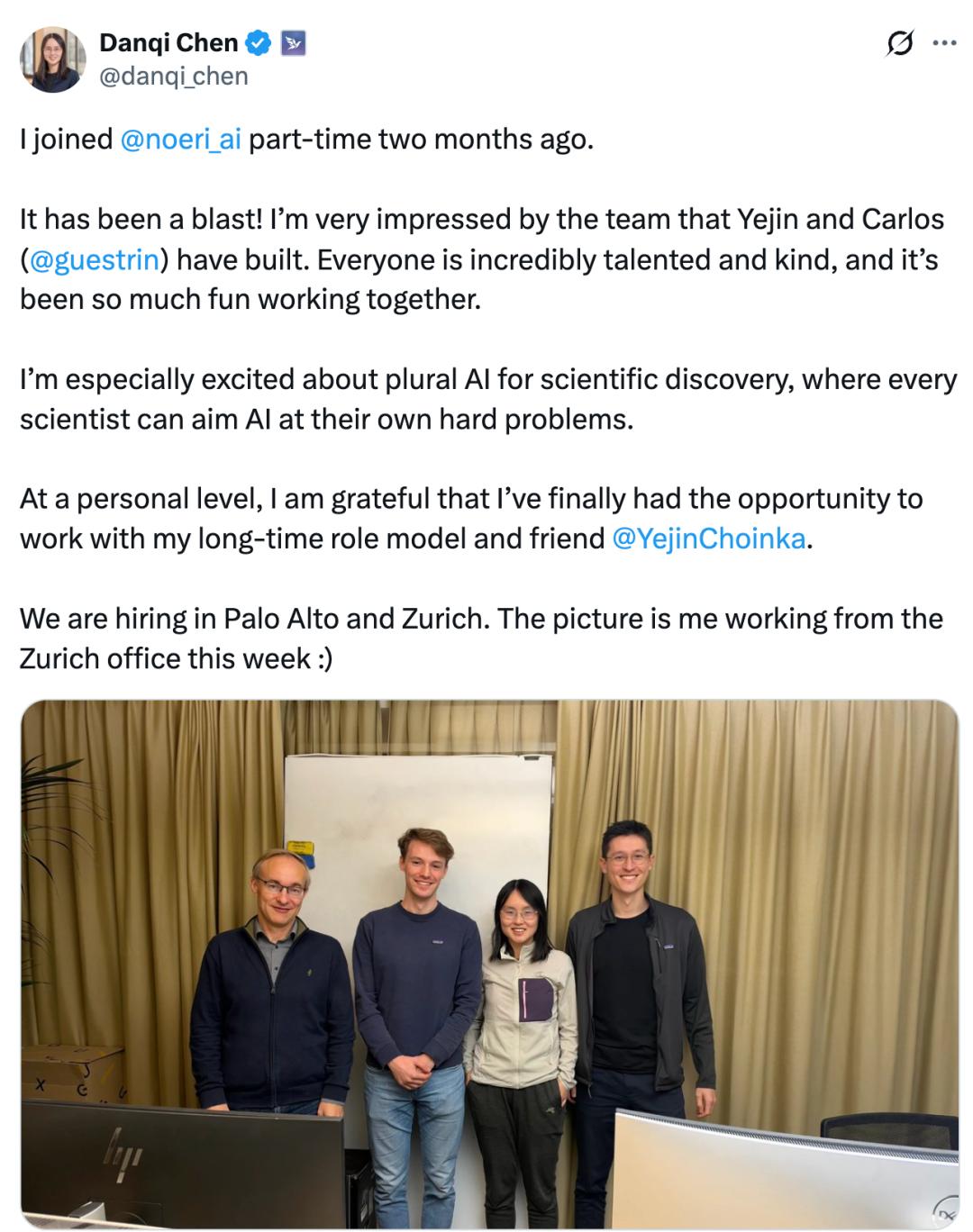
Noeri was co-founded by Yejin Choi, Professor of Computer Science at Stanford University, and Carlos Guestrin, focusing on developing AI systems that can continuously learn and self-improve. The company aims to help enterprises leverage their own data and business experience to build their own exclusive AI, enabling these systems to continuously accumulate experience and optimize capabilities in real work scenarios.
Along with its official debut, Noeri also announced that it has raised 110 million US dollars in financing, led by Menlo Ventures, with participation from Madrona Venture Group, Kindred Ventures, Wing Venture Capital and NEA, and NVIDIA, Cisco Investments, Snowflake etc. have become strategic investors.
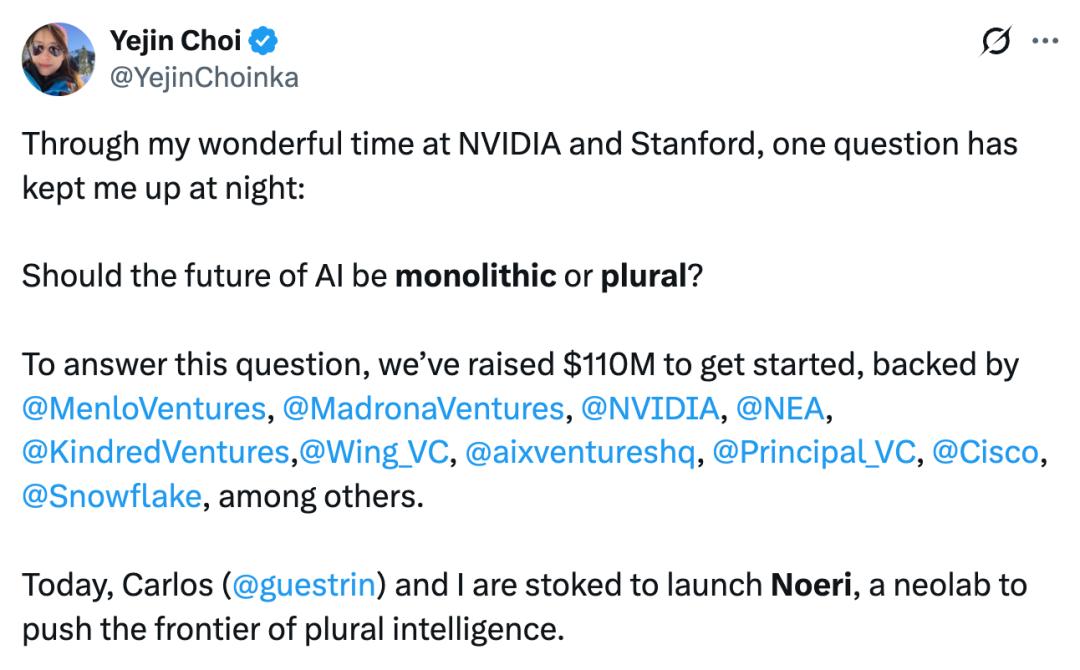
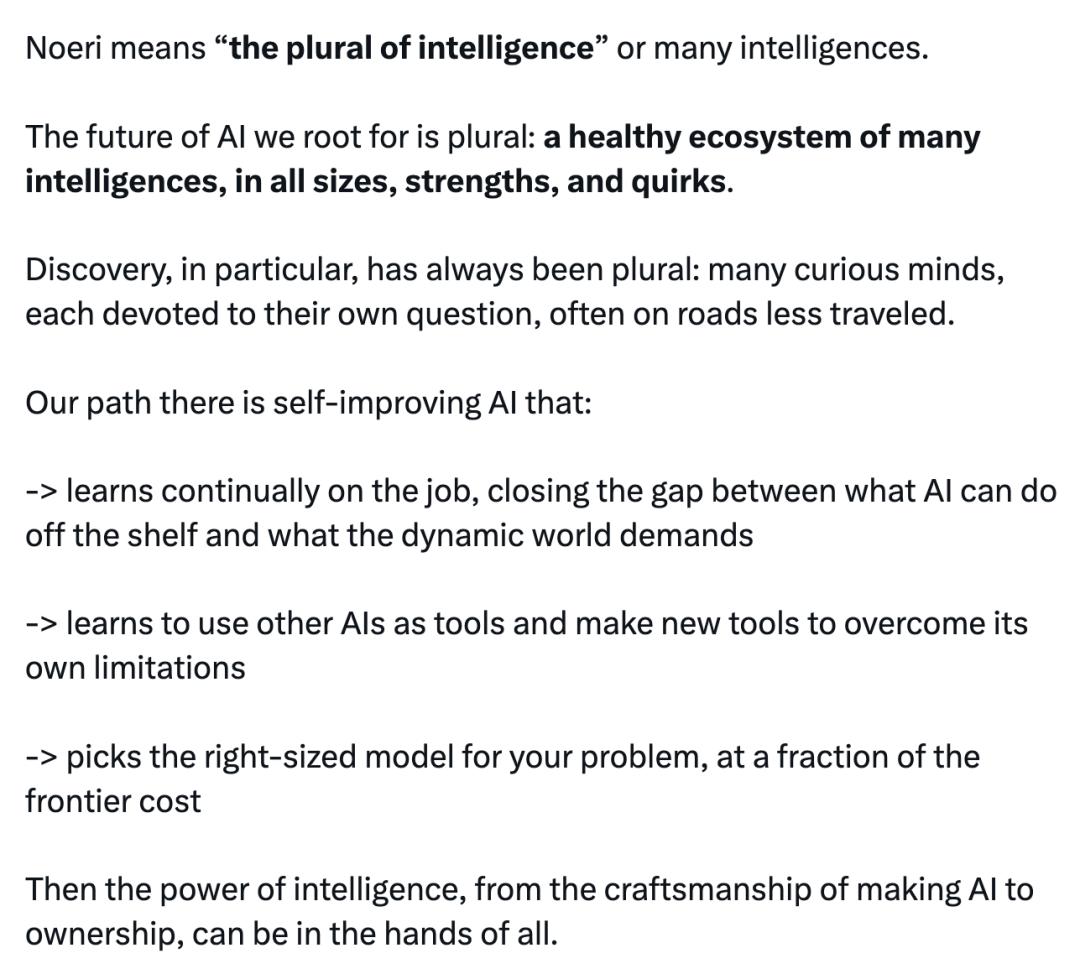
This team has put forward a highly recognizable concept: Plural Intelligence. In their view, future AI should be composed of intelligent systems of different scales and different specialties, and every organization and individual can build, master and continuously improve their own AI.
Danqi Chen's Joining
What Is the Lineup Behind Noeri?
The two core figures of this startup both have quite profound accumulation in the AI research circle.
Yejin Choi is a Professor of Computer Science at Stanford University and a senior fellow at Stanford HAI. She has long been engaged in research directions such as commonsense reasoning, natural language processing, large language models and AI value alignment. She used to be a Professor of Computer Science at the University of Washington, Senior Research Manager at the Allen Institute for AI (Ai2), and served as Senior Research Director and Distinguished Scientist at NVIDIA. In January 2025, she officially joined Stanford University.
The other co-founder, Carlos Guestrin, is a senior scholar and entrepreneur in the field of machine learning.
If you have been exposed to machine learning tools, you have most likely heard of XGBoost, which he co-created with Tianqi Chen. This is a widely used open-source machine learning tool. He also co-founded the machine learning company Turi, which was acquired by Apple in 2016. After joining Apple, Guestrin served as Senior Director of Machine Learning and AI, participating in promoting Apple to establish an AI and machine learning R&D center in Seattle.
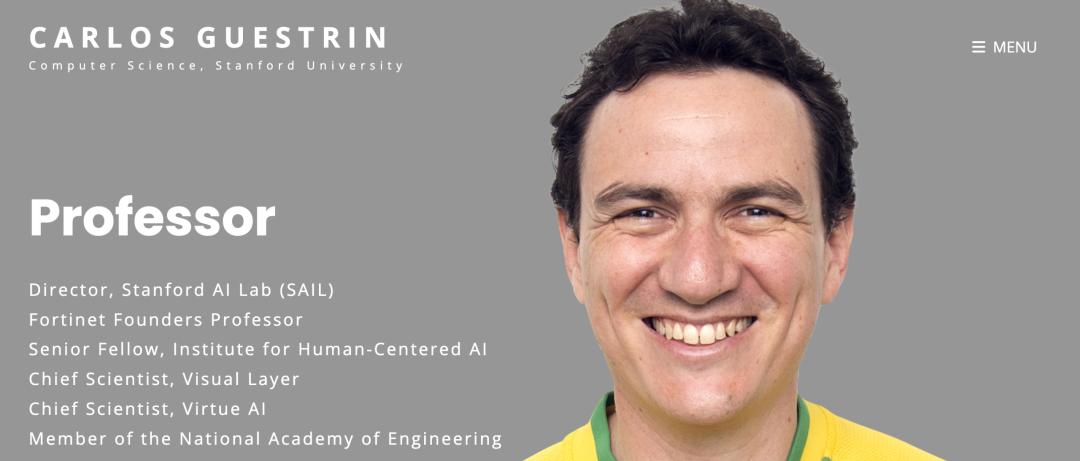
Nowadays, the two serve as co-CEOs of Noeri together.
The joining of Danqi Chen brings another important research context to the team. She is currently an associate professor in the Department of Computer Science at Princeton University, and co-leads the Princeton NLP research group. At the same time, she also serves as deputy director of the Princeton Language and Intelligence Research Program, which is committed to carrying out basic research on large-scale AI (such as LLM), and she is also one of the authors of RoBERTa.
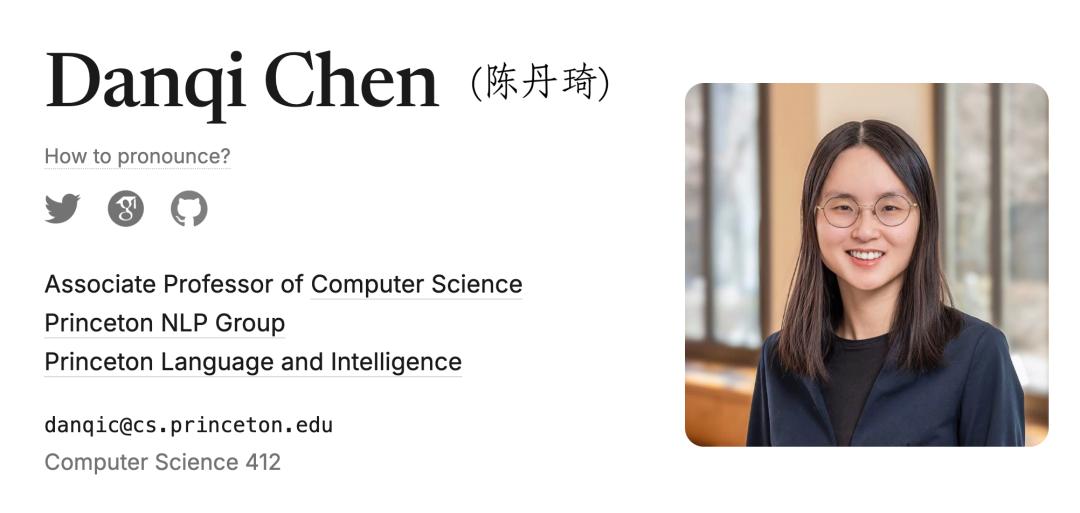
In her tweet, Danqi Chen specially mentioned that she is very happy to be able to work with Yejin Choi, who has long been her role model and friend.
Judging from the team composition, Noeri brings together researchers in the fields of natural language processing, machine learning, reinforcement learning, agents and scientific computing, and it is obvious that the company hopes to promote academic research and practical AI product development on the same track.
Let AI Learn to Improve AI
How Does Noeri Plan to Achieve This?
Noeri has a clear positioning for itself: to build AI systems that can continuously learn and continuously improve.
At present, most AI models have basically fixed parameters after training is completed. After the model is deployed inside an enterprise, when facing new business data and workflows, it often requires manual adjustment of prompts, tool calling methods, and even retraining of the model.
This means that if an enterprise wants AI to truly adapt to its own business, it usually needs to invest in a professional AI engineering team.
Noeri wants to hand over this part of the work to AI.
According to the product introduction released by the company, Noeri will study the enterprise's own data and workflows, and optimize the entire AI system around specific tasks. The scope it can adjust includes:
Instructions and Skills: Improve the instructions, skills and execution strategies used by the AI system based on the performance in actual tasks.
Tools and Orchestration: Adjust tool configurations and calling methods, and optimize the collaboration between different models and tools.
Model Selection: Select a more appropriate model to take charge of the corresponding link according to the difficulty and cost of different tasks.
Model Optimization: Further optimize the model itself, and even adjust the underlying parameters when necessary, so that the model is more suitable for the specific tasks of the enterprise.
Every modification will come with an explanation and be submitted for human review and confirmation. Noeri compares this process to code review.
It supports the use of closed-source models and open-weight models, and can also adapt as new models emerge. Customers can retain ownership of their own data, as well as the workflows and models developed through the system, but they still need to comply with relevant license agreements of third-party models.
Noeri hopes to let AI continuously accumulate experience in actual work. The system will learn from the enterprise's data, workflows, and interactions during task execution, and improve its own capabilities accordingly.
Every experience and correction in a task has the opportunity to become the basis for the next round of optimization.
From the perspective of product form, Noeri is more like an AI engineer who can work continuously. It is responsible for studying existing workflows, finding room for improvement in the system, and proposing optimization plans; every modification needs to go through human review.
Plural Intelligence
Why Has It Become the Core Proposition of Noeri?
The name Noeri itself hides the founding team's judgment on the future of AI.
The company interprets it as "The Plural of Intelligence". In the vision article released by Yejin Choi and Carlos Guestrin, the two depicted two different development paths for AI.
One is that one enterprise develops and masters a superintelligence, while other enterprises and individuals can only rely on it. The other is an ecosystem composed of a large number of AIs of different scales and capabilities. Each intelligent system is professionally adjusted around specific regions, groups of people or problems, and is shaped by people and organizations that truly understand these problems. They prefer the latter.
Behind this lies a very practical business problem.
An enterprise may need AI to handle different tasks such as financial analysis, customer service, R&D and design. Each task has different requirements for the model. If all tasks are handed over to the most expensive cutting-edge model, the cost will be difficult to control; if a model with lower cost and relatively limited capabilities is selected, the task effect may be sacrificed.
Noeri hopes to find a more appropriate combination through model specialization and agent collaboration. For example, let a smaller model be responsible for scheduling, calling other models and professional tools according to task requirements; as experience in specific tasks continues to accumulate, the corresponding models and workflows are continuously optimized. Different AIs perform their respective duties and continue to evolve in actual work.
This line of thinking also extends to scientific research.
Danqi Chen mentioned in her tweet that she is particularly looking forward to the application of Plural Intelligence in scientific discovery. For a scientist, research problems are often highly specialized, and existing general-purpose models may not have enough domain knowledge.
If AI can continuously learn around a specific research problem, remember which solutions have been tried in the past and what results have been achieved, and also allow multiple specialized agents to work together to jointly propose hypotheses, test solutions and improve research directions, then scientists will have the opportunity to focus more on raising questions and verifying discoveries.
This is also the direction that Noeri hopes to explore.
References:
https://www.noeri.ai/
https://x.com/danqi_chen/status/2122430543589413073
https://x.com/YejinChoinka/status/2122379749372907852
This article is from the WeChat Official Account "Synced" (ID: almosthuman2014), the author is Synced who focuses on new AI developments, and 36Kr publishes it with authorization.