Details of Apple's smart glasses have been exposed, and it turns out to be AirPods worn on the face.
Watching Mark Zuckerberg achieve overwhelming market performance with Ray-Ban Meta smart glasses that have sold millions of units as a blockbuster hit, the entire industry has been waiting to see when Apple will finally roll out a pair of smart glasses that are truly suitable for wearing out in daily scenarios.
Earlier this morning, Bloomberg journalist Mark Gurman brought the latest inside information about Apple's first smart glasses, and this new product with the internal codename N50 has finally shown a much clearer outline.
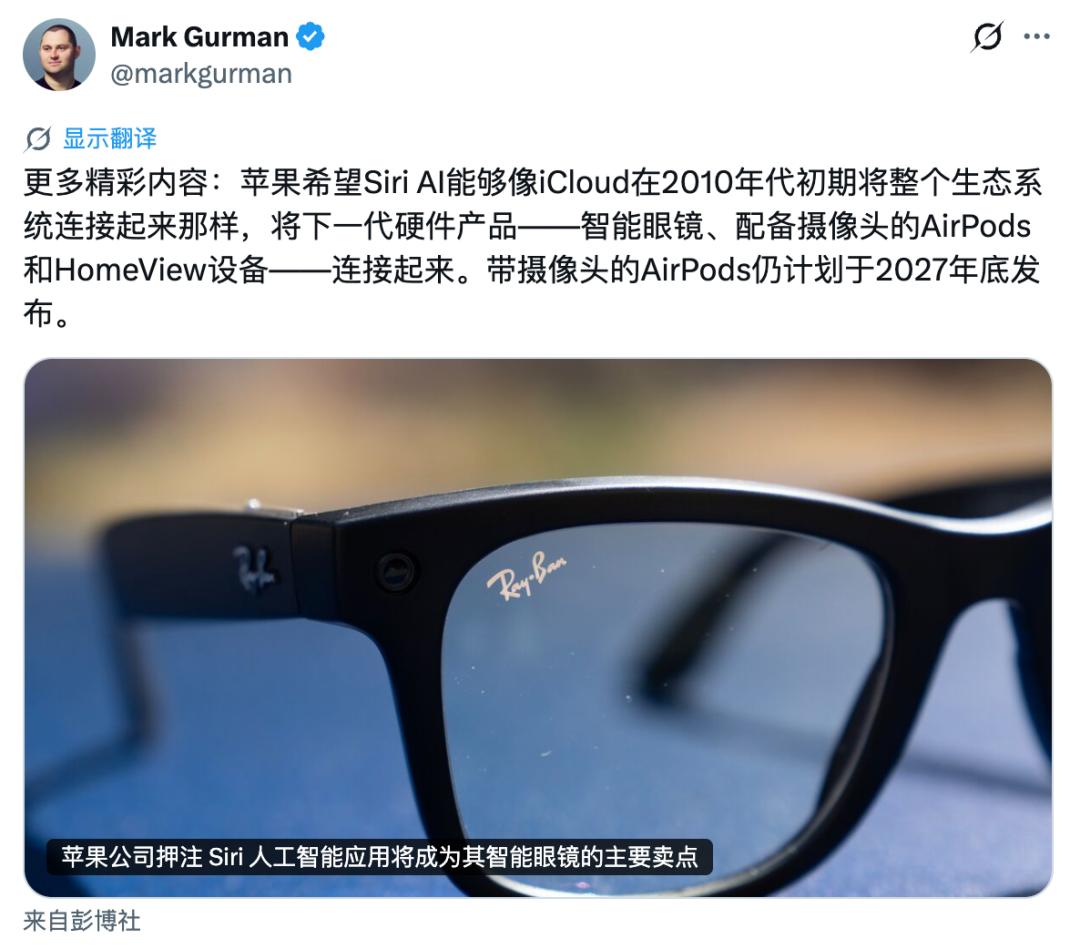
But no one could have imagined that the first-generation glasses that Apple has been developing for so long do not even have a screen. Internal employees simply gave it a very approachable nickname, known as "AirPods worn on the face".
According to the plan, Apple is expected to unveil these glasses at WWDC in June 2027, with shipments starting at the end of the year as a tribute to the 20th anniversary of the birth of the iPhone.
But interestingly, most of the N50's hardware has long been finalized, and the reason it has not been launched until now is purely that Apple's hardware team is waiting for Siri to fulfill the promise it has been touting for two and a half years.
Physical Laws Teach Hard Lessons: Ditching the Screen Is the Most Sensible Compromise at Present
Many parameter enthusiasts, upon hearing that Apple's first glasses do not come with a screen, immediately reacted that Apple is slacking off and making incremental updates again.
But from the perspective of N50's product design, Apple seems to prefer that the first-generation smart glasses prioritize perfecting voice interaction and environmental perception, enabling Siri to understand the world in front of the user's eyes and complete interactions through sound.
This does not mean that Apple is prepared to completely abandon the display function.
After all, even Meta is simultaneously exploring different forms of smart glasses including screen-free, display-equipped and holographic AR products. Apple may also launch products with different positioning in the future, and the only difference lies in the launch sequence and promotion pace chosen by each company.
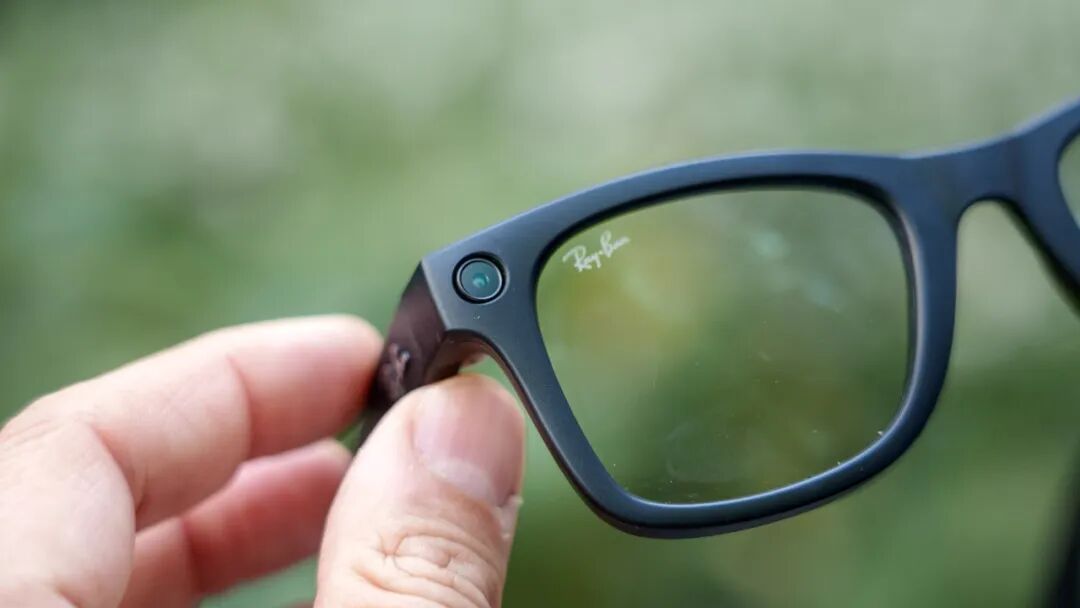
Moreover, smart glasses are electronic devices worn on the bridge of the nose after all, and weight, power consumption and heat dissipation are always unavoidable engineering challenges. Especially after adding a display module, how to strike a balance between wearing comfort, battery life and visual experience still tests the entire industry.
Even for the holographic glasses Orion that Zuckerberg invested huge sums of money to develop, the cost of a single prototype is as high as 10,000 US dollars. What really helped Meta sell millions of pairs of glasses is still the screen-free Ray-Ban Meta.

Apple has obviously figured out this account clearly.
Rather than forcing the release of a niche toy that is heavy and overheats easily, it is better to modify the old Apple Watch chip architecture to create a low-power processor, pair it with a streamlined version of visionOS 28, and make a pair of lightweight glasses that can be worn all day long.
According to Gurman's report, N50 is also equipped with Apple's self-developed wireless communication components, as well as a vision engine specially designed to process real-time camera footage.
The glasses themselves support Wi-Fi, and can continue to complete some basic tasks such as playing audio even when away from the iPhone. However, complex operations involving third-party apps still require the assistance of a mobile phone.
In terms of industrial design, Apple has made some prototypes thinner than the second-generation Ray-Ban Meta, with the camera hidden in an oval opening flush with the frame, and multiple styles and color schemes are prepared.

Audio is also a key priority. Apple internal employees believe that N50's sound performance has reached the industry-leading level, and in addition to listening to music and making and receiving calls, it also supports FaceTime voice calls.
To ease battery life anxiety, engineers even designed a three-pin magnetic interface the size of a Tic Tac mint at the end of the left temple, allowing users to charge the glasses while wearing them.
But the most confusing part is that Apple's first-generation smart glasses may also face strong competition from its own AirPods.
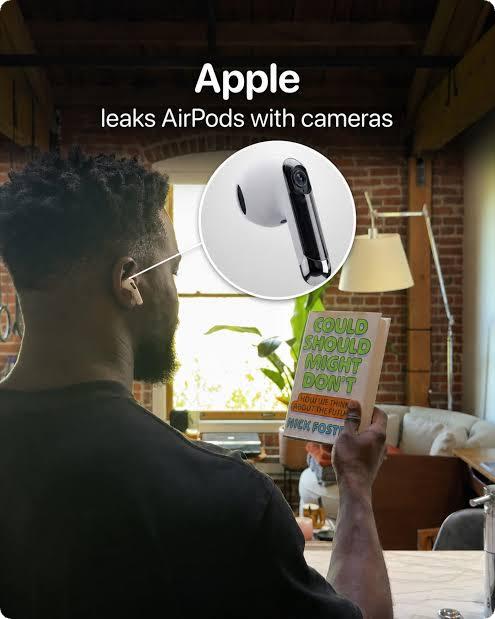
Because Apple is simultaneously developing a camera-equipped AirPods model, which is also planned to be launched at the end of 2027, with the core selling point of observing the world through the lens and then handing over the information to Siri.
When the glasses remove the screen, its functions completely overlap with the AirPods that have "eyes".
Although the glasses can accommodate more sensors and a larger battery, there are still a large number of people in the world who do not have myopia and are not used to wearing plain glasses all day long. What's more, AirPods have already established mature advantages in noise cancellation, audio privacy and wearing habits.
What I am more curious about is that when these two products are launched one after another next year, how Apple will explain their overlapping functions, it can't ask everyone to hang several cameras on their faces and ears at the same time just for the same Siri.
Calling for Support Through the App Store, Turning the Ecosystem Into a Decisive Advantage
In addition to internal competition between its own products, how to break through the market externally is also a big problem.
Since the hardware form is not much different from the Ray-Ban glasses that Meta has sold for several years, why does Apple think consumers will be willing to pay for it?
In Gurman's view, Meta has Muse intelligent agents, Google has Gemini and Android XR, but Apple holds the App Store, the most profitable app platform in the world.

In the iOS 27.3 beta released this month, Apple added a Siri feature that has been delayed for two and a half years, allowing users to precisely control specific functions inside apps through voice, even skipping the steps of opening the app and finding buttons.
Apple plans to support its own applications first in December this year, and open access to third-party developers next year.
On the surface, this is making up for shortcomings on the iPhone, but in fact it is paving the way for N50 in advance.
Because the first-generation Apple glasses cannot run third-party apps independently at all, the applications still run on the paired iPhone, and users are required to own a relatively new Apple mobile phone, excluding Android users directly.
Apple is now urging developers to connect the core functions of their respective apps to Siri. The beauty of this approach is that developers do not need to rewrite a whole set of applications specifically for the glasses, they only need to modify the existing iOS App to allow Siri to call the functions directly.
In the future, when users go out wearing the glasses, they only need to speak a few words to let Siri book restaurants, call a ride, order coffee, and even go shopping and buy movie tickets.

The App ecosystem accumulated over the past decade has instantly become a potential function library for smart glasses.
As for basic functions such as identifying roadside buildings, recommending recipes based on ingredients in the refrigerator, translating street signs, navigation, replying to messages, managing calendars, and creating visual reminders, they are handled by Apple's own visual intelligence and native applications.
Even in the future, when users complete shopping, meal ordering and service reservations through Siri, Apple will have the opportunity to find new revenue sources from AI-driven transactions.
What is more noteworthy is that Apple plans to connect smart glasses, the camera-equipped AirPods, and the next-generation high-end HomeView smart home product with a robotic arm, making Siri the information hub of the entire hardware family.
The glasses are responsible for observing the outside world, the earphones are responsible for personal on-the-go perception, and HomeView manages the home environment, with different devices sharing relevant information. Apple hopes that Siri can become a basic service that all hardware relies on, just like iCloud more than a decade ago.
Of course, smart glasses also have an unavoidable privacy challenge.
Previously, Harvard students used Meta glasses and face search technology to demonstrate how to quickly identify the identities of passersby. Some people even tried to block the recording indicator light of the glasses to make secret shooting more hidden.

Apple is obviously considering this issue as well.
Gurman revealed that the N50 prototype is already equipped with a status indicator on the front, and more privacy-related hardware features are being tested.
Previous Apple patents have also explored designs such as color-changing frames, glowing prompts and physical shutters, and even studied limiting camera operation by detecting if the indicator light is blocked.
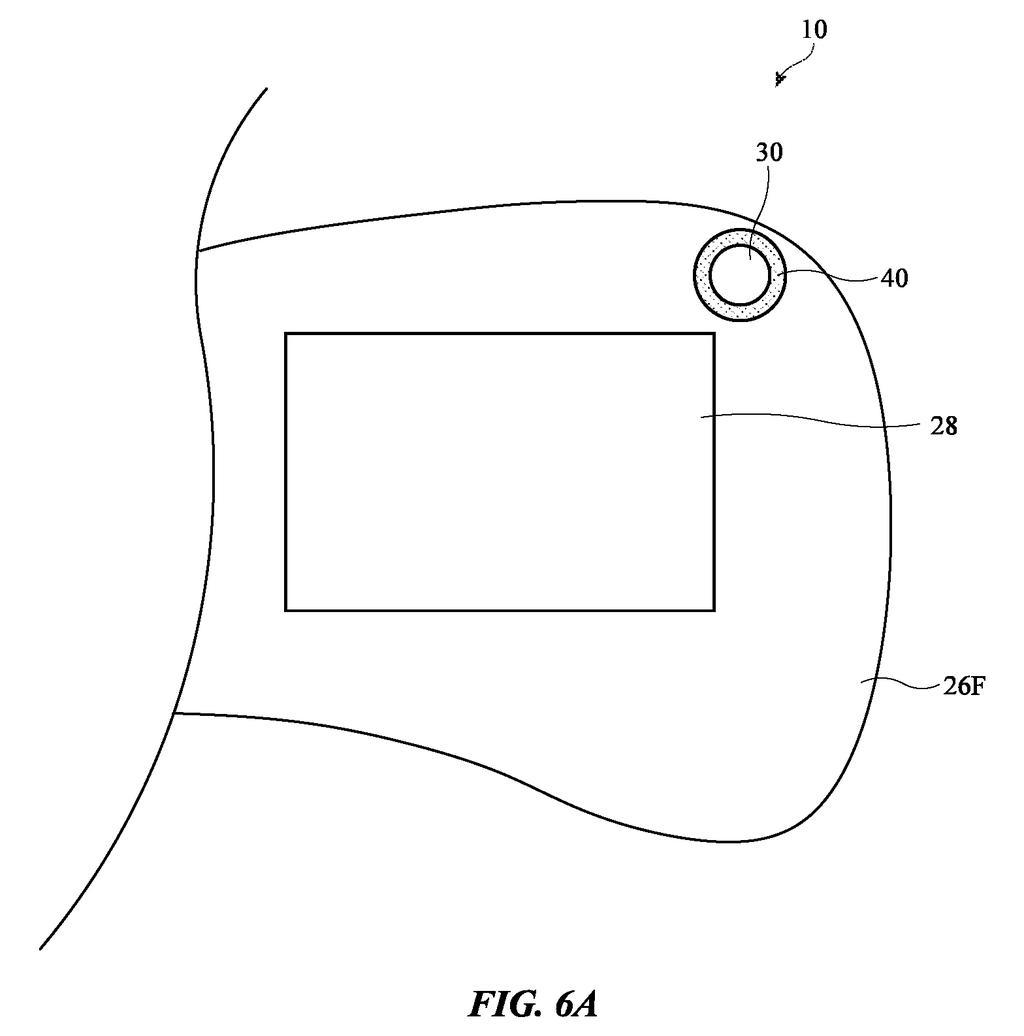
Figure | 🔗https://patentlyze.com/patent/apple-glasses-show-when-camera-recording/
After all, for a pair of glasses that may observe the surrounding environment at any time, how to convince others that they are not being secretly photographed is probably as important as whether Siri is smart enough.
When Top-tier Hardware Starts Waiting for a Smart AI
Looking at the smart glasses, camera-equipped AirPods, and the desktop robotic arm HomeView together, you will find that Apple's product philosophy that it has adhered to for decades is undergoing an interesting reversal.
In the long golden age of hardware, Apple's stories usually started with hardware.
The multi-touch screen gave birth to the app empire based on fingertip sliding, the optical heart rate sensor supported the health functions of Apple Watch, and two Micro-OLED screens plus eye tracking built the spatial computing foundation of Vision Pro.
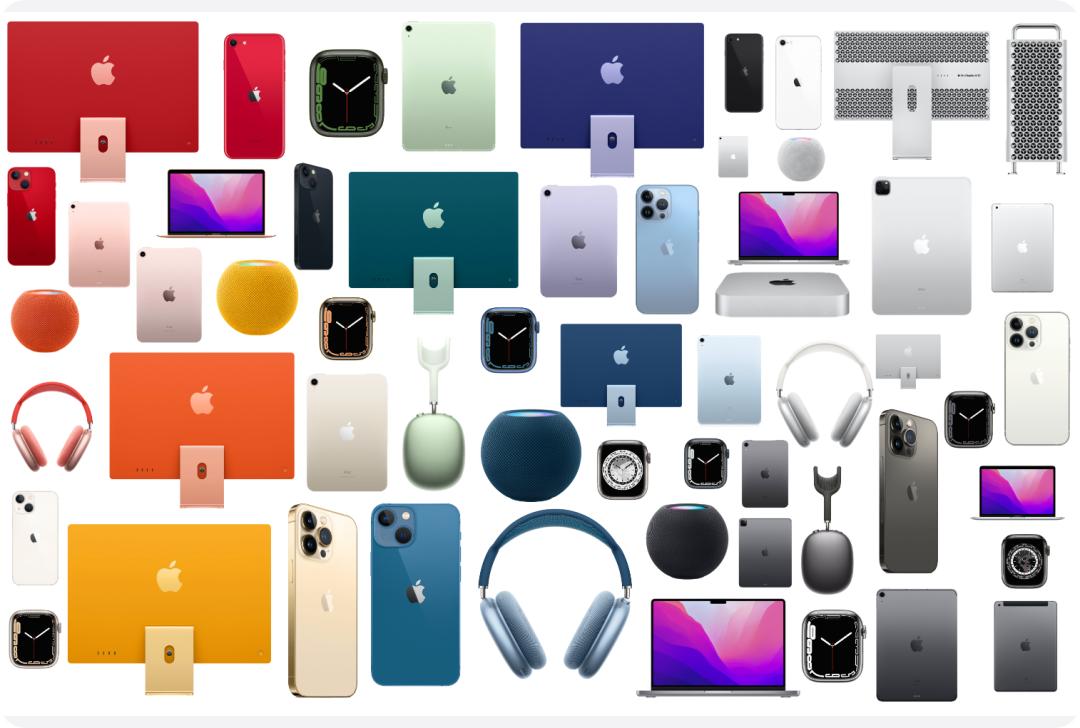
Over the past few decades, Apple's script has mostly been that hardware takes a step forward first, opening up a previously non-existent interaction wilderness, and then the software ecosystem grows wildly along the boundaries defined by the hardware.
On the N50, there is no dazzling waveguide screen inside the frame, the main control chip directly uses the mature watch architecture, and the appearance is honestly designed to look like an ordinary pair of daily glasses.
The hardware has voluntarily put aside its ambition to create sensory wonders, and is willing to step back behind the scenes to become a quiet collector and listener.
Whether N50 will eventually become a neglected accessory gathering dust in a drawer or open the next computing platform is not up to the hardware department. The outcome is completely tied to Siri, which is still working hard to make up for its shortcomings at present.
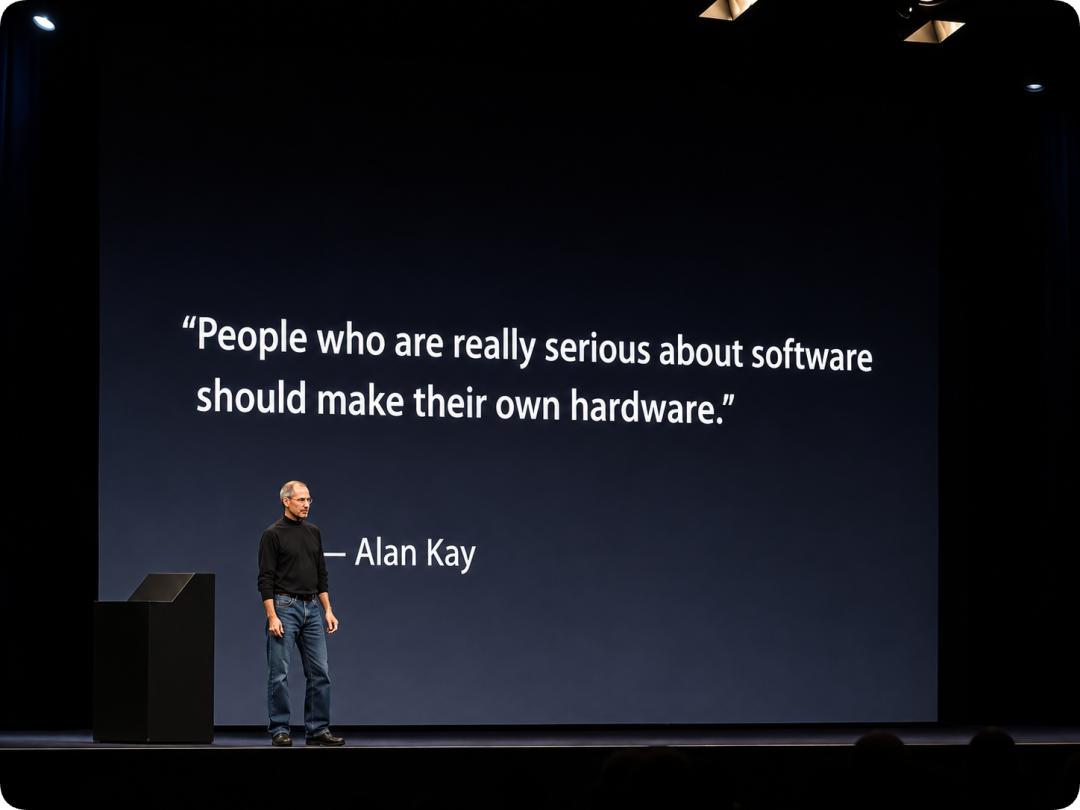
More than 40 years ago, Alan Kay, a pioneer in computer science, said a famous quote that Steve Jobs took as his guiding principle.
"People who are really serious about software should make their own hardware."
That sentence almost laid the foundation for Apple's glory in the following half century.
As time goes by, Apple, which now holds the world's top hardware supply chain, has encountered a reverse century-old problem in the AI era. People who really want to make AI hardware seriously must first have a smart enough AI.
This article is from the WeChat Official Account "APPSO", written by APPSO that discovers tomorrow's products, and published with authorization from 36Kr.