The AI wearable hardware startup founded by former Anker CMO has secured new round of financing, with its products already in mass production | Hard Krypton Exclusive
Author | Nan Huang
Editor | Silai Yuan
Hard Krypton learned that AI Memory smart hardware company "Suisheng Technology" has recently completed tens of millions of yuan in Pre-A round financing, which is invested by NexTide Capital and Alpha Commune. The funds will be mainly invested in the experience optimization of long-term memory engine and active Agent, expand family and team scenarios, promote mass production and delivery of hardware, build overseas channels and improve local delivery capabilities.
Suisheng Technology was founded in 2025. Its brand Memoket uses wearable hardware as the entry point, combined with self-developed underlying long memory engine, to provide Personal Agent that can understand the user's previous context and actively interact with users. The first hardware Gem fits the user's existing wearing habits, can be worn alone, or used as an accessory with a smart watch, silently records real-world conversations, and supports cross-session backtracking, retrieval and information calling on App and desktop terminals.
This product started mass production in September 2026, and simultaneously launched on Amazon US and the official brand website; it entered the Japanese market in October, and both hardware sales and software subscription revenue doubled.
The founding team has profound experience in consumer electronics and AI product operation. Wang Shiyuan, the founder, is the former Global CMO and China Region President of Anker Innovations. The core members include 3 serial entrepreneurs who have previously worked at Anker, ByteDance, Huawei, Tencent and leading AI application enterprises, with capabilities covering large-scale model training, AI application product definition, wearable hardware design, supply chain and global commercialization. Some members have cooperated for more than 10 years, and have formed a complete closed-loop capability from underlying technology to global channels through long-term collaboration.
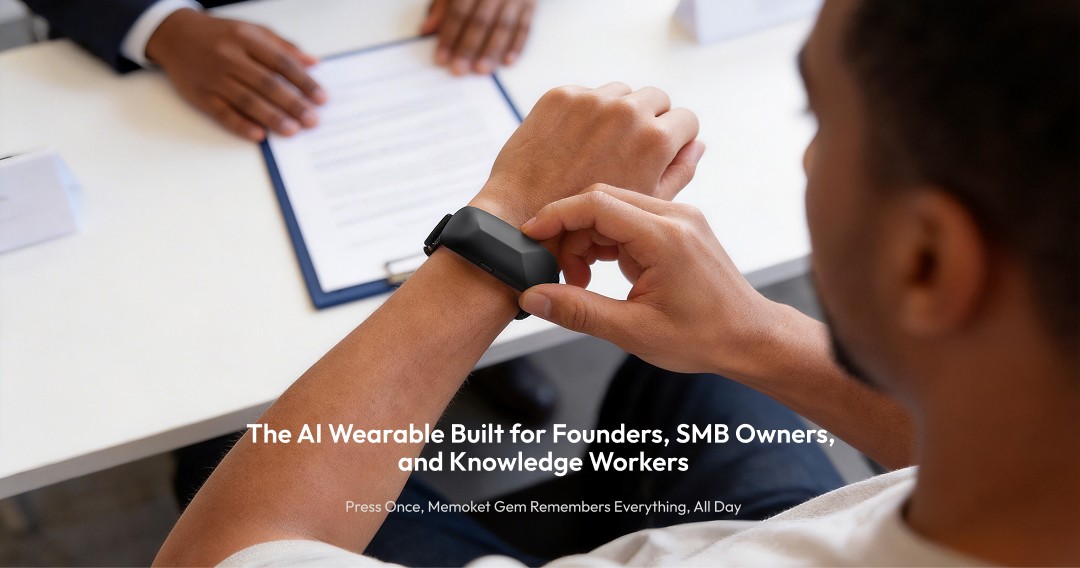
Memoket wearable hardware Gem (Source/Enterprise)
AI hardware is at a critical inflection point from "recording" to "understanding".
In the past, a large number of products focused on Q&A scenarios: the hardware is responsible for collecting audio, the software generates summaries, users ask questions, and the Agent gives answers. This model works in information retrieval scenarios, but in the real physical world, conversations and decisions happen continuously. The value of information often does not lie in a single conversation itself, but in whether it can be associated with verbal agreements made months ago, budgets adjusted last week, and meetings to be promoted tomorrow.
When meeting clients in a coffee shop, promoting projects in the office, and confirming progress on site, small and medium-sized business owners make decisions in a large number of conversations every day. Budgets have changed, delivery dates have been adjusted, and promises made to clients have not been followed up. These pieces of information are scattered in different times and places. Once a detail is missed, it may lead to rework, loss or consumption of trust.
When AI memory is confined to a single interaction, it cannot perceive changes in context, let alone actively provide support at critical moments. As sound pickup and transcription gradually become the basic capabilities of smart devices, the real watershed has shifted to the ability to connect cross-time sequence contexts.
"Traditional AI products record slices, while people's work and life are continuous." Wang Shiyuan, founder and CEO of Suisheng Technology, told Hard Krypton, "If AI cannot understand what happened to you before, it will always be just a passively responsive tool, not a helpful partner."
This is exactly the blank area that Suisheng Technology has entered. From passive recording to active understanding, from single Q&A to long-term memory, the lightweight hardware becomes a continuous memory carrier between the physical world and the digital world.
In today's era of endless emerging AI hardware, the choice of form itself is a strategic judgment. Glasses can capture sight, rings can monitor physical signs, and in Wang Shiyuan's view, choosing a bracelet accessory as the entry point for Personal AI has its unique rationality.
The first consideration is the sustainability of wearing. The premise of Personal AI is continuous presence. If the device requires users to spend extra energy to wear, take off or operate frequently, the usage frequency will inevitably decline. The bracelet is a form that has been verified by the market for a long time, and users naturally have the habit of wearing it.
Gem provides two options in design: it can be worn as an independent bracelet, or directly hung on the user's existing watch strap. In either way, it only adds 11 grams of weight to the wrist position that users are already used to wearing, and can realize all-weather silent recording without changing daily behaviors.
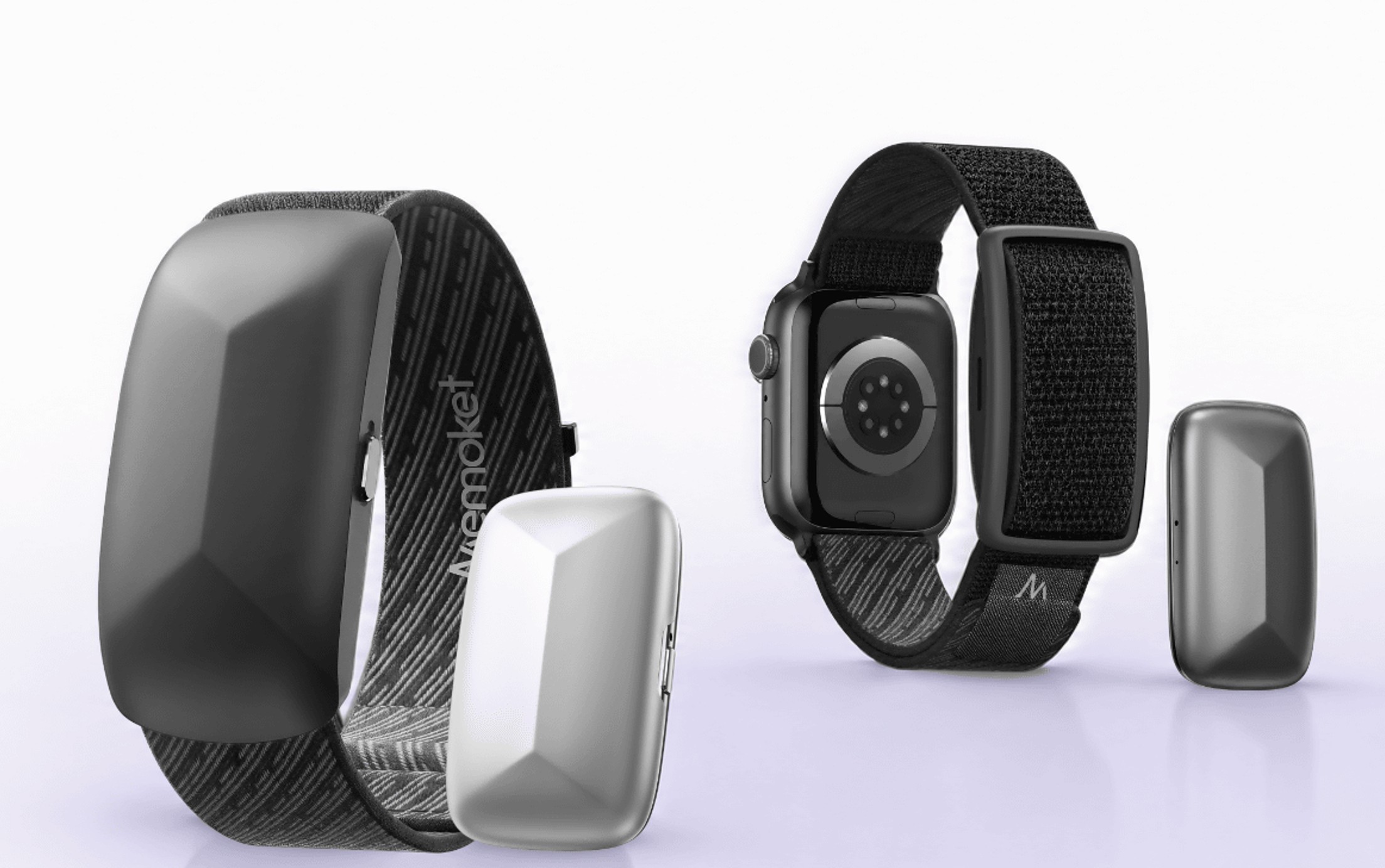
Memoket wearable hardware Gem (Source/Enterprise)
The second consideration is the density and quality of data acquisition. The core information scenario for small and medium-sized business owners lies in face-to-face conversations in the physical world. The sound pickup capability of Gem can cover daily communication, and turn the fleeting language in the physical world into digital assets that can be understood and called. In contrast, other wearable forms often face more complex physical restrictions when balancing continuous sound pickup and all-weather wearing, and it is difficult to have both.
"Essentially, AI hardware gives AI 'tentacles'." Wang Shiyuan said, "The bracelet is the form that our team thinks is closest to the role of this tentacle and that users are most willing to wear for a long time. It does not disturb you, but it is always present."
The hardware completes perceptual collection, the software is responsible for structured sorting of information, and the self-developed long memory engine KITE determines the upper limit of this Personal AI experience.
In the traditional interaction paradigm, the main body responsible for memory is always the user. Users need to review the recording after the meeting, search for historical conversations before meeting clients, and manually organize to-dos during project promotion; even if AI can accelerate summary and retrieval, it is essentially still a passive tool waiting for users to call.
Memoket's KITE engine is designed to break this limitation. The memory of most AI systems is limited to a single conversation, and the information is isolated from each other; while KITE can connect time sequence clues across sessions. It currently achieves 93.51% and 85.60% accuracy on the two long conversation memory benchmarks LoCoMo and LongMemEval-S respectively, with the assessment focus on whether AI can locate information from a large number of scattered conversations and establish continuous context across session boundaries.
"Memory is the infrastructure of active AI. If the memory is inaccurate and discontinuous, all active recommendations and advance reminders are impossible. Users will not trust an assistant who misremembers things." Wang Shiyuan said.
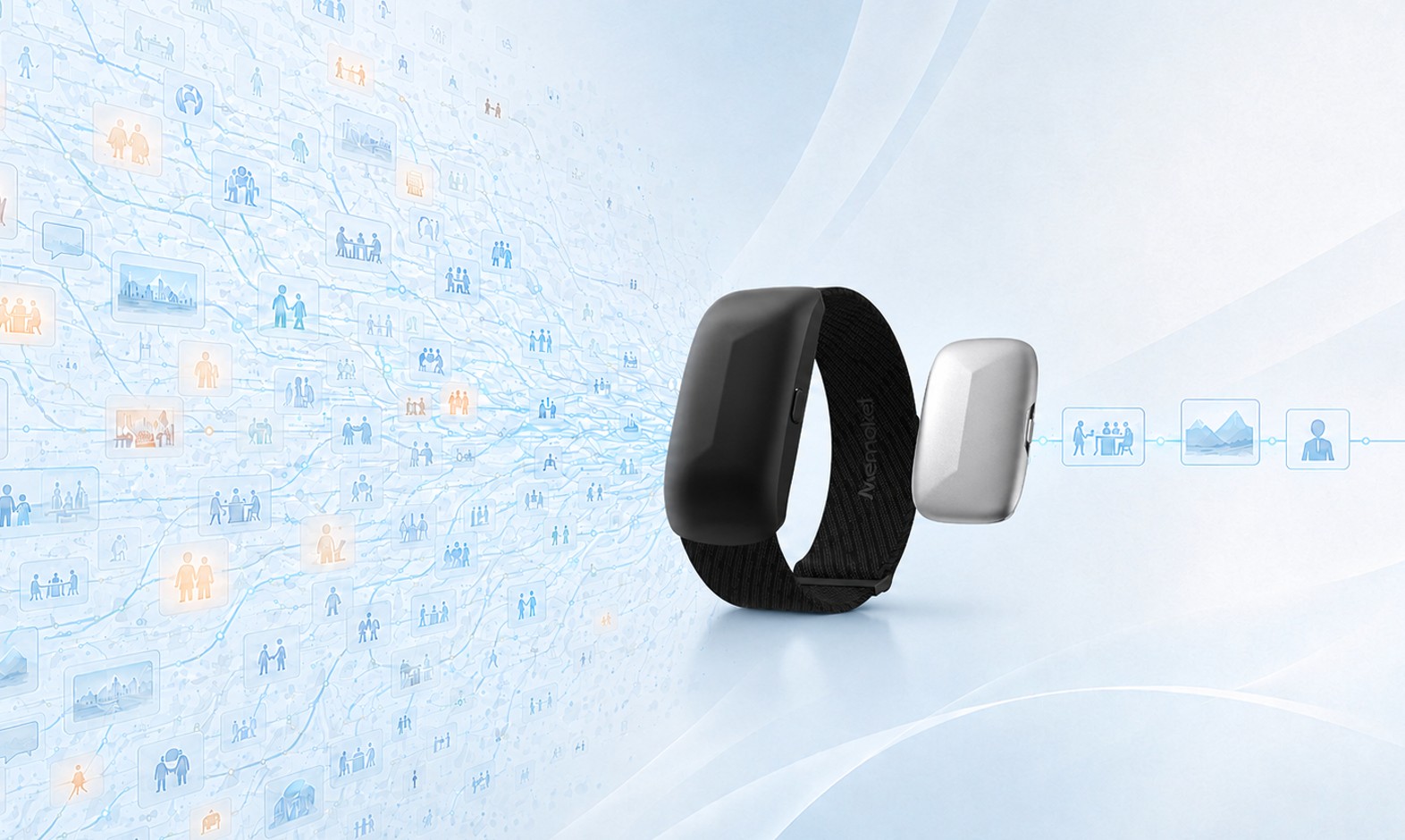
Self-developed long memory engine KITE (Source/Enterprise)
Relying on this long memory base, Memoket has accessed tools such as Google Calendar, ChatGPT, Claude, Slack, and Notion. Users can review conversations and perform cross-session retrieval on App and desktop terminals, and directly integrate information into the workflow.
At the same time, based on this memory capability, the next breakthrough direction of product functions is to explore the capability boundary of active interaction. Hard Krypton learned that the Personal Agent Beta test version will be launched on the Gem App terminal this month, and the core function is to add real-time context pop-up reminders, so that AI can independently identify pending confirmation items and unfulfilled agreements in user communication, and give users prompts at the right time.
Taking the client negotiation scenario as an example, when the user communicates with the client, the device continuously collects the conversation, and KITE will simultaneously compare the historical communication records, identify unconfirmed agreements and pending follow-up items, and pop up a prompt on the App.
"We are not making a recorder with better noise reduction, nor a more accurate meeting minutes tool. We focus on whether each call can truly solve the specific problems in users' work. Miss one less promise, do one less rework, and pick up previous clues at critical moments." Wang Shiyuan said.
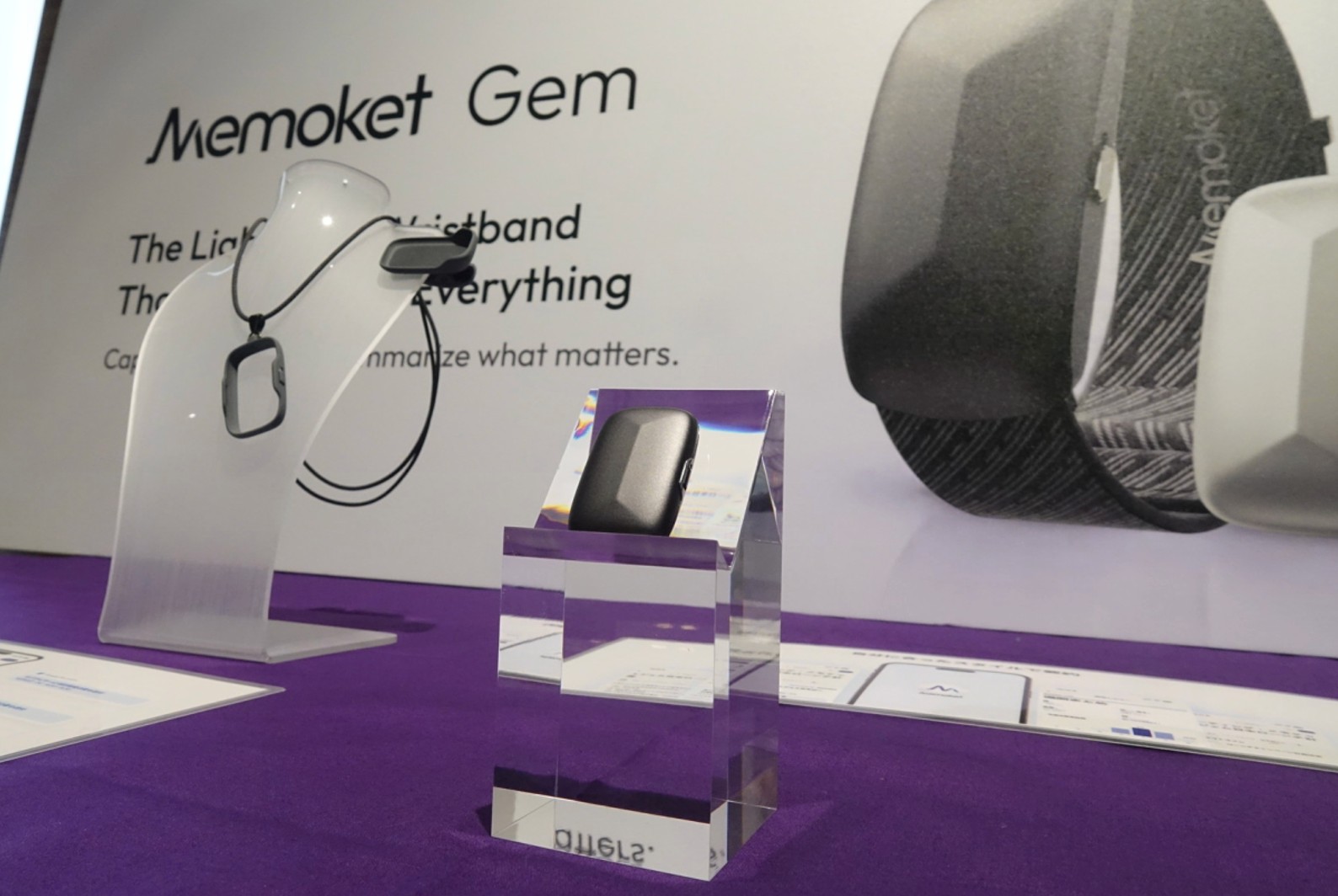
Entered the Japanese market in October 2026 (Source/Enterprise)
Against the background that the capabilities of large AI models are gradually equalized and hardware solutions are maturing at an accelerated pace, the marginal effect of simply competing for parameters or functions is decreasing. What really constitutes a barrier is whether it can continuously obtain high-quality personal data in real scenarios, establish long-term memory, and actively provide value on the basis of understanding users.
Suisheng Technology takes the bracelet as the entry point and the long memory engine as the base, pushing products from "passive response" to "active service". As users get along with AI for a long time, memory is continuously updated and understanding is deepened. The value of Personal AI will no longer be the stack of single-point functions, but an irreplaceable personal digital asset that grows over time.
The following is an excerpt from the interview between Hard Krypton and Wang Shiyuan, founder of Suisheng Technology (slightly edited):
Hard Krypton: As mobile phones and smart watches become more and more "one-stop satisfying", will users still need to wear an additional AI recorder or Memory accessory in the future?
Wang Shiyuan: From the perspective of objective business laws, for light users with extremely low demand frequency, the one-stop functions of mobile phones and smart watches are indeed sufficient. However, the development experience of the mobile Internet in the past ten years shows that when general-purpose devices become large and comprehensive in functions, a group of professional users who cannot be satisfied by "one-stop" will inevitably differentiate in vertical fields, which is the structural opportunity for independent AI hardware.
Our current early user profile is very focused, mainly small and medium-sized business owners with high-frequency decision-making and high conversation density. We have accumulated thousands of early users, which basically meets our initial design. For this group of people, general-purpose devices have obvious physical and experience frictions in professional scenarios.
For example, recording on Apple Watch is easily interrupted by incoming calls or notifications; even after the recording is completed, the general system usually only gives a summary, lacks the original file, and manual export is required to access the large model for in-depth processing. For users who need high-frequency backtracking and establish long-term memory, this data link is broken. What they need is a more professional, silent independent tool with a complete link.
In the future, Personal AI will most likely need a comprehensive entry point, but it is difficult for a general Agent to do best in all sub-scenarios. Everyone is looking for vertical gaps that general devices cannot cover. We believe that Suisheng entered this wave of demand early enough and captured the core group of users with rigid needs.
Hard Krypton: The upcoming context-based active Personal Agent Beta function, what substantive changes will it bring to the interaction?
Wang Shiyuan: We plan to launch the context-based active Personal Agent function. This is a key step for us to leap from "passive recording" to "active service".
In the past, most AI hardware was "post-event summary", but real decisions often happen in the middle of the conversation. Once a promise, pending confirmation item or key issue is missed, it will have generated communication cost even if it is supplemented afterwards. What Memoket wants to do is to advance the node of AI assistance from "after the meeting" to "during the meeting".
Understand it with a specific scenario. The user has previously agreed with colleagues to confirm a delivery node in this meeting. After the meeting starts, Gem continuously collects on-site conversations, and the audio is uploaded to the cloud in real time; the KITE long memory engine simultaneously retrieves the user's historical conversation, schedule and to-do clues, and identifies "items that have been agreed to confirm but not yet mentioned". When the conversation rhythm enters the appropriate window, the system will actively pop up a reminder through the App to tell the user "the delivery node should be confirmed this time". This reminder happens in the process of communication, not after the meeting ends to generate a static minutes.
Of course, this kind of "in-process reminder" has very high requirements for the engineering link. It is not a simple speech-to-text conversion, but a complete link including real-time audio stream transmission, cloud context comparison, historical memory retrieval, and end-side reminder delivery. The most core indicator is latency: if the reminder appears in a few seconds, it will be like a close assistant; but if the latency is too long and the user has moved to the next topic, the reminder will be abrupt or even invalid. Therefore, in the Beta phase, we focus on optimizing end-to-end latency, aiming to make the reminder closer to the natural rhythm of the conversation scene.
Our core positioning is to make an active Agent based on Context, not a simple meeting minutes tool. Its barrier lies in the information connection capability, which can establish associations for the user's scattered information across time and devices, and finally convert it into accurate active reminders.
Hard Krypton: The industry is looking for the landing point of large models in the physical world, and everyone regards this kind of portable hardware as an important Personal AI entry point. In the future competition, what do you think is the key barrier that determines the success or failure of this entry point?
Wang Shiyuan: Compared with pure software Agent, the wearable recording hardware gives users a more concrete and tangible perception, and is a touchable interaction carrier.
Memoket does not pursue to be an all-round assistant. The core is to help users capture those conversation details that have business value but are easy to be ignored, and give reminders at the right time.
In the past, people used mobile phones to record, and the essential logic has not changed: people remember this matter first, then actively open the device, retrieve and call afterwards, and the main body of memory is still the user. Suisheng wants to reverse this relationship: the hardware continuously perceives, the long memory engine completes information precipitation, and the main body of memory is handed over to the system, so users no longer need to spend energy to retain and backtrack scattered details. This is also the direction of our team's long-term technical accumulation finally landing, and the underlying logic of entering this track.
In the long run, recording wearables will not be the only Personal AI entry point, but it has unique advantages in "capturing conversations in the physical world". Different forms will undertake different demands respectively: general terminals meet lightweight demands, and vertical wearable hardware serves high-frequency, high-value offline communication scenarios. The two routes will coexist for a long time.