If the Cybercab can really make money, why would Tesla sell it to you?
On November 14, Tesla officially announced that Cybercab is open for individual orders via an invitation-only system, limited to invited customers in Austin, Texas.
Priced at $29,990 (approximately RMB 200,000), the vehicle requires a non-refundable $1,000 deposit, with deliveries scheduled for December 2026. Equipped with no steering wheel, no pedals and no rearview mirrors, the Cybercab requires a continuous autonomous driving service subscription at $299 per month. The purchase price covers the first month's subscription, and subsequent fees will be deducted monthly.
In other words, once the subscription is paused, the vehicle will no longer be operational.
The vehicle is also fitted with a geofence system, and can only drive autonomously within the area covered by Austin's Robotaxi service. Tesla made it clear that this is a limited invitation-based pilot that will not be fully opened to the public, and the vast majority of production capacity will still be reserved for its self-operated mobility fleet.
If you keep the vehicle for self-operation to generate revenue, all profits will go to yourself, so why would Tesla open sales to private car owners?
According to Elon Musk's first principles, the only reason Tesla chooses to sell the vehicles is one thing: Tesla has run the numbers and confirmed that selling the cars is more cost-effective than operating them itself.
You Can Actually Buy a Car Without a Steering Wheel
Cybercab is a model specially designed by Tesla for autonomous driving mobility services, featuring two seats, a golden body and butterfly doors. EPA certification documents show that it is equipped with a battery pack of approximately 48 kWh, front-wheel drive with 163 kW of power, a curb weight of 1412 kg, and a range of around 418 miles (673 km).
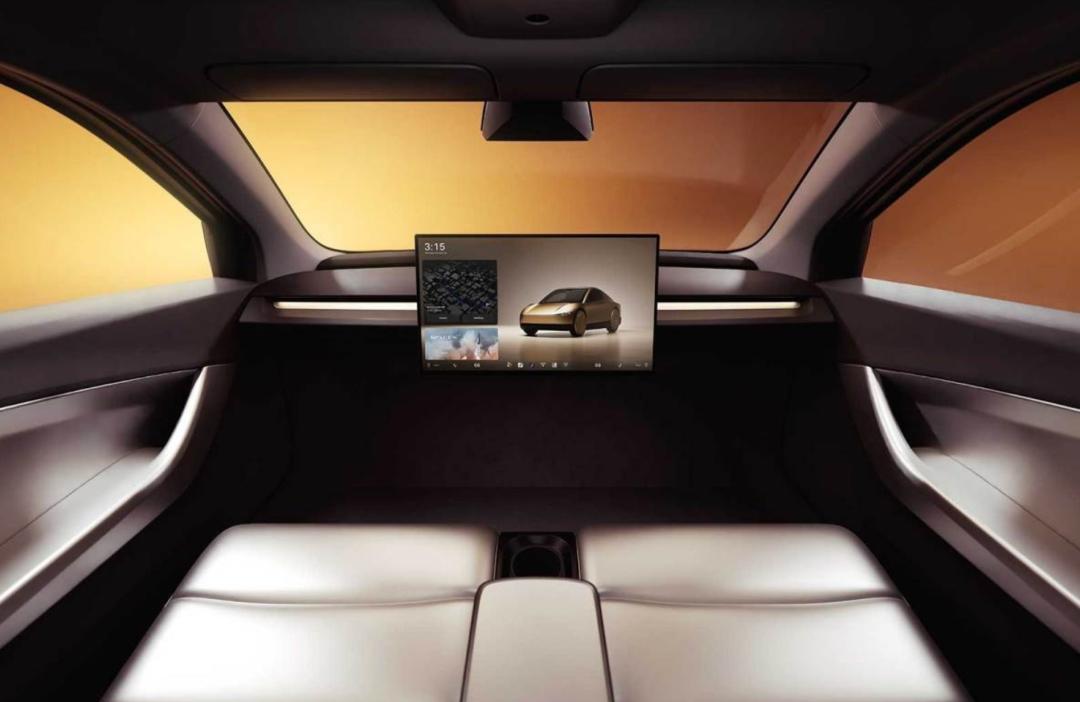
The vehicle made its debut in October 2024, went into production in April 2026, launched the Robotaxi service in Austin on September 3, and expanded to Dallas in November. By mid-November, Tesla had 1,302 autonomous vehicles registered on the Texas Department of Motor Vehicles' list — 729 Model Y units plus 573 Cybercab units, surpassing Waymo's 1,297 units for the first time by a narrow margin of 5 units.
When this list was first made public five months ago, Tesla only had 42 registered autonomous vehicles.
At the end of the third quarter, the total accumulated unsupervised driving mileage was close to 2 million miles, an 8-fold increase from the end of the second quarter. The service hours in Austin were extended from 6 a.m. to midnight. Musk stated at the earnings call that one month after the Cybercab fleet was put into operation, its scale expanded 10 times, and the cumulative mileage curve is "like a rocket heading into orbit".
So this is not a concept car, but a vehicle that has been running for more than two months and is already carrying real passengers.
Then why is Tesla selling it to private individuals now?
The official statement is to "accumulate experience". Lars Moravy, Vice President of Vehicle Engineering at Tesla, made it clear on the earnings call that deliveries at the end of 2026 are a small-scale pilot, mainly used to accumulate practical experience in private user ownership, vehicle delivery and fleet management.
Musk's statement is more straightforward: the vast majority of Cybercab units will still be owned by Tesla and put into mobility service operations, and private user purchases are only part of the overall business model.
Putting the two statements together, it means this is not the main course, but the reason for serving this side dish depends on the accounting of the main business.
What Is Sold Is a Long-term Fee Collection Voucher
To understand this matter, you first need to understand what Tesla is selling with this vehicle.
Traditional car sales are a one-off transaction: you get the car keys, and both parties are settled. But Cybercab is different. The $29,990 you pay gets you the hardware, and the $299 per month subscription gets you the right to make the hardware move. The two are bound together: once you stop paying the subscription, the car becomes a useless ornament.
This is the ultimate form of the "software-defined vehicle" path. Previously, software was a value-added service that you could choose not to buy. Now software is the birth certificate of the vehicle: if you don't pay for it, the car cannot function at all.
But the real reason does not lie in the product logic, but in the balance sheet. Operating a Robotaxi fleet on your own requires three things: capital, regulatory quotas, and operational capabilities.
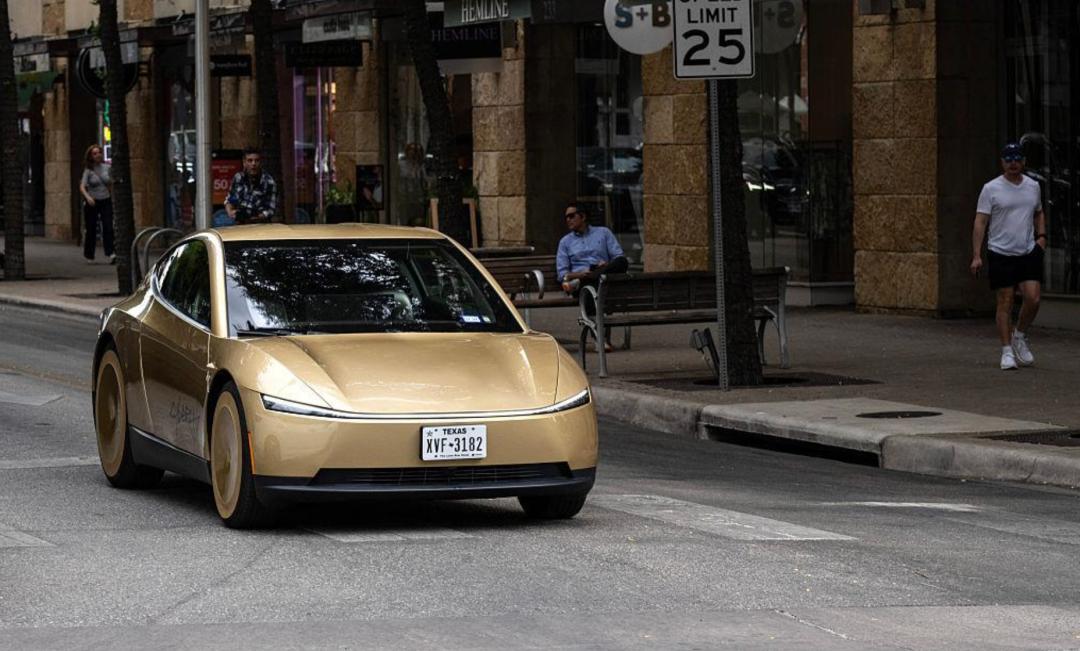
The capital calculation is straightforward: one car costs $30,000, and 1,000 units cost $30 million, not including charging, cleaning, dispatching, insurance, and accident handling. Tesla has more than $45 billion in cash on its books, so money is not a problem.
Production capacity is not a problem either. The nominal production capacity of the Cybercab production line exceeds 125,000 units per year, and the actual capacity can be even higher. Meanwhile, there are only 573 Cybercab units registered in Texas.
With a production capacity of 125,000 units on one side and an actual deployment of 573 units on the other, the gap between them is not manufacturing capability, but regulation and operation.
Where an autonomous vehicle can operate, what range it can cover, whether it can drive on highways, and whether it can operate 24 hours a day all require separate regulatory approval.
Currently, Tesla's unsupervised operations cover 6 cities — Austin, Dallas, Houston, Miami, Orlando, and Tampa, all located in Texas and Florida. The San Francisco Bay Area still requires safety drivers on board. The management's previous statement of "covering more than ten states by the end of the year" was not reiterated at this earnings call.
Waymo currently operates in more than a dozen cities in the United States with a fleet of about 4,000 vehicles, generating more than 500,000 paid orders per week. It plans to expand its fleet to 8,000 units by the end of the year and 20,000 units by the end of 2027. Tesla's fleet in Texas has just overtaken Waymo by a narrow lead of 5 units, and this "number one" position can be taken back by Waymo at any time.
Up to now, the autonomous driving competition is no longer about who has a better technical demonstration, but about who has a larger fleet size, covers more cities, and has lower unit costs. If the scale cannot be expanded, there will be less data; less data will lead to slower model iteration; slower iteration will prevent unit costs from being reduced.
This is also why there is an urgency behind the "selling to private users" move: it is the fastest way to convert production capacity into vehicles on the road.
Selling vehicles to private individuals makes the logic smooth: use consumers' money to turn production capacity into vehicles driving on the road; use consumers' parking spaces to solve parking and charging problems; use consumers' patience to wait for regulatory approvals to be rolled out one by one.
Tesla retains the lightest part of the business: the $299 monthly subscription revenue, as well as the dispatching rights of the vehicles after they are connected to the platform.
This is not offloading burdens, but a legitimate business model choice. The heavy-asset operations are handed over to people who are willing to take on the responsibilities, while the light-asset revenue collection is kept for itself. The aviation industry did this (selling aircraft with financial leasing), and the charging pile industry did this (selling piles and collecting service fees). Tesla is just applying this model to autonomous driving.
There is another layer related to valuation. Morgan Stanley's target price for Tesla is $410, broken down into five parts: core automotive business at $45, network services at $147, mobility at $123, energy at $40, and humanoid robots at $55. The mobility business accounts for nearly one third of the total valuation.
To support this one-third valuation, Tesla needs to prove that people are really willing to pay for autonomous vehicles. FSD paid users have exceeded 1.7 million, and the proportion of new North American car deliveries with activated assisted driving is more than 75%. It has been proven that people are willing to pay for the software. Now Tesla needs to prove the same for the hardware.
Continue to Wait for the Wind to Rise
Now let's calculate the accounts for buyers.
With a car price of $29,990 plus a $299 monthly subscription, the total expenditure over five years is approximately $47,930. This figure is roughly equivalent to the transaction price of an ordinary new car in the United States.
In other words, for the price of an ordinary new car, you get a two-seater vehicle that you cannot drive by yourself, that can only run in designated areas, and that requires a monthly subscription fee — unless the mechanism of "going out to take orders to make money" can be activated.
Whether this deal is cost-effective depends on a question that currently has no answer: can this vehicle go out and make money on its own?
As of now, Tesla has not made any public statement that privately purchased Cybercab units can be connected to the Robotaxi fleet to automatically take orders. The official description has always stayed at "private ownership" and "fleet management experience", with no mention of revenue sharing or access mechanisms.
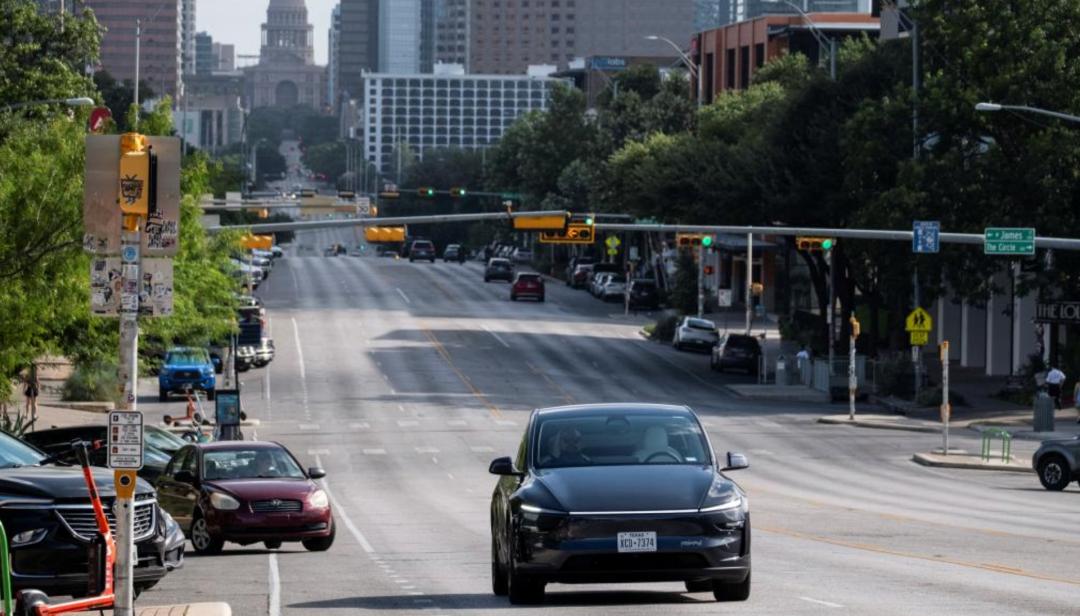
There are two possibilities here. One is that the access will be opened. If private vehicles can connect to Tesla's operation network and take orders on their own when not in use, the entire calculation will immediately change — the car becomes a production tool, and the $299 subscription fee becomes an operating cost, which is the same logic as the platform commission that online ride-hailing drivers pay.
This is the Airbnb model: you provide the assets, the platform provides the traffic, and the two parties share the revenue. Tesla is already technically prepared for this, and what is missing is only policies and contracts.
The other possibility is that the access will not be opened for the time being. In that case, the positioning of this vehicle at the current stage is closer to the first-edition Cybertruck — a product for early adopters, sold for experience and status rather than return on investment. This type of product has always existed in the automotive industry: limited in quantity, high in price, not very practical, but there are people willing to buy it.
No matter which path Tesla takes, it needs to get one thing right first — unit cost.
When asked about this at the earnings call, CFO Vaibhav Taneja answered bluntly: "Have we reached our cost target of 30 cents per mile yet? No, we haven't." He said the company has seen a clear path forward, and the next step is to improve vehicle utilization and optimize links such as pick-up, drop-off and cleaning.
The per-mile cost of online ride-hailing services in the United States is generally above $1, most of which goes to drivers. Autonomous driving eliminates this part of the cost, which in theory can drive the cost down to a very low level. But theory is just theory, and this has not been achieved yet.
So the business model of this vehicle is actually running three variables at the same time: the speed of regulatory relaxation, the speed of unit cost reduction, and the timetable for private vehicles to access the fleet.
If all three variables are fulfilled, the $29,990 vehicle will become a money-making machine. If not, it will just be a very cool car that you cannot drive by yourself.
Musk himself knows that the pricing is not finalized yet. He said at the earnings call that the $299 monthly fee is "too high", and it should be comparable to the FSD and connected service fees on other Tesla models, which is around $115 per month.
Back to that question: if Cybercab can really make money, why would Tesla sell it to you?
Because what Tesla earns is probably never the money from "operating one vehicle", but the money from "selling a car, collecting subscriptions for a lifetime, and continuously charging for subsequent services". Operations carry risks, but subscription revenue does not. As long as the car is running on the road, the subscription fee will arrive in Tesla's account every month.
But for now, this only happens in Austin, a city with an urban population of less than one million, in a service area that is still being demarcated.
It is a small slice of the future, not the future itself.
This article is from the WeChat Official Account "SuperEV-Lab" (ID: SuperEV-Lab), written by Zaizhou, and published with authorization from 36Kr.