Why do personal intelligent agents keep disconnecting? 9 top-tier universities have released the 126-page "Persistent Online Intelligent Agent" roadmap
Personal agents are ushering in an unprecedented period of intensive explosive growth.
Overseas, cutting-edge AI labs have launched a string of heavyweight products one after another, including Muse, dots, Claude Duet, Grok Bot, and Gemini Daily Brief. These products no longer passively wait for users to raise questions: some continue to work silently in the cloud after conversations end, some deliver customized briefings on time every early morning, and others automatically inspect users' associated accounts every few hours.
In China, major tech firms including Tencent, Alibaba, and ByteDance are also rapidly catching up, having successively launched products such as Lingguang 2.0, LightVela, and Qwen Go! On the hardware side, AI glasses manufacturers such as Thunderbird and Rokid are focusing on full-time recording and memorizing every detail around users. Embodied intelligence is also evolving in the same direction:
Cutting-edge large models are becoming the high-level "brain" of robots, and the next step is to evolve into life partners that understand users better.
Such a dense wave of releases sends an extremely clear signal: The competition in the second half of personal intelligence is fully shifting from competing on single models and point functions to competing on a complete system architecture.
This not only requires the system to run for a long time, but also requires the three modules of sensing, memory, and action to collaborate with each other and share information — and all of this must happen autonomously when the user does not give voice commands.
However, a series of critical questions have also emerged:
- Does running continuously in the background count as true "always-on" status?
- When the user is not present or has not issued an instruction, what exactly should the assistant do, and what should it not do?
In essence, the entire industry is seeking answers to three core questions: What makes an assistant truly "always-on"? How can it "understand you better the more you use it"? How far are existing systems from achieving these two goals?
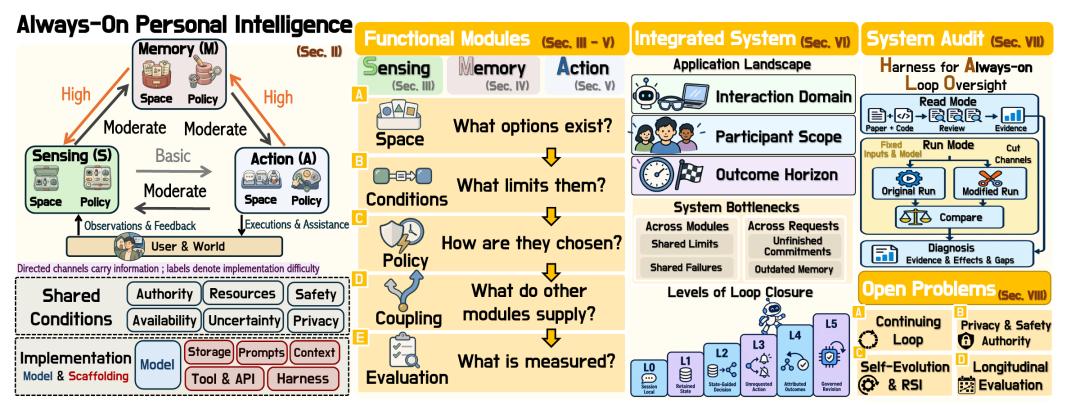
Figure 1 | Overview of the roadmap: Define the continuous closed loop, examine the three modules, analyze integrated systems and closed loop levels, review existing systems with HALO, and discuss open issues
Focusing on the three major questions above, 23 researchers from 9 universities including Nanyang Technological University, University of California, Berkeley, Princeton University, Stanford University, National University of Singapore, King Abdullah University of Science and Technology (KAUST), Dartmouth College, University of North Carolina at Chapel Hill, and Northwestern University jointly released a 126-page panoramic review.
Paper link: https://www.preprints.org/manuscript/202611.0793
Project homepage: https://always-on-intelligence.github.io
Paper list: https://github.com/Always-On-Intelligence/awesome-always-on-personal-intelligence
In the paper, the authors emphasize that an assistant being "always on" does not equal being "always-on".
"Always-On" is not a new term. In software and hardware engineering, it has long been used to describe systems that are permanently powered on and ready for use at any time.
But for personal assistants, there is no clear definition of what it exactly means. Recently, such systems are often mixed with concepts such as Proactive Agent, Personal Agent, and Long-Horizon Agent, making their boundaries even more blurred.
To this end, this review sorts out 632 literatures as well as 119 research systems and products, covering three scenarios: wearables, digital, and embodied intelligence.
From the closed-loop perspective of "three functional modules of sensing, memory, action × six directed information flows", the authors give the definition, functional framework, six levels and future roadmap of always-on personal intelligence, and put forward the final vision: User at the helm, assistant running.
Although today's agents can already share a lot of specific work for people, they still require users to stay in the closed loop at all times, issuing instructions and granting permissions step by step to keep the loop running. In the final form envisioned in the paper, users no longer need to personally maintain the operation of the closed loop, and are only responsible for controlling the direction and setting boundaries.
The assistant then decides for itself when to observe and when to act, improves its own working methods based on experience, and only pauses to request confirmation before actions that require user authorization.
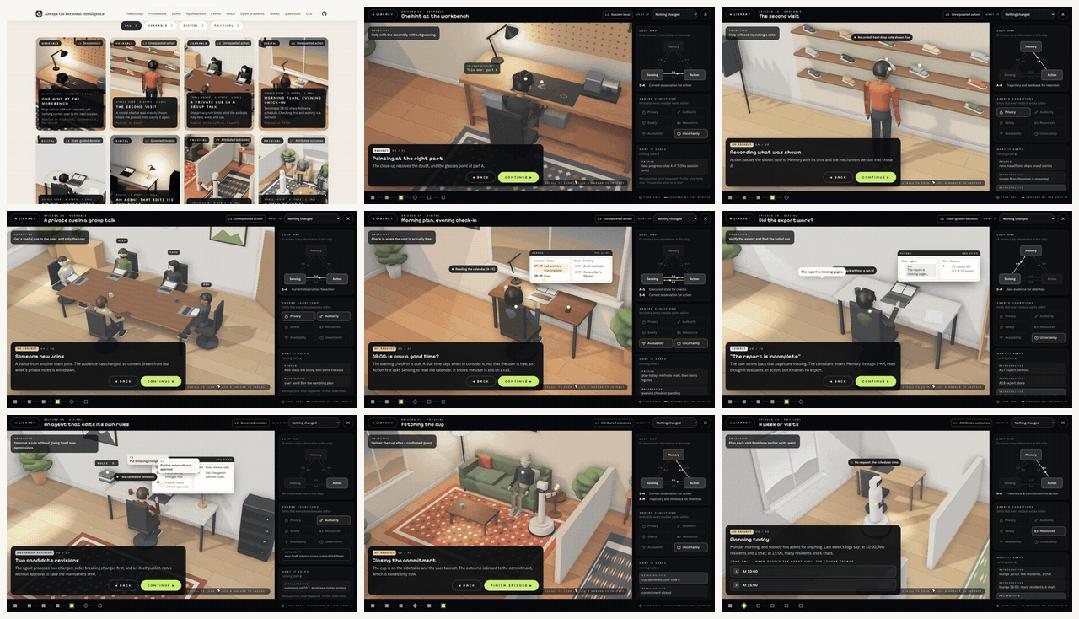
A highly interesting interactive Demo has also been launched simultaneously on the project homepage: in 8 daily scenarios, readers can make decisions for the assistant, and then see what happens if another choice is made.
What counts as true "always-on" status?
Let's first look at a small daily scenario: you say to your assistant, "Remind me to send the report after the meeting ends."
As soon as you finish speaking, the conversation ends, but the assistant's work has just begun — it needs to keep track of when the meeting ends on its own, pick an appropriate time to pop up the reminder, and keep this pending task in mind during the whole period.
The paper distills this process into two core properties that an always-on assistant must have simultaneously:
- Operational Continuity: When there are no new requests, the assistant can independently decide whether to act and when to act based on the current situation — in which "remaining in a waiting state" is itself a reasonable decision.
- State Durability: Across multiple interactions, it continuously retains available personal states (such as user preferences, and promises that the assistant has made but not yet fulfilled). Even if the current conversation has ended, these to-do items can still be autonomously fulfilled by the assistant at some point in the future.
The combination of these two properties forms the "Continuing Loop", which is also the cornerstone of always-on personal intelligence.
According to this strict standard, several common types of assistants on the market are not yet truly "always-on":
- Passive assistants with memory: They have long-term memory, but always wait for the user to speak first, which only has "State Durability";
- Active assistants with no persistent memory: Although they can initiate conversations proactively, they retain nothing after the chat ends, which only has "Operational Continuity";
- Mechanical scheduled tasks: Although alarms or scripts can run around the clock, they are only triggered mechanically at preset times and do not make any decisions on their own.
Always-on personal intelligence is not the same as Long-Horizon Agent. Long-Horizon Agents focus on "how to complete a given complex task", even across multiple sessions; while always-on personal intelligence faces a different situation: users' goals and needs change at any time, and new situations emerge in endlessly, so it must provide uninterrupted companionship and support in dynamic changes.
To adapt to this continuous change, simply memorizing more information by rote is far from enough. The assistant must also continuously improve its own working mechanism during operation. The paper calls this high-level capability "Self-Evolution".
Continuous closed loop is the foundation, self-evolution is the direction
Based on the above definition, the review puts forward the core argument of the whole paper: The foundation of always-on personal intelligence is the "continuous closed loop", and the evolution direction is "self-evolution".
The key to understanding "always-on" is to expand the vision from a single capability to the entire closed loop. Proactive speaking, long-term memory, and background residency — none of these items alone can support always-on status. Only when observation, memory, and action still operate collaboratively and transmit information during the gap between two requests, can always-on status be truly established. Therefore, always-on is a system attribute of the entire closed loop, rather than a local function of a certain module.
On this basis, self-evolution is an advanced extension of the continuous closed loop. A common misconception needs to be clarified here: Remembering the user does not equal self-evolution.
Take the "post-meeting reminder" example again: storing the record that "the user prefers to receive reminders after returning to the workstation" only updates a record, and the assistant's working method has not changed. Only when the assistant finds that previous reminders are frequently closed, and then revises the reminder timing rule to "remind the user after they return to the workstation", can it be regarded as truly revising the mechanism.
Once the mechanism is revised, the processing method of all subsequent inputs will change accordingly. For this reason, the paper puts forward higher requirements for self-evolution:
- Traceable, verifiable, and revocable: Every mechanism revision must be traceable to specific evidence, verified before taking effect, and can be revoked.
- Complete chain of evidence: To prove that a system has self-evolution capabilities, a complete chain of evidence from "what was done", "what the result was" to "the revised rule does take effect in subsequent use" must be presented.
Following the context from "foundation" to "direction", the paper divides the development path into six levels from L0 to L5. At level L3, the assistant autonomously decides to act or wait when there is no request, and the continuous closed loop is established. At level L5, the assistant revises its own working mechanism within the boundaries set by the user, and self-evolution is established.
In short, the continuous closed loop keeps the assistant "always present", and self-evolution makes it "understand you better the more you use it".
Three modules, six directed channels
Having AI assistants stay around to help has been a long-standing vision. Early research often separated sensing, memory, and "when to help" for separate development. As large models make each module more general-purpose, how to truly connect the three and process the information flow between modules has become a new difficulty.
The paper breaks down the always-on assistant into three functional modules within the same closed loop:
Sensing: Responsible for observation. It can be kept on all the time, woken up by specific clues or timers, or started on demand.
Memory: Retains information that is useful for subsequent decision-making. It records past events, current facts and preferences, as well as unfulfilled promises to the user.
Action: Decides whether to help, when to help, and how to help. It includes responding to requests, fulfilling previous promises, and providing active help when no one asks for it.
It is worth noting that each module includes two levels: "what it can do" and "how to choose", and "not acting" is itself a choice: sensing can choose not to observe, memory can choose not to modify, and action can choose to remain silent.
The three modules are connected through six directed Coupling Channels, each channel representing information transmitted from one module to another:
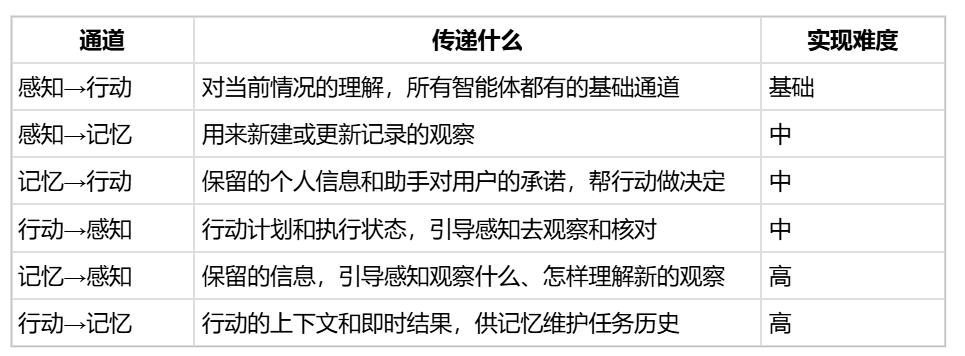
Outside the closed loop formed by the three modules and six channels, there are two layers of support:
Shared Conditions: Set by users and the real world, covering privacy, permissions, security, resources, availability, and uncertainty, constraining every module and channel. For example, during a confidential meeting, the assistant can listen, but cannot store or relay the content it hears.
Implementation: Consists of the Model and its external Scaffolding. The model is responsible for understanding inputs and making decisions. The Scaffolding includes the Harness, Storage, and Tools / APIs, which are responsible for connecting the model's outputs to the user's devices, applications, and data.
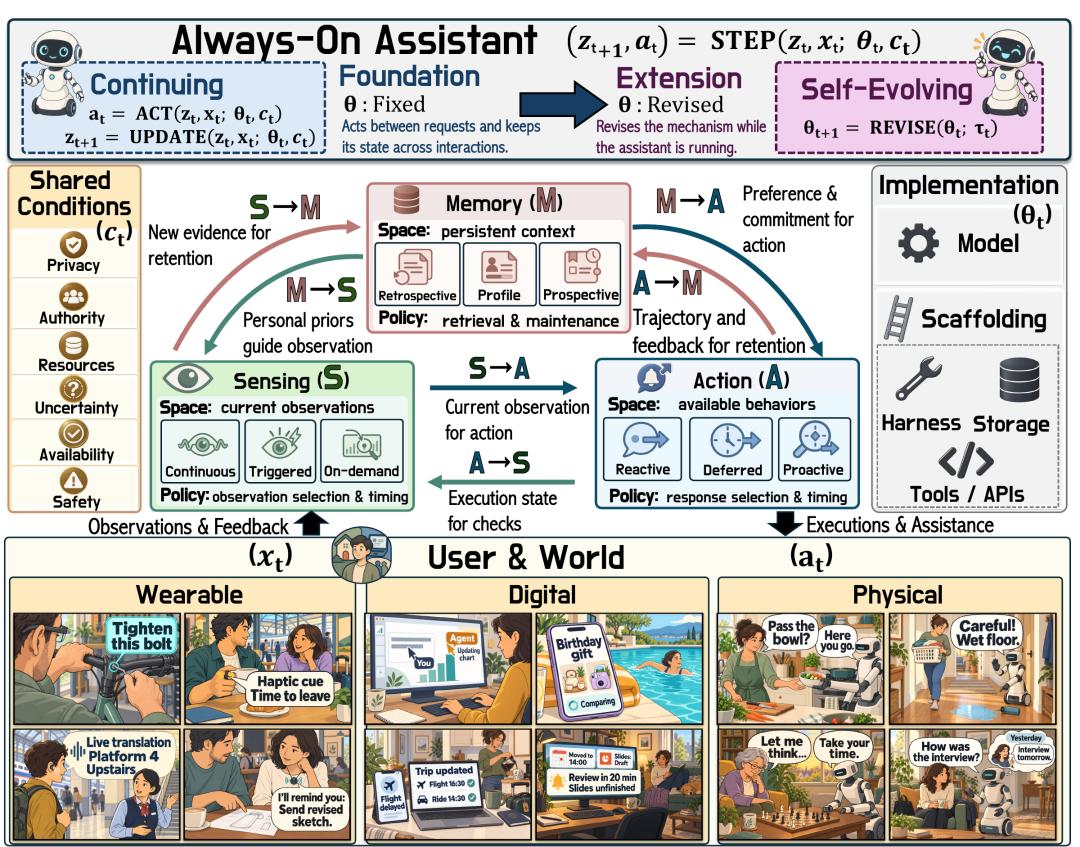
Figure 2 | Framework of always-on personal intelligence
Three implementation scenarios, bottlenecks lie "between modules"
Using this framework, the paper sorts out three scenarios: wearables, digital, and embodied intelligence. A common feature emerges: the bottlenecks in all scenarios cannot be solved simply by upgrading a single module.
1. Wearable assistants: Dilemma between power consumption and social boundaries
Wearable assistants provide help based on what users see and hear.
Bottleneck 1: Trade-off between collection cost and future memory. The more sensors such as cameras and microphones are turned on, the higher the power consumption and computing power required. But the amount of data collected cannot only be calculated based on cost, because "what is captured now" determines what memory "can be recalled later".
Bottleneck 2: Timing and audience for speaking. In multi-person meetings or conversations, the assistant needs to judge when to speak and who to make its voice heard by, while other people present often have not agreed to be recorded.
2. Digital assistants: Computing power competition and "old memory backfiring"
Digital assistants bring plans and personal context to different applications and conversations. According to public information sorted out in the paper, Muse combines timed and event-driven tasks with cross-conversation memory, while OpenAI's dots continues to work on its own cloud computer between two conversations, deciding for itself when to pause and when to wake up.
Bottleneck 1: Computing power competition. Background checks, memory maintenance, and responding to users all compete for the same computing resources.
Bottleneck 2: Misuse of old information. After the interface, task, or permissions change, copying the previously retained context will backfire instead. At this time, the assistant needs to distinguish: whether it is missing new information, made a mistake in the past, or used a correct record in the wrong occasion or for the wrong person.
3. Embodied intelligence assistants: Higher cost of errors
In the physical world, consequences such as collisions are irrevocable once they occur. Although recent robotic agent systems also retain personal states across tasks, most of them still act according to instructions.
Bottleneck 1: Overhead of result verification. Taking a second look after completing an action takes time and resources, but not verifying may lead to continuing to act with errors.
Bottleneck 2: Judging whether the help is useful. To tell whether a help is beneficial or disruptive, the assistant needs to retain the user's reaction and subsequent progress in memory.
