UBS: Gold prices could rise to $5,000, and now is a long-term investment window.
On November 16, UBS released a high-profile gold market outlook, predicting that the gold price will hit $5,000 per ounce in the fourth quarter of 2027.
For investors who have long tracked the precious metals sector and macro policies, this target price itself is not new, but the timeline for reaching the target has undergone subtle changes.
Looking back earlier this year, UBS had previously expected gold prices to hit the $5,000 mark in the first half of 2027.
However, in the latest report, the bank explicitly pushed back this expectation by half a year to the fourth quarter of 2027, while lowering its gold price forecast for this quarter by 10% to $4,500.
This delay does not indicate a bearish view, but a pragmatic adjustment to the changes in the current macro environment.
The core that underpins UBS's long-term bullish logic remains the "Debasement Trade".
As the size of the U.S. government's debt continues to expand, investors are increasingly concerned that inflation and public debt will erode the value of traditional wealth storage instruments.
This concern is driving capital outflows from government bonds and fiat currencies to safe-haven assets such as gold.
UBS expects that despite short-term setbacks, the long-term debasement trade logic remains unchanged, which forms a solid foundation for gold prices to move towards $5,000.
However, the short-term market reality has poured cold water on the bulls.
Recently, due to the resilience shown by U.S. inflation data, market bets on the Federal Reserve raising interest rates in December have risen sharply, and the U.S. Dollar Index has hit a new high for the year.
As a non-interest-bearing asset, gold has become less attractive against the backdrop of tightening interest rate expectations, leading to continuous capital outflows.
Last week, the international gold price fell continuously, giving back nearly $300 in total, directly breaking below the $3,900 mark and hitting a new low for the year. This short-term pain is the main reason why UBS lowered its near-term forecast and delayed its long-term target price.
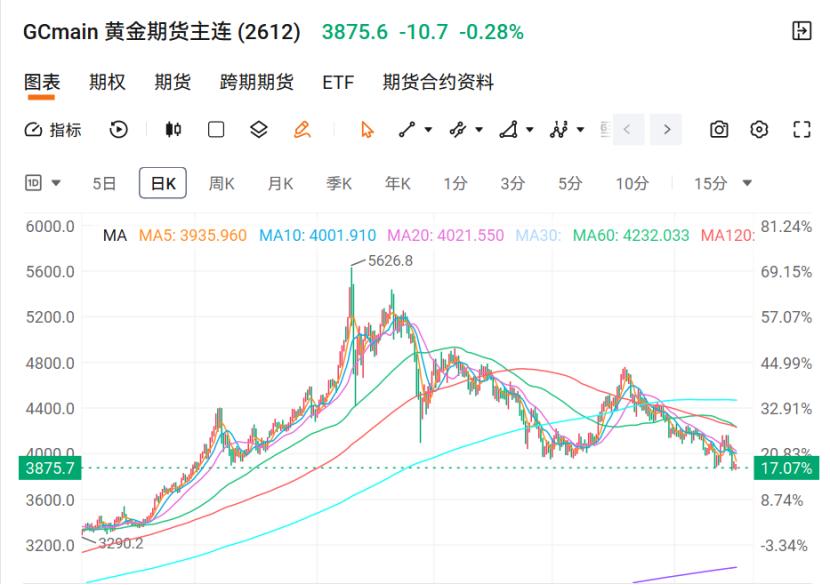
Although gold prices are under short-term pressure, UBS's attitude towards gold mining companies is exceptionally firm.
The bank maintains a "Buy" rating on Australian-listed gold mining companies, and expects the potential rate of return of the entire industry to range from 18% to 88%.
Behind this judgment is the earnings elasticity of gold mining stocks when gold prices are running at a high level.
As the central level of gold prices moves upward, the profit margins of mining enterprises have been significantly expanded. Even if gold prices pull back in the short term, their valuations are still at the middle to low levels in history, with a high safety margin.
For ordinary investors, the current gold market is in a fierce stage of game between bulls and bears.
On the one hand, the shift of macro policies and the uncertainty of geopolitics provide long-term support for gold prices;
On the other hand, fluctuations in short-term interest rate expectations bring huge downside risks.
In this environment, blindly chasing the rise and selling the fall is not advisable.
UBS's suggestion is that if the gold price falls back to around $3,850, this periodic weakness may instead become an opportunity for long-term investors to increase their gold exposure.
At present, the gold price has reached this position.
However, there are many ways to invest in gold, including gold ETFs and physical gold bars.
There is also a high-risk way to invest in gold through gold mining stocks, which has large elasticity but also high requirements, requiring close attention to the cost control and output growth of mining enterprises.
To sum up, UBS's delay of the $5,000 target price to the fourth quarter of 2027 is a rational response to the current macro environment, but it has also triggered some controversies, such as questions about UBS's professionalism.
The logic of the long-term bull market for gold has not changed, but short-term fluctuations are inevitable, and investors need to pay attention to risks.
This article is from the WeChat official account "Gelonghui Finance Hotspot" (ID: glh_finance), written by Max, and authorized for release by 36Kr.