With scenarios booming, ecosystem co-construction and value unlocking, the commercialization process of Chint graphene has stepped into a new stage.
As the "King of New Materials" that rose to fame as early as 2010, graphene boasts a strength 200 times that of steel, and its electrical and thermal conductivity far exceeds that of copper and silver. However, over the past decade or more, trapped by bottlenecks in large-scale preparation and engineering applications, graphene once faded from public view due to its slow commercialization.
Today, this trend is reigniting — not limited to thermal conductivity, the commercial implementation of graphene in tracks including electrical conductivity, heavy anti-corrosion, and high specific energy batteries is accelerating across the board.
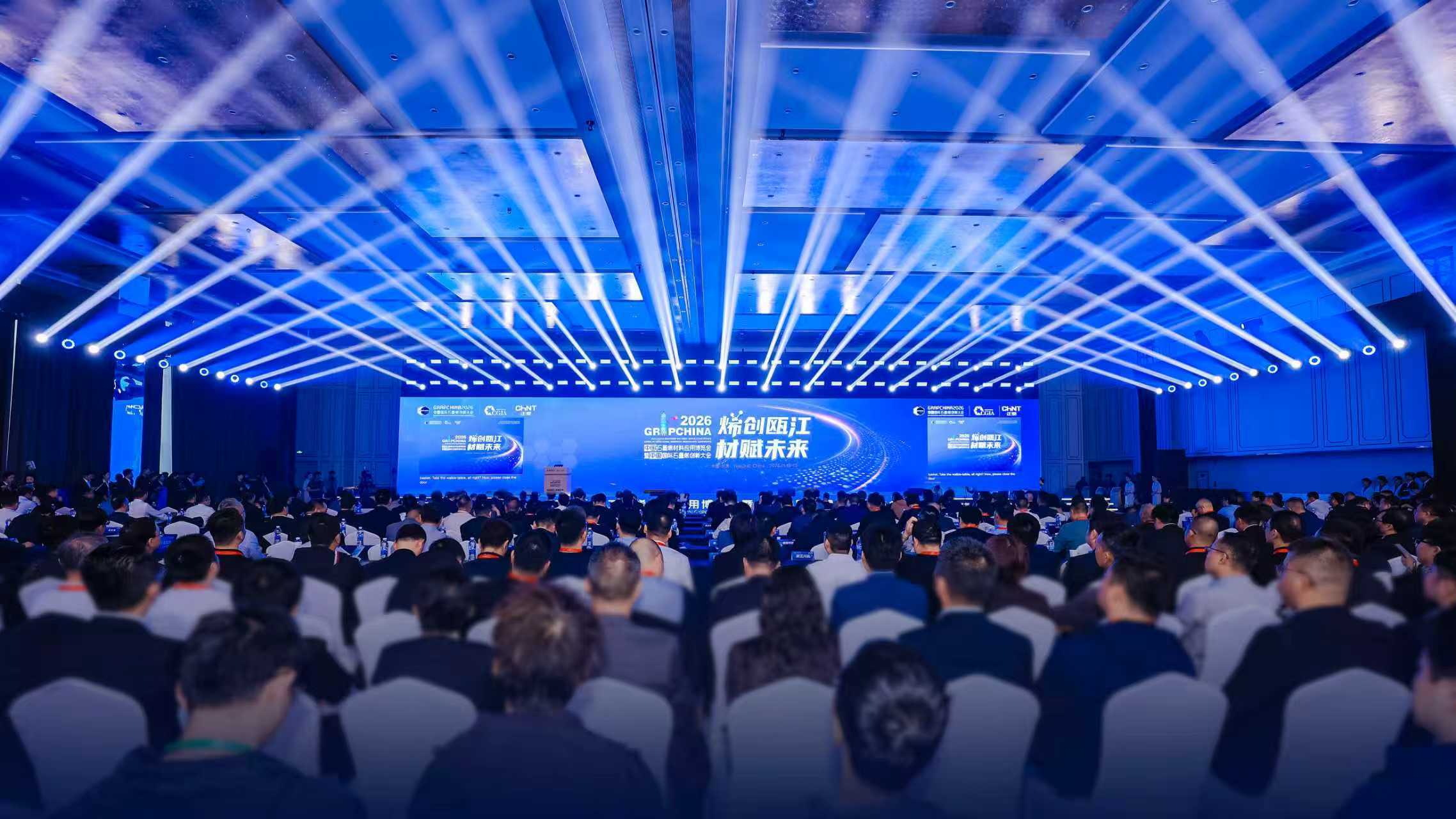
The just-concluded "2026 China Graphene Material Application Expo & China International Graphene Innovation Conference" has provided a clearer anchor point for this industry.
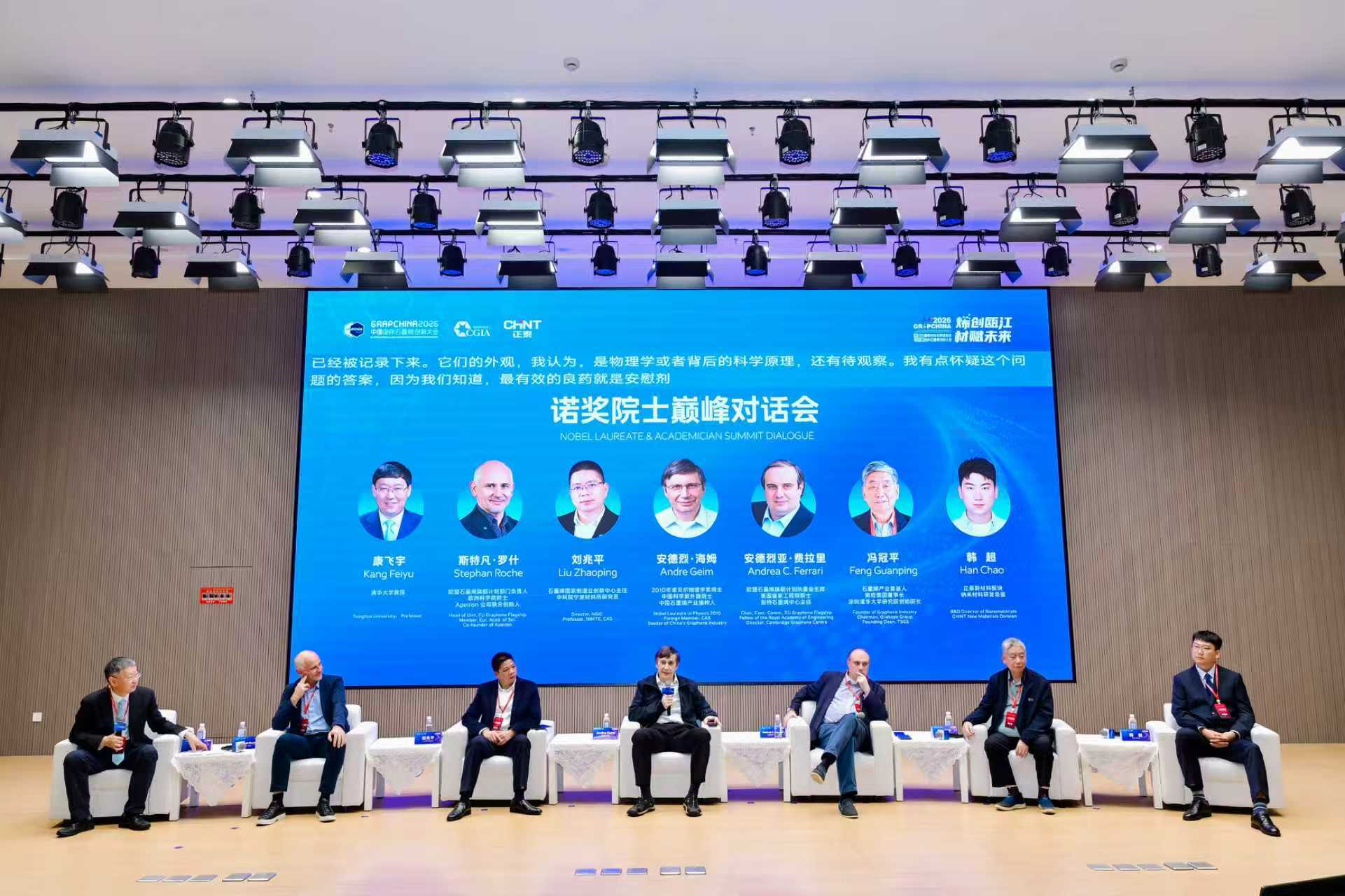
This industry seminar, co-hosted by China Graphene Industry Technology Innovation Strategic Alliance (CGIA) and Chint Group under the theme of "Graphene Innovation on Oujiang River, Materials Empowering the Future", has gathered global scholars, academicians, enterprise executives and representatives of investment institutions, including the graphene-related Nobel laureate. From the signals released at the conference, graphene is bidding farewell to the "story-telling stage" and stepping into a harvest period of pilot test integration and deep connection with the industrial end.
Why Graphene?
Every major industrial paradigm shift is usually underpinned by a revolution related to "electricity".
The electronic information industry has turned electricity into an information carrier, the new energy revolution has reshaped the modes of power generation and consumption, and the current AI wave sweeping across the globe has not only caused the power consumption scale to expand exponentially, but also set strict requirements for the stability, heat dissipation efficiency and power density of the power system.
Graphene itself integrates high electrical conductivity, high thermal conductivity and lightweight properties, which naturally fits all "electricity-powered" scenarios such as electronics, power systems and energy sectors. When terminal power-consuming equipment approaches the physical limit of traditional metal materials and urgently needs performance breakthroughs at a higher dimension, graphene has become an unavoidable option for industrial upgrading.
However, downstream demand does not mean that the industry will naturally achieve explosive growth. For a long time in the past, the stunning parameters of graphene obtained in laboratories were difficult to be stably reproduced on production lines, leaving the entire industry mostly stuck in the concept stage.
In recent years, leading industrial players represented by Chint Group have continued to carry out industrial exploration, gradually pushing graphene from the laboratory to large-scale production lines, and continuously promoting the commercial mass production of graphene. It is understood that Chint has built four professional R&D platforms including the CNAS-accredited Graphene Composite Material Testing Center, Graphene Application and Engineering Center, and Advanced Lithium-ion Laboratory, and has successfully incubated three industrial entities: Taiyi Materials, Taiyu Surface Treatment, and Tairui Lithium Battery. It has opened up a complete closed loop from basic research to large-scale mass production, formed an integrated development ecology of "R&D platform + innovation carrier + industrial company", and achieved a number of independent breakthroughs in key technologies in core fields such as graphene composite modification, precision preparation and green processes.
To cross the threshold of industrialization, as the world's widely trusted integrated power and energy solution service provider, Chint, through more than ten years of layout, has sequentially opened up three links around the properties of graphene materials: turning raw materials into qualified materials, turning materials into usable components, and making components perform well in real scenarios, so that cutting-edge materials can step out of laboratories, enter large-scale industries, and land in practical scenarios.
Why Chint?
When manufacturing difficulties are overcome, opportunities for commercial mass production will arrive accordingly. In practical applications, Chint has transformed the material properties of graphene into three advantages of its products: more stable operation, longer service life and stronger performance.
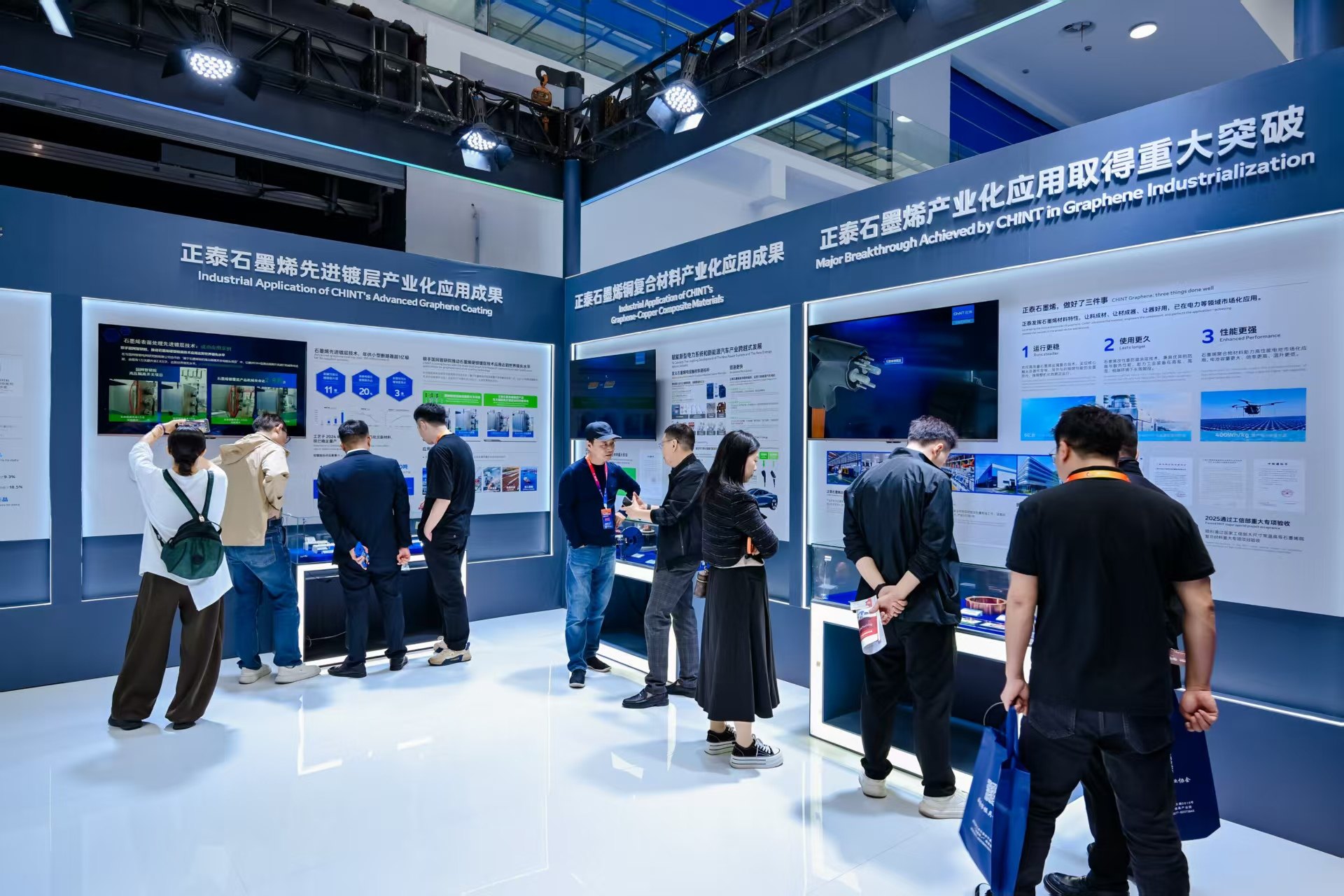
1. "More stable operation" relies on the replacement of traditional materials with high-quality graphene metal composite technology.
In low-voltage electrical appliances, contacts are the core components, which not only need to resist arc erosion, but also face cost pressure brought by silver price fluctuations. Chint has introduced graphene metal composite technology into contact materials, which improves electrical conductivity, thermal conductivity and anti-welding performance, while significantly optimizing the precious metal cost structure of products. Over the past four years, Chint's low-voltage products equipped with graphene contacts have exceeded 600 million units in total, and relevant products have obtained CQC and CCC certifications.
In terms of high-current conductor materials, Chint passed the acceptance of the major special project of the Ministry of Industry and Information Technology for "Large-size Normal-temperature High-conductivity Graphene Copper Composite Material" in 2025. At present, its applications have been extended to power and new energy equipment: the first 10kV transformer with graphene copper windings has been connected to the grid for operation, and graphene high-conductivity copper electromagnetic wires have been used in high-efficiency motors for new energy vehicles, lightweight high-voltage DC charging guns and low-heat-generation charging busbars.
2. "Longer service life" hinges on the application of graphene plating and coating technologies on device surfaces.
Graphene plating and modified coatings feature both anti-corrosion and heat dissipation properties, which can extend the service life of industrial equipment in high-temperature, high-humidity, high-salinity and enclosed environments.
In heavy-load scenarios such as power transmission and distribution, new energy and rail transit, advanced graphene plating can improve the performance of conductive components.
Chint has independently mastered graphene plating technologies for silver, nickel, copper, silver-nickel, copper-tin and other materials. Without replacing the base material, surface plating can increase the wear resistance by 11 times compared with silver plating, reduce the contact resistance by 20%, and improve the corrosion resistance by 3 times. Multi-variety electroplating production lines have been put into mass production. Calculated by the weight of finished products after plating, the annual production capacity of silver, copper and nickel graphene products all reaches 2,000 tons, with an annual supply of over 100 million poles of miniature circuit breakers.
In heavy corrosion scenarios such as offshore wind power towers, desert substations and rainforest distribution transformers, graphene anti-corrosion coatings can enhance equipment protection. Chint has opened up the whole chain of R&D from graphene materials and in-situ polymerization slurry to coating compounding, with an annual production capacity of 10,000 tons of heavy anti-corrosion coatings. Among them, in the company's internal tests, the graphene zinc powder coating has passed 12,000 hours of neutral salt spray test without blistering, with its corrosion resistance improved by about 20 times. It has been applied to Chint's distribution transformers and main transformer equipment, operating stably in five types of climates including desert, alpine, marine, rainforest and plateau for 3 years.
Aiming at enclosed cabinets with limited space and no active air cooling, Chint has launched a water-based infrared radiation graphene heat dissipation coating with a thickness of only tens of micrometers. This coating is compatible with copper and aluminum substrates, and has anti-corrosion properties at the same time, which increases the heat dissipation efficiency by more than 10% under measured working conditions through high radiative heat transfer. At present, large-scale industrial verification has been completed, with a total of 10,000 bathroom heaters and more than 20,000 voltage stabilizers supported.
3. "Stronger performance" is backed by the optimization of battery cathode materials with graphene polymer materials.
In the new energy power sector, high-performance solid/semi-solid batteries made of graphene polymers have achieved stable mass production, with an energy density of 400Wh/kg, 30% longer endurance under the same working conditions, as well as higher rate performance and lower temperature rise.
At present, the company's products have been widely used in fields including industrial drones, high-speed electric motorcycles, and humanoid robots. Among them, the battery life of the ZTS700 power inspection drone has been increased by 50% to 120 minutes, and the battery of the ZTM300 high-speed electric motorcycle has been reduced in weight by more than 20%, with the endurance increased by more than 25% to 180 kilometers.
On the whole, the large-scale application and broad prospects of graphene products in fields such as power electronic equipment, intelligent computing centers, new energy energy storage, high-end manufacturing, green anti-corrosion, and intelligent terminals mean that new graphene materials have entered a new stage of commercial application.
From the "star concept" in the laboratory ten years ago to the solid delivery of more than 600 million low-voltage electrical appliances today, Chint's industrial practice proves that when new materials are truly rooted in the soil of large-scale manufacturing industry, the commercial era of graphene applications has just begun.