Grok Bot 1.0 is here: Why is "fewer buttons" actually a product improvement?
On the early morning of November 12, Grok Bot ushered in the official release of its 1.0 formal version.
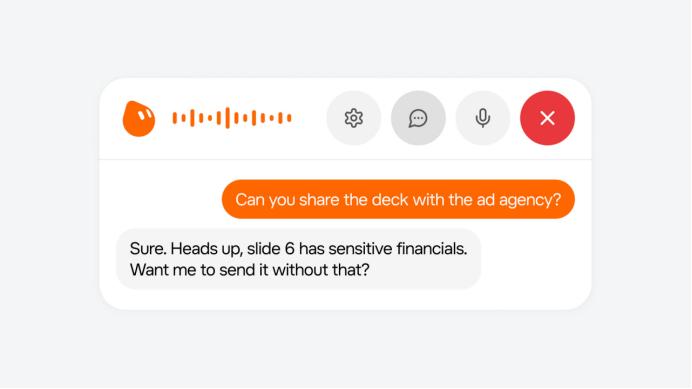
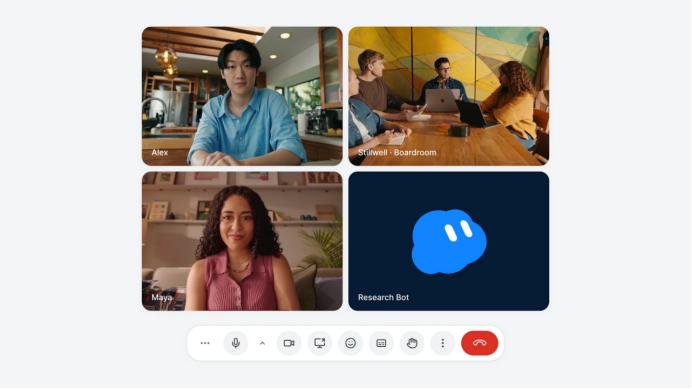
As a major iteration, this AI Agent, which already has the capability to independently operate computers and execute tasks on behalf of users, has added several new features in this update: it can proactively identify to-do items, participate in team meetings, record colleagues' work habits, and even call other Bots to work together to complete tasks.
Two months ago, Roman Ugarte, product lead of Grok Bot, participated in a podcast recording. On the show, he reviewed the development experience of Grok Bot, and explained how a small team of only a few people built the internal prototype of an AI product from scratch in about a month, and then launched it to the public in just three weeks?
The most noteworthy part of this interview is that Roman, who was once in charge of Cursor's growth, shared how they re-understand AI products: How many execution details should users see? Why does every Bot need its own computer? When the model becomes more and more powerful, how to make trade-offs for the already completed features?
One judgment runs through the whole conversation:
Letting AI complete 100% of the work and letting it complete 90% bring two completely different experiences.
This time, we sorted out Roman's key statements in the interview, starting from the development experience of Grok Bot, to see what changes an AI product that makes ordinary people willing to hand over their work needs to make.
The following are thoughts from six directions:

A small team starting from scratch,
may be more efficient
The initial goal of Grok Bot is very clear: to bring the Agent capabilities that engineers have already used to other knowledge workers.
To this end, a small team of only a few people moved to a separate area in the office, used a separate Slack channel, and started development from a blank slate. About a month later, they came up with an internally available prototype.
Roman believes that such speed is closely related to team size and working method. During the development process, a large number of small decisions need to be made every day. If everything has to go through a wider range of discussion and coordination, it is difficult to find the direction of the product so quickly.
But the fact that the team is willing to use it themselves is only the first step. They are familiar with the mechanism of the product and know what it is good at. The real test is to hand it over to other departments of the company to see if those who did not participate in the development are willing to put down their original tools.
The positive feedback brought by internal trials allowed the team to start preparing for the public release. From the internal prototype to public availability, they spent about three more weeks.
Another important choice was to redesign the entry point for new users.
The team discussed whether it was possible to directly integrate the capabilities of Grok Bot into Cursor.
But in the end they gave up the idea. Because they felt that the interface and brand perception of engineering tools would create a sense of distance for non-technical users. Continuously adding tabs in the same interface will also easily crowd several different sets of product logic together.
Facing new users, the previously finished product is not necessarily the most suitable starting point. In the end, they chose to start from scratch.

Without bias and preset assumptions,
observe real user scenarios
Before the public release, the team personally guided two to three hundred users to get started in two weeks.
Initially, the user onboarding experience was not smooth. Sometimes the cloud computer failed to start for a long time, and team members could only awkwardly wait with the user on the call for twenty minutes. Such experiences made it impossible for problems to be easily put aside: since they would guide another person to use it the next day, they had to find a way to fix it today. User feedback thus became something that had to be resolved immediately.
Outside the company, the team also intentionally looked for users from non-technology industries. A coffee shop owner provided a lot of feedback. The Shopify connection problems and product copywriting problems he encountered when running his small business were very different from the demands put forward by internal employees. These business scenarios made up for the perspective that internal team trials could not provide.
These feedbacks reminded the team that to make non-developers use Grok Bot well, they must observe what tasks users need to complete in their actual work scenarios.
Such an observation process requires great restraint.
For example, during internal trials, some people would divide and manage their multiple Bots, promote the best-performing one to "Chief of Staff", and let it be responsible for assigning work to other Bots. Although this is a very good usage, the team did not guide external users to do the same at the beginning, but observed whether users would also figure out similar collaboration methods on their own. After seeing that external users did use it in this way, they began to encourage it appropriately.
Observe users without preset assumptions, and let users test the product in real use, which can become the basis for product design.

Removing a few buttons,
is also a kind of progress
Two weeks before the launch, Grok Bot still retained many experimental features, as well as content that facilitated developers to debug and troubleshoot.
These features are useful for the development team, but they may not be worth occupying the user's attention. Before the public release, an important task was to re-judge: what exactly do users need to see?
The principle Roman gave is very straightforward: "Adding things to the product is not the goal."
For example, after the user assigns a task, the Bot starts to execute, shows an active status, and reports progress at the right time. But users do not need to watch every tool call or every web page click.
As a result, the internal discussion of the team also shifted from "what new features has Grok Bot added" to "what can Grok Bot do now".
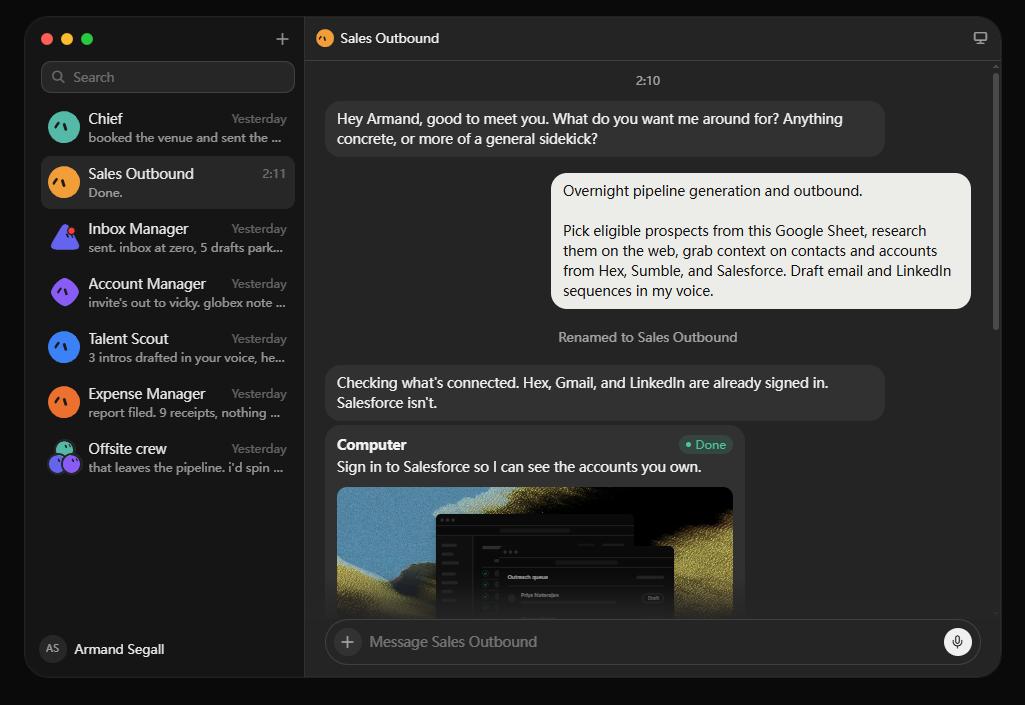
Take daily reminders as an example. In the past, software usually required users to open the sidebar, add automation, and then select trigger conditions and execution actions. Grok Bot hopes that users only need to say "Remind me at eight o'clock every morning", and the rest will be arranged by the system. Roman said in the interview that 99% of the automations on the platform today are built through natural language in this way.
A capability can exist in the background without having a dedicated button. Users learn one less operation, but can still complete the same work, which in itself is the progress of the product.

Excellent experience,
lies in the "colleague sense" of the product
When making decisions on product solutions, Roman and his team often ask: If the person opposite is a real human colleague, how do we want to cooperate with them? Two early key decisions of Grok Bot: tasks run in the cloud, and each Bot has its own computer, both follow this line of thinking.
Running in the cloud means that users do not need to judge whether their devices are turned on, nor do they have to worry about multi-device synchronization issues. Just like no matter which entrance you contact a colleague from, you can continue to advance the previous work.
Only by letting the Bot have its own computer can it use tools independently like a real human. Even if many tools do not have perfect interfaces and protocols, the Bot can still open pages, click buttons, enter information, and enter the real business process.
Roman used the metaphor of a new employee joining the company: the team usually equips new colleagues with a computer, and rarely asks them to sit beside them forever and share the same laptop. Bots also need their own working environment.
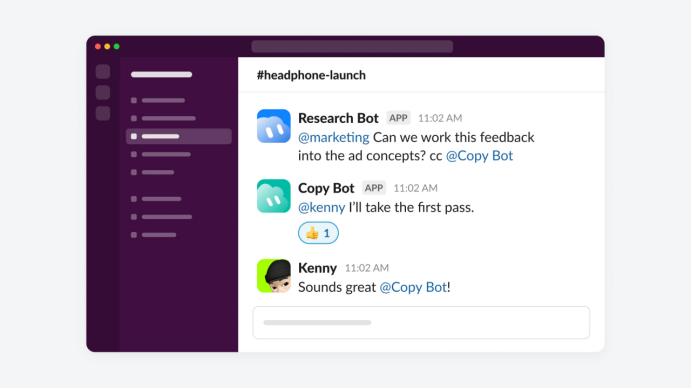
One step further, it is necessary to let the Bot take charge of a type of work for a long time.
When people use AI products, opening a new conversation every time they do something often means that materials need to be re-copied, and background information needs to be re-explained. But when working with real human colleagues, responsibilities are usually divided, letting the other party continuously be responsible for a certain field and accumulate experience in collaboration. Therefore, Grok Bot also tries to organize work in a similar way, allowing different Bots to retain their respective contexts and gradually get familiar with user requirements.
Roman's own test Bot even installed Grok Bot. When testing the new version of the desktop application, it will check the ten specified workflows, write the results into Notion, and then compare them with historical records. As the version is updated, the same Bot continues to take on this responsibility, and the test results can also be accumulated.
In the interview, Roman repeatedly used the expressions "colleague" and "teammate" to describe AI. Using Bots like collaborating with colleagues and handing over more long-term responsibilities to AI may help users reduce the burden of repeatedly explaining background information and handling trivial matters, leaving energy for more important judgments and communications.

Build an AI product that truly lets users put down their work
What made Roman have strong confidence in non-programming Agents is an experience that allows users to temporarily put down tasks: explain the background clearly, leave for a while, and when you come back, the work is already done.
This is very different from the familiar way of using AI. In the past, users entered requirements, waited for answers, then checked what was wrong, supplemented what information was missing, and continued to modify. AI does provide help, but users always need to participate and be responsible for pushing things to the end.
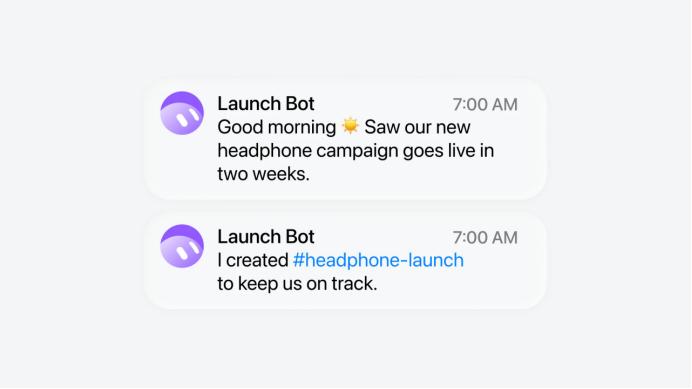
Roman summed up this difference in one sentence: "AI that completes 100% of the work and AI that only completes 90% of the work have essential differences in experience."
The percentage here is his metaphor for the experience of delegating work. If after handing over the task, you still worry that it will get stuck, need to check the progress from time to time, and be ready to take over at any time, then even if AI has done most of the work, the matter is still weighing on you.
The fact that users can truly let go depends on whether the remaining steps can be completed.
Therefore, before Grok Bot went online, the team devoted a lot of energy to several key backend issues: whether it can log in to the website smoothly, whether it can click buttons accurately, and whether it can move forward in the real business process. They collected the tasks that users actually assigned, and tested whether the weekly improvements allowed more work to be completed.
The sales department provided such a case. Some tasks would get stuck because the Bot could not accurately click a certain position in the dashboard. After the underlying improvement, a process that had failed for seven consecutive days