Dismantling aircraft for power supply? The computing power anxiety of AI companies has pushed the fierce cutthroat competition all the way to the power sector.
According to a report by the Financial Times on November 8, Anthropic completed a transaction with OnePWR Solutions, an equipment supplier based in San Antonio, Texas, in late September, locking in the supply of 1.7 GW heavy-duty generators for $3.4 billion (about RMB 22.7 billion) to power data centers.
Earlier in April, AI infrastructure company Crusoe ordered 13 units from ProEnergy in Missouri, each with a rated power of 50 MW, totaling 650 MW, for future U.S. data centers.
Ten years ago, taking the core of an aero engine apart to power a computer room would have been nothing more than a quirky joke in a proposal.
In fact, this is not a technological innovation, but more of a collision between two sets of timing logics: capital expansion is measured in quarters, while the cycle of power infrastructure spans a full decade.
01. Waiting for a single machine takes as long as a full decade
Pablo Koziner, Chief Commercial and Operations Officer of GE Vernova, introduced that currently around 20% of orders in the gas power generation business come from data center and AI-related projects, and the company's order book has already been scheduled to 2030, even 2031.
Meanwhile, in the second quarter of 2026, GE Vernova signed 20 GW of new gas equipment contracts, with backlogged orders plus reserved capacity reaching 116 GW.
Siemens Energy and Mitsubishi Heavy Industries are in a similar situation: their on-hand orders have fully filled existing production capacity, and the delivery window continues to be pushed backward.
The 2026 White Paper on Gas Turbine Industry Development shows that global demand for gas turbines in 2025 is approximately 90GW to 100GW, while the annual production capacity is only 55GW to 60GW. According to another data from the research report of Soochow Securities, restricted by high manufacturing barriers and insufficient gas turbine supply, the order delivery of global leading players such as GEV and Siemens has been scheduled to 2030.
A report from Wood Mackenzie shows that the market imbalance has pushed gas turbine prices to new highs, and it is expected that the market price will reach $600/kW by the end of 2027, an increase of 195% compared with 2019.
According to a report by CLSA, industry insiders also pointed out that although global turbine manufacturing capacity is growing and is expected to reach about 87 GW by 2028, this is still far lower than the projected 129 GW of turbine power demand.
This round of supply-demand mismatch can hardly be resolved quickly in the short term.
Aurora Tenorio, senior analyst at energy consultancy Wood Mackenzie, said when talking about the U.S. gas turbine market: "The delivery times people are discussing are basically concentrated between 2030 and 2031."
In other words, if a computing power enterprise finalizes a heavy-duty gas turbine this year, by the time the equipment is delivered, the mainstream computing power hardware will most likely have gone through multiple rounds of iterations.
The computer room can be built in advance, but the core power supply equipment is still on the way.
Even if you get the equipment smoothly, it does not mean that you can successfully connect to the grid. The capacity assessment and line supporting work related to grid connection is another threshold that is hard to bypass.
According to the forecast data released by Gartner in 2024, the approval for new grid connections in major European and American markets has been scheduled for 24 to 36 months later, and the waiting time is even longer in some regions with tighter supply and demand.
Among them, according to the JLL 2026 Global Data Center Outlook, in the Northern Virginia region, a grid connection application for a 50 MW project may take seven years to process.
Pamela McDougall, Head of Energy Markets for Europe, Middle East and Africa at Amazon AWS, also revealed that the current waiting time for grid connection applications in Europe is as long as seven years.
The capacity assessment of regional power grids, cluster load verification, and transmission and distribution transformation all follow the rolling planning and engineering construction cycle of power grids, and their underlying rhythm does not naturally match the expansion timetable of computing power manufacturers.
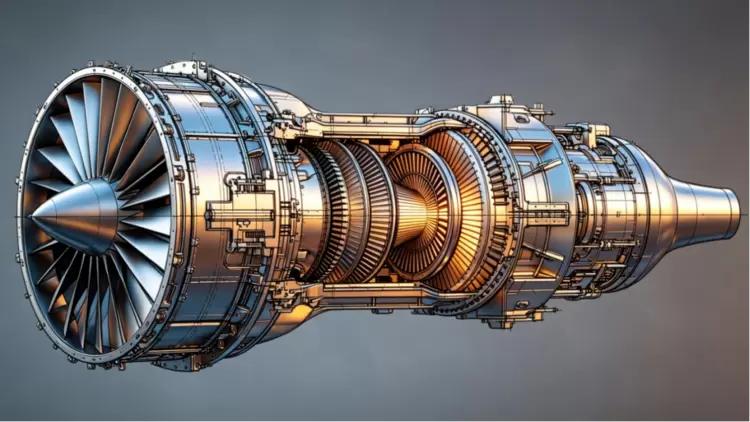
Although local governments and grid operators can narrow the time gap through special docking, supporting projects and phased power transmission, rigid constraints such as grid safety verification, corridor land acquisition and investment plans often become hidden time thresholds for computing power implementation.
Equipment delivery, grid connection and emission permits form three layers of constraints, and getting through one of them does not mean that the remaining stuck points will be automatically resolved.
For Crusoe, this order effectively solves the equipment supply bottleneck first. The two parties signed the contract in April, with the target delivery window set for the summer of 2027, a cycle of just over a year.
There is no authoritative public information on the actual transaction price, exact deployment location and long-term operation mode of these units. The only things the market can confirm are the order size and delivery window, and most other details remain in industry speculation.
This also indirectly indicates that this power supply solution based on the renovation of retired aero engines has not yet formed a mature and standardized industrial route, and is more of an alternative path that multiple parties in the industry are testing.
02. What you save is not just money, but years of waiting time
High-power heavy-duty gas turbines are a typical heavy-asset track, with a long production scheduling cycle for main unit manufacturing, and have long been dominated by a small number of original equipment manufacturers. Even if manufacturers decide to expand production, restricted by constraints on hot-section components, special equipment and process verification, the implementation pace of new production capacity is usually measured in years.
The logic of civil large-bypass aero engines is completely different: after decades of mass production, the civil aviation system has built a global MRO overhaul network and spare parts storage system, and old passenger planes continue to be retired, releasing available engine resources.
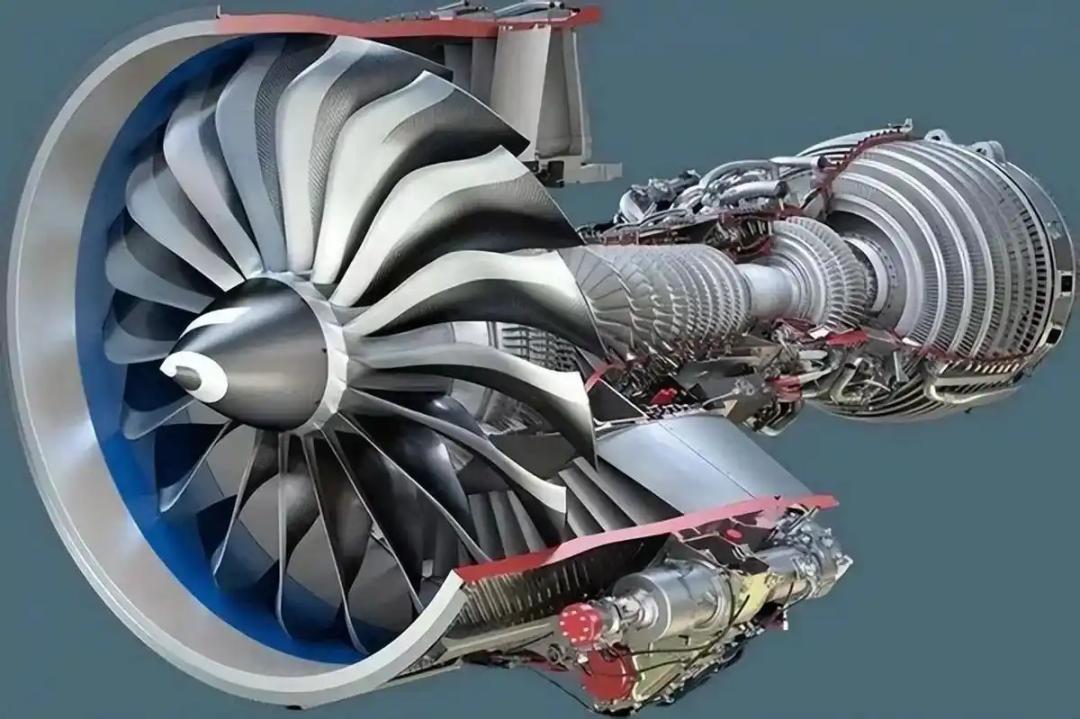
Represented by the CF6-80C2, the main aero engine for aero-derivative gas turbines, which was put into commercial use in 1985, a large number of retired complete engines, disassembled components and overhauled core engines together form a considerable stock resource pool.
The business foundation of aero-derivative generator sets lies exactly here: instead of competing for the tight new unit production capacity in the traditional power equipment system, it draws supply from the huge retired stock assets of the civil aviation industry.
The strong demand on the market side has changed from hidden undercurrents to an open fact.
Ana Amicarella, CEO of equipment service provider Ethos Energy, said that the second-hand market is very hot at present and equipment prices are rising; Darius Padhivala, head of the U.S. after-sales business at Sulzer, also said that the company receives requests every few weeks to find second-hand gas turbines for data centers.
The Tennessee Valley Authority stated that prices of gas turbines, both new and used, have risen sharply over the past two years. Jim Matheson, CEO of the National Rural Electric Cooperative Association, admitted that association members are facing unprecedented long delivery times and continuously rising prices.
According to a report by CLSA, currently, well-maintained second-hand units are priced at about $1.5 million to $1.7 million per MW, and refurbished units are priced at about $1.3 million per MW, which is significantly lower than the cost of new turbines ($2 million to $2.5 million per MW).
Nowadays, the core reason for buyers to choose these products is not to pursue extreme thermal efficiency, but to prioritize the ability to deploy quickly and carry load for power supply as soon as possible.
The urgency of the industry can be seen even more clearly from the transaction cases of small units.
Dan Poole, general manager of ReflowX, which connects buyers and sellers, said that two 14.5 MW gas turbines manufactured by Solar Turbines, a subsidiary of Caterpillar, were recently sold for $12.5 million, equivalent to about $430,000 per MW. He also mentioned that the price of new units is about $35 million and delivery takes five years.
Scott Schrig, sales director of U.S. equipment supplier SVI Bremco, said that they sometimes deploy more than 100 units at a single site, mixing different models and brands.
When the purchaser is willing to accept a highly complex solution with mixed models and hundreds of units connected in parallel, the project priority has been reordered: power supply is guaranteed first, while efficiency, standardization and operation and maintenance pressure have to take a back seat at the current stage.
Other alternative routes are also growing rapidly amid this round of supply gaps.
Anders Lindberg, President of the Energy Business at Wärtsilä Finland, said that since last spring, the company has received orders of about 3 GW from U.S. data centers, for generator sets driven by gas internal combustion engines rather than gas turbines.
The core of this boom in demand for data center power supply equipment is a supply-demand mismatch dominated by delivery cycles.
Although the book purchase price of second-hand and refurbished aero-derivative units is more favorable, they need to bear additional long-term operation and maintenance costs, and their real selling point is delivery speed.
The market is even willing to accept clusters of small units of multiple brands and models connected in parallel, and bear the consequent operation and maintenance pressure.
The alternative route of gas internal combustion engines has also benefited from this round of demand boom.
The trade-off logic for current procurement has shifted: efficiency and standardization are no longer priority indicators, and fast, stable load-carrying output is the most valued condition for buyers.
03. No one can guarantee how long temporary power supply can last
Aero engines are originally designed for variable operating conditions at high altitude: takeoff, climb, cruise, landing, with thrust dynamically adjusted in a wide range, and most of the operating time is not maintained at full load.
The demands of ground power stations are completely different: they require long-term stable, predictable continuous output. For second-hand aero-derivative solutions that have not been verified under power generation conditions, there is a lack of sufficient operation sample support for their durability performance, maintenance rhythm and availability under long-term high-load operation.
Tenorio's warning is exactly focused on this: whether these units transformed from second-hand aero engines can stably support continuous power generation for many years still needs longer-term operation data to verify.
The cost accounting of second-hand refurbished units is far more than just the front-end purchase price.
Some industry insiders pointed out that many refurbished equipment have incomplete operation records, limited remaining service life, and relatively weak long-term technical support from the original manufacturer. In scenarios that require year-round continuous operation and support full-load GPU clusters, these factors exactly constitute the highest-risk part of the full life cycle cost.
For these modified units, the responsible entities for warranty, spare parts and technical support are usually integrators and third-party maintenance providers, and the original manufacturer's complete unit guarantee system no longer covers them.
It can be said that most of the underwriting risks within the full life cycle of the assets have been transferred from the original manufacturer to the project operator and integration service provider.
And this is not a hard defect of the unit itself, but an inherent cost brought by the transaction structure when choosing this supply route.
Emission and air permits are another tightening red line.
Recently, xAI, Elon Musk's artificial intelligence company, has deployed eight gas turbines modified from aero engines in Mississippi, USA, to provide power for its Colossus 2 data center in Memphis, Tennessee.
The gas turbines deployed by xAI this time have already aroused doubts from local environmental protection organizations about pollutant emissions, and the adjustment of emission limits in relevant permit documents has also attracted attention.
Neither stored units nor retired CF6 core engines are sustainable stock supplies, and they have clear generational restrictions. When this batch of available engines is exhausted, there is no answer yet as to whether the new generation of civil aero engines can replicate this low-cost transformation path.
At the same time, rising quotations for second-hand units, TVA's confirmation of the general price increase of various gas turbines, and middlemen constantly seeing buyers raising prices, these multiple signals jointly indicate that this round of supply window relying on retired aero engines can hardly continue to expand, but is gradually narrowing.
Of course, this batch of equipment is not necessarily doomed to become sunk costs. After all, aero-derivative units are modular, easy to disassemble and transport, and occupy a small area. Theoretically, they can be relocated to other projects for reuse, or sold as adjustable capacity in the power market.
From this perspective, they are more like relocatable transitional assets, different from traditional heavy power assets that are firmly anchored at the site and difficult to reuse in other locations.
However, this is ultimately just a theoretical possibility: transportation costs, repeated compliance certification, and fuel pipeline transformation will all erode the residual value of the equipment.
Putting all the constraints together, we can draw a relatively prudent judgment: whether this batch of units launched to catch the power supply window will eventually become effective assets or impairment burdens depends more on the external conditions evolving over time, rather than purely on the technology itself.
If grid expansion is completed within three years, gas prices remain stable, and carbon constraints do not tighten sharply, this batch of units will complete their phased tasks and no longer undertake core power supply loads; once the grid connection cycle continues to extend and the computing power premium remains high, this solution is expected to be self-consistent and generate good returns.
In essence, it bridges the completely different time scales of the two systems: AI capital expansion advances on a quarterly basis, while the implementation cycle of power infrastructure spans a full decade, and the gap between the two has spawned this type of alternative power supply solution.
Compared with the quirky narrative, three clues are more worthy of continuous observation: the progress of capacity ramp-up of original gas turbine manufacturers, the decline speed of grid connection waiting time, and the trend of emission permit regulation.
The convergence trend of the three will determine the fate of these units: whether they will remain stably on the asset side, or enter the path of impairment provision.
This article is from the WeChat official account "Silicon Carbon Variable", author: Shen Lang, published with authorization from 36Kr.