Another college student from the village, why is it still an action game?
Phantom Blade Zero is a hit, but why is it another Soulslike?
At the end of October, Phantom Blade Zero, long-awaited by Chinese players, finally arrived as scheduled.
Excitingly, this new domestic blockbuster has got off to a pretty good start.
In terms of commercial performance, Phantom Blade Zero sold over 4 million copies within 72 hours after its release. Estimated at the standard price of 268 yuan, the game's revenue has reached the order of 1 billion yuan. Combined with industry experience, the first-year sales of similar products are roughly 2 to 3 times the first-week sales, which means it is a high probability event that Phantom Blade Zero will exceed 10 million copies in first-year sales.
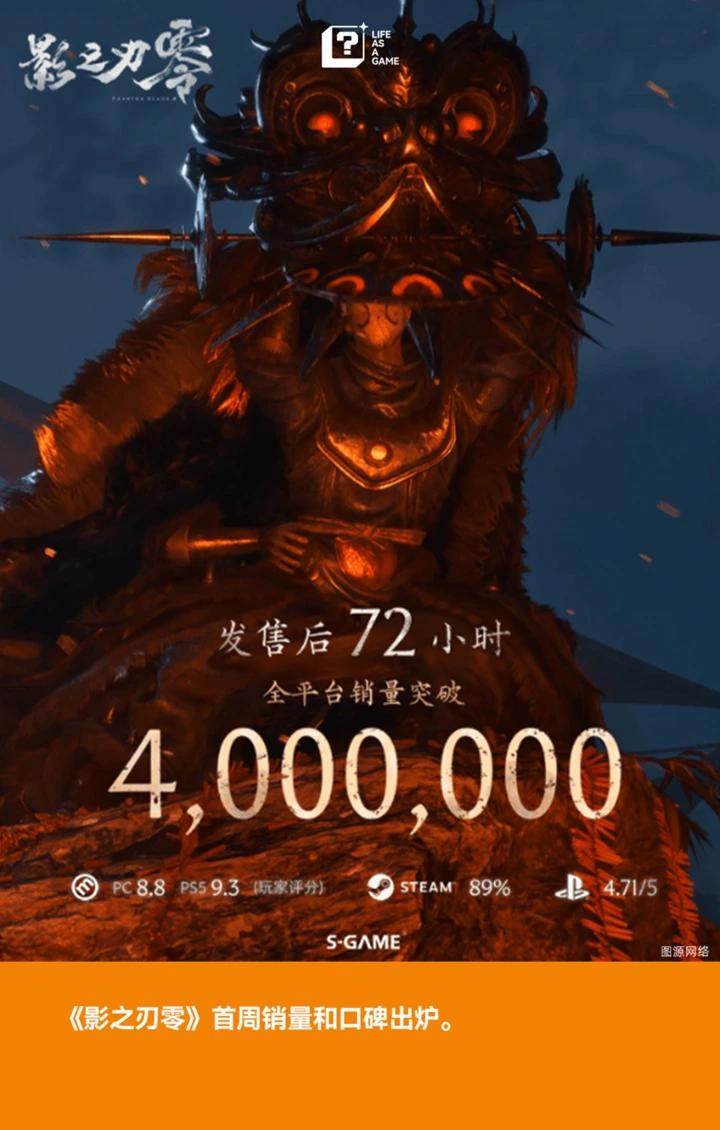
Apart from sales, this new work also has a very solid reputation, with an average media review score of 88. For comparison, Black Myth: Wukong has an average Metacritic score of 81, and Onimusha: Way of the Sword scores 82 (both are PC version ratings). On the player side, users on major platforms such as Steam have given positive feedback.
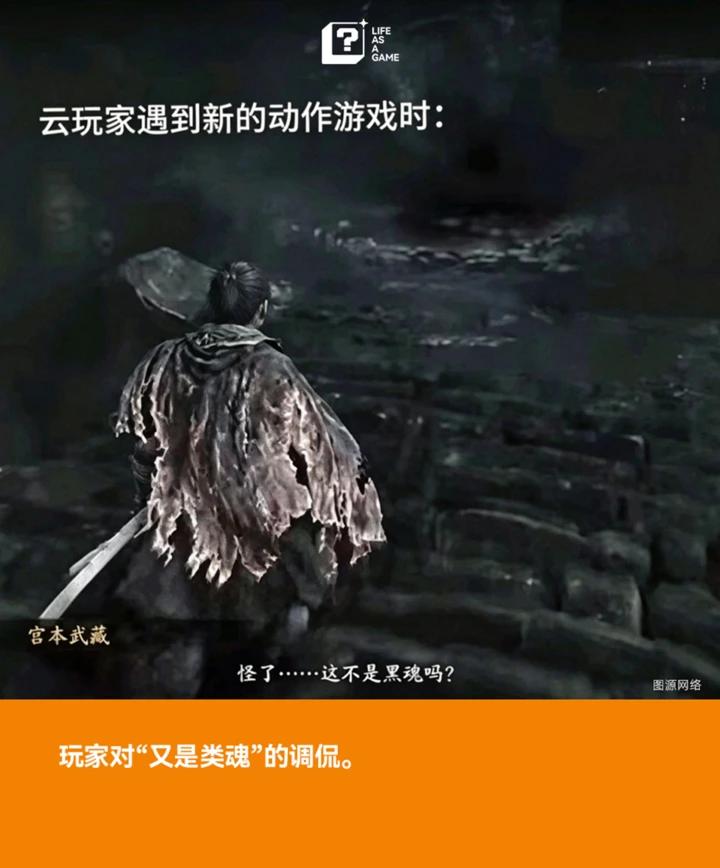
However, amid the celebratory hype, dissenting voices are not absent in the player community, especially the questioning of "why is Phantom Blade Zero another Soulslike".
The so-called Soulslike refers to games that imitate the famous masterpiece Dark Souls in multiple dimensions such as gameplay difficulty, action design, and story atmosphere. Although Phantom Blade Zero does not strictly belong to this genre, and its producer Liang Qiwei does not agree that what he made is a Soulslike, the doubts raised by some players are not completely unreasonable.
After all, Soulslike broadly belongs to action games, and the introduction of Phantom Blade Zero on the PS Store clearly marks it as a "dark martial arts action adventure game". At first glance, there do exist certain commonalities in the content features of the two.
In fact, it is not just Phantom Blade Zero. Looking at those domestic single-player projects that aim for 3A standards, describing them as "almost all action games" does not seem to be an exaggeration.
23 Games, 20 "Swords"
Nowadays, among domestic single-player games that follow the blockbuster route, the proportion of action genre is surprisingly high.
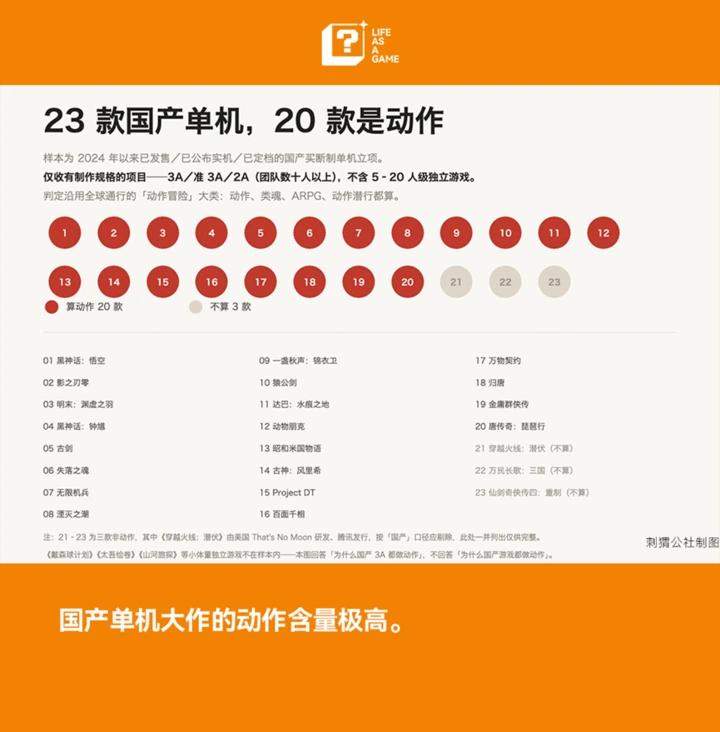
First look at the released works, the 3A-scale titles Black Myth: Wukong, Phantom Blade Zero and Ming Dynasty: Wraiths of the Void are all undisputed action games. Even the 2A works Lost Soul and Infinite Mech with relatively small development teams and low capital investment are positioned as action games.
If we add the games that have been approved for development but not yet released, the proportion of action genre remains surprisingly high.
According to incomplete statistics from industry insiders, since the release of Black Myth: Wukong, 20 out of 23 large-scale domestic paid single-player games (including released and approved projects) can be roughly classified as action games, covering subgenres such as Soulslike, ARPG, high-speed ACT and stealth action, accounting for as high as 87%.
On the list, there are only 3 games that do not involve action elements: The Long March of the People: Three Kingdoms is positioned as an SLG, Chinese Paladin 4 Remake is a turn-based role-playing game, and the FPS blockbuster Crossfire: Hidden Side published by Tencent is actually developed by an overseas team.
Roughly speaking, when various new domestic action games release their actual gameplay demos, high-speed information game elements common in Soulslike games, such as parry, posture bar and move memorization, appear more or less in the videos. This is why many players frequently sigh that "it is another Soulslike".
Of course, action games are also mainstream overseas, but their popularity is far less prominent than in the Chinese market.
According to reports from multiple research institutions, action games account for about 30% to 40% of global paid single-player blockbusters. We counted 46 paid single-player blockbusters that have been released or scheduled for release this year, 18 of which can be classified as action games in the broad sense, accounting for about 39%, which is basically consistent with the data of third-party institutions.
It can be said that the 40% proportion means that action games are already the undisputed top global 3A genre. However, compared with the 87% proportion of action games in domestic blockbusters, this figure is far less prominent.
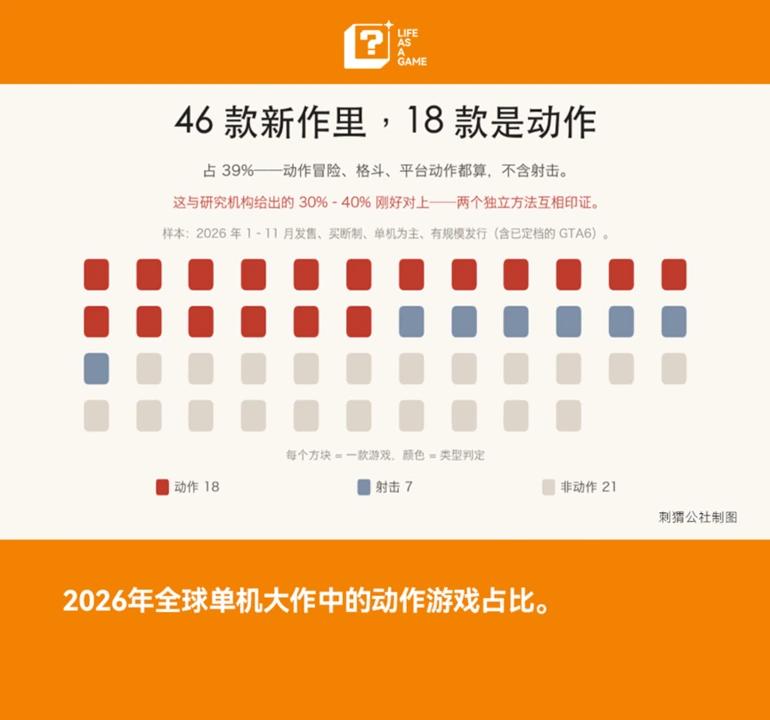
In other words, a globally mainstream genre has become an almost exclusive option in the Chinese market.
So what has led to this situation?
Admittedly, the direction of game development is often related to the content preference of creators. For example, Feng Ji, the producer of Black Myth: Wukong, once said in an interview that the game with the longest playtime of the Game Science team on Steam is Monster Hunter: World, and the second and third places are also ARPG games, so they chose to make Black Myth: Wukong an ARPG.
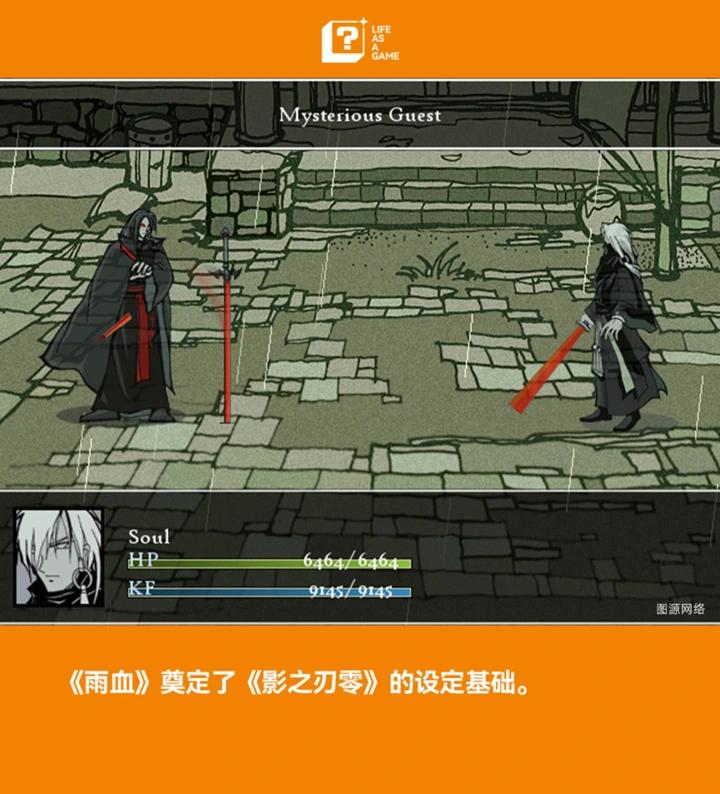
As for Leiting Games, the developer of Phantom Blade Zero, it has been making action games for more than ten consecutive years before developing Phantom Blade Zero, including the Rainblood series and the previous Phantom Blade series, which shows the team's persistence in action games.
The problem is that the choice of one or two projects can be attributed to the personal interest of creators, but when this choice becomes the common answer of the entire market, there must be more structural reasons behind it.
The explosion of action games is filling the gap left by mobile games?
Market gap is the key reason why domestic single-player blockbusters are flocking to the action track.
For many years, the demands of local players for different game genres have been almost met by a rich variety of mobile game works. From first-person shooter to multiplayer online battle arena, to anime-style, SLG strategy, casual party and other categories, domestic mobile games have no lack of excellent long-term operation models.
However, in the global large category of action games, the proportion of Chinese mobile games is extremely low.
We counted the top 50 Chinese mobile games by revenue in 2025, and only 5 of them can be called "action games": Naruto Mobile, Dungeon & Fighter: Origin, Genshin Impact, Wuthering Waves and Where Winds Meet. But even calculated according to such a rough standard, the proportion of action games in top Chinese mobile games does not exceed 10%.
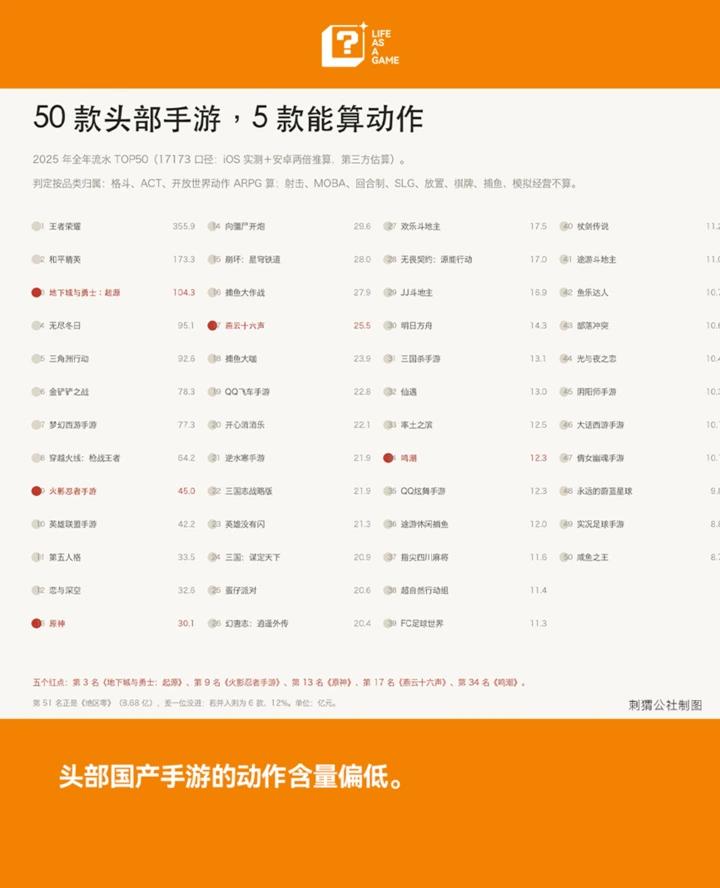
The reason for this situation is, on the one hand, high-speed information-driven action games usually require a large number of keys, which creates an inherent contradiction with the operation conditions of mobile terminals.
Take the recently released Onimusha: Way of the Sword as an example, there are multiple mechanisms in the game such as parry, insight, block, deflection and instant kill, each corresponding to independent buttons and timing. For PC or console users, this is not a problem, because the keyboard can assign different keys, and the controller can use combined buttons.
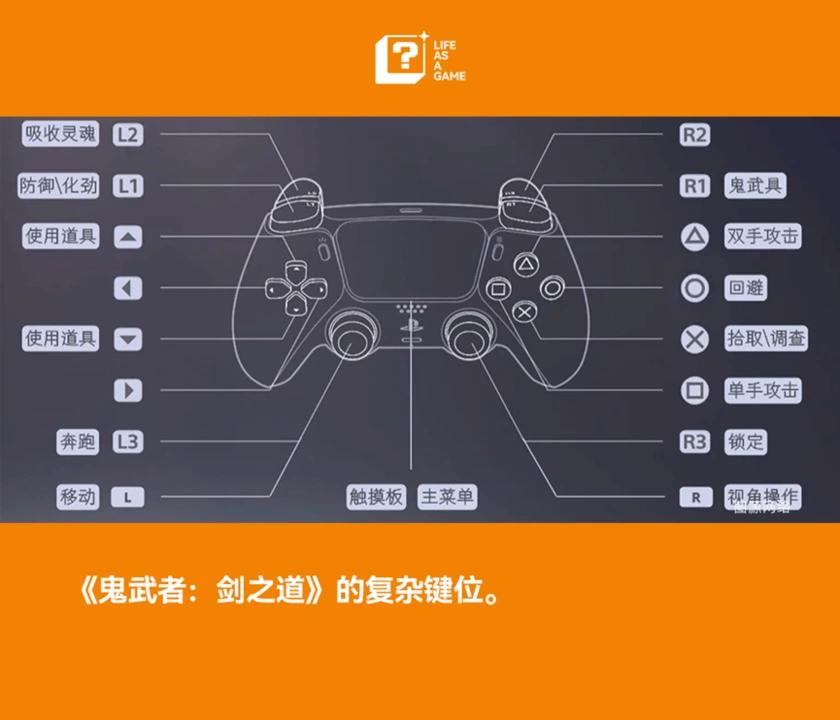
But imagine if players need to operate Onimusha: Way of the Sword on a mobile phone, the situation will be completely different. A 6-inch touch screen needs to not only display the game screen, but also add more than a dozen key positions, which will not only cause visual pollution, but also make it difficult for players to get fun from "tapping on the glass screen".
On the other hand, from the perspective of commercialization, the F2P business model that dominates the mobile game field is also mutually exclusive with the pleasure acquisition mechanism of action games to a certain extent.
It should be noted that the reason why people can get pleasure from action games is largely because of its natural challenge. Players need to quickly find the most reasonable response in a complex information environment, manage limited resources, and deal with different powerful enemies.
But in the framework of free games, this pleasure mechanism will face many problems. Because once manufacturers choose the monetization path of numerical payment, the action fun of thinking and playing against each other will be eliminated by the game environment where "you can get stronger by paying".
Even if manufacturers do not choose numerical payment and only make payment for skins, the cost-effectiveness of long-term updates of action games also needs to be carefully calculated. In the long run, if manufacturers keep updating hardcore action gameplay to support the payment points for appearances, the workload and difficulty will be much greater than that of any 3A action game with 50 hours of experience.
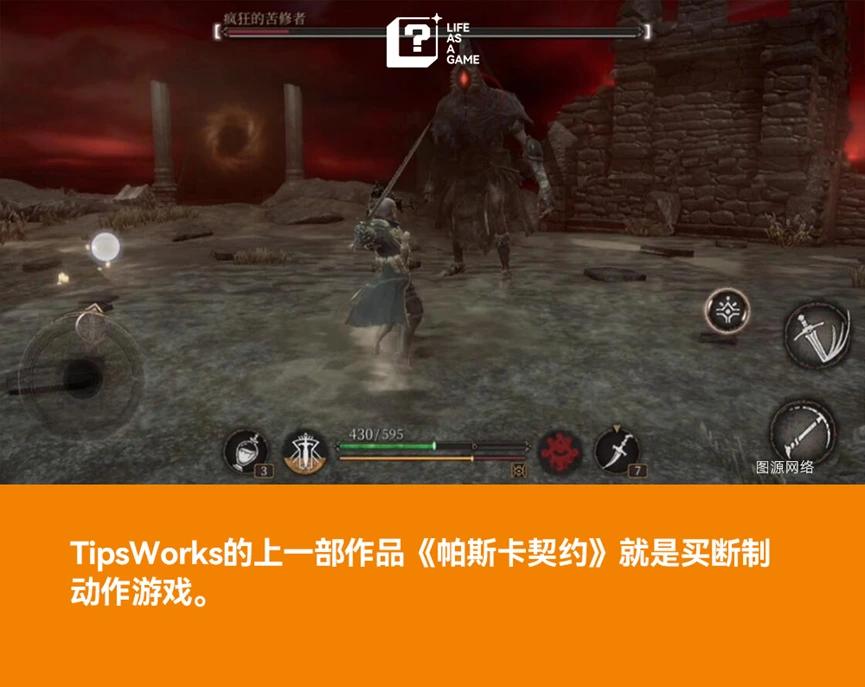
In fact, The Eternity Covenant, an ARPG game published by Papergames and developed by TipsWorks Studio, once considered adopting the F2P business model. The game producer once promised not to engage in numerical payment and character gacha, but then the team experienced large-scale layoffs, and the project also turned to paid single-player, which shows that the inherent contradiction between this type of game and the F2P model is still an industry problem.
And this just leaves a good gap for creators of domestic single-player games to fill.
Make what others don't make, make what others can't make
It should be noted that in the tracks where mobile games perform well, Chinese large manufacturers have almost reached the ultimate level, making it extremely difficult for single-player developers to break through.
For example, in the open-world pet-catching category, Roco Kingdom: World has reached a level close to or even surpassing the Pokemon series in terms of game graphics and scene interaction, and maintains a low-payment ecosystem with a large number of daily active users. In this case, the way for Chinese single-player games to enter the pet-catching category is almost "blocked".
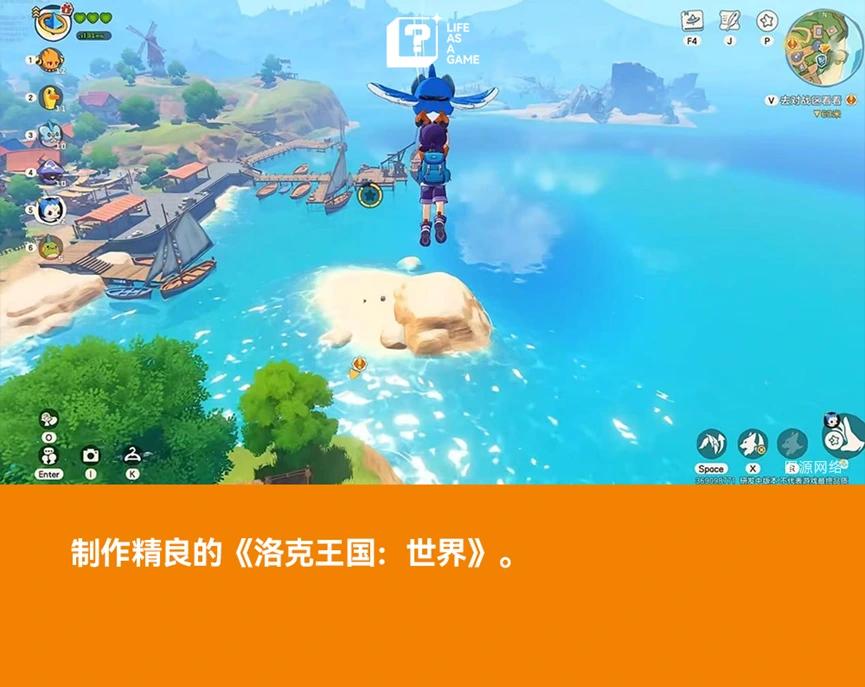
After all, it is difficult for any developer to answer such a question in the project approval meeting: why should players spend 268 yuan to buy your paid pet-catching game instead of directly playing the free Roco Kingdom: World?
In fact, The Long March of the People: Three Kingdoms, a paid SLG game under NetEase, has experienced twists and turns such as "project cancellation" and "production team disbandment" because the test data did not meet expectations.
The concerns of manufacturers are not difficult to understand. When mobile games such as Three Kingdoms: Strategic Edition and Conquer Online have met the needs of a large number of SLG players, it is really difficult for a new paid work to re-screen out single-player players who are willing to pay.
In this regard, other game genres are facing similar problems.
In general, the highly developed domestic mobile games have brought huge competitive pressure to multiple game categories, but they are not good at carrying relatively hardcore action gameplay on mobile terminals. Under the two-sided squeeze, local single-player blockbusters will naturally tend to choose the path of action games.
At the same time, the demonstration effect of the leading players is also playing a role.
The phenomenal popularity of Black Myth: Wukong in the past has proved that there is indeed such demand in the Chinese game market. Now the success of Phantom Blade Zero has taken over the baton, proving that the success of Black Myth: Wukong is not a unique case that only relies on favorable timing, location and people.
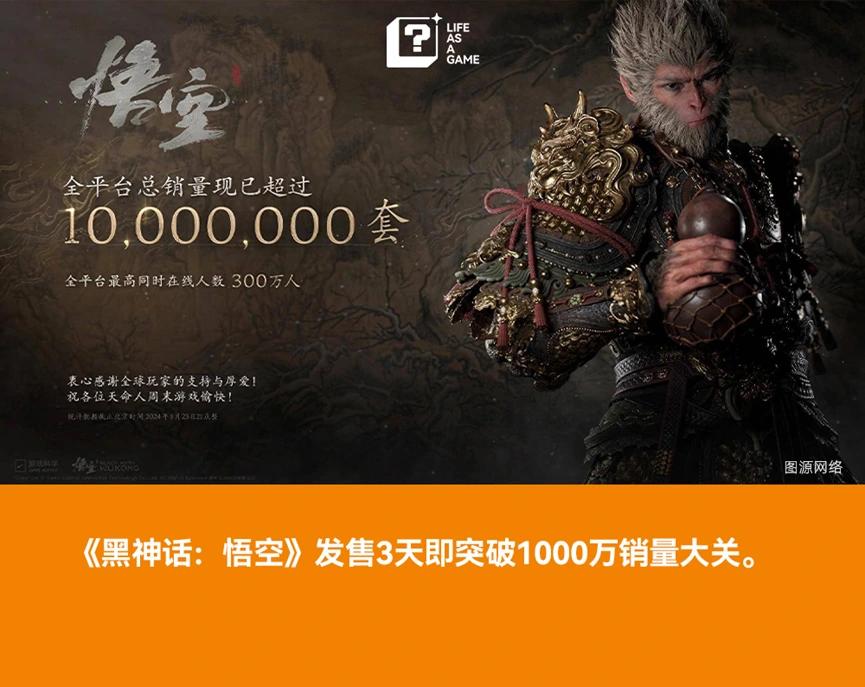
The results show that as long as the game quality is up to standard, there is no lack of consumers willing to pay in China and even the global market.
Of course, in this process, there will inevitably be more or less questioning voices of "another Soulslike" and "another action game". But in the final analysis, the principle of "voting with your feet" applies to any industry. This is the result of market selection, and it is also the only way in the initial stage of industrial development.
With enough time, when the user base of the local single-player market further