Google launches a surprise offensive against NVIDIA: it accelerates the delivery of full-rack TPU offerings for external sales, with its inference performance per dollar 50% ahead of GB200.
NVIDIA has far more headaches lately than just the issues faced by Jensen Huang.
This week, Google launched two new TPU chips, targeting confidential inference and long context respectively. Adding the two TPU chips released in the first half of the year, the 8th-generation TPU has now expanded to four configurations.
This year, Google launched four TPU systems within a single calendar year for the first time. And Google's ambitions for TPU may be far greater than the outside world imagines —
Also this year, Google broke with convention and started selling TPU systems to external parties.
Qbit learned from internal sources at Google that the company is brimming with confidence internally, claiming that "TPU's market share will rise rapidly next year", and by that time "more large enterprises will adopt TPU on a large scale".
As for performance, they are also full of confidence.
At least in the eyes of Google's senior executives, "the days when NVIDIA dominates the entire market alone are coming to an end".
(Lisa Su: Huh?.jpg)
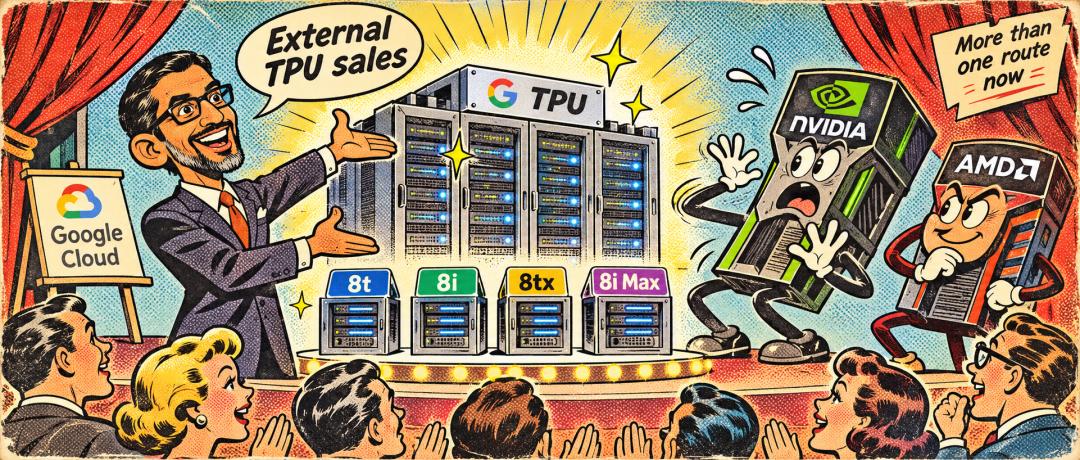
△ Image generated by AI
"Just like NVIDIA", Selling TPU Systems to External Parties
This year, Google made a decision that went against its long-standing convention —
For the first time, it sold complete TPU systems to external customers.
Qbit learned from sources close to Google that this decision was pushed forward by an executive who joined the company less than three years ago.
Amid huge internal debates, he strongly advocated changing TPU's business strategy, and finally convinced the management to make up its mind to sell TPUs to external customers "just like NVIDIA".

△ Image generated by AI
Back in 2013, TPU was just a special-purpose acceleration chip self-developed by Google to reduce the computing power cost of its own AI business, and it was not until 2018 that Google opened up TPU computing power leasing to external parties on Google Cloud.
The cloud leasing model means that all TPU-related hardware infrastructure is managed and operated by Google.
However, fast forward to this year's Q1 earnings call, CEO Sundar Pichai stated that Google has observed "strong demand" for TPUs from AI labs, capital market firms and high-performance computing application fields, announcing that it will support deploying TPUs in customers' own data centers for some selected customers.
Internally, this round of external sales is regarded as a structural replacement of "supporting R&D with sales" — using external orders to share the huge capital expenditure of data centers, and using scaled demand to drive down the cost curve of self-developed hardware.
Starting from Q2, Google delivered complete TPU systems to customers.
The system includes a full set of capabilities such as computing, storage, network hardware and software, and also provides services related to training and inference.
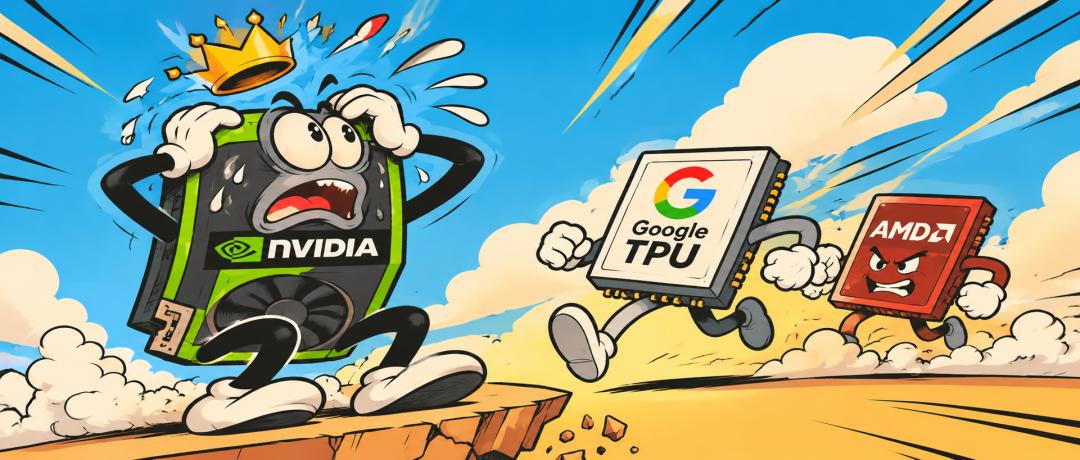
△ Image generated by AI
This business model has begun to show revenue potential.
Since the beginning of this year, the growth of Google Cloud has been accelerating all the way. It increased by 63% year-on-year in Q1, 82% in Q2, and in Q3, its revenue reached 30.7 billion US dollars, up 103% year-on-year; its operating profit also rose from 3.594 billion US dollars to 11.121 billion US dollars.
(Whispering quietly, Google Cloud is probably the only part of the Q3 earnings report that doesn't make people frown)
Google's parent company Alphabet explicitly stated that TPU system sales are one of the important contributing factors to Google Cloud's growth in the third quarter.
In the latest 10-Q filing, Alphabet has clearly listed "product sales, mainly TPU systems" as part of Google Cloud's revenue. The management expects TPU system sales to continue to expand in Q4.
Although the vast majority of contract revenue from TPU system sales will not be recorded in the financial statements until 2027 and has not yet been reflected in the current earnings reports, this trend is unlikely to be reversed.
Why Did Google Do It Only This Year?
In fact, Google's external sale of TPUs is an inevitable choice resulting from the combined effect of natural evolution and external conditions.
Although at the Q2 earnings call, Sundar Pichai said that Google's internal computing power demand for cutting-edge AGI is still an uncrossable red line, in the past two years, high-end GPUs have been in continuous short supply, and customers who cannot purchase NVIDIA products have had to look for alternative solutions.
Google wants to seize this window of opportunity.
The 7th-generation TPU Ironwood released in 2025 was already specifically designed for inference. For this year's 8th-generation products, Google further split training, real-time inference, confidential computing and ultra-long context into different system configurations.
Amin Vahdat, head of Google's chip business, revealed publicly that "the future belongs to specialization", whose intention is exactly to use the specialized chip route to shake the foundation of NVIDIA's narrative that "one general-purpose chip can handle all scenarios".
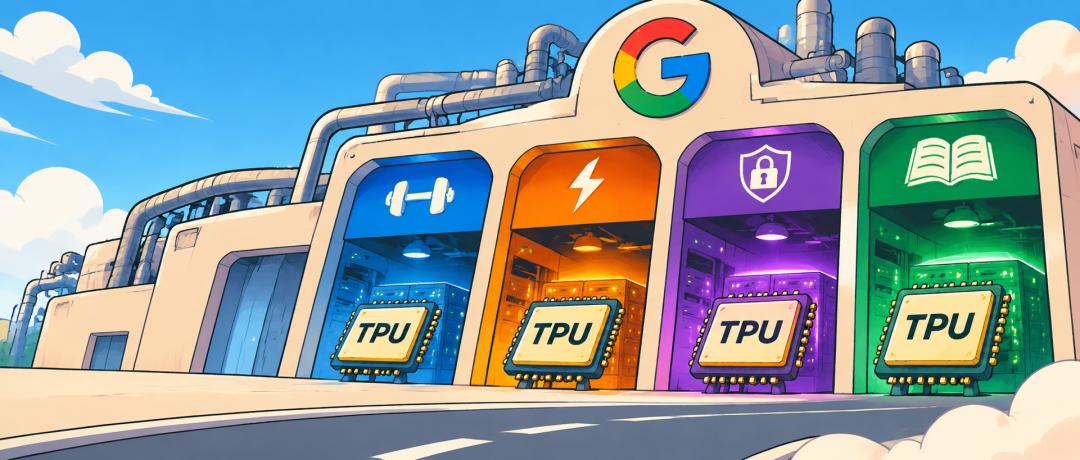
△ Image generated by AI
Secondly, Google has been working at full speed to make up for its lessons on the TPU software ecosystem.
One of NVIDIA's biggest advantages over the years is the CUDA ecosystem. NVIDIA completed the full toolbox for AI developers very early, and a large number of software programs have been adapted and optimized around CUDA.
As the mainstream AI framework, PyTorch has the most mature support for CUDA.
The mainstream path in the industry is to build models with PyTorch, and call NVIDIA GPUs via CUDA, building up an irreplaceable ecological barrier.
However, for a long time, Google TPUs were deeply bound to TensorFlow and JAX, and their software and hardware stacks differed greatly from GPUs, leading to very high migration thresholds.
In mid-2025, Google finally started to develop TorchTPU together with Meta's PyTorch team, aiming to support running PyTorch models on TPUs with only a small amount of code modification.
At the end of last month, this collaborative outcome TorchTPU was officially open-sourced.
I believe there is no need for me to elaborate on what effects this will bring.
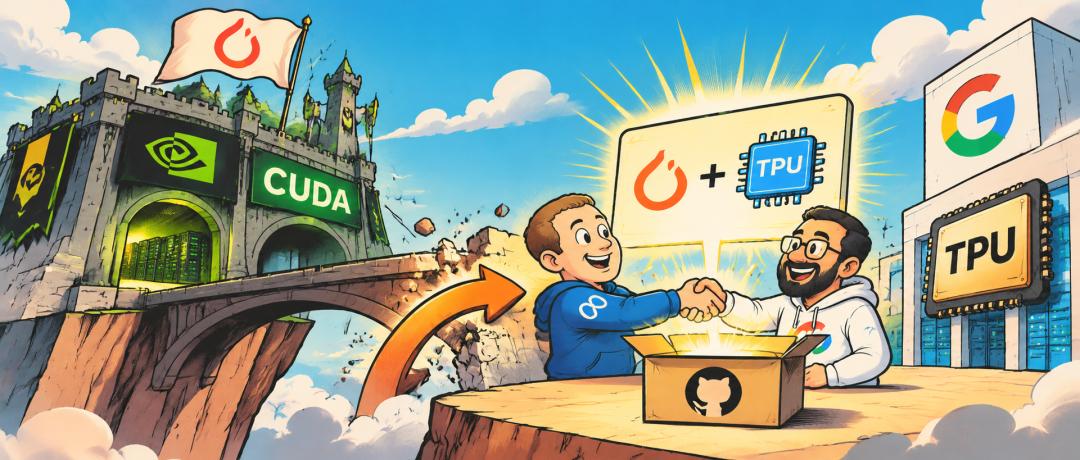
△ Image generated by AI
In terms of performance and cost, on November 5, SemiAnalysis released a new set of Agent inference test results.
The results show that on models such as Muse Spark, Google's 7th-generation TPU Ironwood has achieved higher token output per dollar than NVIDIA GPUs in some tests.
Previously, NVIDIA only lost to AMD in a few scenarios; the cost-performance shock brought by TPU is a situation it has never seen and does not want to accept.
SemiAnalysis stated that after Google submitted AgentX test results proving that TPUv7 can beat GB300 NVL72 FP4 in terms of performance per dollar, NVIDIA quickly assembled a team of engineers to fight back.
NVIDIA's engineers and Agents worked overtime at high intensity day and night, with no weekends.
They even worked until 2 a.m. local time.
After four rounds of optimization, in the test of a certain model, the token output per dollar of GB300 finally surpassed that of TPU by 1.5 to 2.6 times.

AMD is catching up from within the GPU camp.
Behind it, Google is trying to shake the position of GPUs as the default computing power option from the architecture level.
NVIDIA can hardly avoid competing against itself this time!
Jensen Huang's troubles have not yet been resolved, and unexpectedly the AI chip market will add another "dilemma" for NVIDIA.
It is truly a troubled time for NVIDIA, a troubled time indeed...
References:
[1]https://newsletter.semianalysis.com/p/tpu-strikes-the-king?utm_source=chatgpt.com
This article is from the WeChat official account "Qbit", author: Heng Yu, published with authorization from 36Kr.