Why has AI caused such widespread panic across the gaming industry?
The games that use AI the least get the harshest criticism, while those that use AI the most draw both amazement and skepticism. The "domestic 3A blockbuster" *Jimao*, which stole a foreign developer's demo, only ended up being a laughing stock.
When House House finished developing *Big Walk*, it probably never expected to be pushed to the forefront of public controversy just because of ten lines of code.
Even though the AI intervention was extremely low, almost undetectable, and the game itself had a good reputation, the public disclosure immediately ignited anti-AI-generated content sentiment, with a large number of players flooding platforms such as Steam to leave negative reviews.
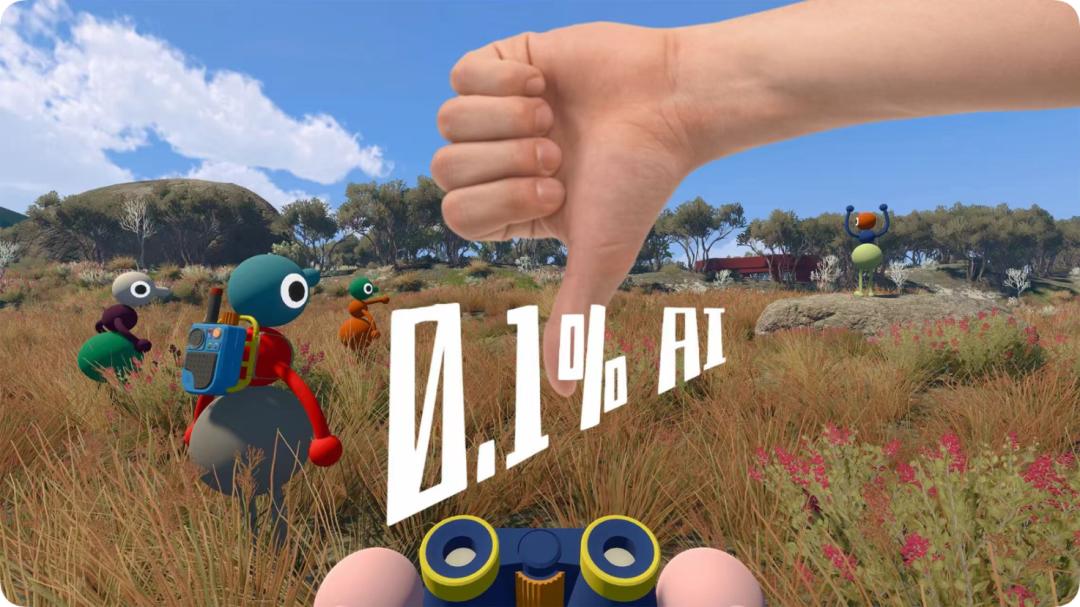
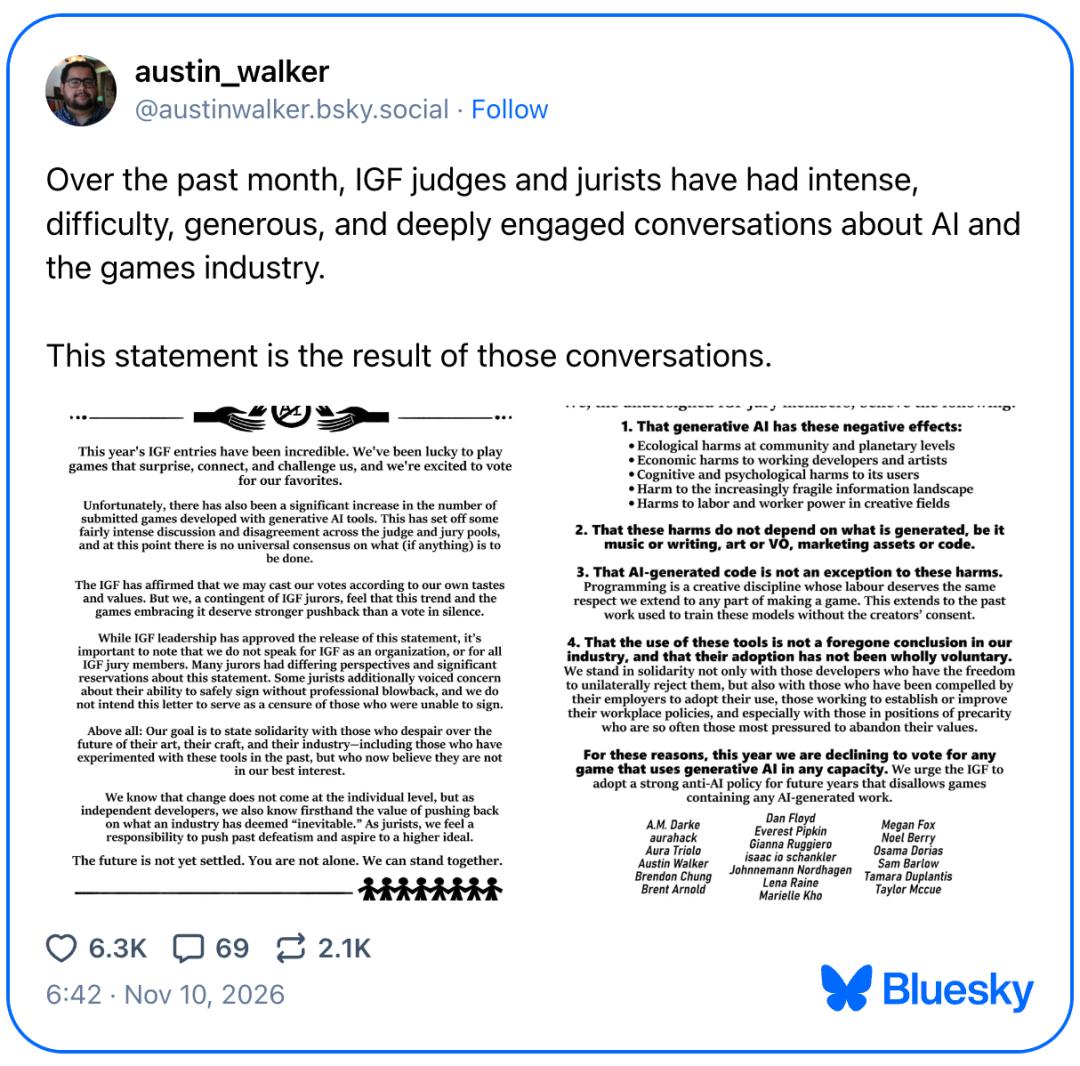
At the same time, 19 IGF (Independent Games Festival) judges explicitly stated that they would not vote for any game that uses generative AI.
AI-generated Code Accounts for Less Than 0.1% — Why Did It Get Torn Apart?
House House is a small Australian studio, which rose to fame with *Untitled Goose Game* released in 2019.
*Big Walk* is a co-op adventure game they spent six years developing. When it launched in early August, its Metacritic score once reached 94, ranking the highest of the year, and it was also nominated for Best Game of the Year at the Golden Joystick Awards. Before the controversy broke out, this game was almost regarded as a benchmark for independent games.
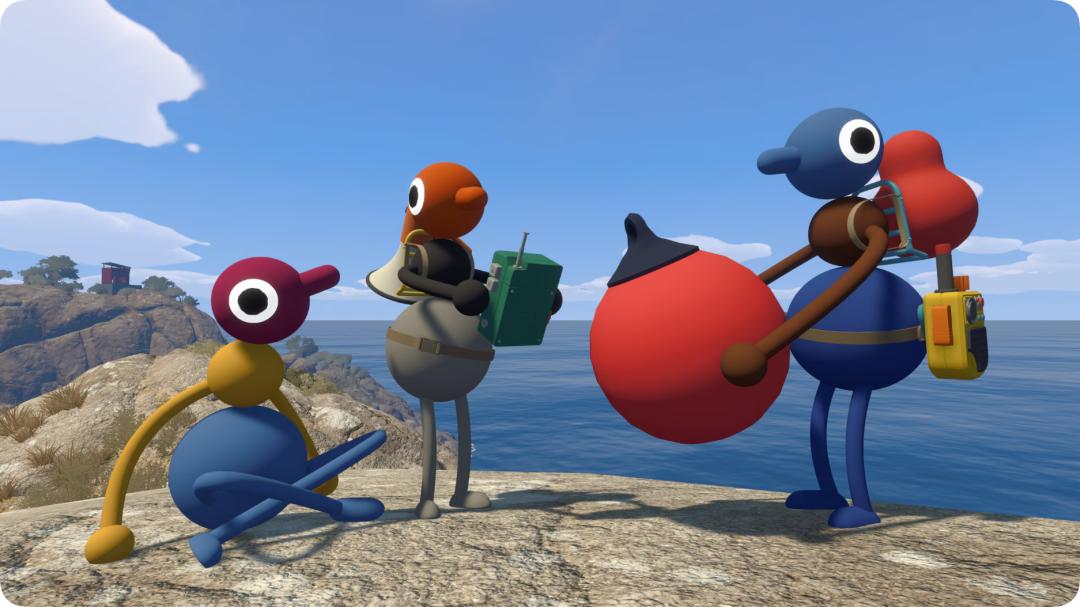
Image source: House House
The problem lies in Unity's Universal Render Pipeline, or URP. *Big Walk* had a shadow culling defect — shadow casters behind the player were rendered to infinity, causing the game's frame rate to drop sharply by about 50% for nearly 20 seconds during sunrise and sunset.
The studio did its own research, looked through the URP source code, and couldn't find a solution. Later, they contacted an official engineer at Unity, who asked his colleagues and finally replied that the modification they wanted was "impossible" to implement.
After that, they sent the problem to an LLM chatbot. After several attempts and setbacks, they finally found a feasible direction. The studio modified and adjusted this direction, and implemented it into about 10 lines of rewritten code in the URP source code. The studio estimates that the amount of AI-related code is less than 0.1% of the total game volume, and generative AI was never used for the game's art creation.
That's all there is to it.
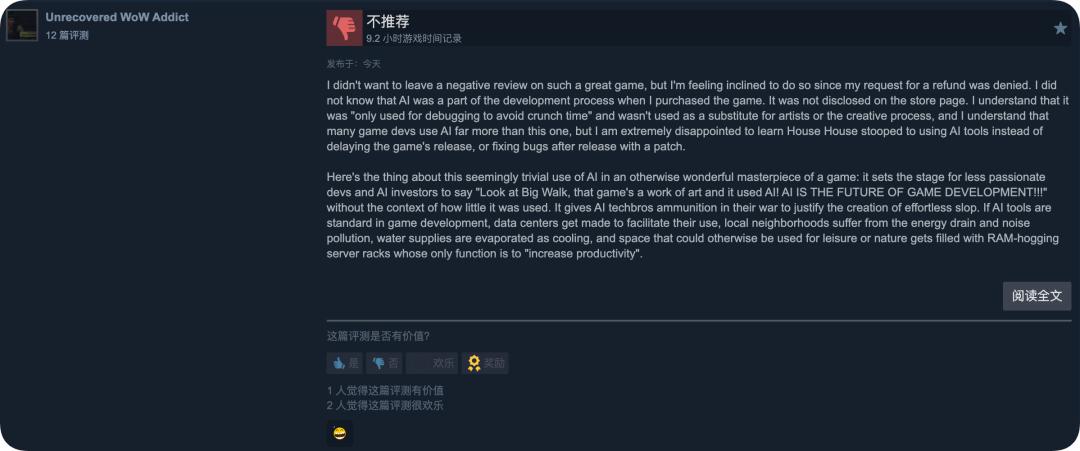
House House updated its FAQ and took the initiative to disclose these details, but this triggered a joint statement from the judges and a collective stance from players. Some players left negative reviews on Steam on the grounds that "undisclosed AI use is misleading about the game's quality and the effort put into it", and some applied for refunds.
The studio later said in a statement that there was no internal AI usage policy during the development of *Big Walk*, which was "a mistake".
Ironically, although the IGF leadership expressed support for that statement, it did not officially announce that *Big Walk* was disqualified from the competition.
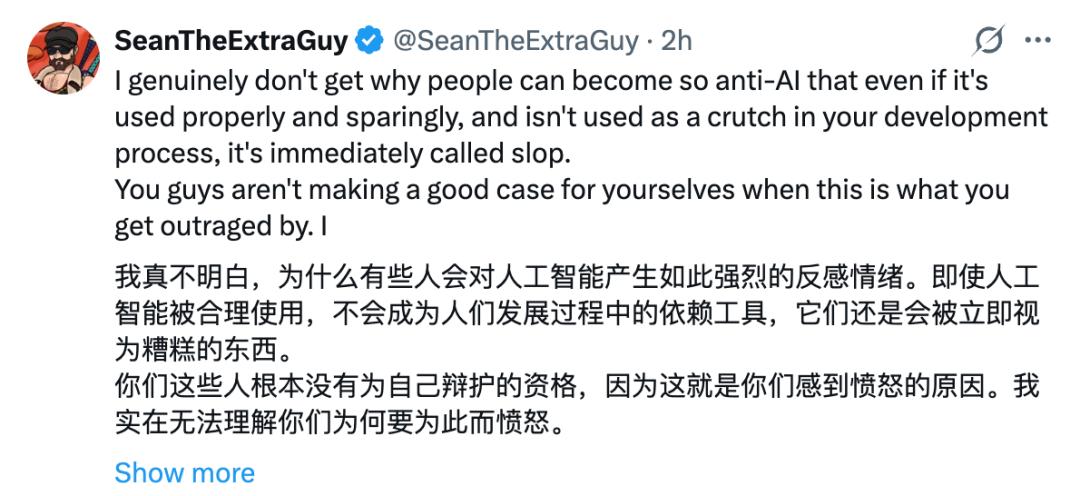
This angry reaction to AI has set a dangerous precedent for the video game industry. Now game developers will be more reluctant to disclose the use of artificial intelligence in their games to avoid criticism from review bodies.
"Scared to Tears by the AI Overlord"
At the same time, games entirely generated by AI do not face such criticism.
When Anthropic engineer Felix Rieseberg was testing Claude Fable 5.2, he gave the model a very minimal prompt: make a small-scale FPS with graphics comparable to 3A blockbusters, realistic lighting and photorealistic effects. After that, he did not provide any further feedback and let the model run autonomously for about 8 hours.
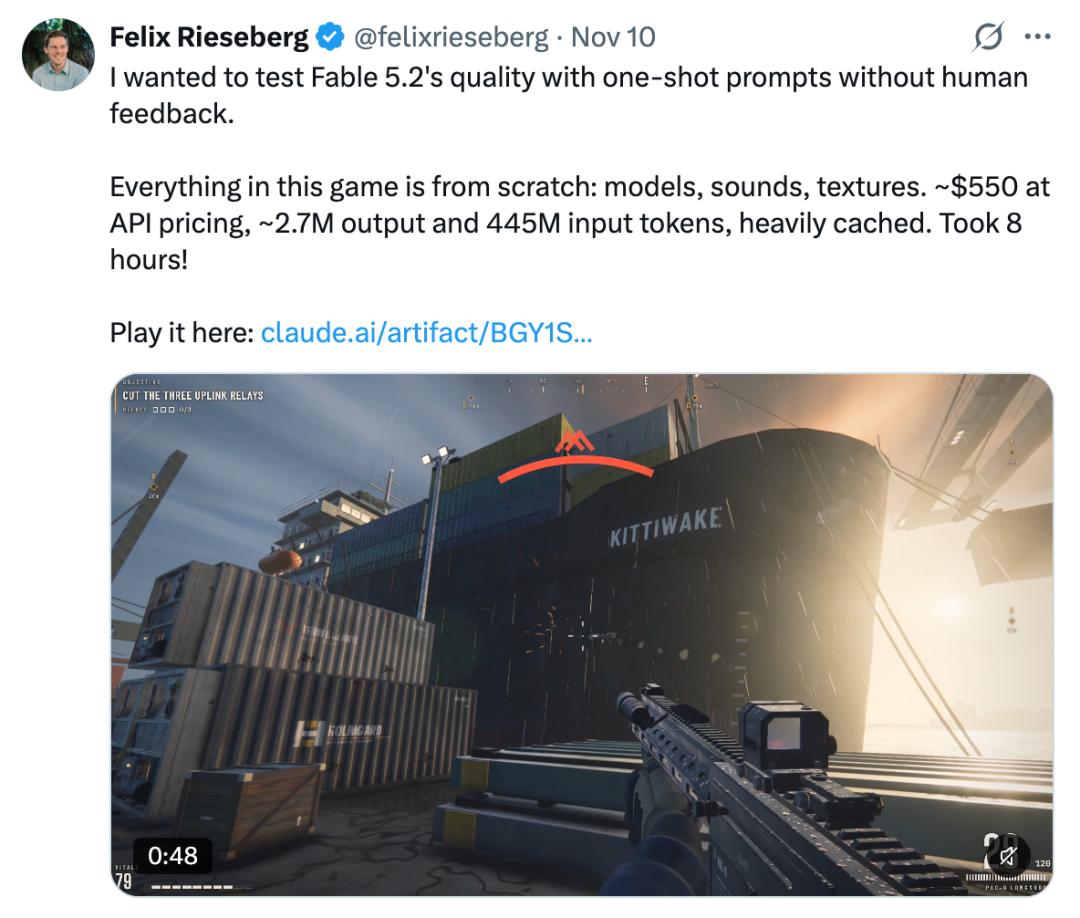
In the end, the model delivered a browser-based first-person shooter game called *Saltline*. Set in a rainy container port, the scene features cranes, cargo ships, wet ground and low-angle sunset, with a visual atmosphere close to modern *Call of Duty*-style mission levels. Players need to cut off three uplink relays while dealing with drones (Gulls) and robotic dogs (Hounds).
All 3D models, textures, sound effects and even shaders are generated entirely by the model from scratch using code, no external assets are imported, and the whole game is basically a self-contained HTML file.
The entire process consumed approximately 445 million input tokens and 2.7 million output tokens. Most of the inputs hit the cache, and the API cost was about $550.
Rieseberg later made the prompt and results public, stating that this was a test of the model's upper quality limit under the condition of "single prompt, no human intervention".
Many people were directly impressed by the visual effects, thinking that details such as the rainy port, wet ground reflections, crane silhouettes, and red dot sights are already very close to the level texture of modern *Call of Duty* or *Battlefield*. Many netizens said "This is really 3A-level graphics" and "GTA 6 may be the last 3A blockbuster made by a traditional studio".

The most controversial point focuses on the expression of "one-shot / no human feedback". Netizens believe that 445 million input tokens mean that this is not a real single-step generation at all, but an autonomous execution of 8 hours after one instruction. "Half the people who read this article will try a single conversation, get a much worse game, and then conclude that the model is very ordinary."
Around November 10, an HTML file called *Jimao* was spread in group chats. It was only 1.4MB, but it was a well-completed small FPS game. The supporting copy claimed that it was independently developed by Claude Fable 5.2 and was a "domestic 3A blockbuster". Everyone's reaction was also "scared to tears by the AI overlord", "so shocking", accompanied by playful banter.

But this is just a localized reskin of *Saltline*.
When you compare them side by side, you may feel quite strange. *Big Walk* is a carefully crafted masterpiece that took six years of development. AI was only used to fix a bug that even Unity engineers said was impossible to fix, leaving only 10 lines of code, but it immediately ignited anti-AI-generated content sentiment. *Saltline* demonstrated the model's ability to build a complete game without human intervention, from code to assets, and what it received was amazement.
People's sentiment towards AI largely comes from their imagination of labor. Independent games are regarded as handicrafts, and what players pay for includes the unique feel and human touch. Even if only one line of code comes from a machine, it is like screwing a screw from an assembly line into a handcrafted wooden table.
Conversely, *Saltline* was placed on the exhibition stand of "see what the model can do" from the very beginning, no one had the expectation of handmade quality for it, and the onlookers just enjoyed the spectacle.
From another perspective, these players are not entirely acting on impulse. Generative content has indeed created a lot of garbage in game stores, shoddily made reskinned works have taken up recommendation slots, and serious and hardworking small teams have been overshadowed instead.
If you have had these experiences, it may be difficult to stay calm about "a little bit of AI".
The Gaming Industry Is Mostly Still Using AI With Restraint
The gaming industry has long been considered a scenario very suitable for large-scale AI application, image generation models, video models, world models... all can be deeply integrated with the gaming industry.
But in reality, the extent to which the gaming circle embraces AI is not as high as imagined.
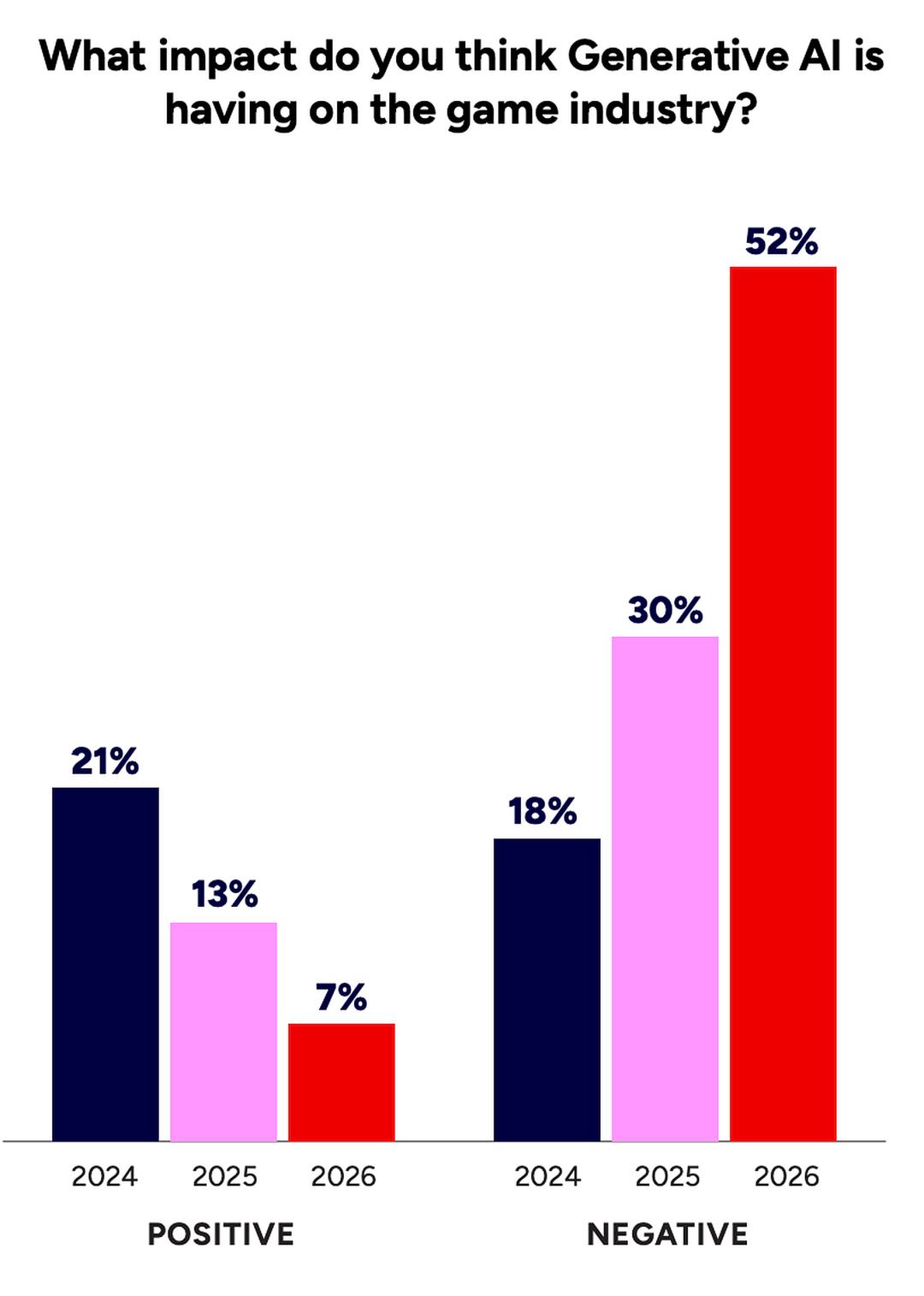
The GDC 2026 annual gaming industry survey interviewed more than 2,300 practitioners. 52% of respondents believe that generative AI has a negative impact on the industry, this proportion has nearly tripled from 18% in two years, while the number of people with a positive view of AI has dropped to 7%.
The speed at which game practitioners are turning against AI has refreshed the record of this survey.
Complaints aside, 36% of game practitioners do use generative AI in their work in practice, of which 81% use it for research and brainstorming, and 47% use it for code assistance.
However, only 5% of them actually present AI-generated content to players.
However, in this statistic, 58% of people using AI are in positions such as publishing, marketing and business, and only 30% of the developers who directly make games in the studio are using AI.
In other words, people who write code and make art actually don't use AI much. Most developers who "use AI" do almost the same thing as House House, treating chatbots as research tools and code debugging aids, rather than the main body of creation.
In 2024, new games marked with AI-generated content on Steam accounted for about 13%, the figure rose to 24% in 2025, and reached 40.1% in the first ten months of 2026, even approaching 50% in the single month of October.
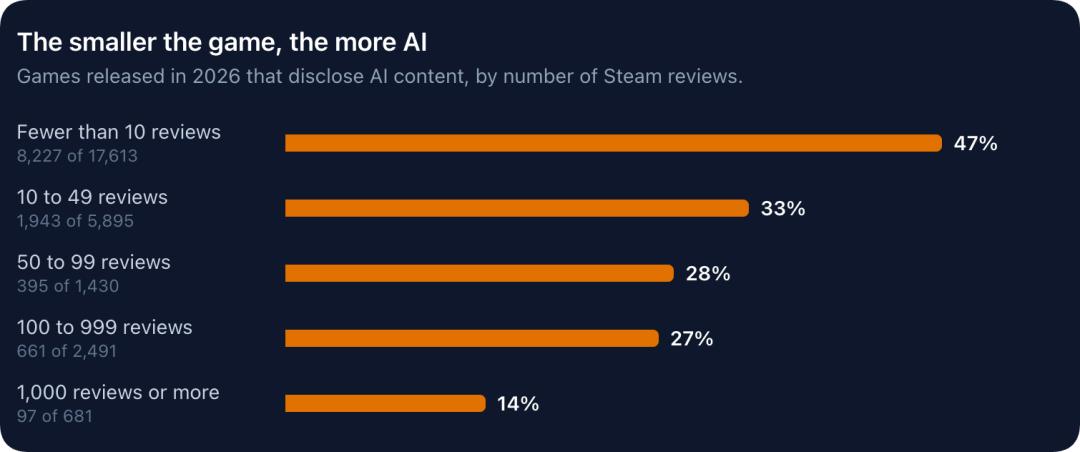
Among games with more than 1000 reviews in 2026, the AI disclosure rate is only 14%, while for games with less than 10 reviews, this ratio is as high as 47%.
Games that heavily use AI-generated content are mainly concentrated in products that are launched in batches for rapid monetization. Most of the games that have received a lot of player attention still use AI with restraint.
Valve made an important revision in January 2026, clearly separating "development assistance tools" and "AI-generated content for players". Code assistants and chatbots for debugging do not need to be disclosed at all, and only AI-generated content that players can see or hear needs to be made public.
According to these new rules, House House's use of LLM to fix code bugs does not actually need to be told to anyone.
The wonderful thing is that a new rule has classified House House's practice as a background tool that does not need to be declared, but the moral judgment based on the old vague zone has already completed its trial.
On the other side, *Saltline* shows what the model can do without human intervention, and *Jimao* shows how easy it is to reuse and reskin the output after the result is produced. When the tool becomes truly powerful, it will trigger far more complex problems than copyright and disclosure.
If everything is finally spread as the banter of "the AI overlord is so powerful", all the complexity disappears.