This anti-AI camera issues a "receipt" for every photo it captures.
When the iPhone 18 Pro was first released, we discovered a little-known camera feature: it signs the authenticity of photos via sensor-based watermarks.
Obviously, the demand for verifying the authenticity of images has become increasingly widespread now. So a group of geeks came up with an idea: why not build a whole camera for this purpose? They named it "Counter Artificial Intelligence Machine 1" (CAIM1), which sounds extremely quirky and full of otaku-style passion.
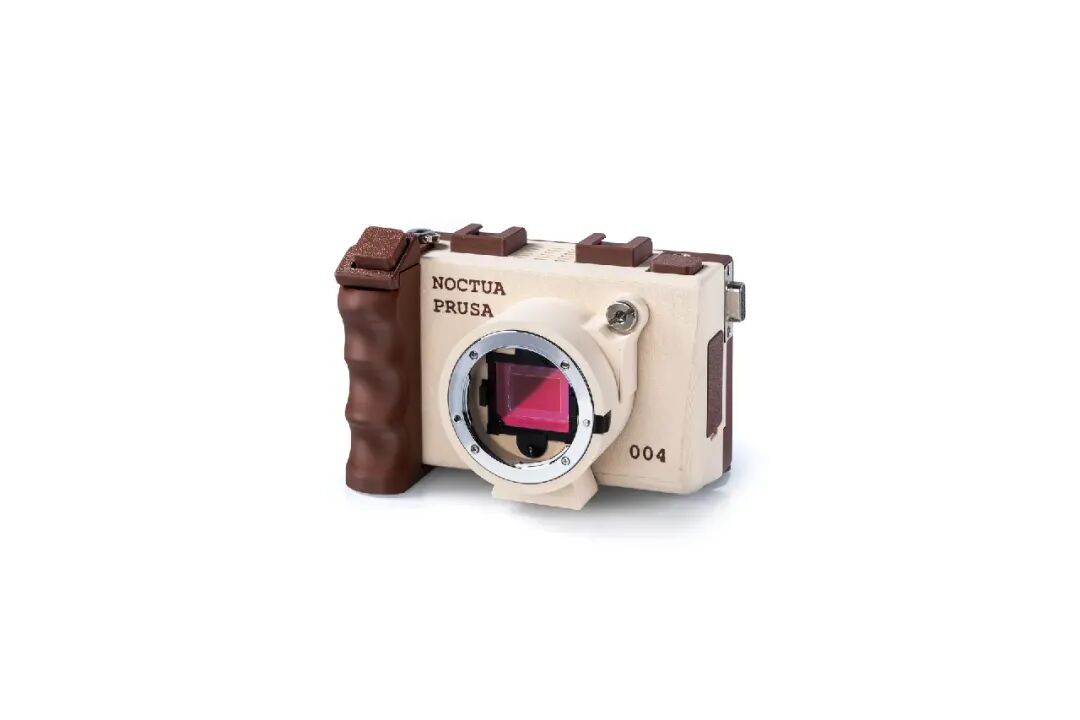
Rendering of the full CAIM1 device. Source: CAIM1 official website
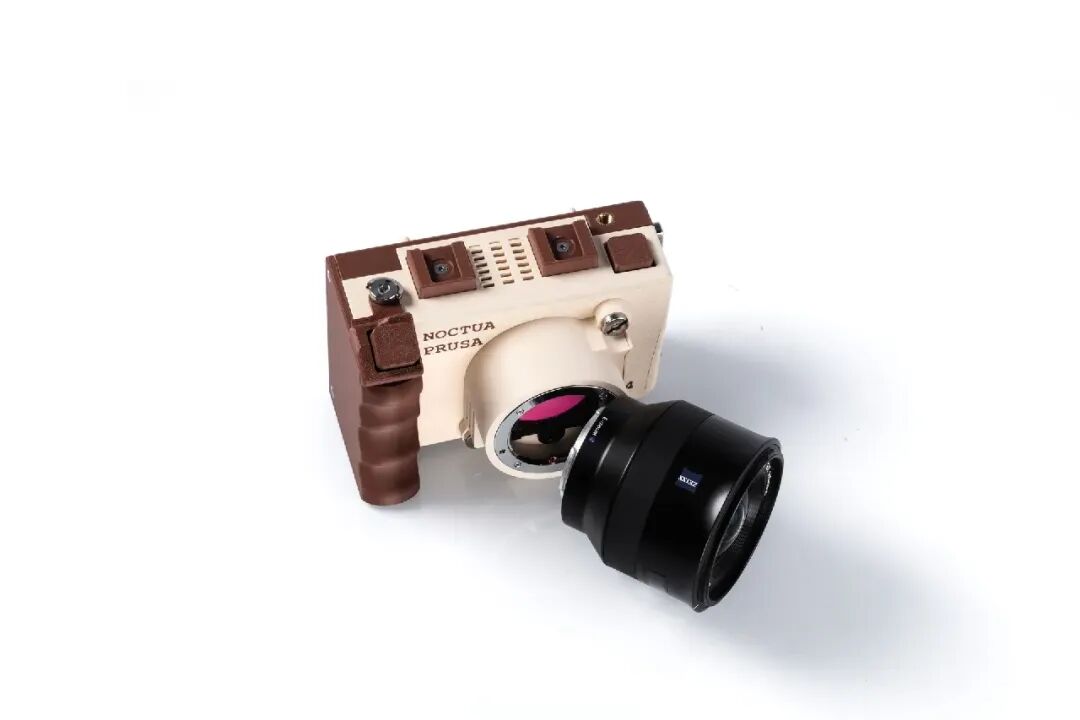
The appearance design of this anti-AI camera references the iconic age-old off-white and dark brown color scheme of Noctua, which is well-known to every PC building enthusiast. The most amazing part comes right after you press the shutter: apart from saving the captured frame on the 4.3-inch touchscreen on the back of the device, it can also spit out a physical paper receipt on the spot, just like a supermarket cash register, with shooting date, UTC time accurate to the second, latitude and longitude coordinates and other information printed below.
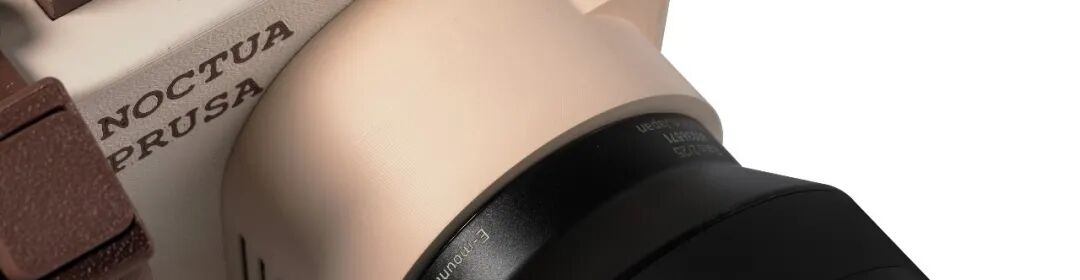
CAIM1 prototype adopting Noctua's off-white and dark brown color scheme. Source: Noctua
If someone questions later whether your photo was taken by a real camera or generated by AI, you can just take out this receipt and show it: the sensor proves that you did take the shot in person.
The camera dressed in the "anti-AI armor"
From the underlying technical path, CAIM1 follows the exact same route as Apple Reference Image that Apple launched on iPhone 18 Pro and 18 Pro Max this September: instead of waiting for a photo to spread online and using algorithms to guess "whether this image is AI-generated", it moves the trust chain forward directly to the shooting hardware, generating an untamperable encrypted proof right at the source where the sensor captures light.
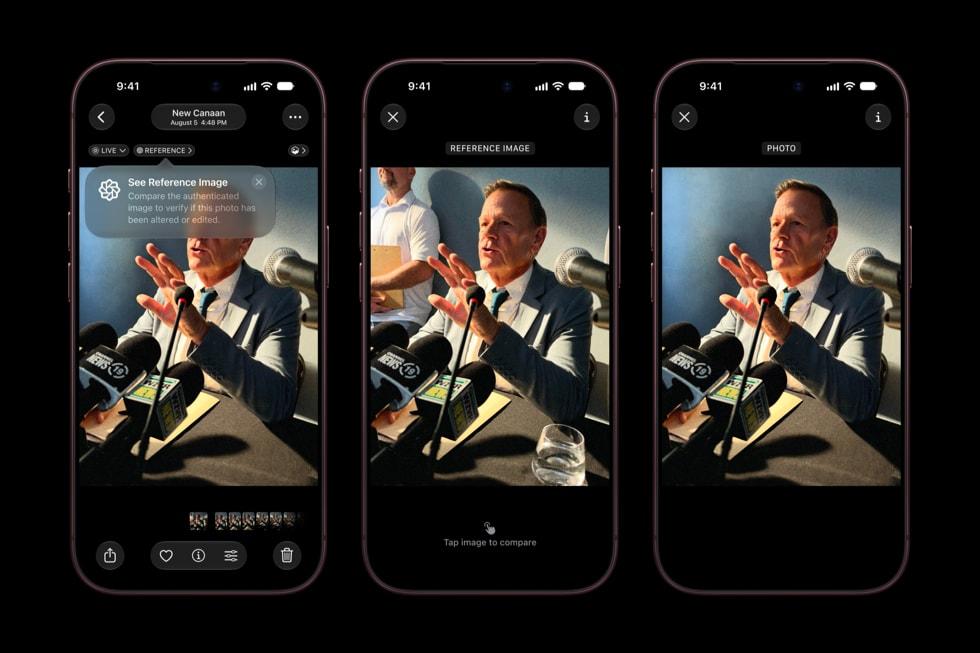
Apple Reference Image can display the original photo, edited photo and unchangeable reference image side by side. Source: Apple
The principle is not new, but the team behind CAIM1 is little-known, with no public information about its founder, past projects or partner manufacturers. How did a startup team that has neither accumulated experience in optical lenses nor self-developed CMOS sensor capabilities manage to build this camera?
The answer is quite similar to the "custom-built assembled PCs" that used to be popular in computer malls. Judging from the internal structure diagram of CAIM1, its hardware team has gathered a group of open-source companies for collaboration:
It does not come with a built-in lens, supports Sony E-mount and M4/3 mount versions, and only has a built-in M4/3 (Micro Four Thirds) format sensor that supports 4K recording, with a 650nm infrared filter. Its core security component `TROPIC01` is developed by Tropic Square, an open-source security semiconductor startup based in Prague, Czech Republic.
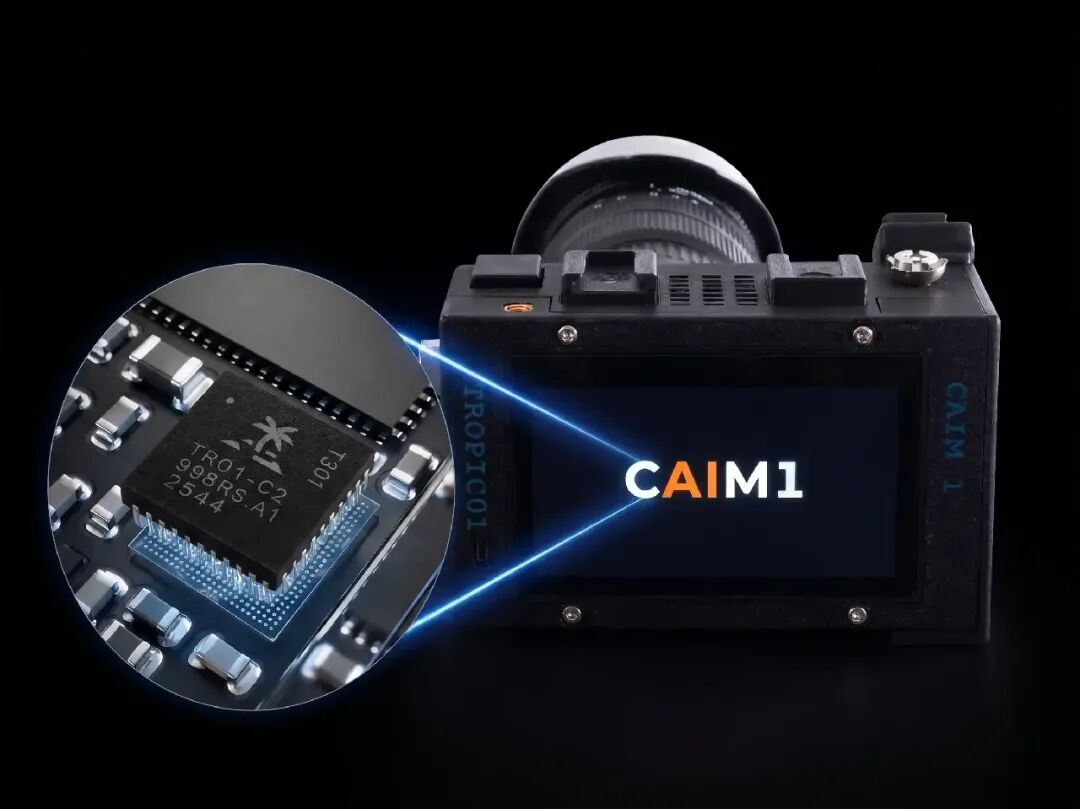
CAIM1 back panel and TROPIC01 security chip. Source: CAIM1 official website
It also has friendly support from well-known enterprises: renowned cooling manufacturer Noctua provides silent fans, the shell is provided by 3D printing giant Prusa Research, which supplies Prusament PETG consumables with a tolerance controlled within ±0.02mm, and the entire prototype's shell and internal air ducts are directly 3D printed.
Exploded view of CAIM1, showing the 3D printed shell, sensor and fan assembly. Source: CAIM1 official website
This way of gathering resources from multiple parties is partly because the device was originally just a toy that founder Josh Cowell tinkered out "for personal use by a small number of enthusiasts", before he suddenly decided to push it onto the commercialization stage.
On the other hand, it has strong Web3 roots.
The social media account ID of founder Josh Cowell, `@JoshatoshiOnX`, combines his own name with Satoshi, the father of Bitcoin. This prototype made its debut not at traditional imaging exhibitions such as Germany's Photokina or Japan's CP+, but at crypto developer conferences including Ethereum Tokyo and Pragma Tokyo.

Inside the device, the security chip is not only responsible for stamping proof on photos, but actually constitutes a complete Web3 hardware wallet. According to the official four-step process, the encrypted proof generated after each shot will be written to the decentralized storage network; and the physical "encrypted receipt" mentioned earlier is essentially a brand new wallet access password containing the authenticity credential of the captured image, printed directly on paper.
Therefore, CAIM1 does not intend to compete with major imaging manufacturers. What it builds is a set of "on-chain authenticity infrastructure" with strong Web3 characteristics.
Why does this "plastic-feeling" camera deserve people's attention?
Since major manufacturers are already working on related products, who would buy a niche camera with no injection mold and a 3D printed shell? Leica has implemented C2PA content credentials as early as on the M11-P, and Apple has launched the relevant feature on iPhone 18 Pro, so this "unofficial product" must have some unique advantages, right?
CAIM1's biggest ambition is to achieve real-time signature for "4K 60fps video". It is very easy to calculate a hash signature for a single static photo, which Leica and Apple can complete silently within milliseconds; but CAIM1's stated engineering goal is to complete encrypted proof calculation in real time while recording 4K 60fps high-bitrate video.
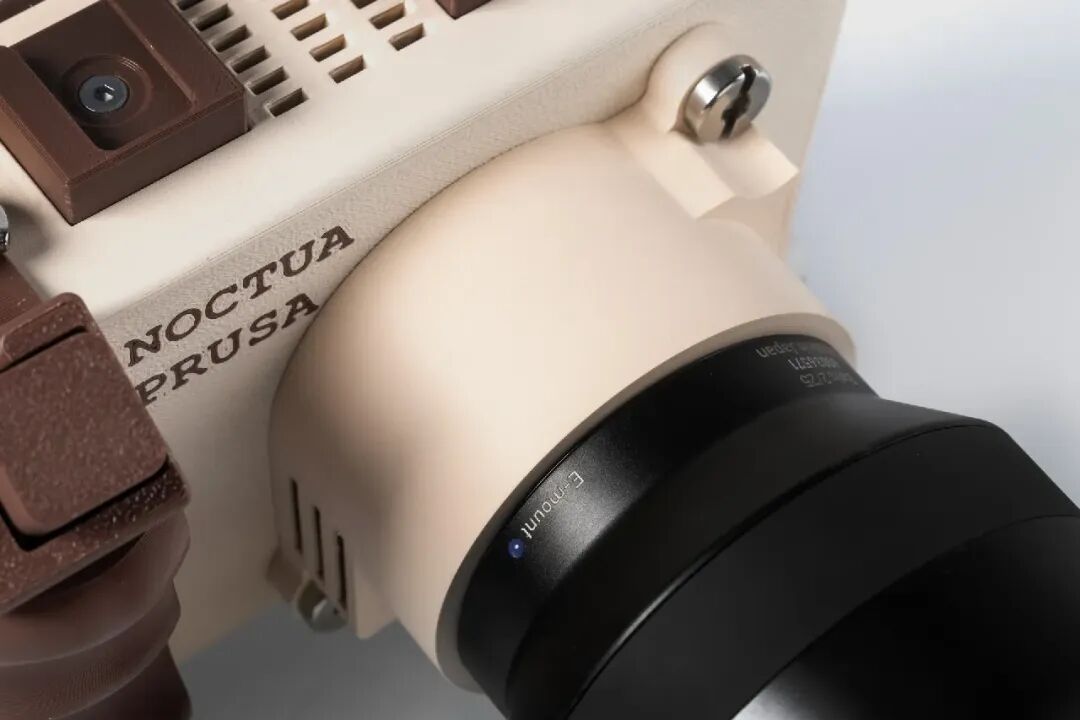
Close-up of the 3D printed air intake grille on CAIM1's body | Source: CAIM1 official website
This means that the edge computing board inside the device must process the ultra-high-definition image stream of 60 frames per second while running encryption algorithms at full load. Without a three-dimensional air duct that runs through the front air intake of the device, the alloy back plate of the sensor, the Noctua fan and the CPU heat sink, the internal chips will overheat and throttle in minutes.
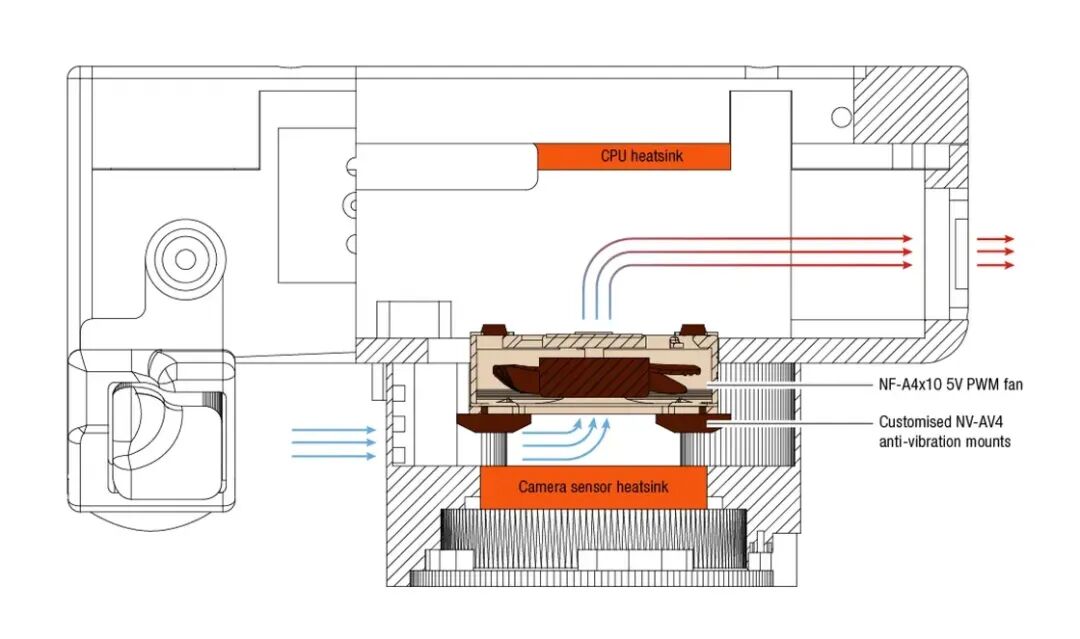
Schematic diagram of CAIM1's single-fan through-type cooling air duct | Source: CAIM1 official website
This is exactly why a camera the size of a mirrorless camera has to be stuffed with a fan of the level used in a PC case, including the choice to abandon ordinary PLA plastic and use PETG engineering consumables, which can withstand 68–75°C high temperature and prevent the shell from being softened by heat.
This engineering goal is far more radical than simply tagging photos. In a scenario where continuous video anti-counterfeiting is still an industry challenge while AI-generated videos are becoming increasingly realistic, this can be regarded as a "brute-force solution" that relies on strong hardware performance.
The concept is cool, but can it really be launched on the market?
The official claims that it plans to officially launch the flagship model in the first quarter of 2027, but there is almost nothing on its official website except renderings for now, no demo units, no sample shots, not even a price tag.
However, whether it can be launched as scheduled in 2027 may not be the most important issue. Everyone can see how far this device, which still has a strong prototype vibe, is from a mature consumer camera. But it has already shown a rather absurd future in advance: in order to prove that a photo is real, people need to stuff a security chip, cooling fan and hardware wallet into the camera, and get a paper receipt similar to a shopping voucher after shooting.
AI has not only reduced the cost of creating fake images, but also changed the burden of proof for real images. Europol warns that up to 90% of online content may be AI-generated by the end of this year. When generated content becomes the norm of the online environment, authenticity is no longer an inherent attribute of photos, but needs to be jointly guaranteed by sensors, encrypted signatures, cloud computing and storage networks.
However, such a cool concept cannot avoid a paradox — hardware signature can prove that a certain device captured a set of optical information at a certain time, but it cannot prove that the scene in front of the lens was not posed, nor can it help us judge whether the content expressed by a photo is true. What CAIM1 can prove is the source of the image, but it can never prove that the picture itself is the truth.
This article is from the WeChat official account "APPSO", written by APPSO that discovers tomorrow's products, and is released with authorization from 36Kr.