Why are Silicon Valley tech giants and major domestic tech companies all scrambling to create your "cyber avatar"?
Have you had a strong feeling lately that the competitive landscape in the AI industry has quietly shifted?
Over the past two years, whenever you tuned into a press conference hosted by any major tech firm, the screen was filled with familiar buzzwords: MMLU scores rose by another two points, performance matching gold-medal level in math competitions, 1 million-token context window support, and code generation speed doubled.
But in recent months, the battle has suddenly centered on a new term — Personal Agent.
Meta officially launched Muse, its standalone personal agent, in September 2026. It is not only equipped with an exclusive secure virtual machine and dedicated browser, but also integrated with WhatsApp, email and calendar, focusing on enabling AI to take over tedious life and business travel tasks for users. Less than a month later, OpenAI rolled out Dots, a resident agent embedded in ChatGPT. CLaude Duet and GrokBot also launched one after another... All major AI firms in the US are developing personal agents at the moment.
Turning our attention back to China, Alibaba's Qwen has been connected to Taobao, Alipay, Amap and Fliggy, positioned as a personal life assistant. ByteDance is advancing multi-step complex task execution in Doubao. Tencent is focusing on ecosystem agents in Yuanbao and WorkBuddy...
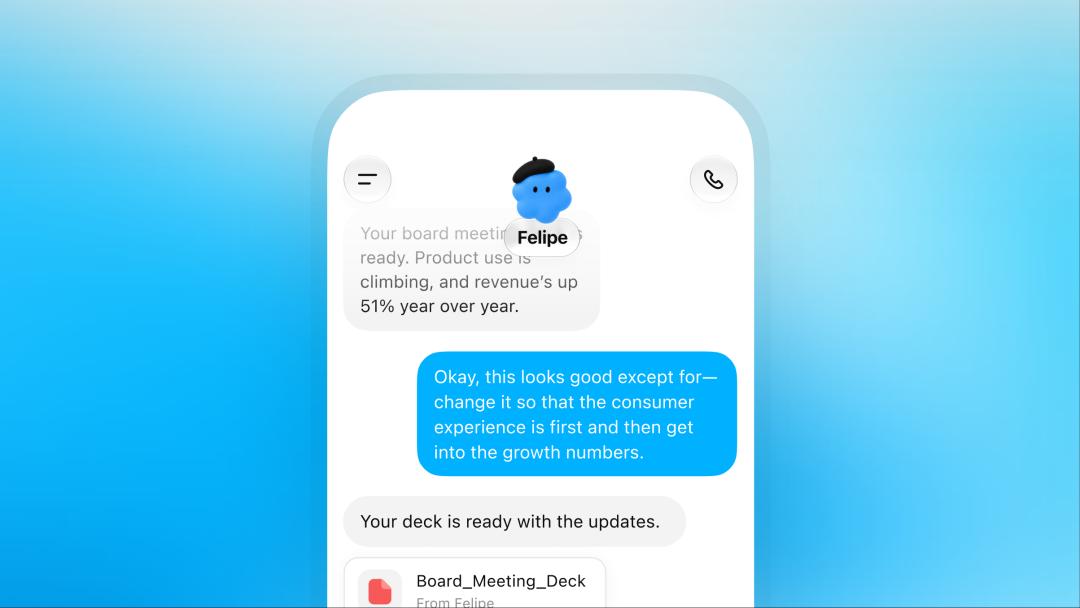
Image source: Dots | OpenAI
At this point, many tech-focused readers may feel confused:
OpenClaw in the open source community has long allowed geeks to build personal assistants locally, and Moonshot AI launched KimiClaw configured on cloud servers in early 2026. Concepts including virtual machines, long-term memory and tool calling have been widely discussed across the industry for almost two full years.
Why is it only recently that tech giants seem to have reached a tacit agreement to collectively launch consumer-grade Personal Agent products?
Behind this new battle, what exactly has changed in the competition logic of the AI industry?
01
Why does everyone deserve a personal agent?
To explain what Personal Agent is, we need to answer the most fundamental question first: We already have ChatGPT, Doubao and DeepSeek on our phones, and various specialized Agents that can book flights and write weekly reports are everywhere. Why do we still need a so-called "personal agent"?
When you compare them side by side, the difference is obvious:

Chatbot: It responds to one message you send at a time. If you don't speak, it stays idle forever; every time you start a new conversation, you have to re-enter most of the context from scratch. Early versions of Doubao and DeepSeek are both typical chatbots.
General Agent: It no longer only answers questions, but can independently plan steps, call tools and execute tasks. For example, if you ask it to make a travel itinerary, it can search for flights, check hotels, plan routes on its own, and finally organize a complete plan. Most AI products this year have integrated Agent functions.
Personal Agent: A private digital secretary with persistent memory, running in the background all the time, and completely "user-centric". It remembers your work and rest routines, preference styles and past accumulated information, and can proactively filter information and handle trivial affairs for you in the background without you giving frequent instructions.
Its core advantages boil down to three key words: persistent memory, proactive intervention, and continuous closed-loop operation.
Let's take a real daily scenario as an example.
Some time ago, when I was testing Meta Muse, I casually mentioned in a chat that I had been sitting at my desk writing for too long recently, my cervical spine was sore, and I wanted to get rid of my bad habit of hunching over. If this happened in an ordinary chat dialog, the AI would immediately list five well-known health tips for you, and the conversation would end right there. Three days later, the conversation would be buried under new work records, and the AI would completely forget about this matter.
But the experience with Muse is completely different.
Two days later, right after I finished processing my schedule on the web page, a lightweight notification popped up on the right side of the Muse interface. Instead of preaching to me, it asked how I felt about my sitting posture that day, and automatically generated a simple check-in incentive panel, asking if I needed to add a standing stretch at 3 p.m. every day to my calendar automatically. This is because Muse precipitated the fragmented information into the personal memory layer, and gave proactive feedback at a logically appropriate time point.
Another example is the integrated processing across schedules and emails. In the past, to book a flight, you had to check flights in the airline app, look up your colleagues' availability in WeChat groups, and check meeting conflicts in the Feishu calendar. But a qualified Personal Agent can hang a task in the background: "Help me keep an eye on flights to Shenzhen this Thursday, prioritize flights taking off after 2 p.m. with aisle seats, avoid my weekly team meeting, and push the final options to me before confirmation."
It does not require you to stare at the screen and wait. It will compare information on web pages, align with your calendar on its own, and only ask for your confirmation at the moment you need to make payment or grant authorization.
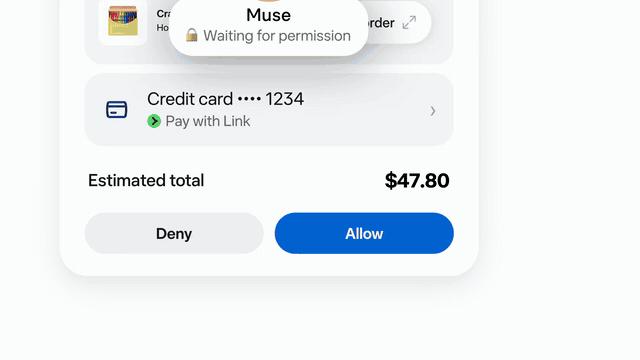
Image source: Muse payment confirmation
This experience is so compelling because you no longer need to take the initiative to ask questions, or tell it the story background every time. This agent that knows you well will get these things done, and even proactively remind you of missing items you might have overlooked.
02
From OpenClaw to consumer-grade products
What was the bottleneck holding it back before?
Given how attractive this experience is, the suspense raised at the beginning is even more thought-provoking:
Why didn't it emerge when large model context windows exploded in 2024? Why did excellent open source projects like OpenClaw provide geeks with building frameworks long ago, but real consumer-grade products did not see a concentrated boom until recently?
Looking back along the trajectory of technological evolution, you will find that personal agents have gone through a very typical transition from geek toys to mass consumer products in recent years:
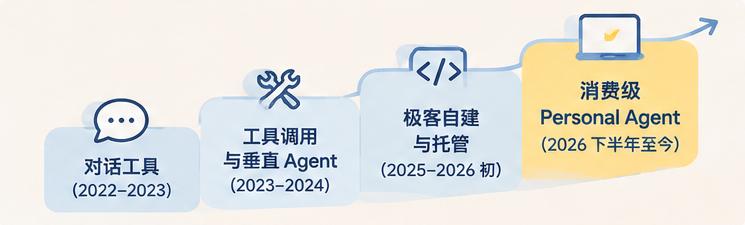
1.Phase 1: Conversational tools (late 2022 — 2023). Single-round Q&A and text generation, the model only outputs text in the dialog box, with no connection to external systems at all.
2.Phase 2: Tool calling and vertical Agent (2023 — 2024). With the popularization of Function Calling and the ReAct paradigm, models can search the web and run Python code. But the execution scope is strictly locked in the sandbox. Once a long task exceeds 4 or 5 steps, reasoning tends to go off track, the context window gets full, and the cost remains extremely high.
3.Phase 3: Geek self-hosting and minimal hosting (late 2025 — early 2026). Frameworks represented by OpenClaw connect Agents with messaging channels (Telegram, Feishu, WeCom), and try to take over local terminals and file systems. Later, products like KimiClaw lowered the threshold for preparing servers and API keys, allowing more people to experience cloud resident agents. But they are still developer-oriented: the configuration process is complicated, they may crash at any time, and the security boundary is entirely controlled by users themselves.
4.Phase 4: Consumer-grade Personal Agent (second half of 2026 to present). Giants start to package this capability into out-of-the-box products for ordinary users in the form of unified hosting, system-level security sandboxes and standardized application connectors.
Personal Agent is not a new concept. Why did it start to explode exactly now? There are four key changes behind it.

1. The economic inflection point of cost and small model inference
In the past, running an agent that is on call 7×24 hours and can continuously plan and execute tasks was very expensive. The token cost generated by frequent large model calls and repeated context processing was too high to support consumer-grade subscription services.
But over the past two years, AI infrastructure has undergone large-scale expansion. With the continuous construction of GPU computing clusters, dedicated inference chips and data centers, and the maturity of technologies including model quantization, inference acceleration and cache reuse, the unit inference cost has kept declining.
At the same time, the capability of small models has improved rapidly, and the hierarchical scheduling architecture has gradually matured. Simple tasks such as email checking and information sorting are handed over to low-cost models, while complex planning tasks call for flagship models. The combination of increased computing power supply, improved inference efficiency and reduced small model cost has gradually made long-running Personal Agent commercially viable for consumer scenarios.
2. Long task reliability: from "single trial and error" to "persistent state"
The second change is state persistence. Many people who have built their own agents have this experience: if you ask the AI to do 10 consecutive things, as long as the web page loading times out at the 4th step or the page structure is slightly adjusted, the entire execution chain will crash instantly, or fall into an infinite loop that consumes tokens wildly.
The breakthrough of these latest products is essentially an upgrade of the engineering architecture. Whether it is Dots or Muse, the underlying mechanism similar to "Checkpoint" and environment state persistence is introduced. When execution fails, partial retry can be performed, and the task can be suspended waiting for human review when ambiguity occurs, instead of restarting the whole process from scratch.
3. Environment isolation and security: you can't let a wildfire burn down everything in your house
The most worrying part in the OpenClaw era is permission management. If you grant it access to your local computer, once it suffers a prompt injection attack, or the model makes a wrong judgment, it may really delete your important files, leak your privacy, or even perform unauthorized operations.
The reason why current consumer-grade products are safe to launch to the public is that a controlled sandbox has been built. Meta explicitly runs Muse in an independent Secure VM virtual machine, equipped with an independent browser. It can write email drafts, but "actually clicking send" and "entering bank card information to make payment" must be forcibly returned for human review. OpenAI Dots also hosts the computing environment in independent cloud instances. This dual-layer security architecture has made mass users let down their guard.
4. Maturity of AI ecosystem: say goodbye to fragile web page simulation
The last change is the development of the AI ecosystem. In the past, to make AI operate external software, it usually needed to simulate mouse clicks and screen operations, which was not only inefficient, but also prone to errors if the web page changed slightly. With the rapid advancement of standardized context and tool connection protocols (such as open standards like MCP) in the industry, third-party software has begun to actively expose structured secure interfaces to agents. AI no longer needs to click on pixels like a blind man groping for an elephant, but can call your calendar, notes and instant messaging tools just like calling local functions.
It is only after the technical curves of cost, reliability, sandbox isolation and ecosystem connection all cross the passing line at the same time, that Personal Agent has finally moved from the geek's workbench to the daily app stores of the general public.
03
Major domestic tech firms are entering the market collectively, what is the real challenge?
If we turn our attention to the domestic market, you will see a very dramatic contrast:
Overseas, the core scenarios of personal agents are mainly focused on the interconnection of emails, Google Workspace, calendars, GitHub and enterprise SaaS. But in China, the digitalization level of ordinary people's highest-frequency life and work scenarios is actually much higher than overseas — ordering food delivery, hailing a taxi, sending a parcel, scanning a code to pay bills, registering for hospital visits, and handling government services are all done on mobile phones.
Theoretically, China is the most fertile soil for the birth of the ultimate life service Personal Agent. Alibaba's Qwen can already help you place orders on Taobao, book tickets on Fliggy, and hail taxis on Amap. Ant Group's Afu is deeply rooted in the health and medical scenario. Tencent's Yuanbao and WorkBuddy connect content and services inside and outside the WeChat ecosystem.
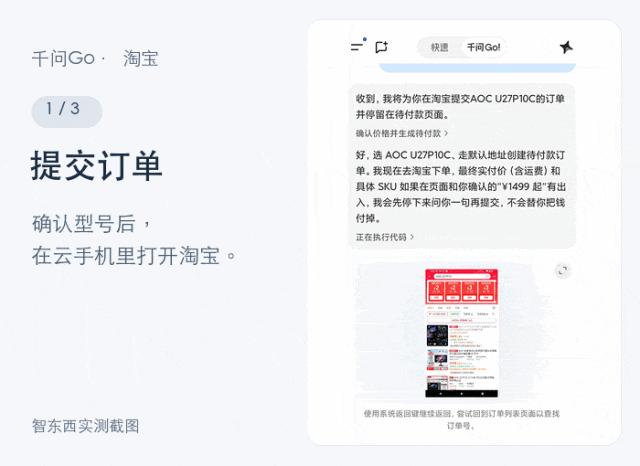
Image source: Qwen Go creates pending payment orders on Taobao
But why is there still no truly "universal, autonomous and all-powerful" national-level personal agent on our mobile phones today?
The answer does not lie in insufficient capability of domestic models, but in the unique ecological landscape of China's mobile internet.
1. The insurmountable "walled garden" and cross-App gap
China's mobile internet ecosystem is almost dominated by several closed super Apps owned by different giants.
The ideal workflow of a really useful life agent should be like this: you select a restaurant after checking guides on Xiaohongshu, collect coupons on Meituan, pay via WeChat Pay, hail a car on Amap, and synchronize the itinerary to your Feishu calendar with one click.
But what is the reality? To protect their own traffic closed loop, commercial barriers and user data assets, all platforms have built high walls between each other. Taobao system data will not be open to WeChat casually, Meituan's services are difficult to be deeply accessed by third-party agents, and many key pages are even deployed with extremely strict anti-crawling and anti-automation risk control strategies.
In the absence of a unified open protocol, if an Agent can only work within Alibaba's system, or only chat in the WeChat ecosystem, it can hardly become the unique "global personal avatar" for users, but is more like a "vertical giant aggregated client" with a new interactive interface.
2. Growing pains of technical routes: GUI visual clicking vs direct protocol connection
Facing ecosystem fragmentation, there are currently two main attempts to break the deadlock in China:
Top-down ecosystem direct connection route: Represented by Alibaba Qwen. Its own Taobao, Fliggy and Amap are directly connected through official APIs, with extremely smooth and stable experience, and absolutely secure payment and