Elon Musk has placed a high-stakes bet on space computing power in response to the "Blue Camp" crackdown. Will China follow suit?
The Blue Camp Launches Counterattack Against Trump's Camp
On November 3, the Democratic Party took control of both the Senate and the House of Representatives. Two days later, the Nasdaq fell by more than 5%, the Dow Jones dropped by over 1,800 points, and the S&P 500 shrank by more than 4%, erasing all the gains from the day after the election and even losing extra ground.
Musk suffered the heaviest loss. Tesla plunged about 11% during intraday trading, and SpaceX fell by roughly 9%. The reason is not hard to figure out: the Democratic Party regaining control of Congress means investigations, hearings and regulatory measures targeting his companies will come in succession. Jensen Huang has already been forced to step down amid the "infidelity scandal". How can Musk avoid the "liquidation" from the Democratic Party?
Source: Internet
What the Democratic Party plans to do is already a clear card, with a set of operations being tightened simultaneously in three areas.
First, energy and the environment. Large technology enterprises are required to bear the construction cost of new power grids, disclose energy consumption and water consumption, and are prohibited from passing the bills of AI infrastructure to residents' electricity tariffs. Next, for the model itself, mandatory safety tests, third-party audits and major accident reporting mechanisms are required. In October, Cantwell, the Democratic leader of the Senate Commerce Committee, has put the national AI regulatory framework on the table. Finally, there is congressional supervision: subpoenas, hearings and investigations will go all the way to the tax incentives and electricity cost allocation of data centers. As soon as the committee chairman gets the gavel, the power of subpoena comes along.
Behind this set of operations is the sentiment in the votes. Previous Ipsos polls showed that 55% of Democratic voters support restricting data center construction, while only 37% of Republican voters hold that view. What is more noteworthy is that this time the "deep red states" turned blue, including Texas, Kansas and South Carolina. The real driving force is not ideology, but electricity tariffs and living costs. With the rapid growth of AI investment and the rise of asset prices, ordinary voters have not got any benefits, but only received the bills.
However, it should be specially noted here: the Democratic Party has won both chambers of Congress, but has not reached the 2/3 majority required to override the presidential veto, and Senate legislation still needs 60 votes to end the filibuster. For major bills involving the core interests of both parties, the probability of passing before the 2028 general election is not high. It is basically impossible for the federal government to introduce drastic measures such as "suspending the construction of AI data centers before the safety framework is implemented".
The real variable lies in state and local governments. State-level power constraints and local environmental assessment approvals are the hands that push up costs and extend the cycle.
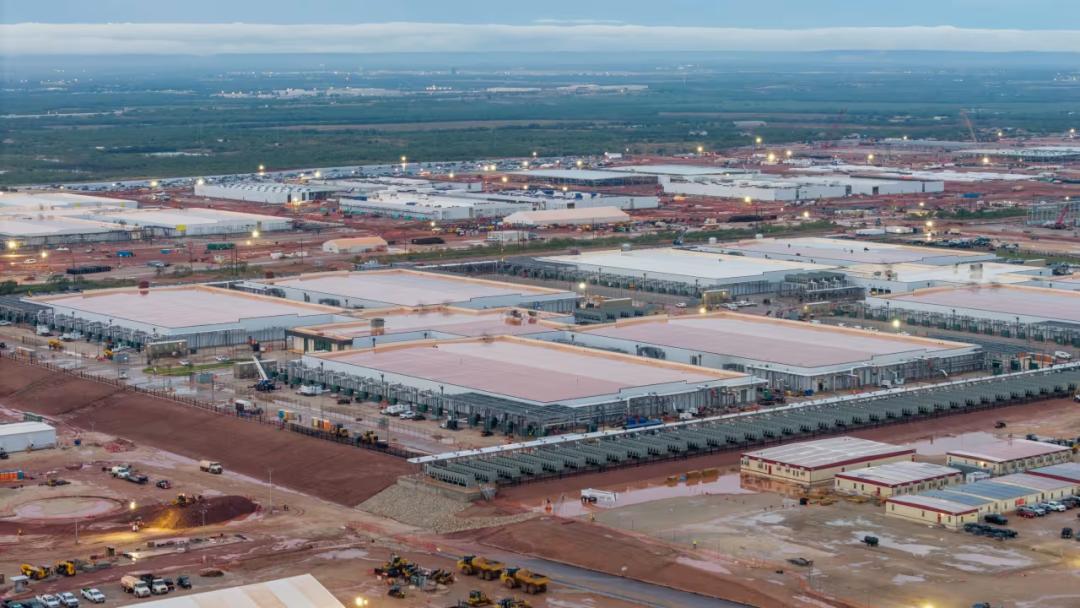
"Stargate" AI data center under construction in Abilene, Texas, USA Source: Internet
Therefore, the restriction on ground incremental capacity is structural and chronic, not a one-off ban. It will not shut down data centers tomorrow, but it will reduce the IRR of each new project by several percentage points, extend the approval cycle from 18 months to 36 months, and turn "going online next year" into "wait and see for another two years".
For capital, chronic diseases are more unbearable than acute diseases. Acute diseases may kill people, while chronic diseases will force people to move away.
Therefore, computing power is starting to look for new locations. Musk's actions are earlier than the market reaction.
Too much trouble on Earth? Go to space
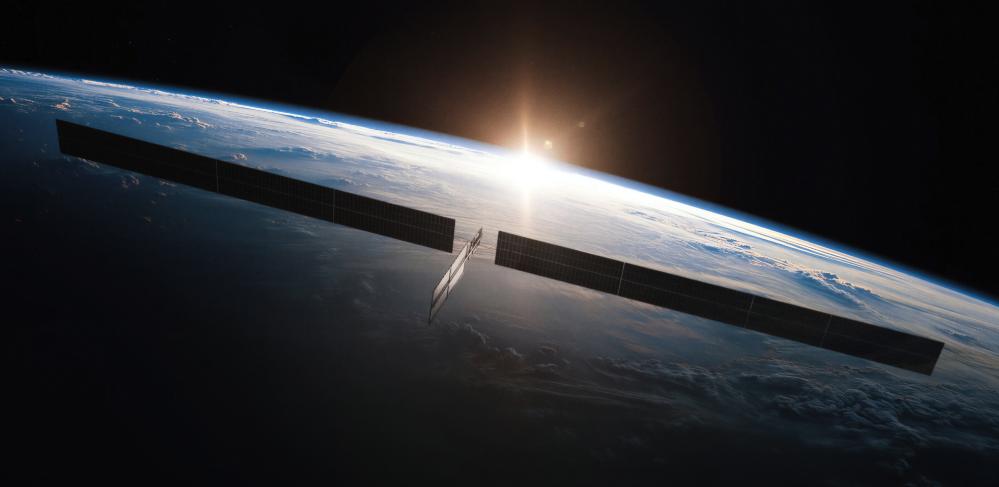
On January 30, 2026, SpaceX submitted an 8-page document to the FCC, named "SpaceX Orbital Data Center System", whose core demand is just one sentence: to launch 1 million satellites into space.
The parameters are very carefully designed. The orbit height ranges from 500 to 2000 kilometers, and it is a sun-synchronous orbit with an inclination of about 30 degrees, all packed into a narrow shell with a width of no more than 50 kilometers, which not only ensures the coordination of its own system, but also leaves a safe separation for other spacecraft. The high-orbit layer has a sunshine proportion of more than 99%, so there is basically no need to carry large batteries, and the low-inclination layer uses the global time zone difference to achieve load balancing.
Source: Internet
Then there is the organizational restructuring. On February 2 this year, SpaceX announced the acquisition of xAI, with a post-merger valuation of 1.25 trillion US dollars: SpaceX accounts for 1 trillion, and xAI accounts for 250 billion. Musk said the goal is to build a "vertically integrated innovation engine" covering the complete technical chain from ground to space. The IPO will be launched from June to July, and the purpose of fundraising is clearly written: to buy chips.
The figures at the execution level are also on the table. 6,000 dedicated racks have been ordered and will be delivered in 2027; 1GW of on-orbit computing power will be achieved in 2028; the caliber from the supply chain is 1.5 million space computing power cards, corresponding to about 20,000 cabinets and 3.2GW.
The only economics supporting all this is one factor: launch cost. Now it is about 500 US dollars per kilogram, and after the full operation of Starship, it will be 10 to 150 US dollars. Starcloud has calculated that for a data center of the same scale, the 10-year core cost of the space solution is about 8.2 million US dollars, while the ground solution is about 167 million US dollars, and the space solution only accounts for 5% of the cost.
Therefore, Musk is not betting on technology, but on the slope of the cost curve.
The risks also need to be made clear. The FCC is not a rubber stamp. For the second-generation Starlink, SpaceX applied for 22,488 satellites, but only 7,500 were finally approved. The million-satellite constellation needs to pass three barriers: spectrum coordination, space debris and astronomical observation. If any barrier gets stuck, the schedule will have to be rearranged.
Musk said "in the next two to three years, space is expected to become the way with the lowest AI computing cost". Note that he said "is expected". This is a vision, not a financial report.
The premise for the bet to hold is that Starship does not fail.
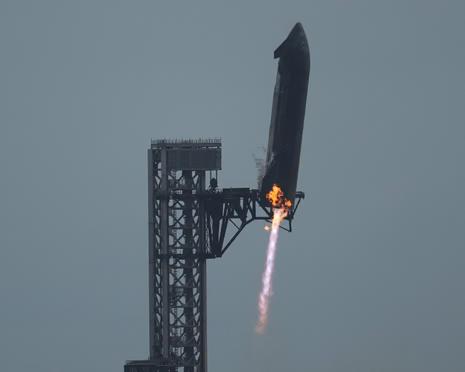
Coincidentally, Starship has just completed 15 test flights. After about 22.5 hours, SpaceX completed the recovery of the Starship spacecraft part on Saturday, November 14, and for the first time realized the "clamping" of the returning Starship spacecraft with the launch tower robotic arm. However, the originally planned "double capture" was not fully successful. The super-heavy booster failed after separation, and finally splashed down in the Gulf of Mexico and caught fire.
Source: Internet
Although the booster recovery was frustrated, the successful capture of the spacecraft is a key milestone on the reusable technology route of Starship. This test flight verified the feasibility of the spacecraft returning from orbit and being directly recovered by ground facilities, and accumulated crucial data and experience for the subsequent realization of the "rapid reusability" goal.
Why must computing power go to space
Space computing power does not exist for romance. It is forced out by three figures.
TrendForce estimates that the global power demand capacity of data centers in 2026 will be 161GW, a year-on-year increase of about 31%, and AI servers account for one third; by 2030, the demand will reach 491GW, while on the premise that all other power demands are met, the power grid can only allocate 222.6GW to data centers, leaving a gap of 268GW in the middle.
Gartner's forecast is more straightforward: the global power consumption of data centers will rise from 448TWh in 2025 to 980TWh in 2030, more than doubling. Among them, AI-optimized servers will rise from 93TWh to 432TWh, nearly five times, accounting for 44% of the total power consumption by then. The RAND Corporation believes that the demand for a single training task will reach 8GW by 2030, exceeding the installed capacity of many of the largest power plants in the United States.
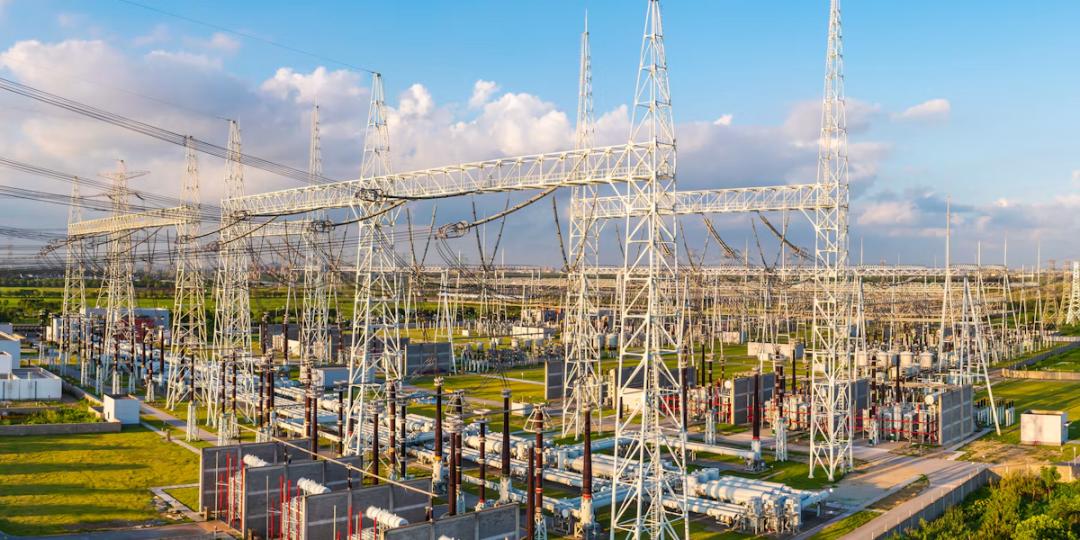
Behind these three figures, there is also a time problem: the queuing cycle for U.S. power grid access is 3 to 7 years. For an 8GW-level cluster, it is almost impossible to find a plot that meets the requirements of land, water, power grid and community acceptance at the same time.
Source: Internet
Therefore, on the whole, the ceiling of ground computing power is not chips, but electricity and land.
Only space can exactly meet the above conditions.
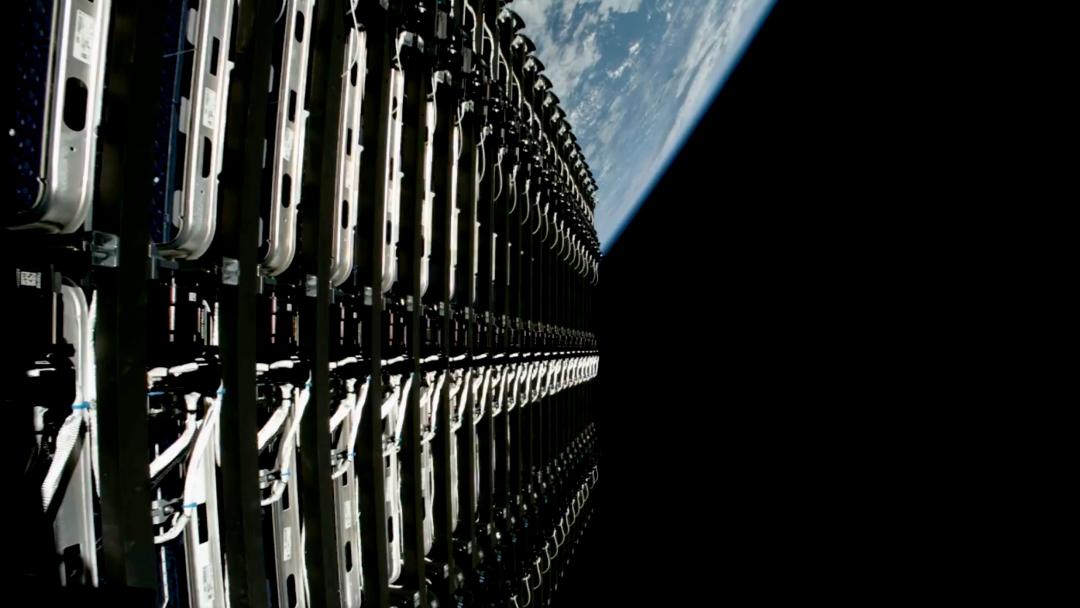
The solar irradiance outside the atmosphere is about 1366W/m², 30% to 40% higher than that at sea level, without atmospheric attenuation, no day and night alternation, and no weather influence. The average capacity factor of ground photovoltaic in the United States is about 24%, while that in the dawn-dusk orbit can exceed 95%. For arrays of the same area, the annual power generation is more than five times that of the ground. The heat dissipation effect is even better: the vacuum background is close to minus 270℃, the heat is directly radiated away, the heat dissipation energy consumption can be reduced by more than 70%, and the PUE is close to 1. 30% to 40% of the power consumption of ground data centers is spent on cooling, and this cost is almost saved in orbit.
There is another less obvious but more rigid reason: latency and coverage. The round-trip latency in low orbit is only more than ten milliseconds, and "space sensing and space computing" can reduce emergency response from the hour level to the second level. For places that ground networks cannot reach, such as oceans, deserts, forests and polar regions, only orbit can provide computing power. This is not a commercial option, but a capability boundary.
But it must be made clear: necessity does not mean it is cost-effective now. The design life of space computing centers is usually only 5 to 8 years, while that of ground data centers is more than 15 years. The launch cost has not fallen below the threshold of 200 US dollars per kilogram, and the hardware of a single satellite is still expensive. Therefore, its role today is a supplement of "high unit price and strong scenario", not a substitute.
Source: Internet
Will it become a trend? My judgment is that the question is not "will it", but "which part will come first".
Taibo Think Tank divides space computing power into three forms, with inflection points around 2027, 2030 and 2035 respectively: single-satellite intelligence will have large-scale replication conditions around 2027; computing power constellations will cross the threshold of large-scale networking and metered charging around 2030; restricted by launch cost, on-orbit life and on-orbit service capability, space data centers will not reach the real inflection point until around 2035.
The slope of the market is confirming this rhythm. The global space computing power market was 2.94 billion US dollars in 2025, and it is predicted to reach 19 billion US dollars in 2030 and 171.93 billion US dollars in 2035, with a ten-year compound growth rate of about 50%; the Chinese market will grow from 5 billion yuan to 45.2 billion yuan and then to 363.25 billion yuan, growing faster.
The order of commercialization is also clear: reasoning first, then training; space data processed in space first, then ground data processed in space. Starmind, jointly promoted by NVIDIA and Musk, has given a timetable: the first batch of launches will be completed in 2027, a considerable scale will be achieved in 2028, and large-scale deployment will start in 2029. Musk's reason is very simple: to maintain an annual computing power growth of 200GW, the ground power supply cannot support it, so computing power can only go to space.
Space computing power is not a spare tire for ground computing power, but the only incremental direction after ground computing power hits the wall. However, this wall has just shown a crack now.
In the short term, Musk's bet on space computing power is a response to the interference from political opponents (the Democratic Party) and the competition from commercial opponents (Blue Origin). In the long run, from the perspective of technical narrative itself, Musk's vision is to liberate AI computing power from the physical and regulatory restrictions of the earth, and try to establish a long-term infrastructure advantage for his AI business (such as xAI) that is not bound by ground rules in a field where the law is still blank.
China has no intention of following the trend
China has not applied for 1 million satellites. This is not conservatism, but a different path.
The national team line has already achieved results.
In May 2025, the first 12 satellites of the "Three-Body Computing Constellation" were launched into orbit, led by Zhejiang Lab and developed by Guoxing Aerospace. The maximum computing power of a single satellite is 744TOPS, the maximum inter-satellite laser rate is 100Gbps, and the 12 interconnected satellites have 5POPS computing power and 30TB storage, and are