China's AI4LS track has delivered outstanding performance over the past 10 months: $3.5 billion and 124 financing deals.
$34.91 billion is the total financing China's AI for Science (AI4S) in the life science sector (AI4LS) has secured in the first 10 months.
$58.33 billion is the total amount of the top 10 financings in the global AI4LS sector in the first 10 months of this year.
Capital flows from upstream computing power facilities, through midstream models and platforms, to downstream vertical scenario applications — a complete industrial chain has been fully rolled out within 10 months.
The flow of capital represents the trend of the industry:
Clear gap appears in financing rounds — 65.3% of the capital flows to seed/angel rounds and Series A rounds, of which the true early startup stage (seed/angel) accounts for 23.4%; while only 11.3% remains after Series B.
Invest early, but not scattered — 11 financing deals worth over 100 million USD have raised more than 2 billion USD in total, accounting for over 50% of the total. Capital is not spreading widely, but locking in leading players with large amounts of capital at the earliest stage.
In this case, the flow of capital has clear specific destinations:
Who got the $34.91 billion investment?
What are the capital buying for? What are the investors paying for?
Before the arrival of the "first year of realization", this set of data may first mark out the industrial path leading to scientific intelligence.
01
65% of rounds are early-stage investments, but 50% of the capital flows to 11 leading enterprises
The primary market is the most sensitive barometer that can clearly show the direction of emerging tracks.
Break down the 124 financing deals by rounds, the primary market capital pool of AI4LS has a very clear "newborn" orientation — 65.3% of the capital flows to seed/angel rounds and Series A rounds. In particular, the truly early startup stage of seed/angel rounds accounts for nearly a quarter (23.4%).
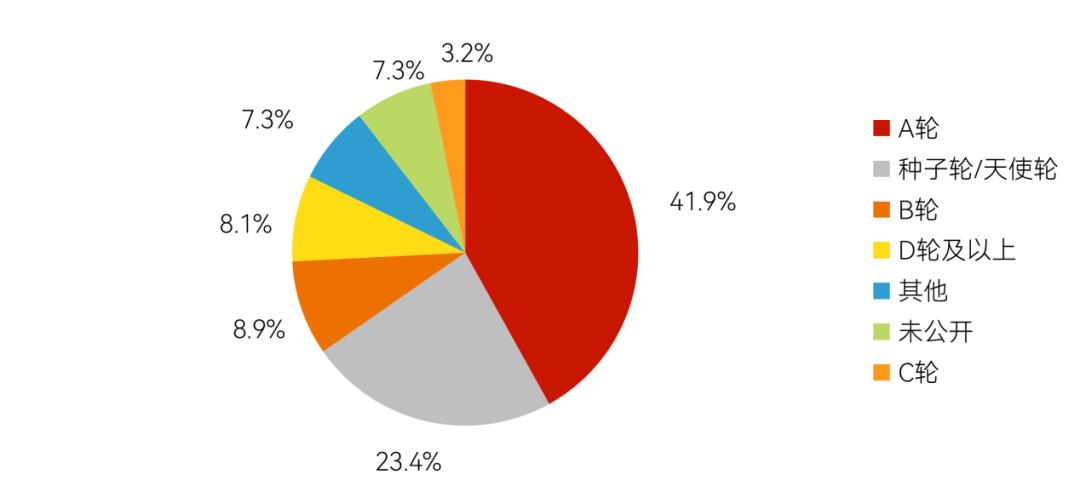
Fig. AI4LS financing rounds in China from January to October 2026
At the underlying logic level, AI4LS combines the value realization expectations of both healthcare and hard technology. The primary market's pricing for it is built on "paradigm innovation" rather than "current-period performance" from the very beginning.
Zhang Chong, Partner of Songhe Capital, believes that the current AI4LS primary market is essentially pricing in advance for the "expected penetration rate option of the platform".
In the past, valuation logic for AI pharmaceutical and other sectors focused on pipeline milestones and DCF linear pricing. But today, the AI4LS valuation anchor has shifted to the non-linear option pricing of "total market × (expected) penetration rate", and talent density, data assets, and platform scalability have replaced current-period revenue as core variables.
But the gap is also obvious, financing rounds after Series B only account for 11.3%.
Newborn means that the path for exit and realization is not yet clear.
Early AI4LS projects can get angel/Series A financing with top scientists and demos, and the funders are mostly healthcare and hard technology VCs that dare to take risks. But after Series B, projects need hundreds of millions or even billions of dollars in funds to promote product implementation or build commercial teams, and there is an urgent need for long-term capital with deep industrial background to take over.
At the same time, "investing early" does not mean that all capital flows to "small" and "new" enterprises.
The essence of early-stage financing in AI4LS is still "investing in leading players", making heavy bets on track definers at the earliest stage.
According to incomplete statistics from VBrain, there were 11 financing deals worth over 100 million USD in the AI4LS sector from January to October, totaling over 2 billion USD, accounting for more than 50%, with an average financing amount of over 178 million USD.
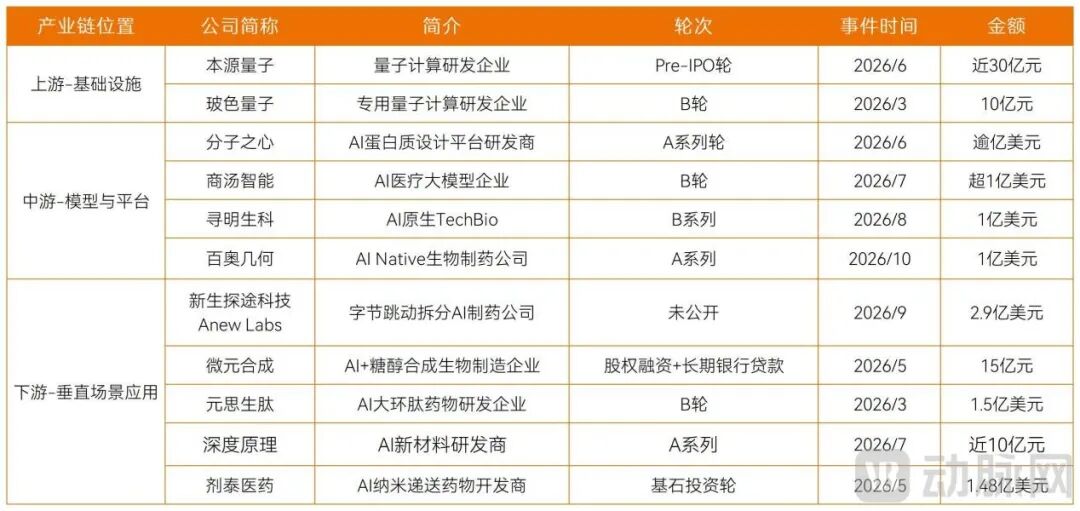
Fig. Top 11 AI4LS financing deals over 100 million USD in China from January to October 2026
From the perspective of industrial chain position, these 11 leading targets are distributed in three links, and their respective financing logics are different:
Upstream infrastructure enterprises such as computing power base, combined with hard technology track investors, have become the main force of large-scale financing.
Midstream models and platforms are concentrated in relatively mature suppliers, manufacturers and service providers that already have self-developed models or products.
At the downstream vertical scenario application end, large amounts of capital are invested in star enterprises with clear commercialization logic.
When capital is concentrated in AI4LS, the threshold for large-scale financing has shifted from "platform story" to "scenario anchor + technical closed loop": looking at scenario cash flow in the short term, and paradigm ceiling in the long term.
The criteria for target screening have also become clear accordingly.
Distinctive technical originality and strong scenario anchor — whether it is programmable bioengineering of MoleculeMind, dry and wet experimental data closed loop of Xunming Bio, synthetic biological assets of BaioGeometry, or tens of millions of industrial orders of Deep Principle, all point to the implementation of technical platforms and scenario-based applications.
Clear exit and realization path — after completing the $149 million IPO cornerstone round financing, Materia Tech was listed on the Hong Kong Stock Exchange as "the first global AI drug delivery stock", opening 175% higher on the first day. NewPath focuses on AI pharmaceutical small molecule R&D platform; Yuanpei BioPeptide focuses on AI + synthetic peptide drug R&D.
"Big factory" background endorsement and star team — NewPath (Anew Labs), which completed the largest single-round AI pharmaceutical financing within the year in September, was spun off from ByteDance's internal AI pharmaceutical business. The post-investment valuation is 1.5 billion USD, and ByteDance retains 56% controlling stake.
Long-term bet on the industrial chain — behind it is the ecological chain and end-to-end integrated capabilities, especially in the bio-manufacturing track that strongly depends on supply and channels. After completing 1.8 billion yuan of financing within the year, Meta Synthesis acquired Yuxin, the world's second largest xylitol enterprise, integrating the channel advantages of synthetic biology; jointly with Stanford University, ByteDance and other parties, it released the open cooperation platform for AI biological computing PoseX, evolving towards the infrastructure direction of bio-manufacturing, bio-based materials and industrial enzyme design.
An unavoidable fact is: as capital concentration continues to rise, leading projects can get multi-round, large-scale, multi-type capital support, while early teams lacking experimental assets or clear industrial interfaces still face high subsequent verification thresholds.
02
Invest in four tracks: AI pharmaceuticals, AI materials, AI bio-manufacturing, AI foundational models and facilities
In the life science track with high technical barriers and high output return ratio, AI has richer scenario entry points and more diverse imagination space for value realization.
Leading players take most of the capital, but no one can give all the answers.
From the perspective of segmented tracks, representative AI4LS financings are concentrated in four routes: AI pharmaceuticals, AI materials, AI bio-manufacturing, AI foundational models and facilities.
AI pharmaceuticals is still the basic market, but the fastest warming tracks are AI bio-manufacturing and AI materials. The reason may be that these two routes have shorter verification cycles, larger commercial base markets, and fit China's engineering and production capacity advantages.
From the perspective of technology evolution, the four routes point to four common trends:
Trend 1: Modeling level moves upward, value center shifts from "candidate generation" to "mechanism and translation"
The world model of life science, AI virtual cells and other directions are trying to make up for the causal gap between molecular optimization and in vivo/clinical translation, as well as the modeling gap of intercellular interaction. The value center of AI pharmaceuticals is moving upward from candidate molecule generation to disease mechanism interpretation and translational verification.
This upward shift directly opens up new scenario entry points. Once the model can explain the transmission path of intervention in the system, the fields that could only rely on empirical trial and error in the past will have the conditions to be re-engineered — cutting-edge directions such as AI anti-aging, AI metabolism, and AI oral cyclic peptides have become independent tracks in this round of modeling capability spillover.
Trend 2: Dry and wet closed loop becomes the standard, emphasizing "model prediction — experimental verification — data return"
Cross-scale modeling must rely on dry and wet closed loop to support iteration and verification. When the model moves up from molecules to cells, tissues, and organs, the parameters of each layer cannot be fitted purely by public data, and can only be produced by controlled experiments. The establishment condition of the closed loop is that the experimental design can be guided by the model, the experimental results can be returned in a structured way, and the returned data can reversely correct the model. If any of the three is missing, the chain will be broken.
Trend 3: Humanized experimental data is redefined as scarce infrastructure
High-quality, standardized life science corpora are still scarce at present. As a proprietary asset formed by experimental design, standardized collection, metadata and model feedback, whoever masters the stable high-quality data production capability will establish a long-term exclusive barrier. Among them, single-cell multi-omics, organ chips and organoid chips have gradually become important components of the new generation of AI data base.
Trend 4: Focus on commercializable interfaces, and the models are divided into platform services and cooperative development
The two types of models have different requirements for cash consumption, verification cycle and revenue recognition: platform type requires replicable deployment and paying customers, while asset type requires pipeline milestones and equity realization. The commercial interfaces of AI life science tools are still concentrated in drug discovery, targets, cell therapy, sample stratification and regulatory-available experimental data, rather than simply selling subscriptions to scientific research users.
03
Financial capital invests in possibilities, state-owned capital seeks certainty, and CVC focuses on synergy
Where the capital flows also depends on who is providing the funds.
The funding structure of the AI4LS primary market in 2026 presents a clear three-part pattern: financial capital invests in possibilities, state-owned capital invests in certainty, and industrial capital invests in synergy.
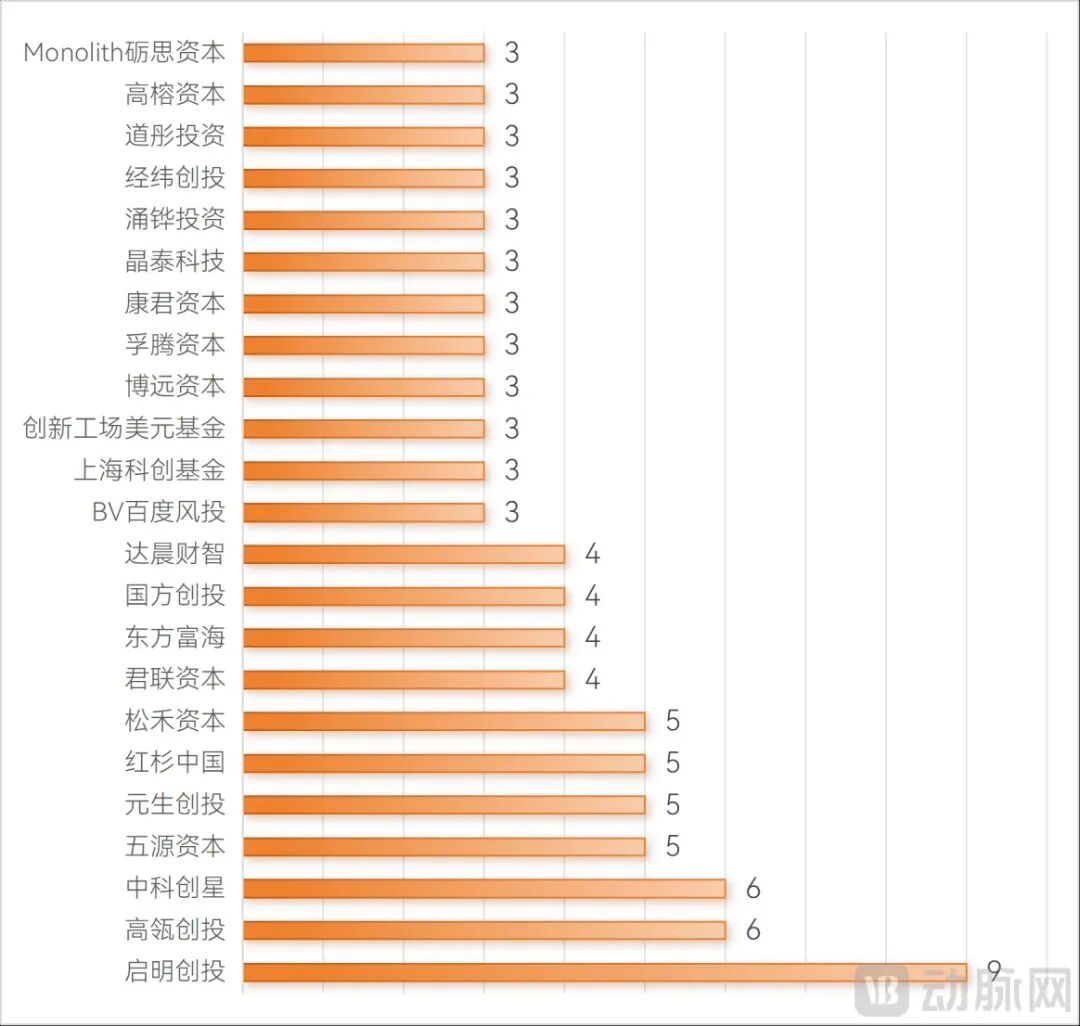
Fig. Active institutions in China's AI4LS market from January to October 2026 (incomplete statistics from VBrain)
Financial capital has shown extremely strong aggressiveness on the AI4LS track. The top 3 active capital institutions have participated in more than 20 invested projects in total. Qiming Venture Partners, which ranks first, has participated in more than 9 AI4LS projects, GL Ventures and CAS Star have invested in more than 6 AI4LS projects respectively.
From the perspective of tracks, financial investors have almost invested in all popular tracks of AI4LS: from AI-native TechBio (Xunming Bio), full-modal molecular world model (Valhalla Tech), to AI macrocyclic peptide drugs (Yuanpei BioPeptide), AI aging reversal therapy (Jingtong Life), AI virtual cell model (Unbounded Evolution).
They are not only investing in technology and scenarios, but also trying to quickly lock in the future industry overlords in "new concepts".
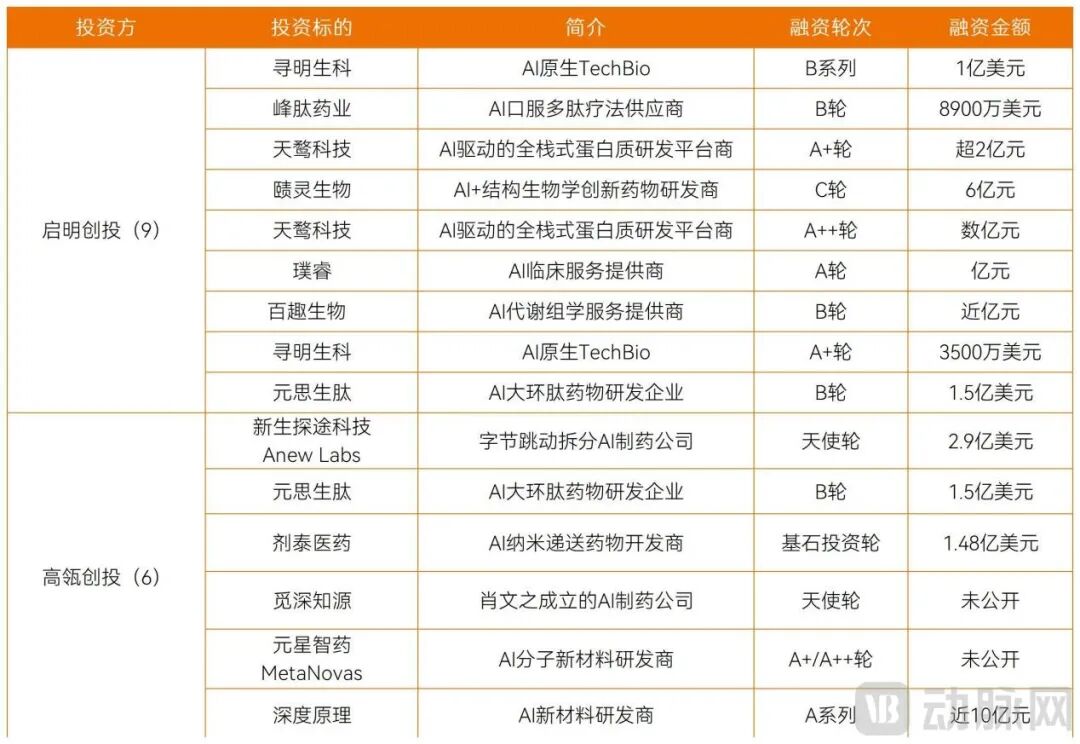
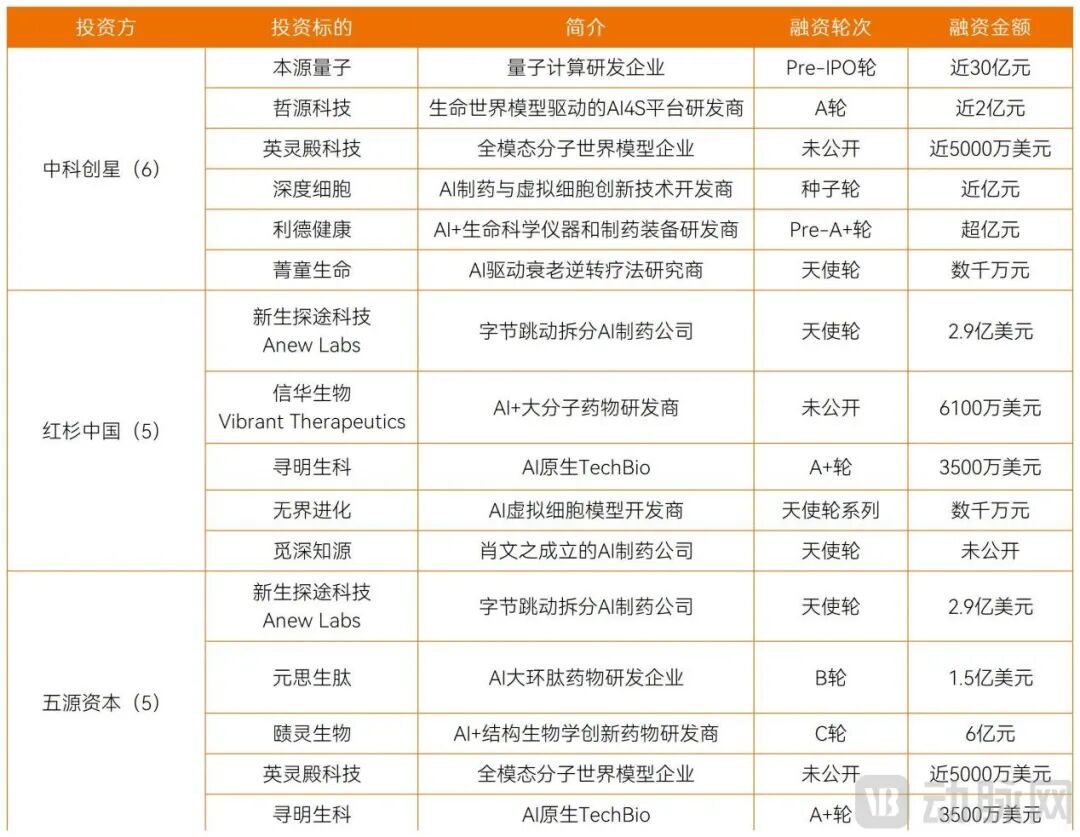
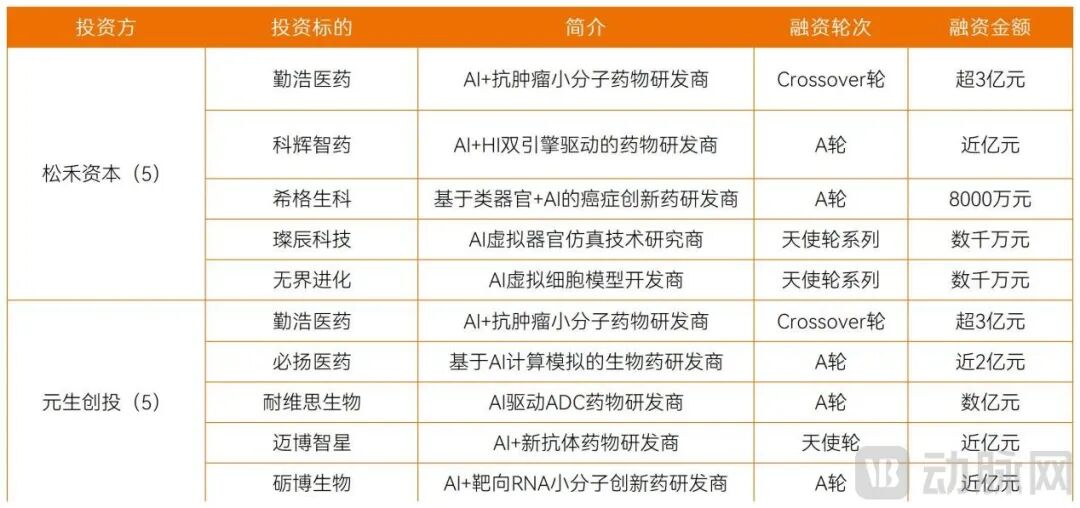
Fig. Projects invested by the top 3 institutions with the most investment deals in AI4LS from January to October 2026
The investment background of state-owned capital is completely different: make heavy bets on the base, bet on heavy-asset infrastructure, and occupy positions in models, chips, computing power platforms, scientific computing humanized data facilities and regional innovation ecosystems.
Taking four of the high-frequency investing institutions as examples, state-owned capital prefers platform companies with underlying general technology attributes, such as full-modal molecular world model (Valhalla Tech), AI target discovery world model (Gaowei Pharma), AI-driven full-stack protein R&D (Tianlu Tech) and AI Native biopharmaceuticals (BaioGeometry).
In terms of rounds, the investment timing of state-owned capital covers Series A for preliminary technology verification to Series C for product commercialization, but rarely invests in the very early angel/seed rounds.
The core demands of government guidance funds and state-owned capital are becoming more and more refined, and at the same time, they undertake a clear mission: to guide capital to flow into the fields required by national strategies, enter the early-stage, long-cycle, high-uncertainty links, and through return investment, investment attraction, and building industrial clusters and strengthening chains, precipitate capital into local industrial capabilities and long-term positioning value, and cultivate a batch of industrial soil.
This also means that state-owned capital can accept longer R&D cycles and realization stories.
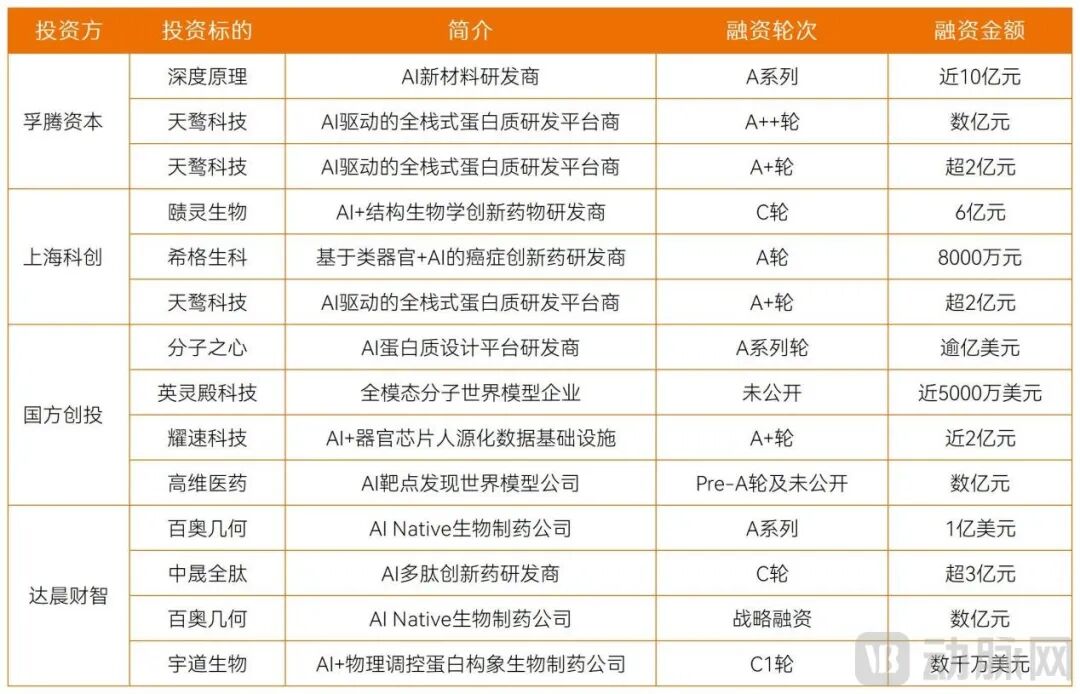
Fig. Active state-owned capital institutions in China's AI4LS market from