The next journey of phone cases: from protecting mobile phones to supporting creation
Today's consumers are never short of choices for phone cases. Drop resistance, magnetic attraction, built-in stand, co-branded and personalized designs — almost every demand can find a corresponding product. Faced with the overwhelming number of styles, a more essential question arises: What kind of phone case is truly worthy of people's long-term choice?
Data from GSMA shows that the global mobile phone replacement cycle has extended to about 3.5 years. As people spend more time with their phones, phone cases also need to withstand longer-lasting tests. A phone case may be purchased for its striking color, or quickly grab attention with a specific feature. But after it is fitted on the phone, what really shapes users' judgment are often more specific, day-to-day sensory experiences.
A phone case still holds a device, but what it truly connects is people's usage patterns in real life. Whether it feels natural in the hand, whether it adds extra burden when going out, whether it brings peace of mind against bumps and drops, and whether it remains comfortable and good-looking after a period of use.
A single selling point can make a product get purchased. But only by continuously delivering value every time you pick it up, use it and move around with it, can it be kept for a long time.
1. The trend of the era has changed, and the proposition for phone cases has also changed
The phone case industry is no longer short of good products or new features. The more challenging task is to make different capabilities work in harmony on a single case.
Traditional phone cases focus on basic protection or appearance design, which can hardly cover users' increasingly diverse usage scenarios. Some products with external stands on the market do add the supporting function, but the protruding structure may damage the grip experience. Thickened protection can enhance a sense of security, but it comes at the cost of slimness and aesthetics. Products that emphasize personality expression still need to meet users' basic expectations for protection capabilities. Different solutions have their own priorities, but they do not necessarily achieve a balanced performance on a single case.
In real-life scenarios, isolated individual parameters do not mean much. What users value is the overall experience when using the phone: natural grip in daily use, easy portability, stable support when the screen needs to be propped up, and maximum reduction of the risk of device damage in case of accidental collision or drop.
In other words, simple superposition of functions makes no sense. What users need is a coherent experience.
This means that phone cases are evolving from the "static single product" in the past to a "usage interface" between users and their phones. Faced with this transformation, simply adding more functions is far from enough.
TORRAS is exactly the brand that took the lead in exploring along this line of questioning. In 2021, TORRAS launched the original zero-sense stand case, which cleverly integrated the stand structure into the back plate of the phone case, so that the phone can be propped up at any time when needed, and return to a flat, unnoticeable state when not in use.
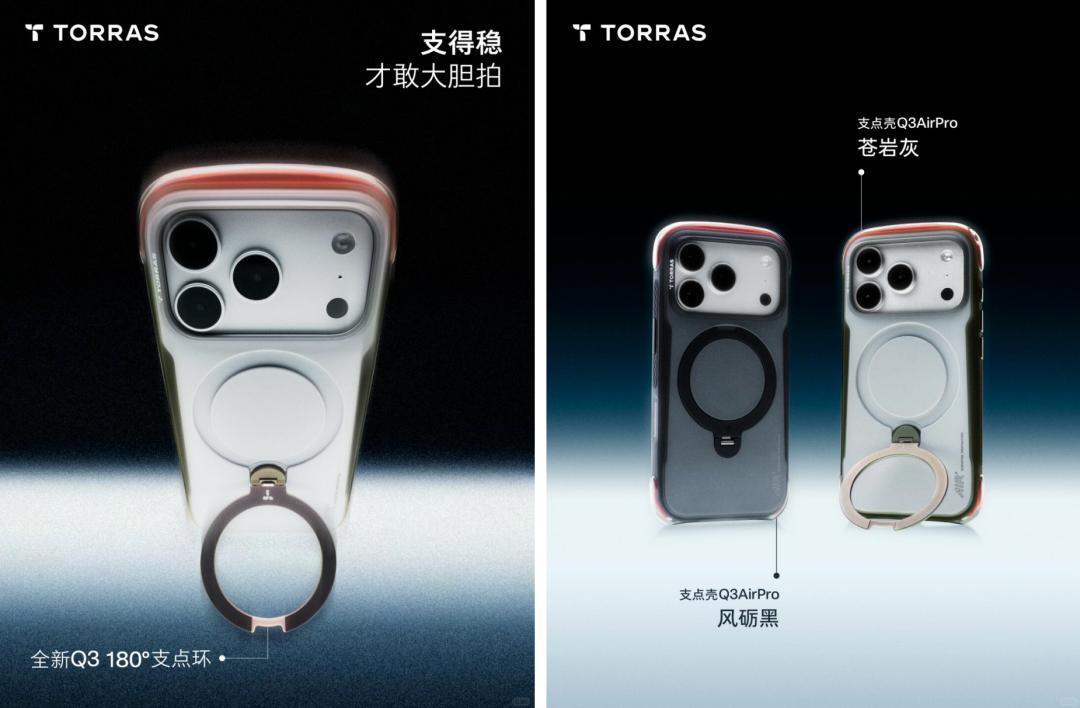
Public information shows that TORRAS has built a global-oriented product R&D, sales and service system. Since its establishment, it has owned more than 6,000 patents across all product categories, with its products and services covering more than 148 countries and regions, serving over 60 million users worldwide. In the product line of stand cases alone, it has accumulated more than 500 original patents, won multiple international design awards, and ranked first in national sales volume.
The stand case has grown from a new product to a niche category that attracts widespread market attention, which also verifies consumers' new expectations for phone cases: in addition to protecting the device and expressing personality, it should further improve the way people use their phones. Driven by the stand case, industry competition has begun to shift from adding individual functions to the synergy among support, protection, hand feel and design.
What TORRAS needs to continue to answer is how to improve the pioneering product form into a coherent usage experience.
2. When freedom and peace of mind are both achieved, a product is worthy of long-term choice
If the first-generation zero-sense stand case solved the problem of the stand "growing out of nothing and changing from obtrusive to invisible", then the Air Airbag series launched by TORRAS in recent years is a further upgrade of the stand case to answer the proposition of "how different capabilities can work together to create greater value".
The stand has changed the way phones are placed, and expanded more possibilities for people to use their phones. Operations that originally required handholding can now be moved to desktops, countertops or other suitable supporting positions, so that users can free their hands and naturally engage in diverse scenarios such as video calls, desktop work, TV series watching, tutorial checking, shooting and recording, giving the phone more possibilities to be used freely.
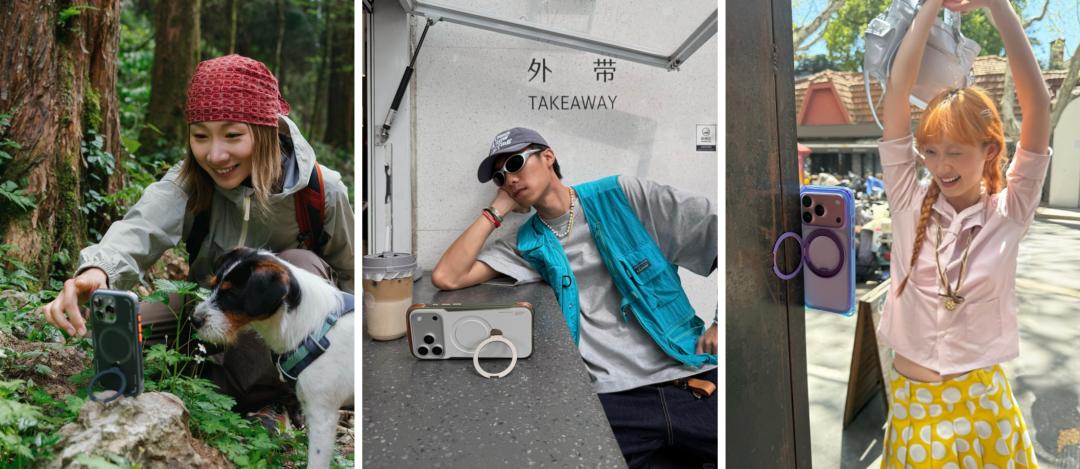
However, when a phone is picked up, propped up and brought into various complex environments more frequently thanks to the "stand", new problems emerge: during daily movement, the phone faces risks such as slipping from hands, friction, desktop bumps, squeezing in bags, and even drops from heights. Users should not bear extra worries about accidental damage just to enjoy the convenience of free usage.
Therefore, based on continuous research on protection scenarios and impact paths, TORRAS introduced "airbag" into the protection system of the stand case, specifically solving the concern of "how to use the phone with greater peace of mind".
Before the airbag stand case, traditional drop resistance relied on continuously adding materials and thickness to make the shell directly face the impact. TORRAS adopted a new idea: instead of letting the phone "collide hard with hard objects", it is better to achieve more efficient buffering and dispersion of impact, so that protection evolves from "material confrontation" to "structural resolution", and changes from a heavy burden to "lightweight protection".
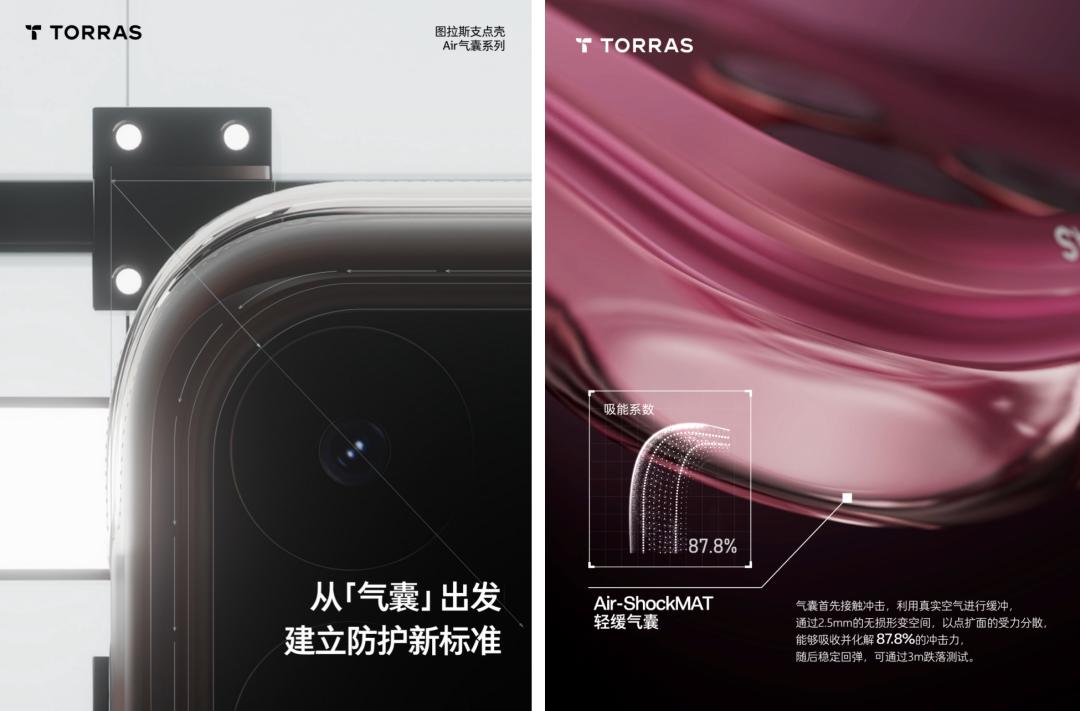
Moreover, TORRAS extends protection to details such as anti-slip performance, scratch resistance, and raised edges for the lens and screen, which first reduces the probability of some accidents, then lowers the risk of damage caused by impact, and fully eliminates hidden dangers of daily friction and slipping.
Airbags have also changed the way protection is presented. In the past, a sense of security was often conveyed through a thick, rough appearance; TORRAS tries to turn the cavity and corner structure into design language, and the visualized airbag structure allows users to intuitively feel that the key corners of the phone are being properly protected. The product aesthetics evolved with the airbag as the core further enables users to have both peace of mind and aesthetic expression without sacrificing one for the other.
Facing the long-standing dualistic competition in the phone case industry between "better drop resistance" and "better appearance", TORRAS integrates the zero-sense stand, airbag protection, innovative materials and aesthetic design into one, it truly solves the industry problem of "simple function superposition that fails to bring experience breakthrough", The two capabilities ultimately serve the same experience, allowing users to spend less energy taking care of their devices and pay more attention to what they are doing.
3. From Protecting Phones to "The Creator's Case"
The value of a product can only be understood when it is finally traced back to the changes in people's behaviors.
When the phone can be placed stably, quickly enter shooting and viewing states, and get lightweight protection during movement, the relationship between users and their phones will shift from "carefully protecting a device", to "using a tool more proactively".
This change is especially important for today's creation. Creation is not exclusive to professional creators. Recording a trip, reviewing a training session, sharing a sports game, completing a remote communication, and capturing a flash of inspiration are all expressions that ordinary people make in their daily lives. Most of the time, people do not lack ideas or the willingness to record, but obstacles always appear before they start: inspiration is fleeting, and people struggle to find a proper place to put their phones; they want to shoot a complete frame but have no free hands; when they finally get the device ready, they worry about bumps and drops during movement.
The "Super Creator Lifestyle Guide" jointly launched by TORRAS and Brand Planet presents the real demands in different creation scenarios.
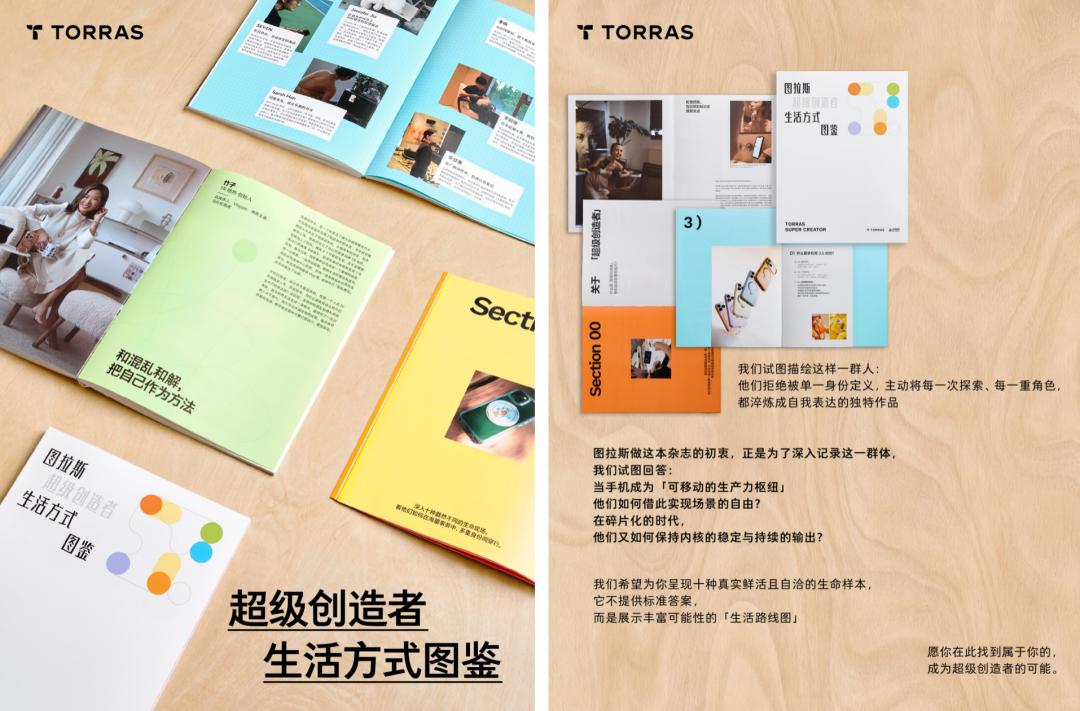
For example, for content creators who need to capture inspiration in different places such as cafes and streets, creation scenes are often mobile, and inspiration does not necessarily appear when everything is fully prepared. Whether the phone can be propped up quickly and enter the recording state in time determines whether an idea can be preserved in time. The significance of the airbag stand case lies in reducing these preparations before creation, making recording more naturally integrated into daily life, and allowing users to prop up the phone anywhere without worries.
Similar demands also exist in sports scenarios. Take HYORX, which is sponsored by TORRAS, as an example. The purpose of recording is not only sharing, but also reviewing movements, reviewing training processes, and observing personal progress. But during sports, both hands need to be focused on movements, and the venue and environment are constantly changing, so the recording tool cannot be a burden that requires extra care. With flexible supporting methods and all-round protection, the airbag stand case allows users to place their phones and record the process more freely, and review their performance after training.
From daily creation to sports recording, it all shows that users need a kind of support that can smoothly integrate into actions and function when needed. At the moment when inspiration appears and something is worth recording, users can focus on the current state and take the first step more easily. In addition to expanding the scenarios where people use their phones, the stand case also encourages people to expand the boundaries of what they are willing to try, enabling people to use their phones more naturally, act with greater peace of mind, and express and create more freely.
In this sense, what TORRAS has built is a "Creator's Case".
It does not serve a specific profession, but a group of people who are willing to actively record, express, learn, train and explore life. It not only supports the posture of a phone, but also the possibility for people to start acting at any time.
4. The 3.0 Era of Stand Cases: Redefining the Category Value of Phone Cases
Looking at the entire industry, TORRAS's exploration on stand cases is complementing a key puzzle piece for the evolution of the entire phone case category.
When it keenly captured that "people's demands for phone cases have changed", TORRAS put forward the value proposition of "Stand Case 3.0" through the practice of stand cases, If the 1.0 stage mainly solves basic protection, and the 2.0 stage adds personality expression, then phone cases in the next stage need to more actively support people to create their own lives through mobile phones. With the unique features of its stand cases, TORRAS has naturally become the leader of this era, making "everyone can create instantly, record and share efficiently anytime and anywhere" a daily experience within easy reach.
Market sales data proves that what the stand case responds to is not an occasional demand of a small group of people, but a widespread usage expectation, which is also TORRAS's deeper influence on the industry. It breaks the stand case out of the narrow positioning as a "derivative product", turning the formerly single product that seemingly has little technical content into a "usage experience system" that users truly want to own and can support creation, delivering real value-added benefits for every life creator.
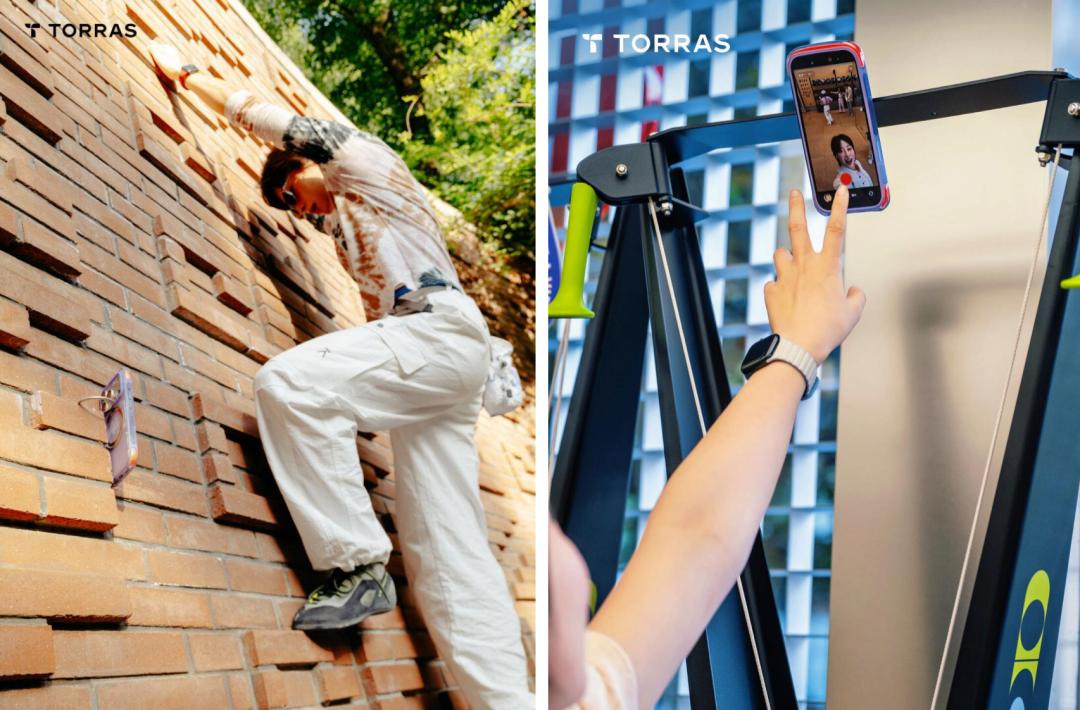
Against this trend, the competition logic of the industry is also changing. The moat of a brand is shifting from single drop resistance parameters, appearance styles and function lists to more complete experience design capabilities.
The stand case has completed the leap from single product innovation to a niche category, established a new category coordinate in the highly mature market, and reopened the industry's imagination for product value.
5. From Pioneer to Definer: How Does Continuous Innovation Happen?
Why can TORRAS jump out of the homogeneous involution of the industry, take the lead in completing the evolution of this product form, and achieve counter-trend growth in the era of rational consumption? The answer lies in its underlying driving force for continuous iteration and profound R&D system.
A new product can attract attention by virtue of form innovation, but whether a category can continue to develop depends on whether the brand can continuously discover and solve new usage problems after the product enters real life.
Over the past five years, the R&D of stand cases has gradually expanded from the initial structural innovation to systematic research on support, protection, grip feel, materials and design. It creates product value based on deep user insights, transforms the industrial chain thinking to turn innovation into a threshold, and its organization turns one-time success into continuous capability.
Take the stand as an example. The R&D team disassembles a complete usage process into specific actions such as opening, adjusting, supporting and retracting. Whether the finger buckle position is convenient, whether the rotation damping is smooth, whether the stand can stay stable after being propped up, and whether it remains reliable after long-term repeated opening and closing — every experience problem needs to go through repeated adjustment and testing. For example, to achieve continuous smooth damping, 5 rounds of aperture verification are required; to ensure long-term stable rotation of the stand, it needs to be verified that it can still support the phone after more than 3000 opening and closing cycles, and the damping sound does not attenuate after more than 10000 rotations.
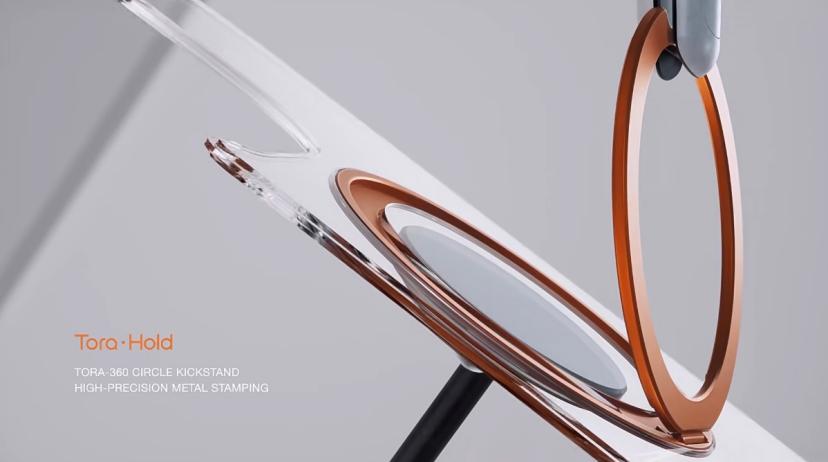
These improvements can hardly be fully seen from the product appearance, but they are perceived repeatedly in daily use. Users may not know what changes have taken place in the internal structure, but they can directly judge whether the stand is easier to open, whether the angle is better to adjust, and whether the phone is stable enough after being placed.
The iteration of airbags follows a similar logic. The Air series has now developed into the sixth-generation products represented by O3AirCore, and the research focus has gradually shifted from partial protection enhancement to the comprehensive design of buffer space, force path and overall usage experience. Before each product is officially launched, it has to go through 1000 to 3000 drop and extrusion tests.
The airbag needs to provide enough deformation space for impact, and also control the resulting volume and weight. The protective structure should be clearly visible to bring users a definite sense of security, while