After nearly a decade of secret R&D, Apple's long-awaited humanoid robot ended up adopting Unitree's technology.
Tremble, robots! Apple is finally joining the fun.
Apple recently announced a humanoid robot research project named HALO. In the demo video, a humanoid robot moves nimbly around in an unfamiliar room, crawling under tables and shifting boxes perfectly; it can even squeeze sideways through a bedroom door that is not fully closed, and finally find a chair to sit down, with all movements extremely smooth and natural.
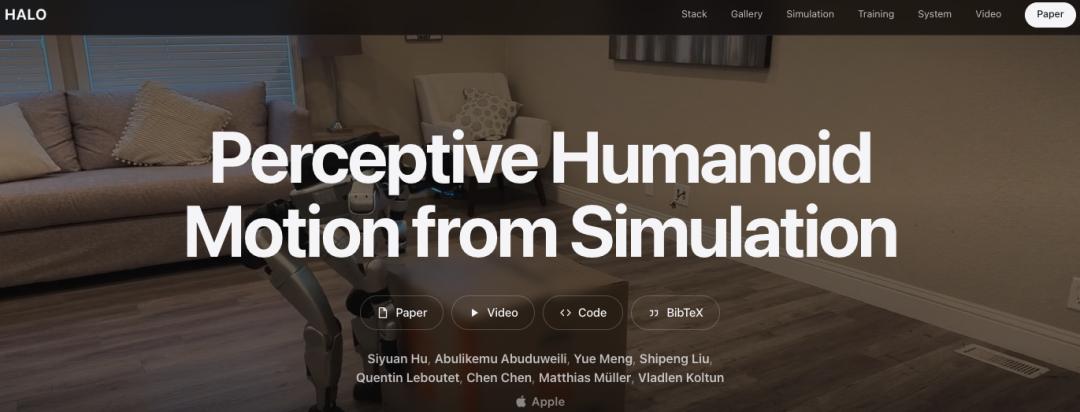
HALO Project Official Website
Furthermore, the whole process runs completely offline, with no remote control operation or cloud connection, which is far more advanced than previous humanoid robots that still relied on remote controllers.
However, on closer inspection, the robot's body looks rather familiar. This is exactly the Unitree G1 robot released in May 2024!
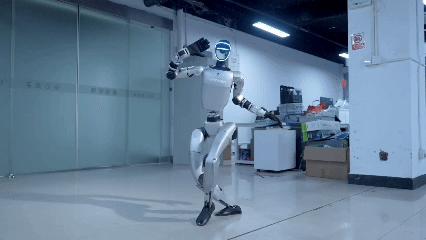
Unitree G1 Robot
What is even more strange is that this robot carries a Mac mini M4 Pro on its back, and the large language model running inside comes from Alibaba's Qwen.
After years of secret development, Apple's humanoid robot turned out to be a patchwork creation?
Mac Mini + Qwen, Scored 91 Points
Current robots have many advantages, except that there is no sufficient data for them to learn.
The pre-training of traditional large language models (LLM) has massive online materials, and even tens of trillions of Tokens are easy to obtain; autonomous driving relies on various intelligent vehicles running on roads, and hundreds of billions of hours of data are more than enough.
However, for embodied intelligence that needs to understand spatial structures, object relationships and physical laws, the publicly available operation data for training is only on the order of hundreds of thousands of hours. This amount of data is barely enough to train a humanoid robot, which is just a negligible level of data.
Then why is the data for training humanoid robots so scarce? Because mainstream data collection methods, such as real machine collection, motion capture and video distillation, all have their own limitations: high cost, high scrap rate and insufficient diversity. The market price of real machine remote control is about 500 yuan to 1000 yuan per hour.
At this time, Apple's HALO made a bold decision: Stop collecting data, and directly generate data through simulation synthesis!
Therefore, Apple synthesized about 300 hours of training data in 1000 programmatically generated virtual home environments, where the living rooms, offices, bedrooms and furniture in the homes are randomly distributed, using 250 NVIDIA H100 GPUs.
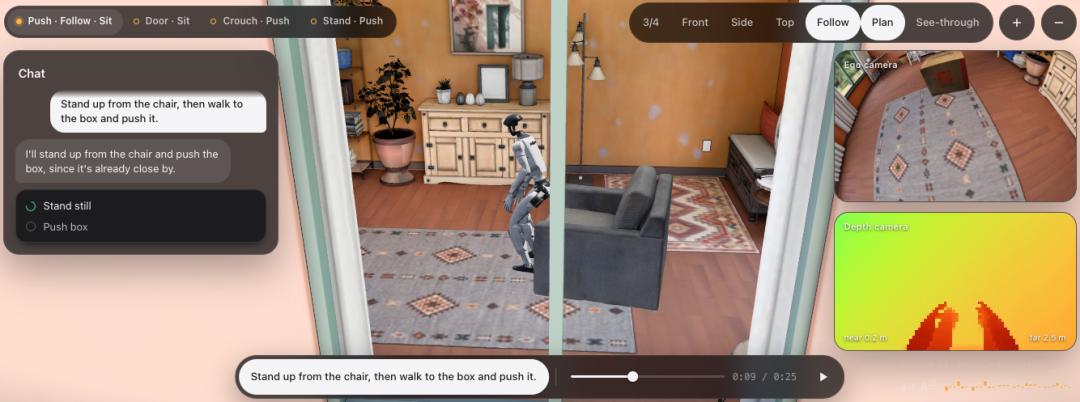
Simulation of Apple HALO Project
These virtual homes are not simply built with a few rooms and a few pieces of furniture. The scenes are added with various filters, including blur, noise, different brightness, darkness, cool and warm tones, to simulate the strange light and visual interference in real homes as much as possible.
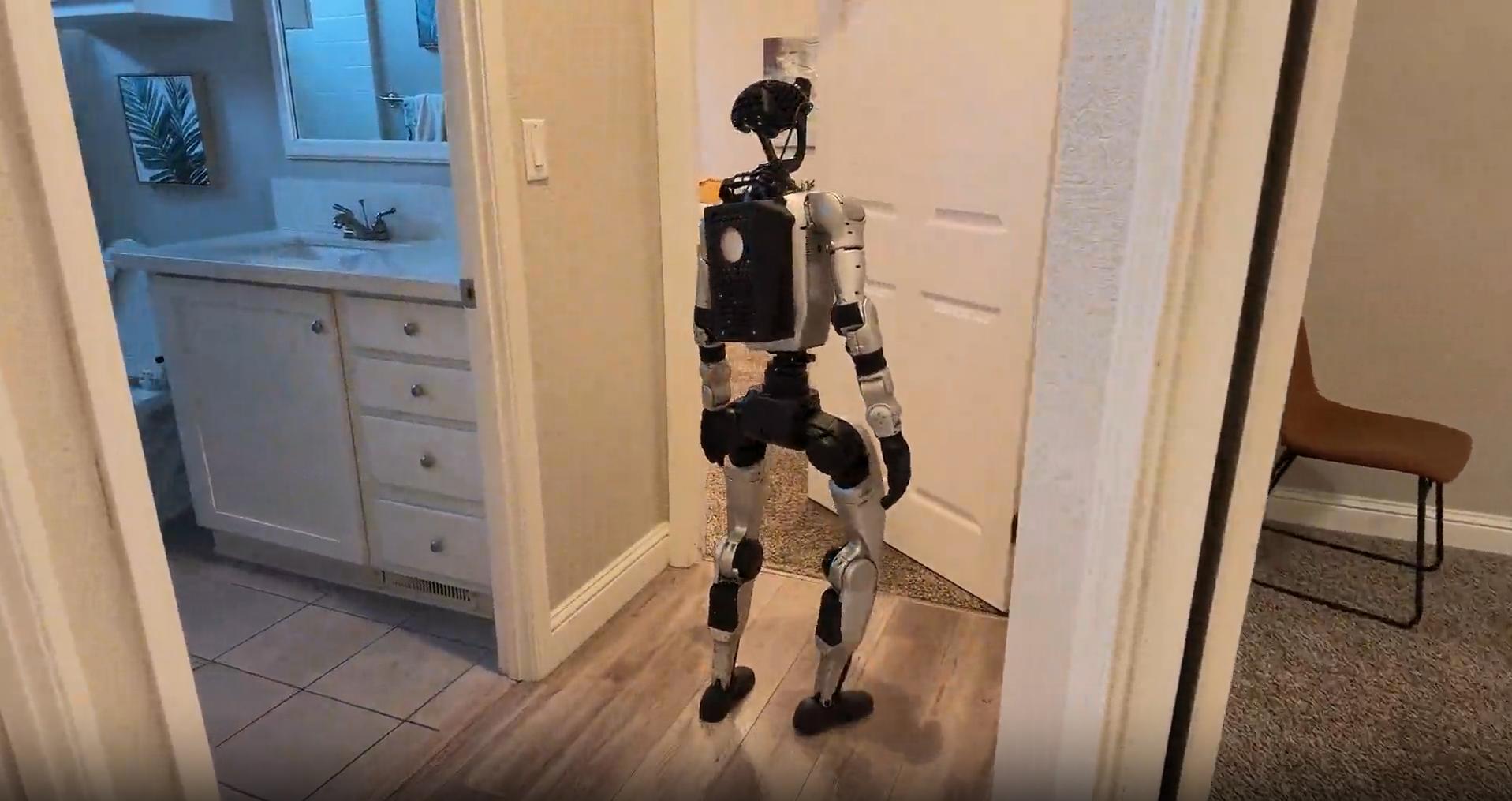
Apple HALO Research Demo
After solving the problem of training data, we still need to solve the response speed of the robot in the real environment.
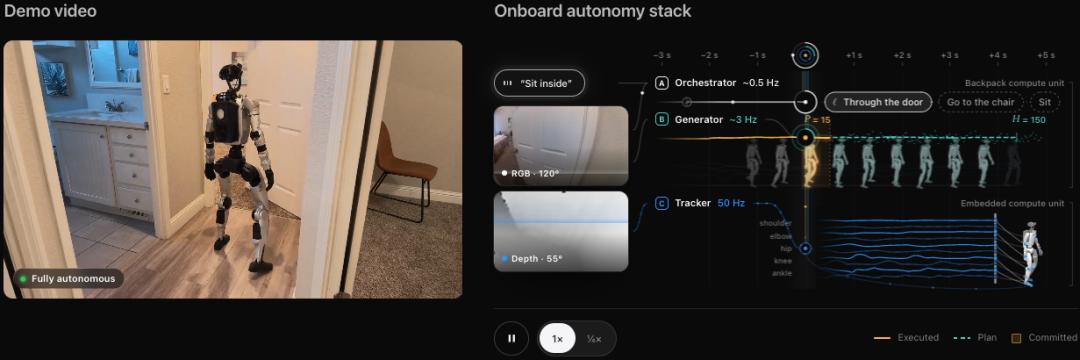
Since the whole process needs to be offline, all calculations must be completed in the Mac mini on the robot's back. If only one large model is used to handle all tasks from "understanding the environment" to "controlling all joints of the body", the local computing power will not be sufficient at all, and the movement will have serious delays. Therefore, Apple split HALO into three levels, allowing models of different sizes to cooperate with each other with a clear division of labor.
The top layer is responsible for task understanding. For example, when the user says "go and push the box away", the vision-language model needs to combine the camera image to judge where the box is and what obstacles are around, and then break the task down into several specific sub-steps. This layer uses Alibaba Qwen Qwen3.6-35B-A3B, with only 3 billion activated parameters.
HALO Project Official Website
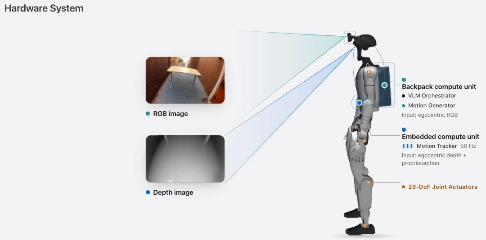
The middle layer is responsible for generating movements. It needs to receive the decomposed tasks from the upper layer according to the current environment, call the lighter Qwen3.5-2B model, and break the task down into body movement instructions for the next 5 seconds. The bottom layer is motion tracking, which converts the upper-layer instructions into electrical signals to directly drive the joint movements.
The operation of both the top layer and the middle layer relies on the Mac mini M4 Pro carried on the robot's back. That means the robot's "brain" is installed in the Mac Mini on its back, so the data transmission time is short, and the robot's response is naturally faster.
HALO Project Official Website
Then why did Apple choose the Qwen large language model as the brain of its robot?
On the one hand, compared with companies such as OpenAI and Anthropic, Apple's pace of developing AI large models has indeed fallen behind. Instead of training a new model from scratch, it is better to directly use a mature open-source model.
What's more, Alibaba's Qwen large models are sufficiently open and diverse. Data generation, model training, deployment code and open-source weights all support local deployment and modification.
It covers parameters from 2B to hundreds of B. Apple uses Qwen3.6-35B-A3B and Qwen3.5-2B in the three layers, which can be flexibly matched according to tasks and computing power budgets, and the 64GB Mac mini M4 Pro is exactly capable of undertaking this role.
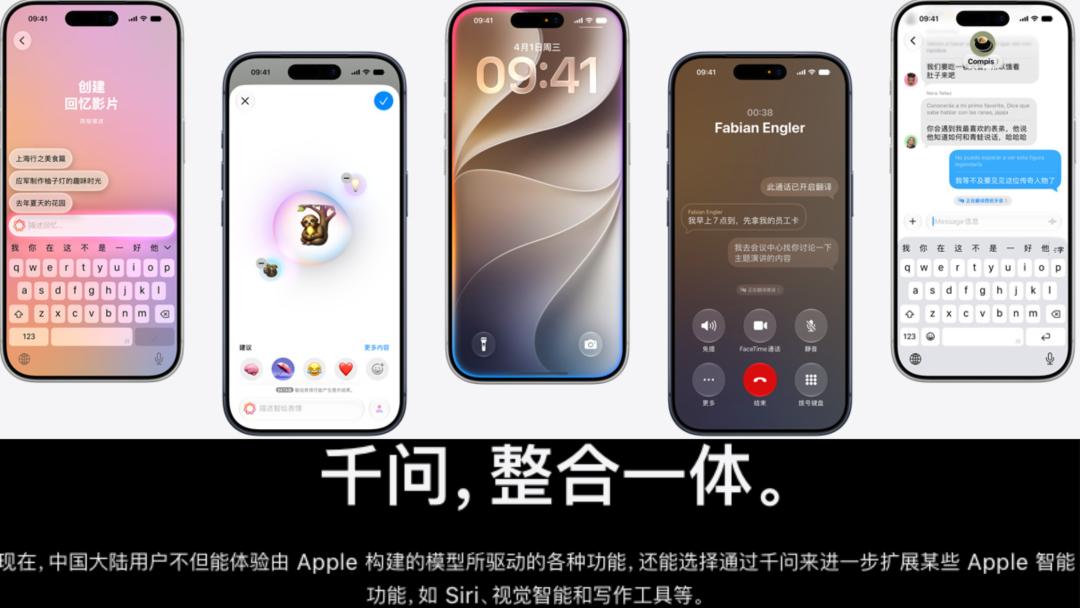
It is not difficult to understand why Apple Intelligence, which the Chinese market has been waiting for a long time, chose Qwen, which can be regarded as following the same consistent logic.
Cooperation between Apple Intelligence and Qwen
Finally, HALO completed 360 tests in 6 unscanned and unmapped real environments, with an average success rate of 91%. Among them, the success rate of crawling under the table reached 100%, and the success rate of passing through the half-open door also reached 93%.
It borrows Qwen as its brain, relies on Mac mini for computing power, and Apple did not even develop the robot body by itself.
Apple's Integration on Unitree
The brain is purchased by Apple, and unexpectedly, the robot body is also purchased.
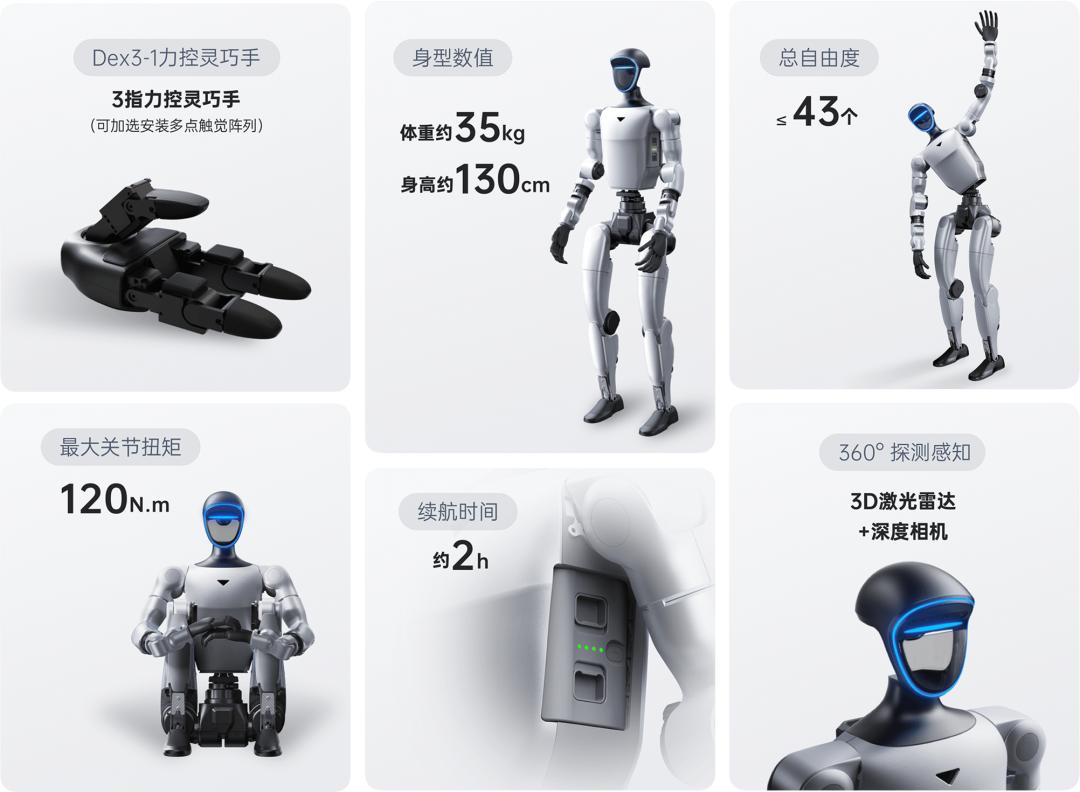
The robot body of HALO uses the standard version of Unitree G1. It is about 132 cm tall, weighs about 35 kg, and has 23 to 43 joints. Apple did not redesign the entire mechanical structure, but added a 3D-printed protective shell on its back, where the Mac Mini M4 Pro is placed.
Unitree G1 Detail Image
Here comes the question: There are humanoid robots in the United States, such as Tesla's Optimus and Boston Dynamics' Atlas, which are all well-known top brands.
But the fact is, they simply do not want to open their products for Apple to use.
Although Musk's Optimus has been mass-produced, most of the early products are kept in its own factory for work, and external delivery will not be available until around the end of 2027. In addition, Musk often delays his plans, so Optimus is not a reliable choice.
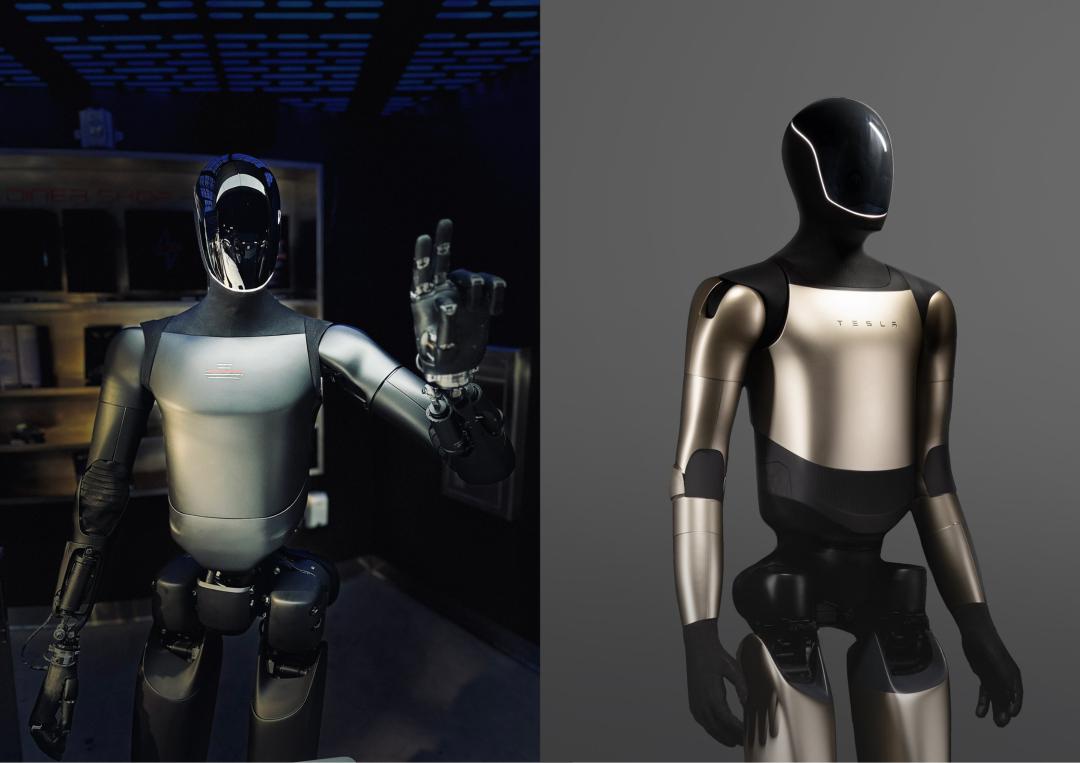
Tesla Optimus
Boston Dynamics' new generation of electric Atlas is also not publicly available for retail, and it mainly cooperates with companies such as Hyundai Motor. Figure AI is deeply integrated with its self-developed Helix model, so it will not be available for Apple to use either.
Even if they can be purchased, Apple may not be able to use them.
The paper mentions that HALO needs to repeatedly adjust the joint force, actuator response and instruction delay of the robot, and also needs to install Mac Mini and cameras, as well as modify the underlying control programs. All these require open hardware parameters and underlying control permissions.
However, the robots of Tesla and Boston Dynamics keep hardware design, joint control and core algorithms in their own hands, and do not open them for external parties to call and modify at will.
Besides, Apple, which is in the stage of catching up and research, needs a robot body that can be disassembled, modified and adjusted freely. The Unitree G1 just meets this requirement.
The standard version of Unitree G1 is priced from 99,000 yuan, which is far lower than the cost of Boston Dynamics' Atlas that costs millions of dollars, so it is obviously more cost-effective.
Of course, Apple is not a company short of money.
The more important point is that Unitree's robots are open enough, and they are one of the humanoid robots with the most mature open-source ecology and the smoothest mass production. It supports developers to access their own algorithms, adjust underlying control parameters, and even carry out secondary development. Unitree has also successively open-sourced its robot development framework and the general operation large model UnifoLM-VLA-0, leaving enough space for adjustment in both software and hardware ecology.
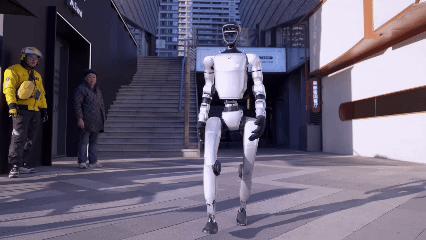
Unitree G1 Robot
For example, the R1 series dual-arm humanoid robot supports full-stack open secondary development and has a mature robot development framework.
This is why more than 70% of the revenue of Unitree's humanoid robots comes from the "scientific research and education" sector. Being purchasable, modifiable, and able to supply stably may be the real reason why Apple chose it.
But the problem is, the outside world has been waiting for Apple's robot for nearly a decade, and what people expect should be a truly humanoid robot built from scratch by Apple, rather than a Unitree G1 loaded with Qwen and carrying a Mac mini on its back.
What Apple has presented is more of a solution that combines off-the-shelf hardware, large models and self-developed algorithms.
Put in a nice way, this is supply chain integration; put in a bad way, it may just be an "OEM machine".
Apple May Need to Be Bolder
In fact, Apple's robot project is not a temporary decision, but it has always been too conservative.
As early as 2014, Apple launched the "Titan" car-building project, aiming to develop L5-level fully autonomous vehicles. After nearly ten years of slow progress, it invested more than 10 billion dollars and terminated the project without delivering any products.
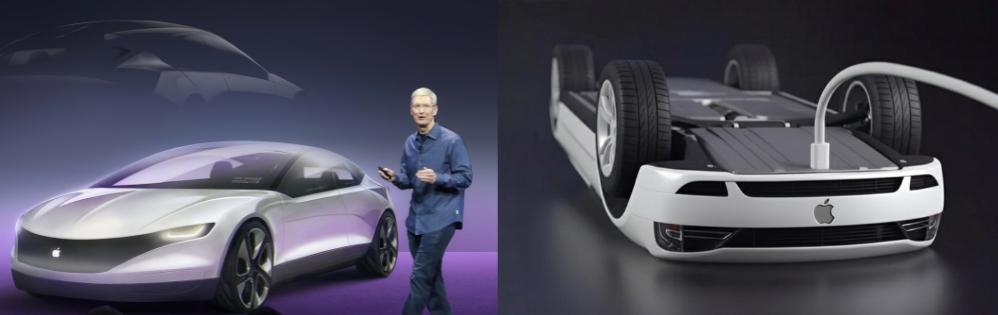
Rumored Apple Car on the Internet
Fortunately, although it failed to deliver a car, Apple accumulated technical reserves in computer vision, autonomous navigation, motion control and sensor fusion, and some of the engineers later transferred to the robot project.
Apple officially turned its attention to robots around 2020. At that time, it once tried to acquire Boston Dynamics, but the deal was finally snatched by Hyundai Motor Group of South Korea.
In 2022, Tim Cook promoted the launch of a desktop robot project codenamed J595. According to the plan, it would add a robotic arm to the iPad, which can rotate the screen, follow the user's line of sight, call Siri and Apple Intelligence, and act as a video conference assistant and